
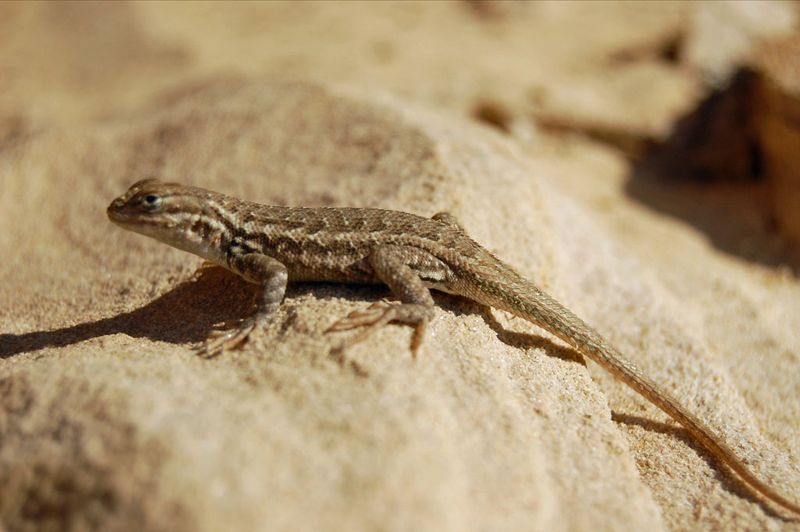
Tucked under a sun-warmed rock or perched on a wooden fence post, the western fence lizard is one of California’s most common backyard reptiles, and it has a quiet habit of eating the insects that damage your plants. Most homeowners never realize one is living in their yard until they move a board or clear a brush pile and watch it dart away.
Keeping a few simple features in your landscape can make your yard more welcoming to this native insect-eater, without sacrificing tidiness or wildfire safety.
Meet the western fence lizard in your California yard
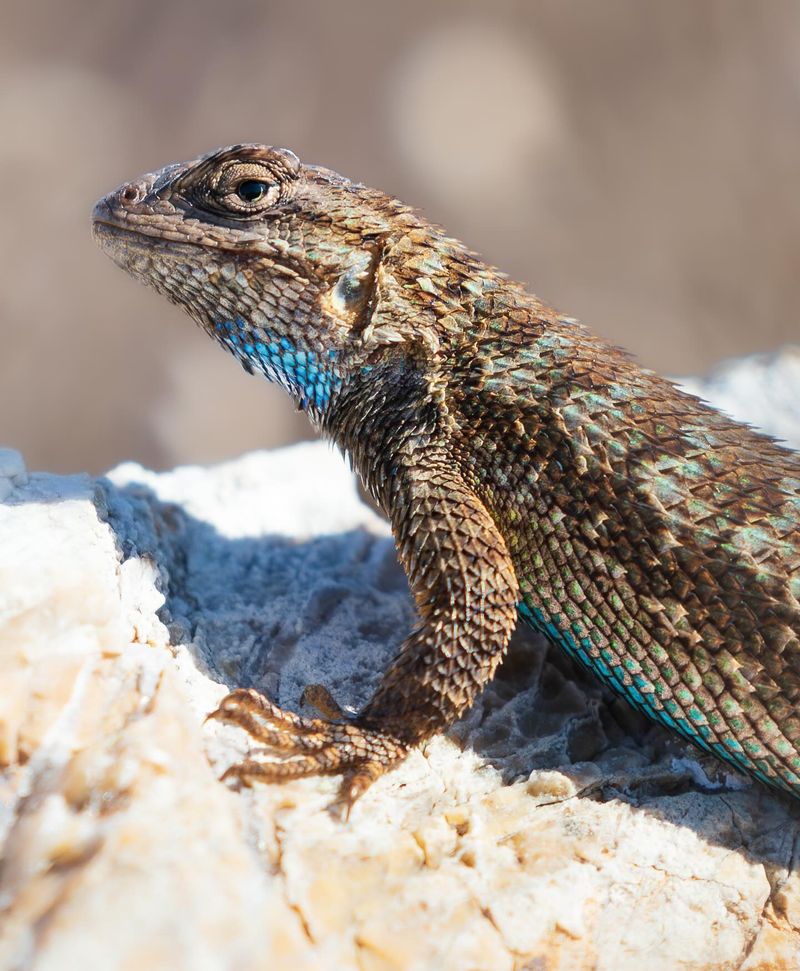
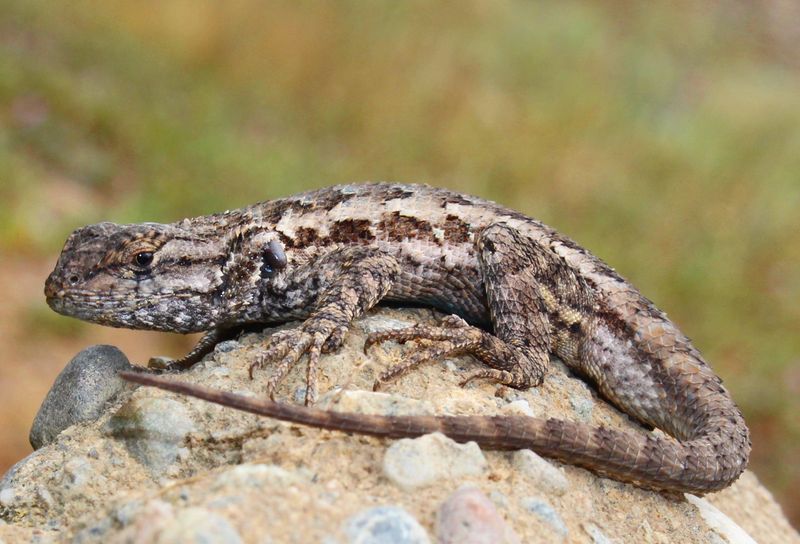
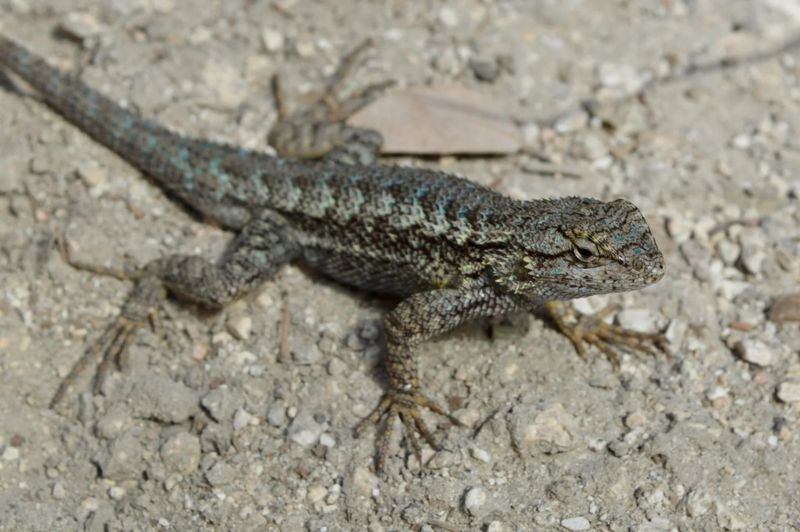
Sceloporus occidentalis turns up in backyards from the Central Valley to coastal hillsides, making it one of the most frequently encountered reptiles in California suburban landscapes. Males display iridescent blue patches on their belly and throat, which is where the popular nickname “blue-belly” comes from.
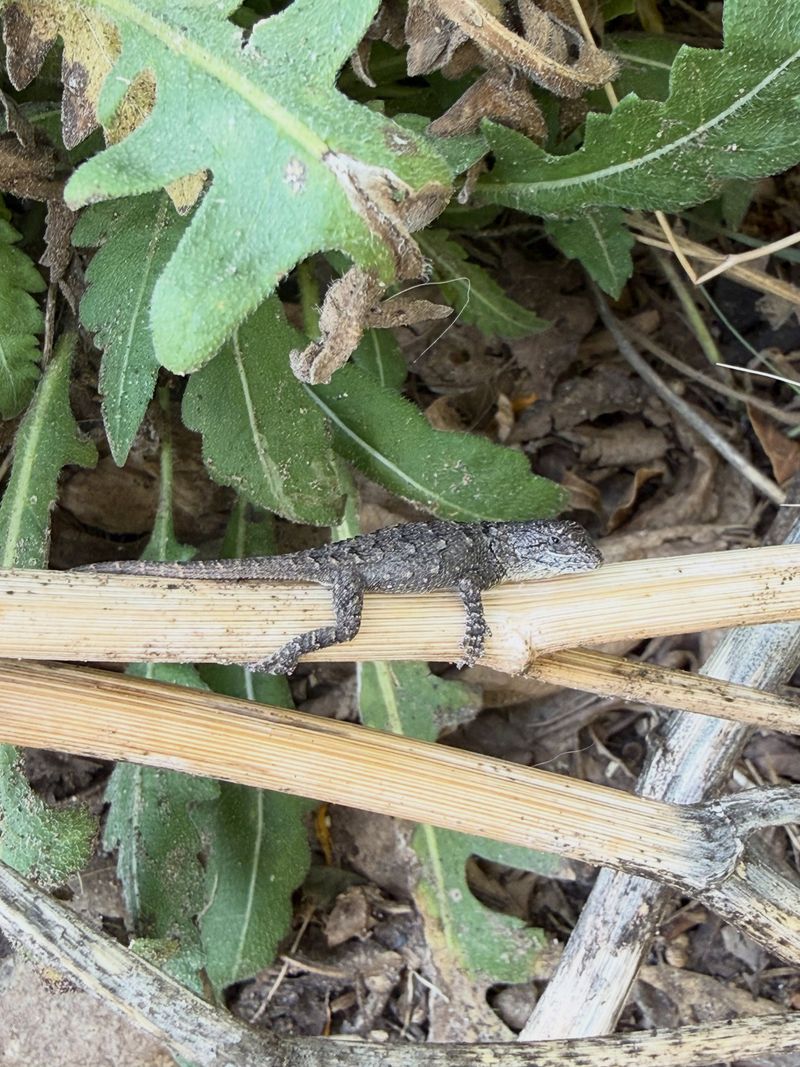
Females and juveniles are typically gray-brown with faint patterning, and many homeowners mistake them for other species entirely.
Before assuming any small lizard darting across your patio belongs to this species, check both location and appearance. Research on California lizard communities in urban areas notes that California hosts more than 60 lizard species, and introduced species appear in parts of Southern California.
If you are not sure what you have, your county UC Cooperative Extension office can help with identification.
Western fence lizards are primarily insectivores, meaning they eat insects and other small invertebrates rather than plants. UC Integrated Pest Management documents their diet as including aphids, beetles, ants, wasps, grasshoppers, and spiders.
The same resource notes that lizards cause no measurable damage to garden plants and describes them as potentially beneficial.
The California Department of Fish and Wildlife species account confirms this broad, opportunistic feeding behavior, listing terrestrial invertebrates as the core of the diet. That breadth is worth keeping in mind: the lizard is an all-purpose arthropod hunter, not a targeted pest-control agent.
Treating it as a possible garden ally is reasonable; expecting it to solve a serious aphid or caterpillar problem on its own is not.
The pest-control evidence is useful but limited
A study conducted in California urban gardens tested how different predators responded to sentinel caterpillar larvae placed in garden beds. Western fence lizards accounted for 22.33% of the observed larval removals in that experiment, which is a meaningful share and confirms that lizards do eat caterpillar-stage insects when they encounter them.
But the full picture from that urban garden predator study tells a more complicated story.
Ants removed nearly 45% of the experimental larvae. Birds accounted for 21.36%, wasps for 10.68%, and spiders for 0.97%.
The lizard’s share was real and notable, but it was part of a broader predator community working across the same garden space at the same time. No single predator dominated, and the lizard was clearly not operating alone.
There is also an important distinction between what that study measured and what many readers might assume it shows. The experiment tracked removal of artificial sentinel prey placed by researchers, not the percentage reduction of an actual caterpillar outbreak damaging a vegetable bed or fruit tree.
A lizard that picks off larvae during a controlled experiment may or may not encounter the same density of insects in a real garden with living plants, competing cover, and variable prey distribution.
UC IPM’s garden lizard guidance describes the potential benefit as lizards eating pest insects, using language that is deliberately cautious. That caution is appropriate.
Adding a lizard-friendly feature to your yard can contribute to natural predation pressure on garden pests, but it should not replace monitoring, targeted pest management, or other biological controls when a real infestation develops. Think of the lizard as one useful member of a predator team, not the whole team.
Lizards need sun, shelter, and nearby hunting space
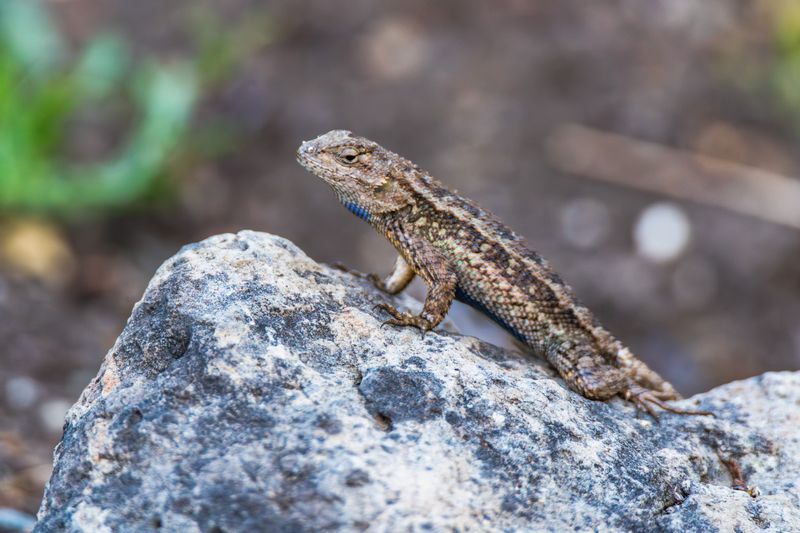
Western fence lizards are ectotherms, which means they rely on external heat sources to regulate body temperature. A warm, sunny basking surface is not a luxury for them – it is a biological requirement.
Without it, they cannot digest food efficiently, move quickly, or reproduce successfully.
Basking alone is not enough, though. The CDFW western fence lizard account describes the species using woodpiles, rock piles, wooden fences, tree trunks, building walls, and surface objects like boards as perches and hiding places.
That combination of sun exposure plus nearby cover is the key pattern: lizards need a warm surface to rest on and a quick escape route into shade or shelter when a predator appears.
In developed Southern California landscapes, rocks appear to matter more than almost any other single habitat feature. A 2022 urban-ecology study examining western fence lizard occupancy across an urban-rural gradient found that rock refuges were strongly associated with whether lizards were present in a given location.
Yards with rocks were more likely to support lizards than yards without them, even after controlling for other factors.
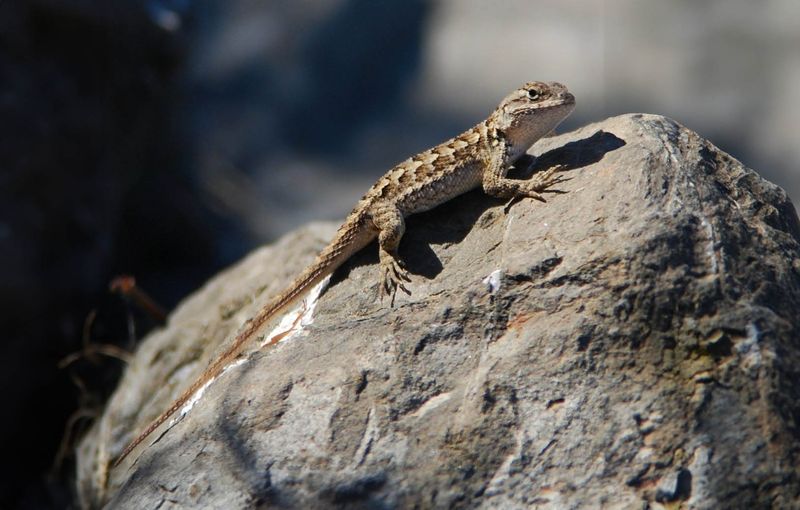
That connection between rocks and occupancy makes practical sense. A flat rock absorbs heat and provides a stable basking platform, while the gap beneath it offers shade, moisture, and concealment.
Crevices between stacked stones do the same. Fences and tree trunks provide vertical basking surfaces, which lizards also use.
The habitat does not need to be elaborate – a modest arrangement of noncombustible stones near a sunny garden edge can serve the same function as a natural rock outcrop, as long as insects are accessible nearby for foraging.
Cleanup can remove refuge without deliberately harming lizards
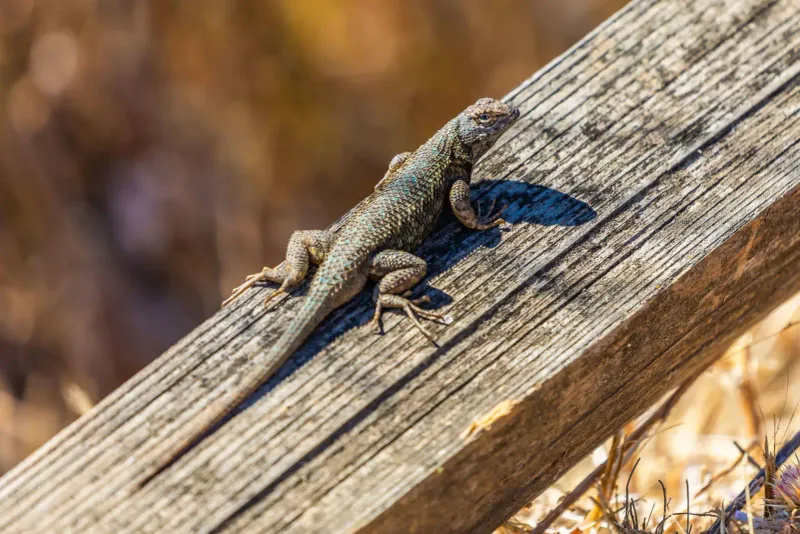
Pulling up an old board, clearing a brush pile, or hauling away a stack of flat rocks are ordinary landscaping tasks that most California homeowners do without giving them a second thought. The connection to lizard habitat only becomes visible when you understand that those materials often function as cover and shelter, not just clutter.
The UC IPM Pest Notes on lizards and the CDFW species account both confirm that western fence lizards use rocks, boards, logs, woody debris, fences, and similar features as cover. When those materials disappear, the habitat structure that allowed lizards to thermoregulate and hide in that spot disappears with them.
A yard that has been thoroughly cleared of these features is simply less suitable for the species.
That said, the research does not measure how many lizards actually leave after a typical homeowner cleanup, and it does not support the claim that ordinary yard maintenance kills or permanently evicts lizards as a rule. The urban occupancy study shows that rock refuges are associated with lizard presence, which is an ecological inference, not a behavioral tracking study of homeowner cleanup events.
Lizards are mobile animals with home ranges that may extend across multiple properties.
A practical middle ground is to designate a small, low-traffic corner of the yard for a modest rock arrangement or a few flat stones near a sunny fence line. Planting beds, pathways, and living areas can remain tidy while one unobtrusive spot retains the structure that supports lizard use.
The goal is not to preserve every scrap of debris, but to leave at least some noncombustible cover where it will not create hazards or interfere with daily yard use.
Wildfire rules come before wildlife preferences
Any conversation about keeping habitat features in a California yard has to start with one firm boundary: wildfire safety rules are not optional, and no wildlife benefit justifies keeping combustible materials in a location that creates fire risk. This matters especially for homeowners in hillside communities, wildland-urban interface zones, and anywhere that CAL FIRE or a local fire district has issued defensible-space requirements.
CAL FIRE’s Ready for Wildfire defensible-space guidance is clear that wood piles must be kept well away from structures, with surrounding vegetation cleared, and that firewood stored near a home should be moved out of the area closest to the building. The California Board of Forestry’s defensible-space zone requirements define specific clearance distances and material restrictions that apply to the land immediately surrounding a home.
Local fire districts can impose stricter standards than the state baseline, so the most current local rules always apply.
What this means in practice is that a woodpile leaning against a fence near the house, a pile of brush under a deck, or dense combustible debris tucked against siding should be removed regardless of whether a lizard is living in it. Those materials pose a real fire hazard, and that risk outweighs any ecological benefit.
CAL FIRE’s defensible space program exists precisely because fire behavior in California is fast and unpredictable.
The good news is that lizard-friendly features and fire-safe yards are not mutually exclusive. The urban occupancy research found that rocks, not combustible debris, are the habitat feature most strongly linked to lizard presence.
A small arrangement of flat stones or stone edging near a sunny garden border is noncombustible, requires no special maintenance, and can serve the same habitat function as a woodpile without any of the fire risk. Place it away from structures, vents, decks, and required clearance zones, and confirm it complies with your local fire-district inspection standards before treating it as a permanent feature.
Do not turn a garden ally into a health myth
Western fence lizards eat a wide range of insects and invertebrates, but that does not make them specialists at any particular pest. Aphids, for example, are tiny soft-bodied insects that cluster on leaf undersides and tender stems, often in locations where a perch-and-pounce predator like a fence lizard has limited physical access.
UC IPM lists aphids among documented lizard prey, but ants, lady beetles, lacewings, hoverfly larvae, parasitoid wasps, and birds may be far more important aphid predators in any given garden. Counting on a lizard to handle an aphid colony is likely to leave you disappointed.
The tick relationship is more nuanced and more frequently misrepresented. Western fence lizards host large numbers of immature western black-legged ticks, the species that transmits Lyme disease in the western United States.
Research documenting tick loads on western fence lizards confirmed that a single lizard can carry dozens of larval and nymphal ticks. The lizard’s blood contains a factor that can neutralize Borrelia burgdorferi, the Lyme disease bacterium, in ticks feeding on it, which means ticks that feed on lizards may be less likely to carry the pathogen afterward.
That sounds like a straightforward benefit, but experimental research on lizard removal and Lyme disease risk found the relationship is more complicated. Removing lizards from a study area changed the host community in ways that affected tick abundance and infection rates, but not always in the direction of lower disease risk.
Community ecology modeling reinforces that local disease risk depends on the full mix of host species, tick abundance, pathogen prevalence, and human exposure patterns.
Lizards do not eat ticks, do not make a yard tick-free, and their presence has no bearing on treating or preventing Lyme disease in people. CDC surveillance data continues to identify western black-legged ticks as active disease vectors across much of California.
Standard precautions still apply: check yourself and pets after time outdoors, use tick repellent in brushy or wooded areas, and keep pets from disturbing wildlife or bringing ticks indoors.
Support a useful predator without managing it by hand
Helping western fence lizards stay in your yard comes down to a few straightforward choices, none of which require capturing, feeding, or otherwise managing the animals directly. Wild lizards should be left alone.
Feeding them mealworms or insects is unnecessary, can alter their foraging behavior, and may expose them to prey that has been contaminated by pesticides. UC IPM’s lizard guidance and the UC IPM Pest Notes both recommend supporting habitat rather than intervening with the animals themselves.
The most useful step is placing a modest arrangement of flat noncombustible stones near a sunny spot in a low-traffic part of the yard, set away from structures, vents, and any area covered by defensible-space clearance requirements. That single feature provides both a basking surface and nearby cover.
Maintaining access to shaded crevices or ground-level cover close to the basking site rounds out the habitat.
Reducing broad-spectrum pesticide use where possible also matters. Insecticides that eliminate the beetles, ants, and caterpillars a lizard depends on for food can make a yard effectively uninhabitable even when the physical structure looks suitable.
Targeted pest management, applied only when a real infestation warrants it, leaves more food available for the predator community as a whole.
CAL FIRE defensible-space rules always take priority over habitat preferences, so confirm any planned feature is compliant with local fire-district standards before putting it in place. A lizard that finds your yard suitable will take care of the rest on its own – which is, ultimately, how a native predator is supposed to work.