
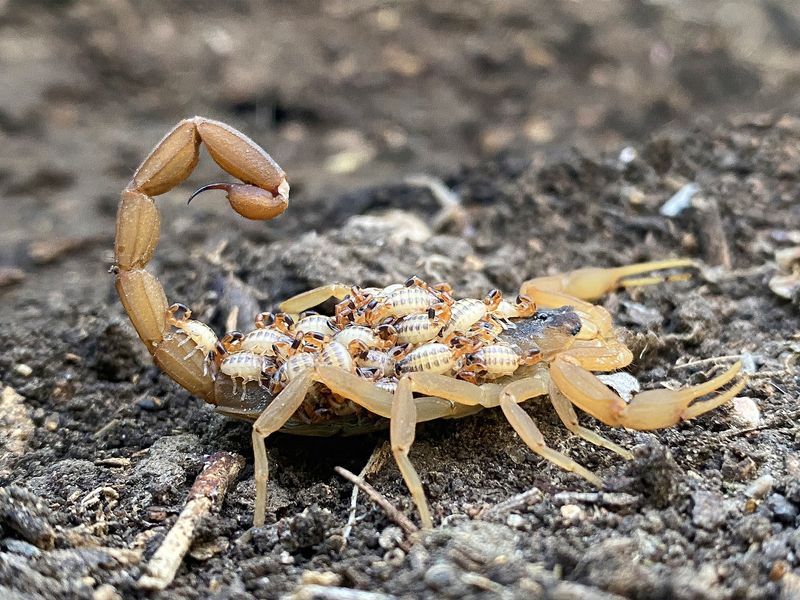
Scorpions rank near the top of the list of things Texas homeowners dread finding inside their homes, and that fear is completely reasonable. A heat-tolerant herb called rosemary has been getting attention lately as a possible deterrent, partly because of a real laboratory study involving one Texas scorpion species.
The science is more limited than the headlines suggest, but the full story is still worth knowing, because rosemary is a genuinely useful plant for many Texas landscapes, and there are proven steps you can take to reduce scorpion encounters around your home.
Rosemary is the candidate—but not a Texas native
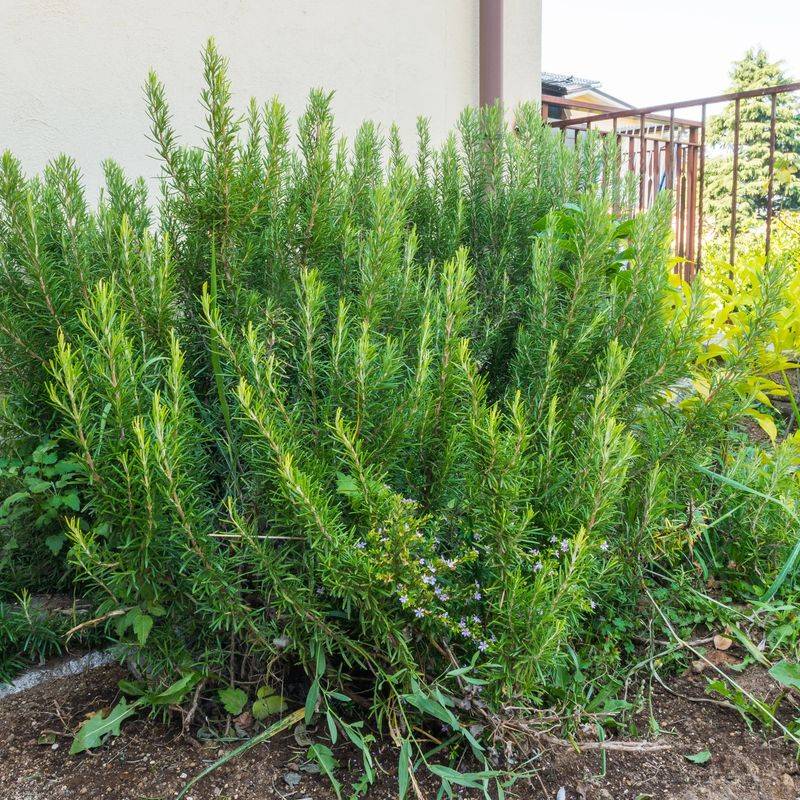
Rosemary, now classified as Salvia rosmarinus, is the plant behind the scorpion-deterrent buzz. Before going further, two things about the title deserve a correction: rosemary did not originate in Texas, and no field study has shown that planting it measurably reduces scorpion activity in a residential yard.
Getting those facts straight upfront makes everything that follows more useful.
The herb traces its roots to the Mediterranean region, where rocky hillsides, thin soils, and dry summers shaped its character over thousands of years. Texas A&M AgriLife Extension’s rosemary guide describes it as a hardy, drought-resistant perennial that performs well across most of Texas when given the right conditions, but the guide is clear that this is a Mediterranean plant adapted to Texas, not one that evolved here.
That distinction matters for honesty, but it does not make rosemary a bad choice for a Texas yard. Far from it.
NC State Extension’s plant profile for Salvia rosmarinus describes it as an evergreen shrub tolerant of heat, drought, and poor soils once established, qualities that make it genuinely practical for Texas gardeners dealing with water restrictions and scorching summers.
Rosemary earns a place in Texas landscapes through its culinary use, its year-round green structure, its low water needs after the first season, and its fragrant foliage. Whether that fragrance plays any role against scorpions in a real yard is a separate question, and the answer is more complicated than most articles on the topic let on.
This article works through that evidence carefully and then gives you the practical steps that actually hold up.
What the rosemary-oil study actually found
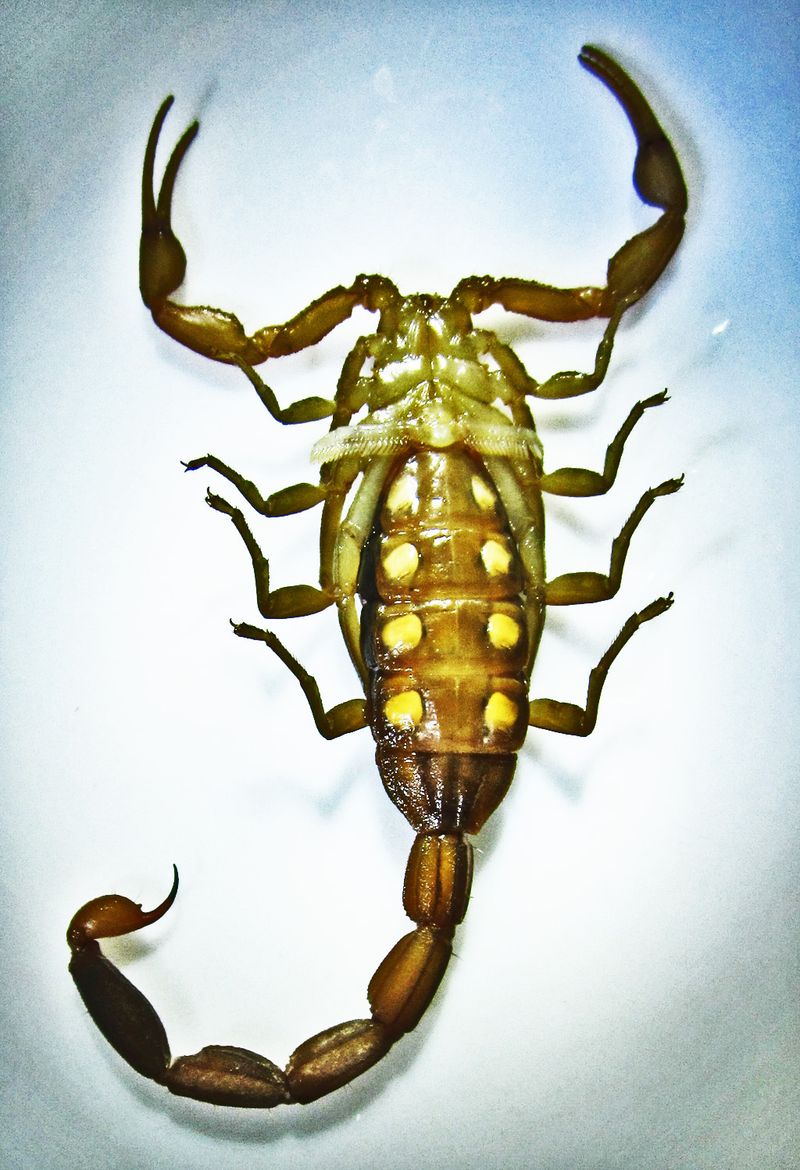
A 2019 paper published in the Journal of Arachnology is the source of the rosemary-scorpion connection, and the details of that experiment matter a great deal. Researchers set up a simple choice arena: a small container with two sections of sand, one treated with diluted, commercially sourced rosemary oil and one treated with mineral oil as a control.
They then placed striped bark scorpions in the arena and tracked how much time each scorpion spent on each side.
The result was clear in the lab setting. The published study found that the scorpions spent significantly less time on the rosemary-oil-treated sand than on the control sand.
That is a real finding, and it is worth taking seriously.
The species involved, Centruroides vittatus, is the striped bark scorpion. Texas A&M AgriLife Extension’s scorpion fact sheet confirms that the striped bark scorpion is the only scorpion species found throughout Texas and the only one reported across eastern Texas, so the species tested is genuinely relevant to most Texas homeowners.
The study worked with 16 adult scorpions collected in Norman, Oklahoma. The arena was small, the conditions were controlled, and the exposure was direct: rosemary oil applied to sand, not volatilized from a living plant nearby.
The authors themselves noted that additional research would be needed to evaluate how the plant itself performs outdoors, how long any effect lasts, and whether scorpions adapt over time.
Calling this study proof that planting rosemary deters scorpions in your yard would be a stretch the researchers did not make. What the study does show is that something in the rosemary-oil mixture was enough to change where the scorpions chose to spend their time under controlled conditions.
That is a meaningful starting point, not a finished answer.
Why a live plant is not the same as tested oil
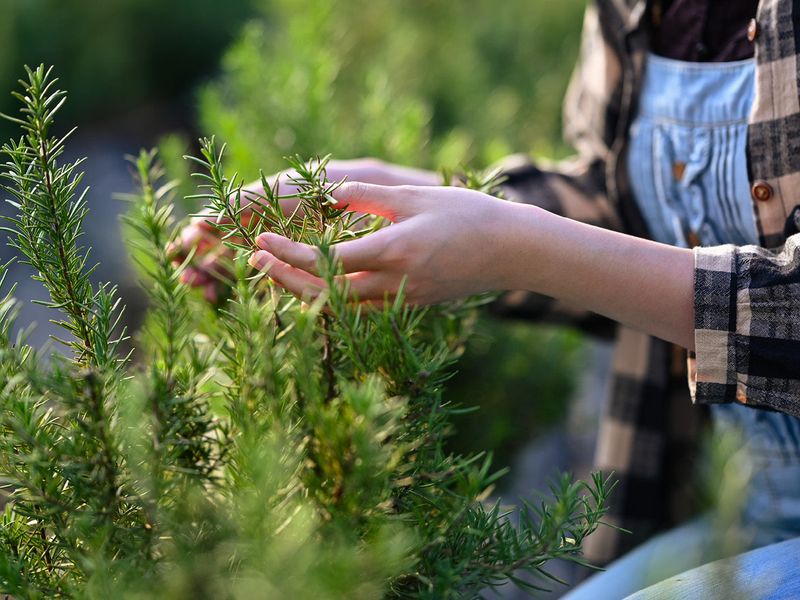
Moving from a lab result to a yard recommendation requires crossing a gap that the available research has not yet bridged. The study applied diluted rosemary oil directly to sand in an enclosed arena.
A living rosemary plant outdoors releases volatile compounds into open air, where wind disperses them, rain washes surfaces, heat accelerates evaporation, and the concentration at ground level near a scorpion could be entirely different from what was tested.
None of those outdoor variables were part of the experiment. The study did not measure how many volatile compounds a rosemary plant releases per square foot, how far those compounds travel before becoming too diluted to affect behavior, how many plants would be needed to produce a meaningful effect, or whether the effect holds up over weeks and months rather than the short duration of a lab trial.
A later study adds another layer of caution. Research on shelter selection in two scorpion species found that responses to rosemary oil were species-specific: one species showed avoidance, while another showed no apparent response.
Texas has 18 documented scorpion species, and assuming that a result from one species in one study generalizes to all of them would go well beyond what the evidence supports.
There is also a chemical nuance worth noting. The 2019 study found avoidance of the complete rosemary-oil mixture, not of its primary component, 1,8-cineole, when tested on its own.
That means the effect is probably not a single compound acting alone, and simplifying the claim to “rosemary scent repels scorpions” glosses over real complexity in the data.
Treat any benefit from a live rosemary plant in your yard as a reasonable possibility worth exploring, not a proven outcome. The plant has plenty of legitimate reasons to earn a spot in a Texas landscape.
Scorpion deterrence just is not yet one of them with solid evidence behind it.
How to grow rosemary successfully in Texas
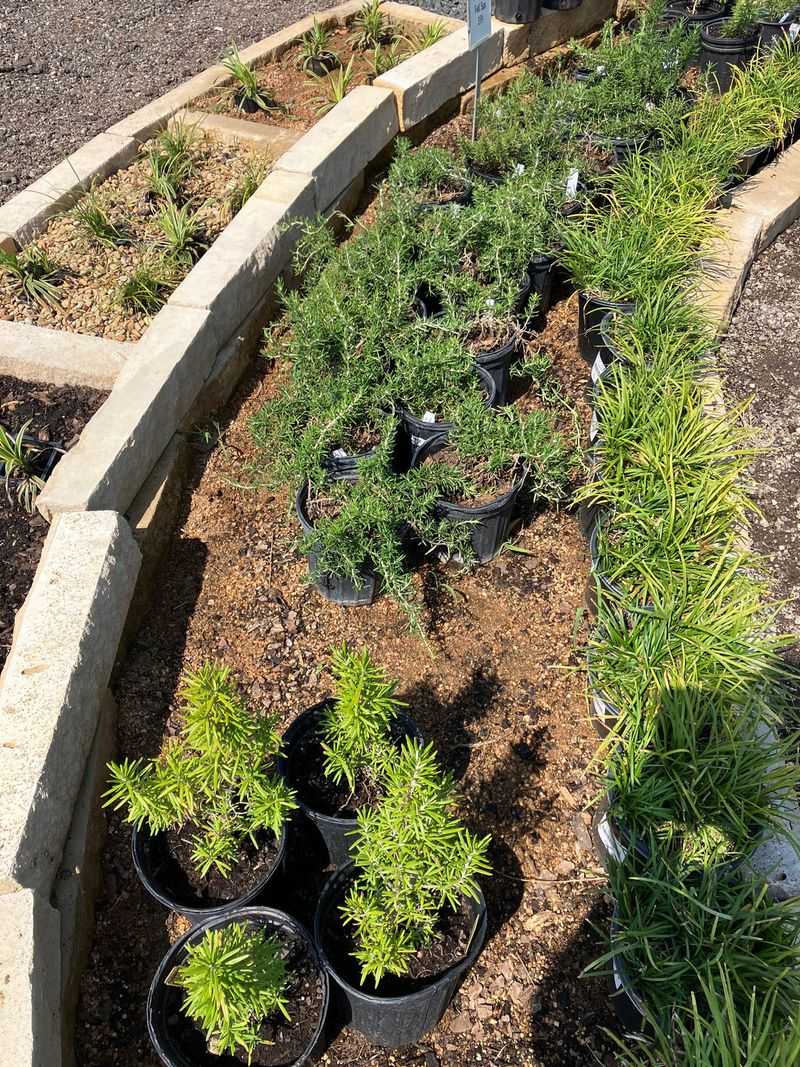
Rosemary earns its place in a Texas yard through practical performance, not pest promises. Getting it to thrive comes down to a few non-negotiable conditions, starting with sunlight.
At least six hours of direct sun per day is the minimum; more is better. Shaded plants tend to grow weakly and are far more prone to root rot and fungal problems.
Drainage is equally critical. Texas A&M’s Easy Gardening guide for rosemary recommends slightly raised or mounded beds in areas where drainage needs improvement.
Rosemary roots sitting in waterlogged soil will rot, often quickly, and no amount of sun will save a plant with wet feet. Sandy or rocky soils that drain fast are close to ideal.
Once established, usually after the first full growing season, rosemary handles Texas heat and dry spells with very little help. Supplemental watering during establishment is important, but mature plants are genuinely drought-resistant and can go extended periods without irrigation, a real advantage under water restrictions.
NC State Extension’s Salvia rosmarinus profile describes the plant as an evergreen shrub that can serve multiple landscape roles: a culinary herb, a container specimen on a patio or porch, a low border along a path, a fragrant hedge, or an edible landscape feature that attracts pollinators. Upright varieties can reach four to six feet tall and wide; prostrate varieties stay lower and work well cascading over walls or raised beds.
One honest caveat applies to parts of the Gulf Coast and other areas with high humidity and poor drainage. Rosemary can struggle in persistently wet, muggy conditions where air circulation is limited, and gardeners in those zones may find it dies back during wet seasons regardless of other care.
Raised beds and good airflow help, but they do not always solve the problem completely. If you are on the Gulf Coast, try a small planting first before committing to a full hedge.
Start with habitat modification and exclusion
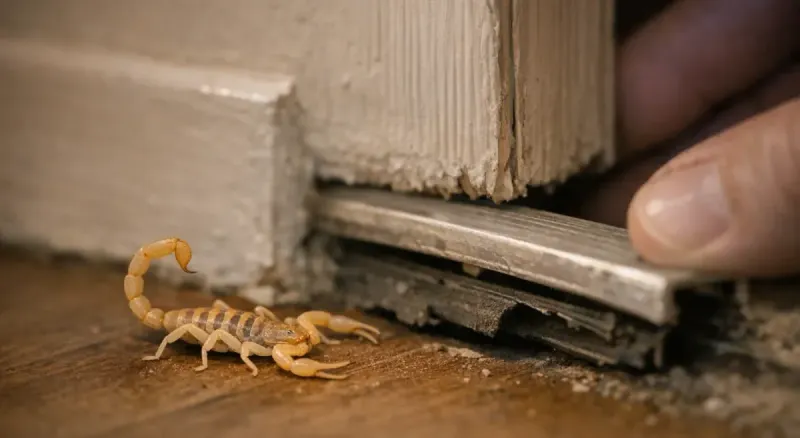
Rosemary may be worth planting, but the most reliable path to fewer scorpion encounters around your home starts somewhere else entirely. Texas A&M recommends modifying the area around your structure before reaching for any repellent or pesticide, and that advice is grounded in how scorpions actually live.
Texas A&M’s scorpion identification and control publication lists the practical steps clearly. Remove trash, boards, bricks, stones, logs, and dead vegetation from the area around your house.
These materials are prime scorpion shelter, and clearing them eliminates the hiding spots that make your yard and perimeter attractive in the first place.
Firewood deserves its own rule: keep it outside and away from the house, and bring it indoors only when it is going directly onto a fire. A woodpile stacked against the house is essentially an invitation.
Texas A&M AgriLife Extension’s scorpion fact sheet confirms that striped bark scorpions are closely associated with exactly these kinds of materials: rocks, boards, debris, dead vegetation, fallen logs, walls, and human dwellings.
Prune shrubs and tree branches so they do not touch or overhang the house. Overhanging branches act as bridges, and dense shrubs against the foundation create sheltered zones right next to your walls.
Keep a clear, dry zone between plantings and the structure itself.
Closing entry points is equally important. Check screens on windows and doors and replace any that do not fit tightly.
Install or repair weather stripping on exterior doors. Seal cracks around eaves, utility pipes, and the foundation using caulk or appropriate sealant.
Scorpions can squeeze through surprisingly small gaps, so a thorough inspection of the exterior is worth the time.
Rosemary fits into this picture as a supplemental addition, not a replacement for any of these steps. A fragrant herb along the border is a nice feature; a sealed foundation and a clear perimeter are what actually reduce the chance of a scorpion walking through your door.
Inspect safely and read every pesticide label
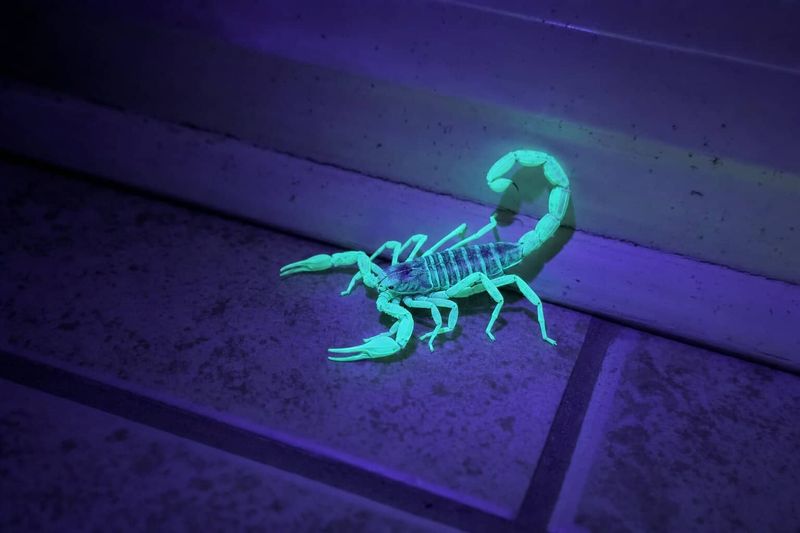
Knowing where scorpions are active in your yard is useful information, and a UV black light makes nighttime inspection much easier. Scorpions fluoresce under ultraviolet light, appearing bright green or yellow against dark surroundings.
Utah State University Extension’s scorpion resource explains that a UV flashlight can help homeowners identify where scorpions are spending time, which helps focus your habitat modification and exclusion efforts on the right areas.
The black light is a scouting tool, not a control method. Finding scorpions with it does not reduce their numbers; it just shows you where to concentrate your other efforts.
Walk the perimeter of your home after dark, check around woodpiles, rock features, potted plants, and the base of walls, and note the hot spots.
Whenever you move firewood, rocks, boards, or any debris that might shelter a scorpion, wear gloves and protective footwear. Do not reach into spaces you cannot see clearly.
Scorpions are nocturnal and most active in warm months, but they can be present under cover at any time.
On the question of pesticides, the distinction between products matters. Texas A&M’s scorpion control publication notes that some labeled scorpion-control products contain rosemary oil as an active ingredient, but also notes that naturally derived ingredients tend to degrade more quickly and may provide only limited residual control.
Those are formulated, tested, and labeled products, not the same thing as a bottle of essential oil from a grocery store or a live plant in the garden. Ordinary essential oils are not interchangeable with labeled pesticide products.
EPA guidance on reading pesticide labels is clear: use only products labeled for the intended site and pest, follow dosage and application directions exactly, and keep children and pets away from treated areas as the label directs. EPA’s tips for protecting children from pesticides add that storage, disposal, and application timing all matter for household safety.
Never apply undiluted essential oil to soil, foundations, porches, or plants based on general advice; only follow a product label that specifically authorizes that use.
Grow rosemary for the landscape, not as a guarantee
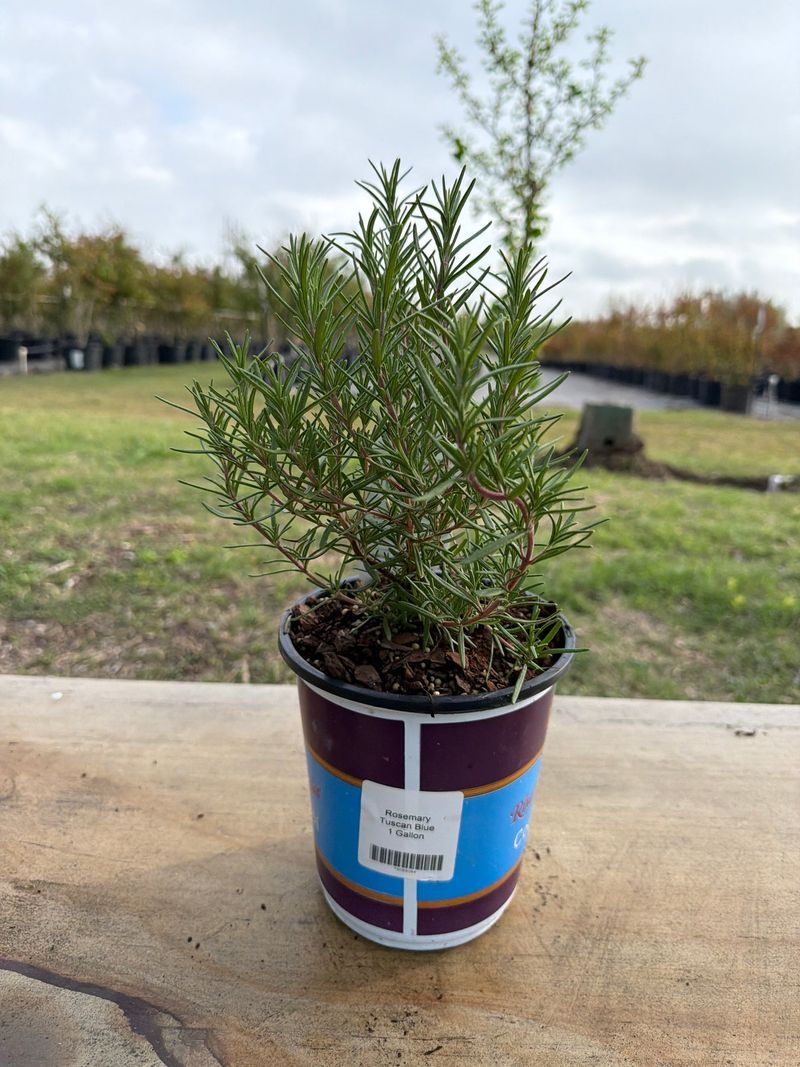
A practical decision rule helps here. Plant rosemary where the sunlight is strong, the soil drains well, and the heat tolerance fits your conditions.
Regard any scorpion-deterrent effect from a live plant as a possibility the lab evidence hints at but has not confirmed in a real yard. That framing lets you enjoy the plant for what it reliably delivers, without expecting it to solve a problem it has not been proven to address.
The better-supported defense starts at the house itself. Removing shelter, sealing entry points, and keeping a clear perimeter around your foundation are the steps Texas A&M recommends first, and they hold up under scrutiny in a way that a planting strategy has not yet been tested to do.
Rosemary in the border is a reasonable addition to that foundation, not a substitute for it.
One broader perspective is worth keeping. Utah State University Extension notes that scorpions are predators of other arthropods and carry genuine ecological value in the landscape.
The realistic goal for most homeowners is reducing encounters near the house and in high-contact areas, not eliminating scorpions from an entire yard.
Scorpion stings are usually painful but manageable for most people. Seek medical attention promptly if a sting is followed by difficulty breathing, persistent or spreading swelling, or any other serious symptoms, because individual reactions vary and allergic responses are possible.
A yard with rosemary growing in it, cracks sealed, and debris cleared is a yard where a scorpion encounter becomes less likely near the house. That is the honest, achievable version of the promise.