
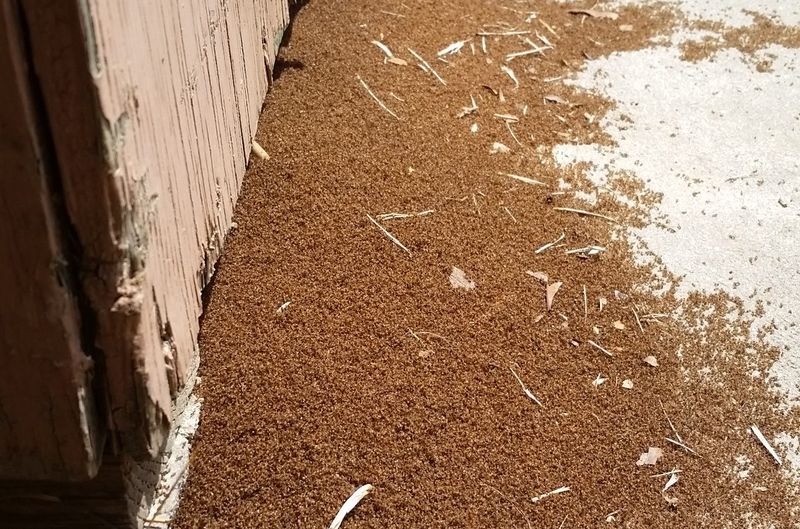
A small reddish-brown ant has been turning up in Texas yards and homes in numbers that can seem impossible to believe, and it is not the fire ant most Texans already dread. The tawny crazy ant, known scientifically as Nylanderia fulva, has established colonies across Gulf Coast areas and parts of central Texas, creating infestations so dense that homeowners often describe them as a living carpet.
Understanding what makes this insect so hard to stop, and what you can actually do about it, could save your yard, your electrical equipment, and your neighbors a serious headache.
Meet the tawny crazy ant behind the Texas alarm
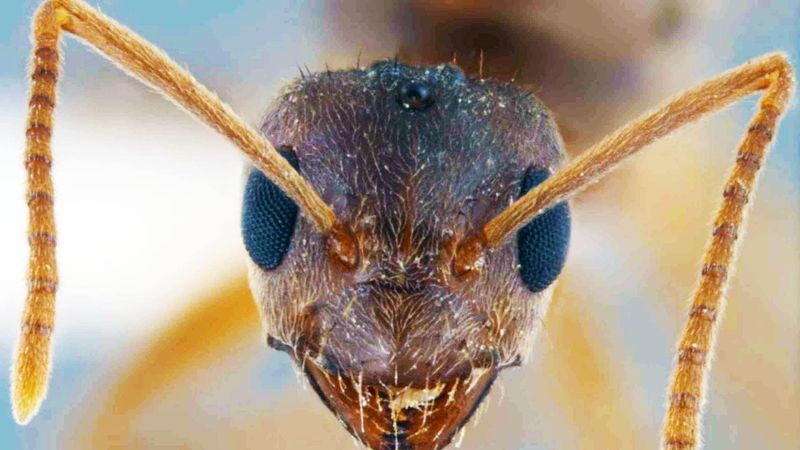
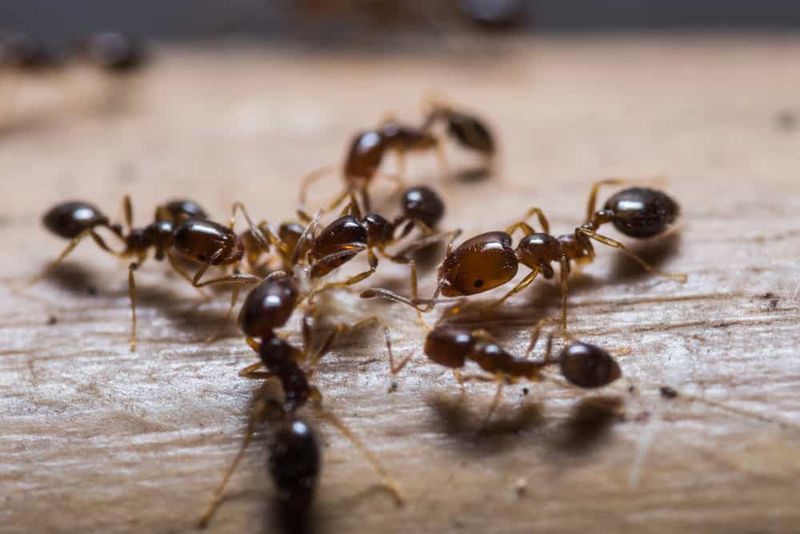
Nylanderia fulva, commonly called the tawny crazy ant, is a small reddish-brown insect usually measuring less than one-eighth of an inch long. What sets it apart visually is a combination of notably long legs, long antennae, and a coat of fine hairs that give the body a slightly fuzzy appearance under a magnifying glass.
Move your eyes to its behavior, and the picture becomes even clearer: rather than marching in a straight, disciplined line like many household ants, tawny crazy ants sprint in rapid, erratic bursts that look genuinely chaotic from above.
Unlike red imported fire ants, which announce their presence with the conspicuous raised mounds that Texas homeowners have learned to sidestep, tawny crazy ants rarely build anything that obvious. Colonies hide in moist, ground-level spots such as leaf litter, mulch, compost piles, rotting wood, rocks, and the root zones of potted plants.
That low profile makes them easy to miss until the population has already grown very large.
The colony scale is where the real alarm starts. Texas A&M’s Urban Entomology program notes that tawny crazy ant infestations can involve millions of individual ants and multiple egg-laying queens, which is a very different situation from a single-queen fire-ant mound.
Dense trails climb fences, trees, exterior walls, and eventually enter homes through gaps around pipes, doors, and windows.
Once inside a structure, the ants investigate electrical equipment, utility boxes, and wall voids with the same intensity they show in the yard. Texas Parks and Wildlife reports that large numbers can short-circuit electrical components, a problem that goes well beyond ordinary household nuisance.
For Texas homeowners near the Gulf Coast or in central Texas areas where infestations are confirmed, recognizing this ant early is the first practical step toward limiting the damage.
Rapid-looking spread comes from transport and local density, not a statewide natural race
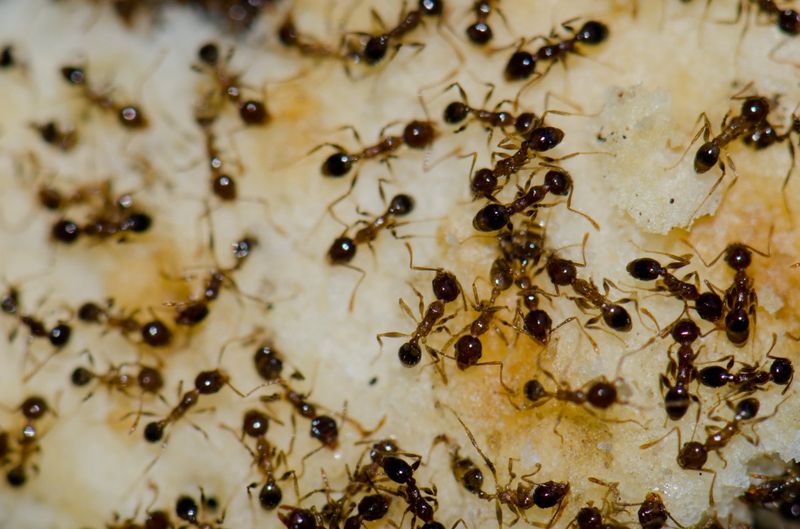
Headlines about tawny crazy ants “spreading faster than fire ants” deserve a closer look, because the comparison depends entirely on what kind of spreading you mean. Over open land, tawny crazy ants actually move relatively slowly.
They lack the winged reproductive flights that let fire ant queens cover long distances on their own, so natural ground movement alone does not explain how colonies have appeared in widely separated Texas communities.
The real engine behind sudden new infestations is human transport. Texas A&M entomologists point to infested mulch, potted plants, compost, soil, hay, yard debris, trash, and even vehicles and equipment as the primary vehicles for long-distance jumps.
A single load of mulch from an infested property can deposit thousands of workers and multiple queens at a new address miles away, and the new colony can be well established before anyone notices.
Once a colony is in place, the local expansion can look astonishing. A Galveston County Master Gardener newsletter describing early Gulf Coast infestations captured how colonies that started at a single entry point fanned out across entire neighborhoods within a few seasons, creating the impression of a rapid statewide takeover when the reality was explosive local growth from transported founders.
The geographic picture matters for context. Texas Parks and Wildlife reports that tawny crazy ants have been positively identified in more than 27 Texas counties as of its current published guidance, with the heaviest concentrations along the Gulf Coast and in parts of central Texas.
Fire ants, by contrast, remain under quarantine in 189 Texas counties according to the Texas Department of Agriculture, meaning they are far more uniformly distributed across the state. Calling tawny crazy ants a statewide replacement for fire ants overstates the situation; calling them a severe local problem in confirmed infestation zones is entirely accurate.
Multi-queen colonies can overwhelm an infested yard
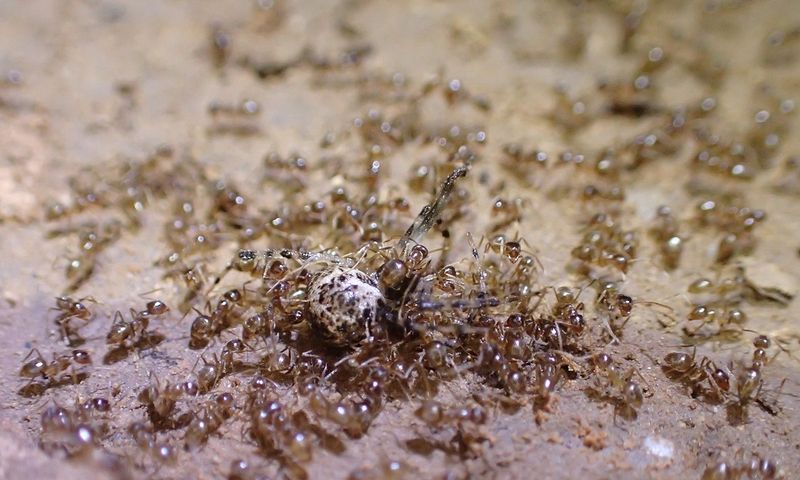
Part of what makes an established tawny crazy ant infestation feel unmanageable is the structure of the colony itself. Red imported fire ant colonies typically have one queen or a limited number, which constrains how fast the population can grow.
Tawny crazy ant colonies operate with multiple queens cooperating across a broad area, meaning the reproductive engine behind the infestation is distributed and harder to shut down with a single targeted treatment.
UF/IFAS integrated pest management guidance for Nylanderia fulva describes infestations that can reach extraordinary densities, with workers covering the ground, climbing structures, and moving through cracks in numbers that homeowners often compare to a flood rather than a pest problem. The ants favor moist, sheltered ground-level habitat, which means a yard with leaf litter, thick mulch, compost, or standing moisture is an especially welcoming environment.
Their success against fire ants comes down to a chemical advantage. University of Texas field station researchers found that tawny crazy ants produce and apply a formic-acid-based secretion that neutralizes fire-ant venom during direct encounters, giving them a survival edge in territory that would otherwise be defended aggressively by fire ants.
This biochemical edge helps explain how dense crazy-ant populations can push into fire-ant territory and hold it.
University of Texas researchers have documented local fire-ant displacement in heavily infested areas along the Texas Gulf Coast, including cases where crazy ants took over fire-ant mounds and monopolized food resources. That displacement is real and measurable in dense infestation zones, but fire ants remain widespread across Texas as a whole, so the picture is one of local replacement rather than a statewide shift.
Researchers have also associated heavy infestations with reduced native ant diversity and lower arthropod abundance in invaded areas, though the full ecological consequences across different Texas habitats are still being studied.
Use movement, habitat, and body features as clues—not proof of identification
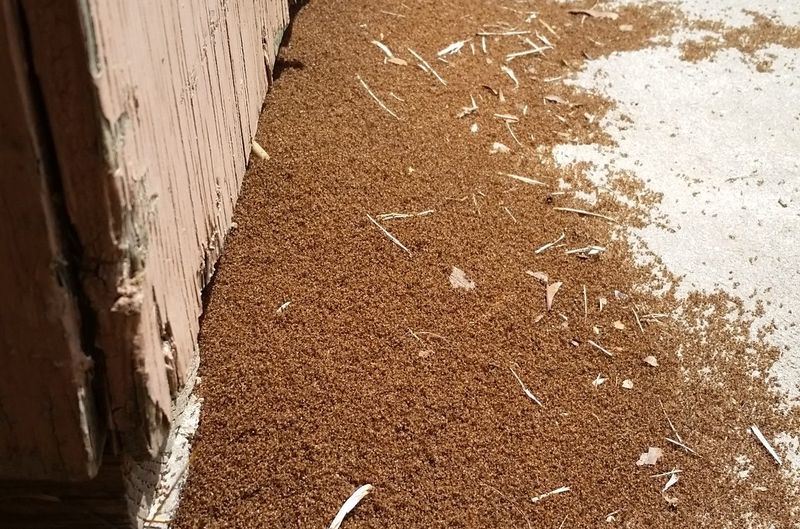
Spotting something that looks like a tawny crazy ant in your yard is a reason to pay attention, but field observation alone cannot confirm the species. Several ants share a reddish-brown color or move in dense trails, so treating without a confirmed identification risks wasting money and applying pesticides that will not help.
A practical approach starts with building a mental checklist of clues and then seeking qualified confirmation before taking further action.
The movement pattern is often the first thing homeowners notice. Rather than following a tight, orderly column, tawny crazy ants move in wide, chaotic-looking streams that seem to cover surfaces in every direction at once.
UF/IFAS pest management guidance describes trails climbing trees, fences, exterior walls, and the sides of buildings, with the ants entering homes through any available gap around pipes, doors, or window frames.
Habitat clues matter just as much as movement. Look for activity concentrated in leaf litter, thick mulch, compost bins, stacked rocks, fallen branches, trash piles, and the soil around potted plants.
Texas Parks and Wildlife notes that activity generally increases during warm weather and tends to be most noticeable in summer, although the ants may slow down or seek shade during the hottest part of the afternoon. Piles of dead ants accumulating near treated surfaces, utility boxes, or electrical equipment are another indicator worth photographing.
A reduction in fire-ant activity in an area where you previously saw mounds is a useful contextual clue, not a standalone diagnosis. Texas A&M’s entomology program recommends photographing the ants clearly, including close-up shots that capture leg length and body color, then contacting a county Texas A&M AgriLife Extension office or a licensed pest professional for a qualified identification before purchasing or applying any treatment product.
Contain a suspected infestation before it reaches another property
Getting a photo and a confirmed identification are the right first steps, but there is one action that should happen at the same time: stop moving anything from the suspected area to another location. Human transport is the primary way tawny crazy ants establish new infestations far from existing ones, and a well-meaning trip to drop off extra mulch or a potted plant at a friend’s house can seed a colony miles away before either of you realizes what happened.
Texas A&M’s tawny crazy ant guidance specifically identifies mulch, compost, potted plants, soil, yard debris, hay, firewood, camping equipment, and vehicles as high-risk transport items. The ants nest in or travel through all of these materials, and a colony fragment with even a few queens can survive the move and rebuild at the new site.
Inspect any item carefully before loading it, and when in doubt, leave it in place until you have a confirmed identification and professional advice.
Contacting your county Texas A&M AgriLife Extension office is the recommended next call. AgriLife Extension’s tawny crazy ant resources can connect you with local experts who handle identification requests regularly and can advise on whether your situation warrants professional pest-control involvement.
They can also tell you whether neighboring properties or community areas may already be infested, which affects how any management program should be structured.
Letting neighbors know about a suspected infestation is not an overreaction. Because tawny crazy ant colonies spread across property lines and can cover large areas, a treatment that addresses only one yard while surrounding properties remain untreated is often temporary at best.
Early communication with neighbors and local extension offices gives everyone a better chance of slowing the infestation before it becomes a neighborhood-wide problem.
Remove moisture, shelter, and food sources without expecting a cure
Yard modifications will not eliminate a sprawling, multi-queen colony on their own, but they can make a property meaningfully less hospitable and support whatever professional management follows. The starting point is harborage reduction.
Leaf piles, fallen limbs, stacked rocks, excess mulch, and loose trash all provide the moist, sheltered ground-level habitat that tawny crazy ants prefer. Clearing these materials away from the foundation and from dense planting beds removes hiding places and can slow colony expansion near structures.
Moisture control is equally practical. Texas A&M’s program guidance advises repairing outdoor leaks, improving drainage in low-lying areas, and pulling back on irrigation schedules where the soil stays unnecessarily wet.
In Texas summers, it can feel counterintuitive to water less, but tawny crazy ants thrive in humid conditions, and reducing standing moisture around the foundation and garden beds takes away one of their key attractants.
Food sources around structures deserve attention too. UF/IFAS management guidance notes that tawny crazy ants are drawn to sweet liquids, exposed garbage, and the honeydew produced by soft-scale insects, aphids, and whiteflies on ornamental plants.
Keeping garbage in sealed containers, cleaning up spilled drinks outdoors, and managing honeydew-producing pest insects on shrubs and trees can reduce the food signals that draw foraging workers toward your home.
None of these steps will clear an established infestation by themselves. Think of them as reducing the conditions that allow the colony to thrive at the edges and inside structures, which makes any subsequent professional treatment more effective and longer-lasting.
They are preparation and ongoing maintenance, not a replacement for integrated management of the full infestation.
Manage the entire infestation, not just the visible trail
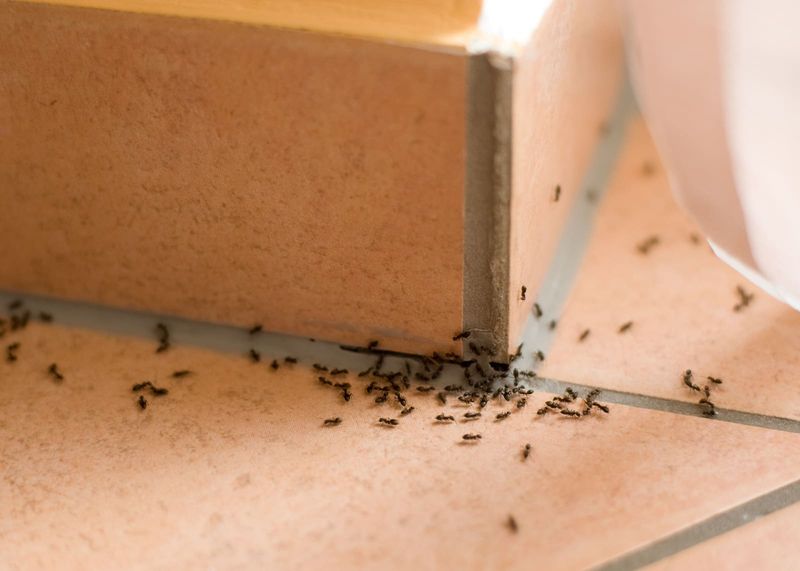
Spraying the line of ants you can see marching up your back fence is a natural impulse, but with tawny crazy ants it addresses a symptom rather than the problem. The colony generating that trail may extend across your entire yard, into neighboring properties, and through wall voids or utility infrastructure you cannot see from the outside.
Treating one surface or one trail typically provides only brief suppression before workers from the broader infestation refill the gap.
UF/IFAS research on tawny crazy ant management found that a single insecticide application under tested conditions may provide as little as a few days of meaningful control. Texas A&M similarly describes exterior perimeter barriers as temporary, with reinvasion likely when the surrounding infestation remains active.
These findings point toward integrated management of the entire infestation rather than repeated spot treatments.
Texas A&M’s entomology program advises homeowners with suspected established infestations to work with a licensed pest-control provider, because the products and application strategies that work best against tawny crazy ants may not be available for consumer purchase and require professional knowledge to apply correctly. If the infestation crosses property lines, effective management may need to involve neighboring properties or coordination with a local extension office to address the broader colony area.
A note on product selection: tawny crazy ants are not attracted to most fire-ant baits, so products marketed for fire-ant control are generally not an appropriate substitution. Any pesticide used must be registered for the intended site and applied strictly according to its label.
Special care is required around vegetable gardens, edible crops, water features, pet areas, children’s play spaces, and outdoor electrical equipment, all of which can be affected by pesticide misuse. Texas A&M’s fire ant site-management guidance reinforces the importance of matching products to the specific pest and site conditions rather than defaulting to whatever is on the shelf.
Avoid improvised treatments such as boiling water, bleach, or gasoline poured on the colony; these methods can injure people, damage soil and plants, and do nothing to address a multi-queen infestation spread across a wide area.
Take the local threat seriously without calling it a statewide takeover

Tawny crazy ants are not marching naturally across Texas at a pace that outstrips fire ants, and they have not replaced fire ants statewide. What they have done is establish severe, hard-to-control infestations in Gulf Coast areas and parts of central Texas, and they can hitchhike to entirely new communities in a single truck bed of mulch.
Texas Parks and Wildlife confirms positive identifications in more than 27 counties as of its current guidance, a number that deserves attention even if it is far from a statewide uniform presence.
Three actions remain worth repeating in plain terms: confirm the species before treating, stop moving potentially infested materials to other properties, and bring in qualified professional help for any established colony rather than relying on a single spray or a product designed for a different ant. Texas A&M and UF/IFAS both reinforce that integrated management of the full infestation, not just the visible portion, gives homeowners the best realistic outcome.
Unlike fire ants, tawny crazy ants do not sting, which can make them seem less urgent at first contact. Their density, persistence, electrical-equipment risks, nuisance scale, and documented effects on native arthropod communities tell a different story.
A yard with millions of erratically moving ants covering every surface is a problem worth reporting, identifying, and addressing seriously, even if the threat looks different from the mound-and-sting alarm Texans already know.