
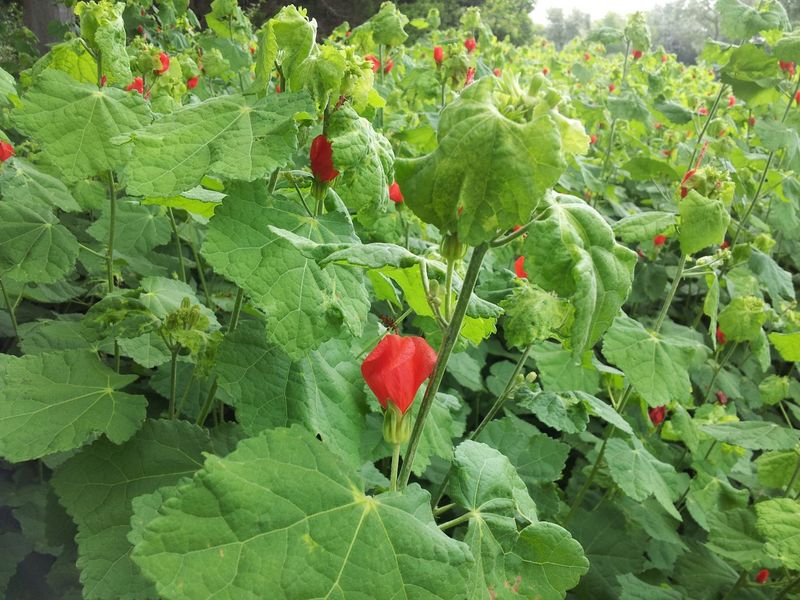
Every Texas gardener knows the disappointment of watching hostas melt in the summer heat, turning yellow and crispy when the triple-digit days arrive. The problem is not always the gardener’s fault – it is often a mismatch between what hostas need and what most Texas shade beds actually provide. A Texas-native plant called Turk’s cap, known botanically as Malvaviscus arboreus var. drummondii, handles many of those same hot, dry, partially shaded spots with far less drama. Understanding where it fits, and where it does not, can save you a lot of wasted effort and dead plants.
Why hostas can struggle in some Texas shade
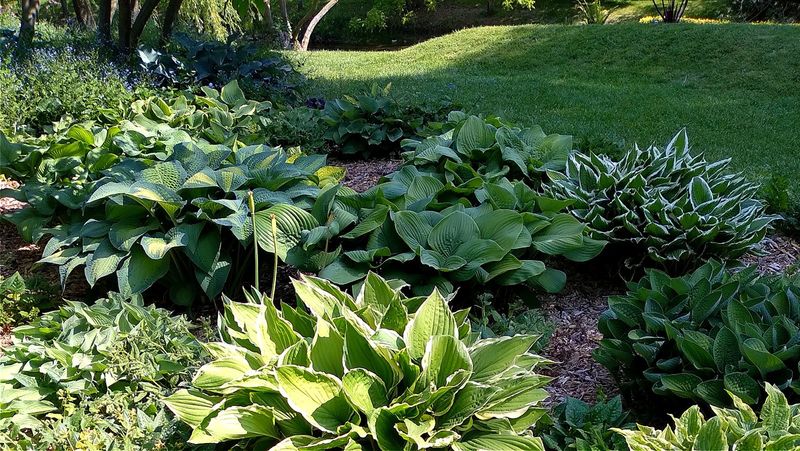
Hostas have a devoted following in cooler, moister parts of the country, and it is easy to see why – they offer bold foliage, low maintenance, and a tidy look in shaded beds. The trouble in Texas is that the conditions hostas prefer and the conditions most Texas shade beds provide are often two different things. McLennan County Master Gardener guidance confirms that hostas can grow in Central Texas but typically need deep shade, organic-rich soil, and consistent moisture, and that prolonged heat and drought can cause significant decline.
Not all Texas shade is created equal. The filtered light under a tall pecan tree is different from the dense, dry shade beneath a low-spreading live oak, which is different again from the bright reflected shade beside a white stucco wall. Hostas tend to perform best in the cooler, more protected version – the kind of shade that also comes with reasonably moist soil and some humidity buffering. Dense dry shade beneath mature trees often means heavy root competition and moisture-robbing conditions that stress hostas even when sunlight is not the problem.
Texas A&M guidance on shade planting recommends observing how shade shifts across the day and across seasons before selecting plants, because what looks like deep shade in June may be full morning sun in March. Hostas are not impossible in Texas – a protected north-facing bed with amended soil and reliable irrigation can keep them alive and even attractive. The problem is that many Texas yards do not naturally offer those conditions, and maintaining them through a prolonged drought or a string of 105-degree days takes real effort. That mismatch is what opens the door for a Texas-native alternative that is built for the heat.
Why Turk’s cap deserves consideration
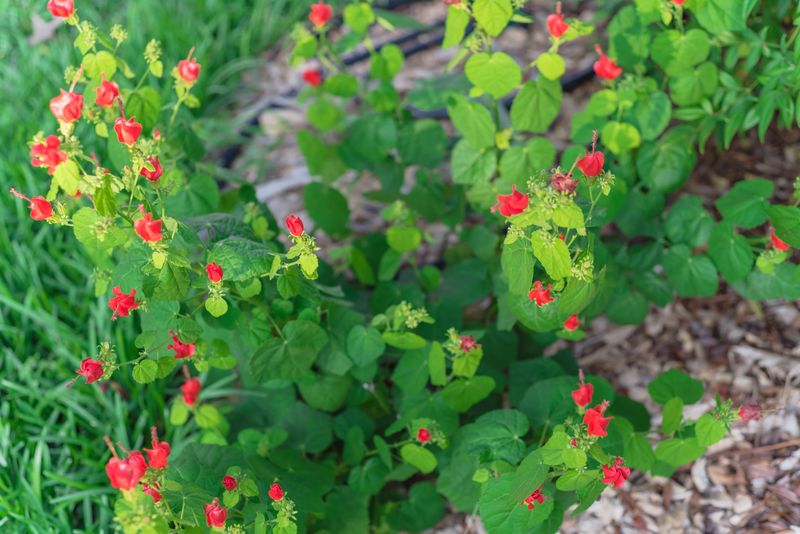
Malvaviscus arboreus var. drummondii – sold commonly as Turk’s cap – is a Texas native that has been doing just fine in this climate long before anyone tried growing hostas here. The Texas Tech University Plant Resources database identifies it as a native plant suited to partial shade with drought tolerance, calling it one of the few native plants that can genuinely withstand shade. Its native status means it is already calibrated to Texas soils, Texas heat cycles, and Texas rainfall patterns – not engineered to tolerate them, but actually shaped by them over generations.
The plant is a shrub-like perennial, not a clumping foliage plant, so readers expecting a hosta look-alike will need to reset expectations. Turk’s cap brings flowers, wildlife value, and Texas-adapted toughness rather than the layered, textured foliage that makes hostas appealing as ground cover. The City of Austin’s plant guide lists it for sun or part shade with low water needs, noting a height range of two to six feet and a spread of three to five feet – substantial enough that it functions more like a background or mid-border shrub than a foreground accent.
Texas Tech gives a somewhat more compact estimate of 2.5 to 3.5 feet tall and three to five feet wide, but published figures vary by region, soil quality, and how much light the plant receives. The practical takeaway is to plan for a plant that will fill real space. Give it room at planting rather than expecting it to stay hosta-sized, and think of it as anchoring a bed rather than edging one. For many Texas gardeners dealing with hot, dry, partially shaded spots where hostas have repeatedly disappointed, that is exactly the kind of reliable, climate-matched plant worth trying.
Choose shade that still provides useful light
Shade tolerance is not the same as shade preference, and that distinction matters when you are deciding where to put Turk’s cap. Both Texas Tech and the City of Austin list the plant for partial shade or sun and part shade – not for the darkest corner of the yard. A University of California Cooperative Extension profile notes that Turk’s cap may produce more flowers with increased light, while foliage can suffer in full, intense sun – which points to morning sun with afternoon shade as a particularly useful arrangement when flower production matters to you.
The Texas Tech plant database lists partial shade as the target condition, and field experience in Texas backs that up – plants sited under filtered light from high tree canopies tend to bloom more reliably than those tucked into dense, low-canopy shade. Expecting heavy flowering in the darkest corner of the yard is setting yourself up for disappointment, even with a shade-tolerant native.
Before you dig, Texas A&M recommends tracking how light moves through a site across different times of day and different seasons. A spot that sits in shade all afternoon in July might get three hours of direct morning sun in April, and that seasonal variation changes what a plant experiences over a full year. Spend a few days watching the bed before committing – note when direct sun hits, how long filtered light lasts, and whether the area is shaded by buildings (which block light but also trap heat) or by tree canopy (which filters light and moderates temperature). That observation will tell you more about whether Turk’s cap will thrive and flower than any general shade category alone.
Water deeply while the roots establish
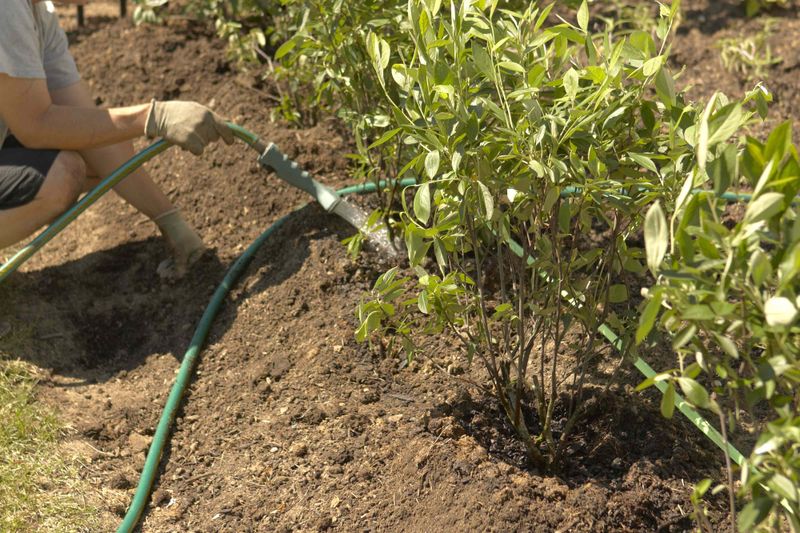
Drought tolerance is a quality Turk’s cap earns after it has settled into the ground – not on day one. Texas A&M AgriLife guidance on water use makes clear that even native plants need increased irrigation during establishment, a process that can take one to three years depending on soil conditions, rainfall, and summer heat. Skipping regular watering in year one because the plant is native is one of the most common reasons newly planted Turk’s cap fails to take hold.
The right watering approach is to wet the root zone thoroughly, then allow the soil to dry somewhat before watering again. Texas A&M Earth-Kind guidance describes this cycle as thorough saturation followed by allowing plants to use much of the available soil moisture before the next irrigation – a method that encourages roots to grow deeper rather than staying near the surface where they are vulnerable to heat and dry spells. Shallow, frequent watering produces shallow roots, which is the opposite of what you want going into a Texas summer.
Mulch is your best tool for stretching the time between waterings. A two-to-four-inch layer of organic mulch over the root zone slows evaporation, moderates soil temperature, and keeps the soil from baking hard between rain events. Texas A&M materials consistently recommend mulch as a practical way to support plants through heat and drought. One firm rule: keep mulch pulled a few inches away from the plant’s stem.
Piling it against the base traps moisture against the wood and can invite rot or pest problems. Adjust your watering frequency based on your specific region – a plant in humid East Texas will need far less supplemental water than the same plant in a dry Central Texas summer, and a plant in a container needs more frequent attention than one in the ground regardless of its native status.
Expect flowers, wildlife, and a different look from hostas
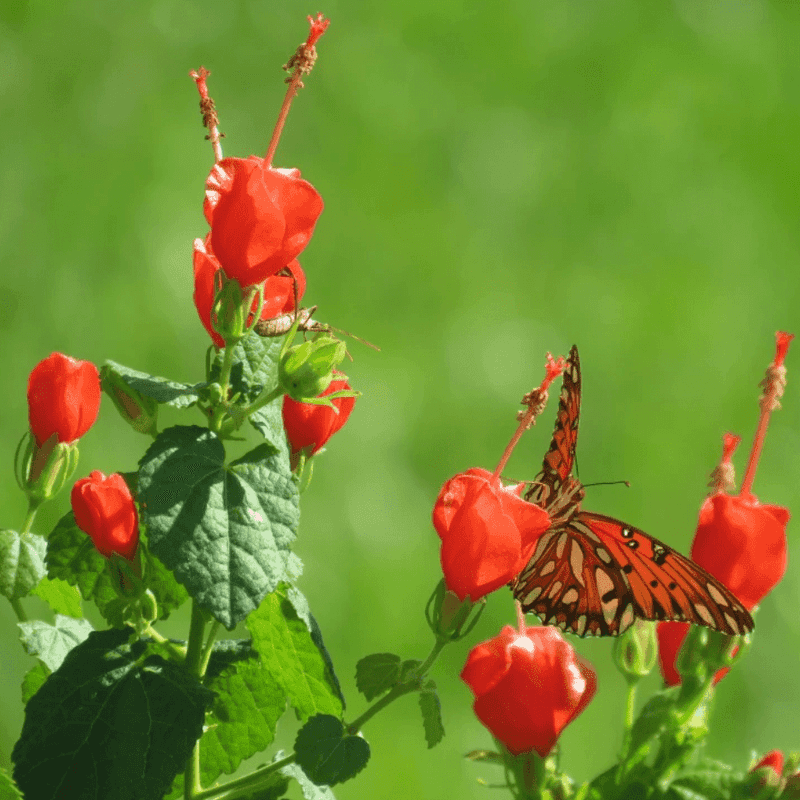
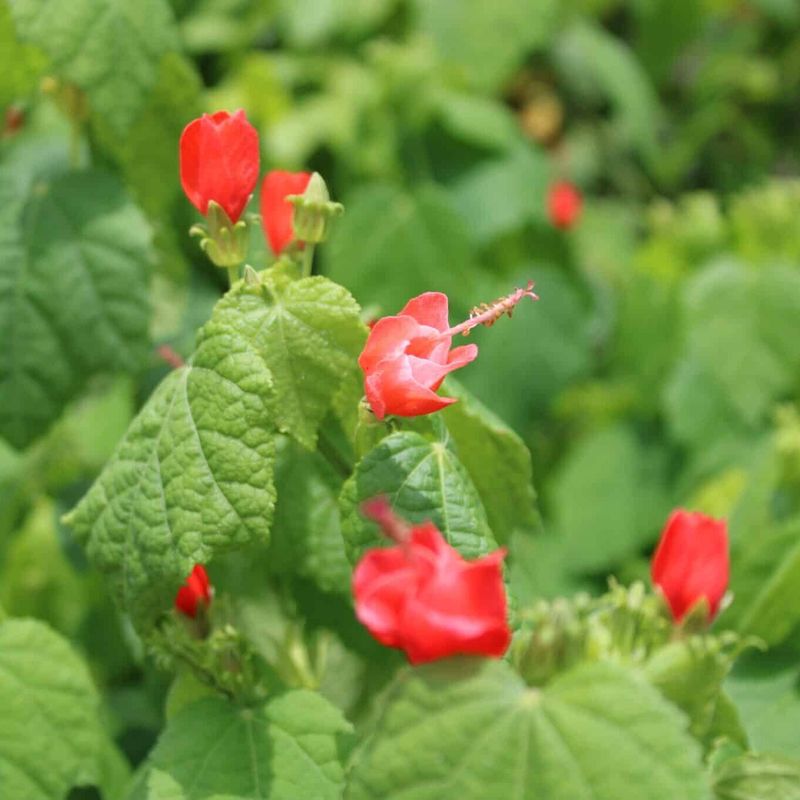
The flowers on Turk’s cap are genuinely distinctive – red, tightly twisted blooms that look like a hibiscus that never fully opened, which is exactly what they are. The plant belongs to the mallow family, and its flowers stay spiraled rather than flaring open, giving them a lantern-like appearance. The Native Plant Society of Texas describes a bloom period that commonly runs from summer into fall, though timing varies by region – Gulf Coast plants may begin earlier, while those in drier or cooler parts of the state may have a shorter window. More light generally means more flowers, so a plant in bright filtered shade will typically outperform one in a darker location.
The wildlife value is real and observable. Texas Tech lists hummingbirds and butterflies as documented visitors, and the City of Austin’s plant guide confirms both. The tubular, nectar-rich flowers are shaped well for hummingbird feeding, and the plant’s long bloom season means it can serve as a reliable food source through late summer when many other plants have finished.
The design shift is worth acknowledging plainly. Hostas anchor a bed with bold, layered foliage and a tidy mounding form. Turk’s cap offers an upright, somewhat open shrub form with seasonal flowers and wildlife activity. These are different visual experiences, and neither one is wrong – they just serve different design goals.
Gardeners who want the quiet, textural calm of hosta foliage will need to make peace with a different aesthetic. Those who want movement, color, and the occasional hummingbird hovering at eye level will find Turk’s cap a more rewarding trade.
Leave room for spread and seasonal pruning
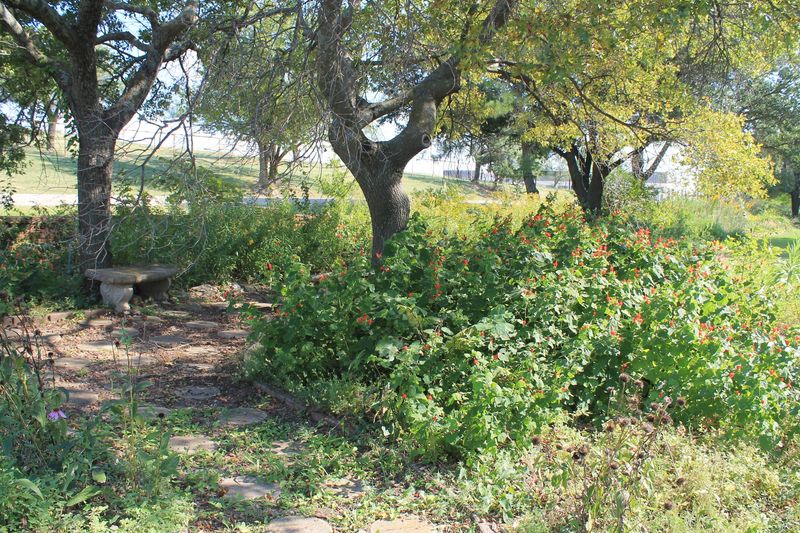
Turk’s cap is a vigorous plant, and vigorous plants need management. The City of Austin’s guide specifically warns that the plant can form expanding colonies and recommends pruning to contain it or improve its shape. Texas Tech also flags the potential for weedy spread. Neither source calls it invasive, but both make clear that this is not a plant you install and then ignore for years without consequences.
At planting, give it the full spread it is likely to reach – three to five feet wide, with some specimens pushing wider in good conditions. Crowding it against a wall or a fence line on both sides leaves no room for the natural expansion it will attempt. Check the edges of the planting once or twice a year and remove stems or root shoots that have moved beyond where you want the plant to be. This kind of light management is straightforward and does not require special tools or expertise – a pair of sharp bypass pruners handles most of it.
Winter brings its own pruning moment in some parts of Texas. Texas Tech notes that Turk’s cap may die back to the ground after a hard freeze, and Austin’s guide recommends cutting back damaged top growth after a freeze event. In mild winters along the Gulf Coast, the plant may stay semi-evergreen. In colder parts of Central Texas or farther north, expect a more dramatic dieback and a later spring return.
Either way, the roots typically survive and resprout when conditions warm. The trade-off for this manageable maintenance is a native plant that genuinely earns its keep through the hardest months of the Texas summer.
Match the plant to your Texas region and site
Texas covers an enormous range of climates, and a recommendation that works well in Houston can fall flat in Amarillo. Humid East Texas and the Gulf Coast generally give Turk’s cap the moisture and mild winters it handles best, and plants there often grow vigorously with minimal supplemental water after establishment. Central Texas sits in a middle zone – warm enough to support the plant well, but dry enough that establishment watering matters more and summer heat can be intense. The Texas A&M Earth-Kind Plant Selector is a useful tool for checking which plants are well-documented for your specific county and growing conditions before you buy.
West Texas and the Panhandle present harder conditions. Colder winters, lower humidity, and more alkaline soils can push Turk’s cap closer to its limits, and establishment watering becomes even more critical in those regions. Exposed urban sites with heat-radiating pavement, reflected light from buildings, or compacted clay soils add their own complications regardless of what the regional climate looks like on paper. Texas A&M’s shade replacement guidance emphasizes assessing the actual site conditions – soil drainage, moisture retention, root competition, and reflected heat – rather than relying solely on regional generalizations.
For beds where shade is genuinely deep and the goal is foliage texture rather than flowers, inland sea oats (Chasmanthium latifolium) is worth considering alongside or instead of Turk’s cap. Texas Tech describes inland sea oats as shade tolerant, low-water, and highly heat tolerant, with attractive seed heads that provide seasonal interest. It will not bring hummingbirds or summer flowers, but it handles dense shade more reliably than Turk’s cap and fills a different design role. Knowing which problem you are solving – too much shade, too little moisture, or too much heat – helps you choose the right plant rather than defaulting to whatever is available at the nursery that week.
Use Turk’s cap when the site matches its strengths
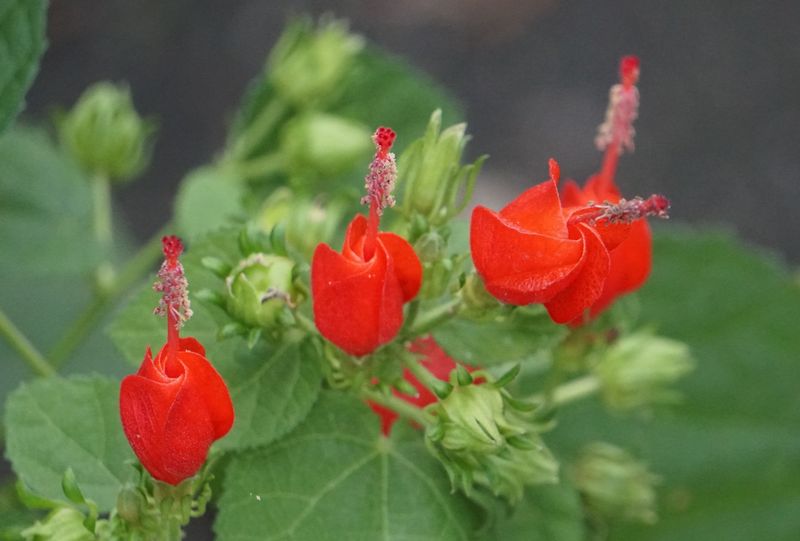
Turk’s cap earns its place in Texas gardens when the site lines up with what the plant actually does well. Partial or filtered shade, enough room for a plant that will spread three to five feet wide, and the commitment to water deeply through the first one to three growing seasons are the three basic requirements. Texas Tech’s plant profile and the City of Austin’s guide both confirm that those conditions produce a reliable, long-blooming native that attracts hummingbirds and butterflies through the hardest part of the Texas summer.
When those conditions are not present – when shade is too dense, space is too tight, or establishment watering is not realistic – a different plant will serve better. The species or cultivar you buy matters too: look specifically for Malvaviscus arboreus var. drummondii rather than assuming every plant sold as Turk’s cap is the same Texas native. Ask at the nursery, and confirm the label matches the botanical name.
Observe the shade, prepare the root zone with good drainage, water deeply during establishment following Earth-Kind watering principles, and manage the plant’s spread with light annual pruning. A Texas native that feeds hummingbirds in August while your neighbors’ hostas are wilting is a fair trade for a little extra space and a few seasons of patience.