
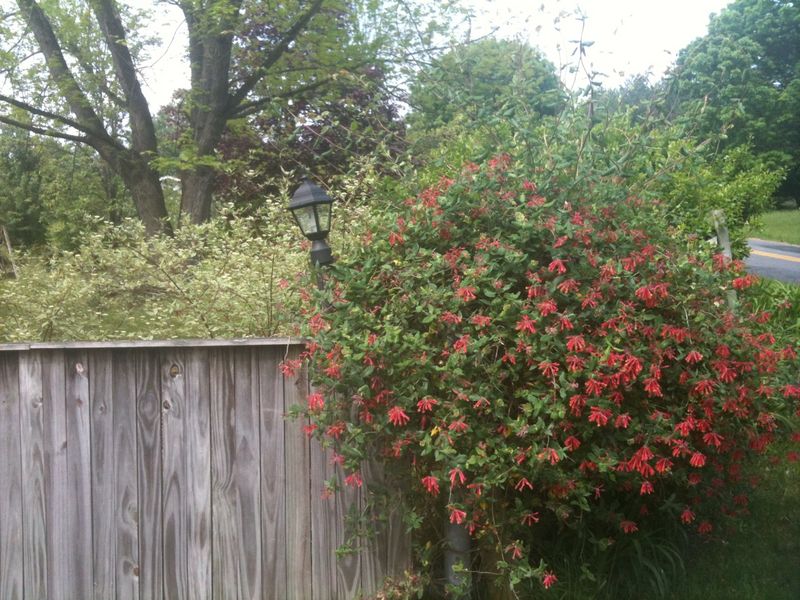
Summer evenings in Central Texas used to mean watching fireflies blink across the backyard, but many neighborhoods have lost that quiet light show over the years. Planting the right vine along your fence can help rebuild the layered habitat that fireflies need, though no single plant works like a switch you can flip.
Coral honeysuckle, Lonicera sempervirens, is one piece of that puzzle, and understanding what it can and cannot do is the first step toward getting results.
A fence line can become part of a firefly habitat
Fireflies do not respond to a single plant the way a hummingbird zeroes in on a red flower. What draws them, and keeps them, is a combination of conditions working together: undisturbed soil, some leaf litter, moisture, vegetation at more than one height, genuine darkness after sunset, and limited pesticide exposure.
A fence-line vine can contribute to that mix by adding vertical structure and leafy cover, but the vine alone is not doing the heavy lifting.
Central Texas has at least two firefly situations worth knowing about before you start planting. UT Austin’s backyard biodiversity guide notes that Eastern fireflies are common in some Austin neighborhoods, with large flights typically running from April through June.
Those are the species most likely to show up in a well-managed suburban yard. A second species, Photinus texanus, is a different story.
Firefly Conservation and Research’s Texas field guide places Photinus texanus primarily in riparian corridors, along creeks, rivers, and ephemeral streams, where moisture stays more reliable. That species is rarely seen far from those wet-edge habitats, so a dry, exposed backyard fence in a developed neighborhood is unlikely to host it regardless of what grows there.
Knowing which firefly you are trying to support shapes every decision that follows.
University of New Hampshire Extension’s firefly support guide frames the habitat goal clearly: leaf litter, low vegetation, perches, no chemical pesticides, and reduced outdoor lighting all matter as a package. A fence line that gains a vine but loses its leaf litter, gets sprayed for mosquitoes, and stays lit all night is unlikely to show improvement.
The vine earns its place by helping create structure, not by replacing everything else the habitat needs.
Coral honeysuckle can add structure where it fits the region
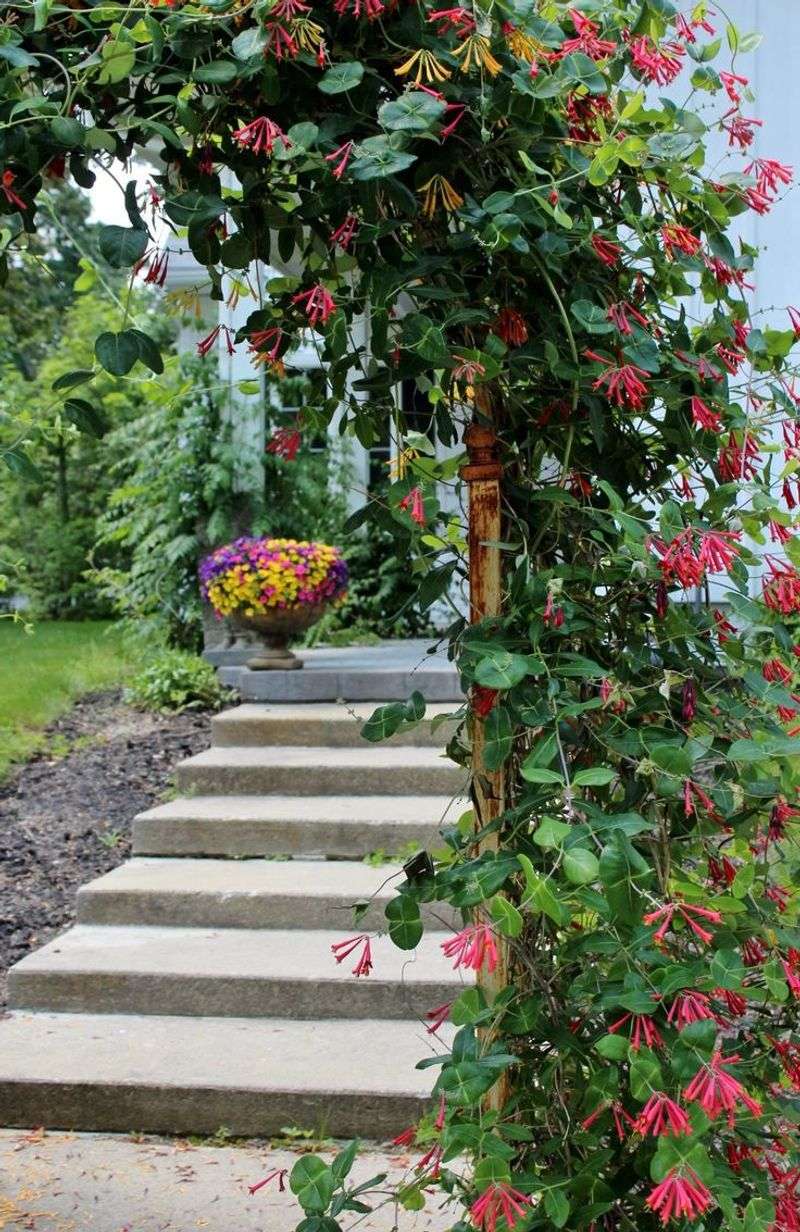
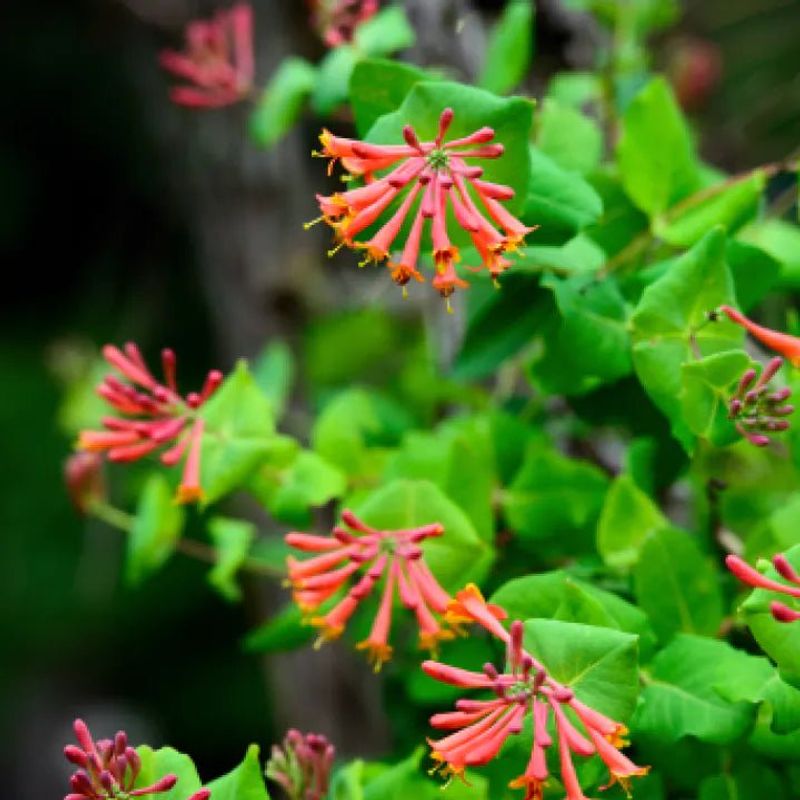
Coral honeysuckle, Lonicera sempervirens, is a perennial, woody, twining vine that can reach roughly 10 to 20 feet when given a proper support structure. Texas A&M AgriLife Horticulture describes it as a native Texas evergreen vine that is relatively vigorous, tolerates heat and periodic drought once established, and can rebloom in late spring through summer.
Those traits make it a reasonable candidate for a supported fence or trellis in the right location.
The phrase “native Texas vine” is accurate but needs a qualifier. The Native Plant Society of Texas notes that coral honeysuckle is native primarily to East Texas and much of the eastern United States.
It has been documented in Hays and Travis Counties, but it is not typical of Edwards Plateau landscapes, which cover much of the Hill Country west of Austin. Calling it a native Central Texas plant without checking your specific county overstates its regional fit.
Before purchasing, confirm that the vine is genuinely suited to your county and that the nursery is selling a locally sourced or regionally appropriate provenance. A plant labeled “honeysuckle” at a big-box store may not be Lonicera sempervirens at all.
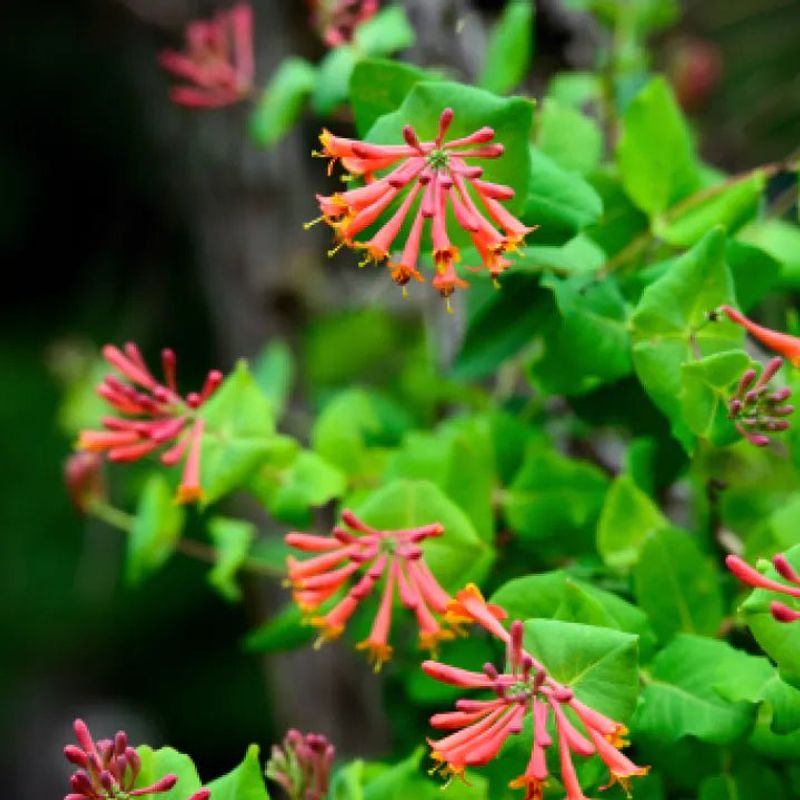
NC State Extension’s plant profile for Lonicera sempervirens documents the species as a woody vine reaching 10 to 20 feet, with tubular red-orange flowers and a preference for a sturdy support structure, which helps distinguish it from lookalike species at the point of sale.
Where the plant does fit the regional conditions, it brings real value: leafy cover that persists through mild Texas winters, seasonal blooms that return without much encouragement, and a growth habit that stays on a structure rather than smothering neighboring plants the way invasive honeysuckles can. Getting the identification and provenance right before planting saves frustration later.
The vine adds vertical cover, not a firefly guarantee
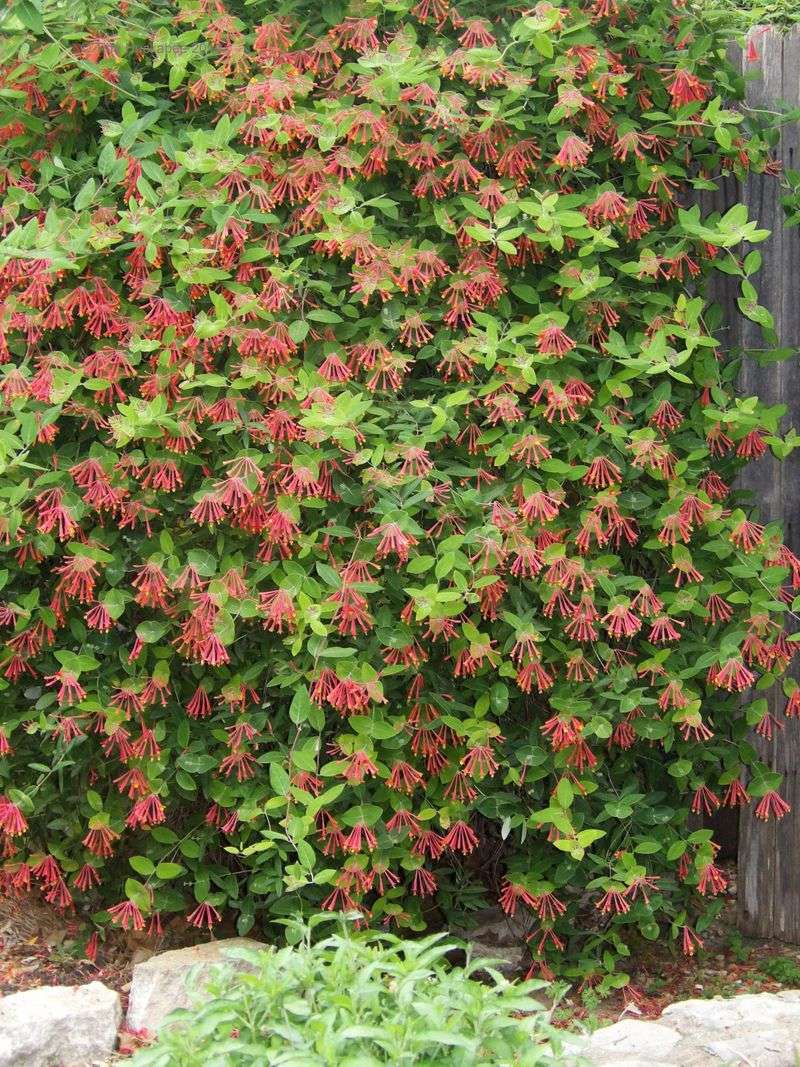
What coral honeysuckle actually delivers on a fence is layered vertical structure: a canopy of leaves that creates shade and cover at heights where low shrubs and grasses cannot reach. That matters for a fence-line habitat because fireflies use perches above the ground for their evening signaling flights, and a bare fence offers almost nothing in that role.
A vine-covered fence gives them somewhere to rest and launch from.
The NC State plant profile documents coral honeysuckle’s wildlife value clearly: the tubular flowers attract hummingbirds, bees, butterflies, and some moths, and the red berries that follow are eaten by songbirds. Those are real, documented benefits.
None of the available plant profiles, however, describe a specific or demonstrated attraction for fireflies. The vine feeds and shelters other wildlife; it does not function as a firefly lure.
Texas SmartScape’s coral honeysuckle entry similarly highlights value for birds and hummingbirds in North Central Texas yards, describing it as a low-water vine that covers an arbor or fence with good wildlife benefit. That wildlife benefit is genuine and worth having.
Framing it as a firefly magnet, though, asks the plant to do something the evidence does not support.
The vine’s real contribution to firefly habitat is indirect. By thickening the fence line with leaves and stems, it creates a more sheltered microclimate, reduces wind exposure near the ground, and gives the yard a more varied vertical profile.
Texas A&M’s assessment of the plant as vigorous but non-invasive means it can fill that structural role without taking over. Pair it with low native grasses or ground cover beneath the fence, and the combination starts to resemble the layered habitat that fireflies actually use.
Set up a durable fence planting in Central Texas
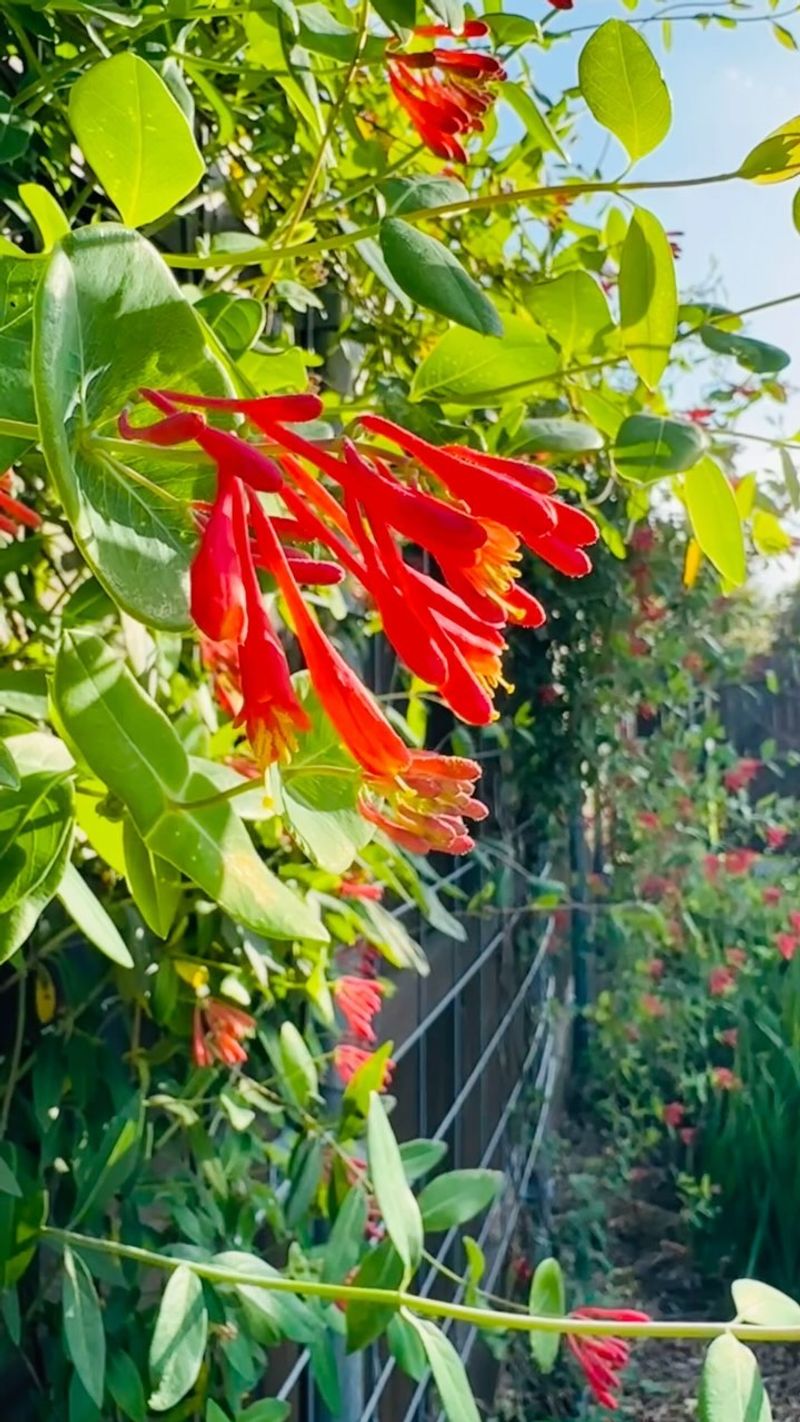
Coral honeysuckle is a twining vine, meaning it wraps its stems around a support rather than gripping a flat surface with adhesive pads. A smooth wooden privacy fence gives it very little to work with.
For a reliable planting, attach a sturdy trellis, use a chain-link fence, or install a wire support system along the fence face before the plant goes in. An arbor works well too.
The point is to give the vine something to grab from the start rather than expecting it to figure out a featureless surface on its own.
Sun exposure shapes how well the plant performs. NC State Extension notes that coral honeysuckle grows in sun to partial shade, and more sun generally produces better flowering.
A fence line that catches at least six hours of direct light each day will reward you with more of the red-orange blooms that the plant is known for. Partial shade is workable, but flowering may be reduced.
Texas SmartScape classifies coral honeysuckle as a low-water plant for North Central Texas once it is established, but establishment is the critical window. During the first summer, especially through Central Texas heat, the root zone should not be allowed to go bone-dry for extended stretches.
Water deeply and infrequently rather than on a rigid schedule, and pay attention to how quickly your soil dries out after rain. Sandy or rocky soils common in the Hill Country drain faster than the clay-heavy soils found in parts of the Blackland Prairie.
Leave room around the base of the vine for companion plantings rather than filling the fence line with a dense monoculture. Native grasses, low forbs, and groundcovers planted nearby add the varied vegetation structure that benefits the broader habitat.
A fence covered entirely in one vine, however well-suited that vine is, creates a simpler environment than a fence backed by a mix of plants at different heights.
Pair the vine with living ground habitat
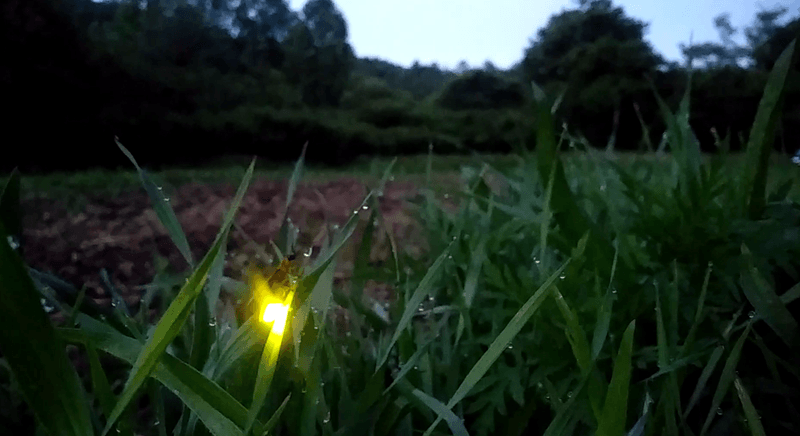
The fence and vine are visible, but the activity that matters most for fireflies happens much closer to the ground. Firefly larvae spend time underground, sometimes for close to two years before they emerge as adults.
During that time they feed on slugs, snails, grubs, and other small invertebrates living in moist, undisturbed soil. A clean, dry, heavily maintained strip beneath the fence can make the vine above it essentially irrelevant to the habitat goal.
UT Austin’s firefly guide specifically recommends leaving leaf litter in place and providing low vegetation as part of a yard-wide habitat approach. Leaf litter holds moisture, moderates soil temperature, and gives larvae the cover and food web they need.
Raking everything out from under the fence for a tidy appearance removes exactly the conditions that support the underground life stage.
Preserving patches of undisturbed soil alongside the leaf litter matters for the same reason. Frequent tilling, foot traffic that compacts the soil, or a thick layer of landscape fabric all disrupt the ground environment where larvae develop.
If the fence line runs along a garden bed, consider pulling back landscape fabric from the section nearest the fence and letting a thin layer of leaves accumulate naturally.
UNH Extension’s firefly support guidance and Firefly Conservation and Research’s habitat-building page both recommend adding low native vegetation and grasses rather than relying on a single dense planting. Native grasses planted at the base of the vine add a second layer of shelter, create additional humidity near the ground on warm evenings, and give adult fireflies more options for resting and signaling.
The ground layer is not a bonus feature; it is an essential companion to whatever grows on the fence above it.
Protect the glow with darker, chemical-free nights
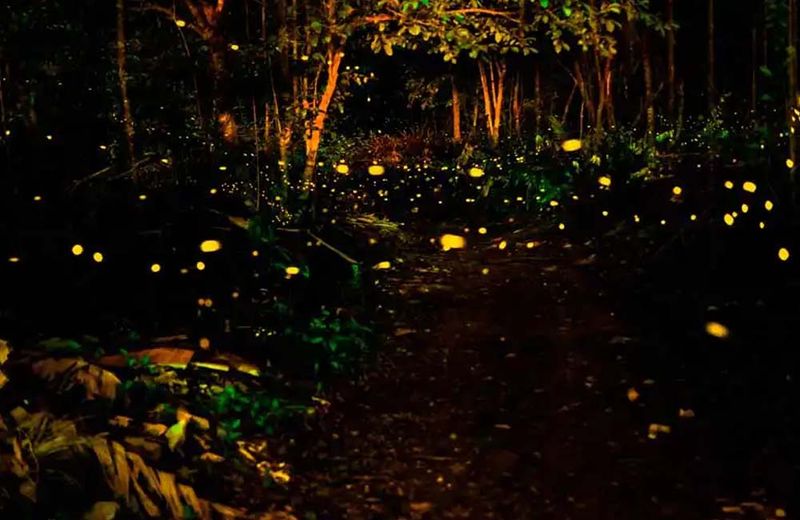
Adult fireflies communicate almost entirely through light. Males flash a species-specific pattern while flying; females respond from perches in the vegetation below.
Bright, constant outdoor lighting drowns out those signals the same way road noise drowns out a quiet conversation. A yard with a beautifully planted fence but floodlights running all night gives fireflies very little reason to stay.
The practical fix does not require going completely dark. UT Austin’s backyard firefly guidance recommends reducing outdoor lighting during peak firefly activity, which in Austin typically runs from late spring through early summer evenings.
Shielding a light so it points downward rather than outward, switching a fixture to a motion sensor so it is off most of the time, or simply turning off a decorative string light during the hour after sunset can make a meaningful difference without leaving the yard completely dark for safety.
Chemicals are the other side of this equation. UNH Extension warns explicitly against using insecticides around firefly habitat, and that warning extends to products marketed as natural or organic mosquito control.
Fireflies are insects. Broad-spectrum insecticides applied by spray or misting system reach flying adults, larvae in the soil, and the invertebrate prey that larvae depend on for food.
A yard treated regularly for mosquitoes may have fewer mosquitoes and also far fewer fireflies.
If mosquito pressure is a real concern, focus on eliminating standing water, using fans on the patio to discourage mosquitoes near seating areas, and wearing repellent personally rather than treating the yard. Those approaches address the mosquito problem without compromising the insect community that the habitat planting is trying to support.
Regional habitat and fire safety set the limits
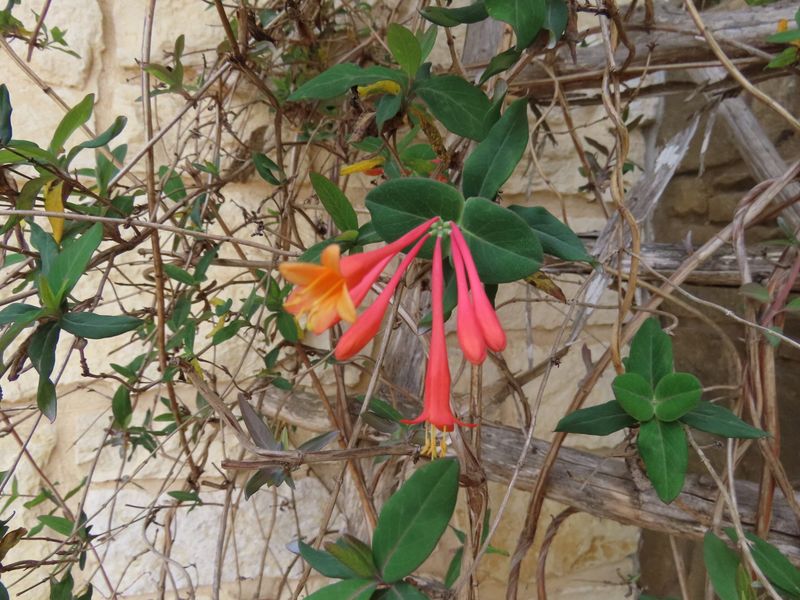
Coral honeysuckle’s regional fit in Central Texas is genuinely uneven. The Native Plant Society of Texas places the plant’s primary native range in East Texas and the eastern United States, with documented occurrences in Hays and Travis Counties but limited presence across Edwards Plateau landscapes.
Gardeners in Wimberley, Kerrville, or Fredericksburg are working in a different ecological context than gardeners in South Austin or Round Rock, and the vine may perform differently or prove less regionally appropriate in those western Hill Country locations. Checking with a county extension office or a local native plant chapter before purchasing is a practical first step, not an optional one.
The firefly picture is similarly uneven across the region. Firefly Conservation and Research’s Texas guide links Photinus texanus strongly to creek corridors, rivers, and ephemeral streams.
A dry, exposed fence line with a vine but no nearby water source, no leaf litter, and no darkness is unlikely to host that species regardless of what is planted. Eastern fireflies are more adaptable to suburban conditions, but they too respond to the full habitat package, not to the vine alone.
Fire safety is a separate consideration that applies in many parts of Central Texas. NC State Extension’s Lonicera sempervirens profile rates the plant as having high flammability.
That rating does not mean the vine cannot be planted anywhere, but it does mean that gardeners in wildfire-prone areas should check applicable local fire-safety or defensible-space guidance before placing the vine close to a structure. Local fire departments and county resources often publish zone-specific guidance on what to plant and where relative to a home.
Finally, the name “honeysuckle” covers a wide range of species with very different behavior. Texas A&M distinguishes coral honeysuckle from Japanese honeysuckle, which is an invasive species that spreads aggressively and should not be planted.
Tatarian honeysuckle is another nonnative species sold under similar common names. When purchasing, ask for Lonicera sempervirens by its Latin name and confirm the source.
Give the habitat time to answer
Planting correctly identified coral honeysuckle where regional conditions support it is a reasonable starting point, but the rest of the work happens at ground level and after dark. Protect the leaf litter, leave patches of soil undisturbed, keep moisture in the root zone where your site allows, add low native vegetation around the vine, reduce unnecessary lighting on summer evenings, and keep insecticides out of the habitat entirely.
UT Austin’s firefly guidance and UNH Extension’s support recommendations both acknowledge that results take time. Firefly larvae may remain underground for close to two years before emerging as adults, and whether adults appear also depends on the surrounding landscape, local moisture levels, weather in a given season, and how much suitable habitat exists beyond your fence line.
A new planting in year one is building toward something, not delivering it immediately.
Firefly Conservation and Research frames the broader point well: regional conditions, species differences, and habitat connectivity all shape what any individual yard can support. The vine is a useful starting structure for a living fence-line habitat, but the fireflies decide whether to show up.
Give the habitat the conditions it needs, then give it time to answer on its own terms.