
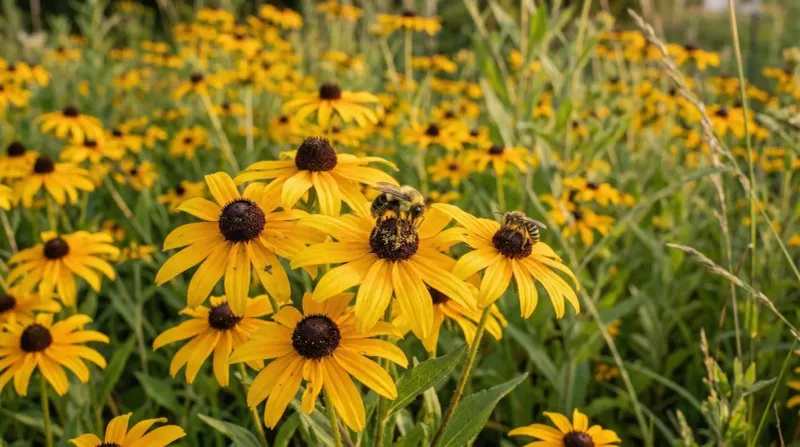
A yellow wildflower with a dark, button-like center has been quietly showing up in Texas pollinator gardens for good reason. Black-eyed Susan grows on roadsides, meadows, and home landscapes across much of the state, and bees do visit its blooms. Before you plant a patch expecting a guaranteed parade of 17-plus bee species with zero effort, though, the full story is a bit more nuanced than the headline suggests.
The mystery plant is most likely black-eyed Susan
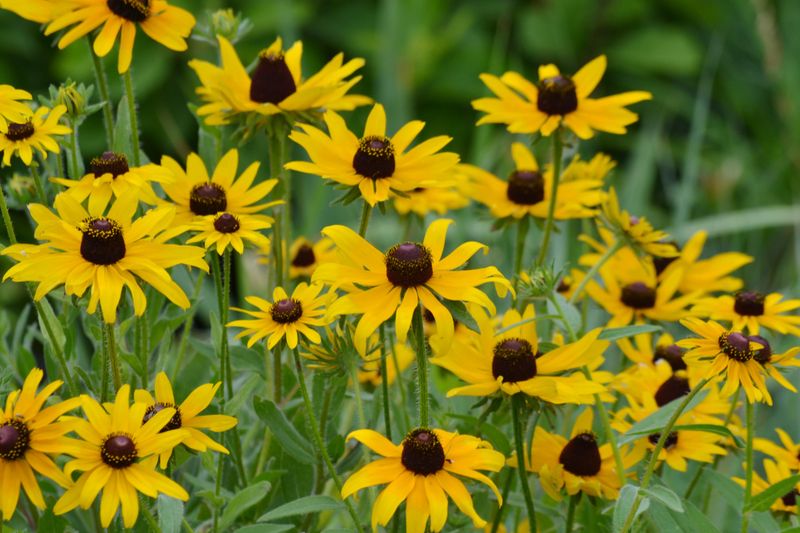
Chances are, if you have seen a viral claim about a Texas native plant that draws more than 17 bee species without any fuss, the plant being described is black-eyed Susan, known botanically as Rudbeckia hirta. Its bright yellow, daisy-like petals ring a raised, dark cone-shaped center that makes it one of the most recognizable wildflowers in the state. The Native Plant Society of Texas confirms it as a true Texas native, listing a potential bloom window that can stretch from March through November under the right conditions.
One thing worth knowing before you plant: black-eyed Susan does not behave the same way in every yard. Depending on your soil, rainfall, and region, it may grow as an annual, a biennial, or a short-lived perennial. That variability matters when you are planning a pollinator garden, because a plant that reseeds and returns in one county may not do the same across the state.
The 17-plus bee species figure comes from a May 2026 secondary article that names black-eyed Susan as the plant behind the claim. That article does not cite an underlying study, provide a species list, or specify where in Texas the count was observed. So while black-eyed Susan is genuinely supported as a Texas-native bee plant, the specific number cannot be treated as a verified Texas fact. The plant earns its place in the garden on documented merit, not on a headline figure that lacks a traceable source.
Why this wildflower can suit many Texas sites
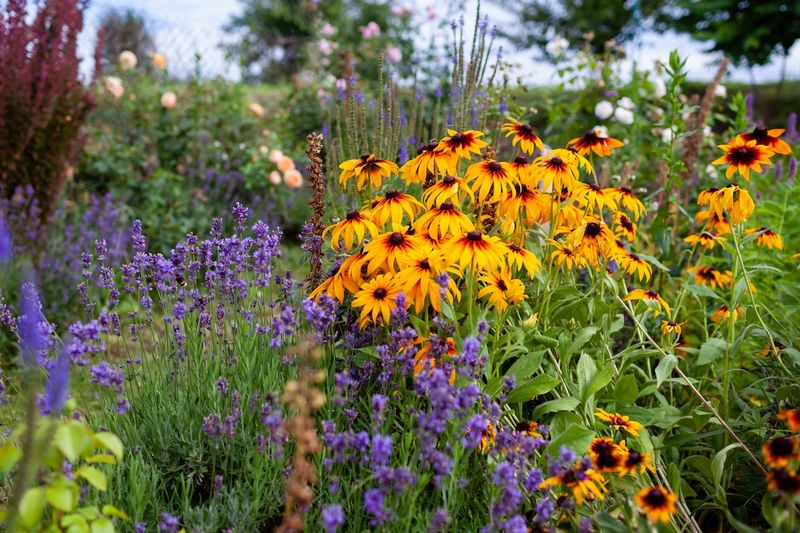
One reason black-eyed Susan turns up in so many Texas gardens is that it tolerates a genuinely wide range of growing conditions. Native American Seed, a Texas-based native seed supplier, lists the plant as reaching roughly 1 to 3 feet tall and tolerating sand, loam, clay, and caliche soils at dry to medium moisture levels. That covers a lot of Texas ground, from Hill Country caliche flats to Blackland Prairie clay.
Sun exposure is more flexible than many gardeners assume. The plant grows well in full sun, but it also handles partial, dappled, and some shade. Native American Seed notes that blooms may actually last longer when plants are shielded from the most intense afternoon sun, which matters in regions where summer temperatures push well past 100 degrees Fahrenheit. Positioning a planting on an east- or north-facing slope, or near a structure that blocks late-day heat, can extend the flowering season in those areas.
That said, “suits many sites” is not the same as “thrives everywhere without adjustment.” Texas spans multiple ecoregions with dramatically different rainfall totals, humidity levels, and soil chemistry. A planting that performs beautifully in the Piney Woods may need different care in the Trans-Pecos. NPSOT’s profile lists the long potential bloom period of March through November, but actual timing depends on when plants establish, how much rain falls, and what temperatures do in a given season. Matching the plant to your specific site conditions is what makes the difference between a thriving patch and a struggling one.
The 17-plus bee claim remains unverified
The headline number deserves a closer look. The claim that black-eyed Susan supports more than 17 bee species in Texas traces back to a secondary online article that repeats the figure without linking to any survey, dataset, field location, or methodology. No species list accompanies the number, and there is no way to determine whether the count refers to formally identified species, genera, morphospecies, or unidentified groups observed on a single plant in a single location. That distinction matters: a bee taxon counted in a rapid field survey is not the same thing as a confirmed, named species verified by a specialist.
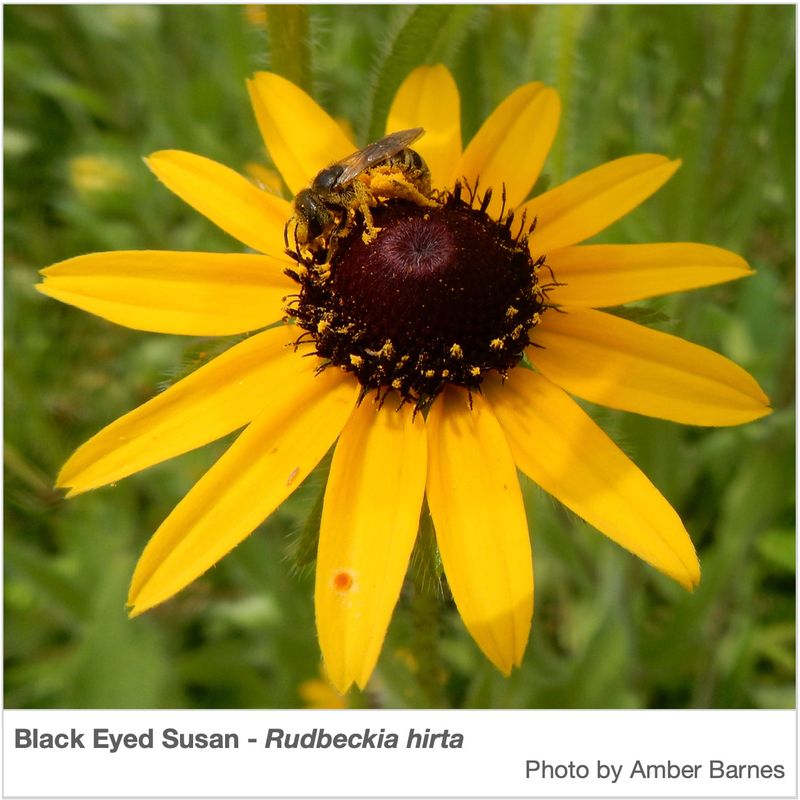
Observing a bee on a flower also does not automatically mean the plant is feeding that bee in a meaningful way. A bee may land on a bloom to collect nectar, to gather pollen, or simply to investigate before moving on. Without data on what the bees were actually collecting and whether the plant met their nutritional needs, “visited by” and “feeds” are not interchangeable terms.
The strongest peer-reviewed comparison available comes from a 2024 study published in Ecological Solutions and Evidence, which recorded 18 distinct bee taxa on Indian blanket (Gaillardia pulchella) in a southeastern U.S. experimental planting. Black-eyed Susan appeared among the lower-richness plants in that same experiment. Critically, that research was not conducted in Texas, and it cannot be used to rank Texas plants or confirm a statewide bee count for black-eyed Susan.
None of this means the plant lacks value for pollinators. Bees do visit black-eyed Susan, and Texas botanical sources describe it as a nectar source. The honest conclusion is that the 17-plus figure is unverified, and the plant’s real contribution depends on factors like local bee populations, surrounding habitat, bloom timing, and what else is flowering nearby.
Black-eyed Susan provides forage, not a complete habitat
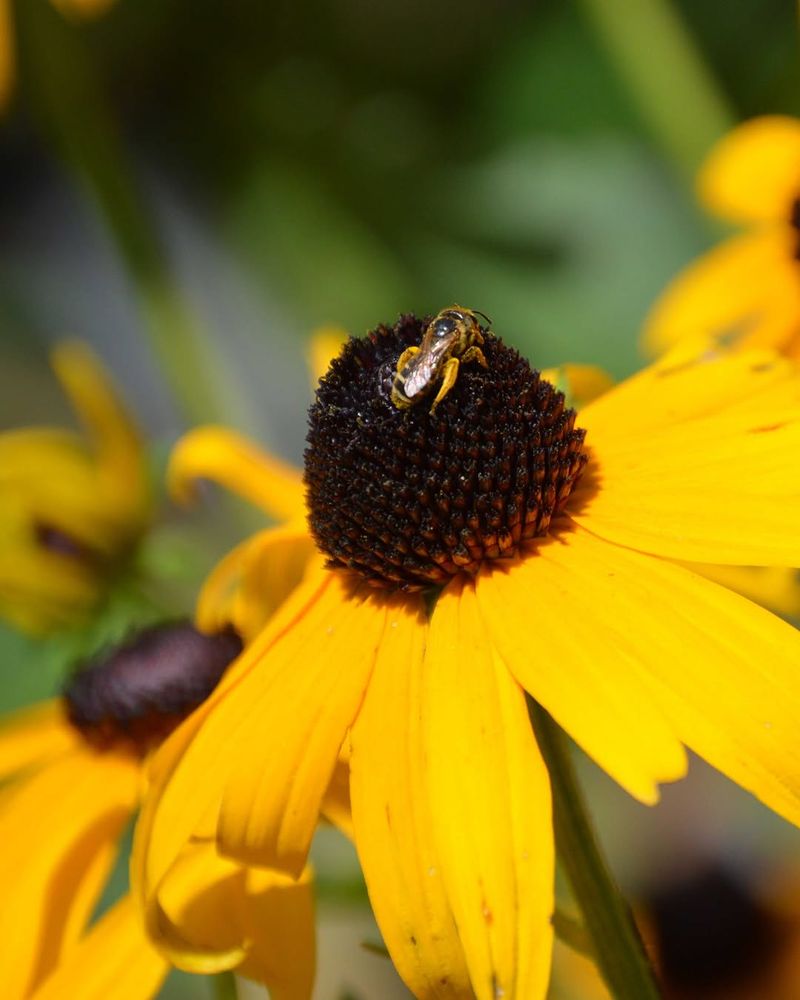
Describing black-eyed Susan as a bee plant is accurate and well-supported. Zilker Botanical Garden identifies it as a hardy wildflower and a documented nectar source for bees. Bees do visit the blooms, and for many Texas gardeners that observation holds up season after season. What the plant cannot do on its own is supply everything a bee population needs to survive and reproduce.
There is also some interesting research on why bees find the flowers attractive in the first place. A study on wild bee behavior and Rudbeckia flower heads found that bees preferentially visit flower heads with exaggerated ultraviolet-absorbing floral guides, suggesting that the visual signals in the flower’s patterning play a role in attracting visitors. That kind of research helps explain bee behavior around the plant, though it does not establish a specific count of species or confirm pollen collection as a measured outcome.
Visitation also varies considerably depending on where you are. The mix of bee species in a Hill Country garden differs from what you might find along the Gulf Coast or in the Panhandle. Weather, surrounding floral resources, plant abundance, and bloom timing all shape which bees show up and how often. Texas Parks and Wildlife is clear that native bees need both food and nesting habitat, and that a diversity of plants providing flowers across multiple seasons serves them far better than any single species.
Black-eyed Susan is a useful piece of that puzzle, not the whole picture.
Give new plants moisture before expecting low-maintenance growth
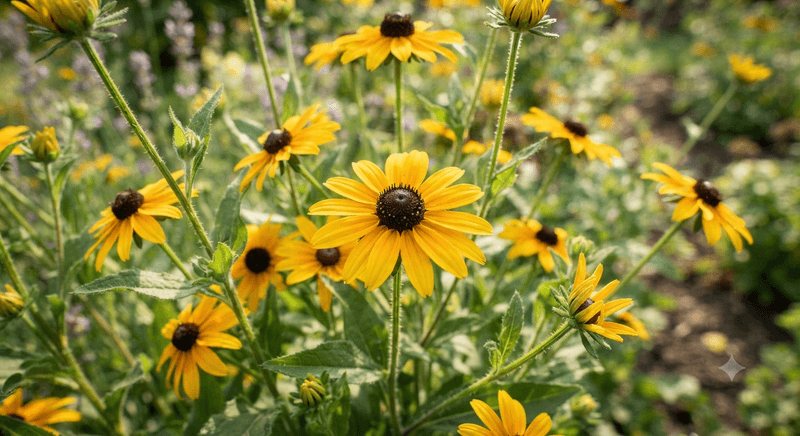
“Low-maintenance after establishment” is the key phrase, and that qualifier does real work. Getting black-eyed Susan to the established stage requires some attention, particularly in Texas heat. NPSOT recommends sowing seed on top of moist soil and covering it lightly, with germination typically taking roughly two to three weeks under suitable conditions. Choosing the right season for sowing helps considerably: fall or early spring plantings in many parts of Texas give seeds time to germinate and develop roots before summer heat arrives.
Young plants need consistent moisture while their root systems develop. Skipping water during the first growing season because the species is labeled drought-tolerant is a common mistake that leads to weak plants or outright failure. Native American Seed describes the plant as preferring dry to medium soil moisture, but that applies to established plants, not to seedlings pushing through their first Texas summer.
Once plants are established, water needs drop significantly, but they do not disappear. During extended heat waves or drought, even well-rooted black-eyed Susans can benefit from supplemental watering, especially in sandy soils that drain quickly. Monitor plants for wilting during the hottest weeks rather than following a fixed watering schedule, since soil type, sun exposure, and rainfall vary too much across Texas for a single interval to apply everywhere.
Reseeding is possible, and the NPSOT profile notes that seeds mature several weeks after flowering. Whether that reseeding becomes a welcome patch or a management task depends on your site and your preferences. Watching where volunteers appear and removing unwanted seedlings early keeps the planting tidy without much effort.
Build a bee habitat around more than one flower
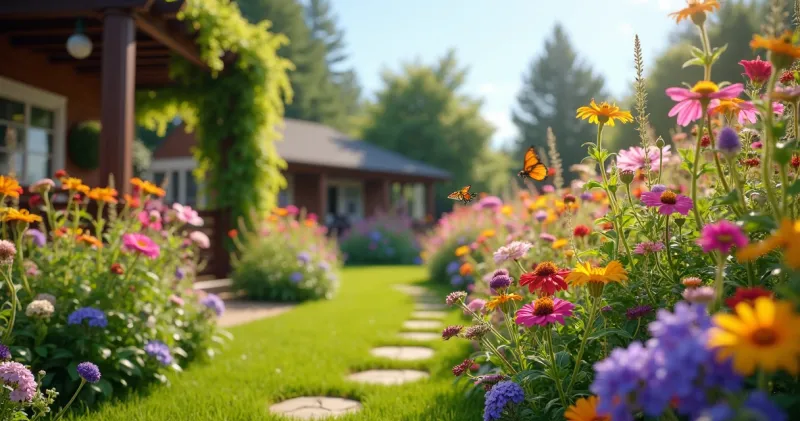
Texas Parks and Wildlife is direct on this point: a single plant species cannot meet the full habitat needs of a diverse native bee community. TPWD’s native bee needs guidance emphasizes that most native bees require both food sources and nesting sites, and that a sequence of blooms across the season matters more than any one standout species.
TPWD’s pollinator management recommendations suggest aiming for at least three native plant species flowering in each of two or three seasons, adjusted for your region and moisture conditions. In practice, that means pairing black-eyed Susan’s warm-season bloom with spring-flowering natives like bluebonnets or prairie phlox, and adding fall bloomers such as goldenrod or mistflower to carry forage into cooler months. Roughly 90 percent of Texas native bees are solitary insects with foraging and nesting needs that differ substantially from managed honey bees, so building for diversity matters.
Nesting habitat is the part of pollinator gardening that gets overlooked most often. The majority of native bees nest in the ground, so patches of bare or lightly covered soil are genuinely useful. Other species use hollow or pithy stems, dead wood, and existing cavities in structures or logs. Leaving some standing dead stems through winter, avoiding heavy mulch over potential nesting areas, and reducing soil disturbance in corners of the yard can make a meaningful difference for cavity- and ground-nesting species alike.
A garden that looks slightly wilder in strategic spots is often more productive for native bees than one that is perfectly groomed.
Protect visiting bees from pesticide exposure
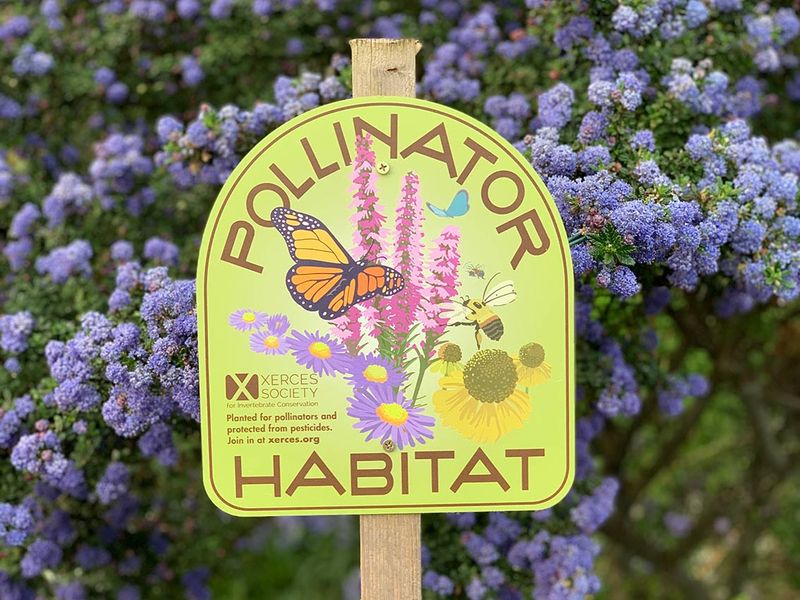
Planting black-eyed Susan in your yard is a positive step, but it does not automatically create a safe foraging environment if insecticides are being used nearby. TPWD’s pollinator management guidance advises avoiding pesticide applications in areas managed for native pollinators, because insecticides can kill bees outright or cause subtler effects on foraging behavior and nesting success. Native bees may be affected at lower doses than honey bees, and pesticide labels do not always reflect the full range of risks to solitary native species.
Timing matters as much as product choice. Spraying any insecticide on or near blooming plants while pollinators are active increases exposure risk significantly. If treatment is necessary, applying in the early morning or evening when bee activity is lower, and keeping applications away from open flowers, reduces but does not eliminate the hazard. USDA Agricultural Research Service recommends following label directions carefully, reducing spray drift, and using nonchemical or integrated pest-management approaches where feasible.
Drift from neighboring properties is a real concern that home gardeners cannot fully control. USDA research has found that pesticide residues can reach pollinator plantings through drift from nearby agricultural or residential applications, creating exposure even when the gardener has not sprayed directly. Talking with neighbors about spray timing, maintaining buffer plantings, and avoiding systemic insecticide treatments on plants adjacent to your pollinator patch are practical steps that go beyond what any single native flower can accomplish on its own.
Plant black-eyed Susan for what the evidence supports
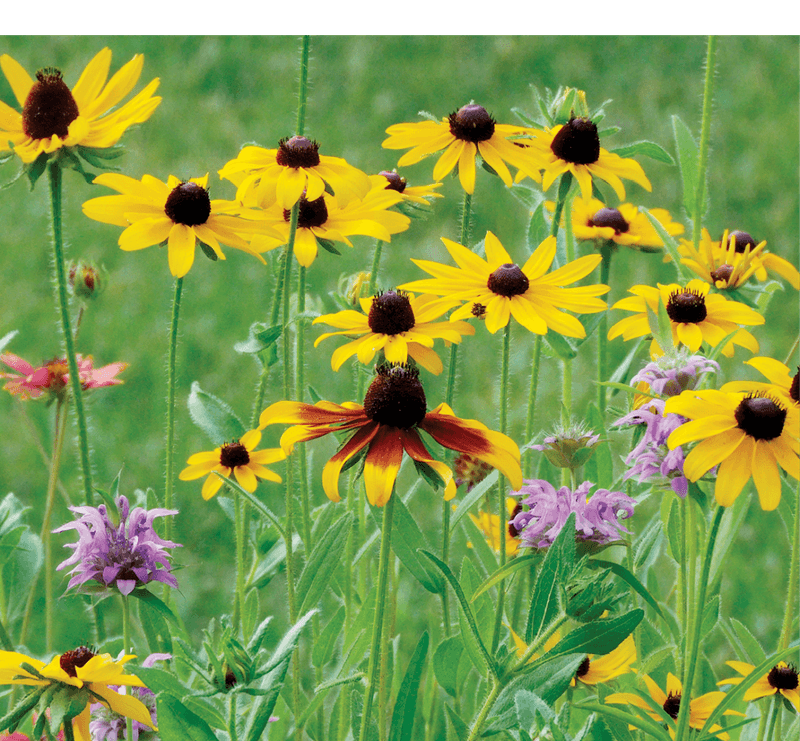
Black-eyed Susan earns a place in a Texas pollinator garden on solid, practical grounds. The Native Plant Society of Texas documents it as a true Texas native with a long potential bloom season, broad soil tolerance, and adaptability across a range of light conditions. Bees visit its flowers, and when the plant is matched to appropriate local conditions and supported through establishment, it can contribute meaningfully to a yard’s forage value.
The unverified 17-plus species figure should not set your expectations. No traceable study, species list, or Texas field survey has been located to support that specific number, and TPWD’s guidance consistently points toward diverse plantings, nesting habitat, and reduced pesticide exposure as the foundations of effective pollinator support, not one standout plant or a compelling headline count.
The stronger practical conclusion is straightforward: add black-eyed Susan to a thoughtfully planned native garden, give it the establishment care it needs, pair it with other natives that bloom in different seasons, and keep pesticides away from open flowers. A garden built on those habits will serve native bees better than any single species ever could, regardless of what number appears in the headline.