
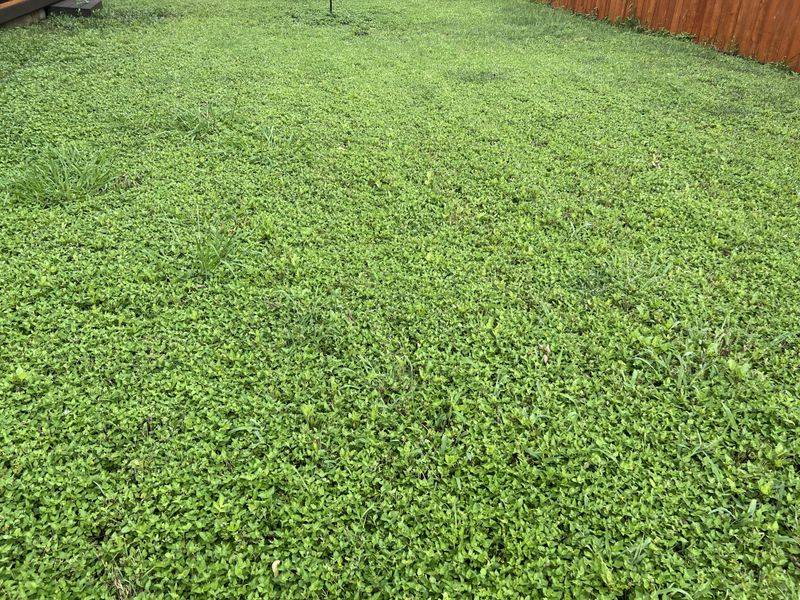
Along fences and shady lawn edges in Central Texas, a low, scrappy plant with tiny yellow flowers often shows up without being invited. One plant that fits that picture is horseherb, also called straggler daisy or lawnflower, and it is worth getting to know before you pull it or mow it flat.
It is a native groundcover in this part of Texas, and small butterflies visit its flowers. Learning a few simple clues can help you decide whether a patch belongs in your yard.
Horseherb is one plant worth recognizing
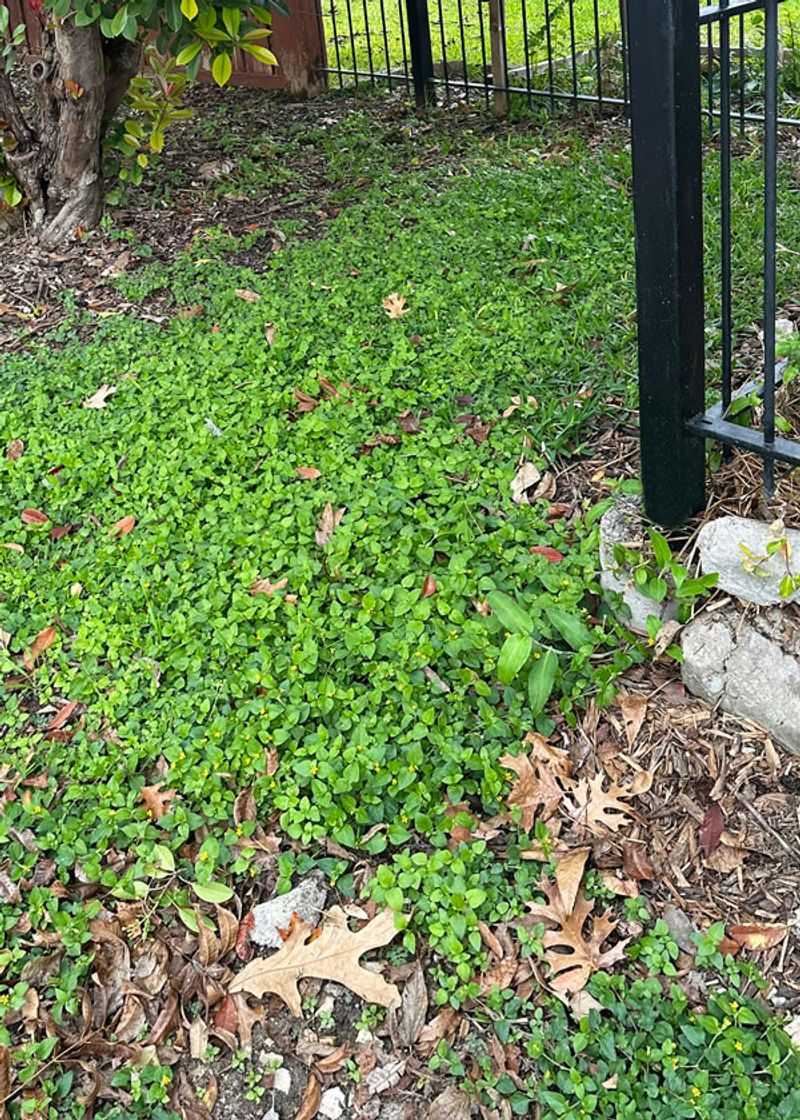
Horseherb (Calyptocarpus vialis), also known as straggler daisy or lawnflower, is one plausible candidate for an unfamiliar volunteer along a Central Texas yard edge. It is not the only possibility, and nobody can name a plant from its location alone.
Still, it is a good one to know because it turns up in places many homeowners notice.
Austin’s plant guide says horseherb occurs naturally in shady areas and lawns. That matches the spots where odd little plants like to settle: the strip beside a fence, the shaded patch under a tree, the thin spot where grass gives up.
A fit with the setting is a reason to look closer, not proof of what you have.
The Lady Bird Johnson Wildflower Center profiles the same plant, which makes it easy to compare what is growing in your yard against a trusted description. Another plant, or a mix of several, could be sharing that edge.
So before you decide to keep it, check its features. The next section walks through what to look for, from the leaves to the flowers.
Once you know what you have, the choice to leave it, mow it, or remove it gets much easier.
Treat this as a short investigation rather than a verdict. A few minutes crouching by the fence with your phone camera can save you from protecting the wrong plant or pulling a useful one.
Look for paired leaves and tiny yellow flowers
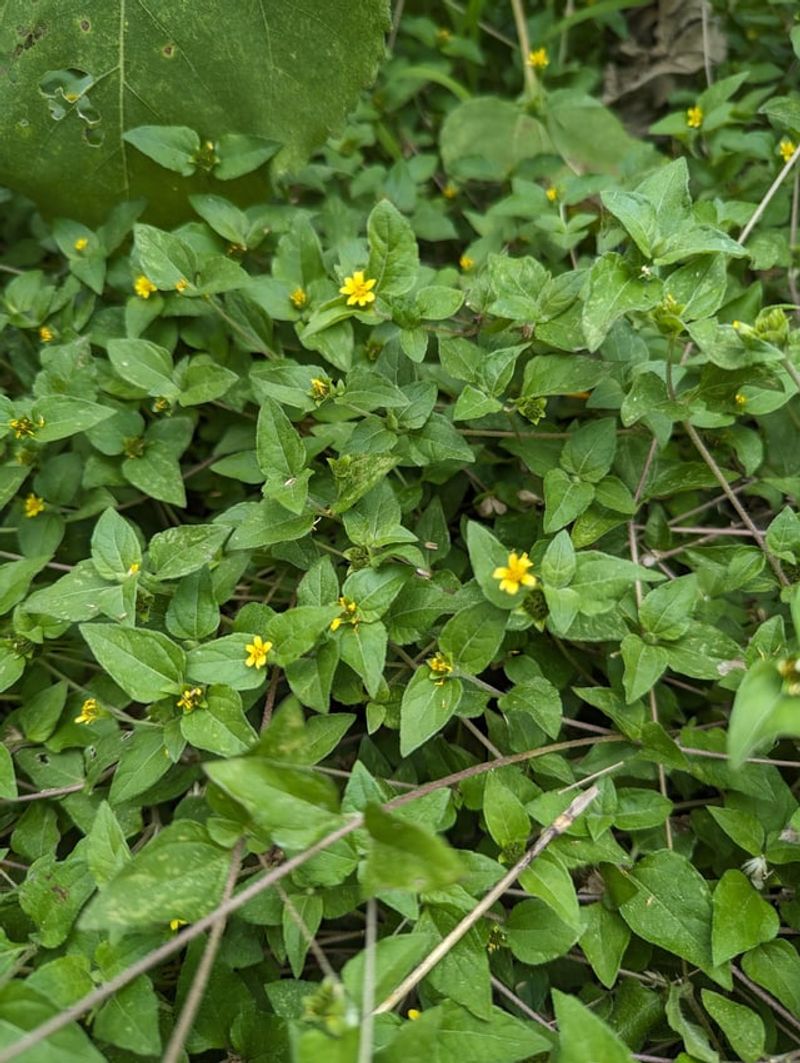
Start with the leaves. Horseherb has leaves that grow in opposite pairs along low, sprawling stems, and the edges are toothed rather than smooth.
Check several stems, since one leaf can mislead you.
Next, find the flowers. They are tiny yellow, daisy-like heads, much smaller than a typical garden daisy.
If your plant has large blooms, a different color, or leaves that alternate along the stem, you are probably looking at something else.
Height is a helpful clue, though not a test. The Wildflower Center and North Carolina State Extension describe it as roughly 6 to 12 inches tall.
A mowed patch may sit lower, and plants in shade can look different from those in sun.
No single feature settles it. Low growth, paired toothed leaves, and small yellow flower heads need to show up together, and it helps to compare your plant with photos from the sources above.
A short description, or the fact that it grows by your fence, cannot confirm anything.
If the match is shaky, wait until the plant flowers, take clear photos of the leaves and blooms, and ask your county Extension office. Leave the shovel and the mower alone until you are confident about what you have.
Central Texas is within its documented native range
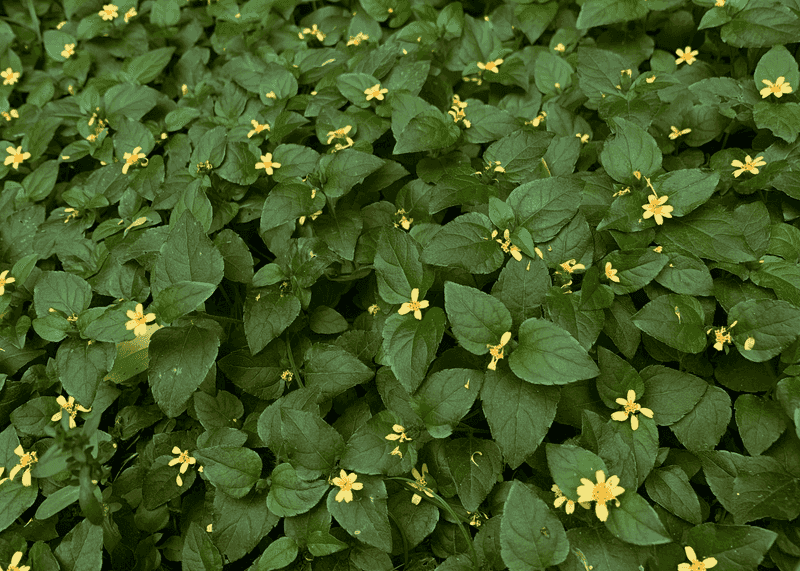
For anyone in the Austin area, the local answer is clear. Austin’s plant guide lists horseherb as native to both the Edwards Plateau and the Blackland Prairie, the two regions that meet across much of Central Texas.
Statewide, the story gets more tangled. A botanical review in Phytoneuron concludes it is native to south and south-central Texas but may be adventive elsewhere in the state, meaning it arrived or spread beyond its historic range.
Databases do not agree either. USDA’s GRIN record places Texas within its native range, while the Wildflower Center’s page notes that a different USDA database uses a contrary designation.
The practical takeaway is regional. For a Central Texas yard, local sources support calling it native.
If you live in another part of Texas, the label is less certain, so avoid assuming that every patch you see across the state belongs to the local landscape.
Where horseherb may fit in a yard
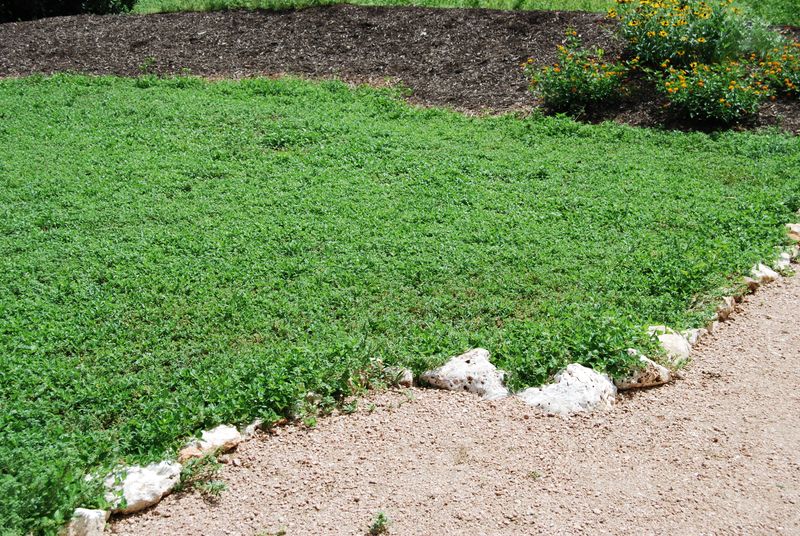
If your plant checks out, think about the site. Horseherb stays low, which is why people consider it an informal groundcover.
Austin lists a height of 8 to 10 inches, suits dry shade and some part-shade spots, and rates its water needs as very low.
That combination is handy under trees, where grass struggles and summer watering is a chore. The Wildflower Center adds that it tolerates moderate foot traffic, so an occasional walk across it will not wreck the patch.
Austin also notes it can be mowed as needed to hold a preferred height.
Winter matters too. It is semi-evergreen, but cold winters can send it dormant, so a patch may look thin or brown for a while before it recovers.
Do not judge it by one rough February.
These traits describe what the plant can do, not a guarantee. Soil, light, and your own watering habits all change the outcome.
Look at the exact spot, such as the shady strip or the fence edge, and ask whether a casual, loose groundcover suits it better than turf or a planted bed.
Small butterflies visit its flowers
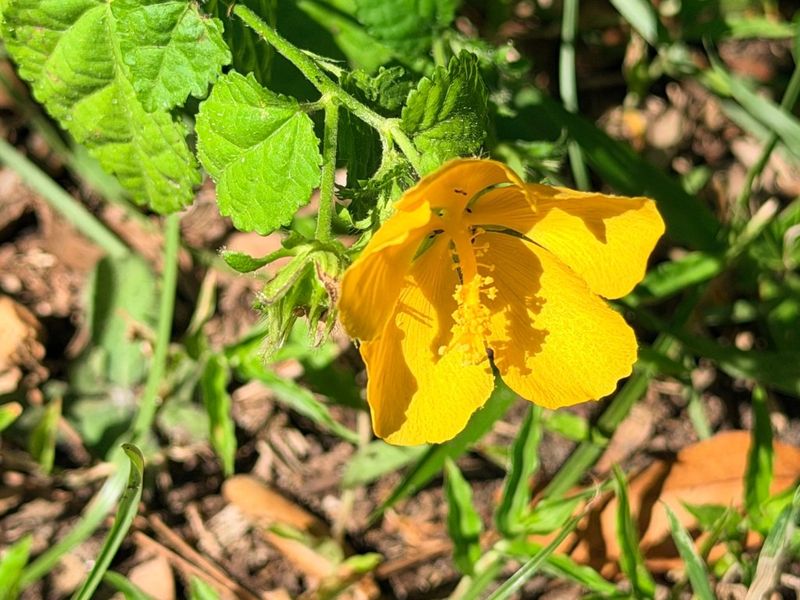
Tiny flowers draw tiny visitors. The Wildflower Center says horseherb’s small blooms attract small butterflies, including sulphurs and skippers, and Austin’s guide describes the same pull.
That is a modest benefit, and it helps to keep it in proportion. A butterfly sipping nectar is not the same as a plant that feeds caterpillars.
Horseherb is not described as a monarch host plant, and nothing in these sources says it helps butterfly numbers recover.
Think of it as one small perk. If you already want a patch for shade and low water, the butterflies are a nice extra to watch on a warm afternoon.
Weigh that against the plant’s habits, since it can spread into places you want to keep tidy. If butterflies are your main goal, you may get more from a mix of nectar plants and host plants for caterpillars, with horseherb as one supporting piece rather than the whole plan.
Keep it where it fits and manage it where it doesn’t
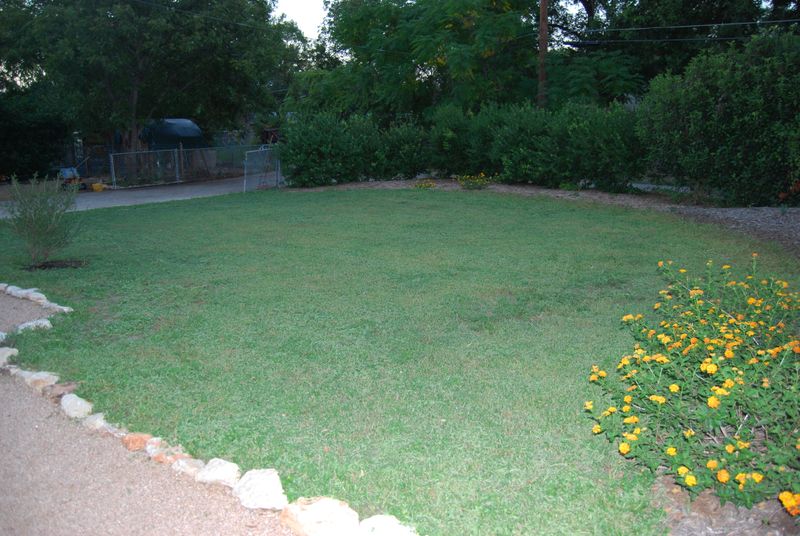
Once you are fairly sure of the identification, the choice is conditional. A patch that suits its spot and stays out of your turf or beds can simply stay.
If you want it shorter, mowing works, as Austin’s plant guide notes.
Spread is the catch. North Carolina State Extension describes it as potentially weedy, able to compete with lawns and beds.
Do not count on it staying put, and do not assume it needs no attention or can replace a lawn everywhere.
Set a boundary early. Mow or edge along the line where you want grass to win, and pull runners that creep into flower beds.
Checking every few weeks in the growing season is easier than reclaiming a bed later.
Skip tasting it, too. Nothing here supports eating a plant you identified yourself.
A volunteer is neither a gift nor a problem until you know what it is and what your yard needs. Name it first, then decide.