
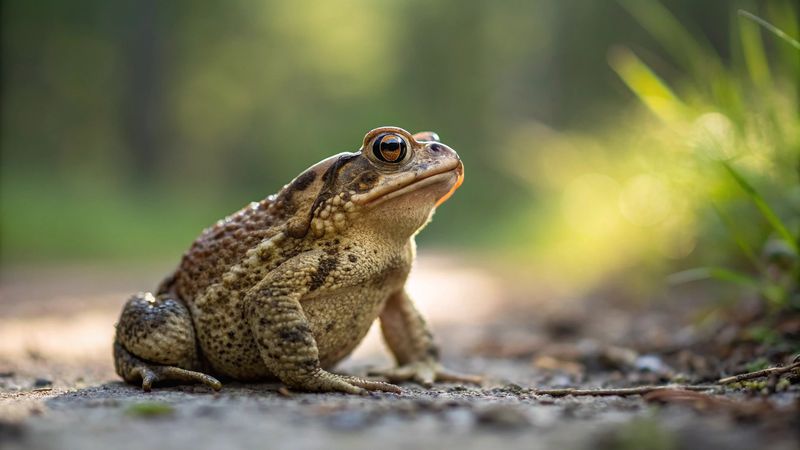
Every summer, Central Texas homeowners start finding scorpions inside their homes, and some wonder whether the toads living under the porch might be doing a little pest control. The idea is appealing, but the full picture is more complicated and more interesting. Toads really can eat scorpions, yet no field study has shown that a yard full of toads reduces the number of scorpions slipping through your walls. Understanding what the science actually says, and what steps genuinely protect your home, can save you a sting and help your backyard wildlife at the same time.
Why Central Texas scorpions reach houses in summer
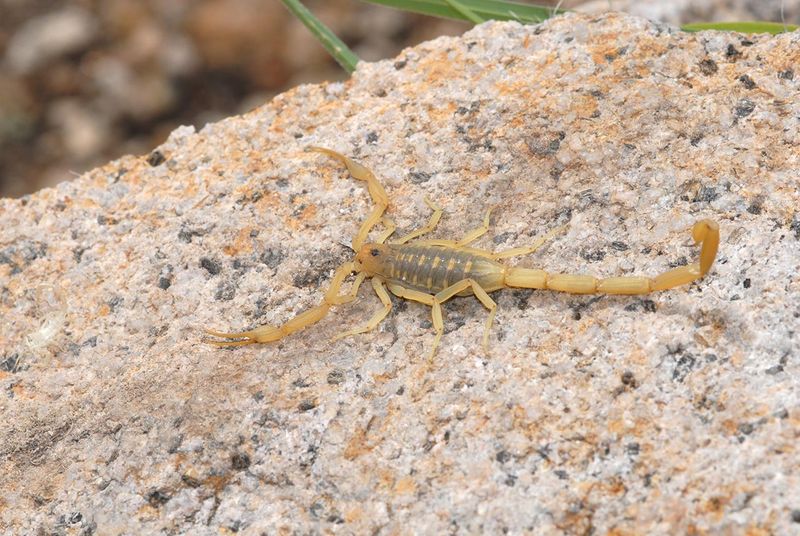
Central Texas sits squarely in striped bark scorpion country. Texas A&M’s guide to venomous terrestrial animals identifies Centruroides vittatus as the scorpion found throughout the state, noting that it is active at night and capable of climbing trees and house walls. That climbing ability is part of what makes it such a persistent indoor visitor, because it does not need a ground-level crack to get inside.
Hot, dry summers push scorpions toward places that offer cooler temperatures, moisture, or both. Texas A&M reporting on summer scorpion behavior explains that when the ground bakes, scorpions seek shelter under rocks, paving stones, logs, landscaping materials, and wood piles, and that the interior of a house can look very attractive when outside conditions become extreme. Porches, garages, and crawl spaces are common transition zones.
Landscaping features that seem harmless, like a stack of stepping stones or a bag of mulch left against the foundation, can quietly serve as daytime resting spots. From there, scorpions move along the exterior at night, find a gap around a pipe or a worn door sweep, and end up inside.
A sting from C. vittatus is painful, and serious symptoms, such as difficulty breathing, muscle twitching, or neurological changes, require prompt medical attention. The practical concern this article addresses is not whether scorpions exist in your yard but how to stop them from making it into your living room. A porch community of toads may seem like a natural answer to that question, and that idea deserves an honest look.
What the toad-and-scorpion research actually shows
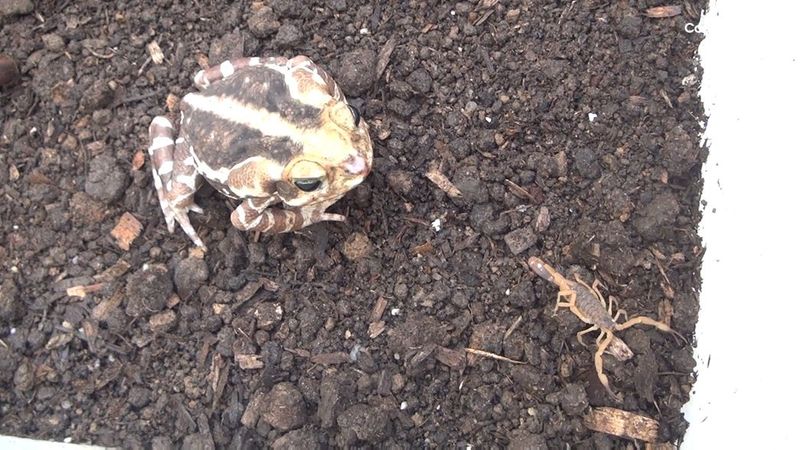
A 2020 laboratory experiment from southeastern Brazil produced the clearest direct evidence that toads can eat scorpions. Researchers observed the Brazilian toad Rhinella icterica preying on the yellow scorpion Tityus serrulatus, and the published study in Toxicon found that the toad showed high resistance to that scorpion’s venom under controlled conditions. That is a meaningful biological finding: it confirms that at least one toad species can handle a venomous scorpion and swallow it.
The limits of the study matter just as much as its results. The experiment was conducted in a laboratory, not in a Central Texas yard. It used one Brazilian toad species and one Brazilian scorpion species, and the researchers did not test whether a higher density of toads around a structure led to fewer scorpions entering that building. The study says nothing about porch toad abundance, long-term scorpion population trends, or the indoor entry rates that Central Texas homeowners actually worry about.
Texas Parks and Wildlife describes the diet of local toads, including the endangered Houston toad, as consisting mainly of insects and other invertebrates. That TPWD guidance on the Houston toad does not frame any Texas toad as a scorpion specialist. Local toads are generalist predators, meaning they eat whatever invertebrate fits in their mouth and happens to cross their path, which can include scorpions but also includes beetles, crickets, moths, and many other insects.
What the research supports is biological possibility: a toad encountering a scorpion outdoors may eat it. What the research does not support is the idea that placing or encouraging more toads beneath your porch will produce a measurable drop in the number of scorpions coming inside. Those are two very different claims, and only the first one has evidence behind it.
Shared porch habitat does not prove scorpion control
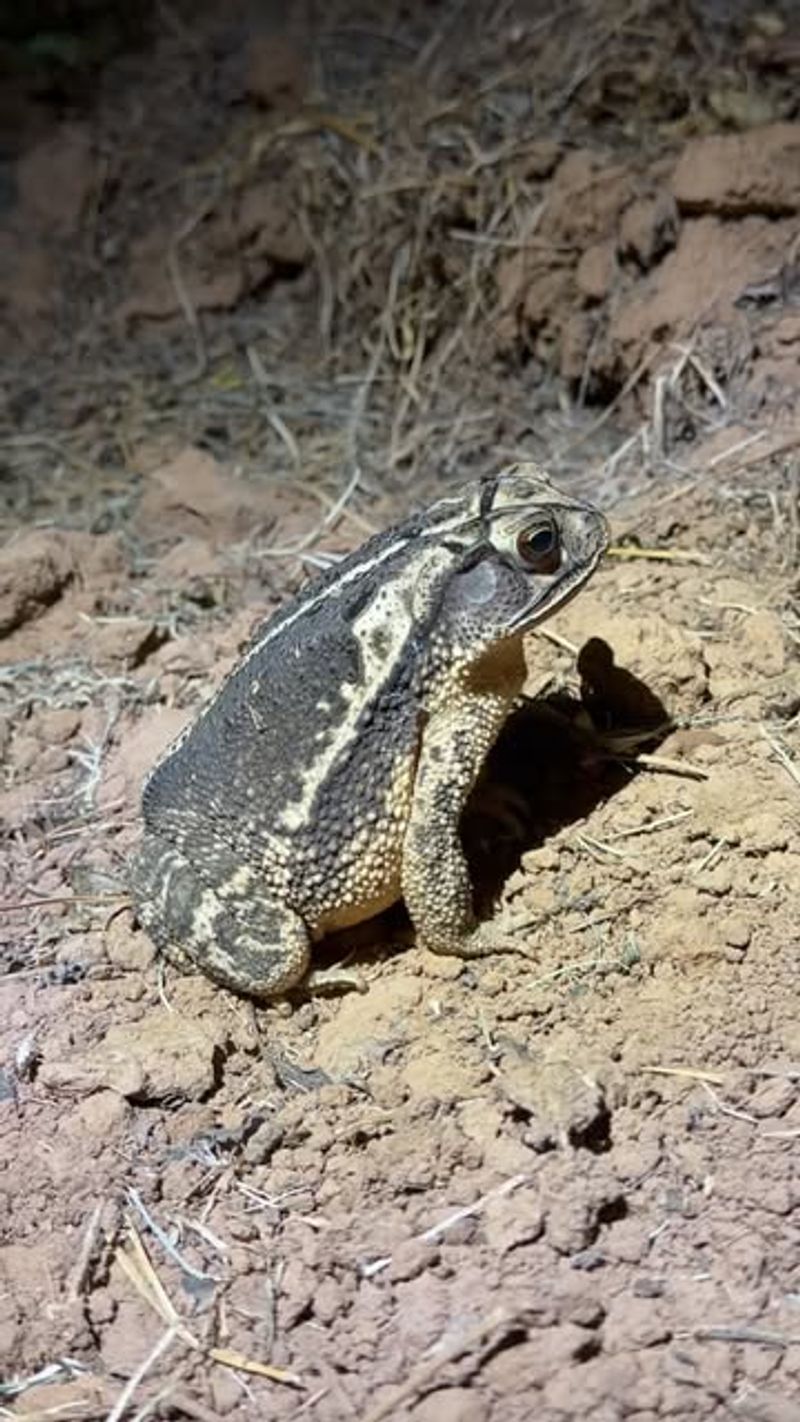
Spotting a toad and a scorpion in the same corner of your porch on the same evening can feel like evidence that the toad is keeping the scorpion population in check. The two animals share that space for completely separate reasons, though, and proximity alone cannot tell you whether any predation is happening, let alone whether it is changing how many scorpions reach your interior walls.
Toads seek shaded, moist cover during Central Texas summers because their skin dries out quickly in the heat. A gap beneath a porch, a damp patch of soil near a drip irrigation line, or the cool shadow of a potted plant all serve that need. Texas A&M’s reporting on summer scorpion movement explains that scorpions are drawn to the same sheltered, cooler microhabitats for entirely different reasons: protection from the heat and proximity to moisture. Two animals using the same refuge for their own survival purposes is shared habitat, not a predator-prey relationship you can count on.
Species identity adds another layer of uncertainty. Central Texas amphibians include Texas toads, Gulf Coast toads, Woodhouse’s toads, spadefoots, and others, depending on the exact location. Texas Parks and Wildlife’s list of frogs and toads found in Texas shows just how varied the local amphibian community can be. The Brazilian experiment involved a single species from a different continent, so its findings cannot be applied uniformly to every toad you see under your porch.
Even if occasional predation does occur, occasional predation is not population suppression. A toad eating one scorpion on a given night does not reduce the broader scorpion activity around your foundation enough to change your indoor risk. That gap between an observed eating event and a demonstrated reduction in household entry is where the popular idea outpaces what the evidence actually shows.
Support native toads without treating them as pest control
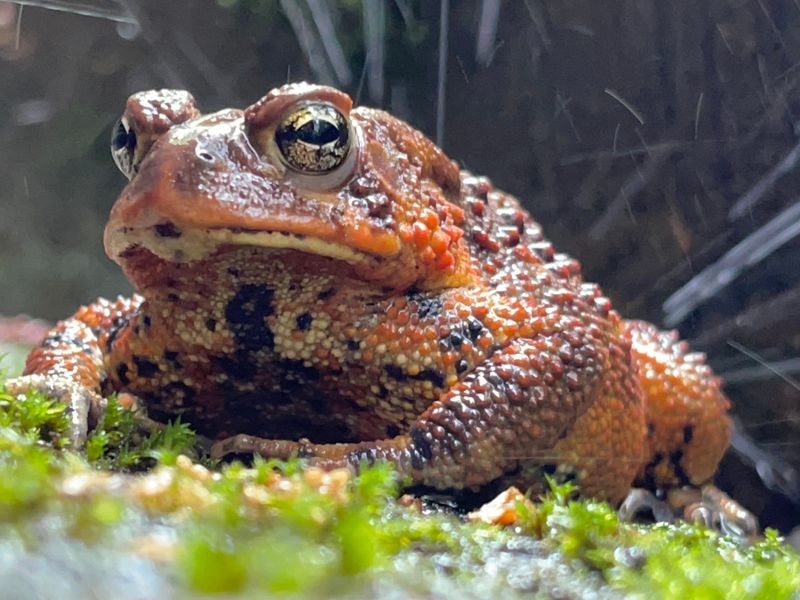
Native toads are worth welcoming in a Central Texas yard on their own ecological terms. They eat large numbers of insects, they connect your backyard to the broader web of local wildlife, and they have been part of the Texas landscape long before pest-control products existed. Supporting them does not require a grand project.
Retaining native vegetation near the house gives toads cover and foraging ground without creating the kind of debris piles that also shelter scorpions. Texas Parks and Wildlife’s wildlife habitat guidance notes that frogs and toads seek small, moist areas to avoid drying out, and suggests an overturned terracotta pot with an opening cut into the rim as a simple, low-cost shelter. Place it in a shaded spot away from foot traffic, and check periodically that it stays clean and dry inside between rains.
If you add a water source, keep it shallow, shaded, and fresh. Stagnant water in a poorly maintained dish can attract mosquitoes and other unwanted visitors, so empty and refill it every few days during hot weather. TPWD’s Wildscapes habitat certification guidance also recommends reducing chemical use and planting native species to support a healthy yard ecosystem.
Never collect, purchase, or relocate wild toads to stock your property. Moving wild amphibians can spread disease, disrupt local populations, and may run afoul of state wildlife regulations. If you think you may have spotted a Houston toad, which is federally and state listed as endangered and occurs in parts of the Bastrop-region landscape and nearby east-central Texas, TPWD’s Houston toad page is the right place to start for identification and reporting guidance. Do not handle it or disturb its habitat without qualified direction.
Good habitat may allow a toad to eat a scorpion now and then. That is a reasonable ecological bonus, but it cannot substitute for the exclusion work that actually keeps scorpions out of your home.
Protect amphibians from pesticide exposure
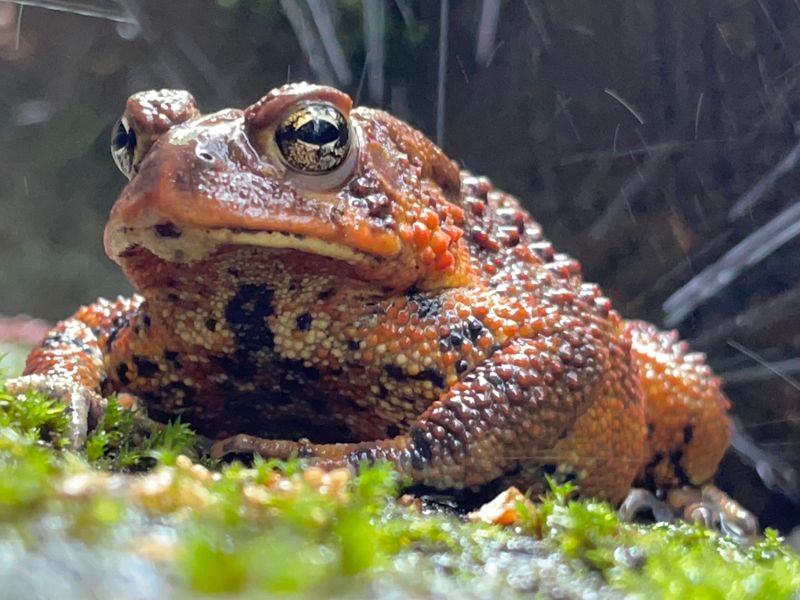
Reaching for a can of spray to protect the toads under your porch, or to push scorpions away from that corner of the foundation, can backfire in a way that is hard to see until the damage is done. Amphibians absorb water and other substances directly through their skin, which makes them far more vulnerable to chemical exposure than insects or rodents.
EPA research on pesticide uptake in frogs confirms that pesticides can affect frogs and other non-target species through skin absorption, and that even low-level exposure to certain compounds can disrupt amphibian health. Spraying a porch, a toad shelter, or the soil around a moist refuge can dose a toad with chemicals it has no way to avoid.
Every pesticide label is a legal document, and EPA guidance on pesticide registration makes clear that using a product in a way that contradicts its label is illegal. That includes applying it in locations, at concentrations, or under conditions the label does not authorize. Before using any product near the foundation, read the label fully and follow it precisely.
As a practical rule, avoid applying pesticides directly on or near active toads, damp soil, water features, or any area where amphibians are known to rest. If a product requires application near a foundation, time it when toads are not active and when rain is not expected to wash the material toward a water source or damp refuge. When in doubt, skip the spray and focus on the physical exclusion steps described in the next section, which address the root cause of indoor scorpion entry without any chemical risk to wildlife.
Seal the house and remove scorpion harborages
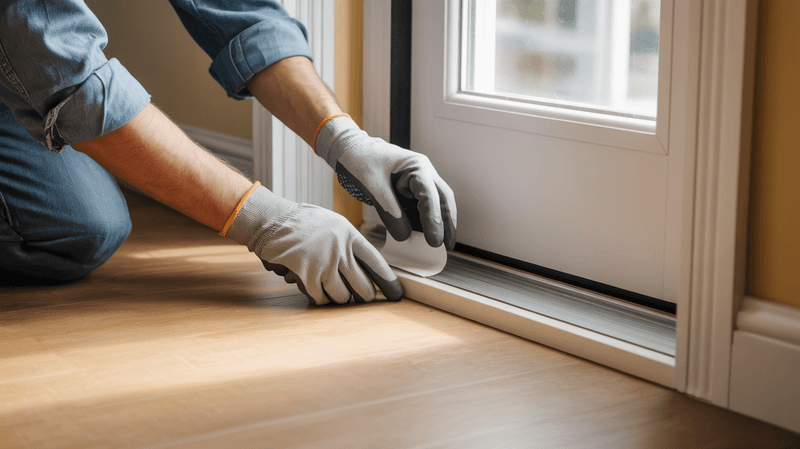
Physical exclusion is the most direct way to reduce the number of scorpions reaching your interior. Unlike habitat changes or ecological strategies, sealing entry points addresses the actual routes scorpions use, and the results are measurable in a way that toad activity simply is not.
Texas A&M AgriLife Extension’s scorpion management guide lays out the core steps clearly. Start by removing debris from around the structure: boards, logs, stones, bricks, landscaping rock, and firewood stacks all serve as daytime resting sites. Move firewood away from the house and store it elevated and off the ground. Rake leaf litter away from the foundation perimeter.
Mow grass close to the foundation and keep it short throughout the summer. Trim any tree branches or shrubs that touch or overhang the roofline, because Centruroides vittatus climbs readily and can enter through a roofline gap as easily as a ground-level crack. These yard-maintenance steps reduce the number of scorpions sheltering near your exterior walls, which lowers the odds of any of them finding a way in.
On the structure itself, replace worn or compressed door sweeps and window weather-stripping. Even a gap the width of a credit card can admit a scorpion. Check weep holes in brick veneer and fit them with appropriate mesh or purpose-made weep-hole covers that allow moisture to escape while blocking entry. Seal cracks around pipe penetrations, conduit runs, and utility lines where they pass through the wall or slab, using caulk or expanding foam rated for exterior use.
One note about toads and this work: do not move landscaping debris, boards, rocks, or logs closer to the house in hopes of attracting amphibians. Those same materials create exactly the harborage conditions that Texas A&M recommends removing. Toad habitat and scorpion harborage overlap considerably, so the safest approach is to keep debris well away from the structure and let native vegetation and a shaded pot shelter toads farther from the foundation.
Know when to seek licensed help and medical care
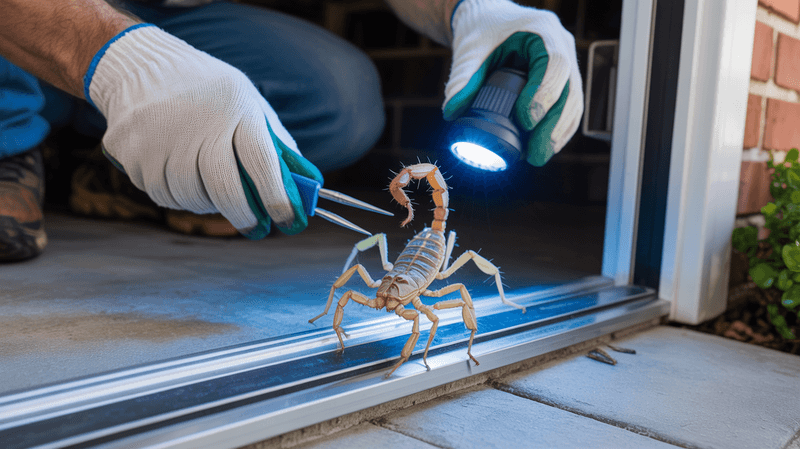
Exclusion and yard cleanup handle most scorpion problems over time, but recurring indoor sightings after you have sealed the obvious entry points are a signal to bring in a professional. Insecticides alone are a limited tool for scorpion control, partly because scorpions can withstand many common formulations better than insects do. Texas A&M’s scorpion management guide notes that chemical treatments should always follow the product label and work best as a complement to physical exclusion rather than a replacement for it.
When hiring someone to treat your home, verify their credentials first. The Texas Department of Agriculture’s structural pest control consumer information page explains that businesses and individuals performing structural pest control for hire in Texas must hold a state license. Asking to see that license before any work begins is a straightforward way to protect yourself and your property.
Personal precautions matter too, especially during the peak summer months when scorpion activity is highest. Wear gloves when moving anything that has been sitting on the ground, including pots, boards, or bags of mulch. Shake out shoes, boots, and clothing that have been left on the floor or in a garage overnight before putting them on. CDC guidance on scorpion stings recommends contacting a healthcare provider or poison-control center after any sting, and identifies specific warning signs that require prompt medical attention: difficulty breathing, muscle twitching, drooling, staggering, convulsions, or other neurological symptoms.
A sting that produces only localized pain and swelling is still worth monitoring, but those systemic symptoms call for emergency care without delay.
A toad living under your porch is a genuine piece of Texas wildlife, and it may eat a scorpion on any given night. That is worth appreciating. Keeping scorpions out of your house, though, comes down to the gaps you seal and the clutter you clear, not the amphibians you hope are hunting on your behalf.