
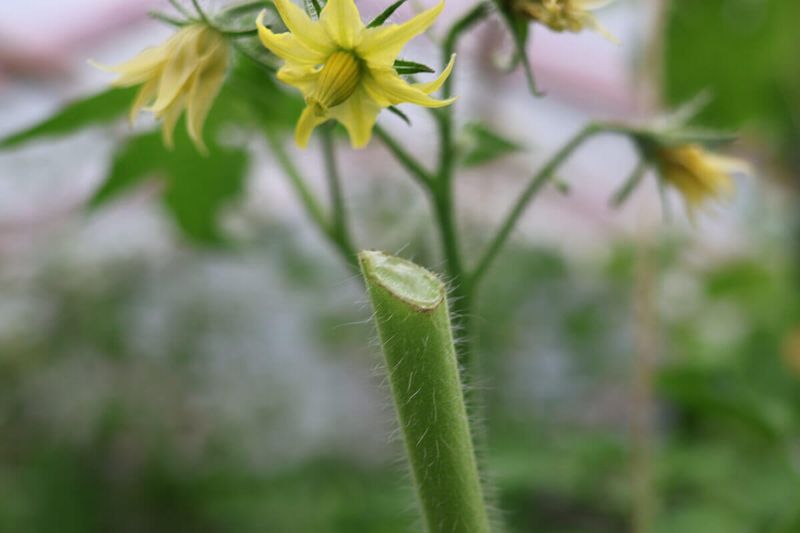
Late in the season, a tall tomato plant can keep stretching and flowering even when cold nights or a season change are on the way. Some gardeners snip off the top of the main stem to stop that growth.
It can be a reasonable choice for the right plant at the right time, but it is not a magic trick for ripening fruit. Here is how to decide, where to cut, and what to do if the weather turns before your tomatoes finish.
Topping can limit new growth, but it cannot guarantee ripe fruit
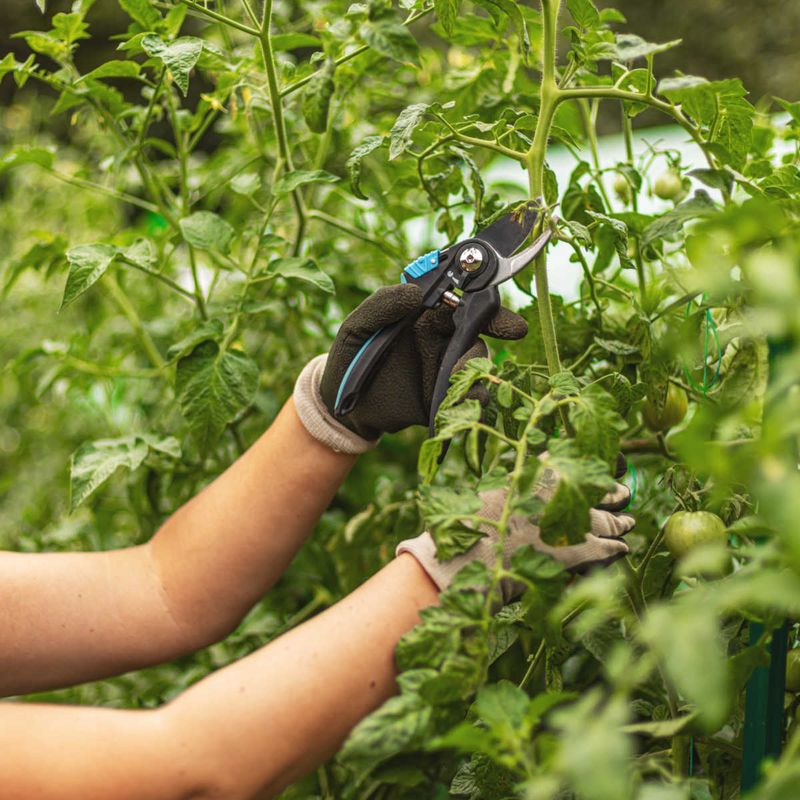
Gardeners top an indeterminate tomato because the main stem keeps climbing and flowering until something stops it. Removing that growing tip limits further upward growth, and Iowa State guidance treats it as a late-season option for established plants.
You will often hear that topping sends the plant’s energy into the fruit already hanging there. Think of that as gardening shorthand.
It means less new growth and fewer new flowers, not a measured shift of energy into existing tomatoes.
Pruning research shows why caution makes sense. In Oregon State’s Early Girl trials, severe pruning and staking were linked to earlier ripening and larger fruit, but lower yield per plant.
Those trials looked at pruning and training, not topping just before frost.
So the possible payoff is earlier fruit at the cost of some total harvest. It does not prove that every green tomato will ripen faster.
Indeterminate plants are the candidates for late-season topping
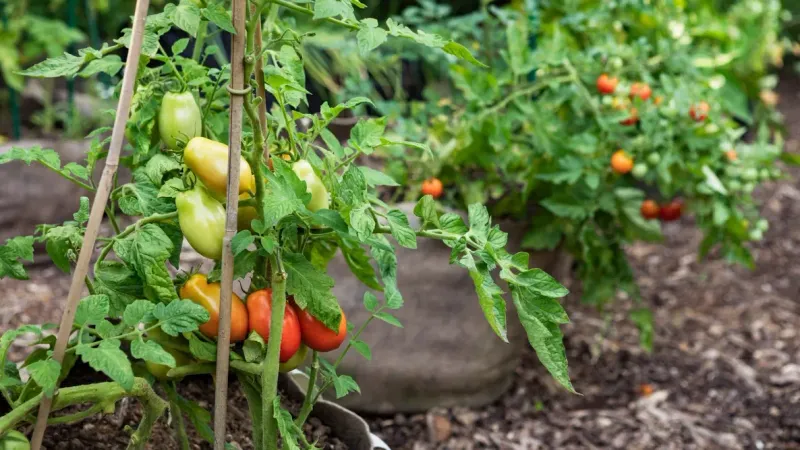
Check the plant type before you pick up the pruners. Indeterminate tomatoes keep growing and flowering along their stems for as long as conditions allow, which is why they get tall and sprawling.
Determinate varieties work differently. They stop growing at terminal flower clusters and tend to ripen their crop over a shorter window, a difference described in Oregon State Extension’s tomato guide.
Because they already have a limited set of fruit, late-season topping makes no sense for them.
If you are unsure what you planted, look at the plant label or the seed packet. Words like indeterminate, vining, or staking recommended point toward a plant that may be a candidate.
Even then, topping fits best when the plant is healthy, established, and still making new stems and flowers. Iowa State’s pruning page frames it that way.
Let your local season—not a fixed date—set the timing
A general reference comes from Iowa State, which suggests topping indeterminate plants about four to six weeks before the average first fall frost. Count back from your own local frost date rather than copying a calendar date from somewhere else.
In the South, that math takes judgment. Florida’s outdoor planting windows differ across the north, central, and south parts of the state, as UF/IFAS lays out.
A fall tomato in Florida may be starting its season while a gardener farther north is nearing the end.
Texas A&M suggests setting out fall transplants about 100 days before expected frost, according to its tomato guide. That is a planting reference, not a topping date.
Heat is another factor. High temperatures can impair fruit set and color, as UF/IFAS notes, and topping will not fix that.
If your fruit is slow to color in hot weather, topping is not the answer.
Make the cut just above a leaf or fruit cluster
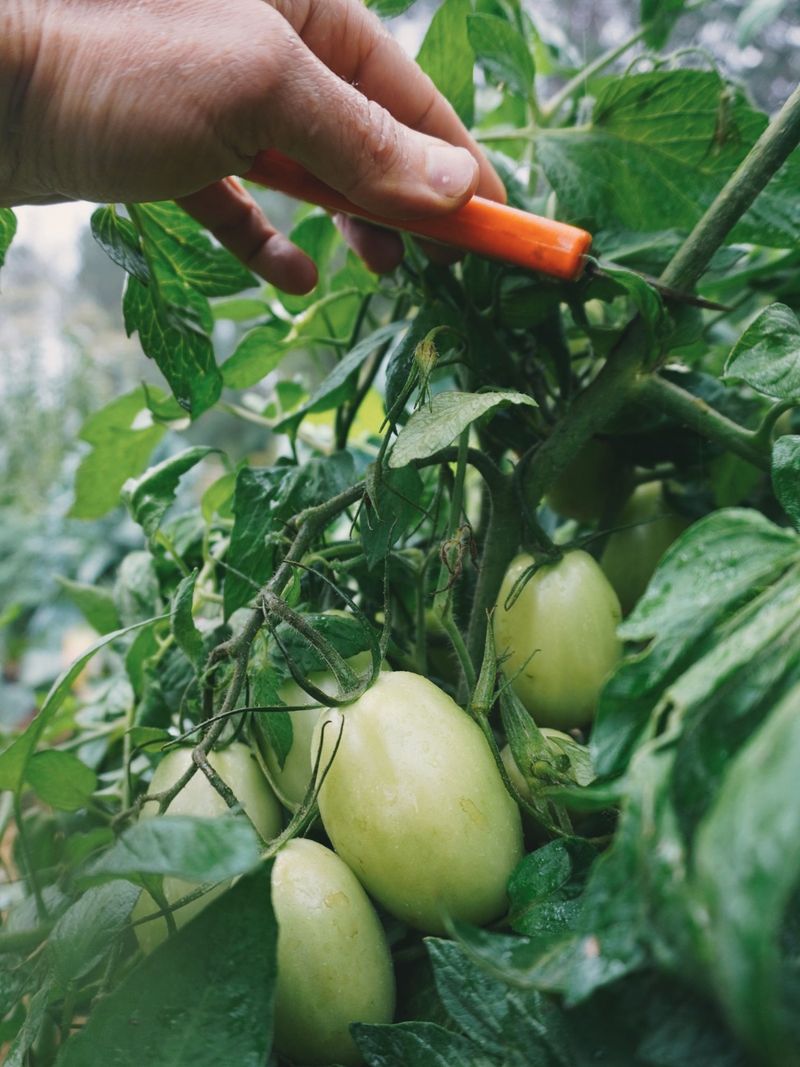
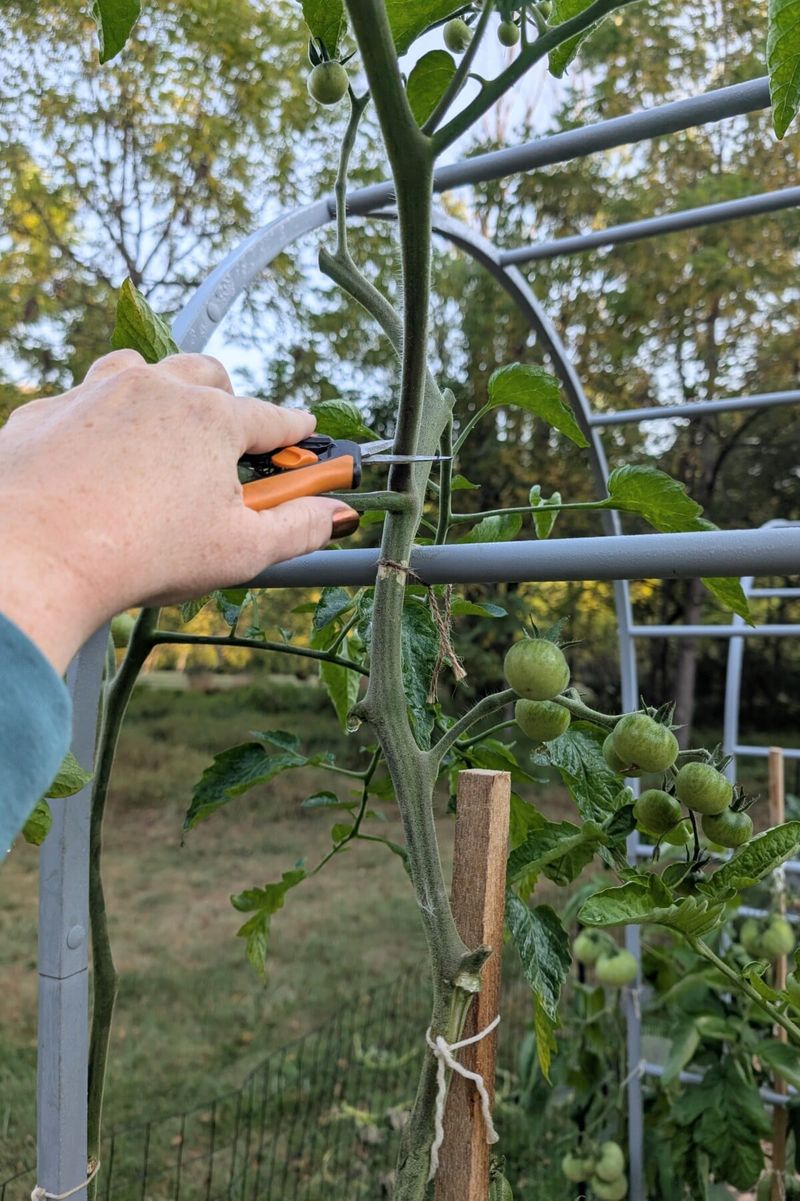
Start with clean, sharp pruners. Find the main stem’s growing tip, then cut just above a leaf or a fruit cluster so the stem does not leave a bare stub.
Keep the cut small. You are removing the tip that would keep climbing, not trimming back big sections of vine or lopping off healthy fruit-bearing growth.
According to Iowa State, pruning is best done on a dry day.
Wet foliage makes it easier for problems to move from plant to plant. Wait for the leaves to dry in the morning sun before you start.
After the cut, look the plant over. The leaves below should still shade and feed the fruit, and the plant should look nearly as full as it did before, just without that reaching top.
Keep healthy leaves around the fruit
Topping does not mean stripping the plant. Leaves make the sugars that feed developing fruit, and Maine Extension cautions against heavy leaf removal before fruit ripens.
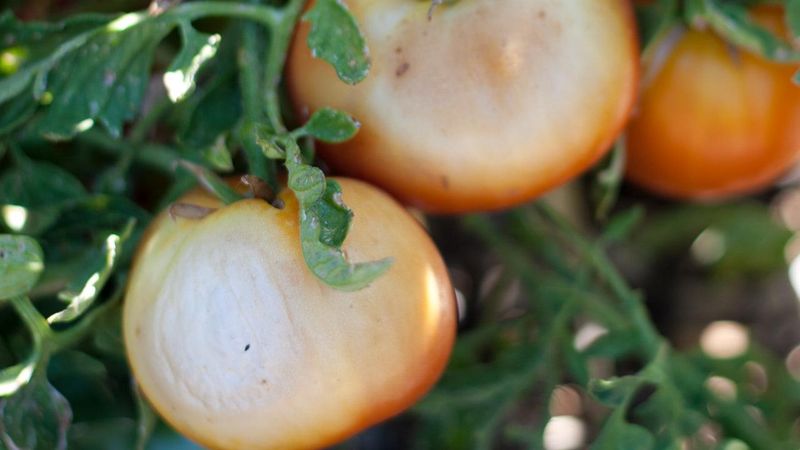
An overly open canopy has a second risk. Fruit left in prolonged direct sun can develop sunscald, especially in hot weather, as University of Maryland Extension explains.
Pale, papery patches on a shoulder of the fruit are the clue. Leaf removal is not a ripening shortcut.
Keep soil moisture steady, and hold off on pruning any plant already stressed by drought, disease, or nutrient problems. Iowa State advises against topping those plants.
Finally, clean your tools between plants. Pathogens such as the bacterial spot described by UF/IFAS can spread through handling and pruning tools, so wipe or sanitize blades, especially if any plant shows disease.
Removing late flowers is a separate decision
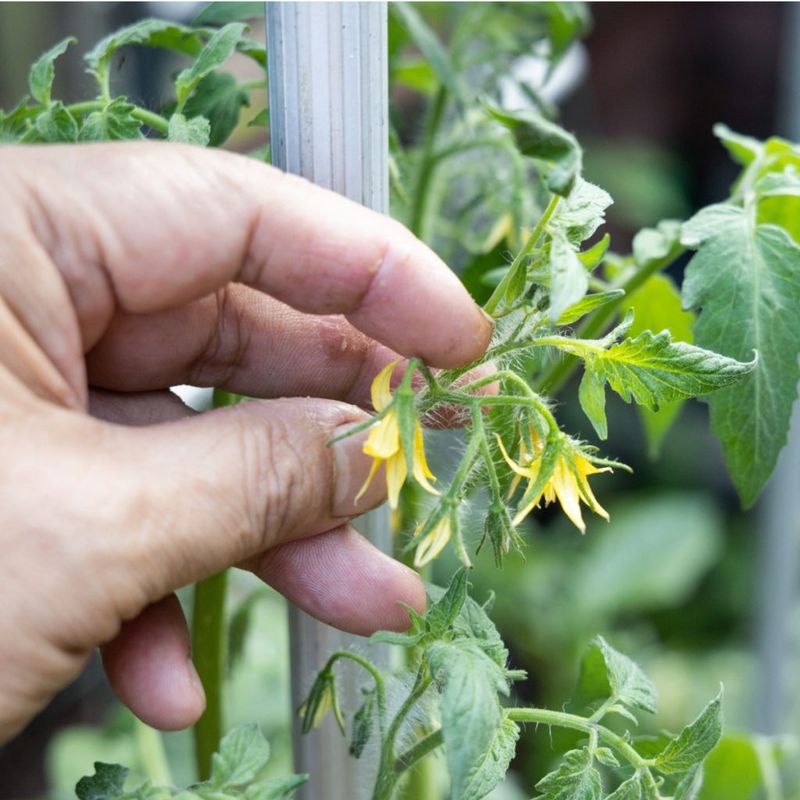
Pinching off flowers is its own late-season tactic, and it is not the same as topping. Topping removes the growing tip, while flower removal clears blooms that have not yet turned into fruit.
Iowa State recommends removing flowers as they appear starting about four weeks before the first fall frost. The reasoning is simple: a bloom opening that late is unlikely to become a ripe tomato before the season ends.
The aim is to avoid spending the plant’s resources on fruit that will not finish. It does not promise that tomatoes already set will ripen faster.
You can do one, both, or neither. A plant in a long Southern fall may keep earning new fruit, so base the call on your own season.
If cold arrives first, sort harvested tomatoes by maturity
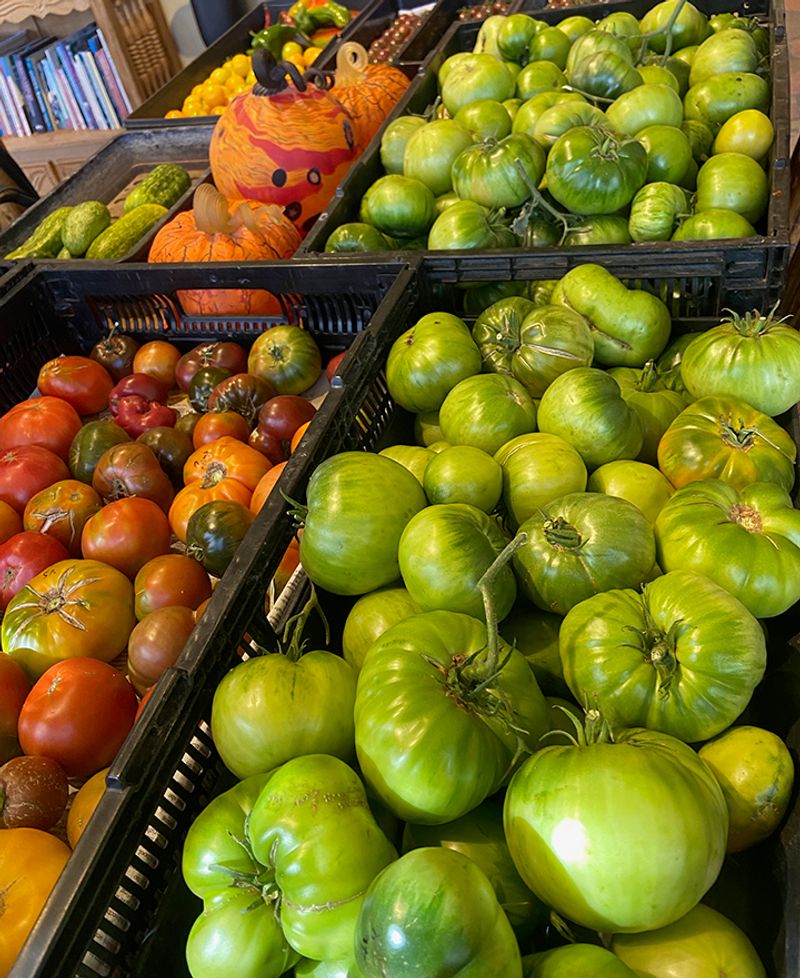
When a cold snap beats the ripening, harvest the fruit and sort it. Colorado State Extension describes mature-green tomatoes as shiny, mature-sized fruit with a pale, star-shaped area at the blossom end.
Those can ripen indoors, though the flavor may not fully develop. Breaker-stage fruit, which has just begun to show color, is also a good candidate.
Matte-green, immature fruit is a different story. It may not ripen successfully indoors, so do not count on every green tomato making it.
Topping remains a conditional option, not a stand-in for checking your local conditions and the maturity of your fruit. A plant that has done its job still deserves a look before the first cold night.