
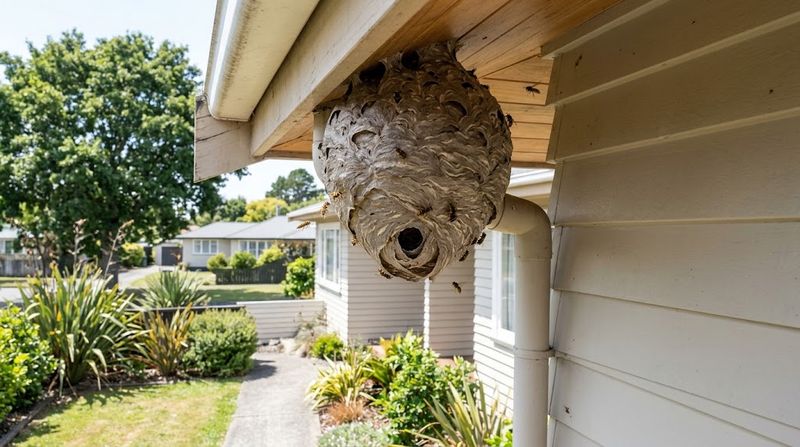
Some wasp queens spend the winter tucked into quiet corners of North Carolina sheds, and a cleanup day can bring you hand to hand with one. The risk of a sting is small, but it is real enough to plan for.
Queens can stir on warm winter days, and a wasp that gets pressed or stepped on may sting. A few careful habits can keep a tidy-up from turning into a surprise.
A winter shelter is not a functioning colony
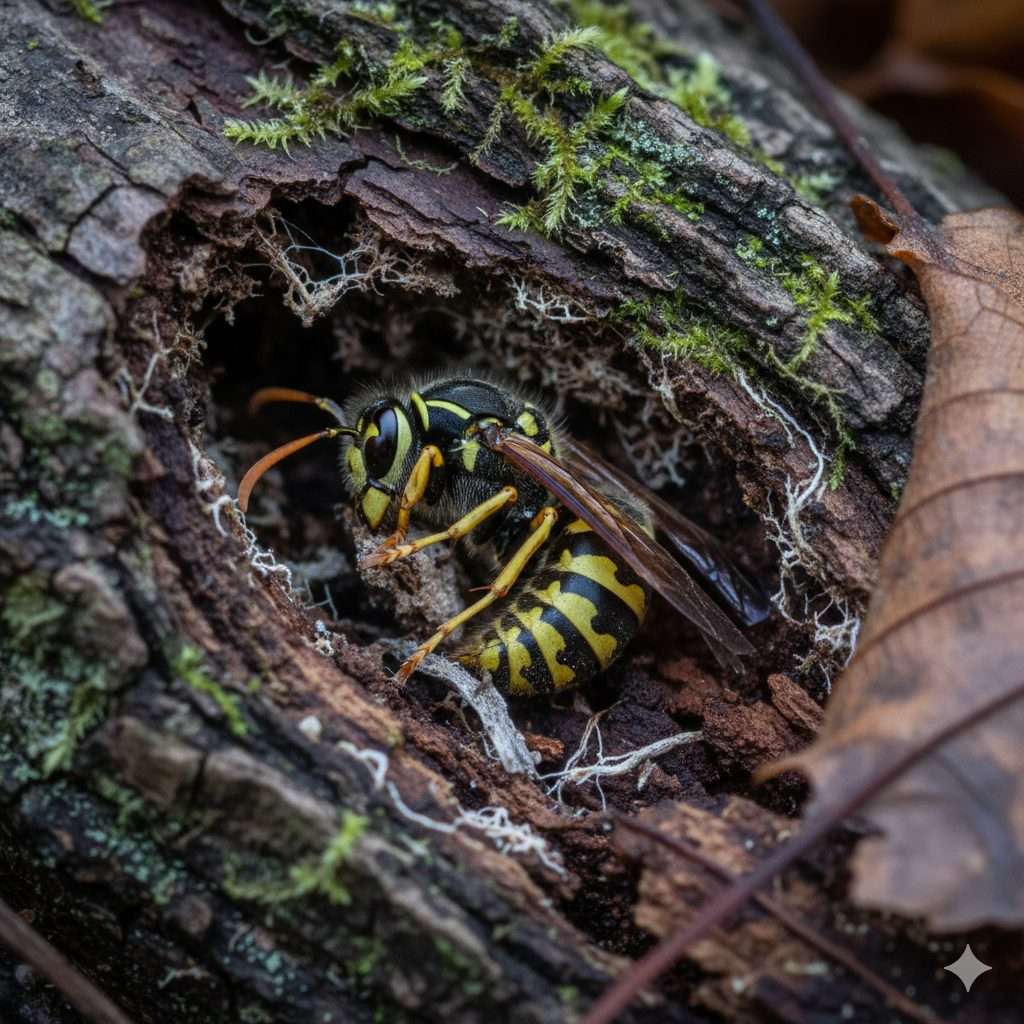
Cleanup advice starts with knowing which insects we mean. Here we are talking about mated queens of social wasps, such as paper wasps, yellowjackets, and European hornets.
Other wasps, including solitary kinds, handle winter in different ways and at different life stages, so none of this applies to every wasp you might see.
For the social wasps, the old colony mostly ends with the season. NC State Extension explains that workers generally die, while mated queens leave to spend winter separately.
Each queen overwinters individually, not as part of a working colony with workers and a nest to defend.
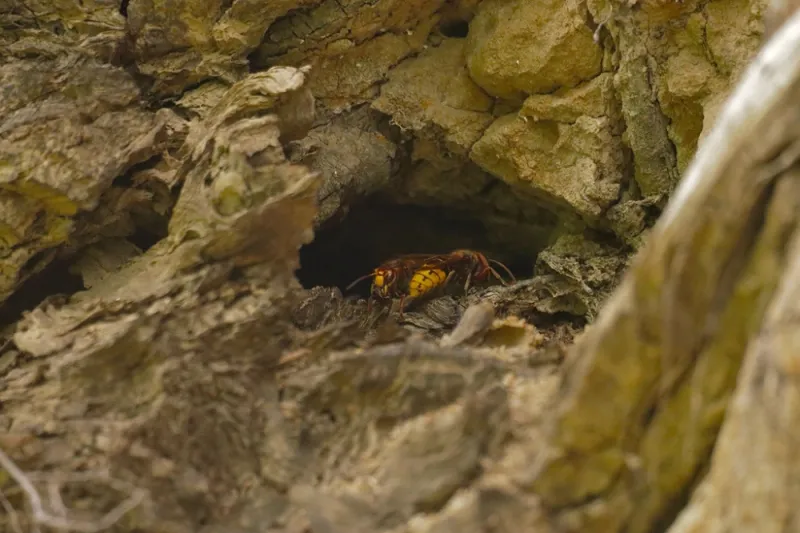
Some queens do share space. NC State’s European hornet page notes that more than one European hornet queen may use the same hibernation site.
A shared hideout is just several sleeping queens in one spot. It is not an active colony.
Old nests are not coming back either. Yellowjacket nests from the previous year are not reused, and neither are European hornet nests.
So a queen in your shed does not mean an old nest is still active, and it does not mean a new nest is waiting close by.
That is a relief for most homeowners. Finding one sluggish queen is a very different situation from finding a busy nest, and it calls for a much calmer response.
Where queens may shelter
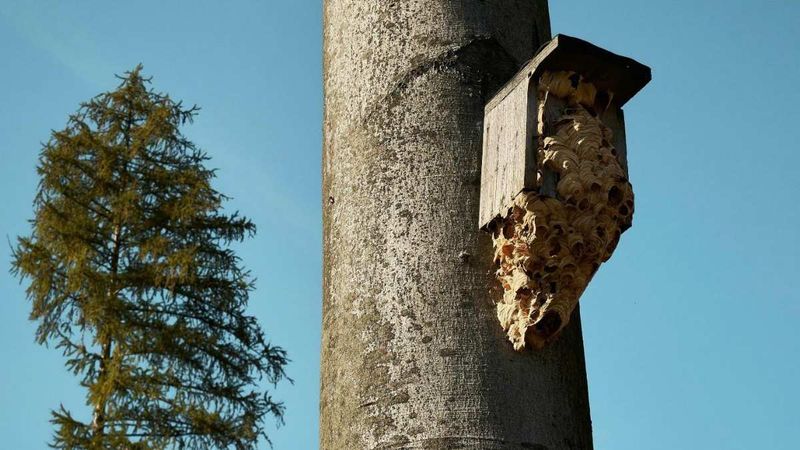
Queens look for protected spots that stay dry and out of the wind. NC State names woodpiles, barns, attics, and similar cavities for paper wasp queens, and sometimes attics for yellowjacket queens.
European hornet queens may also use protected sites, and NC State’s hornet page lists attics among them.
Those examples line up with the places many of us clean out. A firewood stack beside the shed, a loft above the garage, or a barn corner all fit the description of a sheltered cavity.
Gaps behind stored lumber or boxes can fit it too.
Birdhouses and stacked pots are a different case. They offer enclosed, sheltered space, so a queen could plausibly tuck inside.
But the sources reviewed do not show how often North Carolina queens actually use those items.
Think of them as possible hiding places, not predictable hotspots. That difference matters because it keeps you from either ignoring them or panicking over every flowerpot.
A quick look is enough.
For comparison, NC State’s bee hotel guidance reminds us that many insects use small cavities, and they do not all overwinter the same way. So a creature in a tube or hole is not automatically a wasp queen.
What can make a queen more active?
Winter does not keep every queen perfectly still. NC State reports that paper wasps may become more active on warm winter days.
A sunny afternoon in January can be enough to get one moving.
The same source warns that an overwintering wasp can sting if it is accidentally pressed or stepped on. That is the practical concern: a hand closing on a glove, a boot on the floor, or a pot squeezed against a shelf.
You may have heard that moving things around wakes queens up fast. The sources reviewed do not show that.
They do not identify cleanup disturbance as a reliable wake-up trigger, and they do not say a queen will react quickly when items shift.
So the picture is more modest than the scary version. Warm weather can stir queens, and careless contact can lead to a sting.
Neither one means a cleanup will set off a swarm.
For seasonal context, NC State’s Plant Disease and Insect Clinic also writes about queens waking after their winter rest. Treat warm spells as a reason to look first, then handle.
Inspect before you move stored items
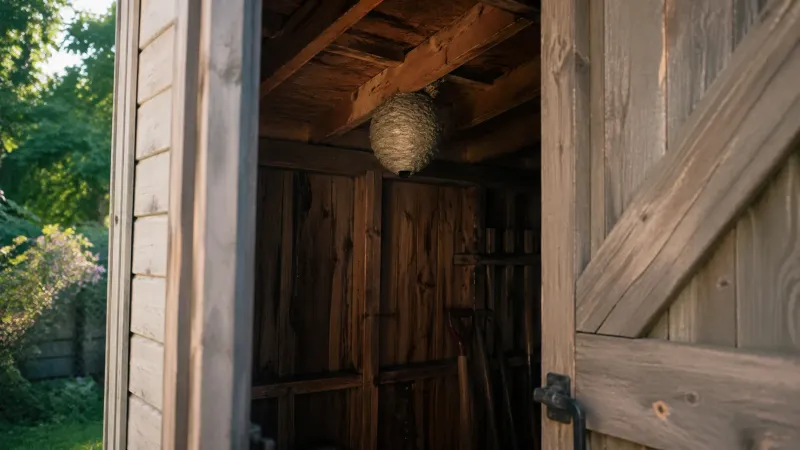
Looking before touching is the simplest habit you can adopt. Scan the shelves, the gaps behind boxes, the inside of pots, and any birdhouse before you lift anything.
A flashlight can help you see into dark corners without putting a hand there.
Move items slowly and one at a time. Lift things by their outer edges, and avoid reaching blindly into gaps or sliding a hand between stacked pots.
If you do see a wasp, step back and let it be while you decide what to do.
These steps come from a single idea. NC State warns that an overwintering wasp can sting if accidentally pressed or stepped on.
Visual checks and careful handling are cautious ways to avoid that kind of contact.
They are precautions, not a tested cleanup method built for a particular species. There is no proven timing rule or special gear that guarantees you will not be stung, so avoid anyone who promises one.
A few small touches help. Keep your feet aware of the floor, shake out gloves before putting them on, and set tools down where you can see them.
Work in good light, and take your time rather than rushing to finish.
If you find a wasp indoors
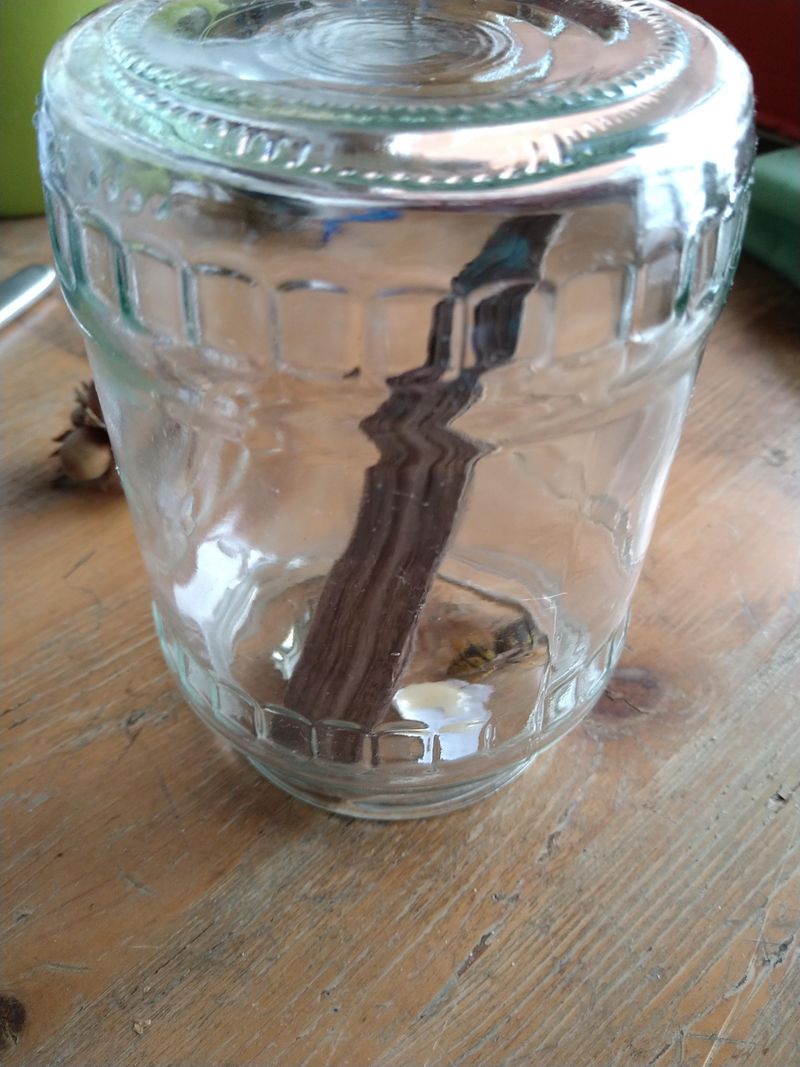
A wasp inside the house in winter can be startling. Still, one wasp does not by itself prove there is an active nest nearby.
An overwintering queen may simply have wandered out of a hiding spot, perhaps on a warm day.
Do not assume you need to kill or spray every wasp you see. NC State says an indoor wasp can be carefully collected in a jar and released outside, or removed by other means.
Paper wasps and yellowjackets can also be beneficial outdoors.
If you try the jar method, move slowly and keep your hands clear. Identify what you are looking at first, since not every insect called a hornet is a European hornet and advice can differ by species.
Anyone with a serious sting allergy should not handle the wasp at all. A jar is not guaranteed safe for everyone, so ask another person to help or call a professional.
Keep this separate from nest problems. A single wasp is an isolated visitor.
If you start seeing several wasps day after day, or hear buzzing in a wall, that points to something else and deserves a closer look.
When a nest needs professional attention
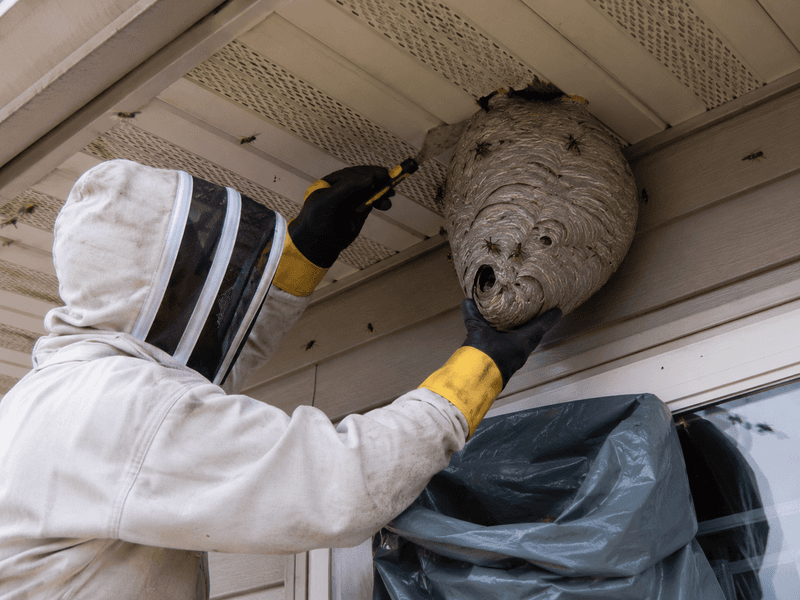
A sleeping queen and an actual nest are two different problems. A queen is alone and usually inactive.
A nest means many wasps, a defended entrance, and a higher chance of stings, so it may call for control.
NC State advises considering a pest-control professional for a nest in an inaccessible wall void. People with serious sting allergies should avoid handling wasps and seek professional help for any nest.
Do not spray a suspected overwintering queen or your storage area ahead of time. Pesticides are meant for a real nest, not a guess.
If you do treat an actual nest yourself, NC State’s 2026 pesticide manual says to apply a labeled product to the nest or its opening after dark, when the insects have returned. Follow every direction on the product label.
Never pour gasoline into a nest. NC State warns against it, and it creates fire and safety hazards without being a proper treatment.
When the nest is out of reach or the risk feels high, calling a professional is the sensible choice.
Check carefully rather than guessing
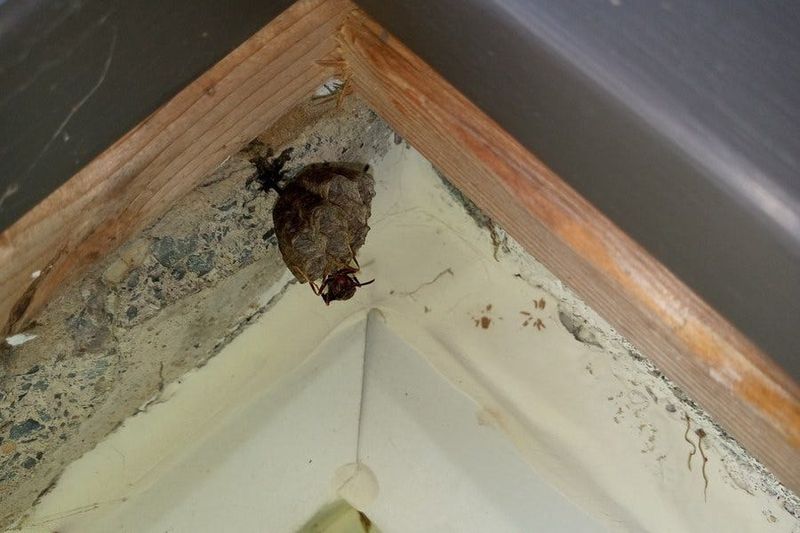
A queen may be resting among your stored things, and NC State’s guidance is about avoiding accidental contact. Moving items is not shown to wake her quickly.
A slow look and gentle hands do the rest.
Most sheds hold nothing more dangerous than dust, and a steady cleanup is usually a quiet one.