
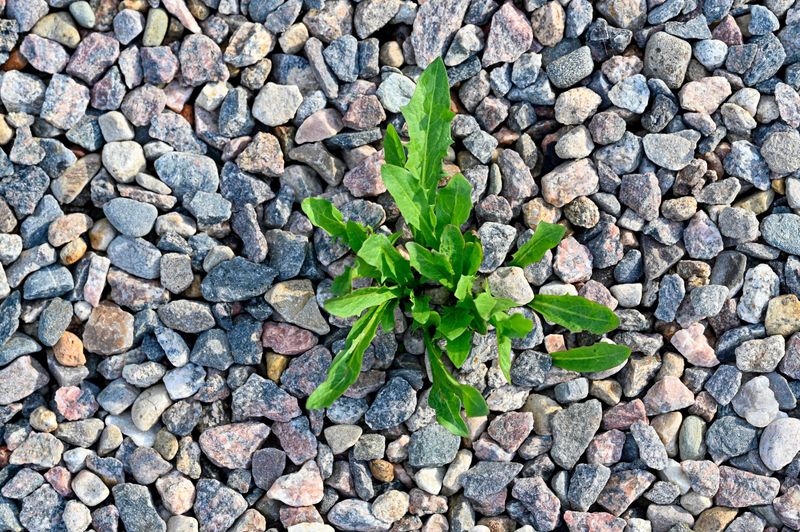
Gravel paths are supposed to be one of the easier parts of the yard to maintain, but weeds have a way of making that promise feel hollow. Pull them once, and they come back thicker than before.
The real problem is not the gravel itself – it is what quietly settles between the stones and turns your path into a ready-made seedbed.
The gravel surface can turn into a seedbed
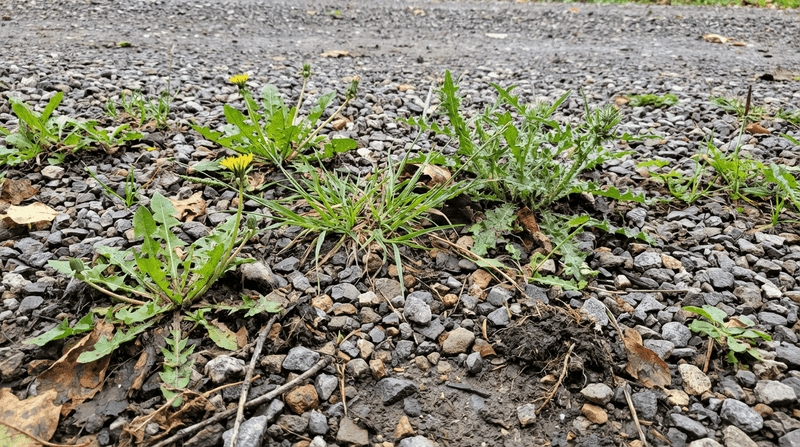
Gravel earns its reputation as a low-maintenance surface partly because it reduces light at the soil level, which slows germination for many annual weeds. That advantage holds up well when the stones are clean and tightly packed.
The trouble starts when the path stops being purely gravel.
Fine soil particles, dust, leaf fragments, broken-down twigs, and other organic material gradually settle on top of and between the stones. Wind carries it in.
Rain washes it from nearby beds. Foot traffic grinds it down.
Over time, this material packs into the gaps and forms a thin but surprisingly capable growing medium sitting right on your path surface.
That thin layer holds moisture longer than bare stone would, and it collects the trace nutrients that organic material releases as it breaks down. A windblown seed landing on clean gravel has almost no chance of surviving.
The same seed landing on a quarter-inch of compacted leaf dust and soil has a reasonable shot. As Iowa State University Extension’s mulch guidance notes, inorganic surfaces become increasingly vulnerable to weed pressure as soil and organic matter accumulate above them.
The debris is not the only reason weeds appear, but it is often the hidden reason a path that looked fine last fall is suddenly full of seedlings by spring. Recognizing the buildup as a developing seedbed – rather than a sign that gravel simply does not work – is the first step toward fixing the right problem.
Cornell’s gravel path weed management resource points to this accumulation as a core driver of ongoing weed pressure in gravel surfaces.
Where else can the weeds be coming from?
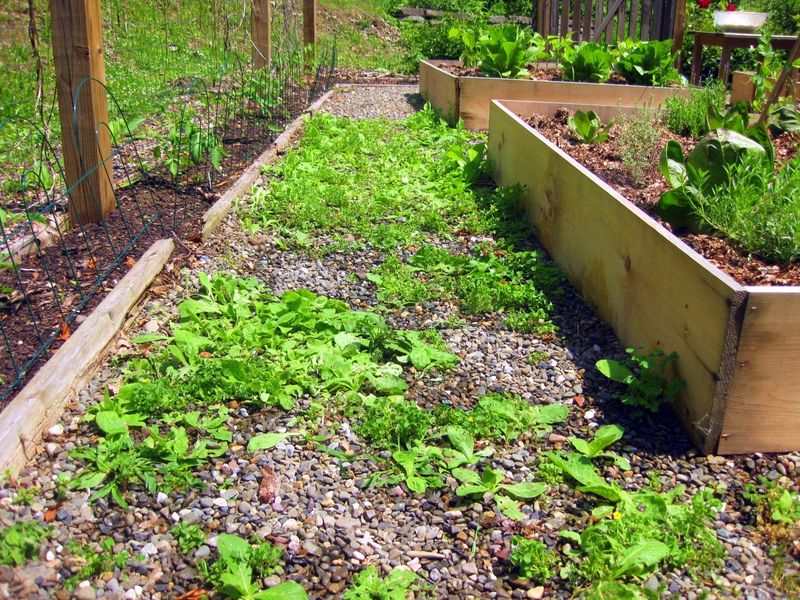
Debris buildup creates ideal conditions for germination, but it is not the whole story. A path can look relatively clean and still host a fresh crop of weeds every few weeks.
Understanding the other entry points helps you figure out why your particular path keeps reseeding itself.
Wind is a constant supplier. Dandelions, thistle, and many other common Southern weeds produce seeds engineered to travel.
Birds and small animals drop seeds as they move through the yard, and runoff from a rainstorm can carry seed from a neighboring bed right onto the path surface. Contaminated landscape materials – bagged mulch, fill soil, or even new gravel from a supplier – can introduce seeds or plant fragments before you ever rake the first stone.
Colorado State University Extension’s rock-landscaping overview lists windblown seed, animals, and nearby vegetation as legitimate and ongoing weed sources in any gravel setting.
Some weeds are not arriving from above at all – they are pushing up from below. If the ground was not fully cleared before the path was installed, established roots and rhizomes can work through the gravel layer over time.
Bermuda grass, nutsedge, and similar spreading species are especially capable of this.
Path edges deserve particular attention. Grasses and weeds growing just outside the border can send runners or rhizomes laterally inward, showing up as weeds that seem to sprout from the middle of the path.
CSU Extension’s guidance on spreading weeds highlights how gravel size can affect how easily debris collects – smaller gravel tends to pack more tightly and leave fewer open pockets, while larger stones can catch more material in their gaps. That is a useful tendency to keep in mind when choosing or replacing gravel, though it is not a guarantee that one size will solve every site.
Start by removing the path’s existing growing layer
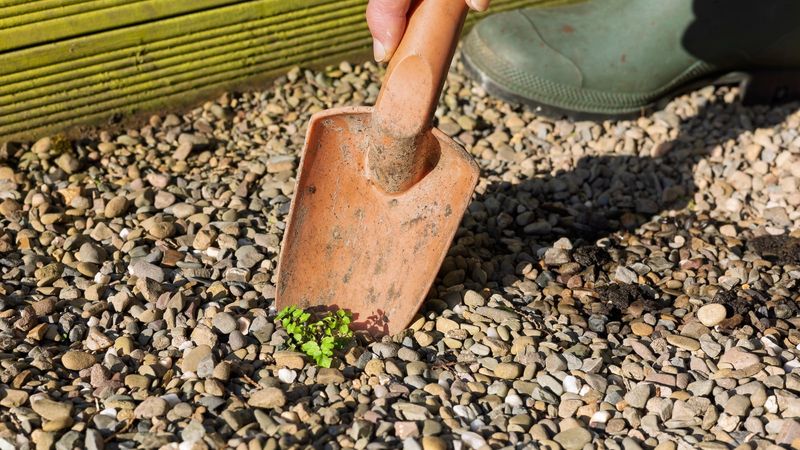
Before adding fresh gravel or trying any treatment, the path needs a reset. Skipping this step is the most common reason weed problems return within a few weeks of what felt like a thorough cleanup.
Pull or dig existing weeds first, before they flower or drop seed. Even weeds that look small can be close to setting seed, especially in the warm conditions typical of Florida and Texas.
Work methodically from one end of the path to the other rather than spot-treating, so you do not miss patches that will resprout. Cornell’s gravel surface weed management guidance specifically recommends removing weeds before they can flower and reseed, treating that step as the foundation of any effective reset.
Once the weeds are out, rake the surface to lift the accumulated layer of soil, dust, and organic material. The goal is to remove that layer without pushing it deeper into the path, where it would continue to feed future weeds from below.
Collect the raked material and remove it from the path area entirely – redistributing it to a nearby bed just moves the problem.
Resist the urge to skip straight to pouring fresh gravel over what is already there. Covering established weeds with new stone rarely works.
Iowa State Extension’s home garden weed management resource makes clear that mulches and surface covers are much less effective against weeds with persistent roots or rhizomes already in the ground. Only after the surface is cleared – weeds removed, debris raked out – does it make sense to restore an even gravel layer and move on to the next step.
Young annuals and spreading perennials need different responses
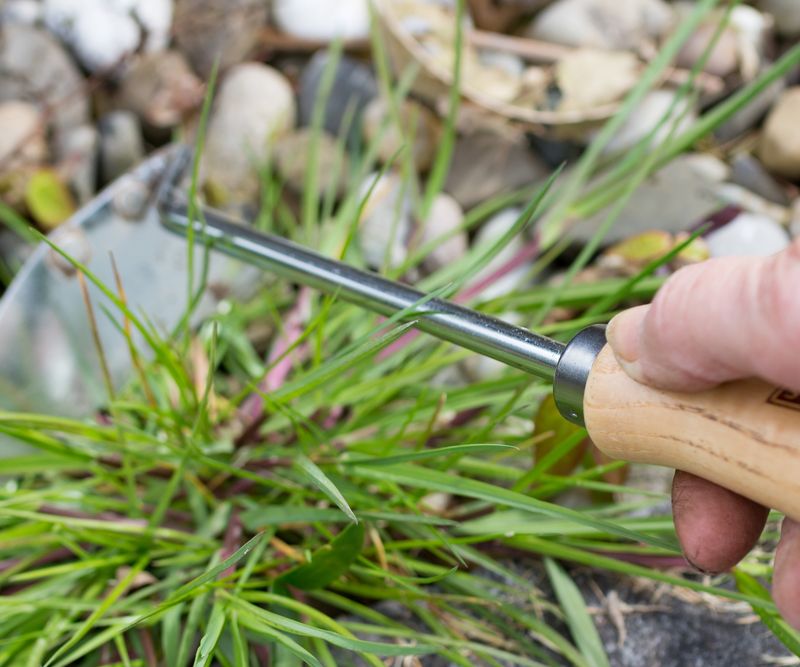
Not every weed on a gravel path calls for the same response. Treating a two-inch annual seedling the same way you treat an established clump of nutsedge is a reliable way to exhaust yourself without making lasting progress.
A quick identification step before you start pulling saves time and frustration.
Annual weeds and young seedlings that have not yet developed deep roots are the easiest to handle. Hand-pulling works well when the soil is slightly moist and the weed is small – the whole root often comes out cleanly with minimal disturbance to the surrounding gravel.
UC IPM’s landscape weed management guidance recommends removing weeds while they are still small, before they set seed or develop the root systems that make hand-pulling less reliable. The key is timing: pulling a crabgrass seedling takes seconds, while the same plant left for three more weeks may require a trowel and repeated follow-up.
Spreading perennials are a different challenge entirely. Bermuda grass, nutsedge, and similar species maintain underground structures – rhizomes, tubers, or stolons – that regrow even when the visible top is removed.
For these weeds, the goal is to remove as much of the underground structure as possible each time you work the area. UC’s research on fabrics and mulches for weed management notes that landscape fabric is not a reliable barrier against all perennial weeds, particularly those with aggressive rhizomes.
Repeated digging sessions, consistent edge management to cut off the source, or a carefully selected labeled herbicide may all be part of managing these species. University of New Hampshire Extension’s guidance on mechanical weed control is direct: persistent perennial weeds rarely disappear after one treatment, and setting realistic expectations about follow-up is part of a workable plan.
A rebuilt path needs separation, not just new stone
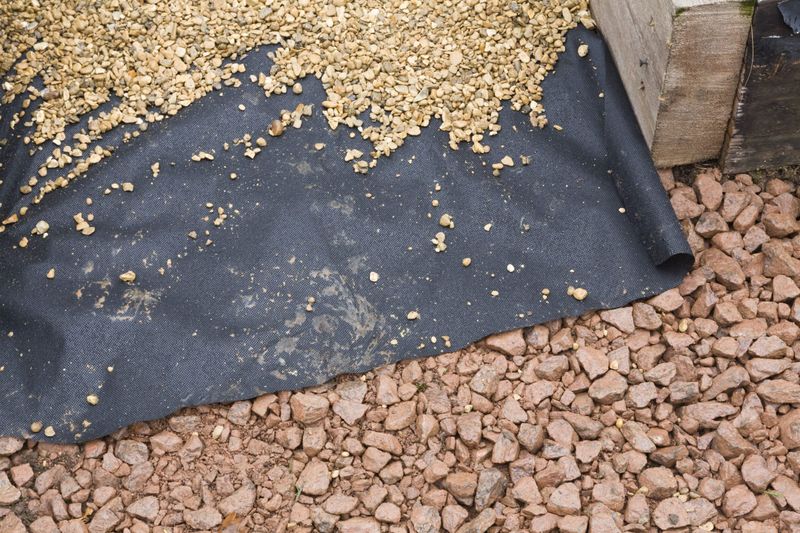
Sometimes a path has deteriorated past the point where a surface reset is enough. If gravel and soil have mixed thoroughly, if perennial weeds have established deep root systems throughout the base, or if the original path was never properly prepared, a more complete rebuild may be the most practical long-term choice.
Reconstruction starts from the ground up. Remove all existing vegetation from the path area first, including as much root material as possible.
Grade the base and compact it appropriately for your soil type and path use – a stable, level foundation prevents the gravel from shifting and mixing with soil over time. Keep soil off any barrier or fresh gravel during the process, because contamination at the start defeats the purpose of the rebuild.
A permeable landscape barrier installed on weed-free ground can help separate the soil base from the gravel layer above it, reducing the mixing that creates the seedbed problem in the first place. Oregon State University’s extension guidance on gravel surface construction illustrates this principle with a “gravel sandwich” approach – fabric below, adequate gravel above, with the fabric carefully pinned and overlapped.
That OSU publication describes a 3- to 6-inch gravel layer in its nursery application, but that specification is not a universal rule for residential walkways. Path depth depends on your soil conditions, drainage, traffic, and the type of gravel you are using.
Fresh gravel restores coverage and improves appearance, but it does not stop future windblown seed from landing, and it will not reliably control perennial weeds that still have living roots beneath the barrier. UC IPM notes that landscape fabric can reduce weed problems when installed correctly, but weeds can still germinate in debris above it, penetrate it over time, or become difficult to remove once rooted into it.
A well-built path starts the maintenance cycle from a better position – it does not end the need for maintenance.
What keeps the next seedbed from forming?
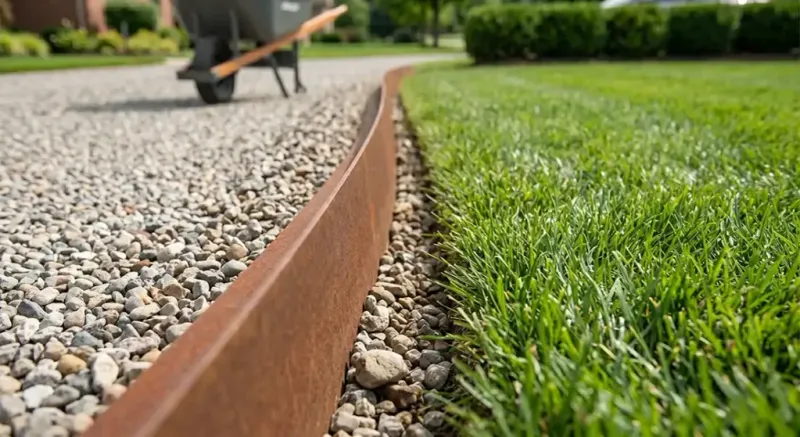
Clearing the path and rebuilding it properly solves the existing problem. Keeping it solved is a matter of staying ahead of the debris before it has a chance to compact into another seedbed.
Raking is the most practical ongoing tool. A periodic pass with a stiff rake lifts leaf fragments, fine soil, and other material before it packs down between the stones.
How often that needs to happen depends on the trees and plants near your path, how much wind and rain you get, and how quickly debris accumulates in your specific yard. Cornell’s gravel surface guidance recommends monitoring the path and edges regularly, raking to minimize soil buildup, and replenishing gravel when the surface becomes uneven or thin – framing those three actions as the core of realistic long-term management.
Edge management matters just as much as surface care. Grasses and weeds growing at the path border are a constant source of lateral invasion, so keeping that edge trimmed or installing a physical edging strip reduces how much plant material can creep inward.
Check edges every time you rake the path surface.
Irrigation habits also play a role. Overhead sprinklers that wet the path surface encourage germination by keeping the debris layer moist.
UF/IFAS research on improving weed control in landscape plantings supports using drip or micro-irrigation to limit water to plants that need it, which can reduce weed pressure in adjacent landscape areas. In Florida and Texas, warm temperatures and extended growing seasons mean weed seeds can germinate almost year-round, so consistent preventive habits matter more than any single treatment.
Catching debris early – before it forms a continuous layer – is always easier than resetting the path from scratch.
Skip shortcuts that create a different yard problem
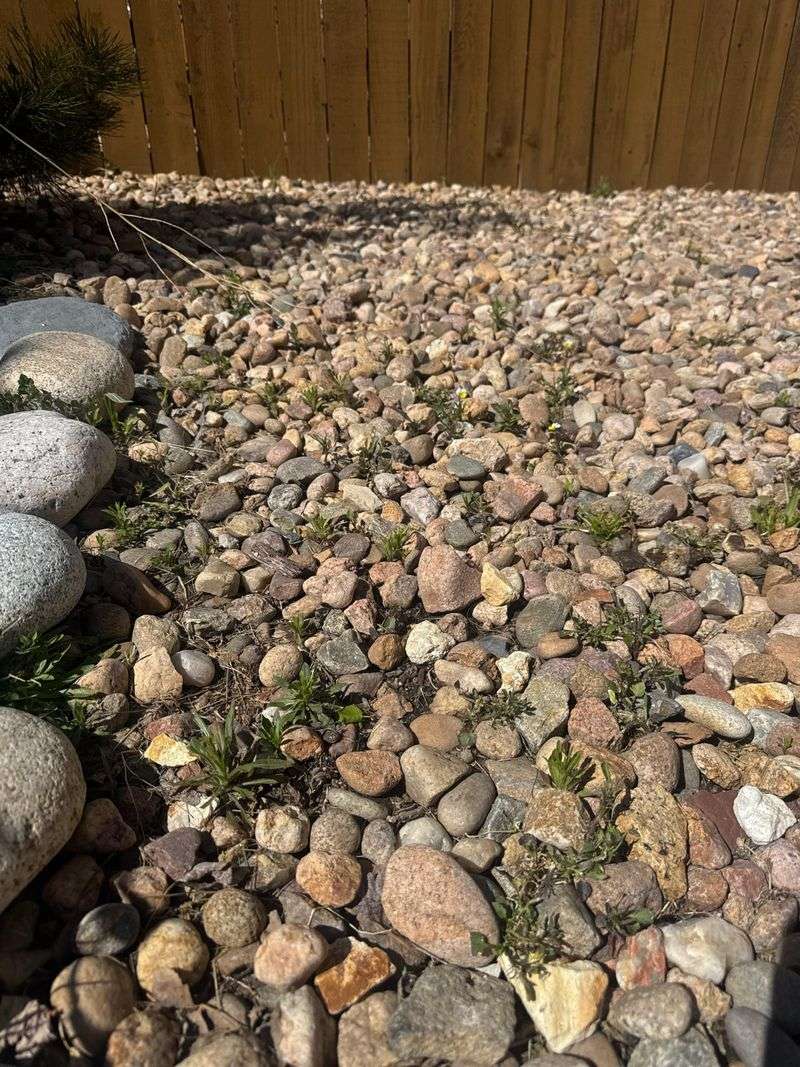
Frustration with persistent weeds pushes a lot of gardeners toward quick fixes that sound reasonable but create new problems. A few of the most common ones are worth addressing directly.
Salt, bleach, and dish soap are not weed killers – they are soil and surface damagers. Salt accumulates in the ground and can affect plants, drainage, and soil structure long after it is applied.
Bleach can harm desirable plants, soil organisms, pets, and nearby water. Penn State Extension cautions broadly against unsupported home remedies, noting that even ingredients marketed as natural can injure plants or raise safety concerns – a warning that applies well beyond its original pest-control context.
Vinegar gets recommended often in gardening circles, but the details matter. Household vinegar at 5% acetic acid has limited effect on anything but the youngest, most tender seedlings.
Higher-concentration horticultural-strength products can cause serious skin and eye injury. More importantly, University of Maryland Extension’s review of vinegar as a glyphosate alternative found that acetic-acid products act as nonselective contact treatments, may not kill perennial roots, and typically require repeat applications – so the “safe and permanent” framing that circulates online is not accurate.
Flame-weeding is sometimes suggested for gravel because there is nothing to burn – except that there often is. UF/IFAS guidance on nonchemical weed control warns against using flame near dry landscape fabric, dry mulch, irrigation components, plastic, rubber, desirable plants, or shallow roots.
If a labeled herbicide seems appropriate, pre-emergent products work before germination and will not affect weeds that are already visible. Post-emergent products target growing weeds but must be matched to the specific weed and site.
The EPA’s introduction to pesticide labels explains that using any product inconsistently with its label violates federal law – so identifying the target weed, confirming the site is listed, and following rate and timing directions exactly are not optional steps. University of Maryland Extension’s herbicide guidance reinforces that product timing, site approval, and application rate all vary by label and must be verified before use.
A gravel path stays low-maintenance only when it stays clean
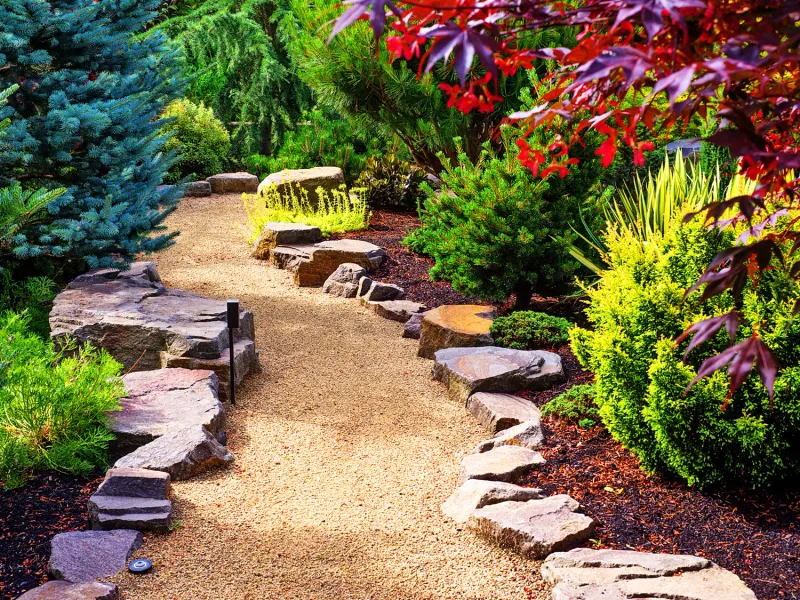
The durable fix for a weed-filled gravel path is a cycle, not a one-time project. Clear the existing weeds, rake out the debris-and-soil layer, restore the gravel surface, manage the edges, and remove new buildup before it compacts into another seedbed.
That sequence, repeated as conditions demand, is what keeps a path functional and looking right.
Barriers and fresh stone can improve starting conditions – a well-built base with proper separation reduces how quickly the path deteriorates – but neither makes the path permanently weed-free. Cornell’s gravel path management guidance and Iowa State Extension’s mulch research both point to the same conclusion: regular observation and maintenance are what separate a path that holds up from one that becomes a weed patch again by summer.
A gravel path that gets a little attention each season is genuinely easier to manage than a lawn – but only if it actually gets that attention. The weeds are not winning because gravel fails; they are winning because debris is doing their work for them.