
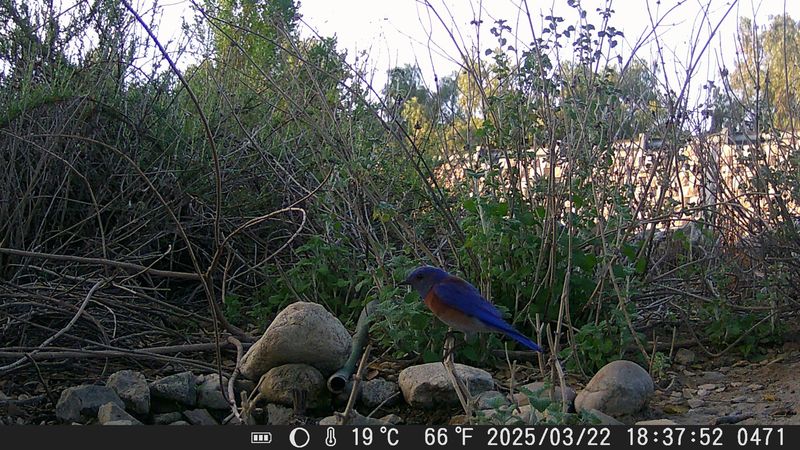
A flash of cobalt blue dropping from a fence post to snatch a beetle is one of the more satisfying things a California homeowner can witness in the yard. Western Bluebirds eat caterpillars, beetles, grasshoppers, ants, and other arthropods, and they do most of their hunting right at ground level where garden pests live.
Knowing what draws them in, and what quietly drives them away, can help you get more out of the birds already passing through your neighborhood. The good news is that a perfectly manicured lawn is not the problem, but a yard with nothing else to offer probably is.
Western Bluebirds hunt across open California yards
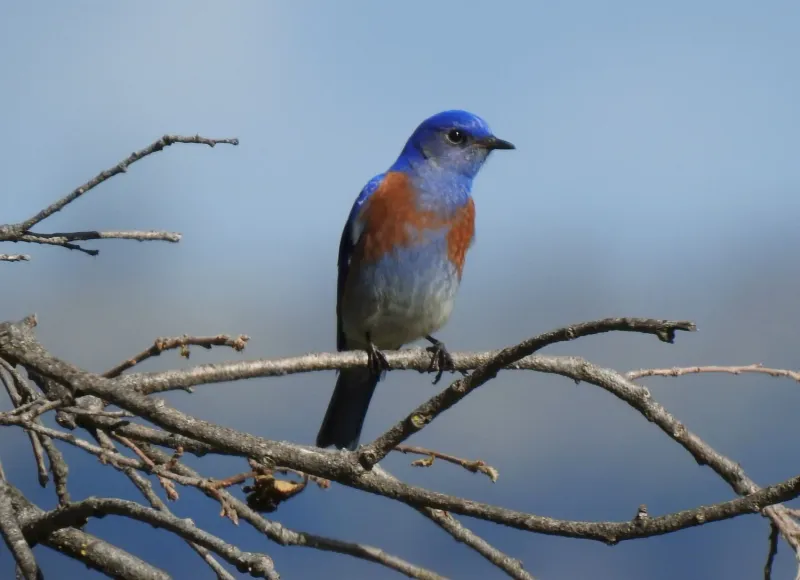
Scan any open hillside, oak woodland edge, or suburban park in California during the warmer months and you have a decent chance of spotting a Western Bluebird doing exactly what its biology is built for: sitting low, watching, and dropping. Males show the species’ signature cobalt-blue back and rusty-orange breast; females wear softer versions of the same palette.
California Department of Fish and Wildlife life history records place the species as a year-round resident through much of the state, favoring open woodlands, oak habitats, riparian corridors, and the edges where trees meet open ground.
The hunting method is straightforward. A bluebird chooses a low perch, whether a shrub branch, fence rail, or utility wire, and watches the ground below.
When something moves, it drops, seizes the prey, and returns to a perch or carries the catch to a nest. Cornell Lab of Ornithology life history data confirms that summer food is primarily insects, with caterpillars, beetles, grasshoppers, ants, spiders, and other arthropods making up the bulk of what adults and nestlings eat.
Insects matter most during the breeding season, when nestlings need high-protein food delivered constantly. Outside that window, fruit, berries, and seeds become a larger share of the diet.
A yard that offers hunting opportunity during spring and summer is where bluebirds are most likely to spend meaningful time.
Observed insect consumption is not the same as guaranteed residential pest control. Western Bluebirds are one helpful part of a functioning yard, not a replacement for targeted pest management.
They can reduce the number of insects they encounter, but how much that matters to any specific garden pest problem depends on many factors beyond the bird’s appetite.
Vineyard research shows potential, not guaranteed backyard control
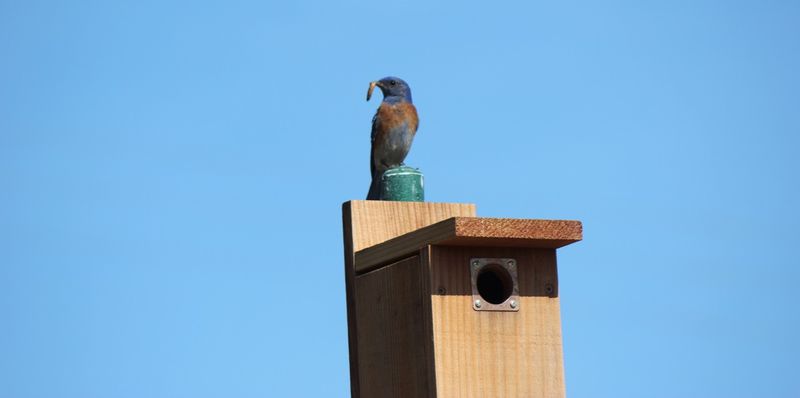
The clearest scientific evidence that Western Bluebirds can reduce pest insects comes not from suburban gardens but from California wine country. A vineyard study published in PLOS ONE found that adding nest boxes increased insectivorous bird density and that sentinel larvae placed near active bluebird boxes were removed at higher rates than larvae placed farther away.
That is meaningful evidence of localized predation pressure in a managed agricultural setting.
A companion diet study adds more detail. Molecular analysis of fecal samples from California vineyard bluebirds identified more than half of prey items as herbivorous insects, which are exactly the category most likely to damage crops and garden plants.
Mosquito DNA appeared in nearly half of the samples, though that finding reflects diet composition rather than any measurable suppression of local mosquito populations.
Vineyard conditions differ substantially from a typical suburban lot. Vineyards offer extensive open foraging ground, coordinated nest-box networks, reduced pesticide pressure in bird-friendly operations, and managed habitat that makes the research environment quite different from a quarter-acre residential yard with mixed vegetation and variable pest pressure.
One backyard pair of bluebirds hunting a standard home landscape may consume a meaningful number of insects without producing a noticeable reduction in caterpillar or beetle damage across the garden. Bluebirds are generalist predators, meaning they eat whatever arthropod is available and catchable, including spiders and other predatory insects that help control pests on their own.
The net effect on any specific pest population can vary considerably from yard to yard and season to season.
The vineyard research supports describing Western Bluebirds as possible contributors to an integrated approach to pest management. It does not support treating them as a reliable or complete solution for residential pest problems.
Keep useful open grass and add habitat at its edges
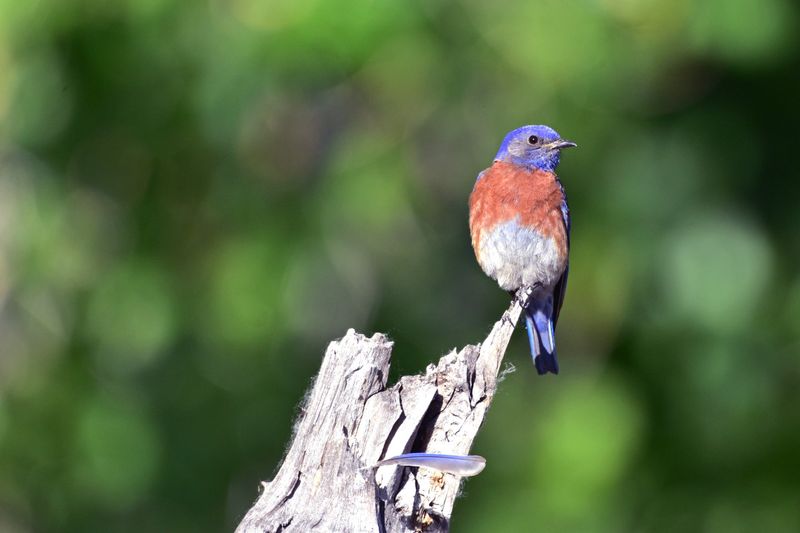
Short grass is not the enemy. Western Bluebirds regularly hunt in mowed meadows, large lawns, parks, golf courses, and field edges because open ground lets them spot prey from a perch and reach it quickly.
California Department of Fish and Wildlife habitat notes specifically list these kinds of open areas as foraging sites, which means a homeowner with a maintained lawn already has one component the bird can use.
The problem is not the grass itself. A lawn that sits in the middle of a yard with no shrubs nearby, no trees within flight distance, no perches at a useful height, and no adjacent vegetation producing insects gives a bluebird open ground but nothing else.
California Bluebird Recovery Program habitat guidance describes a productive bluebird territory as a combination of open hunting space paired with low perches, trees or shrubs for cover, and access to insects, water, and nesting opportunities. That combination, not any single element, is what makes a yard worth returning to.
A sterile, heavily treated, or isolated lawn may offer less foraging value because it tends to support fewer insects and lacks the structural variety bluebirds use for staging and cover. But the fix is not to abandon the lawn entirely.
Preserving some open, short-grass area while adding structure at the edges is a more practical design goal than converting everything to dense planting or leaving everything bare.
Concrete steps include adding a fence post, shepherd’s hook, or low branch stub as a hunting perch near the open area, planting a shrub or small native tree at the yard’s edge to provide cover and insects, and connecting the lawn to adjacent habitat rather than leaving it as an isolated patch surrounded by hardscape. The open space becomes more functional when it has something useful beside it.
Plant for insects, shelter, and seasonal food
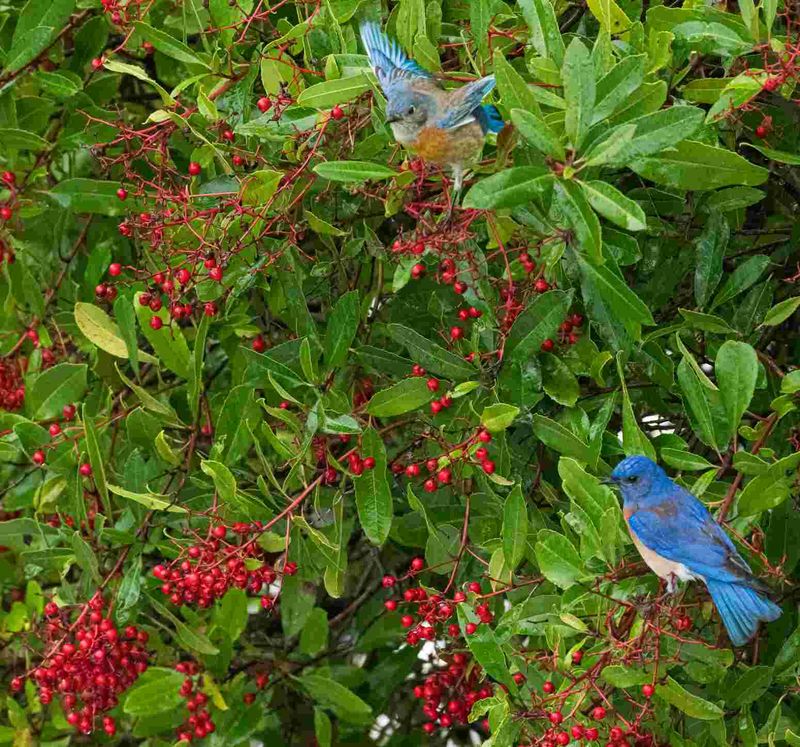
Planting for bluebirds is really planting for insects and structure first, with fruit as a seasonal bonus. Native and climate-appropriate shrubs and trees add perch points, cover for fledglings learning to fly, and the kind of layered vegetation that supports a diverse insect community.
UC Agriculture and Natural Resources identifies elderberry, California grape, serviceberry, juniper, Pacific madrone, manzanita, and related plants as options that can provide food and habitat value for bluebirds and other wildlife.
Outside the breeding season, when insects become scarcer, Western Bluebirds shift toward fruit, berries, and seeds. A yard that offers winter food sources may keep birds foraging nearby even when insect numbers drop.
Toyon is a particularly practical choice for many California homeowners. UC Marin Master Gardeners note that toyon is native to California, drought-tolerant once established, produces small white flowers in summer and clusters of red berries that persist into winter, and supports a range of wildlife.
It can reach ten to fifteen feet tall and equally wide, so placement needs to account for its mature size, defensible-space setbacks, and proximity to structures.
Plant selection should fit the homeowner’s specific California climate zone. A coastal garden in the Bay Area and an inland valley yard near Sacramento have different water budgets, fire risk profiles, and suitable species lists.
Spacing matters too, especially for homeowners in fire-prone areas where local fire authorities set requirements for how close woody vegetation can be to a house or fence.
Adding plants may improve the yard’s suitability and available foraging opportunities, but it does not guarantee that bluebirds will arrive or stay. Bluebird presence depends on regional availability, nesting cavities, competition, predators, and seasonal food as well as planting choices.
The goal is to build a yard worth visiting, with the understanding that the birds make their own decisions about where to spend time.
Diagnose lawn damage before using insecticide
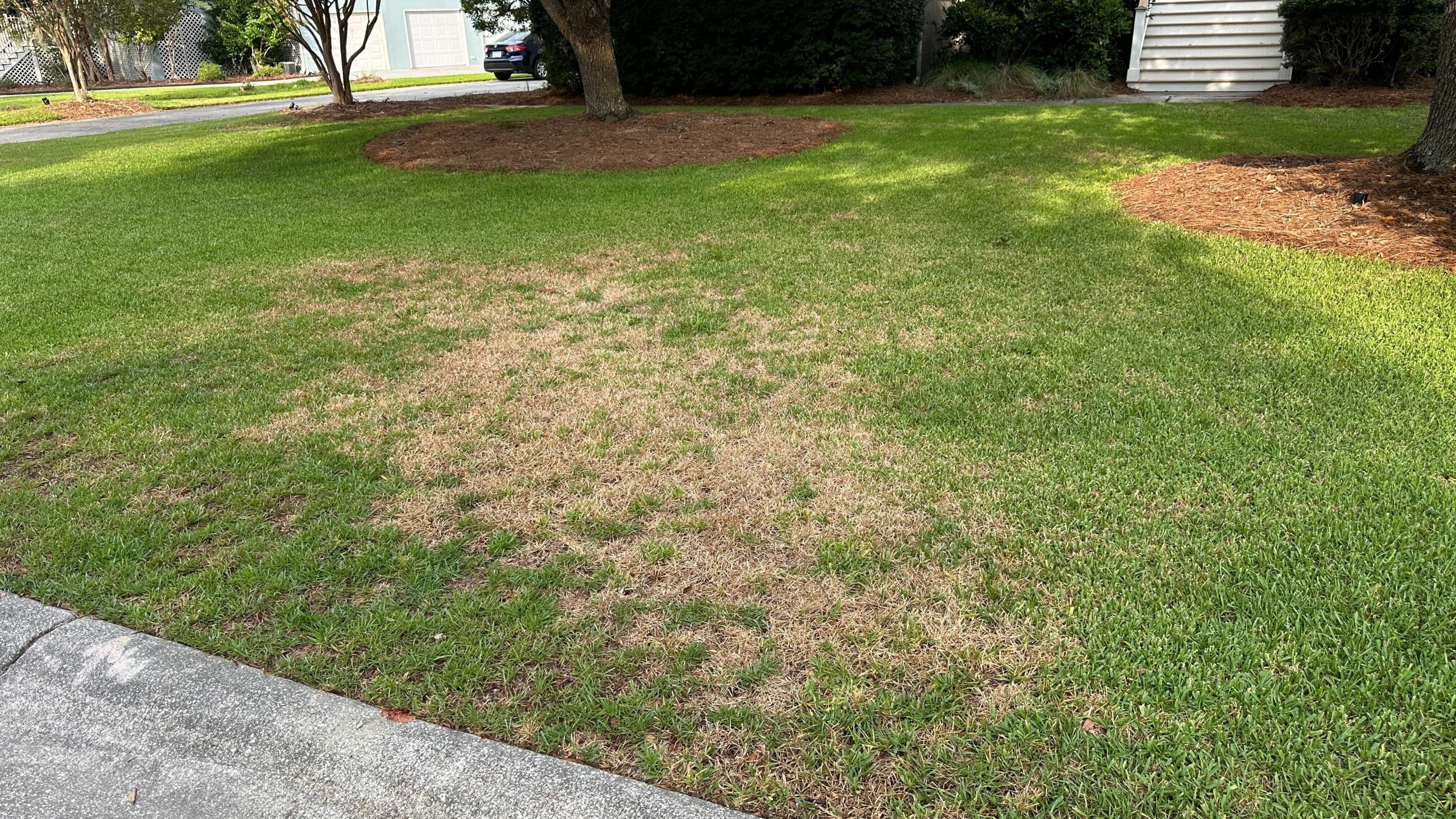
Brown patches and thinning turf are easy to blame on insects, but that assumption leads a lot of California homeowners to treat a problem that insects did not cause. UC Statewide IPM Program guidance on lawn insects lists improper watering, unsuitable turf variety, disease, fertilizer or herbicide misapplication, and dog urine as explanations for lawn damage that are often more likely than insect activity.
Reaching for a pesticide before identifying the actual cause can waste money, harm beneficial organisms, and leave the real problem untouched.
Confirming a damaging pest before treatment is the foundation of integrated pest management. That means pulling back turf, checking soil moisture, looking for actual larvae or chew damage, and ruling out non-insect causes before deciding that treatment is warranted.
Some insects found in lawns are harmless or even beneficial; not every grub or beetle warrants a chemical response.
Routine preventive insecticide applications are worth reconsidering for a different reason as well. Many broad-spectrum insecticides kill the beetles, caterpillars, grasshoppers, and other arthropods that bluebirds and their nestlings depend on during the breeding season.
A lawn treated on a regular schedule as a precaution may support far fewer of the prey items that make it worth a bluebird’s time to hunt there.
When treatment is genuinely justified, integrated pest management points toward the least-disruptive effective option: targeted spot treatment, labeled products applied at the right rate and timing, and methods that reduce impact on non-target organisms. Following product labels and local regulations is not optional.
UC ANR notes that reducing unnecessary pesticide use is one of the most direct ways homeowners can preserve the insect prey base that beneficial birds rely on. Treating less, and treating smarter when needed, benefits the lawn, the insects, and the birds.
Add water and a nest box only when conditions support them
Fresh water can make a yard more useful to bluebirds and other wildlife, but a birdbath that is not maintained creates its own problems. UC Cooperative Extension guidance on living with birds recommends changing the water frequently, scrubbing the vessel regularly to prevent algae and bacteria buildup, and keeping the bath shallow enough for small birds to wade comfortably.
Stagnant water left standing more than a few days can become a mosquito breeding site, which is the opposite of what a wildlife-friendly yard should produce.
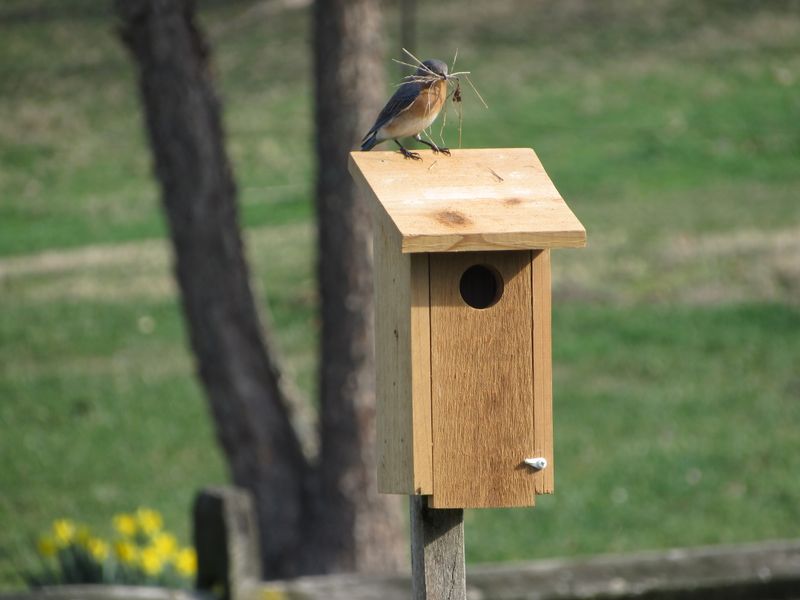
A nest box addresses a real limitation in many California yards: the shortage of natural tree cavities that bluebirds would otherwise use for nesting. Adding one can give a pair a place to raise young where none existed before.
The key is making sure the surrounding yard actually supports nesting before the box goes up. California Bluebird Recovery Program nest box guidance recommends nearby open hunting space, low perches for fledglings to land on after leaving the box, a tree or shrub within the territory for cover, and access to insects and water.
A box installed in an otherwise unsuitable yard is unlikely to attract bluebirds and may sit empty or be taken over by less desirable species.
Box construction matters. The California Bluebird Recovery Program specifies a 1.5-inch entrance hole sized for Western Bluebirds, adequate ventilation holes near the top, drainage holes in the floor, a rough interior surface below the entrance so nestlings can climb out, and no exterior perch rod, which gives House Sparrows an easy place to claim the box.
Predator protection, whether a baffle on the mounting pole or a predator guard around the entrance, is not optional in most California neighborhoods where raccoons, cats, squirrels, and snakes are active.
National Audubon Society nest box guidance reinforces that placement alone does not guarantee occupancy. Bluebirds evaluate the full territory, not just the box.
A correctly built box in the right location, paired with suitable habitat, may attract a nesting pair, but it may also attract Tree Swallows, House Wrens, or other cavity nesters, and it may remain unoccupied for one or more seasons while local birds establish territories.
Monitor boxes and manage expectations
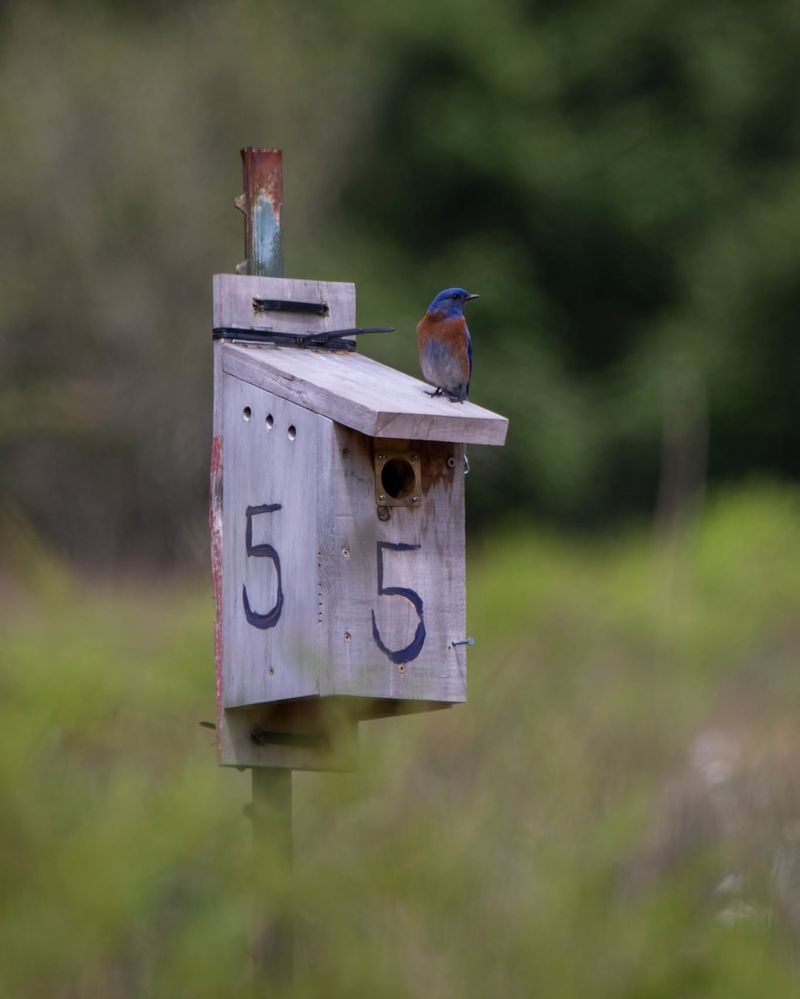
Putting up a nest box is the beginning of a commitment, not the end of one. Boxes that go unmonitored can become traps.
California Bluebird Recovery Program monitoring protocols call for weekly checks during the nesting season so that homeowners can catch problems early, including House Sparrow nest construction, predator disturbance, or failed clutches.
House Sparrows are the most serious concern for California bluebird boxes. They are non-native, aggressive, and capable of injuring or killing adult bluebirds, destroying eggs, and killing nestlings.
Starlings can also claim a box if the entrance hole is too large. Audubon nest box guidance is clear that regular monitoring is part of responsible box management, not an optional extra.
Tree Swallows are native and beneficial; their presence in a box is not a failure, though it does mean bluebirds will need to find another cavity.
Improvised removal of occupants can cause more harm than good. UC ANR nest box guidance directs homeowners toward established bluebird management resources rather than ad hoc intervention, particularly for situations involving House Sparrows, which require specific and carefully timed management to be effective without harming other birds nearby.
Bluebird presence and any associated reduction in insect numbers will vary with habitat quality, seasonal insect availability, competition from other species, predator pressure, regional bird population levels, and disturbance. California wildlife records show that bluebird territory use shifts with season and food availability.
Success in this context means creating better habitat and having the chance to observe bluebirds foraging nearby, not producing a pest-free yard or filling a box on a set schedule.
Build a more useful yard, not a guaranteed bluebird service
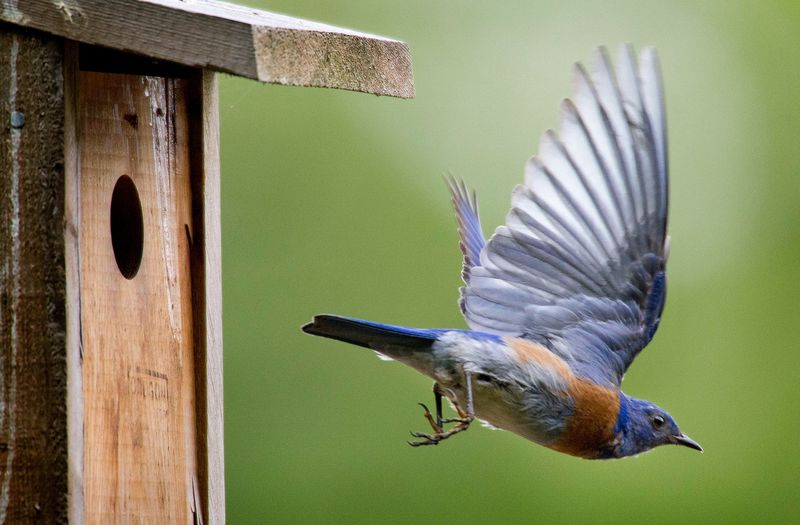
A yard that supports Western Bluebirds does not need to be transformed from the ground up. Preserve some open, short-grass hunting space.
Add a low perch nearby, a native shrub or small tree at the edge for cover and insects, and seasonal fruit plants matched to your California climate zone and fire-safety setbacks. Maintain a clean, shallow water source by changing it every few days.
Identify any genuine pest problem before treating rather than applying insecticides on a routine schedule that strips away the prey bluebirds need.
If the surrounding habitat supports it, a correctly designed and monitored nest box, built to California Bluebird Recovery Program specifications, may give a pair a place to raise young. These additions may improve a yard’s suitability and available foraging opportunities.
They do not guarantee that bluebirds will appear, stay, or occupy the box.
Western Bluebirds can add natural insect predation to a healthy California yard, and vineyard research confirms they can contribute meaningfully to pest management in the right setting. They cannot substitute for pest diagnosis, responsible treatment decisions, or fire-safe landscape planning.
A yard built around realistic habitat goals is the one most likely to earn a regular visit, which turns out to be its own reward.