
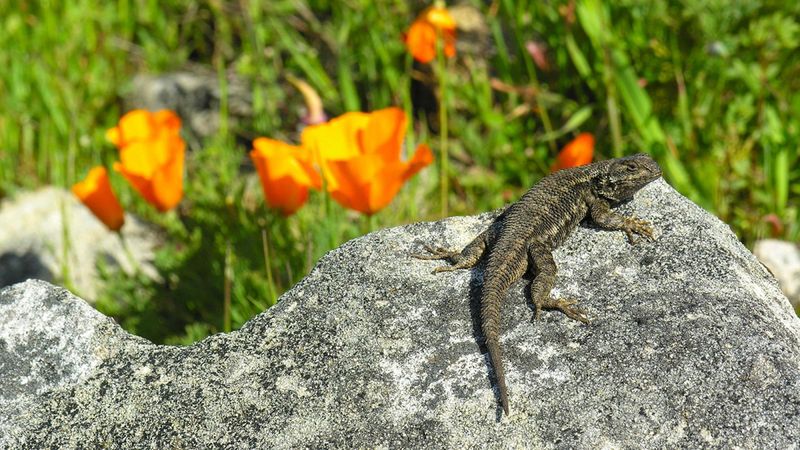
That gray-blue lizard doing push-ups on your rock wall has a surprising trick. When certain ticks feed on it, its blood can kill Lyme-group bacteria inside them.
Does that mean the wall keeps your family safe? Not quite, and the details matter for how you care for your yard.
What a western fence lizard’s blood can do to Lyme bacteria
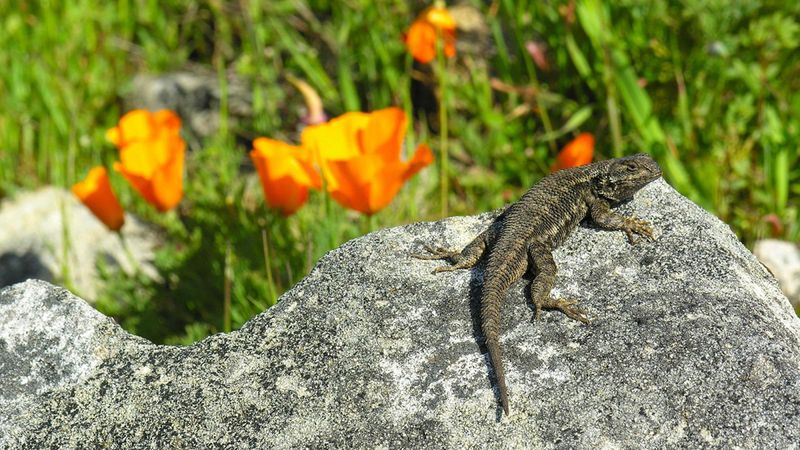
Scientists have known for decades that western fence lizards have something unusual in their blood. In a 1998 study of the lizard’s blood, researchers found a factor that kills the spirochete bacteria behind Lyme disease.
That factor is part of the lizard’s complement immune system.
Here is how it plays out. A young western black-legged tick bites a fence lizard and starts to feed.
If that tick carries Lyme-group bacteria, the lizard’s blood can kill them inside the tick while it feeds. A 2000 comparison of mammal and reptile blood looked at how this complement pathway works against the Lyme spirochete.
Notice how narrow this is. The effect involves one lizard species, one tick species, and one group of bacteria.
It does not extend to every California lizard, every tick, or every tick-borne illness.
It also helps to be clear about what the lizard is not doing. It is not eating ticks, and it is not clearing them out of your yard.
The ticks stay on the lizard for a blood meal and then drop off. The immune effect happens inside the feeding tick, and it does not show that a lizard, or the wall it sits on, protects people from Lyme disease.
The field experiment did not show that lizards protect people

A northern California field experiment put the lizard story to a real-world test. Researchers removed western fence lizards from study plots and then tracked ticks the next year.
The 2011 lizard-removal study measured the density of infected nymphs, which is the stage most linked to human exposure.
The result surprised many people. Where lizards were removed, the next year’s density of infected nymphs went down.
The share of ticks that were infected did not rise.
The full text of the study offers an explanation. Many larvae apparently failed to find another host once the lizards were gone, so fewer survived to become nymphs.
Lizards can be poor carriers of the bacteria and still give young ticks the blood meals they need. That is why the same animal can affect infection and also help sustain immature ticks.
Keep the limits in mind. The team counted ticks, not human Lyme cases.
It also did not test what any single homeowner’s rock wall does. So the study gives no reason to think a wall lowers your personal risk, and no reason to think it raises it.
Rock walls can offer lizards perches and shelter
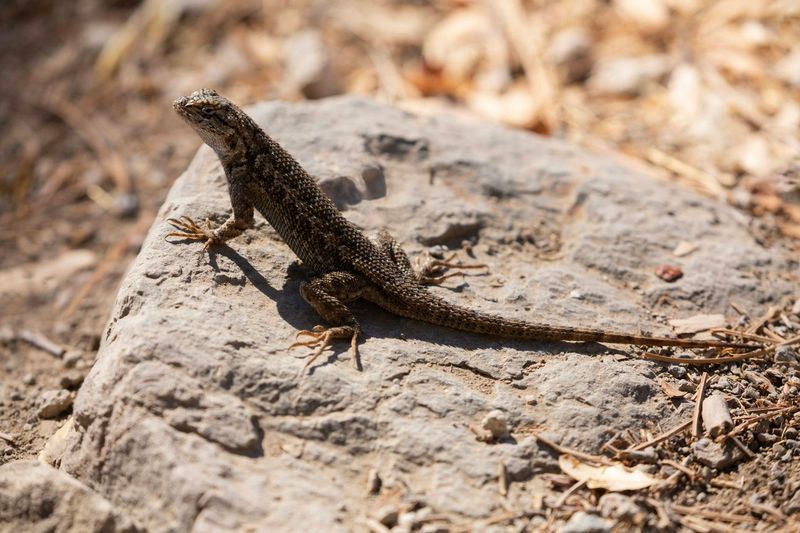
Picture a warm morning in a California yard. The rock wall heats up, and a lizard climbs onto the top stone to soak in the sun.
That is typical behavior, and the California Wildlife Habitat Relationships account lists rock piles, fences, woodpiles, tree trunks, and building walls as perches and basking sites.
Rocks and crevices can do a second job. They can serve as shelter during cold periods, a safe spot to wait out weather that is too chilly for activity.
A wall with a mix of sunny faces and tucked-away gaps can offer both.
Treat your wall as possible habitat, nothing more. Not every wall or crevice will have a lizard in it, and a wall is not a form of tick control.
If a lizard does show up, enjoy the show from a distance.
If you already own a stable wall with some natural gaps, you have a feature many yards lack. Walk along it once and note which sections catch the morning sun and which have deep cracks.
That small survey helps you decide what to leave alone.
Avoid disturbing possible cold-period shelter
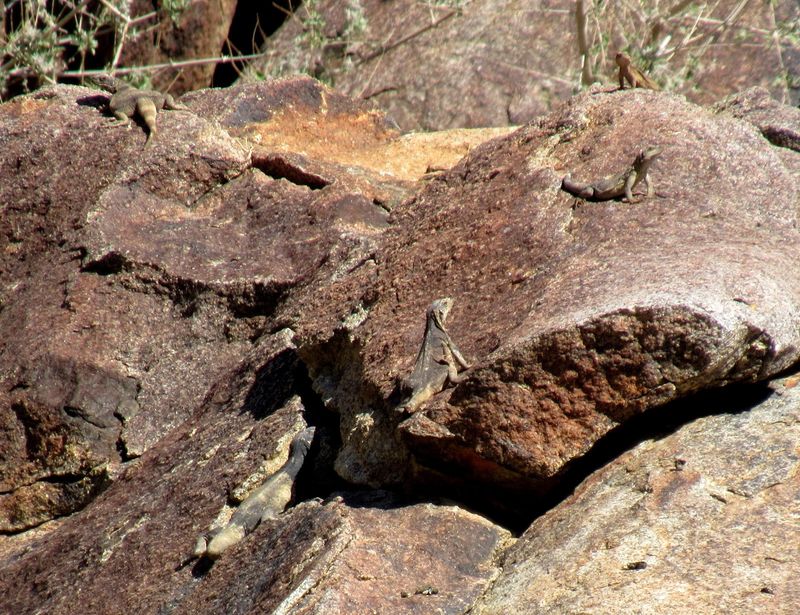
Tidying season often arrives right when lizards are tucked away. Filling every gap with mortar or foam can look neat, but it may close off a spot where an animal is sheltering.
Where your wall is stable and safe, you can skip the sealing project and leave usable crevices as they are.
Cold-weather rock work deserves extra care. Pulling apart or rearranging stones in winter could expose a lizard that is waiting out the cold.
If the wall needs repair for safety, wait for warmer weather when lizards are more likely to be active and can move on their own.
Do not expect a winter show, though. According to the state habitat account, activity varies by location, and fall and winter inactivity is common.
Shelter does not mean lizards will bask all season.
Resist the urge to pick up or move a lizard you find. California regulates the taking and possession of native reptiles, so check the current CDFW rules before considering any handling or removal.
Use proven tick precautions regardless of yard habitat
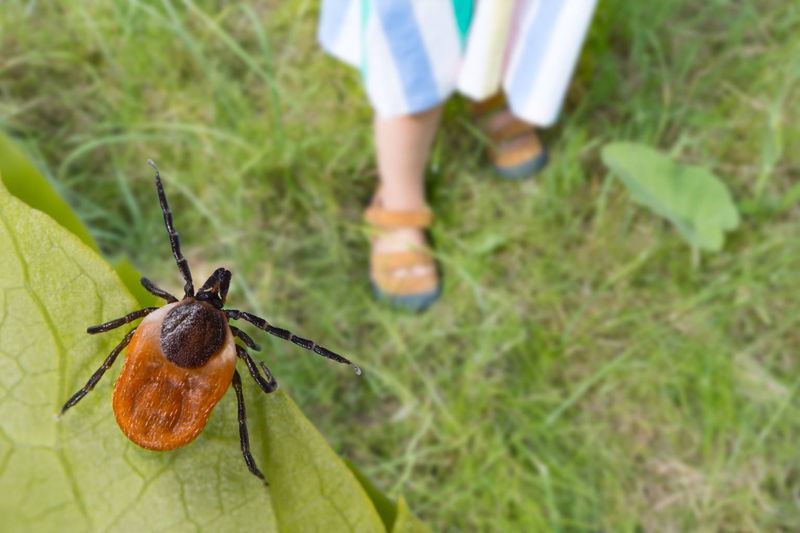
Whatever lives in your wall, your tick routine stays the same. After time outdoors, check yourself, your clothing, your gear, and your pets.
Use EPA-registered repellents as directed on the label, and remove any attached tick promptly. The CDC’s Lyme prevention guidance recommends these proven steps.
Timing matters too. The California Department of Public Health says western black-legged tick nymphs are most active in late spring and early summer.
Even so, tick exposure is possible year-round, so a seasonal habit is better than a one-time effort.
Risk is not the same across the state. CDC western blacklegged tick surveillance notes that this tick is particularly common in Northern California.
A dry hillside yard in one county may face a very different picture than a wooded lot in another.
Practical steps help here. Keep repellent by the back door, do a quick check after gardening in brushy corners, and look over dogs after walks.
These habits work whether or not a lizard ever visits.
Follow local defensible-space requirements

Wildlife habitat is a nice bonus, but fire safety comes first. If your property sits in a fire-prone area, local defensible-space rules decide what can stay near your house.
Those rules can differ from one local agency to another, as CAL FIRE’s defensible space guidance explains.
Before you decide to leave a woodpile, brush, or other lizard-friendly feature in place, check with your local fire authority. A stone wall is a different matter from stacked firewood or dry debris, and where each sits relative to your home counts.
The practical rule is simple. Keep suitable habitat only where its location and local requirements allow it.
If a feature has to go or move, follow the fire rules, and consider whether a stable wall farther from the house can offer perches instead.
Treat the wall as possible habitat, not a Lyme shield
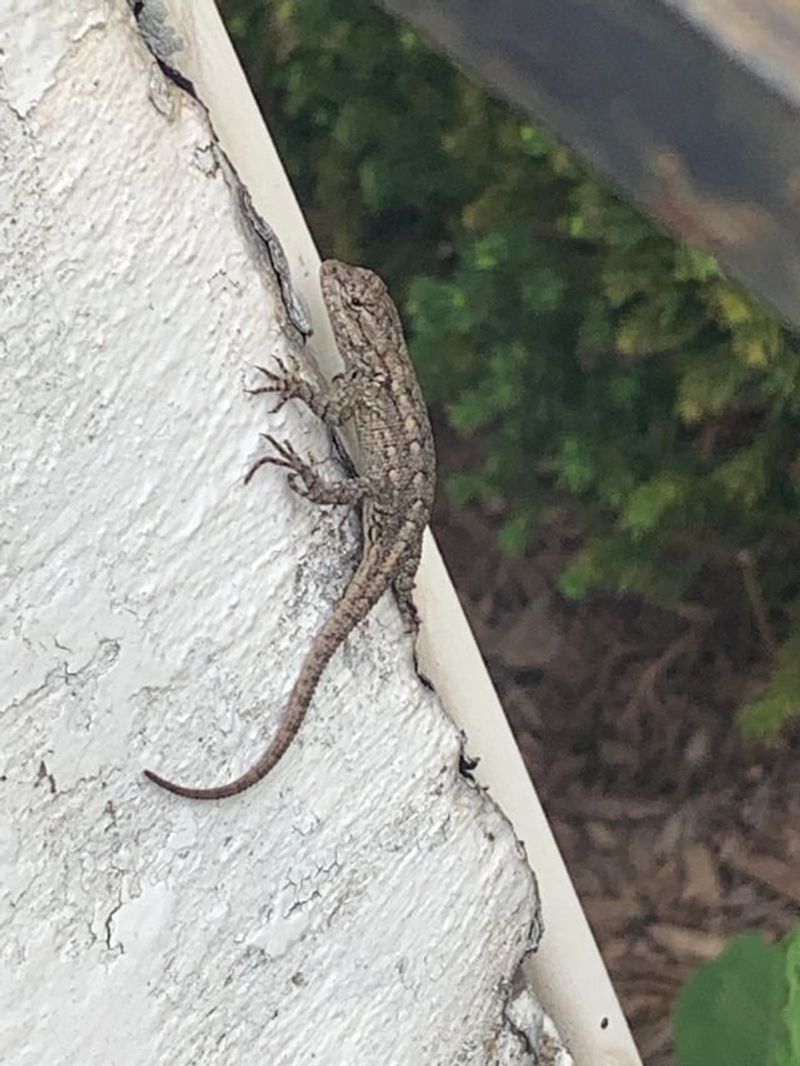
A fence lizard’s blood really can kill Lyme-group bacteria in feeding western black-legged ticks, but that does not make your wall a shield. If your wall is stable, safe, and allowed under local fire rules, leave its usable crevices as potential lizard habitat, and hold off on moving rocks in cold weather.
Keep up your tick precautions, and confirm what defensible-space rules apply to you.
A wall earns its place by giving a small neighbor somewhere to sit in the sun.