
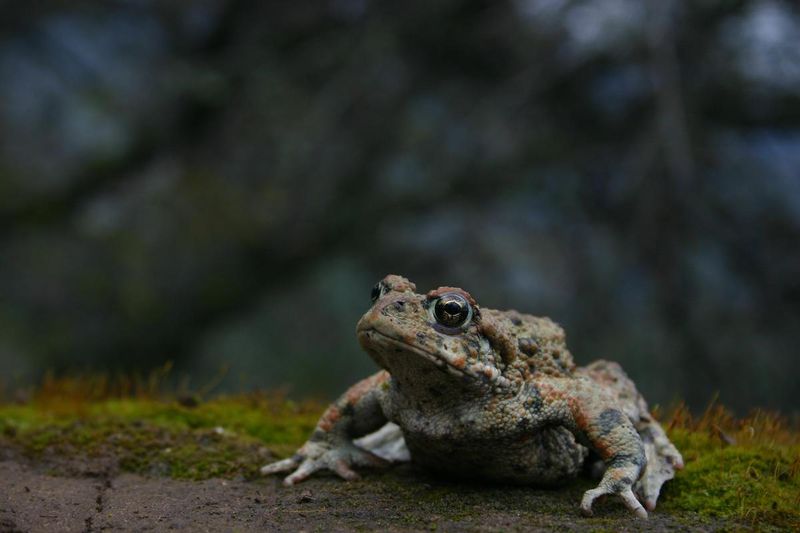
A squat, brown toad sitting at the edge of a California garden bed is doing quiet work most homeowners never notice. Western toads and their California toad relatives eat many of the insects and small arthropods that share your yard, and they may occasionally take a slug along the way.
Calling them slug exterminators, though, sets expectations the evidence cannot support. Understanding what these animals actually do, and what outdoor lighting habits may work against them, gives California homeowners a more useful and honest guide to living alongside backyard amphibians.
What western toads can—and cannot—do for a California garden
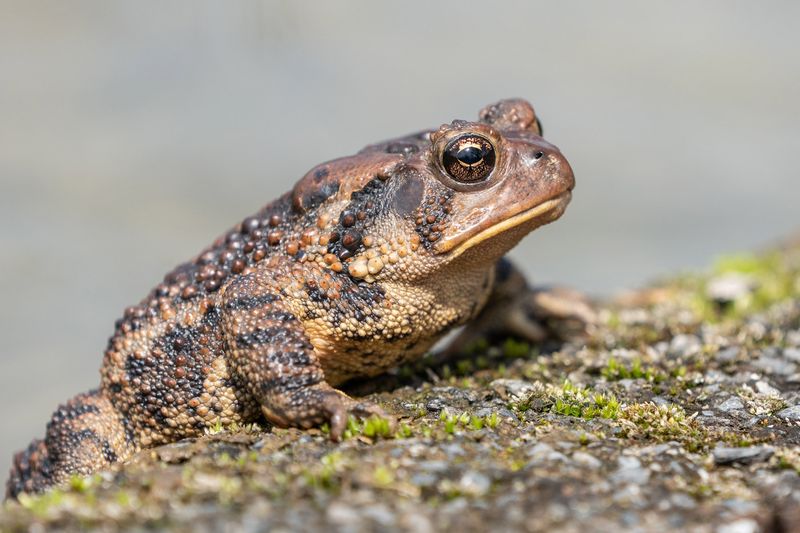
Spotted near a lawn edge or tucked under a planter, a toad in a California garden is often assumed to be a slug-hunting machine. The reality is more nuanced and, honestly, still worth appreciating.
California Department of Fish and Wildlife’s life-history account for the western toad describes adults as feeding primarily on terrestrial insects and other small arthropods, with earthworms, snails, and slugs appearing as less-common prey items.
That distinction matters for garden planning. A toad foraging your beds each night is likely eating beetles, ants, earwigs, sowbugs, and similar creatures far more often than it is targeting slugs.
Counting on one animal to resolve a serious slug infestation will lead to disappointment, but recognizing the toad as a broad-spectrum pest-balancing presence is both accurate and useful.
Species identification adds another layer of nuance specific to California. What most Central and Southern California homeowners encounter is the California toad, formally the subspecies Anaxyrus boreas halophilus, while boreal toad populations in northern California represent a separate part of the western toad’s range.
A generic physical description alone is not a reliable way to tell these apart. Regardless of which form is in your yard, the practical guidance is the same: treat it as a generalist predator that contributes to natural pest balance rather than a targeted slug solution.
UC Statewide IPM’s guide on snails and slugs lists toads among the natural enemies of these pests, alongside ground beetles, birds, snakes, and turtles. No single predator on that list provides complete control, and toads are no exception.
The honest value proposition is a free, low-maintenance contributor to a more balanced garden ecosystem.
The California lawn evidence favors insects over slugs
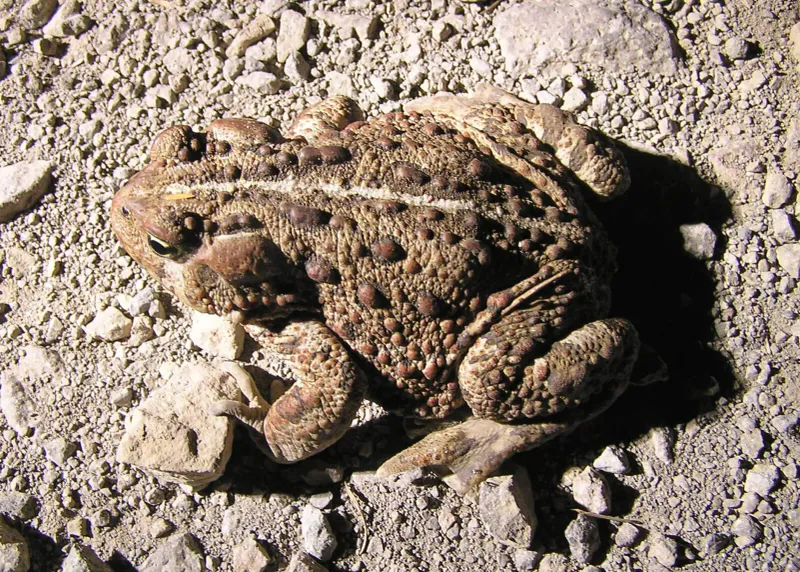
One of the few direct looks at what California toads actually eat in a residential setting comes from a dietary study conducted in Bakersfield. Researchers examined 320 fecal pellets collected from six adult California toads foraging on a residential lawn.
The results were dominated by two prey groups: Coleoptera, meaning beetles, which accounted for 54.06% of identified occurrences, and Isopoda, the sowbugs and pillbugs, at 31.23%. No slug occurrence appeared anywhere in the reported dataset.
That absence does not mean California toads never eat slugs. Six animals from one Bakersfield lawn represent a narrow snapshot, and diet can shift with season, local prey availability, and individual opportunity.
What the study does confirm is that beetles and isopods, not slugs, were the dominant food items for these toads on a suburban California lawn, which lines up with the broader characterization of western toads as insect-focused generalist predators.
For a homeowner wrestling with slug damage on hostas or vegetable seedlings, the takeaway is practical: a resident toad may eat a slug here and there, but it is not systematically hunting them down the way a targeted bait or barrier would. The beetles and sowbugs a toad does consume are themselves significant garden actors, and reducing their numbers has real ecological value even if the slug column stays frustratingly full.
Treating the study’s limits honestly also means resisting the urge to generalize too far in the other direction. A single local sample from Bakersfield does not tell us what toads in coastal gardens, valley foothills, or northern California wetland edges are eating.
The broader point, supported by California wildlife agency descriptions, is that insects and arthropods form the core of the diet, and that expectation should guide how homeowners think about these animals in their own yards.
What artificial-light studies actually show
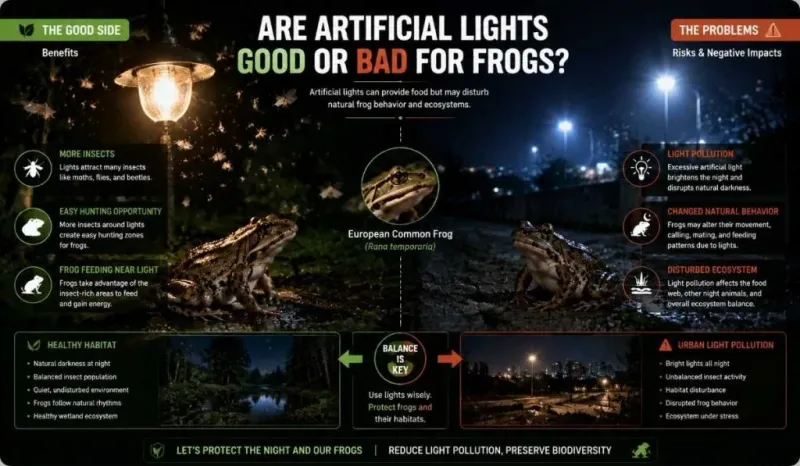
Artificial light at night is a reasonable thing to think about if you want a toad-friendly yard, but the evidence connecting it to western toads specifically is indirect. Most of what researchers know about how light affects toads comes from controlled experiments on other species, and those findings are worth understanding clearly before drawing conclusions about California yards.
A controlled study on common toads found that activity fell by 56% at 5 lux and by 73% at 20 lux after 20 days of artificial light exposure. Those are relatively modest light levels, comparable to a dim security light hitting a garden path.
The researchers also documented changes in energy allocation, suggesting that light-exposed toads were not simply moving less but shifting how they spent their available energy. That is a meaningful physiological disruption, not just a behavioral inconvenience.
Other species fill in additional pieces of the picture. Research on common toads also linked artificial light to altered sexual behavior and reduced fertilization success, pointing to reproductive consequences beyond simple activity changes.
Separate work found that artificial light affected growth rates in American toad juveniles, and studies on spiny toads have explored whether urban populations respond differently than rural ones. Together, these findings build a case for caution, even though none of them tested western toads in California gardens.
One nuance worth keeping: outdoor lights can attract insects, which are exactly what toads eat. The relationship between lighting and toad food availability is not simply subtractive.
The more defensible concern is that persistent, bright, poorly directed lighting can alter nocturnal behavior and physiology over time, not that every porch light immediately clears a yard of amphibians. The National Park Service’s overview of night skies as a natural resource notes that artificial light disrupts a wide range of nocturnal wildlife, reinforcing why the precautionary approach to outdoor lighting makes sense even when species-specific data are incomplete.
Reduce outdoor lighting without sacrificing necessary visibility
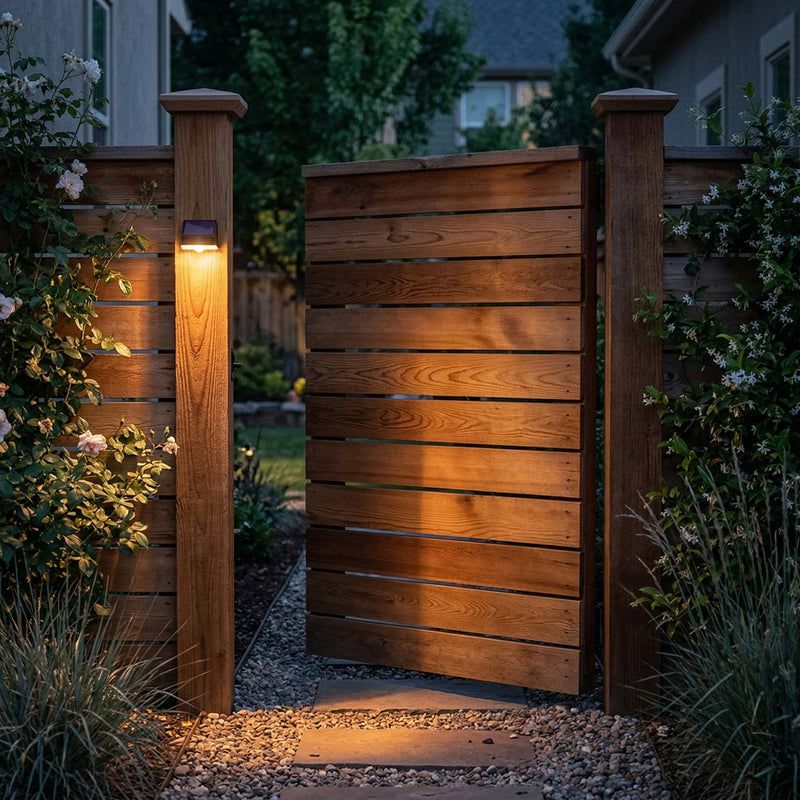
Turning off outdoor lights you do not need tonight is the single most immediate thing a California homeowner can do to make their yard more compatible with nocturnal wildlife. Porch lights left on all night, landscape uplighting, path lights that glow from dusk to dawn, and decorative string lights running across a patio all add up to a persistent light environment that the available evidence suggests can alter toad behavior over time.
Where lighting genuinely serves a safety or access purpose, the goal is not total darkness but smarter light. DarkSky International’s home lighting guidance recommends motion sensors or timers so fixtures activate only when someone is present, fully shielded downward-facing fixtures that direct light onto the ground rather than into the surrounding habitat, the lowest practical brightness for the task, and bulbs rated at 2700K or below.
Warm, amber-toned light at that color temperature is less disruptive to nocturnal animals than cooler blue-white LEDs, which better mimic moonlight and can more strongly suppress melatonin and alter circadian rhythms in wildlife.
One option sometimes suggested is switching to red bulbs on the assumption that red light is harmless to amphibians. The sources reviewed here do not support that claim.
Red light has not been established as safe for western toads or most other amphibian species, and the more reliable guidance focuses on reducing intensity, duration, and sky scatter rather than relying on any specific color as a guaranteed workaround.
The common-toad activity study found measurable effects at light levels as low as 5 lux, which is roughly the illumination reaching a garden bed from a modest security light. That context helps explain why the distinction between brief, targeted, low-intensity lighting and bright, persistent, broadly scattered lighting matters more than choosing between fixture brands or bulb colors.
Temporary illumination for a specific task is a very different thing from a yard that never fully goes dark.
Make the yard compatible with toads that arrive naturally
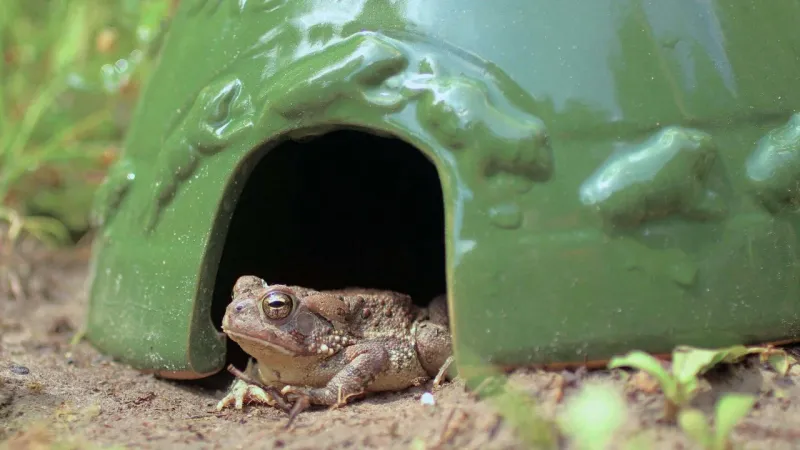
Rather than trying to import a toad or guarantee one will move in, the more realistic goal is making a yard hospitable to any that already live nearby or pass through. Western and California toads use moist terrestrial environments and rely on structural refuges for daytime shelter.
California wildlife habitat descriptions identify spaces like rodent burrows, rock chambers, and gaps around root systems as typical resting sites. A yard that retains some of these features, even informally, offers more to a foraging toad than a fully exposed, intensively managed lawn.
Practical steps that fit within normal California yard care include leaving a flat rock or two in a shaded garden corner, tolerating some leaf litter in planting beds, and avoiding compulsive clearing of every gap and crevice near structures. A small area of consistently moist soil, perhaps near a drip irrigation zone, can also extend the usability of a yard through dry California summers.
None of these changes guarantee a toad will appear, and a dry, heavily paved, or heavily urbanized yard may simply not support a resident animal regardless of what adjustments are made.
Water features deserve a careful mention. California Herps notes that western toads can use almost any standing water source for reproduction, so an existing pond or water feature maintained responsibly could be relevant to breeding toads passing through the area.
A small dish of water placed in a garden bed, however, is not a proven lure and should not be presented as one. Any open water feature also requires maintenance to avoid becoming a mosquito breeding site, which matters both for public health and for compliance with local vector-control expectations.
Buying toads from a supplier, accepting relocated animals from someone else’s yard, or moving toads between locations are all approaches to skip entirely. Relocation can spread chytrid fungus and other amphibian pathogens, and animals placed in unfamiliar territory often fare poorly.
Supporting naturally occurring wildlife through habitat quality is the approach that matches both the evidence and responsible stewardship.
Manage slugs without exposing amphibians unnecessarily
Encouraging toads while routinely spraying or baiting the same garden spaces creates a real conflict. Pesticides applied to soil, foliage, and garden beds can reach non-target animals through direct contact, contaminated prey, or residues that persist in the environment.
EPA guidance on reducing pesticide impacts on wildlife recommends minimizing applications, following label directions precisely, avoiding treatment near water features, and timing applications to reduce exposure to beneficial animals. For a yard where toads forage or shelter, those recommendations translate to avoiding casual or preventive pesticide use in areas where amphibians are active.
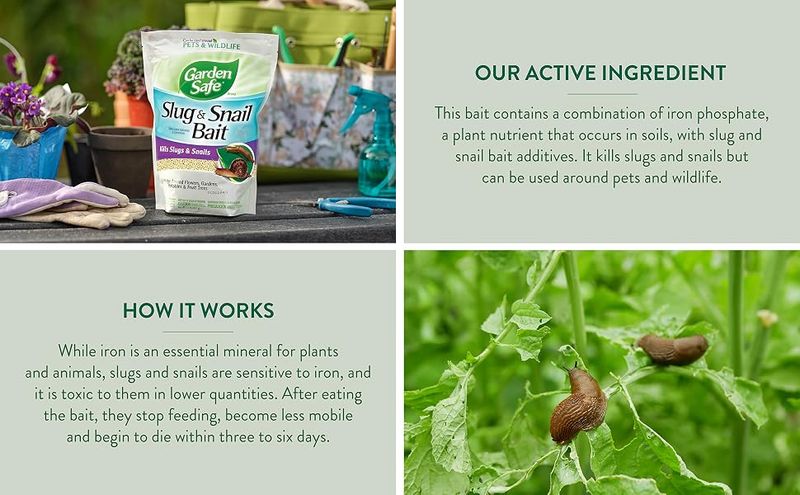
When slug pressure genuinely requires chemical intervention, the choice of product matters. UC IPM identifies iron-phosphate slug baits as generally safer for many non-target animals, including wildlife and pets, compared to other active ingredients used for slug and snail control.
That relative safety profile makes iron-phosphate products a more reasonable option where toads, birds, or other wildlife are present, but the qualification is firm: safer does not mean consequence-free, and every product must be applied exactly as its label instructs. Overapplication or placement in the wrong locations can still create exposure risks.
Metaldehyde products occupy a different category entirely. An EPA-reviewed metaldehyde product label warns that the product may be fatal to dogs if ingested and explicitly prohibits application near water or storm drains.
For a yard with a toad-friendly water feature, moist soil refuges, or any proximity to drainage, that label language should be treated as a hard stop. Metaldehyde is not a wildlife-friendly slug-control option under any reasonable reading of the available evidence.
Physical controls, including copper tape barriers, rough-surface mulches, and hand removal during evening hours, remain viable first steps before any chemical product is considered. Reducing slug habitat by clearing dense ground cover and debris near vulnerable plants also lowers the baseline population without introducing chemical risk.
A toad that wanders through a bed treated with physical controls and kept free of unnecessary pesticides is far more likely to contribute to ongoing pest balance than one that encounters chemical residues in its foraging zone.
The evidence-based takeaway for California homeowners
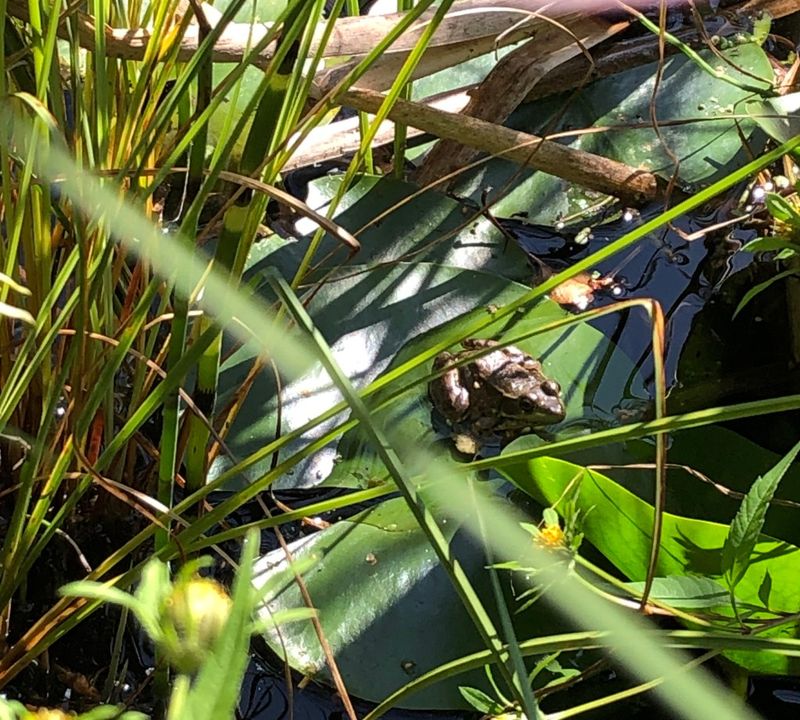
Western and California toads are genuinely useful animals to have in a yard. They eat beetles, sowbugs, ants, and other arthropods in real numbers, and they may take a slug when the opportunity arises.
What they will not do is solve a slug infestation or provide the kind of targeted pest control that a determined gardener dealing with serious damage actually needs. Framing them as a free contributor to a more balanced garden ecosystem is accurate; expecting them to clear a slug problem is not.
The most actionable change most California homeowners can make right now is straightforward: switch off any outdoor light that does not need to be on tonight. For lights that serve a genuine safety or access purpose, DarkSky’s home lighting recommendations point toward motion sensors or timers, shielded downward-facing fixtures, minimum necessary brightness, and bulbs at 2700K or below.
The evidence linking persistent artificial light to disrupted toad behavior comes primarily from studies on other species, but the precautionary case for reducing unnecessary nighttime illumination is solid.
Supporting habitat means preserving moist refuges where they fit safely within California’s water-conservation and fire-safety realities, keeping pesticide use targeted and label-compliant, and leaving naturally occurring toads exactly where they are. A yard that stays a little darker, a little less chemically managed, and a little more structurally varied gives any toad passing through a genuine reason to stay.