
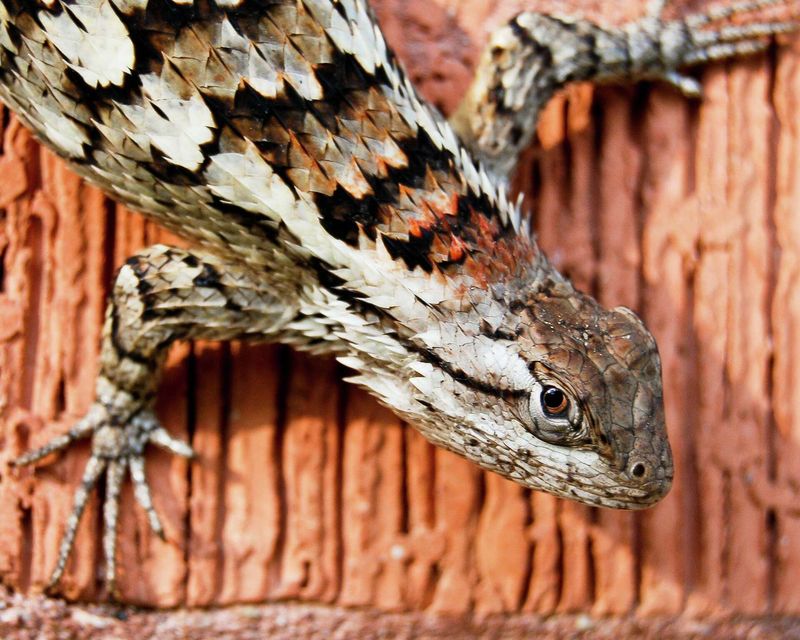
That rough-scaled lizard doing push-ups on your fence is a Texas spiny lizard, and plenty of Central Texas yards have one. Some people say it works as a free scorpion and roach patrol.
The truth is more interesting, and it changes how you can welcome the lizard while still protecting your home. Here is what the lizard really eats, how to help it, and how to keep scorpions out on your own.
A fence can be a basking spot, not proof of pest control
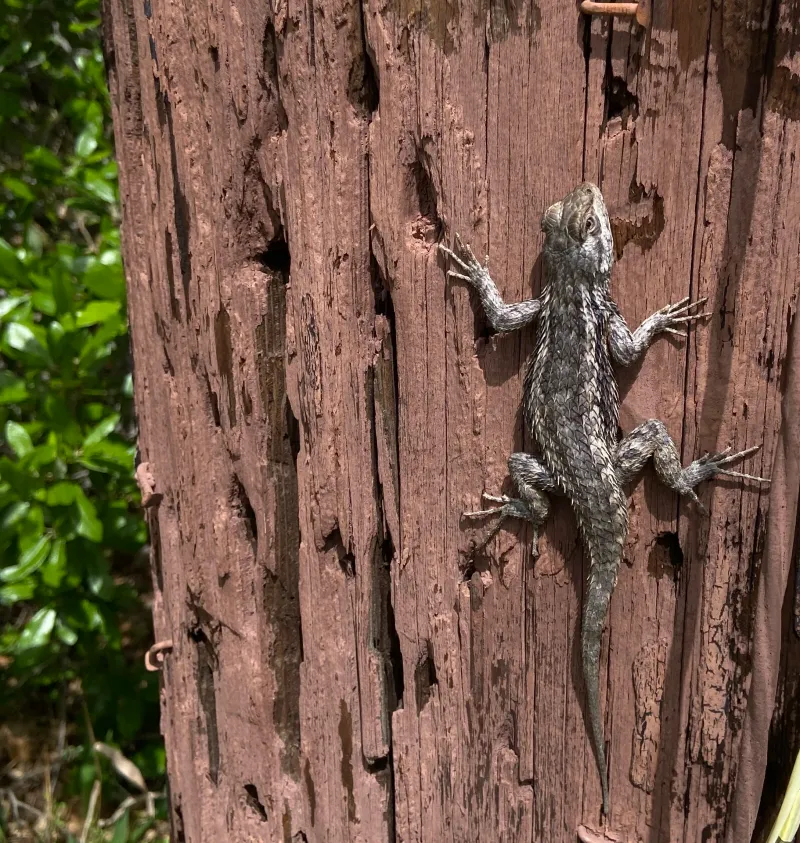
Picture a hot Central Texas morning. A stocky, rough-scaled lizard clings to a cedar fence post, warming itself in the sun and watching the yard.
That is a Texas spiny lizard, a native species that is active during the day and spends much of its life around trees.
According to the University of Texas at Austin Biodiversity Center, these lizards are a familiar backyard sight. Animal Diversity Web describes them as tree-associated lizards that also use human structures such as fences, and they may bask on rocks and trunks too.
A fence is a handy perch. It gives the lizard sun, a lookout, and a quick route to cover.
But seeing one on a fence does not mean the fence is its main home. The lizard may spend most of its time in nearby trees and shrubs and simply come out to warm up.
It also does not mean the lizard is cutting down pests around your house. A lizard on a rail tells you the yard offers some usable habitat.
It does not tell you what is happening with scorpions or roaches near your door.
That difference sets the tone for the rest of this article. You can enjoy and support a native reptile for its own sake, and you can handle household pests with methods built for that job.
Treating them as two separate goals keeps both on track.
What does a Texas spiny lizard actually eat?
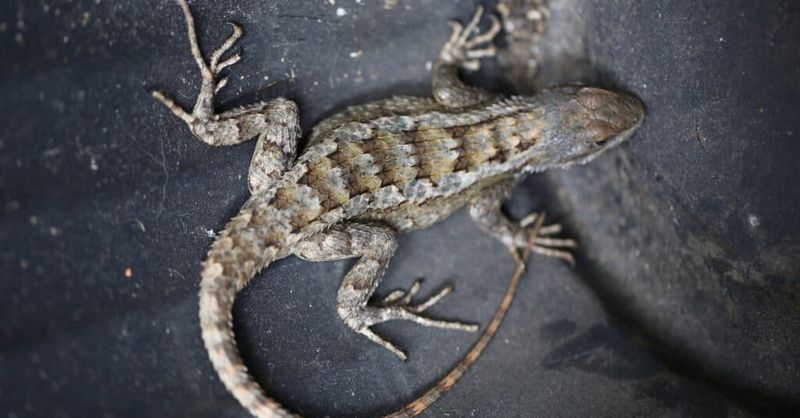
Texas spiny lizards are mostly insect eaters, and they also take other small invertebrates. A specialist diet review in the Southwestern Center for Herpetological Research bulletin lists typical wild prey such as crickets, grasshoppers, ants, flies, true bugs, butterflies, and caterpillars.
That list is a sample, not a complete menu.
The natural-history account on Animal Diversity Web paints the same general picture of a sit-and-wait hunter that eats what it can catch and swallow. In a yard, that usually means the moving bugs found on trunks, fence lines, and open ground.
Cockroaches do show up in the story, but with a catch. They are reported among foods that Texas spiny lizards accept in captivity.
A lizard that eats a roach offered in a cage is not the same as a wild lizard that regularly hunts roaches around a house.
So if you spot a roach problem indoors, do not count on the fence lizard to solve it. Most household roaches hide in places a daytime, tree-loving lizard rarely visits.
A better way to think about it is this. The lizard is one small part of your yard’s insect food web, snacking on whatever insects pass by.
That is a real benefit to the ecosystem, but it is not a measured pest-control service.
The scorpion-and-roach promise goes beyond the evidence
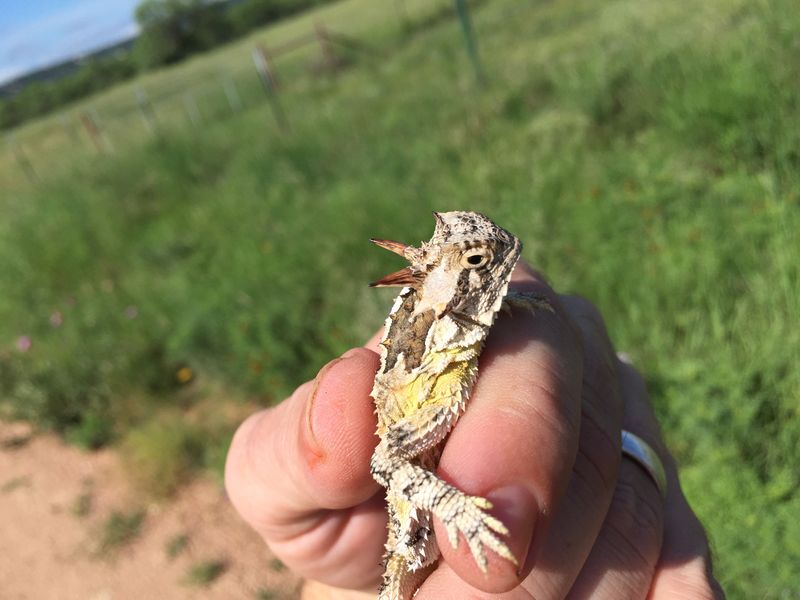
Here is the plain answer to the popular claim. The sources reviewed do not show that yards with more Texas spiny lizards have fewer scorpions or fewer household roaches.
No one has measured that, at least in the material found for this article.
Scorpions are a good example of how the story gets muddy. One Texas Master Naturalist article, a local account from the Rio Grande Valley chapter, lists scorpions among the lizard’s prey.
That is worth knowing, but it is a secondary source, not a study of diets.
The specialist review in the SWCHR bulletin does not list scorpions among typical wild prey. Put together, the two sources mean scorpion eating is unverified.
Even if a lizard grabs one now and then, that is very different from keeping scorpion numbers down.
Scorpions are also mostly active at night, while these lizards are out during the day, as Animal Diversity Web notes about the lizard’s daytime habits. Their schedules barely overlap.
You can still welcome the lizard as a native neighbor. Just skip the idea that it is your pest plan.
A scorpion problem needs steps aimed at scorpions, and those come later in this article.
Trees and native layers make the yard more useful

If you want to give spiny lizards a better shot at settling in, start with the plants. These lizards are tied to trees, so keeping mature trees, or adding suitable ones, is a strong first step.
Animal Diversity Web describes the species as largely tree-associated.
Add locally suitable native plants around the trees. Texas Parks and Wildlife Department’s Wildscapes tips recommend native plants and layered vegetation, meaning a mix of canopy trees, shrubs, and ground-level plants.
Native choices also tend to handle triple-digit Texas summers better than thirsty imports.
Insects are the other half of the picture. They are lizard food, and TPWD points to cutting back on broadcast insecticides as a way to leave more insects available to wildlife.
Spraying the whole yard on a schedule wipes out the very prey you hope will feed your lizards.
A practical example: instead of fogging the yard for mosquitoes every few weeks, treat only the spots that need it and read the label first. Leave some leaf litter and flowering plants in the back of the lot where insects can thrive.
Keep expectations honest. Good habitat makes a yard more suitable, but it cannot promise a lizard will show up.
It also cannot promise fewer scorpions or roaches. Think of it as a gift to local wildlife, not a trade for pest control.
Keep habitat features away from the house
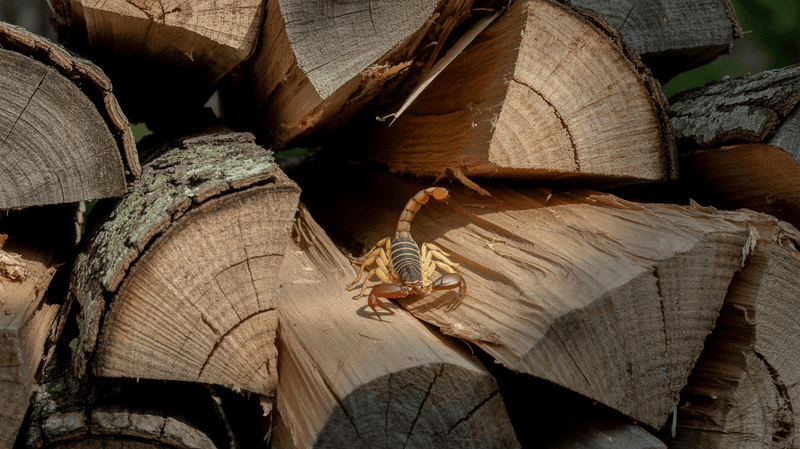
Wildlife shelter is good, but location matters. TPWD’s Wildscapes tips note that fallen logs, rock walls, and similar features can shelter wildlife.
Those same spots can also hide scorpions.
So put a log pile, a low rock wall, or a brushy corner well away from the house, such as along the back fence or under a tree at the far edge of the lot. Never stack wood or loose stone against the building, and avoid dense plantings or debris right beside the foundation.
For scorpion worries, work on the house itself. Texas A&M AgriLife Extension advises sealing potential entry points and clearing harborage near structures.
Check door sweeps, gaps around pipes, and cracks in the foundation.
Keep window and door screens in good repair as well. AgriLife’s Urban IPM notes on striped bark scorpions back up this focus on exclusion and cleaning up around the structure.
If you decide to use a pesticide, follow the product label exactly. A simple weekend routine works well: walk the perimeter, pull back any wood or stone piles, and seal what you find.
Cooler weather can make lizards harder to spot
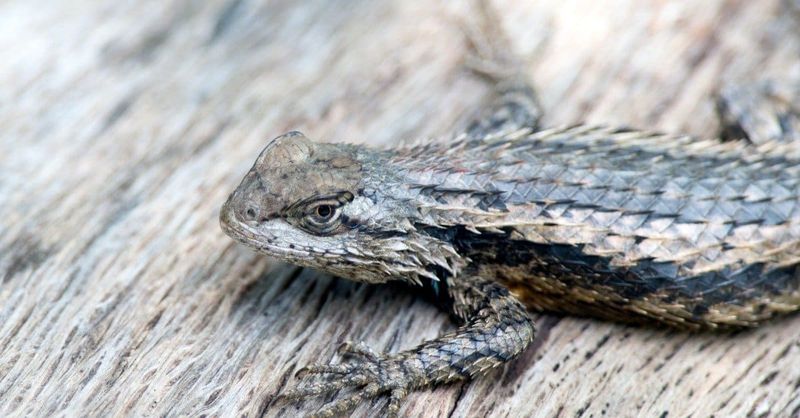
Lizards are cold-blooded, so they rely on outside warmth. When temperatures drop, a Texas spiny lizard may move less, feed less, and stay out of sight.
That is why fence sightings can dry up in the cooler months.
How much a lizard slows down varies across its range. Animal Diversity Web describes brumation, a winter slowdown similar to hibernation, at the northern edge of the species’ range.
Farther south, the account describes reduced activity or burrowing instead.
The Rio Grande Valley chapter’s article, They’re Not Gone, Just Brumating, carries the same message for lizards that seem to vanish: they are often still around, just out of view.
That means there is no set date when Central Texas lizards disappear. A warm November afternoon or a mild February stretch may bring one back onto a sunny post.
If you stop seeing lizards, do not assume your habitat work failed. A missing lizard in winter is not a sign of a problem, and a lizard sighting in spring does not prove pest control either.
Wait for a sunny, warm day and look at tree trunks and sunny fence rails.
Welcome the lizard; manage scorpions directly
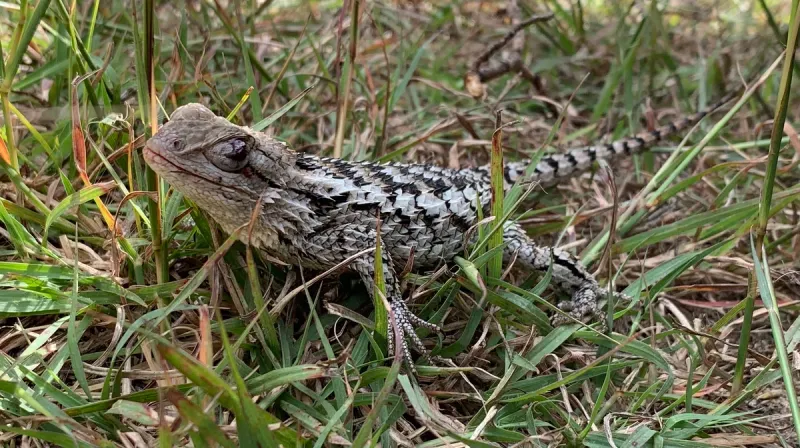
Keep the trees, add native layers, and leave some insects for the lizards, as TPWD’s Wildscapes tips suggest. Put shelter piles far from the house, then seal cracks and clear the perimeter as Texas A&M AgriLife Extension recommends.
For extra background on the scorpion side, see AgriLife’s striped bark scorpion notes.
The spiny lizard earns its spot on the fence by being a native neighbor, not a hired exterminator.