
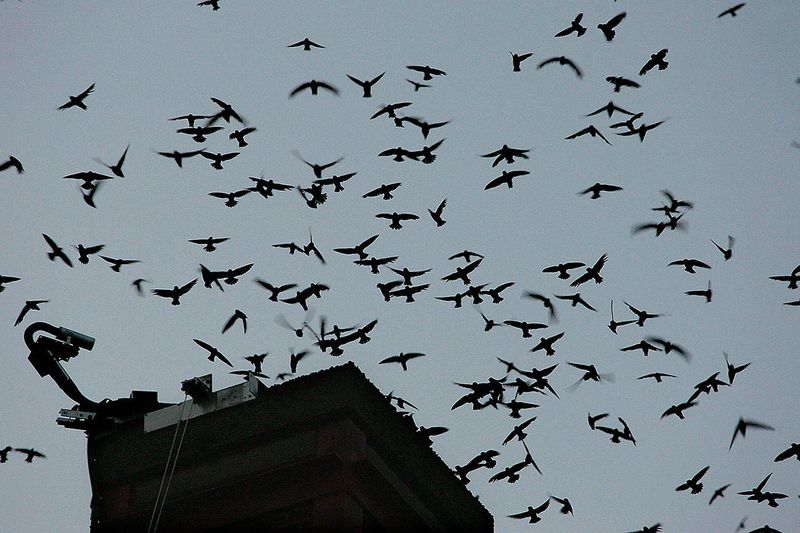
Maybe you have stood in your Texas yard at dusk and watched a cloud of small, twittering birds swirl above the rooftops. In late summer and fall, that show could be Chimney Swifts getting ready to settle in for the night.
Knowing what you are seeing helps you treat the birds kindly and keep your chimney safe. Here is what the swirl may tell you, and what it cannot.
A roofline swirl is a clue, not a diagnosis
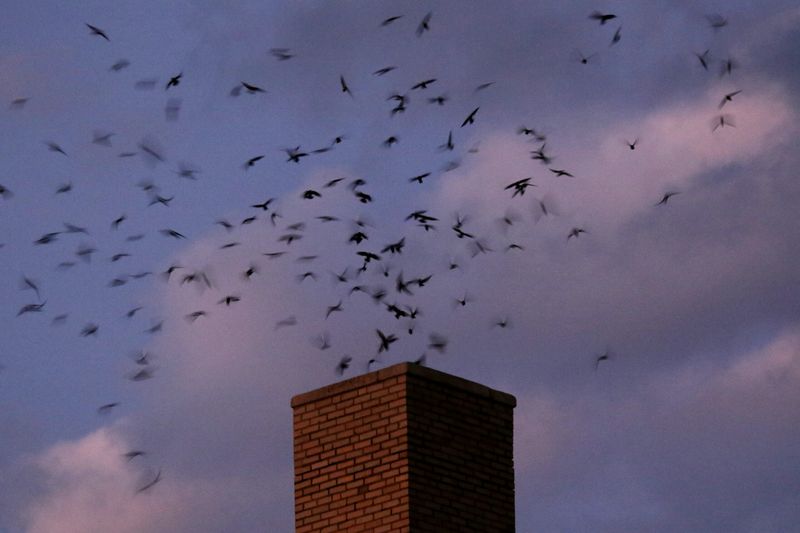
Around sunset in late summer or fall, you may notice a group of fast, chattering birds wheeling above the houses on your street. They sweep in loose circles, often getting lower as the light fades.
That behavior is consistent with Chimney Swifts gathering before a communal night roost.
Consistent with is not the same as confirmed. Other fast flyers, such as swallows or nighthawks, can also swarm over Texas rooftops in the evening.
From the ground, at dusk, it is hard to tell them apart unless you get a good look at the shape: swifts are often described as cigar-shaped with long, curved, stiff-looking wings.
Cornell Lab of Ornithology notes that swifts may circle and then funnel into a chimney to spend the night. That pattern is what makes the dusk swirl a useful clue.
Still, a flock above your roof does not prove the birds are heading into your chimney. They could be dropping into a school chimney, an old industrial stack, or a building two streets over.
Texas offers real examples of this. A Texas Parks and Wildlife guide to Austin birding sites describes hundreds of swifts roosting near dusk in September.
Not every flock behaves that way, and the numbers over your own street may be far smaller.
Think of the swirl as a prompt to watch and learn. Note the date, the time, and where the birds go when the light drops.
Those details tell you more than the circling alone.
Why swifts gather before nightfall
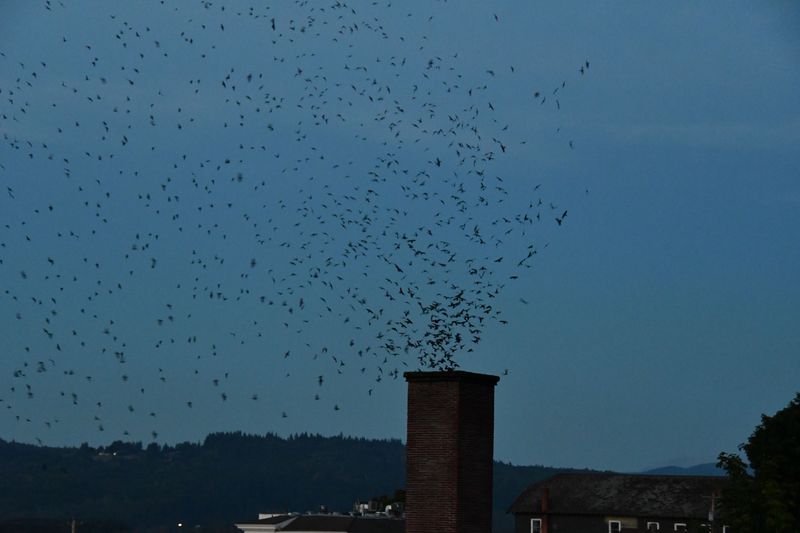
Chimney Swifts spend most of the day in the air, and when evening arrives they need somewhere to rest. Hollow trees were the original choice, but chimneys and other enclosed vertical spaces now do the job.
When many birds share one spot, they often swirl together and then drop in, a bit like water going down a drain.
Swifts do not perch on a wire or a branch the way a sparrow does. According to the Texas Parks and Wildlife species profile, they cling to vertical surfaces such as the inside walls of a chimney.
That is why rough masonry and a straight shaft suit them.
A night roost is simply a place to sleep, and it is different from a nest. Nesting happens in the warmer breeding season, while the fall gathering is a temporary stop.
Seeing swifts at dusk does not mean a pair is setting up house, and it certainly does not mean they are staying for good.
It also helps to remember that the circling does not point to a specific roof. The Cornell Lab life history describes group roosting as a general habit, and the flock may pick a chimney blocks away.
If you want to know whether yours is in use, watch from a distance at dusk and listen for soft rustling or chittering inside, without going near the chimney.
A seasonal gathering with a journey south
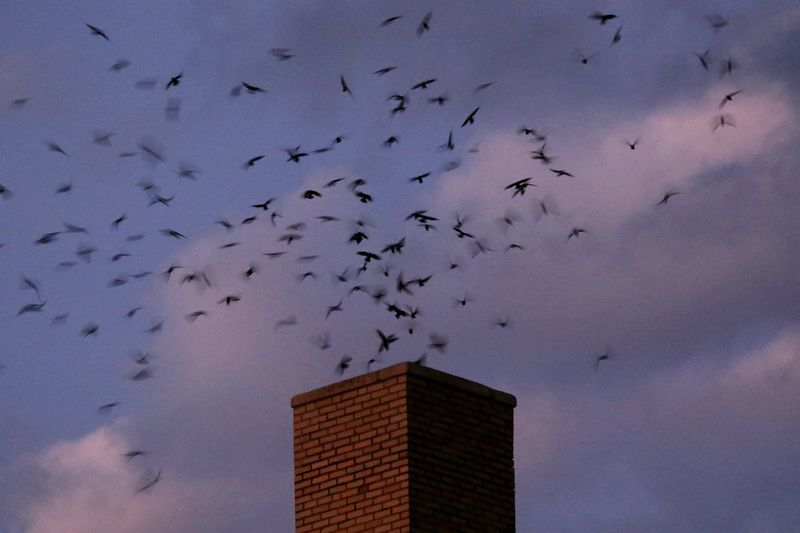
Chimney Swifts are travelers. They spend winter in South America, so the birds you see over Texas in fall are passing through on a long trip, not claiming your chimney for the year.
Timing varies. A U.S.
Fish and Wildlife Service timing table lists Southwest departures around mid-October. Treat that as a regional reference only.
Weather, food, and the year itself can shift when birds move, and individual flocks do not follow a calendar.
A practical way to use this: if the dusk swirls fade out of your neighborhood some evening in October or later, the birds have likely moved on. Mark the date on a calendar for next year and compare.
Over a few seasons you will see your own local pattern.
No one can promise that the same birds will come back to the same chimney, and nothing says they will. Some years a roof sees a crowd, other years it sees none.
Enjoy the show while it lasts, and let it be a seasonal visit rather than something to count on.
Mosquitoes are only part of the menu
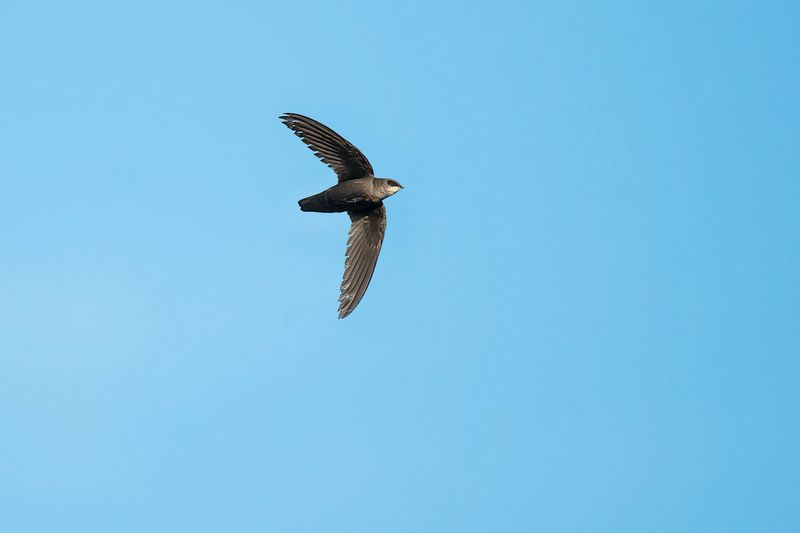
Swifts catch their food in the air, snapping up small flying insects as they go. That makes them a welcome sight in a yard, but the popular line about thousands of mosquitoes goes further than the facts.
A 2025 study in the journal of the American Ornithological Society, a peer-reviewed Chimney Swift diet study, found a varied menu. Beetles, flies, and true bugs showed up most often, and mosquitoes were detected among the prey.
The birds in that study were sampled in Pennsylvania, so it is not a direct measure of what Central Texas swifts eat.
Notice the difference between eating many insects and eating many mosquitoes. Mosquitoes are one item among several, not the main course.
No source gives a daily mosquito count for a flock, and none shows that swifts will cut the mosquitoes biting you on the patio.
Texas Parks and Wildlife uses broad language about swifts eating flying insect pests, which fits the research. For mosquito trouble at home, keep dumping standing water from saucers, buckets, and birdbaths, and treat swifts as a bonus rather than a plan.
Protect a chimney that may be in use
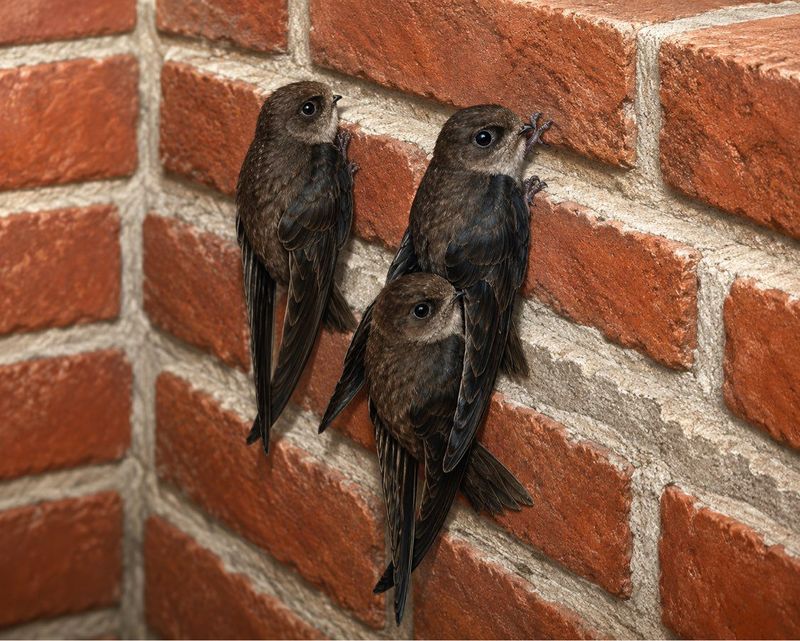
If swifts could be using your chimney, leave it as it is. Do not cap it, screen it, or block the opening while birds are present.
Sealing it can trap birds inside, and a blocked flue can also create problems for you later.
After the heating season ends, U.S. Fish and Wildlife Service guidance suggests keeping the damper closed.
The reason is simple: a closed damper reduces the chance that birds make their way into the house. Open it only when you plan to use the fireplace, and not while birds may be roosting.
Nests bring extra rules. The Fish and Wildlife Service explains that active nests containing eggs or chicks, and dependent young, are protected under the Migratory Bird Treaty Act.
That does not mean every disturbance is automatically illegal, but it is a strong reason not to remove an occupied nest or obstruct a chimney in use.
If you hear scratching or chirping and are unsure what to do, call your state wildlife agency or a qualified wildlife professional and describe what you see. Give the birds space, keep pets and kids away from the fireplace, and let the experts weigh in on your specific situation.
Plan chimney work for after migration
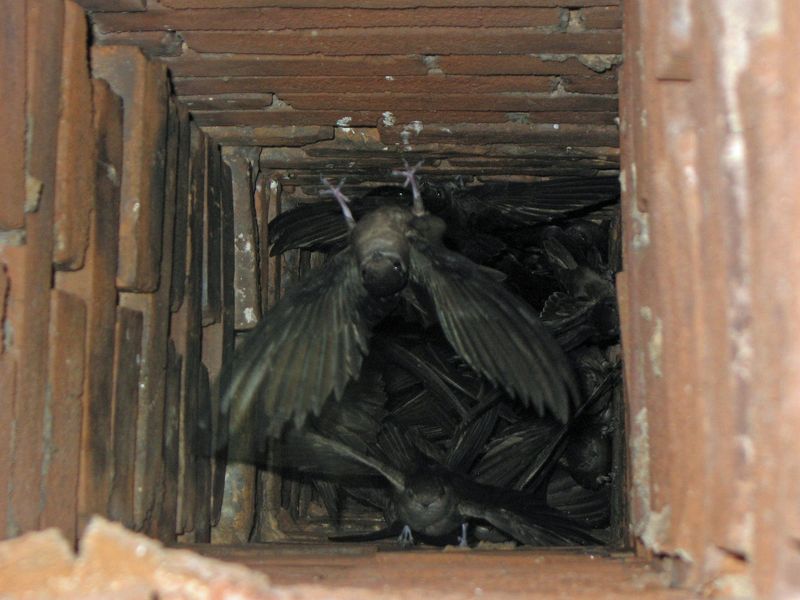
Chimneys need care, and the best time to schedule it is once the birds have gone. Texas Parks and Wildlife prefers late fall after migration for inspection and cleaning.
Book a professional then, and you can be fairly confident the flue is empty and ready for the cool months.
Until then, hands off. Do not inspect, clean, or alter a chimney while swifts are using it, even if you only want a quick look from the top.
Disturbing roosting or nesting birds can hurt them and may bring legal trouble if an active nest is involved.
When you call a sweep, mention that swifts used the area this season. A good professional will understand the timing and can check the flue, the cap, and the damper once it is safe.
Should a nestling fall into the firebox, do not try to raise it yourself. The Fish and Wildlife Service advises contacting a licensed migratory-bird rehabilitator.
Then wait for the sky to go quiet, and take care of the chimney on your schedule. The birds will be somewhere over South America, long past your roofline.