
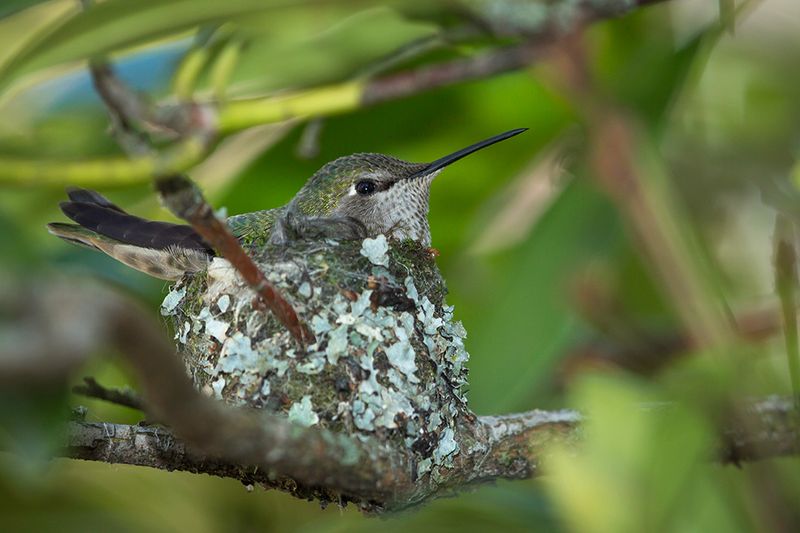
Spotting a tiny, cup-shaped nest tucked into a branch of your California yard is one of those surprises that stops you mid-task. A female hummingbird chose that exact spot because something about your yard worked for her, and that decision came with a fragile brood that depends on your next moves. Moving it, knocking it, or repeatedly getting close can seriously endanger the eggs or young inside. Knowing what the nest signals, and what to leave alone, is the fastest way to help.
The nest marks a small pocket of usable habitat
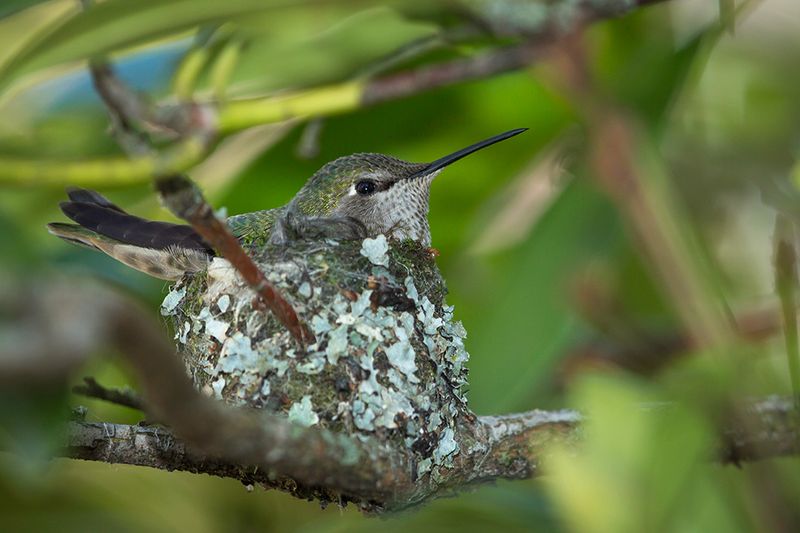
Finding a hummingbird nest in your yard means a female surveyed the area and decided some combination of conditions was good enough to raise young. That combination typically includes a small horizontal support she could anchor to, nearby cover from shrubs or trees, access to flowering plants for nectar, and enough insects and spiders in the area to feed nestlings. Cornell Lab’s Anna’s Hummingbird account notes that the species frequently places nests in trees, shrubs, and vines near nectar sources, which are the same features common in many California residential yards.
What the nest does not tell you is that your yard is perfectly managed, pesticide-free, or packed with native plants. A female may have chosen one favorable branch, a patch of filtered shade, or simply a location with less predator pressure than the alternatives nearby. The presence of a nest points to workable conditions, not a certified wildlife sanctuary.
Audubon’s guidance on hummingbird-friendly yards connects flowering plants, layered vegetation, and reduced pesticide use to hummingbird habitat in a general sense, but none of those factors alone guarantees a nest. The practical takeaway is straightforward: something in your yard is working, and the best thing you can do right now is protect the conditions that are already there rather than intervene at the nest itself.
What “walnut-sized” tells you—and what it does not
The “walnut-sized” description is a useful visual reference, but treat it as a rough comparison rather than a species ID test. Nest size varies by individual bird, site, and species. For Anna’s Hummingbird, the most common West Coast hummingbird and a year-round California resident, Cornell Lab records approximate dimensions of about 1 inch tall by 1.5 inches wide, which is roughly what people picture when they say “walnut-sized.” Other California species build similarly compact nests, but their dimensions and construction details may differ.
The nest itself is built from plant down and bound together with spider silk, which gives it a soft, stretchy structure that can expand slightly as the nestlings grow. That elasticity is part of what makes the nest so well suited to its contents, and also part of why handling it is risky. Pressing on or squeezing the nest can damage its shape in ways that are not immediately visible.
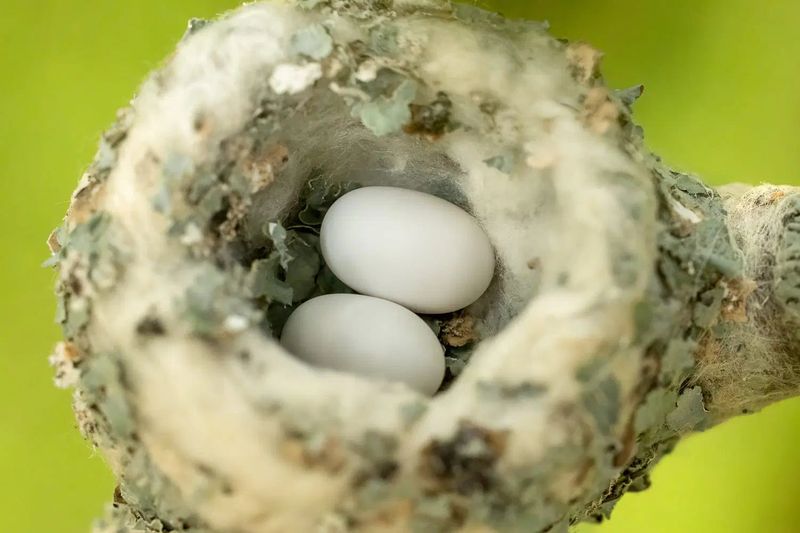
An active Anna’s Hummingbird nest can hold up to two eggs. Incubation runs approximately 16 days, and nestlings typically spend about 20 days in the nest before fledging. Costa’s Hummingbird, another California species found in drier southern and inland areas, follows different seasonal and habitat patterns, so those timelines should not be applied across the board. Audubon’s Costa’s Hummingbird profile illustrates how nesting behavior varies between species.
If you are unsure which species built the nest in your yard, the safe response is the same regardless: leave it alone and reduce disturbance.
The real danger is disturbance, not human scent
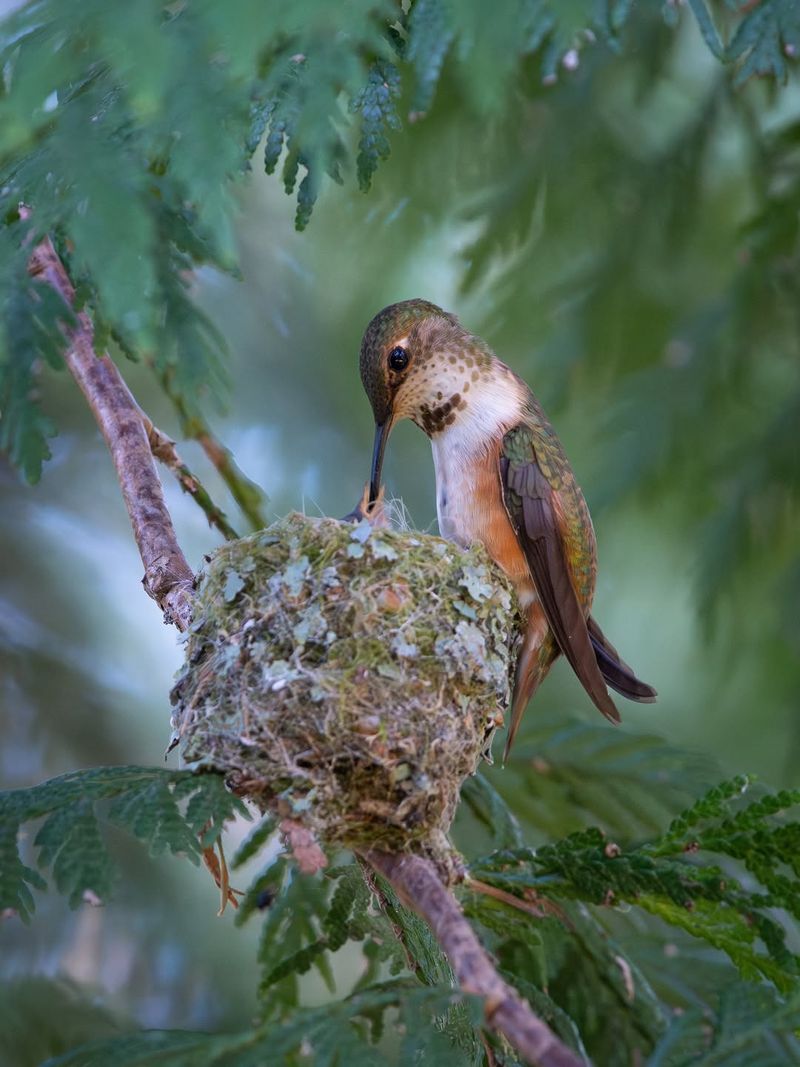
A persistent idea holds that touching a bird’s nest will cause the mother to abandon it because she smells humans. Cornell Lab’s guidance on found birds identifies this as a myth. Human scent alone is not an established mechanism for parental abandonment. If you accidentally brush the nest or get too close before realizing it is there, the right move is simple: leave everything where it is, step back quietly, and avoid going near it again.
The genuine risks are physical and behavioral, not olfactory. Moving the nest can cause the female to abandon it and can damage the structure or knock eggs and nestlings out. Knocking the nest or its contents to the ground puts the young in immediate danger. Repeatedly flushing the female off the nest forces her to spend time and energy returning rather than incubating or brooding.
Each unnecessary approach also increases the chance that a predator will notice the activity and track the nest’s location.
Disrupting parental care, even temporarily, can affect the temperature of the eggs or the feeding schedule of nestlings who depend on a steady supply of arthropods. None of these outcomes is guaranteed from a single accidental contact, but the cumulative effect of repeated disturbance is a real and serious hazard. Cornell’s nesting guidance for homeowners advises minimizing your presence and disturbance around any active nest. For a hummingbird nest in particular, where the entire structure fits in a closed fist and the eggs are about the size of a jellybean, that advice applies with extra weight.
Pause the yard work around the active nest
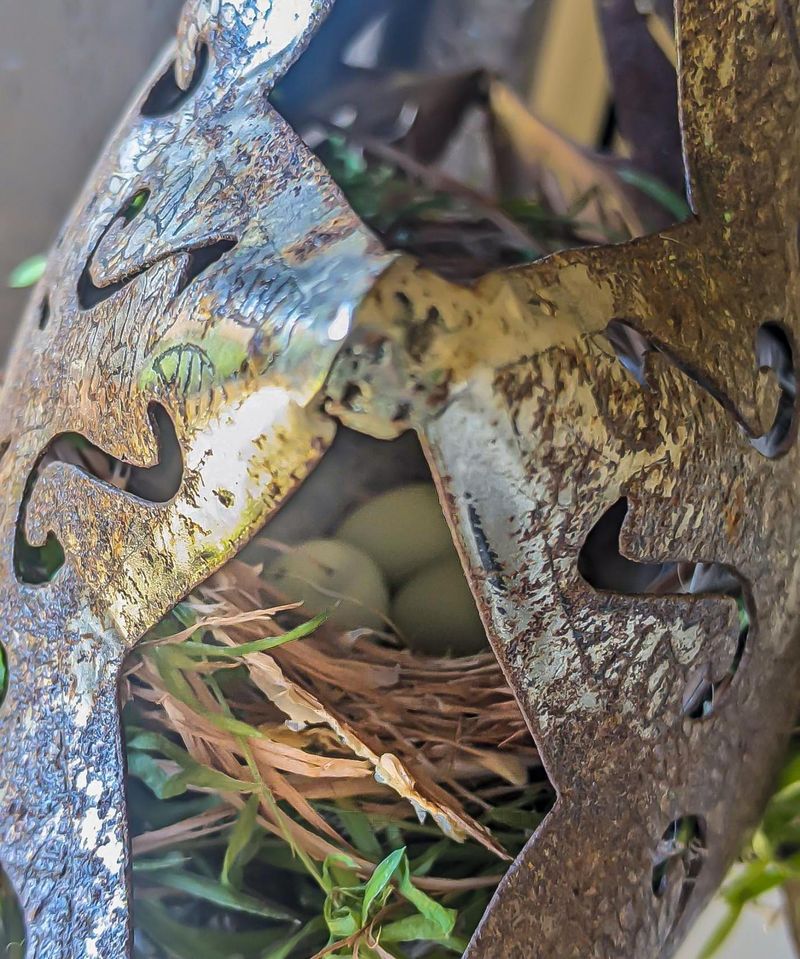
Once you have spotted an active nest, the most useful thing you can do is stop whatever yard work you were doing in that area and keep it stopped. Pruning branches, removing nearby shrubs, applying pesticides, or running power equipment close to the nest can startle the female, damage the nest structure, or eliminate the cover she chose. Cornell Lab recommends minimizing presence and disturbance around any active nest and postponing work in that zone until the young have fledged.
Keep children, cats, and dogs away from the area. Outdoor cats are a particular concern near hummingbird nests, especially when flowers and foraging activity draw the birds close to ground level. Even a well-behaved dog moving through the area can startle the female at a critical moment in incubation or brooding. Observe the nest from a comfortable distance rather than walking up to inspect it, and avoid repeated approaches even out of curiosity.
Nestlings require arthropods, including insects and spiders, as their primary food source. Audubon advises reducing or eliminating pesticide use because insects and spiders are essential food for both adults and young hummingbirds. Putting out additional sugar water does not substitute for the arthropod prey that nestlings need to survive and grow. A feeder may support the foraging female, but it cannot replace what the young actually require.
Two separate legal frameworks protect active nests. Federally, the Migratory Bird Treaty Act makes it illegal to destroy a nest that contains eggs or chicks, or young still dependent on the nest. The U.S. Fish and Wildlife Service explains that the MBTA does not automatically prohibit removing every empty nest, but possession or transfer of migratory bird nests is prohibited, and destruction can still unlawfully take birds or eggs.
Separately, California Fish and Game Code Section 3503 makes it unlawful to take, possess, or needlessly destroy the nest or eggs of any bird. These are distinct rules with different scopes, so apply them to the active nest in front of you rather than generalizing to every situation.
A missing female does not prove the nest is abandoned
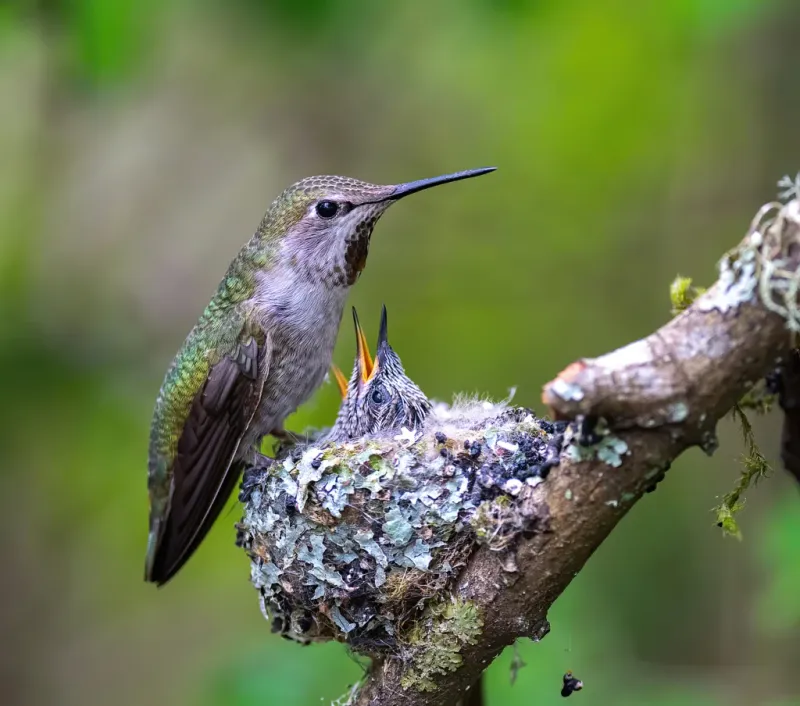
Hummingbirds are fast, and the female’s visits to the nest can be brief enough to miss entirely. She needs to forage regularly to fuel her own metabolism, which means she will leave the nest for stretches of time during both incubation and brooding. Not seeing her for ten or fifteen minutes, or even longer, does not mean the nest has been deserted.
The International Hummingbird Society recommends watching continuously from a distance for 45 to 60 minutes before drawing any conclusion about abandonment. That is a meaningful window, and it requires staying back rather than approaching to check. Repeated close inspections to see whether she has returned are exactly the kind of disturbance that can make a situation worse.
During incubation, Anna’s Hummingbird females handle all incubation duties on their own, so there is no second adult to watch for. A single female managing a nest alone may look absent more often than a species with shared parental care. If you observe the nest continuously from a distance and the female truly does not return within that 45-to-60-minute window, contact a permitted wildlife rehabilitator for guidance rather than handling the eggs or young yourself.
If the nest falls, stop and call for instructions
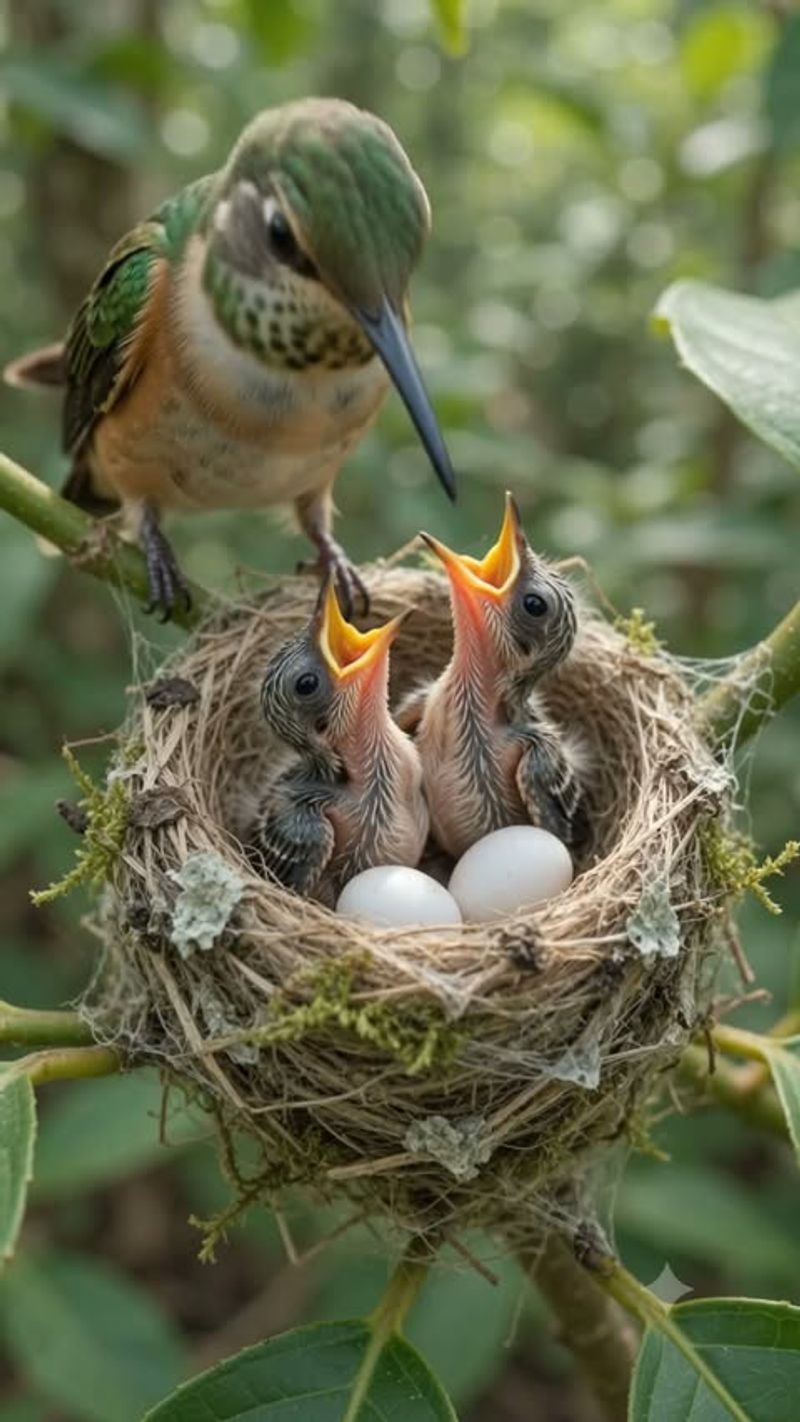
A nest that falls to the ground, or a nestling found on the ground, calls for a specific response: stop, do not feed it anything, and contact a professional before touching or moving anything. Do not offer sugar water, honey, or water by mouth to a hummingbird nestling. Rehabilitation guidance is clear that these can cause serious harm, and a nestling’s nutritional needs cannot be met by improvised feeding.
General wildlife guidance sometimes permits returning a fallen nest with nestlings near its original site, but hummingbird nests carry specific concerns that make professional input essential before anyone acts. The nest’s spider-web structure can be damaged by handling, and placing it in the wrong location or angle can expose the young to heat, cold, or predators. The International Hummingbird Society’s guidance on injured hummingbirds addresses these situations directly and should be your first reference point.
The California Department of Fish and Wildlife maintains a list of permitted wildlife rehabilitators who are trained to handle hummingbirds specifically. Reaching out to one of them, or calling CDFW directly, is the right step when a nest or nestling is on the ground and you are not sure what to do. Cornell Lab also advises against moving a nest without guidance, noting that birds often abandon nests that have been relocated. The few minutes it takes to make a call can make a real difference for the young birds inside.
After fledging, improve the habitat without making promises
Once the young have left the nest and you have confirmed the nesting episode is truly over, you can safely resume pruning, trimming, and other yard work in that area. Before you do, take a careful look through nearby vegetation for any other active nests you may have missed. Hummingbirds are not the only species that nests in California yards, and a quick visual check before cutting takes only a moment.
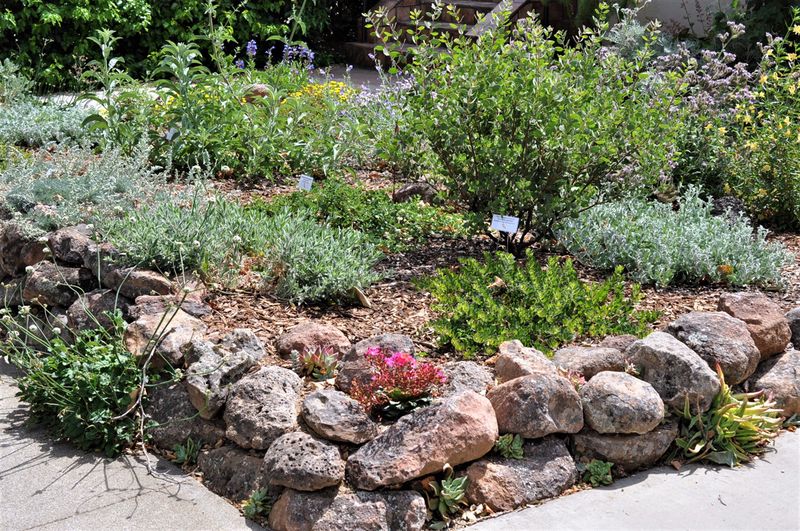
With the brood successfully fledged, the post-nesting window is a good time to think about what the yard could offer in the future. Audubon recommends regionally appropriate flowering plants, layered shrubs and small trees, and reduced pesticide use as practical steps toward a more hummingbird-compatible yard. Retaining some structural complexity, meaning a mix of heights, cover, and open perching spots, gives hummingbirds what they need to forage, rest, and potentially return to nest.
Cutting back on pesticides matters beyond the flowers. UC Agriculture and Natural Resources notes that native plants support native insects, which form the base of the food chain that hummingbirds and their young depend on. UC ANR’s hummingbird resource also connects California’s diverse native plant palette to hummingbird foraging habitat in a water-wise yard context, which fits naturally with the drought-tolerant landscaping many California homeowners are already moving toward. None of these steps guarantees a nest next season, but they keep the door open in a yard where a female has already decided conditions were worth trying.
Leave the walnut-sized nest to do its work
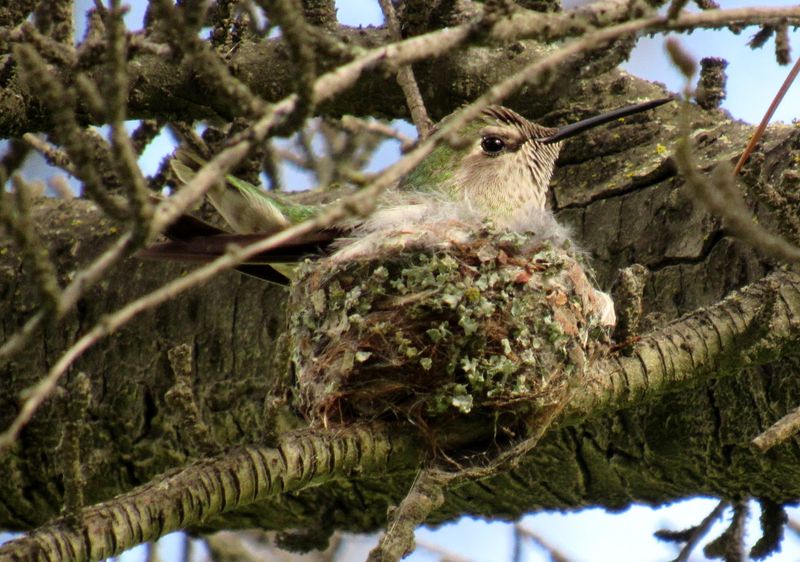
A walnut-sized nest in your yard carries a simple message: a female found enough here to try. Your most effective response is to get out of the way and let her finish the job. Keep people, pets, pruning tools, and pesticide sprayers away from the area. Resist the urge to check on progress by walking up to the nest, and do not mistake a quiet hour without visible activity for proof that the nest has been abandoned.
Cornell Lab’s nesting guidance is consistent on this point: reduced human presence is the most reliable protection you can offer an active nest.
If something does go wrong, whether the nest falls or a nestling ends up on the ground, your job is still not to improvise. Cornell’s guidance on found birds and the International Hummingbird Society both steer homeowners toward permitted rehabilitators rather than amateur rescue attempts. The same restraint that protects the nest during incubation applies when something unexpected happens.
The nest does not promise that every hummingbird that passes through will stay, and protecting this one brood does not guarantee a nest in the same spot next year. What it does mean is that a yard capable of drawing a female to nest is a yard worth tending carefully, one season at a time.