
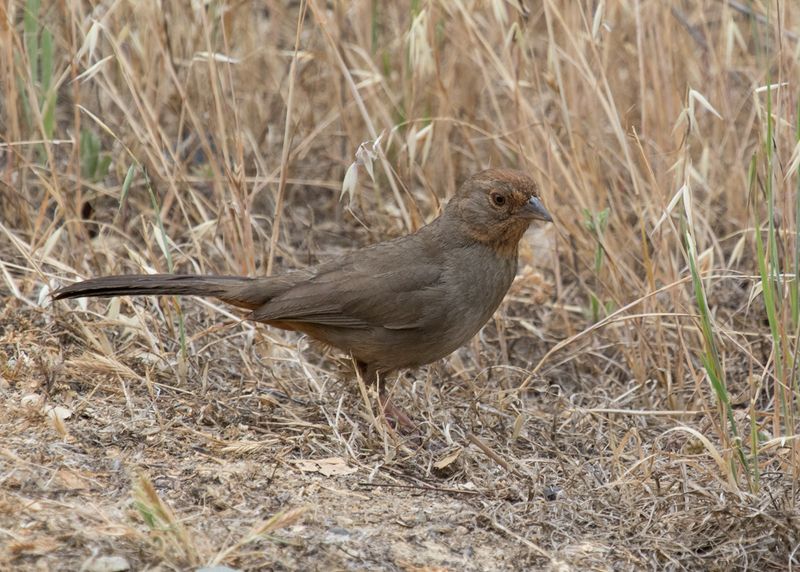
If you’ve noticed a plain brown bird hopping around under your shrubs and flicking leaf litter in every direction, you may be watching one of California’s most common backyard visitors at work. California towhees are ground foragers that spend most of their time searching through loose soil and leaves for seeds and small creatures. Understanding what that scratching actually means can help you make smarter choices about your yard, your pesticide use, and the shrubs you might otherwise trim back.
That quiet brown bird may be a California towhee
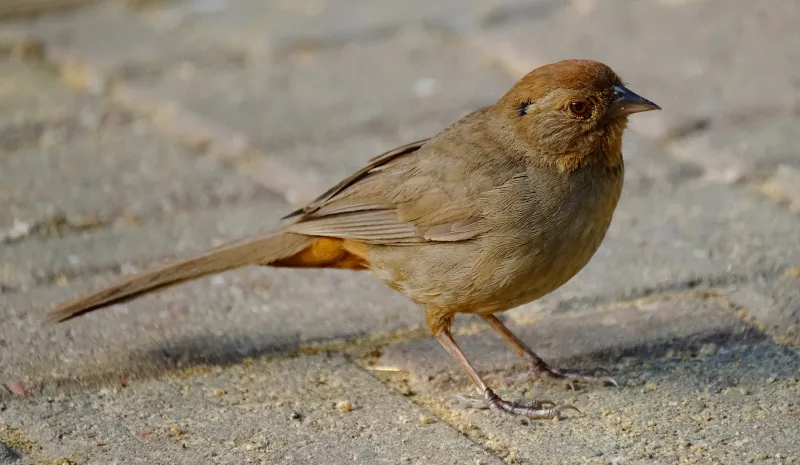
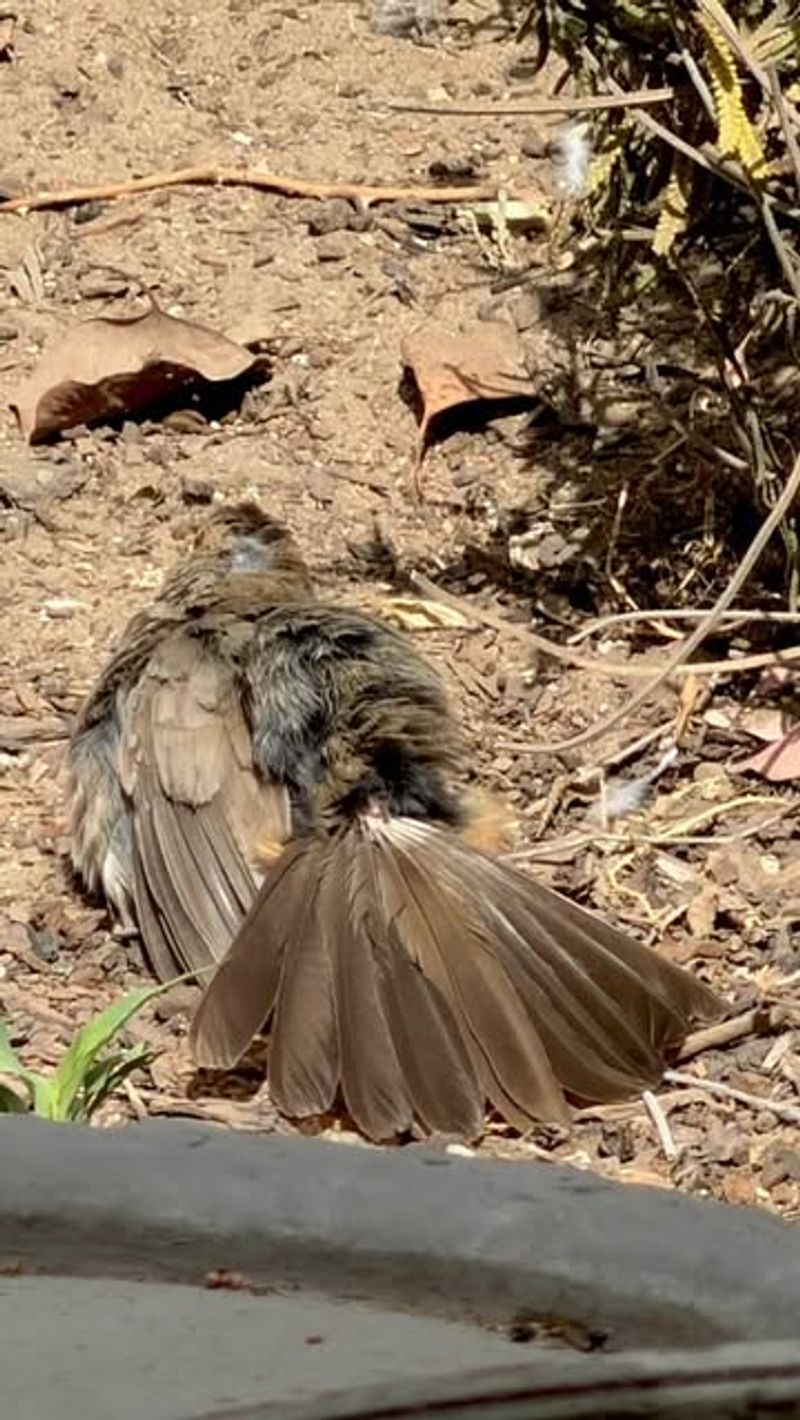
Spotting a plain, brownish bird working its way along the base of a shrub can feel unremarkable at first glance, but look a little closer and the details start to add up. Cornell Lab’s California Towhee life history profile describes the bird as overall gray-brown, with a rusty or orange-buff area beneath the tail, a pale yellowish throat streaked with brown, and a fairly long tail that it often holds loosely downward. There is no bold patterning, no wing bars, and no bright colors to catch the eye.
The bird tends to stay low, hugging the edges of shrubs or moving along fence lines rather than perching in the open. The National Park Service’s California Towhee page notes that the species is well adapted to brushy habitats and has moved comfortably into suburban yards, parks, and lawn edges wherever some shrub cover remains. If your yard has a dense hedge, a patch of native shrubs, or even a neglected corner with low-growing plants, a California towhee may treat it as a regular stop.
That said, a cautious approach to identification makes sense. Other ground-foraging birds visit California yards too, including the spotted towhee, which has a bold black-and-white patterned back and rufous sides that make it easier to distinguish from its plainer relative. A bird that is completely plain gray-brown above, lacks wing spots, and shows that warm rusty patch under the tail is a reasonable candidate for a California towhee, but a quick photo compared against a field guide or birding app can confirm what you are seeing. Turning a yard sighting into a small natural-history observation is genuinely worthwhile, and knowing what species you are watching shapes every practical decision that follows.
The double-scratch is a feeding move
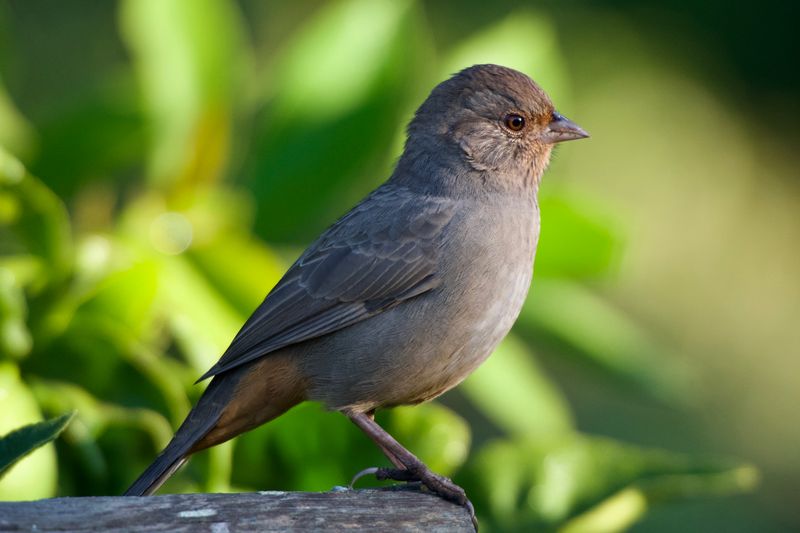
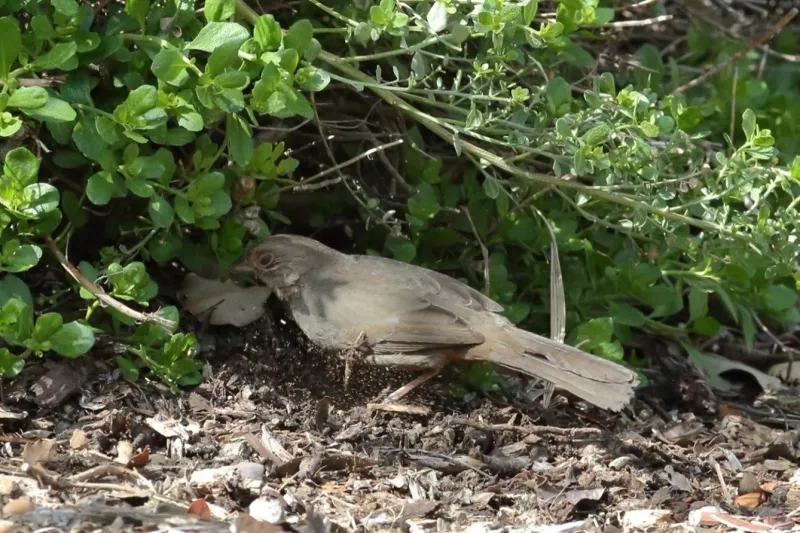
Watch a California towhee for more than a minute and you will almost certainly see the move that makes it stand out from other yard birds. The bird lunges forward, then hops sharply backward, scratching with both feet at the same time to pull leaf litter, loose mulch, or surface soil toward itself. Once the material is disturbed, the towhee pounces on whatever has been uncovered. Cornell Lab describes this double-scratch as the species’ characteristic foraging technique, used consistently when the bird works through leaf litter and open ground near shrubs.
The motion is energetic and looks a bit like the bird is performing a small hop-kick combination. Leaves scatter, loose mulch shifts, and the surface of a planting bed can end up looking slightly rearranged after a towhee has spent time working through it. This is normal feeding behavior, not a deliberate attempt to disturb your garden. The bird is not pulling up seedlings for sport or targeting your mulch specifically; it is trying to uncover food hidden beneath the surface layer.
That said, acknowledging the behavior honestly means acknowledging that a particular bird, on a particular day, can cause real minor disturbance. A towhee working along a freshly planted seed tray, a row of small seedlings, or a carefully raked bed may displace material in ways a homeowner notices and reasonably wants to address. Gently redirecting the bird away from a specific vulnerable area, or using a light physical barrier like wire mesh over a seed flat, is a proportionate response to a genuine site-specific problem. What the double-scratch does not warrant is treating the bird as a pest or chasing it away from the yard entirely, because the same behavior that ruffles your mulch is what makes the towhee useful in other parts of the yard where undisturbed leaf litter and loose soil are exactly what you want it to work through.
What the towhee eats—and what its presence cannot prove
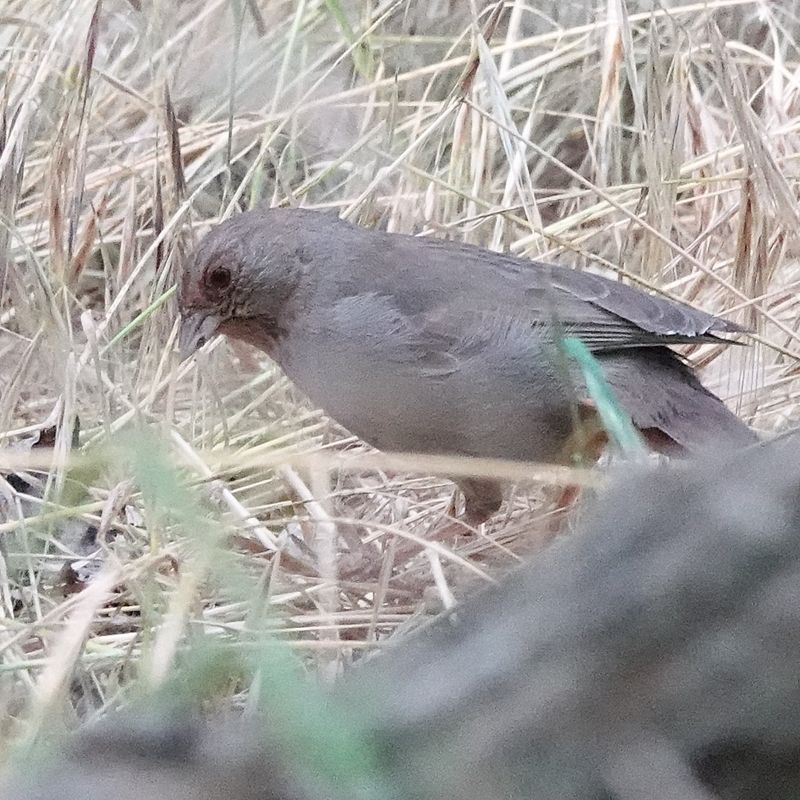
The California towhee’s diet is primarily plant-based. Cornell Lab’s life history account lists seeds from grasses and herbs as the core of the diet year-round, supplemented by berries, acorns, and occasional garden produce. That last category is worth noting: the same bird eating weed seeds in one corner of the yard may nibble a strawberry or pick at fallen fruit in another. Its preferences follow opportunity more than any particular homeowner’s wish list.
Insects become a more significant part of the diet during breeding season, when the protein demand of raising chicks rises. The National Park Service profile and Cornell’s account both mention beetles and grasshoppers as common insect foods, and Cornell also notes spiders, millipedes, and snails among the small prey a towhee may encounter while ground foraging. The bird takes what its double-scratch exposes, which can mean any of those creatures depending on the season and the specific patch of ground it is working.
Here is where a clear boundary matters. Eating some weed seeds is not the same as removing enough seed to prevent germination or reduce a weed problem in any measurable way. A towhee foraging through a planting bed may consume dozens of grass seeds in a session, but a single annual grass can produce hundreds or thousands of seeds per plant, and many seeds lie deeper in the soil than a double-scratch reaches. Similarly, encountering beetles or spiders during foraging does not mean the bird is systematically targeting the specific larvae or pest insects troubling your vegetable bed.
The towhee is an opportunistic ground forager, not a curated pest-control program, and treating its presence as proof that your yard’s weed or insect problems are being handled leads to decisions you may regret later in the season.
A towhee is not a guaranteed pest-control service
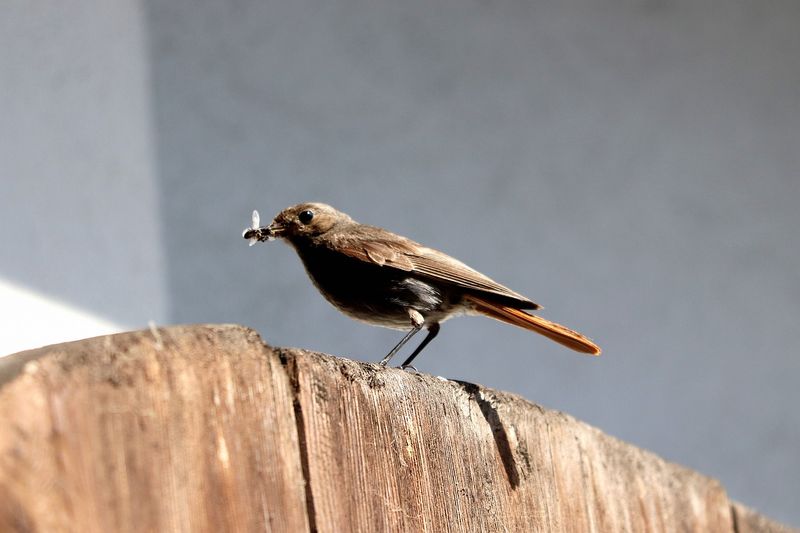
There is genuine research showing that birds can reduce pest insect populations in some agricultural settings, and that context is worth understanding. A U.S. Forest Service study on bird-based pest control found that bird communities reduced pest abundance in certain crop systems, but that outcomes varied considerably depending on the crop, the season, the local bird community, and the food web. Critically, the same research noted that birds sometimes consume beneficial insects, including natural enemies of the pests a grower is trying to suppress, which means bird activity is not always a net benefit even in the settings where it was studied.
That research measured bird communities on farms, not individual California towhees in residential California yards. Scaling those findings down to a single species foraging in a suburban garden requires caution. There is no published study establishing that a California towhee visiting your planting bed will reduce aphids, whiteflies, or caterpillar pressure in a way you can measure or count on. The bird may consume some pest insects while it works through the leaf litter, but it may also take ground beetles, parasitic wasps, or other organisms that were already working in your favor.
A more accurate framing is that a California towhee is one potentially helpful participant in a living yard, not a replacement for observation, weeding, monitoring, or targeted pest management. Welcoming it does not mean you can skip checking plants for damage, identifying what is actually eating your tomatoes, or treating a genuine infestation when one develops. The towhee’s presence is a sign of a yard with enough habitat complexity to support ground-foraging wildlife, and that is genuinely worth something. Just resist the temptation to assign it a job description it was never hired to perform.
Accommodate ordinary foraging where your yard can safely support it
The core recommendation here is straightforward: do not chase away or harass a towhee simply because it is scratching under a shrub. The behavior is normal, the bird is looking for food, and removing it from the yard does nothing to improve the underlying conditions it was responding to. Cornell Lab notes that California towhees forage on open ground close to brushy cover, which means a yard with some intact native or low-water shrubs and a modest layer of leaf litter is exactly the kind of habitat the species uses naturally.
Retaining some shrub cover and compatible leaf litter in appropriate areas of your yard can accommodate the towhee’s documented foraging habits. A hedge along a fence line, a cluster of native shrubs in a back corner, or a mulched area under a tree are all places where a towhee can work without disrupting anything you are actively managing. The National Park Service describes the species as well suited to suburban and park environments where this kind of patchy cover exists, so the bar for supporting it is not high.
Those habitat choices do have real limits in California, and they must yield to other priorities. Defensible-space requirements in fire-prone areas may restrict how much dry vegetation or dense shrub cover you can maintain close to structures. Local drainage rules, HOA standards, or accessibility needs may further limit where leaf litter or low shrubs can reasonably stay. Accommodating a towhee means working within those constraints, not ignoring them.
A yard that supports some ground-foraging wildlife while meeting fire-safety and water-management standards is a realistic goal; a yard that sacrifices safety requirements for the sake of bird habitat is not a trade-off this species requires or that any reasonable guidance supports.
Reduce unnecessary pesticide exposure instead of outsourcing the job to birds
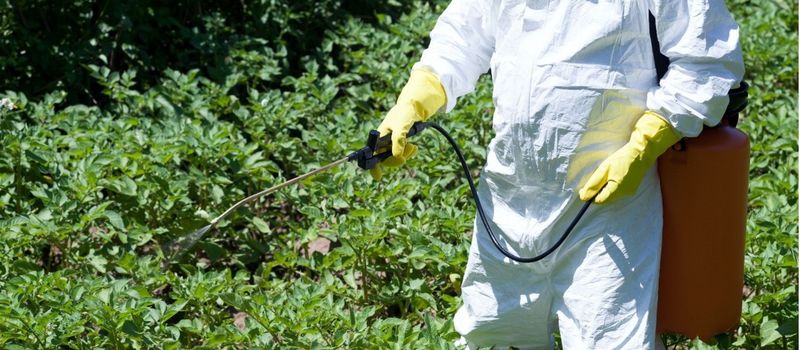
Welcoming a towhee into the yard is not a reason to abandon pest management, but it is a reasonable prompt to look honestly at how you are currently using pesticides. Routine, broad outdoor applications, the kind where you spray the whole yard on a schedule regardless of whether a specific problem exists, are harder on wildlife than targeted treatments and often unnecessary. EPA guidance on reducing pesticide impacts on wildlife recommends using pesticides only when a genuine problem has been identified, treating only the affected area rather than the whole property, following the product label precisely, preventing runoff into storm drains and waterways, and avoiding applications before heavy rain that could carry product off-site.
Following those steps protects ground-foraging birds like towhees, along with bees, beneficial insects, and other yard wildlife, without requiring you to give up pest control entirely. The goal is diagnosis before treatment: find out what is actually damaging your plants, confirm the pest’s identity, and choose a product and timing appropriate to that specific problem. Spot-treating a known aphid colony on one shrub is a very different action from spraying the entire planting bed because something looks off.
A few additional points worth keeping in mind. Not every product labeled as natural or organic is automatically safe for birds or other wildlife; some botanical insecticides are toxic to beneficial insects and can affect vertebrates depending on concentration and exposure route. A towhee foraging through recently treated soil or leaf litter can pick up residues through the food it consumes. And none of this means that a genuine pest, sanitation, or public-health concern should go untreated because a bird might be nearby.
The right response to a real problem is targeted, label-compliant treatment, not inaction. The right response to no confirmed problem is no treatment, regardless of what birds are or are not present in the yard.
Check the shrub before you prune or clear it
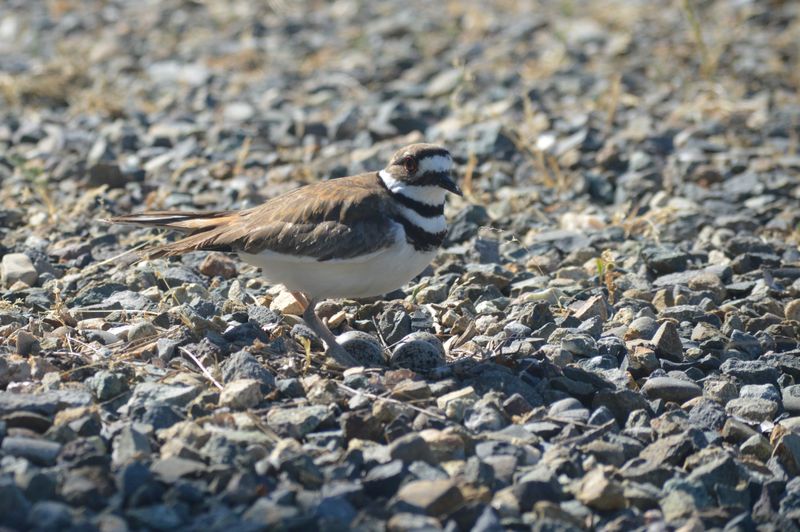
Ordinary foraging and nesting activity look different, and knowing the difference matters before you pick up pruning shears. A towhee scratching along the ground near a shrub is foraging. A towhee repeatedly disappearing into the same shrub, carrying small sticks, dry grass, or other fibrous material in its bill, or bringing food to a fixed point inside a dense plant is likely doing something else entirely. Those are signs of nest building or of adults feeding young, and they call for a different response than watching a bird scratch through leaf litter.
California Department of Fish and Wildlife guidance on nesting birds recommends doing major yard work outside the February-through-August window used as a general nesting-season precaution for many California bird species. That timing is a useful general rule, but it is not absolute. Nesting behavior varies by species, local conditions, and year, and some birds nest outside that window or even year-round in mild California climates. Inspecting a shrub or small tree before cutting it, rather than relying on calendar dates alone, is the more reliable habit to build.
When you find a nest with eggs or young birds inside, the right step is to stop work on that shrub and get guidance specific to your situation before proceeding. California Fish and Game Code Section 3503 makes it unlawful to take, possess, or needlessly destroy a bird’s nest or eggs, though the statute includes exceptions and not every situation involving a nest carries the same legal outcome. The practical point is not that every shrub is off limits forever, but that pausing work and consulting a wildlife professional or your local CDFW office when you find an active nest is both legally prudent and the right thing to do. Chasing a towhee away from a spot where it is simply foraging is a different matter from disturbing an active nest, and those two situations should not be treated as equivalent.
You do not need a feeder to make the yard towhee-friendly
Making your yard genuinely useful to California towhees does not require buying anything or setting up any supplemental feeding station. Suitable shrub cover and a modest layer of compatible leaf litter in appropriate areas of the property already address the species’ core habitat and foraging needs, based on its documented preferences. Cornell Lab notes that California towhees may visit feeders offering millet, but feeding is optional, not a requirement for attracting or supporting the bird.
If you do choose to put out seed or a birdbath, sanitation becomes a genuine responsibility rather than an afterthought. California Department of Fish and Wildlife’s Wildlife Health Lab reports that feeders and birdbaths can facilitate transmission of diseases including salmonellosis, mycoplasmosis, and avian pox when contaminated seed, droppings, or standing water accumulates. Cleaning feeders with a dilute bleach solution at least once or twice a month, replacing seed before it becomes wet or moldy, and scrubbing birdbaths every few days are practical steps that reduce that risk meaningfully. Skipping those tasks turns a well-intentioned offering into a disease risk for the birds you were trying to help.
The practical decision rule for any California homeowner watching a towhee work through the yard is fairly simple. Observe what the bird is doing, accommodate ordinary foraging in areas of the yard where it does not conflict with fire safety, drainage, or other real requirements, and intervene carefully only when a specific yard problem, a genuine sanitation concern, or an active nest actually warrants a response. A yard that supports ground-foraging wildlife without demanding that you manage it like a wildlife sanctuary is entirely achievable, and a towhee scratching under your shrubs is a reasonable sign you are already partway there.