
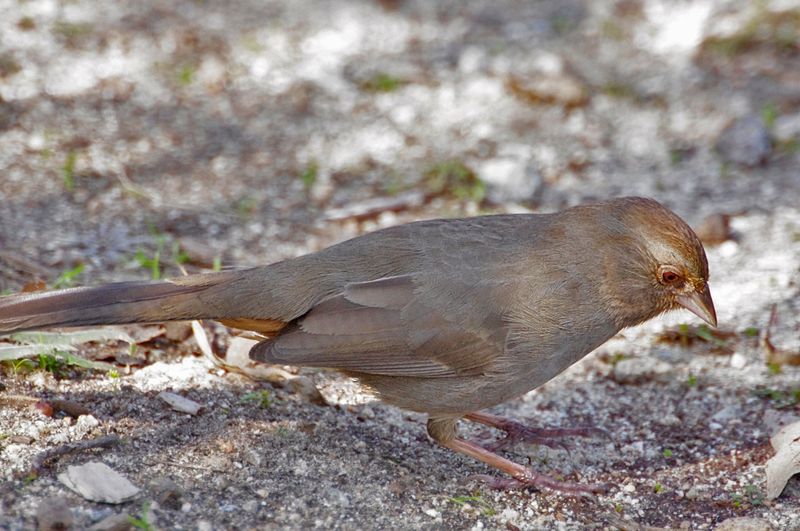
If you have noticed a California towhee repeatedly working the ground beneath one of your shrubs, you are watching one of the most recognizable foraging behaviors in the California backyard. These chunky, russet-brown birds are built for scratching, and when one keeps returning to the same spot, there is almost always a good reason rooted in food, cover, and territory.
Understanding what draws the bird back can help you make smarter yard decisions without accidentally removing the very conditions that made your garden worth visiting.
Repeated scratching usually points to a useful habitat edge
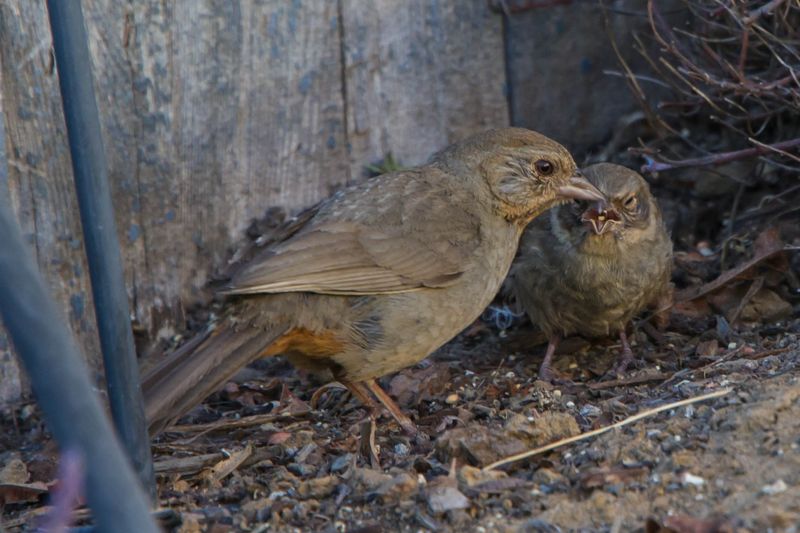
Look closely at where the bird is working and you will notice something consistent: the scratching almost never happens in the open lawn or deep inside a thicket. The activity concentrates right at the boundary where a dense shrub’s canopy meets a small patch of accessible soil or thin leaf litter.
That edge is exactly what makes the spot valuable to a California towhee.
According to the California Department of Fish and Wildlife life-history account for the species, California towhees glean and scratch in litter and forage on open ground immediately next to brushy cover. The shrub provides quick escape cover if a hawk appears, while the exposed or lightly covered ground beside it gives the bird a workable surface to search for food.
Remove either element and the patch becomes much less useful.
Repeated daytime visits to the same location also reflect how California towhees manage their territories. These birds are year-round residents that hold and defend home ranges, so a productive shrub-edge patch can become a regular stop on a pair’s daily circuit.
The bird returns not because it is trapped there but because the patch has paid off before.
That said, repeated scratching alone cannot tell you exactly what is drawing the bird back on any given morning. Research on long-term home-range use in California towhees shows that individual birds shift their activity within a territory in response to changing conditions, so what looks like obsessive focus on one shrub is more likely a flexible bird responding to whatever food happens to be concentrated there right now.
The combination of nearby refuge and a workable feeding surface is the condition worth noting, not the specific shrub on its own.
The bird may be uncovering several kinds of food
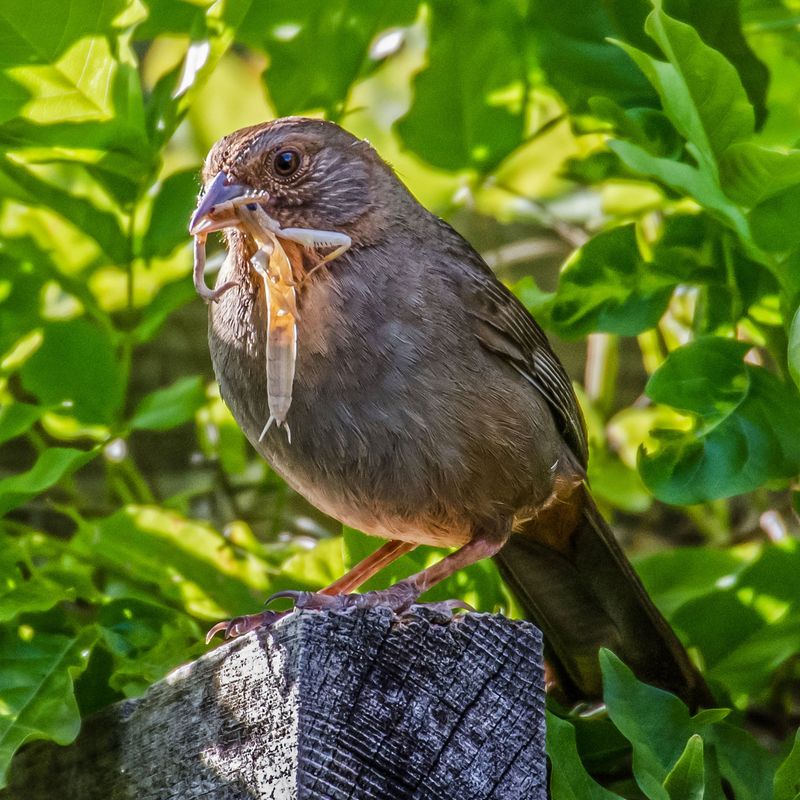
Scratching is a foraging technique, not a sign that one specific food source has taken over the garden bed. A California towhee kicks backward with both feet simultaneously, flipping litter and loosened soil to expose whatever happens to be underneath.
The menu that technique can uncover is broader than most homeowners expect.
Cornell Lab of Ornithology’s life-history profile for the California towhee describes a diet built primarily on seeds from grasses and low-growing herbs, with insects such as beetles and grasshoppers becoming considerably more important during the breeding season. Berries, acorns, and some garden fruits round out the picture across different times of year.
A bird scratching under your shrub on a Tuesday morning in March may be after grass seeds that fell from an overhanging stem. The same bird on a warm June afternoon may be flipping litter to find beetle larvae for a hungry nestling.
That variety matters because it means the behavior carries no built-in alarm. Scratching does not prove that the soil beneath your shrub is infested with a pest, that the plant is diseased, or that some hidden problem needs fixing.
The California Department of Fish and Wildlife notes that the species also picks seeds and fruit directly from plants, so the shrub itself may be contributing fallen material to the ground-level food supply rather than harboring a problem.
The National Park Service similarly describes the towhee as a ground forager that works litter and open soil near brush. In short, the bird is using a generalist technique in a reliable spot, and the range of foods it might find there is wide enough that no single explanation should be treated as the obvious answer without additional evidence.
Several conditions can increase the activity
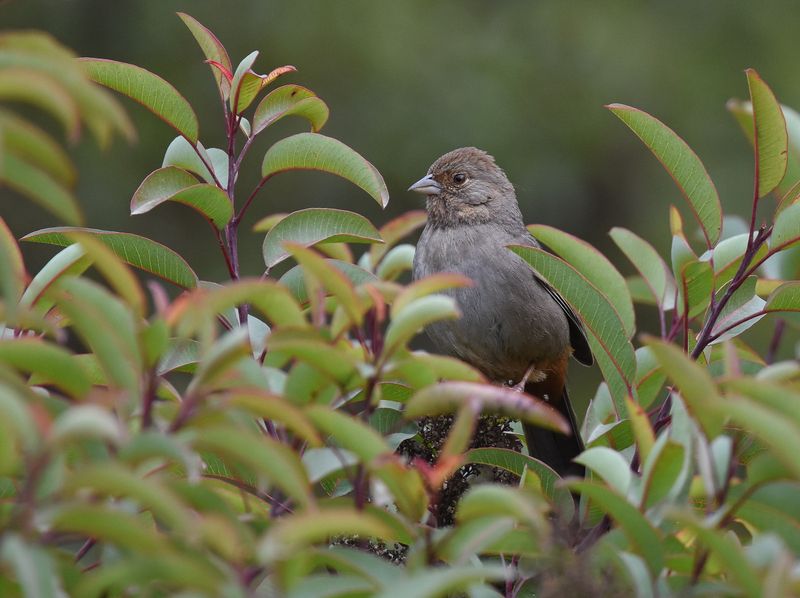
Noticing the bird under the same shrub day after day can feel like something has changed, and often something has. A few well-supported explanations can account for a noticeable uptick in scratching activity, though none of them can be confirmed from observation alone.
One common driver is a temporarily rich food patch. If a shrub recently dropped seeds, berries, or small fruit, or if recent light rain loosened the soil and brought invertebrates closer to the surface, the patch becomes more rewarding than usual.
The bird is not being stubborn; it is being efficient. A second explanation involves the breeding season.
Cornell Lab of Ornithology notes that California towhees may breed from early April into early August, with activity concentrated from early May through mid-June, though individual timing varies by location. During that window, a pair raising young needs substantially more protein, and insects become a larger part of every foraging trip.
More frequent visits to a productive patch make sense when the calorie demand is highest.
Recently disturbed ground is a third factor worth considering. Digging, light cultivation, or even heavy foot traffic near a bed can expose seeds and insects that were previously buried, turning a quiet corner into a temporarily productive feeding station.
The California Department of Fish and Wildlife account confirms that the species is drawn to open or lightly covered ground next to brushy cover, so any disturbance that creates that condition can attract more attention.
Finally, established territory use explains a lot of what homeowners interpret as sudden behavior. Studies on California towhee home-range fidelity show that pairs can occupy the same territory for years.
If your yard falls within an established range, repeated visits to a reliable edge patch are simply part of the bird’s routine rather than a response to anything new in the yard.
Scratching does not confirm a nest or the bird’s identity
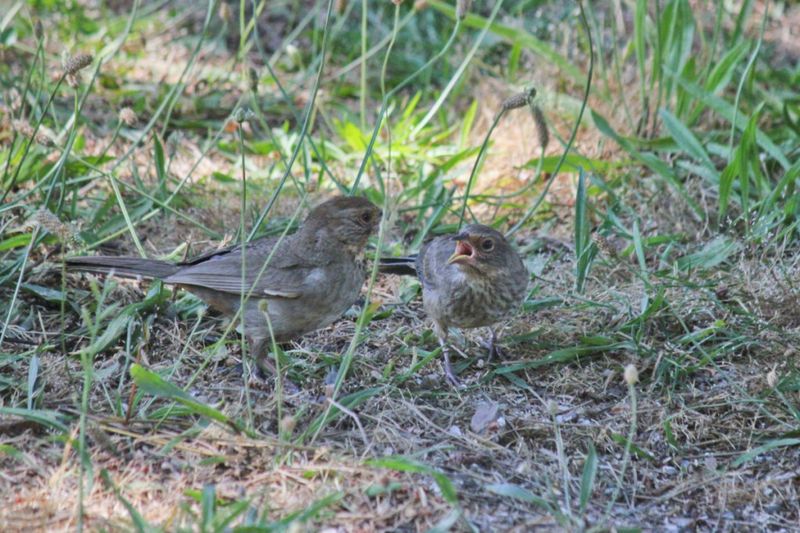
Two misreadings come up often when homeowners watch a towhee working beneath a shrub, and both lead to unnecessary worry or hasty action. The first is assuming that the bird must be nesting in that exact plant.
The second is assuming that any brown bird scratching through litter must be a California towhee.
California towhees do commonly nest in low forks of shrubs or small trees, generally somewhere between three and twelve feet above the ground, according to Cornell Lab of Ornithology’s nesting information for the species. But a bird foraging at the base of a shrub is not necessarily nesting in it.
Towhees forage across their entire territory, which can extend well beyond any single plant. The shrub you are watching may simply be a reliable food stop rather than a nest site.
Before pruning, trimming, or clearing the area, take a slow look from a respectful distance. The U.S.
Fish and Wildlife Service explains that active nests, eggs, and dependent young are protected under the Migratory Bird Treaty Act, and a USFWS nest guidance memorandum clarifies that rules around inactive nests are more limited and fact-specific. If you find eggs or young birds, leave the area alone until the nest is no longer active.
On the identity question, scratching behavior alone cannot separate a California towhee from a spotted towhee or a canyon towhee. All three species use a similar kick-scratch technique in litter.
Reliable identification requires checking multiple field marks: the California towhee is a plain warm-brown bird with a buffy throat outlined by fine streaks, a rusty undertail, and no white wing bars or bold patterning. Cornell’s identification guide for the California towhee provides photo comparisons that make the distinction clear.
Also confirm that your location falls within the species’ established range, which is primarily California, western Oregon, and Baja California, according to the California Department of Fish and Wildlife range dataset.
Maintain a modest transition zone beside the shrub
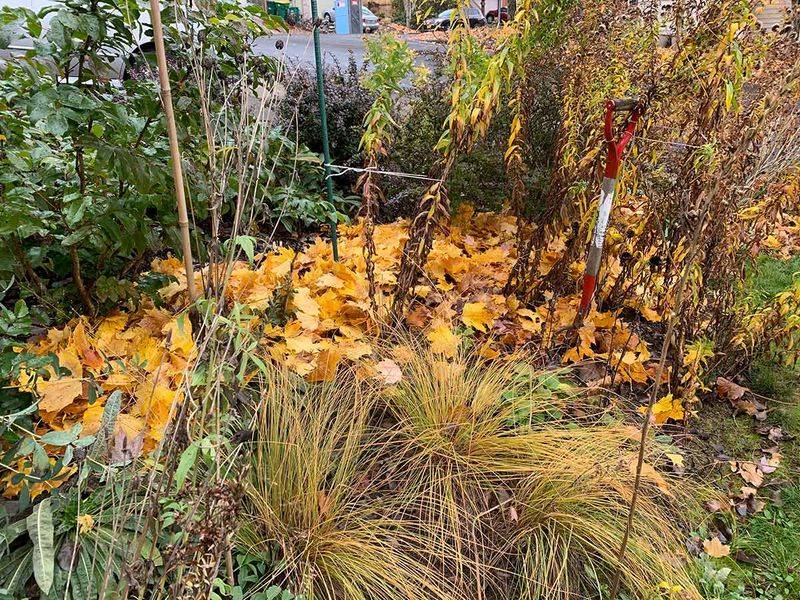
Once you understand what the bird is using, the yard response becomes much simpler than most people expect. The goal is not a full garden overhaul; it is keeping a small, workable edge intact when that fits your property’s other needs.
The California Department of Fish and Wildlife’s habitat description for the species supports retaining some natural leaf litter and accessible open or thinly covered ground beside dense shrubs. In practical terms, that means resisting the impulse to rake every fallen leaf out of the bed or to apply a thick, uniform mulch layer that buries the scratching surface entirely.
A modest natural layer, thin enough for a bird to work through, beside a shrub with enough canopy to provide quick cover, recreates the documented foraging conditions.
That said, these suggestions are options to weigh against your property’s specific situation, not universal instructions. California homeowners in fire-prone hillside communities or wildland-interface zones should follow local defensible-space and clearance requirements, which may require reducing litter near structures.
Drainage problems, excessive pest damage, and HOA or local landscape rules are all legitimate reasons to manage a bed differently. Audubon’s guidance on helping birds at home encourages wildlife-friendly yard choices while acknowledging that homeowner circumstances vary.
Keeping a small transition zone is not a guarantee that the towhee will return or stay. The bird operates across a broader territory, and food availability shifts with the season.
What the edge does is keep your yard in the category of places worth checking rather than places the bird has no reason to visit. Even a narrow strip of accessible ground beside a dense planting can serve that function without requiring major changes to the rest of the bed.
Protect the patch without adding unnecessary risks
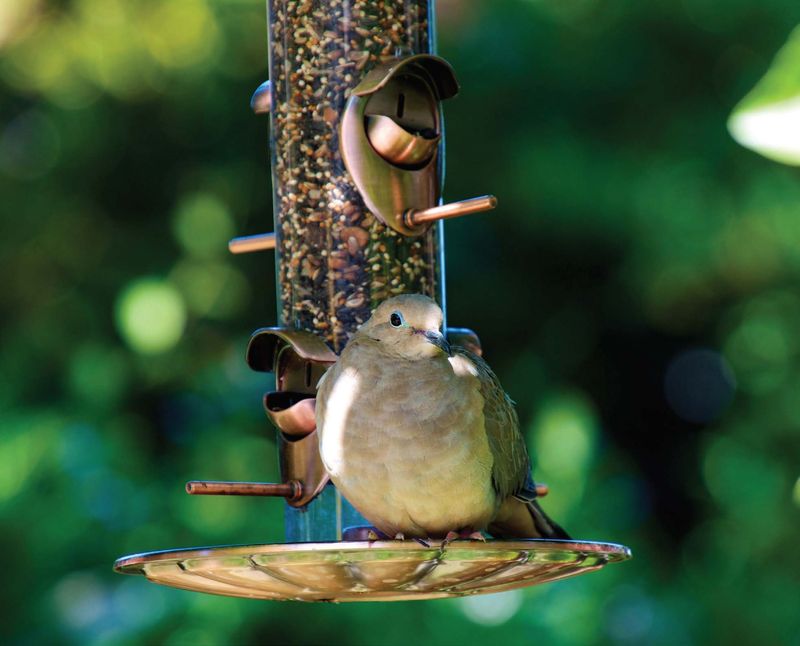
Good intentions can create real problems if they lead to interventions that harm the bird or the yard. A few clear boundaries help homeowners support the towhee without introducing new hazards.
Pesticide use is the most important issue to think through carefully. If the bird is foraging in an area where insecticides, granular pesticides, or rodent baits have been applied, it risks consuming contaminated food or picking up chemicals through contact.
The EPA’s guidance on reducing pesticide impacts on wildlife recommends treating only the areas that genuinely need treatment, following the product label, and minimizing use overall. The EPA’s overview of common causes of pesticide incidents reinforces that wildlife can be harmed through contaminated food, water, and habitat, not just direct contact.
If a pest problem in that bed genuinely requires treatment, time and place the application to minimize exposure to foraging birds.
Supplemental seed is optional rather than necessary. California towhees find food on their own, and the bird visiting your shrub is not dependent on your intervention.
If you do want to offer seed, a tray or small ground-level feeder placed near the shrub is more manageable than scattering loose seed across the soil. Ground feeding can concentrate birds, feces, and pathogens in one spot, and a CDC investigation into a Salmonella outbreak linked to wild songbirds and a related CDC Emerging Infectious Diseases study on human salmonellosis linked to songbird feeding both highlight feeder hygiene as a genuine public health consideration.
Clean any tray regularly, remove wet or spoiled seed promptly, wash hands after handling equipment, and stop feeding temporarily if sick or dead birds appear in the area.
Cats are a separate and serious concern. Audubon identifies free-roaming cats as one of the leading hazards for backyard birds, and a towhee focused on scratching at ground level is particularly vulnerable.
Keeping cats indoors or otherwise preventing them from hunting around the active patch is one of the most effective steps a homeowner can take.
Watch the habitat clue before changing the bed
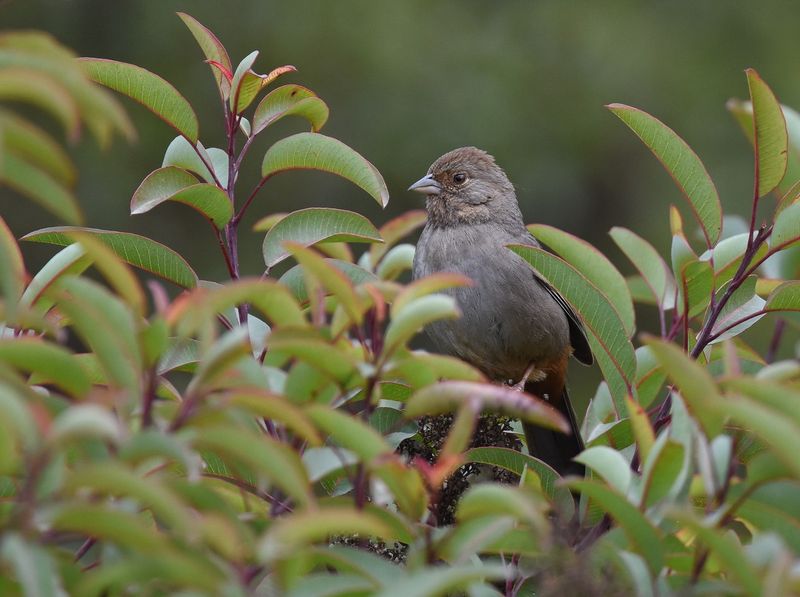
Repeated scratching beneath a shrub is most reliably read as a signal that the bird has found accessible, food-bearing ground beside protective cover. That combination, not any single feature of the plant or the soil, is what makes the spot worth returning to.
Before raking, pruning, or applying anything to the area, spend a few minutes watching from a comfortable distance. Check whether a nest is visible in the shrub’s canopy.
Note whether the bird is carrying food or feeding on the spot. Look at the field marks carefully enough to confirm the species.
The California Department of Fish and Wildlife’s habitat account and the National Park Service’s California towhee natural history page both describe a bird that is working a predictable ecological niche, not one that has discovered a problem you need to solve.
Preserve the edge when your yard’s fire-safety, drainage, and maintenance needs allow it. Avoid treating the scratching as proof of a nest, an infestation, a damp-soil requirement, or a gardening favor.
A California towhee returning to the same corner of your yard is doing exactly what it has evolved to do, and the most useful thing a homeowner can offer is a patch of ground worth scratching.