
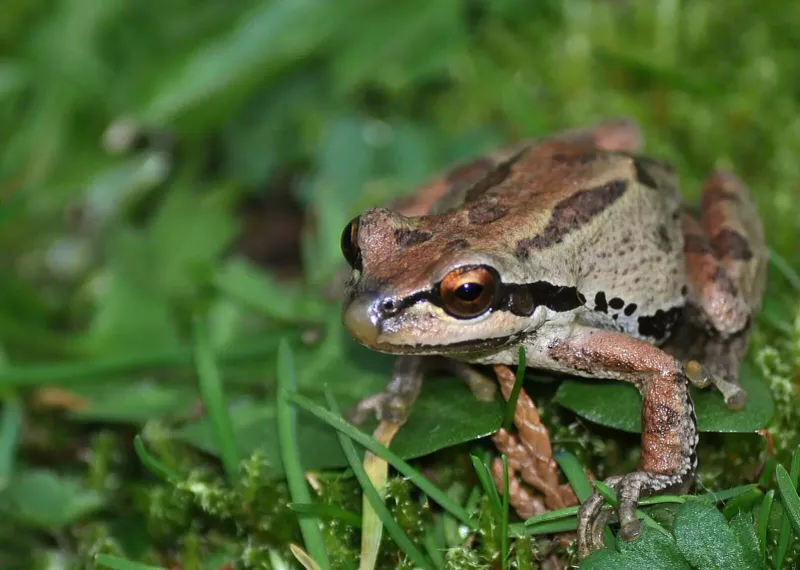
A tiny frog tucked under a flowerpot can make you wonder who has moved into your garden. Many California homeowners find these small visitors and either panic or reach for the spray bottle.
A little background helps you tell what you actually know from what you only hope. Here is how to read the clues and keep the frog safe.
A small yard frog is not automatically a Pacific treefrog
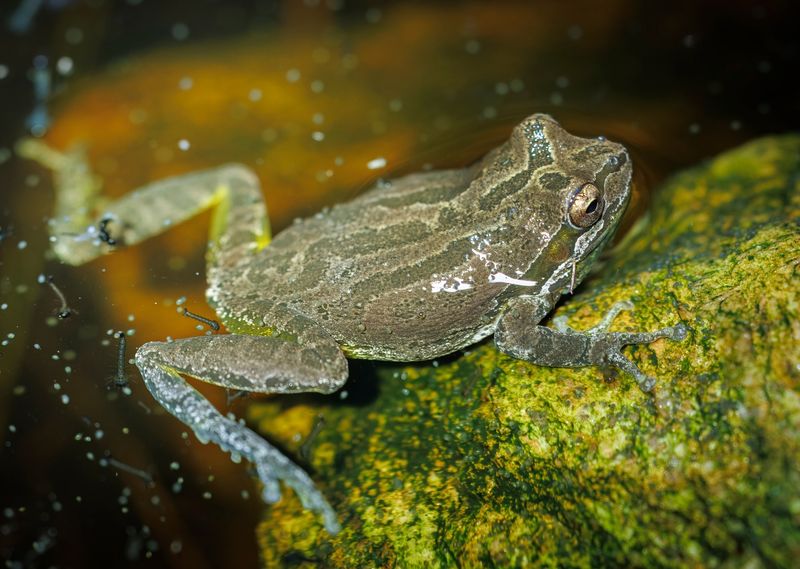
Plenty of people call any little green or brown frog in a California yard a Pacific treefrog. That label is shakier than it sounds.
The California Department of Fish and Wildlife profile explains that the former, widely distributed Pacific treefrog was split into three species.
After that split, the profile says the present-day Pseudacris regilla occurs only in the northwest corner of California. So a frog in a San Diego planter or a Central Valley flower bed may belong to the broader chorus frog group without being that particular species.
Looks alone will not settle it, because these frogs can vary in color and pattern.
That is why this article talks about a small or possible chorus frog rather than a confirmed species. If you live outside the northwest corner, the safest assumption is that you have a native chorus frog of some kind.
Naming the exact species usually takes range information, and sometimes expert help.
The profile’s feeding and life-history details were written for the older, wider species concept. Think of them as helpful background on the group, not a fact sheet for the frog in your yard.
A photo shared with a local naturalist or a regional wildlife group can narrow things down if you are curious.
The good news is that you do not need a species name to treat the frog kindly. Whatever it turns out to be, a native frog in your garden is worth protecting.
Why a frog may shelter under a pot or garden cover
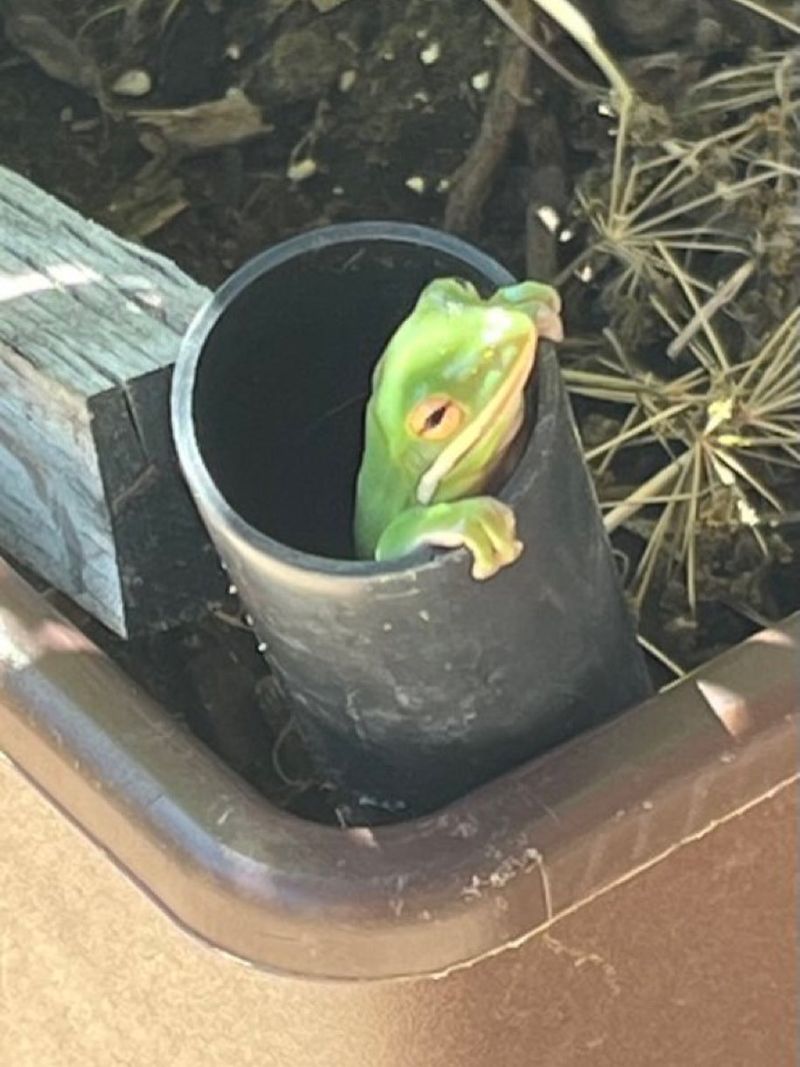
Frogs lose moisture quickly, so they hunt for damp, shaded hiding spots. The CDFW profile describes daytime cover under vegetation and surface objects, plus moist refuges near water.
It also mentions moist niches in buildings, wells, rotting logs, and burrows.
A frog under a pot, behind a watering can, or among ground cover fits that pattern. The profile did not study flowerpots specifically, so this is a reasonable fit rather than a proven habit.
Still, the match is close enough that a pot saucer or leafy bed is a believable hideout.
Timing matters too. The profile reports activity concentrated from late afternoon to midnight at most localities.
Frogs are active year-round except during cold or dry periods, so you should not expect a visit every night or in every season.
In practice, that means you are most likely to find the frog sitting still during the day. Lifting a pot at midday is a good way to startle it and strip away its cover.
If you must move something, do it gently and set it back down the way you found it.
A dry spell or cold snap may send frogs deeper into shelter, so an empty spot does not mean the frog is gone for good.
What the broader group may eat
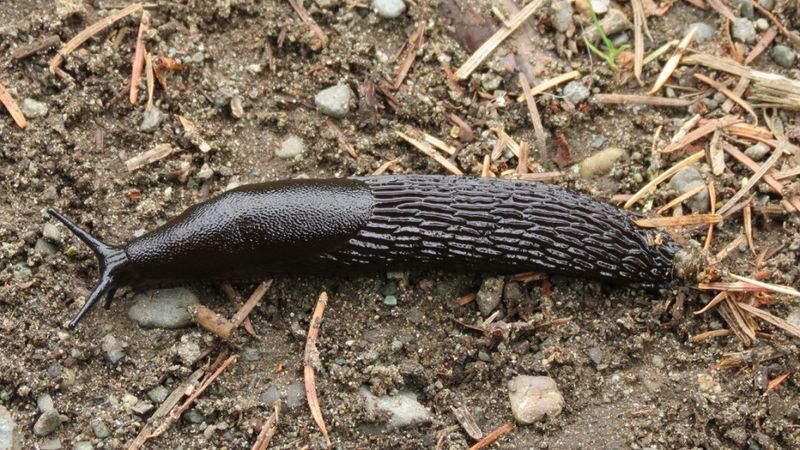
Frogs in this group are hunters of small, soft-bodied things. CDFW lists invertebrates such as slugs, spiders, isopods, centipedes, earthworms, and insects as prey for adults.
Some of those, like slugs and certain insects, are the same creatures gardeners complain about.
Treat that list as potential prey, not a menu your particular frog is working through. The profile covers the former, broader species, and your frog may or may not share every habit.
What it eats at your place depends on what it can find and catch.
Some real-world feeding data backs up the land-based diet. A USGS study of the Cache Creek watershed in northern California found terrestrial prey in all sampled P. regilla stomachs, and only 5 percent of samples held aquatic prey.
That study looked at frogs in a watershed, not in backyards. It tells us these frogs feed on land, but it was never a test of garden pests.
It also does not point to any single pest, so mosquitoes should not be assumed to be on the list.
So the fair picture is a frog that may snack on small invertebrates when it comes across them. That is interesting, and it is also as far as the evidence goes.
A frog’s diet does not prove garden pest control
Knowing what a frog can eat is not the same as knowing what it does for your plants. The sources name prey types, but they give no numbers on how many pests a frog eats in a night.
They also say nothing about whether pest populations in a yard go up or down because a frog is around.
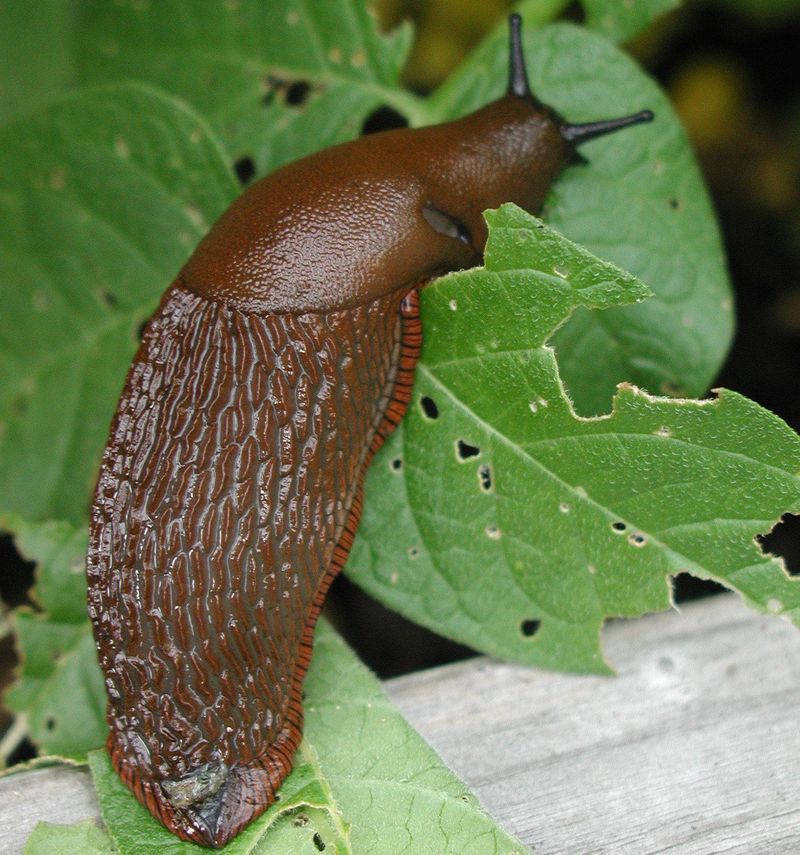
Slugs are a good example. CDFW lists them among the prey, which sounds promising if hostas are being shredded.
But a listing is not a rate, and there is no evidence here that a frog will clear out a slug problem.
The USGS watershed study adds support for terrestrial feeding, yet it did not test backyard pest control. Nobody counted slugs before and after a frog moved in.
Here is a practical way to use this. Keep doing your normal pest checks, such as looking under boards at dusk, picking off slugs by hand, or watering in the morning so surfaces dry by evening.
If the frog helps a bit, consider that a bonus rather than a plan.
Expecting too much can lead to disappointment, or to harsher sprays when the pests stay put. Keeping your expectations modest protects both your plants and your visitor.
A garden sighting does not prove the frog is breeding there
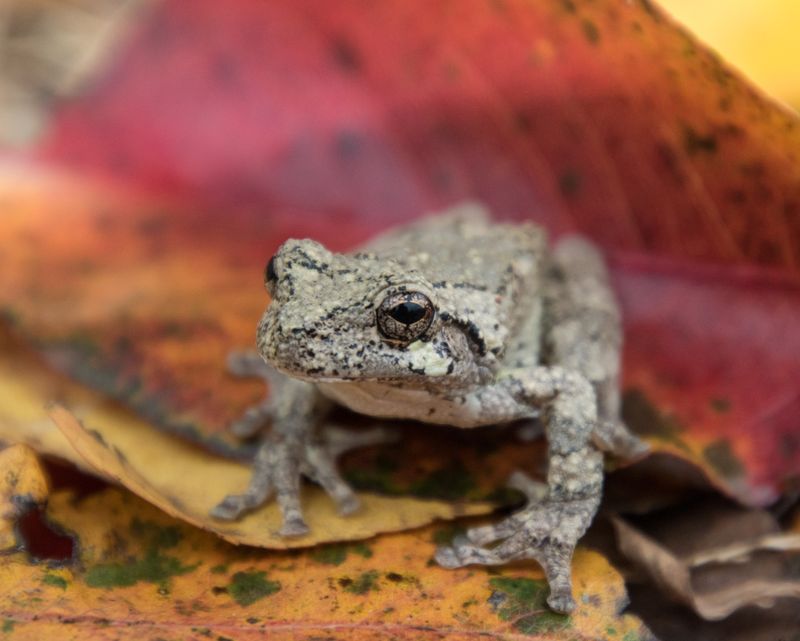
Finding a frog in a bed or under a pot tells you where it is hiding, not where it was born. Breeding is a water story.
Tadpoles need standing water that lasts long enough for them to finish developing.
CDFW gives a rough range of about a month in warmer localities to three or more months at high Sierra elevations. If water dries up before that window closes, the tadpoles cannot finish.
That means a single frog on dry ground does not prove a breeding site, a local population, or a pond next door. Adults can move around, and a garden is only one stop in their range.
The frog under your pot may have come from somewhere you cannot see.
A few clues can help if you are curious. Look for tadpoles in any standing water on your property or nearby, and notice whether you hear calling frogs at certain times of year.
Even then, those clues point to possibilities rather than proof.
If you do have a water feature, avoid treating it or the plants around it with sprays while you figure out who lives there.
Keep pesticide sprays off the frog and its refuge
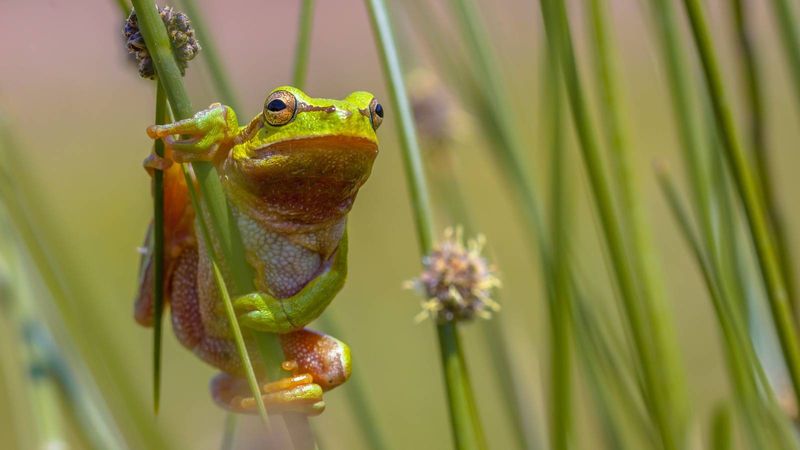
Frog skin is thin and permeable, which is why chemicals matter so much to them. EPA researchers note that frogs can absorb chemicals through their skin and may meet pollution on land and in water.
No pesticide can be called simply safe or simply deadly for every frog. Risk depends on the product, how much exposure happens, and the conditions.
The cautious move is to keep products off the frog and away from its hiding spot.
Start with the basics. Never spray directly at a frog or the pot, board, or plant cover where it is sheltering, and avoid spraying on windy days when drift can carry droplets.
Keep runoff in mind too, and do not let product wash toward damp areas or standing water.
Read and follow the product label every time. Where possible, use integrated pest management, which means starting with lower-impact steps such as hand-picking, barriers, and fixing the conditions that attract pests before turning to chemicals.
An EPA brochure on frogs and pesticide hazards is useful for general exposure ideas, but it focuses on the California red-legged frog, a different species. It is also dated 2006, so check current EPA guidance before relying on any rules it describes.
Let the visitor shelter without expecting pest control
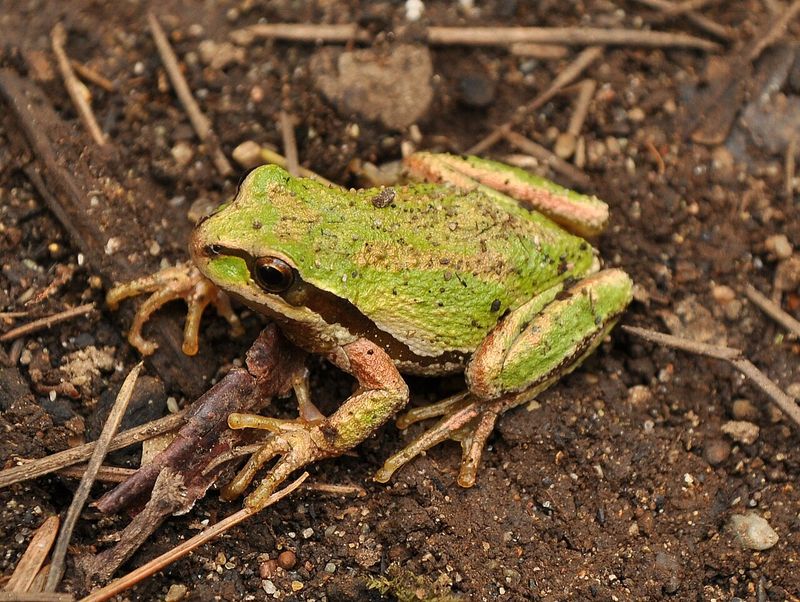
If a small frog has settled into your pot or bed, the kindest move is usually to leave it be. Skip the spray in that corner, and set pots down gently if you must shift them.
CDFW’s profile backs the idea that frogs rely on cover like this to stay moist.
Its presence fits with feeding on small invertebrates, yet it does not name the species, promise fewer pests, or show breeding. EPA’s note on skin absorption is one more reason to keep chemicals away.
Some visitors are worth keeping simply because they are there.