
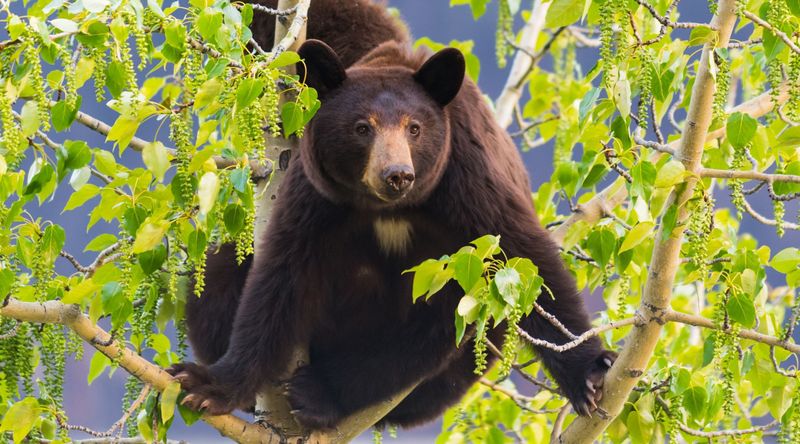
Finding a black bear in your fruit tree is startling, but it usually says more about the bear’s appetite than about any danger to you. California black bears are built to seek out high-calorie foods, and a yard full of ripe or fallen fruit is exactly the kind of concentrated meal they look for.
Knowing why it happened and what to do next can keep a one-time visit from turning into a recurring problem.
The raid usually signals an easy meal, not a change in temperament
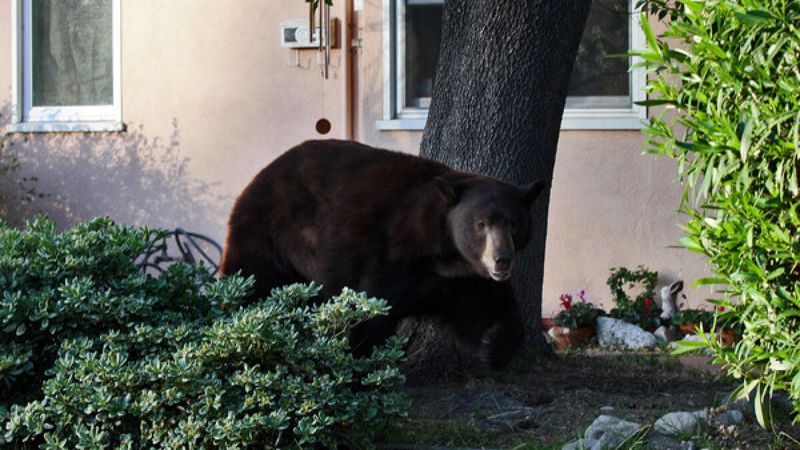
Spotting a bear in your apple tree can feel like a serious wildlife emergency, but the behavior has a straightforward explanation. California black bears are opportunistic omnivores.
When a concentrated, high-calorie food source appears in their range, they go after it. A yard with ripe or fallen fruit is simply an attractive target, not evidence that the bear has turned aggressive or is targeting your household.
According to CDFW’s human-wildlife conflict guidance, conflict risk rises when bears find easy access to human-associated food, including fruit, garbage, pet food, birdseed, grills, and compost. A single visit to a fruit tree does not prove the bear has become food-conditioned or habituated.
Those labels apply to animals that repeatedly seek human food, lose their wariness around people, or behave boldly near homes even after attractants are removed.
The more meaningful warning signs, as CDFW’s living-with-wildlife guidance describes, include repeated access to human food sources, property damage, an obvious lack of fear, or unusually bold behavior near people. One opportunistic fruit-tree visit rarely meets that threshold.
What you must not do while the bear is still present: do not walk toward the tree, pick fruit, or clear windfalls from the ground. The bear needs an unobstructed path to leave, and any action that corners it or makes it feel trapped increases risk.
Bring children and pets inside, stay back, and wait. Once the bear has left the area on its own, you can begin the practical steps that reduce the chance of a return visit.
CDFW’s bear management overview distinguishes ordinary sightings from the smaller number of incidents that pose an actual public-safety threat, a distinction worth keeping in mind before escalating your response.
Which California fruits have the strongest evidence behind them?
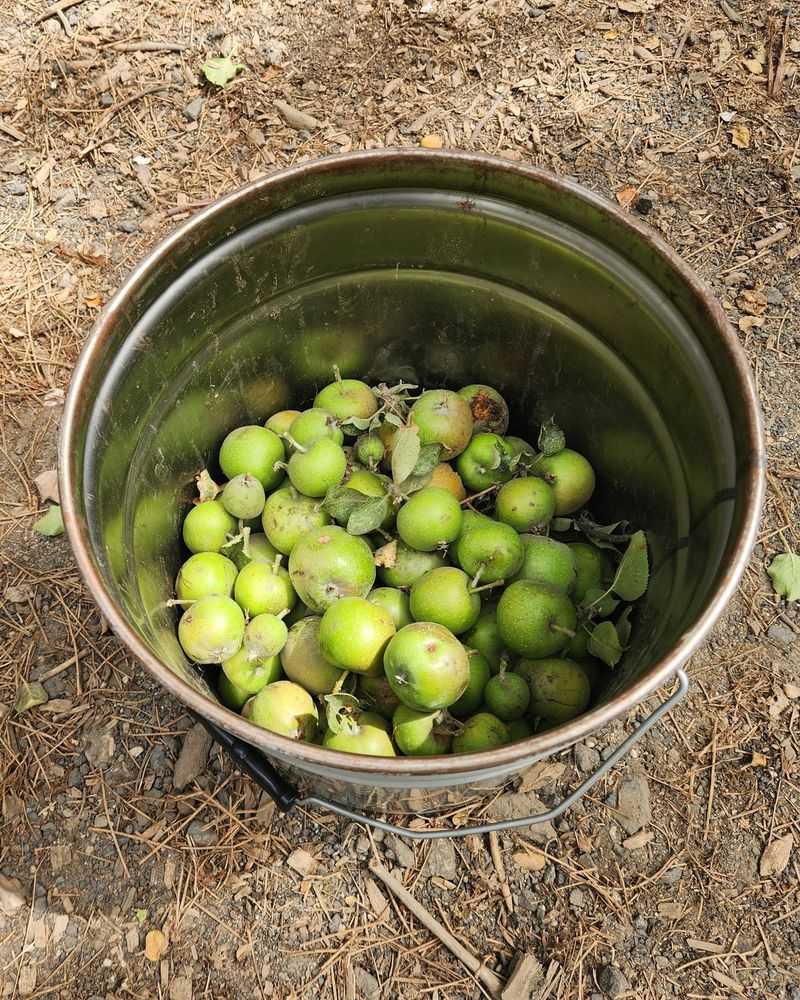
Apples are the best-supported named cultivated fruit in the California-specific research reviewed. A Yosemite bear food-habits report found apples in 57 percent of bear scat samples and documented that apples made up roughly 60 percent of dietary volume during summer.
That is a striking number, and it tells you that where apple trees exist in bear range, bears will use them heavily.
The same Yosemite research, supported by the peer-reviewed food-habits paper by Greenleaf and colleagues, also documented a range of wild plant foods: Rubus berries, manzanita, blue elderberry, chokecherries, currants, gooseberries, and Sierra plum. These are real, documented bear foods in California, not speculation.
Two important limits apply, though. First, the Yosemite findings reflect a specific national park environment with a particular mix of planted and wild vegetation.
They are not a complete map of what every bear in every California neighborhood will target. Second, the California Wildlife Habitat Relationships account for black bears describes their diet broadly as fruits, berries, acorns, insects, carrion, and other plant and animal matter, without ranking specific suburban fruit-tree species by attractiveness.
What does this mean for your yard? If you have an apple tree in an area with bear activity, the evidence for treating it as an attractant is strong.
For other common backyard fruits such as peaches, figs, grapes, and citrus, bears may certainly investigate them when ripe, but the California-specific research reviewed here does not establish a statewide late-summer ranking for those species. Manage every ripe or fallen fruit as a potential attractant rather than waiting to see which specific variety the bear prefers.
Late summer depends on local ripening, not one statewide date
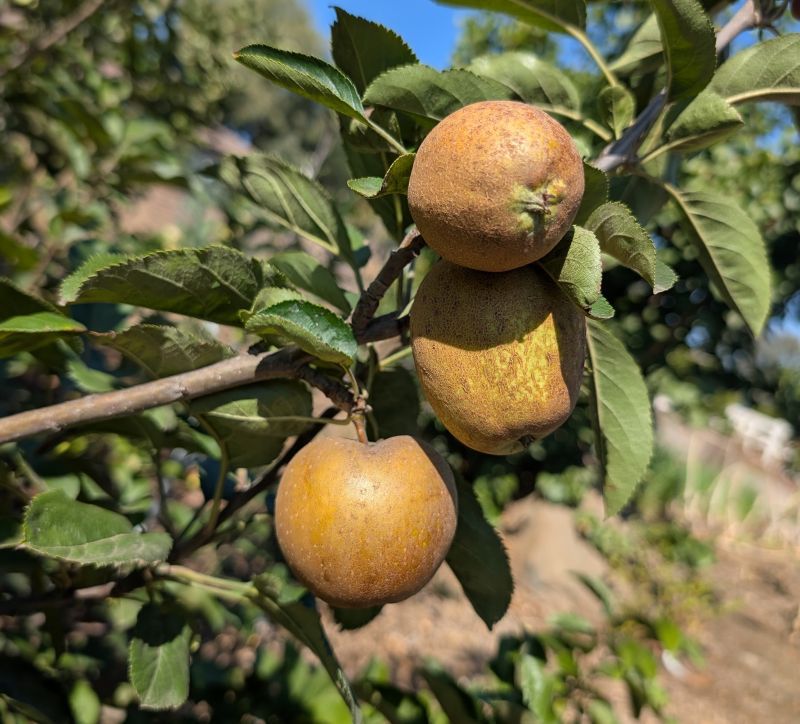
California does not run on a single fruit calendar. The state spans coastal valleys, inland basins, high Sierra foothills, and desert edges, and fruit ripens on a completely different schedule across those zones.
A low-elevation Central Valley apple may be ready in August, while a higher-elevation Sierra foothill tree of the same variety might not peak until October. Bears follow that ripening schedule, not a fixed statewide date.
The broader seasonal driver is a period of intense pre-winter foraging that wildlife biologists commonly call hyperphagia. CDFW’s bear management documentation notes that bears forage especially intensively as winter approaches, building fat reserves before denning.
During that window, a tree loaded with ripe or fermenting fruit represents exactly the kind of calorie-dense, low-effort meal a bear is looking for.
The California Wildlife Habitat Relationships life-history account for black bears reinforces that plant foods, including fruits and berries, are central to the diet across the active season. The practical takeaway is that the risk window for your specific yard is tied to when your trees ripen and drop fruit, not to a month on the calendar.
A coastal Southern California homeowner and a Tahoe-area homeowner may face very different timing.
Knowing your own harvest window matters. If your peaches or apples are heavy and fragrant, and bears are known to move through your area, that is the moment to act, regardless of what month it happens to be.
Local UC Cooperative Extension offices and county agricultural commissioners can help you understand the typical ripening calendar for your specific region and elevation.
After the bear leaves, harvest the tree and clear the ground
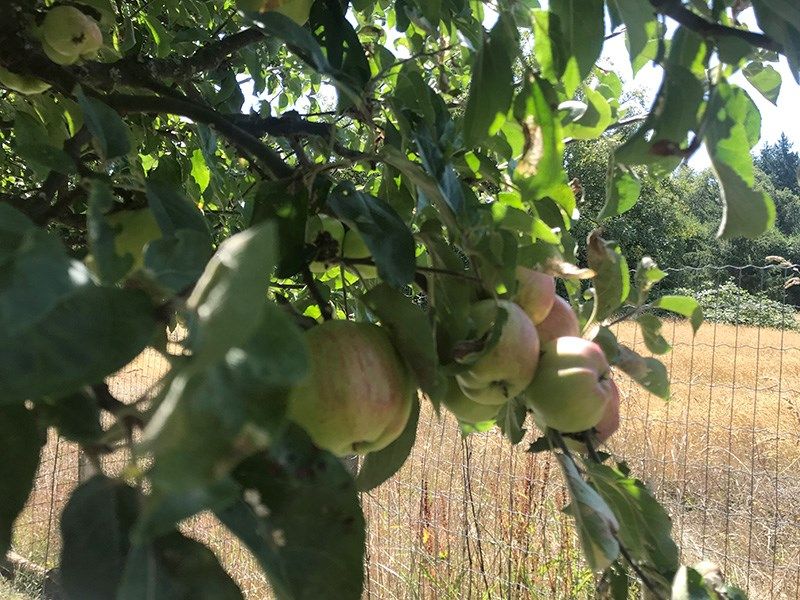
Once the bear has moved off on its own, the first job is the tree itself. Pick ripe fruit promptly, and do not leave anything hanging that is close to ripe.
CDFW’s conflict guidance specifically advises collecting fruit that falls from trees in addition to harvesting what remains on branches. Letting the tree sit loaded for even another day keeps a powerful food signal in the air.
BearWise guidance suggests picking fruit just before it reaches full ripeness when practical, then allowing it to finish ripening indoors in a secure location. That approach removes the strongest aromatic peak from the yard entirely, which is when bears are most likely to investigate.
Fallen fruit on the ground deserves equal attention. Windfalls bruise and ferment quickly, and the resulting smell travels farther than a fruit still on the branch.
BearWise garden guidance recommends removing fallen fruit every day, preferably before dark, since bears are often most active in the evening and overnight hours.
Do not pile discarded or overripe fruit in a compost bin near the tree or near the house. An open compost pile functions as a secondary attractant and can draw a bear back even after the tree is picked clean.
Fruit scraps belong in a bear-resistant container or a fully enclosed composting system kept well away from the home. The NPS at-home bear guidance makes the same point: fruit waste left in accessible areas extends the invitation well past harvest day.
Clearing both the tree and the ground together closes the loop that a single harvest alone cannot.
The fruit tree is only one part of the attractant audit
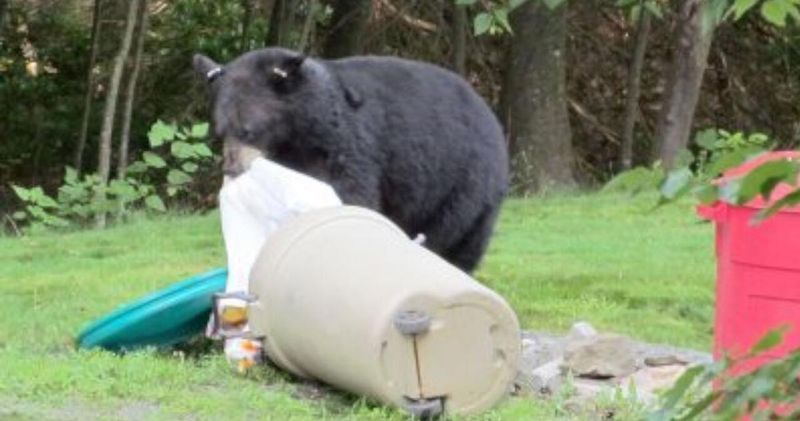
Picking the tree clean is a necessary first step, but a bear that has visited once will often circle back to check the property again. If other food sources or strong odors remain accessible, the fruit removal may not stop the pattern.
A thorough attractant audit covers the entire yard, not just the tree.
Garbage and recycling bins are among the most common secondary draws. Store them inside a garage or a bear-resistant enclosure, and do not set them at the curb until the morning of pickup.
CDFW’s conflict page lists unsecured garbage as a leading cause of bear habituation in California communities.
Pet food left outdoors, even briefly, is another reliable attractant. BearWise’s core guidance on outdoor pet food is direct: bring bowls inside after every feeding and never leave food outside overnight.
Livestock feed, chicken scratch, and rabbit pellets fall into the same category and should be stored in metal containers with locking lids.
Bird feeders deserve a close look. Sunflower seeds and suet are high-fat, calorie-dense foods that bears recognize quickly.
During periods of active bear movement in your neighborhood, taking feeders down temporarily is a reasonable precaution. Grills and smokers should be cleaned after every use, with grease traps emptied and covered.
NPS at-home guidance includes grills and cooking residue as attractants that homeowners often overlook.
Open compost piles, scented candles stored on a porch, and even certain fertilizers can register as interesting odors to a bear with a highly developed sense of smell. Running through this full checklist after a fruit-tree visit gives you a realistic picture of whether the property is actually secured or whether one removed attractant simply shifted the bear’s attention to the next available food source.
An electric fence creates the durable boundary a fruit tree needs
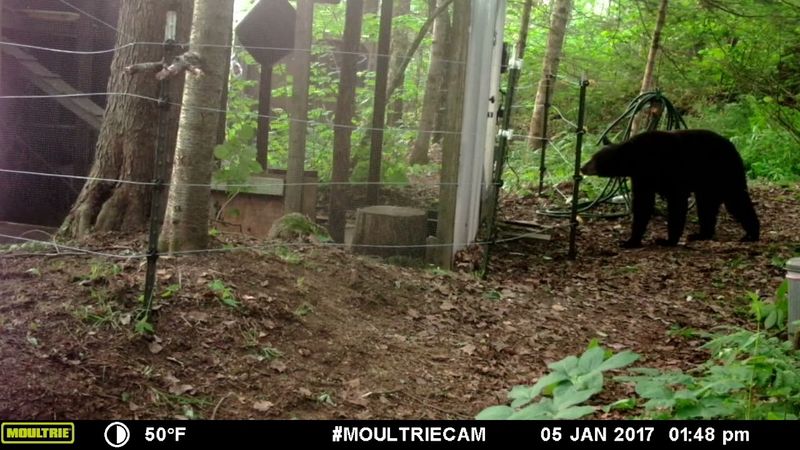
For a fruit tree you want to protect season after season, attractant removal handles the immediate problem but does not create a physical barrier. Electric fencing fills that gap, and it is the most consistently recommended long-term solution for prized fruit trees and garden areas.
BearWise’s electric-fencing guidance describes both permanent and portable systems as the most reliable way to exclude bears from fruit trees and gardens. A working system is not simply a wire strung around a tree.
It requires adequate voltage, proper grounding, correct wire spacing and height, a protected energizer, and regular inspection to stay effective.
BearWise’s example specifications call for at least three strands, with the lowest wire approximately 7 to 9 inches above the ground and the highest at approximately 36 to 42 inches. Five or six strands may perform better in areas with persistent bear activity.
These figures are a useful starting point, not a one-size-fits-all prescription for every California yard, terrain type, or soil condition. Consult local fence suppliers or your county agricultural commissioner for site-specific guidance.
Grounding is one of the most common installation failures. A fence that is not adequately grounded may deliver an inconsistent shock or none at all, and a bear that touches it without a response learns quickly that the barrier is not a threat.
Vegetation touching the wires bleeds off voltage and must be trimmed regularly. The energizer itself should be housed in a weatherproof enclosure and checked after storms.
Safe access matters too. Gates should be designed so that people can enter and exit without accidentally contacting a live wire.
Post clear warning signs so that visitors, children, and service workers know the fence is electrified. Keep children and pets away from the perimeter when the system is active, and confirm whether your city or county has any ordinances governing electric fencing before installation.
BearWise garden guidance and CDFW’s conflict guidance both defer to local rules on installation decisions.
Separate useful backup measures from false confidence
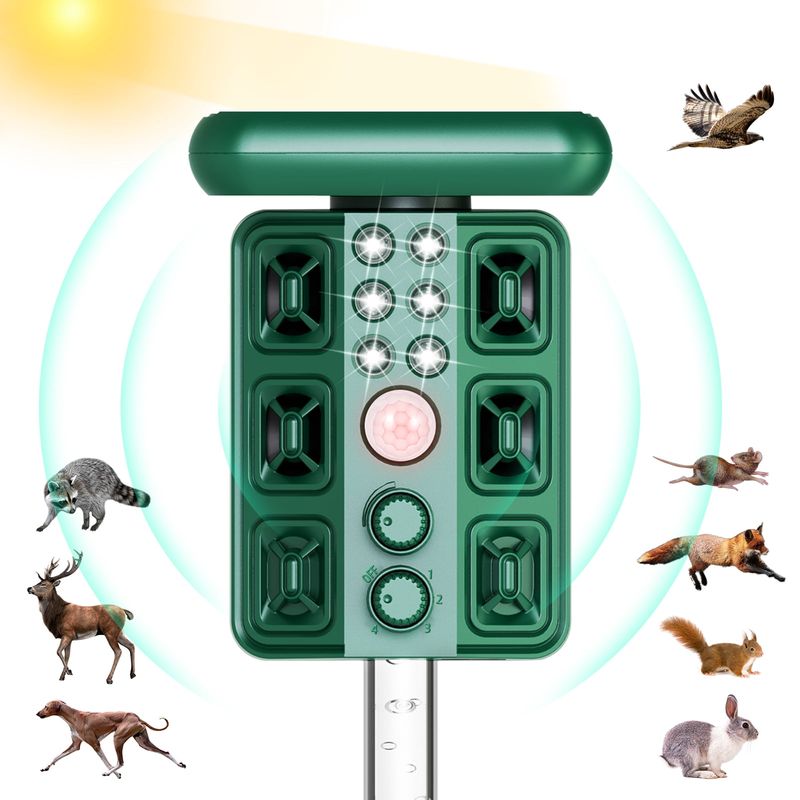
Motion-activated lights, alarms, and noise devices do have a place in a bear-deterrence plan, but that place is supplemental, not central. CDFW’s conflict guidance lists sensory deterrents among possible prevention tools while making clear that the primary intervention is eliminating access to attractants.
A light that alerts you a bear is present is genuinely useful. A light used as a substitute for removing food is not.
The effectiveness of motion lights, alarms, and noisemakers varies considerably. A bear that is highly motivated by a food reward may pass through the deterrent zone repeatedly until it becomes accustomed to the stimulus.
That process, called habituation to deterrents, is a real risk when the underlying food source has not been removed. Think of these devices as an early-warning layer, not a protective barrier.
Some sources mention motion-activated sprinklers as a possible deterrent, but there is no strong verified evidence supporting them as a reliable solution for bears. Do not build a prevention plan around them.
Similarly, a standard decorative picket fence or ordinary garden netting is not a bear-proof solution. BearWise garden guidance specifically recommends electric fencing or a sturdy enclosure for fruit trees and gardens, and BearWise’s fencing page does not present ordinary netting as a comparable alternative.
One behavior to avoid entirely: leaving fruit outside deliberately as a distraction or diversion to keep the bear away from something else. Intentionally feeding or baiting bears increases habituation and can raise public-safety risk.
Under California regulations, knowingly feeding big game mammals is prohibited. Any strategy that places food in the yard to manage a bear’s movements works against the core goal of removing the reward that drew the bear in the first place.
Match the response to the bear’s behavior
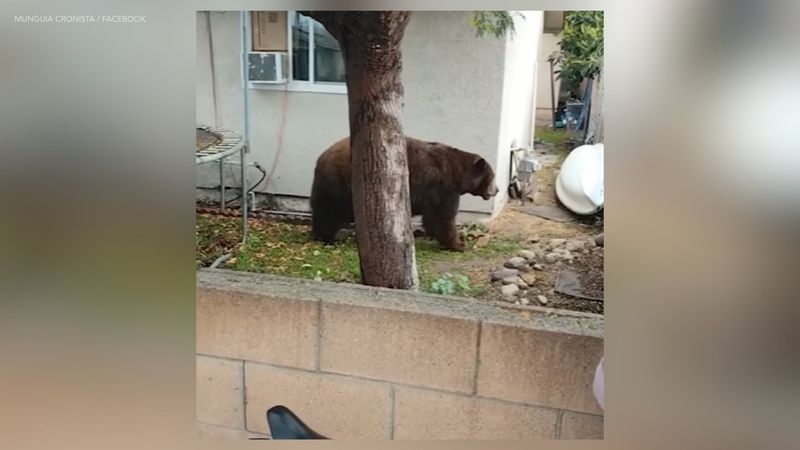
How you respond when a bear is actively in the yard should be proportional to what the bear is actually doing. A bear eating fruit in a tree is behaving very differently from a bear trying to enter a home or approaching people directly, and those two situations call for different actions.
For an active sighting near a fruit tree, the immediate steps are straightforward: bring children and pets inside, move away from the bear’s location, and do not attempt to corner it, block its exit, or chase it off yourself. The bear needs a clear path to leave the property.
Noise from inside the house, such as banging on a window, may encourage it to move on, but do not go outside to confront it or get closer for a better look.
If the bear poses an immediate threat to a person, call 911. That is the correct channel for an active public-safety emergency.
For everything else, including property damage, a recurring pattern of visits, or a bear that is behaving boldly but has not threatened anyone, the appropriate path is through CDFW’s reporting system. CDFW’s conflict page and CDFW’s nuisance wildlife guidance both explain how to reach the right regional office for nonemergency conflicts.
You can also log sightings and incidents through CDFW’s Wildlife Incident Reporting tool, which helps the department track bear activity and identify areas where conflicts are developing. Reporting a recurring problem early gives wildlife officers the information they need before a situation escalates.
Local county rules may add additional steps, so check with your county’s animal services or agricultural commissioner for any regional requirements specific to your area.
Remove the reward before the visit becomes a pattern
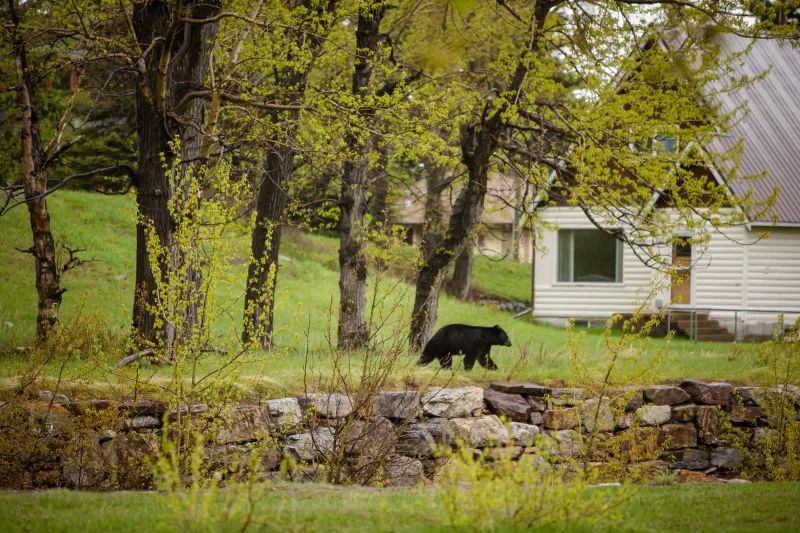
A single fruit-tree visit does not mean you have a bear problem. It means you have an attractant that a bear found once.
The goal now is to make sure that visit does not repeat often enough to become a learned behavior.
The action sequence is straightforward. Wait for the bear to leave on its own.
Then harvest the tree, pick up every fallen piece of fruit before dark, and move discarded fruit to a sealed bear-resistant container rather than an open compost pile. Walk the property and secure garbage, pet food, birdseed, and grills.
If the tree is in an area with regular bear movement, consider installing a properly grounded and inspected electric fence before the next season’s fruit ripens. CDFW’s conflict guidance and BearWise’s electric-fencing resource both support attractant removal paired with effective exclusion as the strongest combination available to homeowners.
Repeated visits after attractants are removed, boldness around people, or property damage are the signs that warrant a prompt report through CDFW’s regional channels rather than a wait-and-see approach. Acting early keeps a manageable situation from becoming a harder one to resolve.
A bear that never gets a reliable reward from your yard has little reason to keep returning, and that is the most durable outcome a homeowner can work toward.