
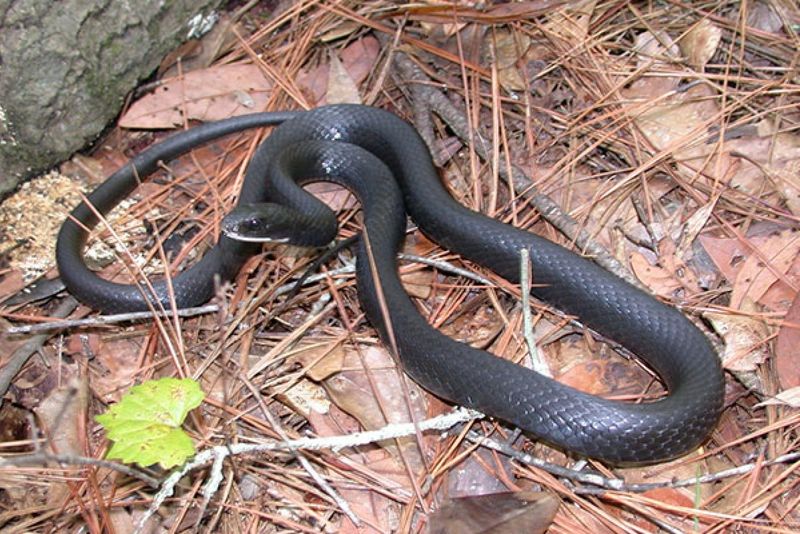
A fast black snake zips along your mulch bed, and your heart skips. Then it shows up again a few days later.
Before you decide what it means, it helps to know what racers do, what they eat, and what a sighting can and cannot tell you about the rest of your yard.
A racer along the garden edge fits ordinary habitat use
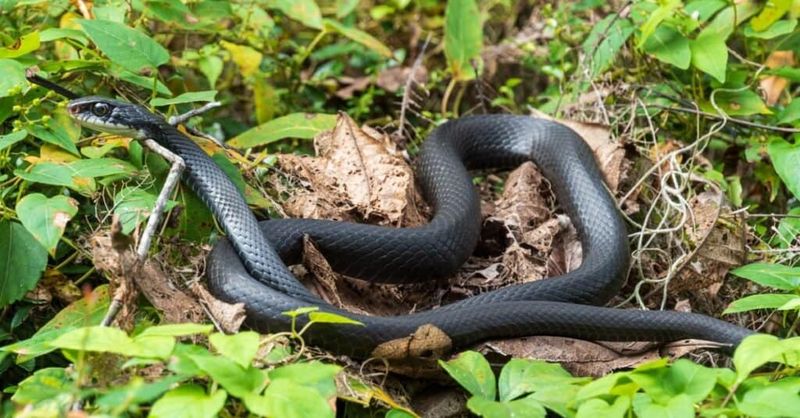
Edges are busy places. Where lawn meets shrubs, fields, or a damp ditch, a snake finds cover, warm spots, and travel lanes all in one strip.
That is why a garden border can feel like a snake highway.
According to the NC Wildlife Resources Commission racer profile, racers live across North Carolina and are active, fast-moving predators. Habitats include shrublands, fields, and wetland edges, which many yard borders resemble.
A detailed North Carolina reptile account describes the same kind of varied habitat use.
So seeing one more than once fits a snake using suitable habitat. Racers are daytime snakes, which is one reason people notice them more than night-roaming species.
What the sighting does not tell you is why the snake came back. It might be crossing on a regular route, basking, sheltering, or foraging.
You cannot read its motive from a glimpse, and one visitor does not signal an unusual threat. Think of it as a sign that your yard edge offers the kind of cover and open space wild animals use.
Its menu includes rodents and other snakes—but a sighting proves neither
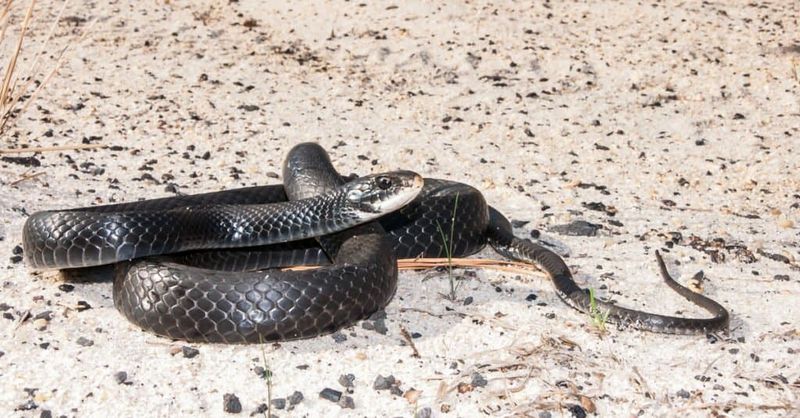
Ask what a racer eats and the list is long. North Carolina’s species account names small mammals such as mice, rats, and voles, plus insects, amphibians, lizards, birds, eggs, and other snakes.
NC State Extension’s page on the colubrid snake family backs up the idea of a broad, varied diet.
Rodents and other snakes are possible prey, but that is a statement about the species, not about the one in your bed. A snake gliding past a hosta tells you nothing about what it ate last or what it is after today.
Crickets, frogs, and lizards are on the menu too.
For the same reason, a racer sighting does not prove you have a rodent problem. Racers use many habitats and eat many things, so the snake may have no connection to mice at all.
If you want to know about rodents, look for direct signs instead, such as droppings, gnaw marks, or burrows near the foundation.
It also means you should not count on a racer as pest control. The sources show what racers can eat, but they do not measure how much any single snake reduces pests in a particular yard.
What does “black snake” tell you?
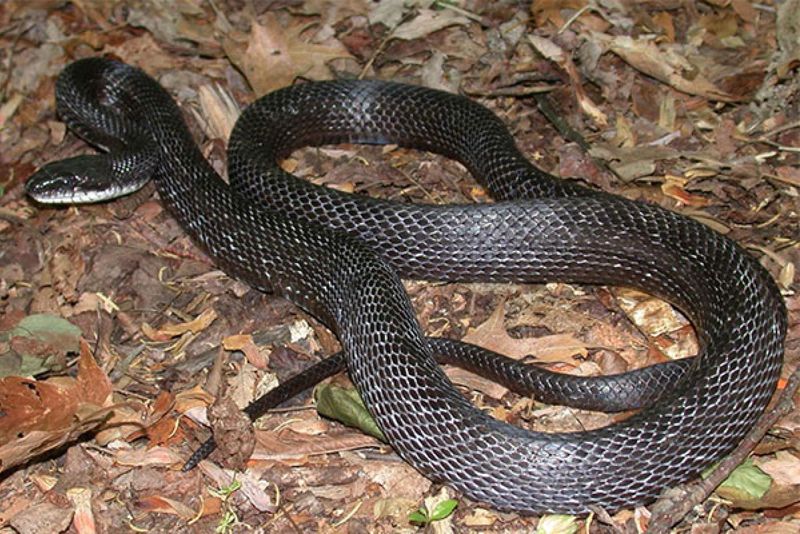
Calling something a black snake is a start, not an answer. Adult black racers and eastern rat snakes can both look dark with a pale chin, so color alone cannot confirm which one is crossing your yard.
NC State Extension’s colubrid family page points to a few differences. Racers have smooth scales.
Adult eastern rat snakes have weakly keeled scales, meaning a faint ridge down each one, and usually a lighter, checkered front belly.
Those clues are hard to use in real life. Scales and bellies are tough to judge on a moving snake, and the only way to see them well is to get close, which is a bad idea.
Never approach, pick up, or pin a snake to check its features.
A better habit is to take a photo from a distance with your phone zoom, then look it over later. If you still cannot tell what it is, treat it as unidentified.
Keep kids and pets back and let the snake move on by itself. That simple rule works whether it turns out to be a racer, a rat snake, or something else.
Racers may eat young copperheads, but they cannot promise protection
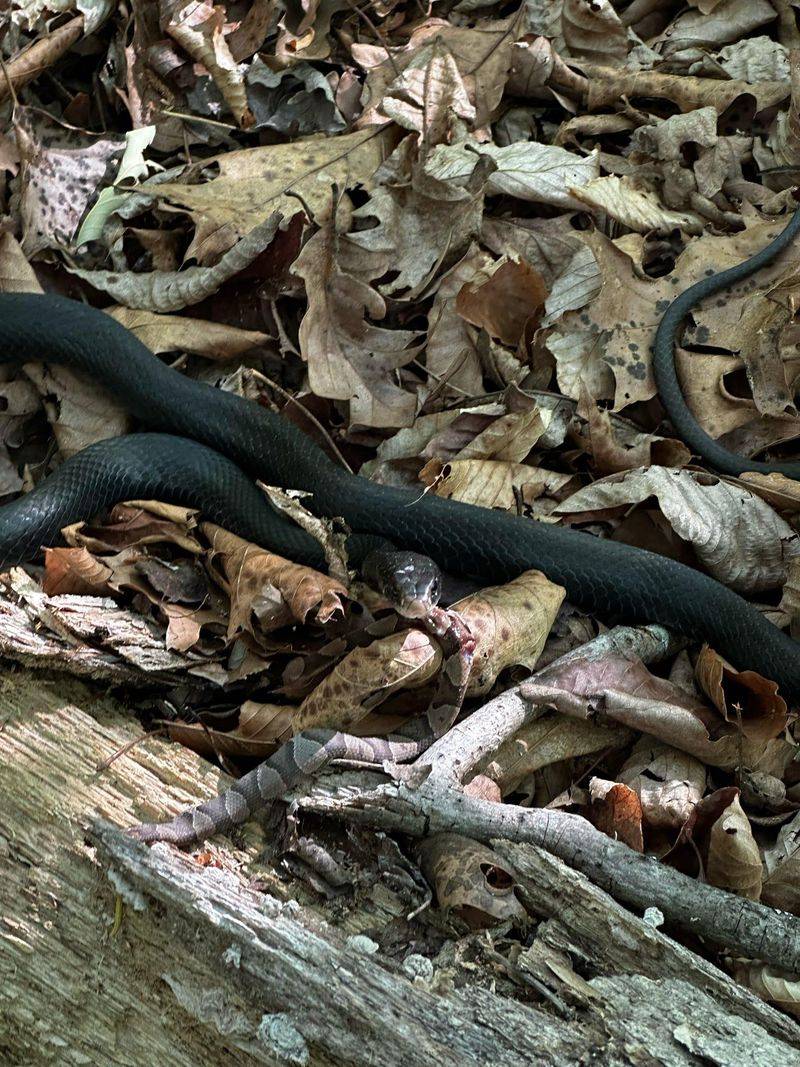
Here is where a good story can mislead. The North Carolina racer account records juvenile copperheads and other young venomous snakes among racer prey.
A NC Wildlife copperhead profile also lists black racers among copperhead predators.
That supports one plain statement: racers may eat young copperheads. It does not say racers clear an area of copperheads, keep them away, or make a yard safe.
None of these sources shows that a racer’s presence means copperheads are absent or under control.
Copperheads remain a real possibility here. The NC Wildlife copperhead page describes them as found statewide and as the state’s most common venomous snake.
In practice, that means a racer on the edge of your garden is no reason to relax your habits. Wear closed shoes, look before reaching into leaf litter or wood piles, and use a light at dusk.
Treat the racer as a neighbor, not a security system.
Manage close-to-house shelter and prey attractants

If you would like fewer snake encounters near the house, work on what draws snakes or their prey. NC State Extension’s snake guidance suggests two main moves: reduce rodent access to buildings, and remove or manage debris and other shelter close to the house.
Start with a weekend walk around the foundation. Seal gaps around pipes and vents, keep garage doors closed, and store birdseed and pet food in tight containers.
Then look for cover: piles of boards, loose stones, tangled brush, and stacked firewood sitting right against the wall.
You do not need to strip your yard. Native plantings farther from the house still shelter wildlife, and a mowed buffer or a tidy zone near doors and patios keeps the cover where you want it.
These steps address food and hiding places, but they cannot guarantee a snake-free yard. Snakes also travel through, and some will still pass by.
Skip the store-bought snake repellents as well, since Extension says commercial repellents have not been scientifically shown to repel snakes.
Give snakes room, especially around children and pets

The safest plan is simple: distance. Keep children and pets away from any snake you cannot confidently identify, and give it a clear path to leave.
NC State Extension’s backyard reptile guidance supports this approach and suggests calling a wildlife professional if you need help.
Racers usually flee when approached. Still, the North Carolina racer account notes that a cornered or captured racer may strike, and its bite can pierce skin.
They are nonvenomous, but that is not the same as harmless, so never try to pick one up.
Teach kids a short rule: look, step back, tell a grown-up. Walk dogs on a leash near brushy edges, and check the yard before letting pets out at dusk.
If someone is bitten, seek medical care. For a pet, CDC guidance on wildlife advises prompt veterinary care.
A repeat visitor is a reason to stay aware, not to assume anything about mice or copperheads. Let the racer have its edge, and keep your own steps unhurried.