
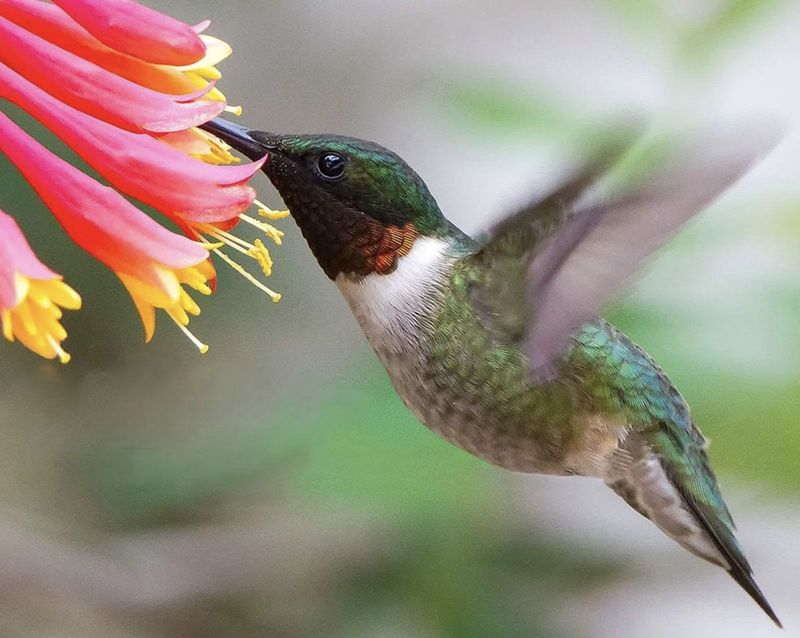
Something small and fast has been showing up on your Central Texas porch every day this September, hovering at the feeder or darting through the flower bed, and you are starting to wonder if it means something. The good news is that there is a real, nature-based explanation worth understanding.
Whether you have a single regular visitor or a rotating cast of tiny wings, the answer has more to do with food, habitat, and bird behavior than anything mysterious.
September narrows the season, not the species
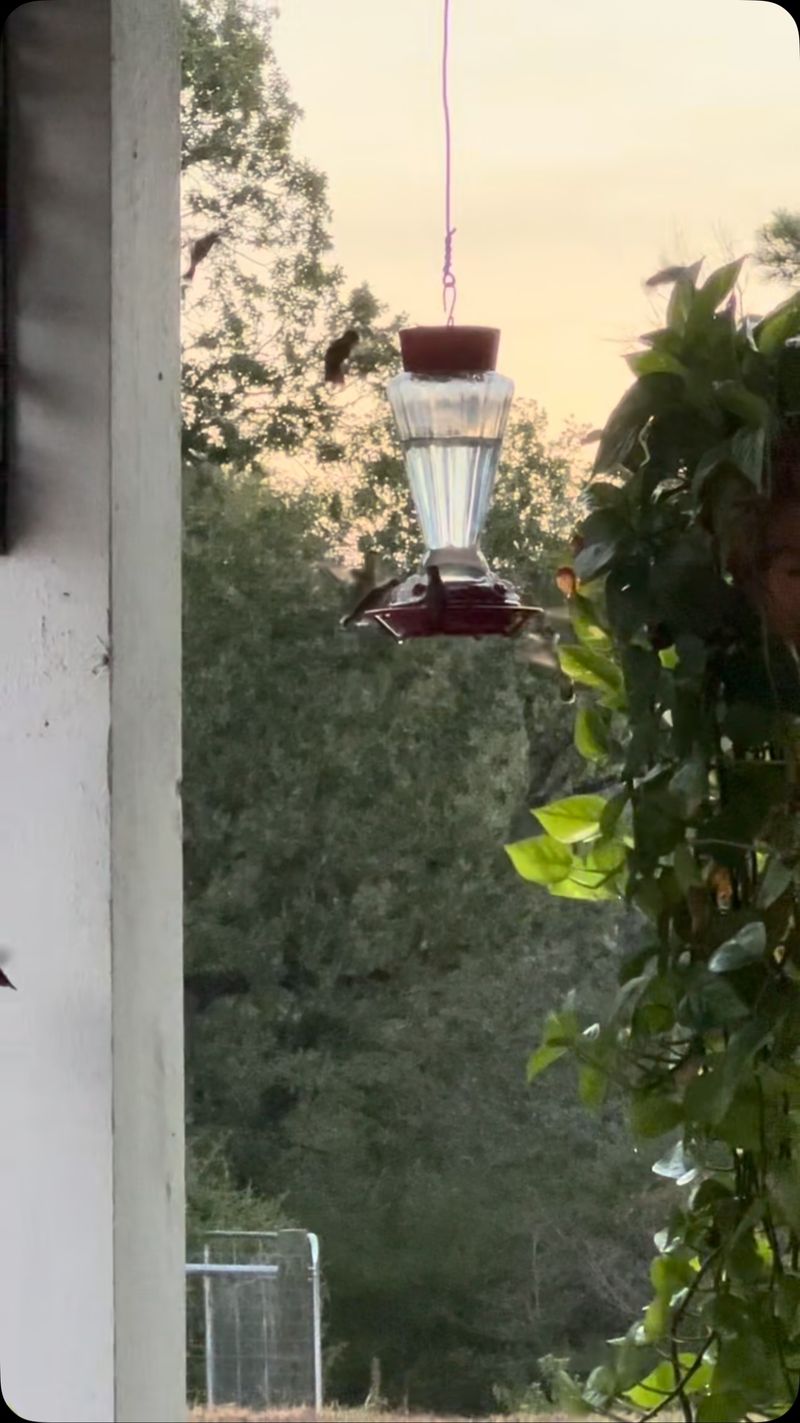
Walking out to your Central Texas porch in September and spotting a hummingbird at the feeder feels like a small gift, but that calendar date tells you less than you might expect. According to Texas Parks and Wildlife’s hummingbird season overview, Black-chinned Hummingbirds are the dominant species across central and western Texas, but Ruby-throated, Rufous, Broad-tailed, Calliope, and other species can all show up in the region depending on the year and your exact location.
Knowing it is September does not tell you which bird you are watching.
The month does narrow the general season, though. Black-chinned Hummingbirds begin tapering their local presence through late summer, while Ruby-throated migrants start moving through and Rufous and Broad-tailed birds are possible from late July through early November.
Travis Audubon’s September bird forecast specifically calls out Ruby-throated Hummingbirds as part of the fall movement through the Austin area, so the timing is real, even if the species is not guaranteed.
What September does confirm is that Central Texas sits in a genuinely active window for hummingbird activity. Some birds you see are local residents finishing out their breeding season.
Others may be post-breeding dispersers moving away from nesting territories, and still others are migrants passing through on a longer journey. Texas Parks and Wildlife’s migration FAQ makes clear that migration timing shifts with species, weather, food availability, and the age of the individual bird.
The safest interpretation of a September porch visitor is straightforward: your yard has become a dependable stop during a period of high hummingbird activity. Whether the bird is a local resident, a short-distance mover, or a migrant in transit, the porch is offering something worth returning for.
That is the starting point for everything else worth knowing about why the visits keep happening.
A productive porch becomes a memorized stop
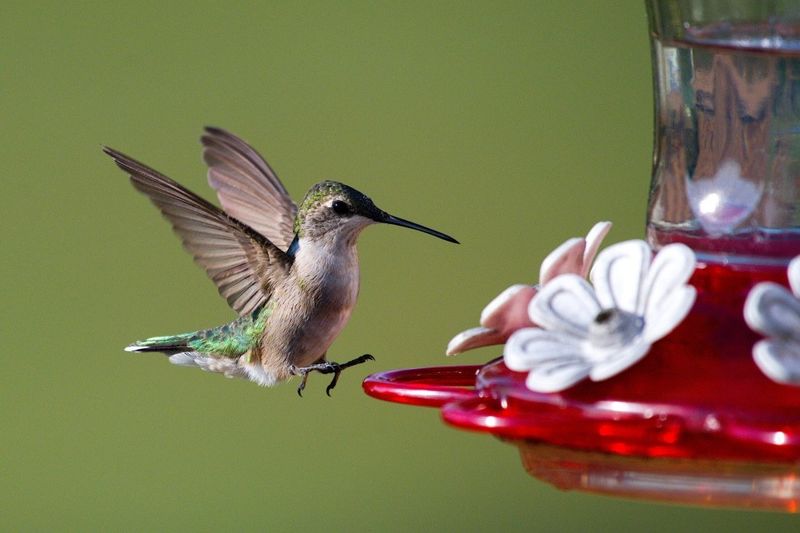
Hummingbirds are not wandering randomly when they show up at your feeder day after day. Research published in a study on hummingbird spatial learning shows that these birds can learn the locations of rewarding feeders and retain that information across visits, adjusting their foraging routes to include stops that reliably pay off.
Your porch, in other words, may have earned a place on a mental map.
A related line of research documented in animal behavior studies on trapline foraging describes how hummingbirds follow repeatable routes through their home range, revisiting profitable flower patches and feeders in sequence. Once a location proves itself worth the energy spent flying there, the bird incorporates it into a regular circuit.
Your feeder or flower bed may simply be one stop on a route the bird has been running for days or weeks.
This behavior explains the feeling that a particular hummingbird has chosen your yard specifically. The bird has not formed a personal attachment to the homeowner or responded to anything beyond the straightforward signal that food is available and predictable here.
That is not a lesser explanation; it reflects real cognitive ability. Hummingbirds are remarkably good at tracking which locations are worth revisiting and at what time of day the reward is likely to be replenished.
The practical upshot is that consistency matters. A feeder that is clean, full, and in the same location gives the visiting bird a reason to keep that stop on its route.
An empty or spoiled feeder teaches the opposite lesson. If you want the visits to continue through September, reliability is the most useful thing you can offer.
Repeated visits can also signal competition
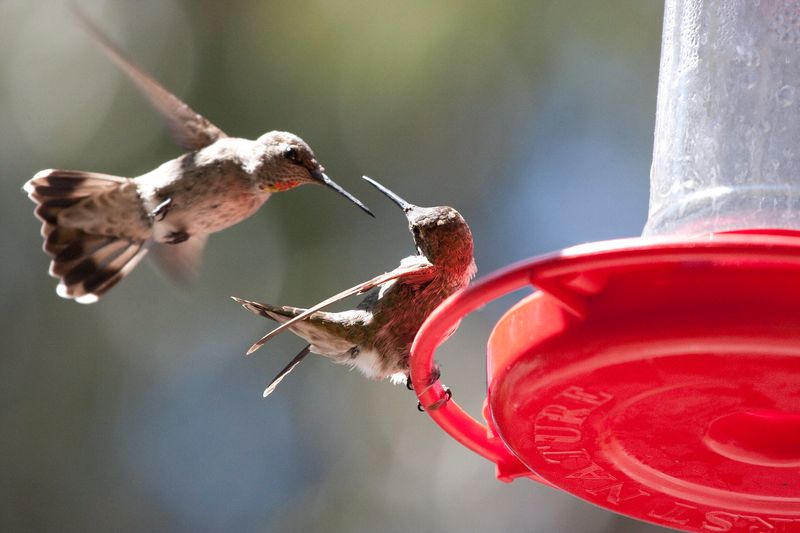
Not every repeat appearance at your feeder is a peaceful return visit. Hummingbirds are famously territorial, and a bird that keeps showing up may be patrolling and defending a food source rather than simply foraging.
Texas Parks and Wildlife’s Ruby-throated Hummingbird profile notes that males in particular defend feeding territories aggressively, chasing away competitors that attempt to use the same resource.
That territorial drive means repeated visits can look like loyalty but function more like ownership. A single bird may circle back to the feeder every few minutes not because it is especially hungry each time, but because it is checking that no competitor has moved in.
If you have seen a hummingbird hovering near the feeder without drinking, or heard the distinctive chittering chase sounds, competition is a likely explanation. Cornell Lab’s hummingbird feeding guidance recommends placing multiple feeders out of sight of one another to reduce the ability of one bird to monopolize all of them.
There is also a subtler point worth keeping in mind. What looks like one bird returning repeatedly could be several different birds following the same profitable route through the neighborhood.
Without a leg band or a very distinctive marking, telling individuals apart at feeder speed is genuinely difficult. Research on hummingbird spatial learning confirms that multiple birds can independently discover and memorize the same rewarding locations.
So the visitor you see at 8 a.m. and the one at 4 p.m. may or may not be the same individual.
Watching for size differences, throat color, and subtle plumage variation across visits can give you clues, but confident identification of individuals requires close, consistent observation over time, or a photograph that captures clear field marks.
The porch is part of a larger hummingbird menu
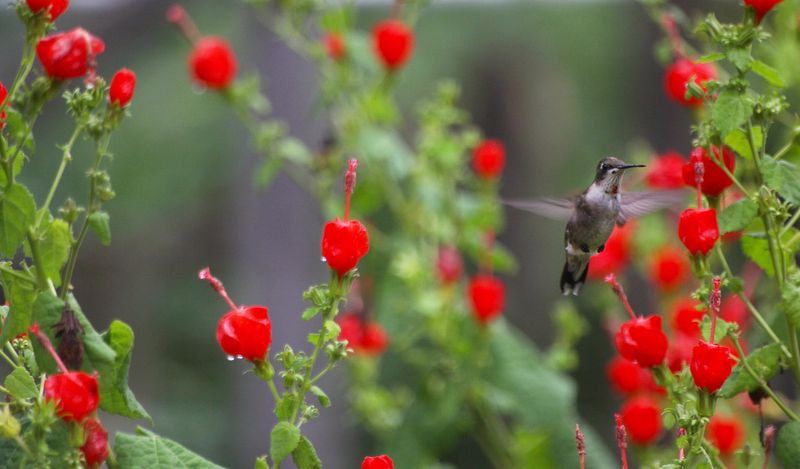
A hummingbird visiting your feeder is not living on sugar water alone. These birds are nutritionally dependent on protein, which they get by hunting small insects and spiders throughout the day.
The feeder provides quick fuel, but the surrounding yard, with its flowers, leaf litter, spider webs, and insect life, is just as important to the bird’s health. Texas Parks and Wildlife’s species account confirms that insects and spiders make up a critical part of the hummingbird diet, alongside flower nectar.
That broader diet is worth thinking about when you consider why a particular porch keeps drawing visits. A yard that offers native flowers, diverse plant structure, and a healthy insect population is more attractive to a hummingbird than a feeder sitting in bare concrete.
Texas Parks and Wildlife’s hummingbird planting guide lists several plants that work well in Central Texas gardens, including Turk’s cap, coral bean, various salvias, and trumpet vine. These plants offer natural nectar and also support the insect communities that hummingbirds hunt.
Turk’s cap is especially well suited to Central Texas conditions. It tolerates heat and partial shade, blooms from late summer well into fall, and produces small red flowers that hummingbirds visit repeatedly.
Salvias such as Salvia coccinea and Salvia greggii are similarly tough and productive through the season when temperatures are still brutal. Planting even a small cluster of these near your porch gives the visiting bird a reason to linger and look around.
Avoiding pesticide use in the immediate area matters too. Broad-spectrum insecticides reduce the insect prey hummingbirds depend on for protein.
A yard that supports natural insect activity alongside flowering plants offers a more complete resource than a feeder alone, and that completeness is likely part of what makes your porch a stop worth memorizing.
A September visit does not reveal the route
Spotting a hummingbird on your Austin or Hill Country porch in September can make it tempting to picture that specific bird preparing to cross the Gulf of Mexico. That narrative is compelling, but it does not follow from a single sighting.
Texas Parks and Wildlife’s Ruby-throated Hummingbird account does describe large fall concentrations of Ruby-throated Hummingbirds along the Gulf Coast, but those coastal counts are not automatically transferable to an individual bird seen at a feeder miles inland.
Species-level migration facts apply to populations, not to individual birds. Ruby-throated Hummingbirds do migrate through Texas in fall, and Cornell Lab’s range maps for Ruby-throated Hummingbirds show the species moving through Texas toward wintering grounds in Mexico and Central America.
Some individuals cross the Gulf directly; others follow overland routes. But without knowing the species of the bird on your porch, let alone its age, sex, or origin point, the route is simply unknown.
Texas Parks and Wildlife’s migration FAQ reinforces that timing varies by species, individual condition, weather, and food availability. A bird that looks like it should be heading south may be a local Black-chinned Hummingbird that has not yet begun moving, or a Rufous Hummingbird that has already come from farther north and is still moving through.
One concern that comes up often is whether keeping a feeder available will delay the bird’s departure. Texas Parks and Wildlife’s bird feeder FAQ is direct on this point: feeders do not stall normal migration.
Birds that are ready to move will move regardless of available food. Leaving your feeder up through September and into October supports birds that are actively passing through without trapping any of them in place.
Texas heat changes feeder care
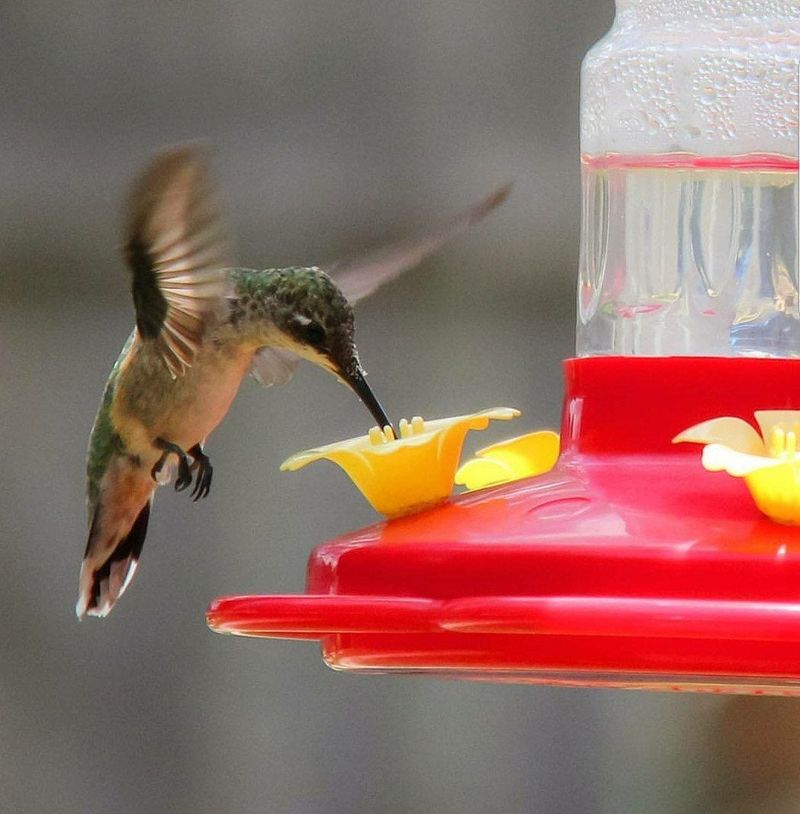
The nectar recipe itself is simple: one part plain white table sugar dissolved in four parts water. That ratio matches the approximate sugar concentration of natural flower nectar and gives hummingbirds a safe, useful fuel source.
Cornell Lab’s hummingbird feeding guide is clear that red food coloring is unnecessary and should be left out, and the same applies to honey, vitamins, electrolyte additives, and any other supplement. Honey in diluted form can support bacterial and fungal growth that harms birds.
Plain sugar water, mixed fresh, is all that is needed.
Texas heat changes how quickly that nectar goes bad. Fermentation and microbial growth accelerate sharply when temperatures climb into the 90s and above, which is still routine across Central Texas in September.
Cornell’s guidance recommends changing sugar water every three to five days, with daily changes appropriate during very hot conditions. A rigid schedule is less useful here than a daily inspection habit: if the nectar looks cloudy, smells off, or shows any film or sediment, replace it immediately regardless of when you last refilled.
Using small batches helps. Filling a feeder halfway rather than to capacity means you are replacing a smaller volume of nectar more often, reducing the chance that spoiled liquid sits in the feeder for any length of time.
U.S. Fish and Wildlife Service bird feeding guidance also cautions against leaving old nectar out, noting that heat accelerates spoilage and that prompt replacement is the safest approach in warm climates.
Cleaning the feeder itself matters as much as the nectar. Cornell Lab’s feeder cleaning guidance recommends scrubbing at least once a week, and more often during heavy use or high heat.
A dilute bleach solution of no more than one part bleach to nine parts water is listed as an effective cleaning option. Rinse the feeder thoroughly after any cleaning and allow it to dry before refilling.
Black mold inside a feeder port is a sign the cleaning schedule needs to tighten, not just a cosmetic issue.
Make the stop safer and easier to identify
Planting native or well-adapted flowering species near your porch does more than add color. Plants like Turk’s cap, coral bean, and autumn sage provide natural nectar and also support the small insects and spiders that hummingbirds hunt for protein.
Texas Parks and Wildlife’s hummingbird habitat guide recommends these species specifically for Central Texas conditions, and many of them bloom heavily in late summer and fall, precisely when hummingbird activity peaks in the region.
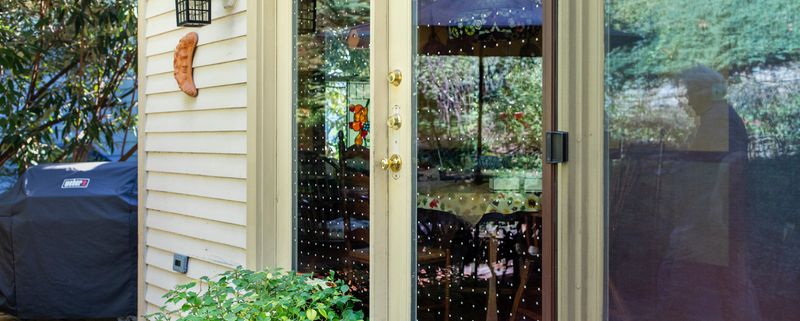
Window collisions are a real hazard, and feeder placement affects the risk. U.S.
Fish and Wildlife Service guidance on bird feeding identifies feeders placed 15 to 30 feet from windows as particularly dangerous, because a bird flushed from that distance has enough speed to cause serious injury on impact. Placing the feeder either within about three feet of a window, where the bird cannot build up speed, or well beyond 30 feet reduces that risk considerably.
Applying collision-deterrent tape or decals to reflective glass adds another layer of protection.
Identification is worth attempting while the bird is visiting, even if a confident species conclusion is not always possible. Texas Parks and Wildlife’s seasonal hummingbird overview notes that Central Texas can host multiple species in September, so observable features matter.
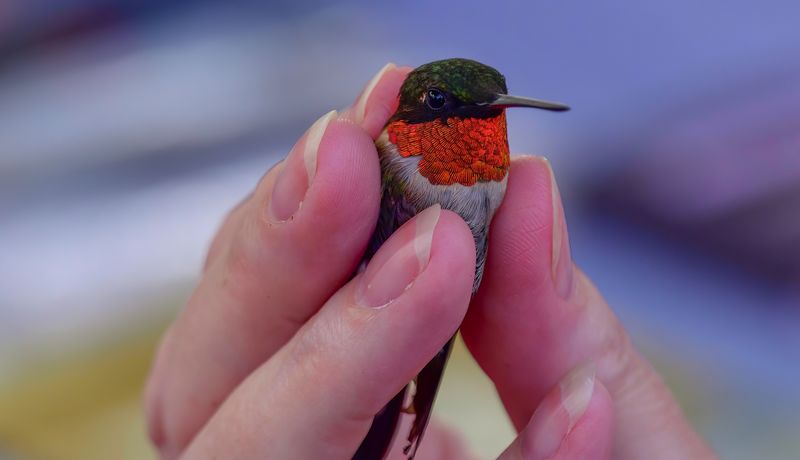
Look at throat color in good light: a Ruby-throated male shows an iridescent red gorget, while a Black-chinned male shows a dark violet band at the base of a black throat. Tail shape, bill length relative to head size, and back color can also help narrow the options.
A photograph taken in good light is the most reliable identification tool. Behavior and timing add context: a bird that arrived in early September and is moving south is more consistent with a migrant profile, while one that has been visiting since July is more likely a local resident.
Texas Parks and Wildlife’s feeder FAQ encourages homeowners to keep feeders up until at least two weeks after the last sighting if they plan to remove them for the season, giving late-moving birds a chance to refuel.
The grounded meaning is a reliable fall feeding stop
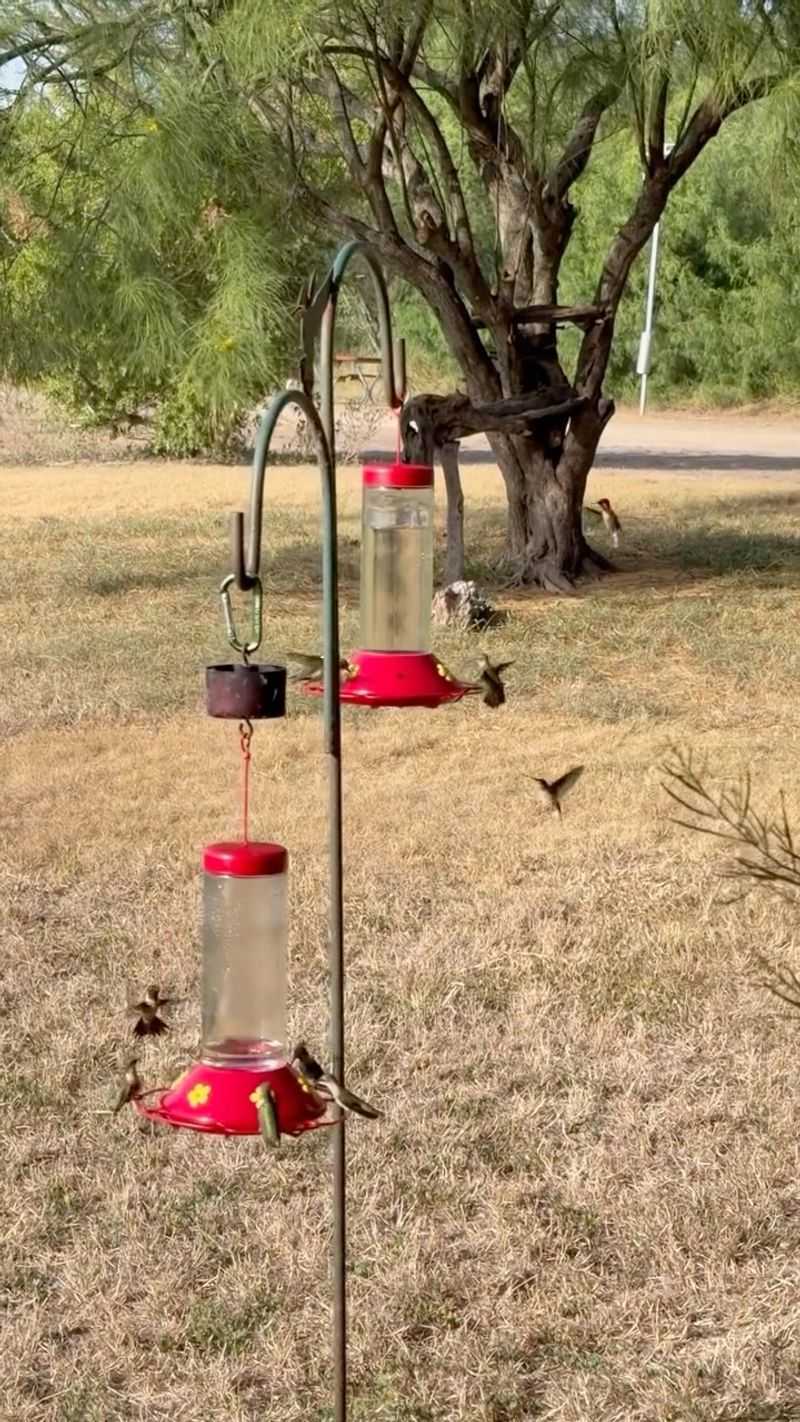
The most honest answer to why a hummingbird keeps visiting your Central Texas porch in September is also the most practical one: your yard has become a dependable resource during a period when hummingbird activity is genuinely high. Whether the bird is a local resident, a post-breeding mover, or a migrant in transit, research on hummingbird spatial memory confirms that reliable food sources get memorized and revisited.
Your porch earned that status.
The species, the individual identity, and the migration status all remain uncertain without a photograph or close observation. Texas Parks and Wildlife’s seasonal overview is a useful reminder that September in Central Texas can bring several species through the same yard in the same week.
The practical response is the same regardless of which bird is visiting: keep the nectar clean and fresh, maintain native plants that support both nectar and insect foraging, reduce window hazards, and watch before drawing conclusions.
A yard that is safe, clean, and stocked with real habitat does not need a mystery to make it worth tending. The hummingbird already voted with its wings.