
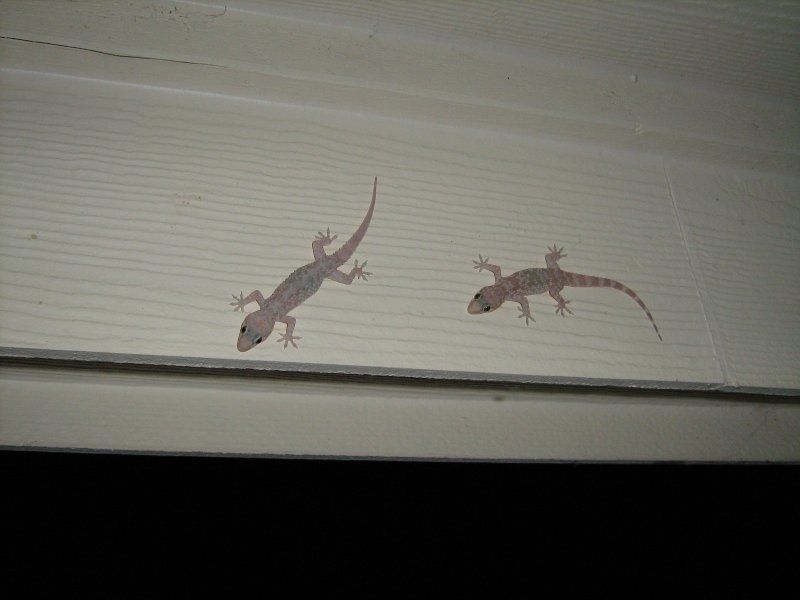
Plenty of Texas homeowners have stepped outside after dark and spotted a small, pale lizard frozen near the porch light, then found it there again the next night and the night after that. Most people want to know two things: what exactly is that creature, and what does its regular appearance say about what might be living around the door?
The answers are more nuanced than a simple “you have a bug problem” or “free pest control,” but they are genuinely useful once you know what to look for.
The likely visitor is a Mediterranean house gecko
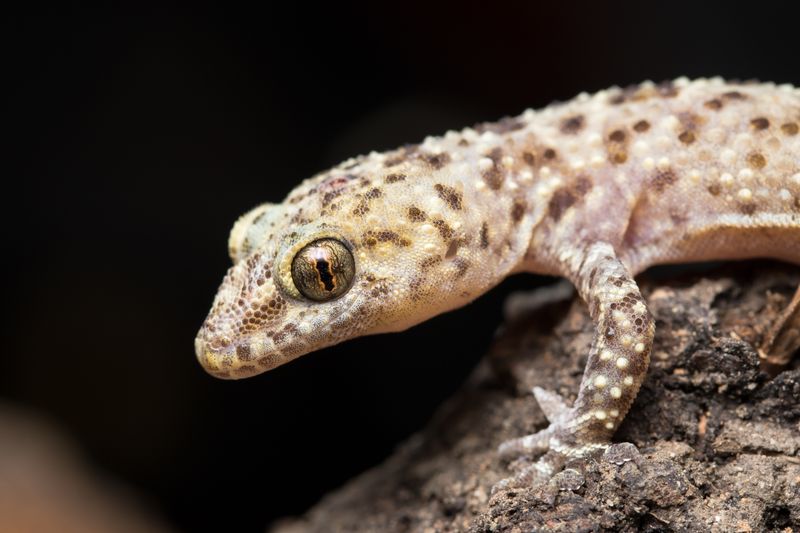
When a small pale lizard turns up on a Texas porch after dark, the most probable candidate is the Mediterranean house gecko, Hemidactylus turcicusH. frenatus. That said, “most probable” is not the same as certain, because Texas also hosts the introduced common house gecko, .
A clear photograph or a careful look at a few key features may be needed before you can be confident which species you are seeing.
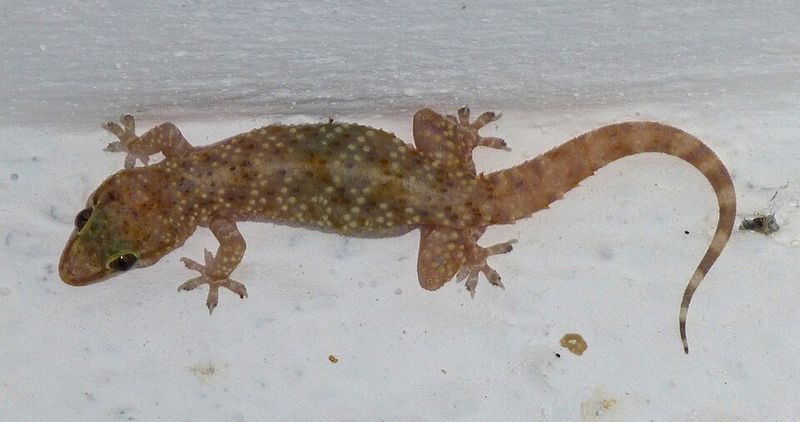
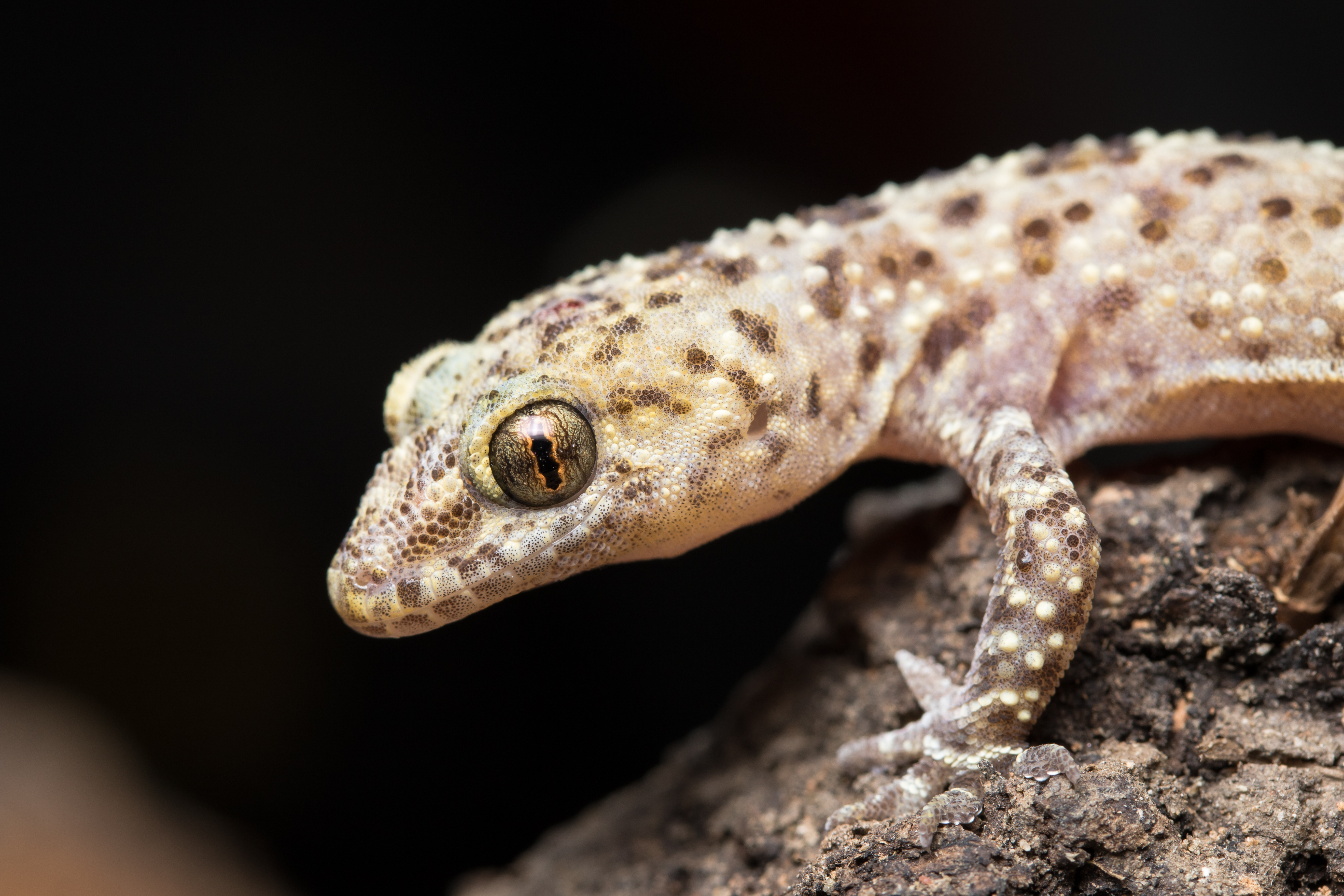
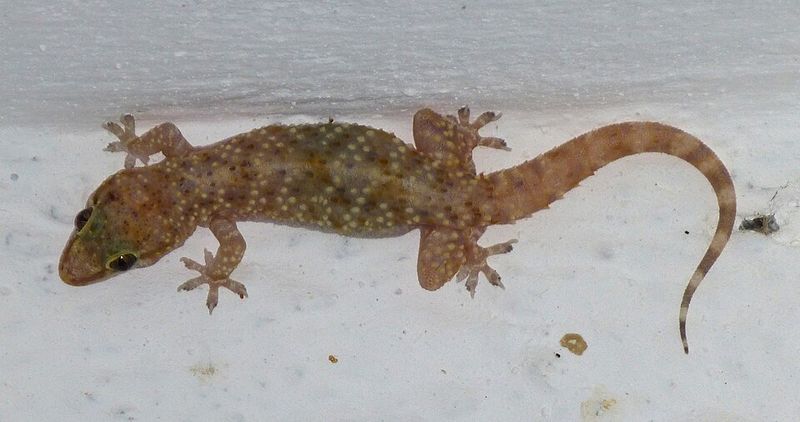
The Mediterranean house gecko typically runs 4 to 5 inches from snout to tail tip. Its body is pale gray to tan, sometimes almost translucent under porch lighting, and the skin is covered in noticeable rows of bumps or small wart-like tubercles that give it a rougher texture than many other lizards.
According to Texas A&M AgriLife Extension, look for large lidless eyes with vertical pupils, adhesive toe pads that let it walk up smooth walls, and a tail that is banded rather than solid in color.
The common house gecko, H. frenatus, can look similar at a quick glance, but it tends to have a more elongated snout and different body proportions, often with skin that appears slightly smoother. If the gecko you see has a distinctly rounded snout and prominent bumpy texture, H. turcicus is the stronger candidate, though a photograph compared against a verified reference is the most reliable check.
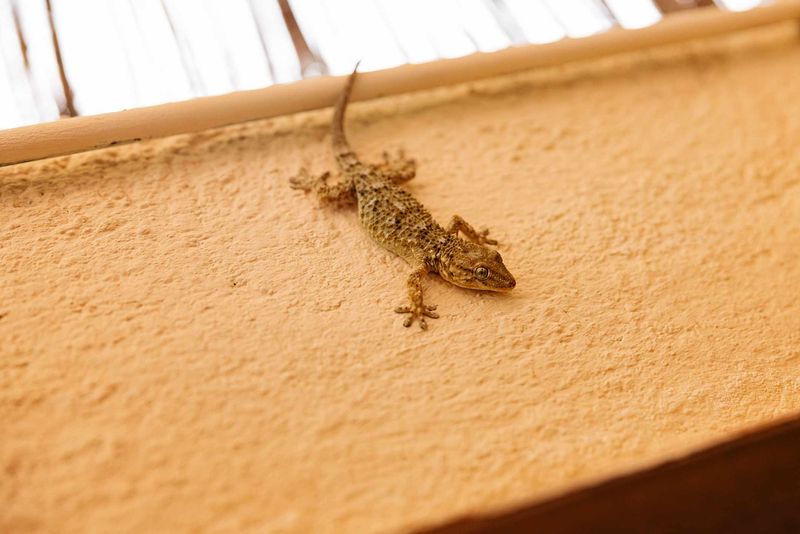
Mediterranean house geckos are well documented in Central Texas and across much of the state’s southern and urban regions, particularly around developed areas with buildings and outdoor lighting. Their range is not uniform statewide, so a sighting in a rural or northern county is less predictable than one in San Antonio or Austin.
The University of Georgia Savannah River Ecology Laboratory notes that this species is strongly associated with human structures, which is exactly why porches, garages, and exterior walls are such common sighting spots.
Why a porch can become a nightly hunting station
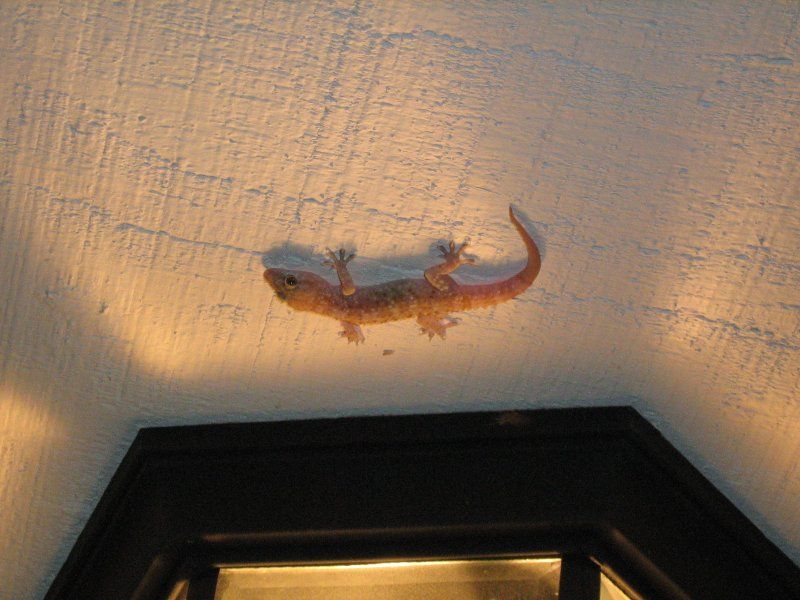
A gecko does not wander onto your porch randomly and then happen to return. Buildings offer something that open ground rarely provides in combination: a warm, sheltered refuge during the day and a predictable concentration of prey after dark.
Cracks in siding, gaps around window frames, spaces behind shutters, and the tight seams where pipes enter a wall all serve as daytime hiding spots. When evening comes, the gecko moves out to a nearby surface and waits.
Exterior lighting plays a real role in this pattern. Many nighttime insects are drawn toward light sources, and a gecko that stations itself near a bulb is positioning itself where moths, small flies, and other flying invertebrates may pass within striking range.
The Savannah River Ecology Laboratory’s species account describes Mediterranean house geckos as nocturnal animals strongly associated with buildings and outdoor lights, which fits the pattern most Texas homeowners observe.
Lighting is only part of the picture, though. Research on Mediterranean gecko diet found substantial consumption of ground-dwelling and non-flying prey, and one diet study raised questions about whether lights are always the primary reason geckos gather in a spot.
Warmth from walls that retain heat after a hot Texas day, the availability of sheltered territory, and the presence of spiders or other crawling prey that are not attracted to light at all may each contribute to why a porch becomes a regular stop.
The UF/IFAS Extension guidance on managing house geckos notes that these animals use crevices and wall gaps as refuges, which means the porch may be both a hunting ground and a home base. The gecko is exploiting a favorable location, not conducting an inspection of your foundation or responding to a specific pest population you need to worry about.
What the gecko suggests about bugs near the porch
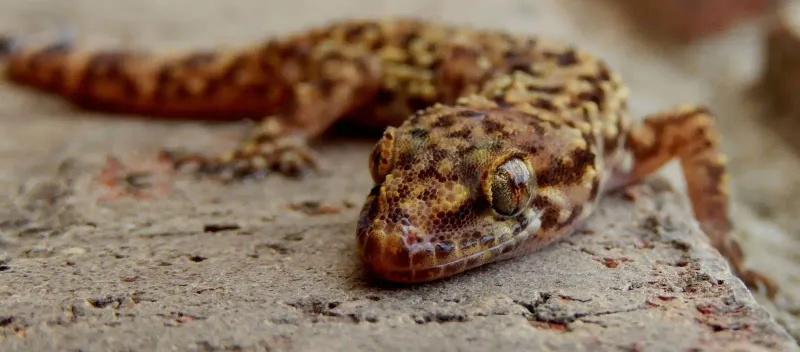
Seeing a gecko on the porch after dark is a reasonable signal that some nighttime arthropods are accessible near that entry, light, or building. That is a useful piece of information, but it comes with limits that are worth understanding before you draw any larger conclusions.
Mediterranean house geckos are opportunistic hunters with a broad diet. A dietary study of H. turcicus in Texas found that the species consumes insects, spiders, isopods, and other arthropods across a wide range of taxa.
That variety matters because it means you cannot work backward from one gecko sighting to conclude that any particular pest is present. A gecko near your front door could be eating moths drawn to the porch light, small beetles in the mulch, spiders living in a corner of the doorframe, or pill bugs near the foundation plantings.
The full research paper on Mediterranean gecko diet reinforces how generalist these animals are, which is precisely why a single sighting functions as an informal sign of nighttime arthropod activity rather than a measurement of pest abundance. Think of it as a rough indicator that the area is biologically active after dark, not as a diagnosis of a specific problem requiring treatment.
The gecko’s presence does not localize the arthropod source to any single spot, either. Prey could be concentrated near the light fixture, in the landscaping, along the wall, or simply moving through the area as part of normal nightly activity.
Treating the gecko as an alarm for a particular pest infestation misreads what the sighting can actually tell you. The honest takeaway is that some arthropods are available nearby, the porch offers suitable hunting conditions, and the gecko has noticed.
A nightly sighting does not prove an infestation or one returning gecko
Two interpretations of a nightly gecko sighting tend to stick in people’s minds, and both deserve a closer look. The first is that a gecko on the porch must mean the house has a cockroach infestation or an unusual pest surge.
The second is that the same individual gecko is loyally returning to the same spot every single night. Neither conclusion is well supported by the available evidence.
On the infestation question: the gecko’s diet is broad enough that its presence cannot point to cockroaches specifically. The Texas diet research documents consumption of many different arthropod groups, and the full dietary study notes that gecko foraging behavior may reflect shelter and favorable territory as much as any particular prey concentration.
A gecko near your door is not evidence of an unusual pest surge; it is evidence that the porch works well as a hunting location, for reasons that may have as much to do with warmth and cover as with any specific bug population.
On the “same gecko every night” question: repeated sightings at the same spot feel personal, but they do not establish individual identity. Life history research on Mediterranean geckos in southern Texas shows that males can defend feeding areas, and multiple individuals may use the same favorable porch over the course of a week.
Without marking an animal, you cannot know whether you are watching one gecko or several taking turns at a productive spot.
Separating what the sighting supports from what it cannot establish keeps the response proportionate. The porch is a good location for a gecko; that much is clear.
Whether it signals a specific pest problem or a single devoted visitor is a different question, and the honest answer to both is: probably not.
It may eat porch insects, but it is not pest control
Finding a gecko on the porch can feel like a small piece of good luck, especially if mosquitoes or moths have been a nuisance near the door. The reality is more modest.
An outdoor gecko may well consume insects and other arthropods around a structure, and UF/IFAS Extension acknowledges that house geckos may help reduce insect populations around buildings. That is a reasonable observation, not a guarantee of meaningful pest reduction.
The gecko’s broad, opportunistic diet means it eats what is available rather than targeting the pests you most want eliminated. The Texas diet study makes clear that the species consumes a wide variety of arthropods, so one gecko or even a small group on a porch is not a substitute for addressing an actual pest problem through inspection, sanitation, or professional management.
Treating the animal as a pest-control program overstates its role and may delay action that would actually help.
The ecological picture is also more complicated than “helpful lizard eats bugs.” Mediterranean house geckos are introduced in Texas, not native wildlife. The Savannah River Ecology Laboratory classifies the species as introduced, and the Texas Invasive Species Institute lists it with cautionary notes about its nonnative status.
Their effects on native lizards, invertebrates, and other wildlife in Texas are not well established, which means blanket praise for a nonnative species is not warranted any more than blanket alarm would be.
The fair position is a middle one: a gecko on the porch is not a threat requiring removal, and it is not a wildlife asset deserving special protection as a native species. Leaving it alone outdoors is a low-stakes choice.
Just do not count on it to solve a pest problem that would otherwise call for a more deliberate response.
How to reduce porch activity and keep geckos outside
Whether you are comfortable with a gecko on the porch or would prefer fewer nighttime visitors near the entry, there are practical steps that can shift the situation without requiring pesticides or harmful interventions. The approach depends on your goal: reducing how often geckos gather near the door, or preventing them from getting inside.
For reducing porch activity, the most direct option is managing exterior lighting. Turning off unnecessary porch lights when they are not needed, installing motion-sensor controls so lights are only on when someone is actually outside, or switching to yellow-tinted bug bulbs can all reduce the number of flying insects drawn to the entry area.
Penn State Extension’s integrated pest management guidance notes that yellow bulbs attract fewer insects than standard white bulbs. Fewer insects near the door means less reason for a gecko to station itself there, though it does not guarantee that geckos will stop using the porch entirely, since shelter and warmth may still draw them.
For geckos that are getting indoors, exclusion is the right tool. UF/IFAS Extension specifically recommends sealing gaps around windows and doors with silicone caulk, repairing or replacing door sweeps that no longer make solid contact with the threshold, and checking screens for tears or poor fits.
These measures address the actual entry points rather than attempting to deter the animal chemically. No pesticide is registered for managing geckos inside structures, and spraying is not an established solution.
Handling geckos is worth avoiding when possible. Reptiles can carry Salmonella even when they look completely healthy, and CDC guidance on Salmonella linked to reptiles is clear that anyone who touches a gecko or a surface it has contacted should wash their hands thoroughly with soap and water.
Children younger than five, older adults, and anyone who is immunocompromised should avoid contact with reptiles and their environments entirely. If a gecko needs to be moved from indoors to outside, use a container rather than bare hands, and wash up immediately afterward.
Use the porch sighting as a clue, not a diagnosis
Putting the whole picture together, a gecko on your porch after dark is most accurately read as a clue about local conditions rather than a firm diagnosis of any specific problem. Call it a likely Mediterranean house gecko only when the physical features actually support that identification: bumpy skin, rounded snout, vertical pupils, sticky toe pads, and a banded tail.
If the features are ambiguous, a photograph compared against a verified reference will get you further than a confident guess.
Repeated appearances at the same spot tell you the porch offers a dependable mix of shelter, warmth, and accessible arthropods. They do not tell you that you have an infestation, that a single devoted gecko is returning each night, or that your pest problems are being handled.
The species is introduced in Texas, opportunistic in its habits, and useful as an informal indicator of nighttime insect activity rather than a quantitative pest monitor.
Your practical options map cleanly onto your comfort level. Leave an outdoor visitor alone if it is not entering the house, reduce light-driven insect activity near the entry if you prefer fewer geckos gathering there, or seal gaps and repair door sweeps if one has made it inside.
The gecko on your porch is not an emergency; it is a small, nocturnal animal that found a good spot. Managing it comes down to exclusion and lighting choices, not alarm.
Knowing what the sighting can and cannot tell you is most of the work.