
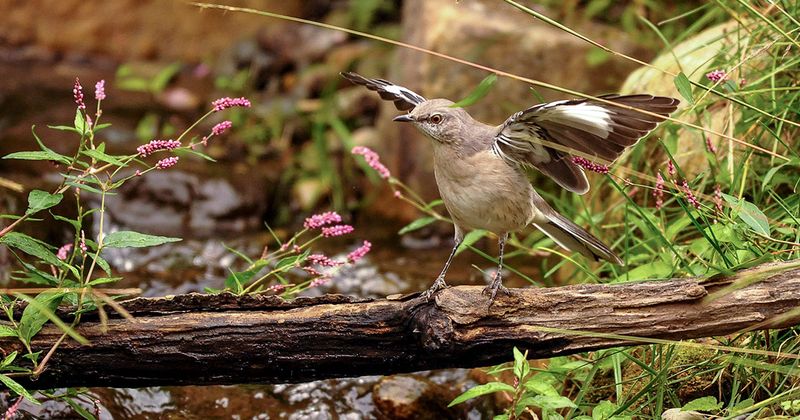
If a gray-and-white bird has been showing up in your yard every day, singing from the fence post, chasing off other birds, and generally acting like it owns the place, there is a good chance you are sharing space with the Northern Mockingbird, Texas’s official state bird. Most Texans notice these repeat visits and wonder what the bird is trying to say. The honest answer is grounded in biology, not symbolism, and it turns out your yard may be more useful to local wildlife than you realize.
The repeated visitor is probably claiming a route, not delivering a message
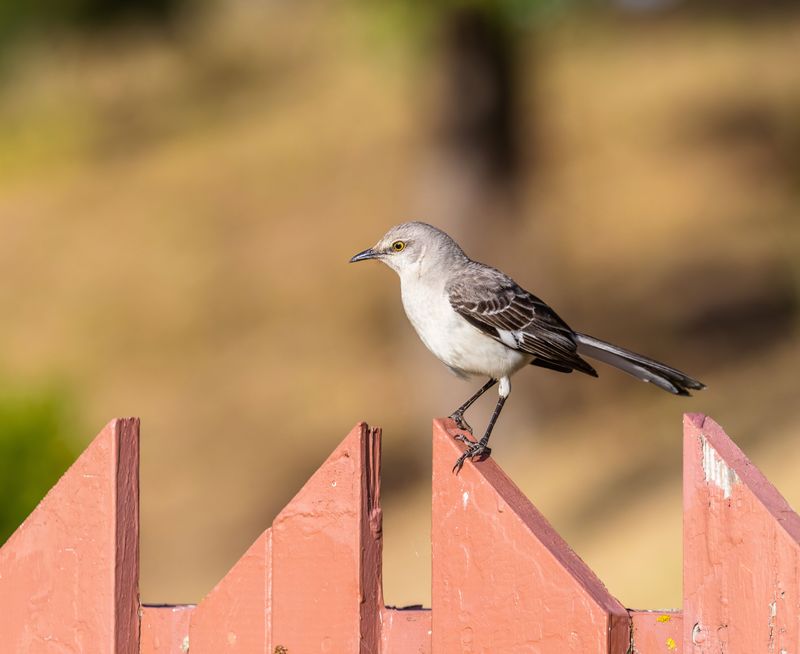
Spotting the same bird in your yard day after day feels significant, and in an ecological sense it genuinely is, just not in the way folklore often suggests. The bird most likely visiting your Texas yard is the Northern Mockingbird, Mimus polyglottos, the official state bird of Texas and a year-round resident found across virtually every habitat in the state, from city lots to ranch land. Texas Parks and Wildlife Department describes the species as one of the most widespread and recognizable birds in Texas, conspicuous because of its bold personality, loud song, and willingness to share space with people.
When a mockingbird keeps appearing in the same yard, the most grounded explanation is that the property falls inside the bird’s territory or along a regular foraging circuit. A single mockingbird’s territory can span several neighboring yards, meaning the bird you see on your fence may have just come from two houses down and will move on to the yard behind you next. The return visit does not mean the bird is traveling a great distance each day. It may simply be the same resident individual or pair looping through a familiar patch of ground.
Repeated visits are not a sign of luck, a warning, or a message from someone who has passed. Those are cultural interpretations with real meaning in certain traditions, but they are not conclusions supported by ornithology. The documented reasons a mockingbird keeps coming back are practical ones: territory, food, shelter, perches, and water. Knowing that distinction helps you observe the bird more clearly and respond to its presence in ways that actually benefit it.
What does the yard provide?
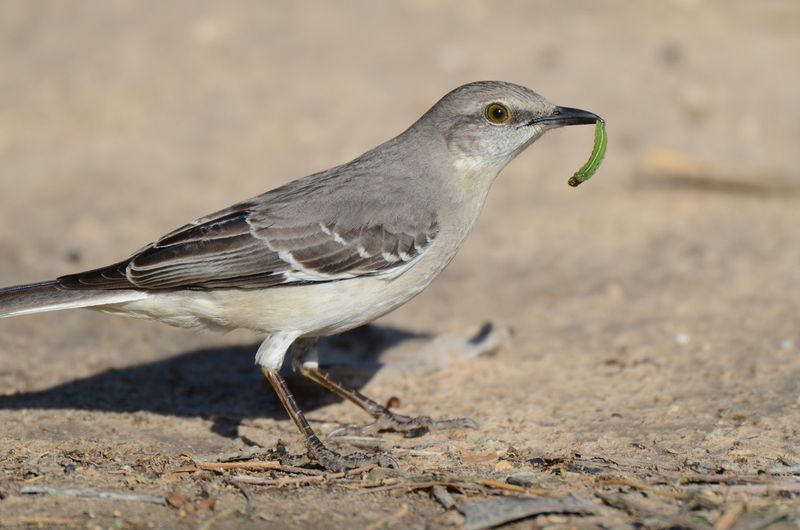
Before asking why a mockingbird keeps returning, it helps to look at the yard through the bird’s eyes. Mockingbirds are primarily ground foragers. Cornell Lab of Ornithology describes them as birds that run and hop across open areas, often dropping from a low perch to snatch prey from the surface. A mowed lawn or a patch of bare soil gives the bird a clear view of the ground and easy access to insects, spiders, and other small arthropods moving through the grass.
Elevated perches matter just as much as open ground. A fence line, a utility wire, a rooftop edge, or the top of a tall shrub gives a mockingbird a high vantage point for scanning, singing, and watching for rivals or predators. Yards that offer both open foraging space at ground level and clear singing posts above it check two important boxes at once. Audubon notes that mockingbirds favor open country with scattered shrubs, which describes a typical Texas suburban yard fairly well.
Fruiting plants add another draw. TPWD’s young naturalists guide to mockingbirds explains that while insects make up a large share of the summer diet, fruits and berries are eaten year-round and become especially important in cooler months. Dense shrubs and tangled vegetation also offer shelter and potential nesting cover, making them worth investigating even when the bird is not actively feeding.
One thing a summer mockingbird visit does not confirm is that your yard has an unusually large insect population or a pest problem. The bird may simply be using the lawn as a convenient hunting surface because it is open and familiar. Access and habit are often just as relevant as prey density when explaining why a bird returns to a specific spot.
Summer singing often points to territory and breeding pressure
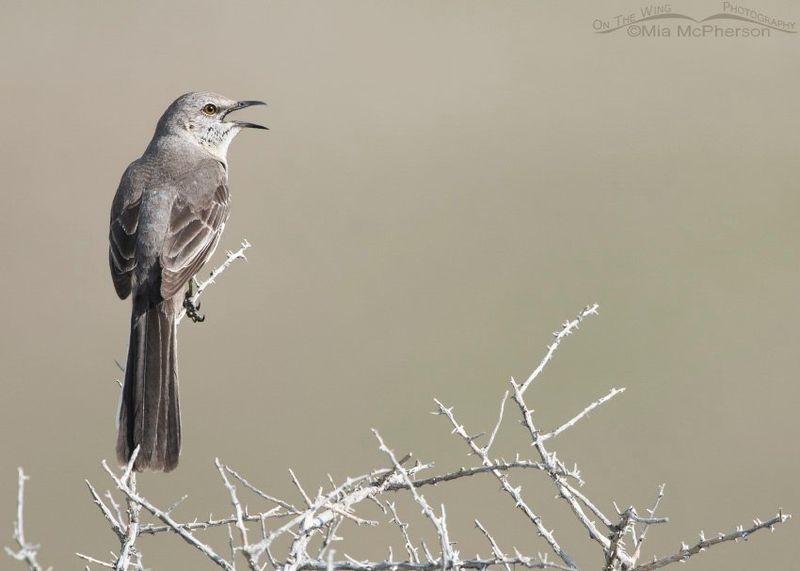
Few birds in Texas are louder or more persistent than a mockingbird in full song. If one has been belting out phrases from your rooftop or a nearby treetop for days on end, that vocal energy is almost certainly tied to territory and reproduction. TPWD describes the male mockingbird’s song as a tool for defending territory and attracting a mate, with males capable of producing dozens of distinct phrases and mimicking other bird species, frogs, and even mechanical sounds.
The Smithsonian’s National Zoo notes that unmated males may sing through the night, while mated males tend to sing most actively during daylight hours around the nest. If you are hearing a mockingbird late at night near a streetlight, there is a reasonable chance it is an unmated male working hard to advertise his presence. Both males and females will defend nests and young aggressively, which can make the birds seem especially bold or confrontational during the breeding period.
Spring and summer are when these behaviors become most visible, but a key point is that mockingbirds can sing and defend territory outside that window too. TPWD’s mockingbird guide describes vocal activity across broad seasonal windows, and local conditions in Texas vary enough that a bird singing in October is not behaving unusually. Seasonal timing gives you useful context for interpreting what you see, but it does not operate like a calendar rule.
Repeated singing or perching in the same spots is more reliably connected to territorial behavior than to a judgment about your landscaping choices. The bird is not endorsing your garden. It is announcing ownership of a patch of ground that happens to include your yard.
The behavior offers clues, but it does not tell the whole story
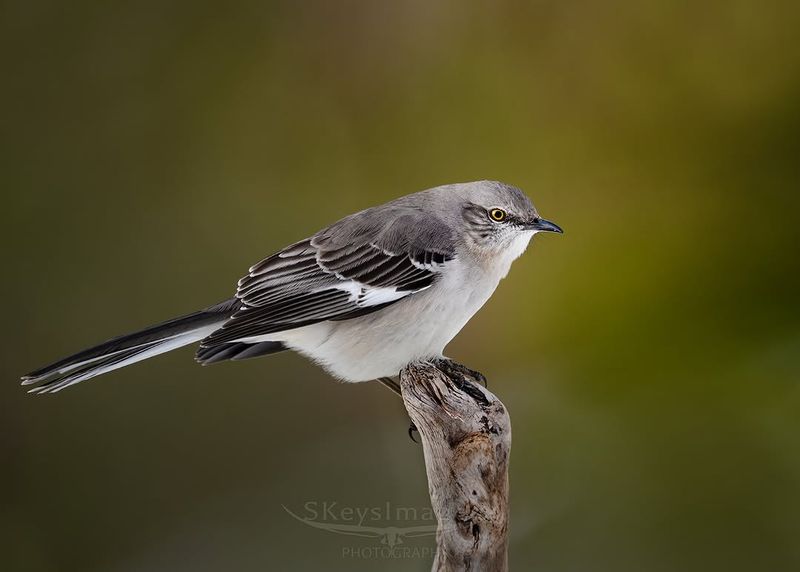
Watching how a mockingbird moves through your yard can tell you quite a bit about what draws it there, as long as you resist the urge to over-explain any single visit. A bird running across the lawn and pausing to stab at the ground is almost certainly hunting insects or other small invertebrates. That same bird hopping into a shrub and emerging with a berry is using a food resource that happens to be available. Neither behavior proves the yard is exceptional.
Both are normal parts of the species’ daily routine.
An elevated perch used repeatedly for singing is a stronger signal. TPWD and Cornell both connect consistent singing from a fixed high point to territorial advertising. If the same fence post or antenna becomes the bird’s regular stage, you are probably watching a territory-holder mark the boundaries of its range. The yard may be a central resource point or simply one stop on a circuit that covers several properties.
A bird that moves between the lawn, a shrub, and a perch in a predictable loop is not necessarily loyal to your yard specifically. Audubon describes mockingbirds as birds that patrol open areas and use scattered vegetation, which means the loop may extend well beyond your property line. What looks like a daily visit from a single devoted bird may be one segment of a larger foraging circuit shared with your neighbors.
One behavior that does stand out from routine visits is a bird repeatedly charging at a single window. That pattern has a different explanation and a different response, which the later section on defense covers in detail. For now, the practical takeaway is to watch the pattern before drawing conclusions, because the full picture often spans more than one yard.
A Texas-friendly yard can support the relationship without forcing it
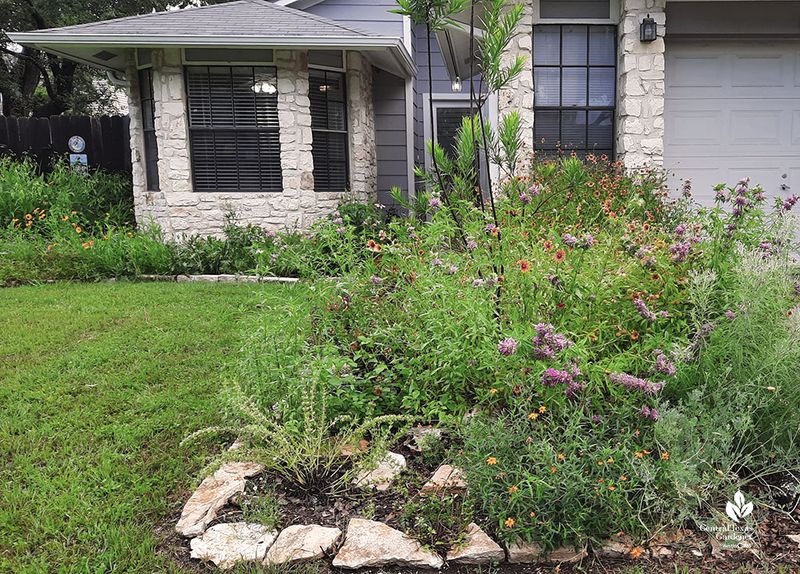
Once you understand what a mockingbird is actually using your yard for, you can make thoughtful choices that keep the property accessible to it without trying to engineer a guaranteed return. The species favors a mix of open ground for foraging, fruiting vegetation for food, dense shrubs for shelter, and useful perches for singing and scanning. A yard that offers some combination of those features in a layout that also works for your family is a reasonable goal.
Native plants are worth prioritizing because they tend to deliver multiple benefits at once. TPWD’s habitat resources page explains that regionally appropriate native plants provide fruits, seeds, shelter, and the insects that birds depend on, while generally requiring less water and maintenance than many nonnative alternatives. That last point matters in Texas, where water availability can vary significantly by region and season. The key qualifier is “regionally appropriate.” Texas spans multiple ecoregions, and a plant suited to the Hill Country may not be the right choice for the Gulf Coast or the Panhandle.
TPWD’s Texas Wildscapes guidance recommends layering vegetation of different heights to create the kind of structural variety that supports a range of bird behaviors. Low ground cover, mid-height shrubs, and taller trees or large shrubs together produce foraging zones, shelter options, and singing posts in one landscape. That structure tends to be more useful to mockingbirds than any single named plant.
Cornell notes that mockingbirds are common in backyards but do not often visit seed feeders. A standard tube or platform feeder stocked with sunflower seeds is not the most relevant intervention for this species. Fruiting plants, open foraging space, and water will serve a mockingbird better than a feeder will. The honest caveat is that no landscaping choice guarantees that a particular bird will stay.
Wildlife behavior is also shaped by surrounding properties, weather, predators, and nesting success, all of which are outside your direct control.
Support the bird without turning the yard into a hazard
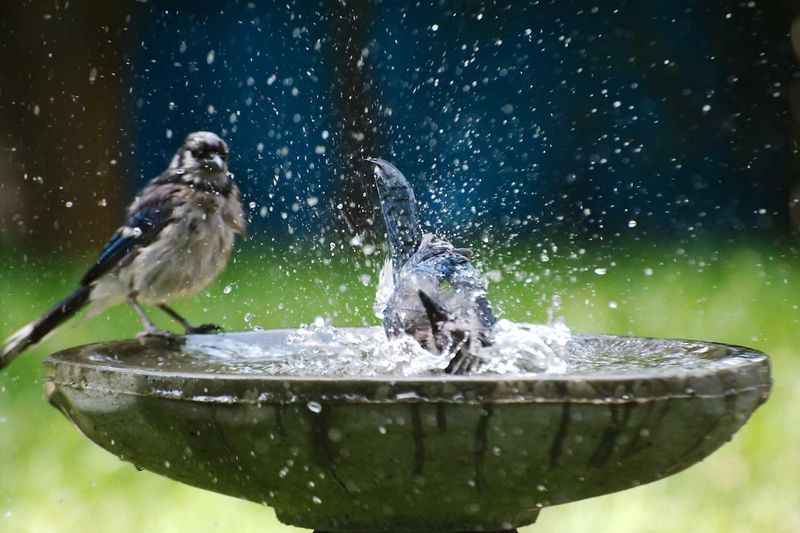
Providing water is one of the most straightforward ways to make a yard more usable for birds, especially during stretches of extreme heat. The setup matters, though. Cornell recommends a shallow bath with water no deeper than about one inch at the edges and roughly two inches at the center, and changing the water every day or two during warm weather to prevent algae and mosquito breeding. A rough-textured basin helps birds grip the surface while bathing.
Never add antifreeze or glycerin to a birdbath. Cornell identifies both as unsafe for birds and recommends cleaning and replacing the water as the only safe approach to maintenance in any season.
Pesticides are a more complicated issue. TPWD’s threat-reduction guidance warns that birds can be harmed directly by landscape chemicals or indirectly by eating insects that have been exposed to them. Broad-spectrum pesticide applications reduce the insect base that mockingbirds and other birds rely on for food and for feeding nestlings. The goal is not to manufacture a large prey population for the bird.
Using fewer broad pesticides simply avoids removing resources the bird would otherwise find naturally. TPWD’s Partners in Flight action guidance recommends native plantings, pest-specific methods, and integrated pest management as alternatives to routine broad-spectrum spraying.
When a pest problem genuinely requires a chemical treatment, EPA guidance on reducing pesticide impacts on wildlife advises following every product-label requirement and taking steps to limit exposure to non-target animals. Label instructions are legal requirements, not suggestions.
Outdoor cats are another serious concern. TPWD identifies outdoor and feral cats as a major threat to songbirds, and mockingbirds that spend time on the ground foraging are especially exposed. Keeping cats indoors or otherwise preventing outdoor access is one of the most direct steps a Texas homeowner can take to protect yard birds. Leaving out table scraps is not a recommended alternative to habitat.
TPWD advises against table scraps because they can attract predators and do not substitute for the natural food sources the bird depends on.
When defense becomes a safety question
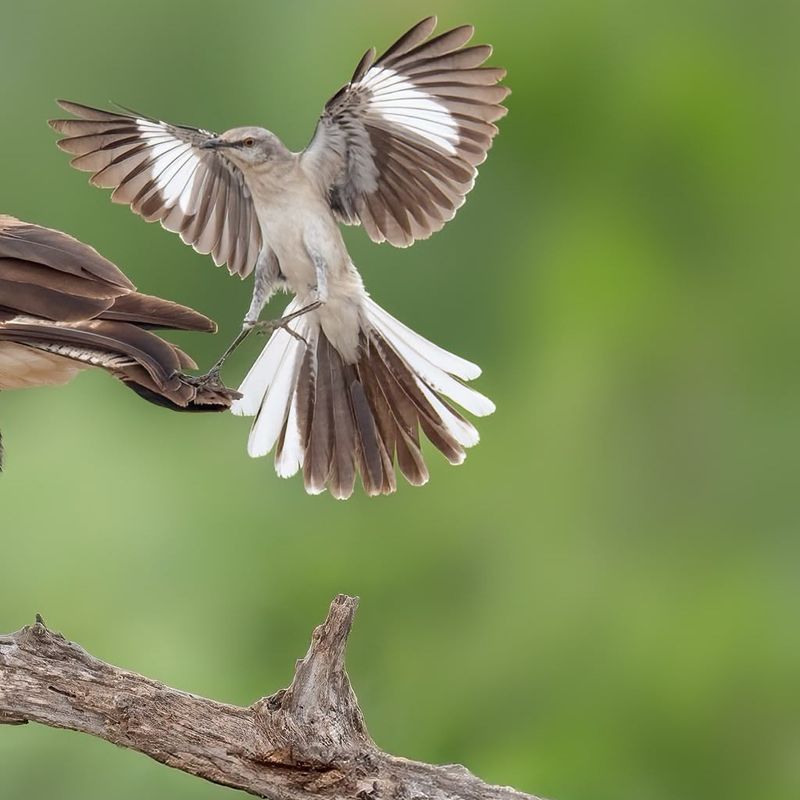
A mockingbird that swoops at people or pets is almost always defending something nearby, not expressing general hostility. The target is usually a nest, a mate, a fledgling on the ground, or a territory boundary that the bird has decided you crossed. The response that makes the most sense is simple: keep people and pets away from the area where the bird seems most agitated, and wait. If there are eggs or young in a nearby nest, the intensity of the defense will ease once the chicks fledge and move on.
Provoking the bird or trying to drive it away tends to escalate the behavior rather than stop it.
Active nests require particular care from a legal standpoint. The U.S. Fish and Wildlife Service explains that most songbird nests, eggs, and young are protected under the Migratory Bird Treaty Act. Moving or destroying an active nest that contains eggs or dependent young is not a safe DIY option and may be unlawful.
USFWS frequently asked questions note that protection depends on circumstances, including whether the nest is active and which species is involved. If a nest location creates a genuine safety conflict, the right step is to contact a licensed wildlife professional or your state wildlife agency rather than handle the nest yourself. An empty, inactive nest that has already been abandoned does not carry the same protections, but when in doubt, professional guidance is the safer path.
Window attacks are a separate situation with a different cause. When a mockingbird repeatedly taps or charges at a single window, the most likely explanation is that the bird sees its own reflection and interprets it as a rival. TPWD’s FAQ on window-tapping birds recommends breaking up the reflection from the outside using tape, a screen, a plant placed close to the glass, or soap applied to the exterior surface. The fix needs to be on the outside of the window because that is where the reflection appears to the bird.
The behavior is not an attempt to enter the house. Once the reflection is disrupted, the territorial trigger is removed and the attacks typically stop.
The clearest meaning is that your yard fits into a living territory
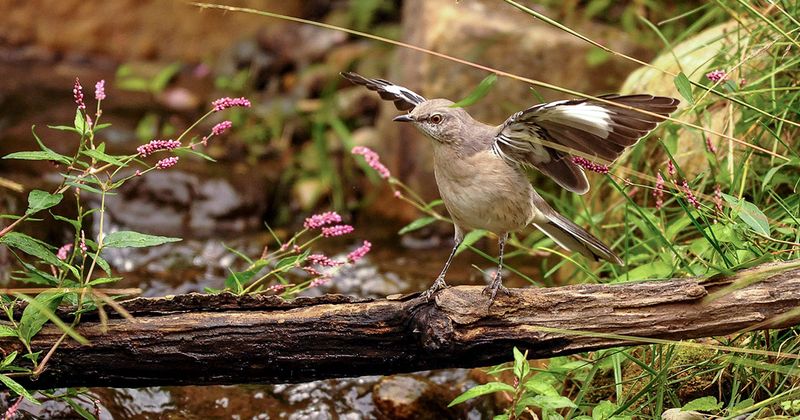
Pull back from any single visit and the pattern becomes clear. A Northern Mockingbird that keeps returning to a Texas yard is most plausibly using that property as part of an established territory or regular foraging circuit. The singing signals ownership. The lawn runs signal food.
The fruit stops signal available resources. The perch choices signal a bird that knows its ground well. Each behavior reveals a different layer of the same routine, and none of them require a supernatural explanation to make sense.
The most useful thing a Texas homeowner can do with that information is observe first, then improve habitat carefully, then protect the bird from the hazards that matter most: outdoor cats, broad pesticide use, and unsafe water sources. TPWD and Cornell both point toward habitat quality and threat reduction as the practical levers available to homeowners. A yard that is safe, structurally varied, and reasonably free of broad chemical treatments will support mockingbirds and many other species without requiring a guarantee from the bird itself. The mockingbird is not delivering a verdict on your garden.
It is simply living in its territory, and your yard happens to be part of the map.