
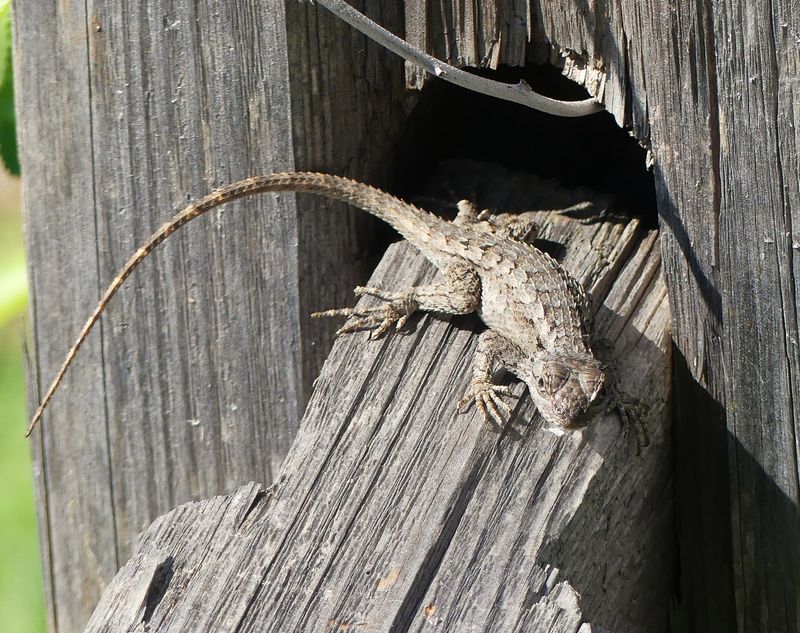
You glance out the window and there it is again, a rough-scaled lizard stretched out on the fence like it pays rent. It looks a bit fierce, but it is just a reptile soaking up warmth.
Knowing why it picks that spot can help you decide what to do, and what not to worry about. Here is what the sighting tells you, and what it does not.
Why does the fence make a good sunning spot?
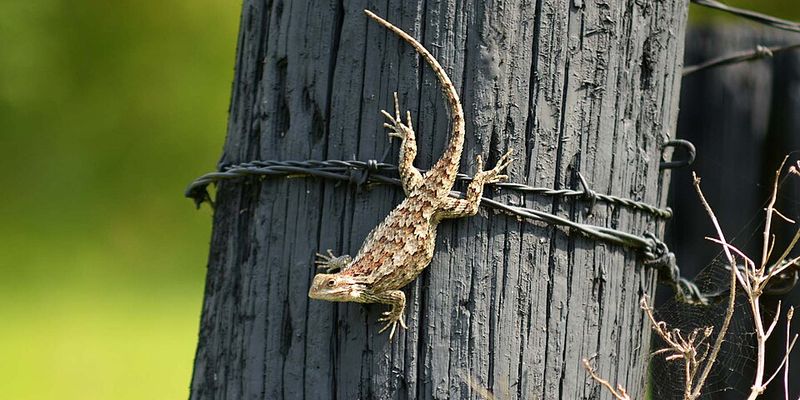
A lizard cannot make its own body heat the way you do. Texas spiny lizards are ectothermic, which means they rely on outside warmth to get their bodies up to working temperature.
That is why you see them perched out in the open on sunny days.
A fence is a handy tool for that job. The University of Texas Biodiversity Center describes this species as an ectotherm that spends much of its time on trees, and Texas Parks and Wildlife Magazine notes that these lizards also turn up on fences and the outsides of buildings.
A fence rail is raised, exposed, and catches direct sun, which makes it a good place to warm up.
So the simplest explanation for a lizard on your fence is also the best one: it found a warm, open perch and used it. Think of it like a person choosing a sunny bench on a cool morning.
There is no secret message tucked into the behavior.
If you see the same lizard there more than once, that fits with a perch that works well. A spot with good sun exposure and a quick route to cover is simply useful to a lizard.
Beyond that, the sighting does not need a bigger story to make sense.
A spiny lizard is a shy, daytime neighbor
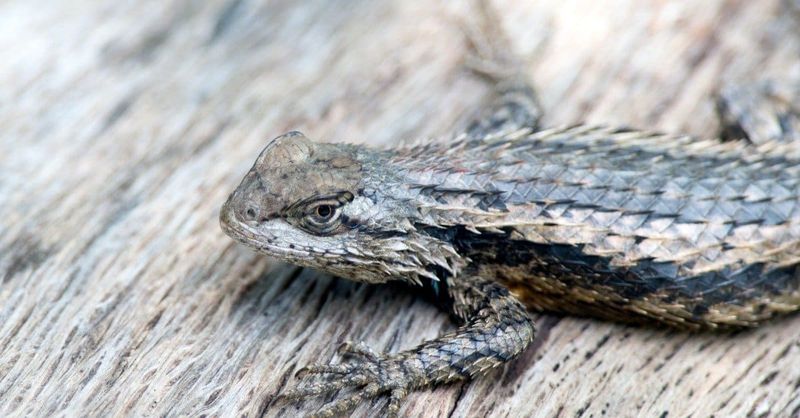
The lizard on your fence is most likely a Texas spiny lizard, Sceloporus olivaceus. It is native to south-central North America and active during the day, which is why you catch it out in the sun rather than at night.
Its rough, keeled scales and mottled gray-brown coloring blend in with bark and weathered wood. The UT Biodiversity Center calls the species shy and well camouflaged, and says it spends much of its time in trees.
Males also have blue markings on the belly, though you may never see them unless one flips or stretches just right.
Because it is shy, you may notice it dart around to the far side of a post when you walk by. That is normal caution, not a sign that anything is wrong.
The best way to enjoy it is from a distance. Watch from a window or a few steps away, and skip any urge to catch, handle, or relocate it.
A lizard that is left alone will go on with its day, and so can you.
Fall warmth does not make this a seasonal signal
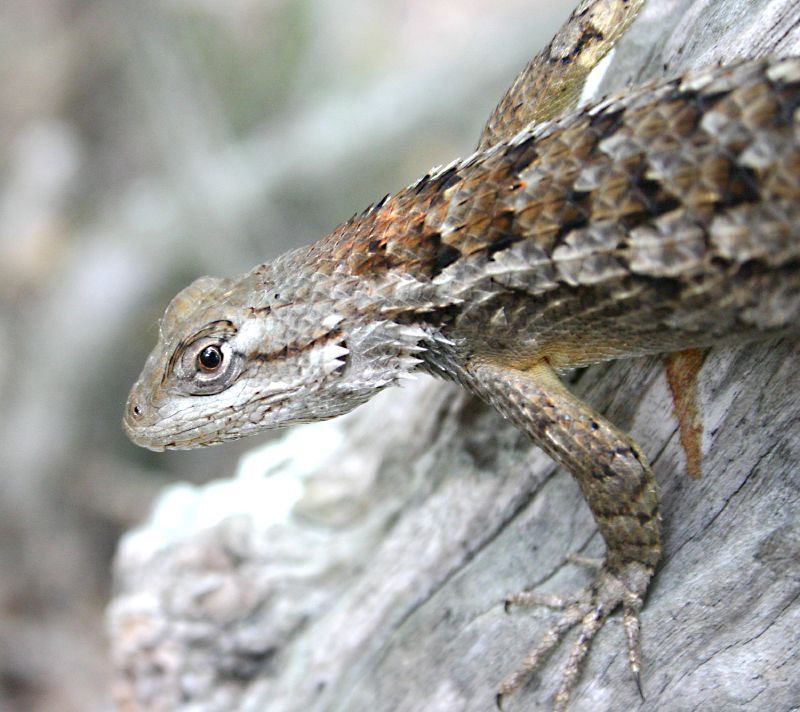
Central Texas can stay warm well into autumn, so a lizard soaking up sun in October is not a surprise. On a mild afternoon, a sunny fence is as inviting as it was in July.
The seasonal picture is fairly simple. Texas Parks and Wildlife Magazine describes these lizards as seen during the warm months and inactive in winter, tucked under leaf litter or in soil.
That is about as far as the information goes. Nothing in it shows that repeated fall sunning predicts an insect surge, a sudden change in behavior, or a special way of getting ready for winter.
A lizard that shows up on several warm days is most likely just using a good perch on good days.
If you want a practical clue, watch the weather rather than the calendar. Sightings tend to follow sunny, warm stretches, and they thin out when it turns cool.
You do not need to turn that pattern into a forecast.
Its insect diet is not a pest-control promise
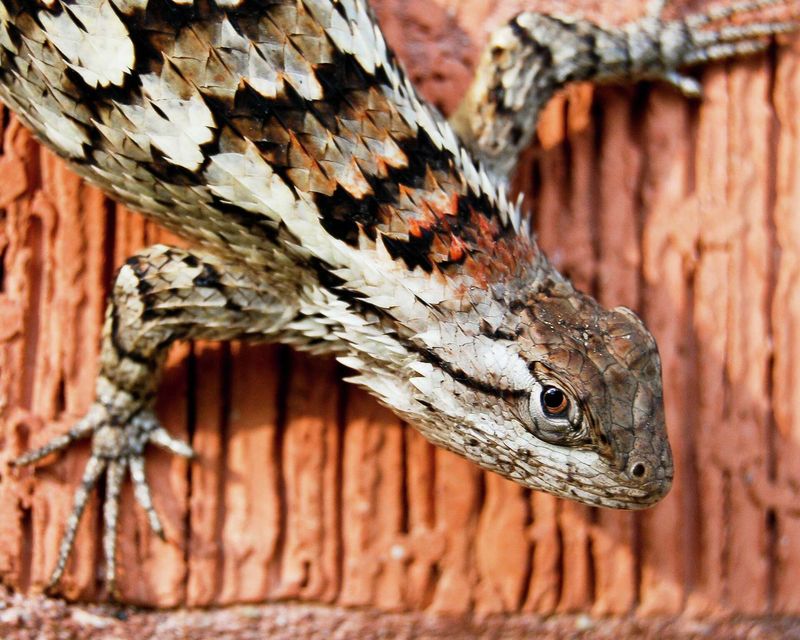
Yes, this lizard eats insects. Texas Parks and Wildlife Magazine lists grasshoppers, beetles, ants, caterpillars, and other insect larvae among its prey, along with other small animals.
It is an active hunter that picks off what it can catch from its perch.
Gardeners sometimes hear that this makes a lizard a free pest crew. That goes further than the facts.
The sources do not measure how many pests a backyard lizard removes, and they do not show that one will stop a chewed-up tomato plant or a leaf-munching caterpillar.
So keep the two ideas apart. A lizard eating a beetle is a normal part of the food web.
A lizard solving your garden pest problem is a promise nobody can back up.
For the gardener, the useful move is to keep doing your own checking. If leaves are being chewed, look closely, figure out what is doing it, and decide whether it needs action.
The lizard is a welcome part of the yard’s wildlife, not a replacement for paying attention to your plants.
One sighting shows the lizard used your yard
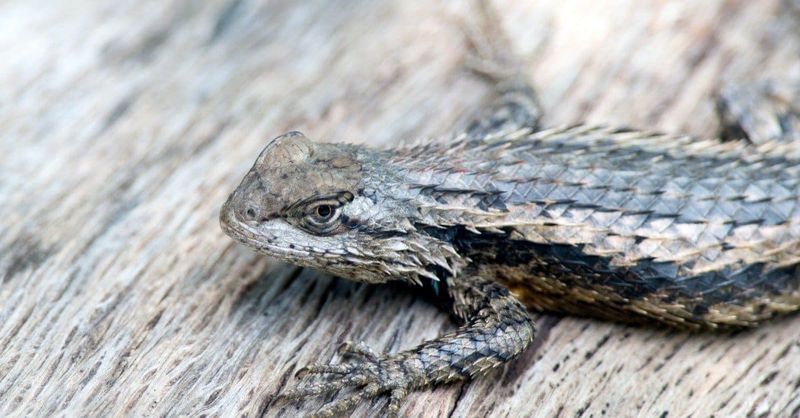
Seeing a lizard on your fence tells you one thing for sure: it used that spot. It does not tell you the lizard lives in your yard, and it does not tell you how many insects are around.
It also cannot certify the whole yard as great habitat, or poor habitat either.
One animal on one perch is a single snapshot. The UT Biodiversity Center describes a shy, tree-loving species that moves through trees and structures, so it may have been passing through from a neighbor’s yard.
What the sighting can do is nudge you to think about what wildlife generally needs. Texas Parks and Wildlife’s Wildscapes tips point to native plants, layers of vegetation, natural shelter, and a food web that includes insects.
Those are the building blocks behind wildlife-friendly yards.
Take the sighting as a pleasant moment and a reason to look at your landscape. Just do not treat the lizard as a test score for the yard.
Keep shelter and food in the mix
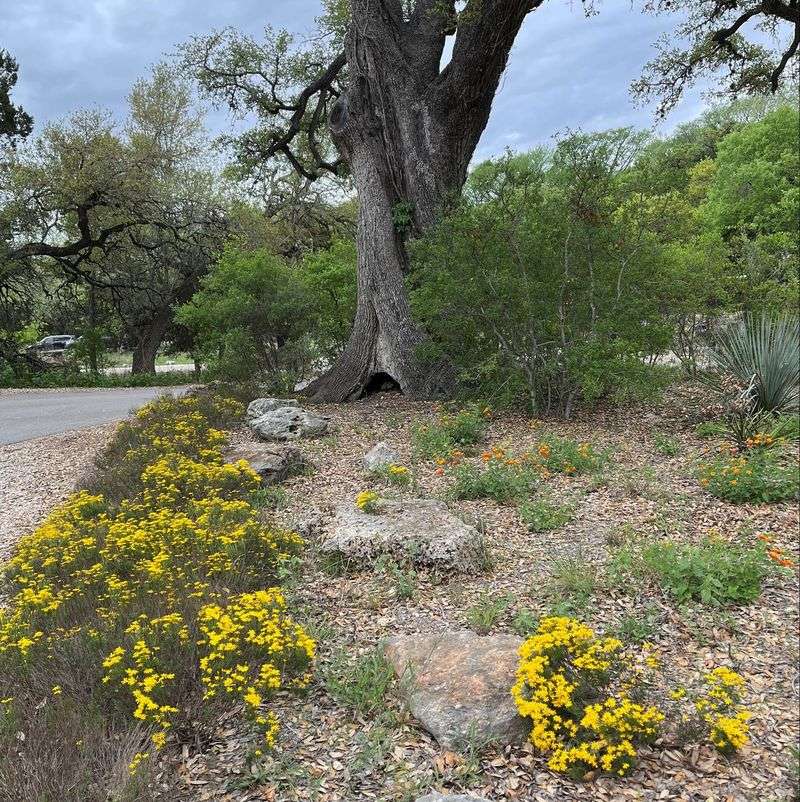
The modest, useful takeaway is to keep the features that help wildlife in general. Texas Parks and Wildlife’s Wildscapes tips recommend native plants, layered vegetation from groundcover to trees, natural shelter, and a food web that includes insects.
For Central Texas, start with local guidance rather than a generic national list. TPWD offers separate plant lists by region, including one for the Hill Country, which is a better fit for our soils, heat, and rainfall than a plant list written for somewhere else.
In practice, that can mean leaving a mature tree in place, adding native shrubs and grasses near the fence, or keeping a bit of leaf litter in a back bed. These steps support wildlife in a general way.
They do not guarantee more lizards, and they will not wipe out pests.
Pest management belongs in the same picture. USDA NRCS Texas suggests monitoring and identifying pests, and it notes that many garden insects are harmless or beneficial.
Before you spray, find out what you are actually dealing with.
If a real problem shows up, treat it selectively. The EPA advises using pesticides only when necessary, treating only the areas that need it, and following the product label.
That keeps control focused without giving up on it.
Read the lizard as a visitor, not a yard report
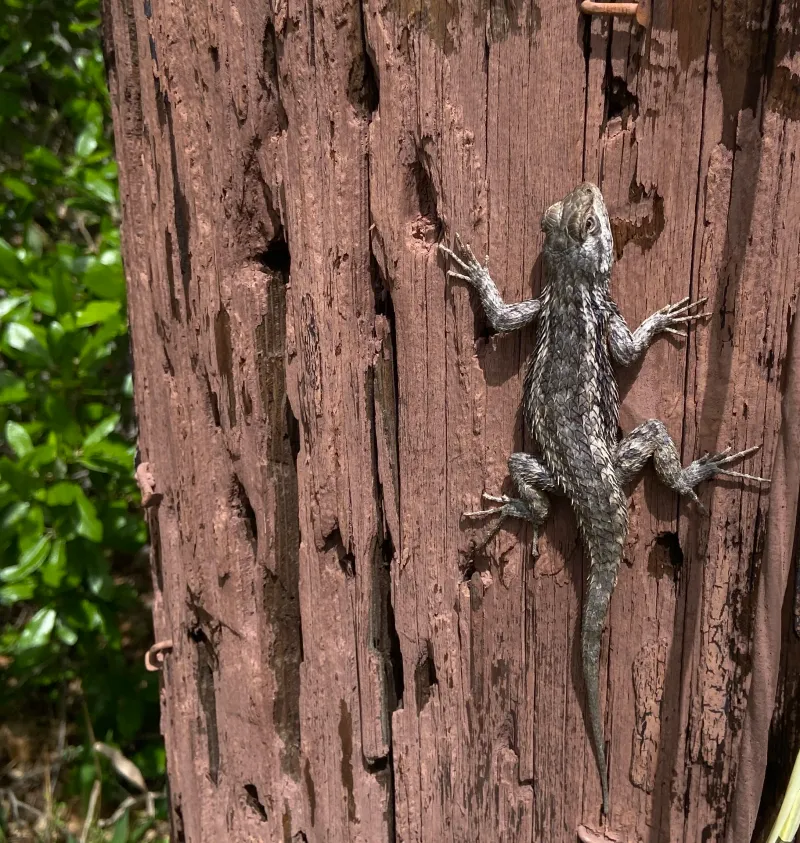
The lizard is using a sunny perch, and that is all the sighting proves. It cannot tell you how many insects are around, whether it lives nearby, or how healthy your yard is overall.
Watch it from a distance and leave it alone. Hold on to the plants, trees, and shelter that give wildlife a place to be, as TPWD suggests, and be glad the shy fence-sitter dropped by.
Sometimes a warm rail is just a warm rail.