
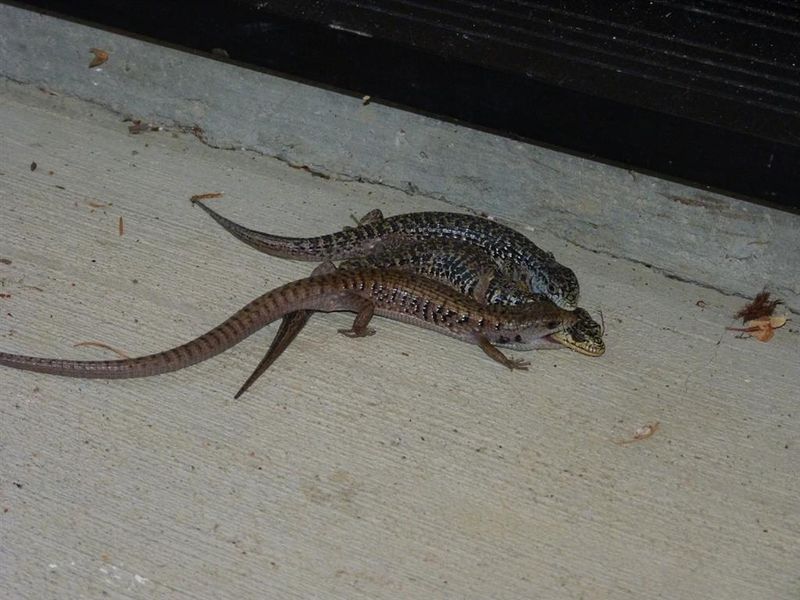
Spotting several alligator lizards scurrying along your foundation on a warm California afternoon can feel surprising, even a little alarming. Most homeowners assume the lizards have suddenly taken over, but the real story is usually quieter and more interesting than that.
Understanding what actually draws these native reptiles close to your home can help you make smarter decisions about your yard, your pest concerns, and your property.
Several sightings do not prove a summer population boom
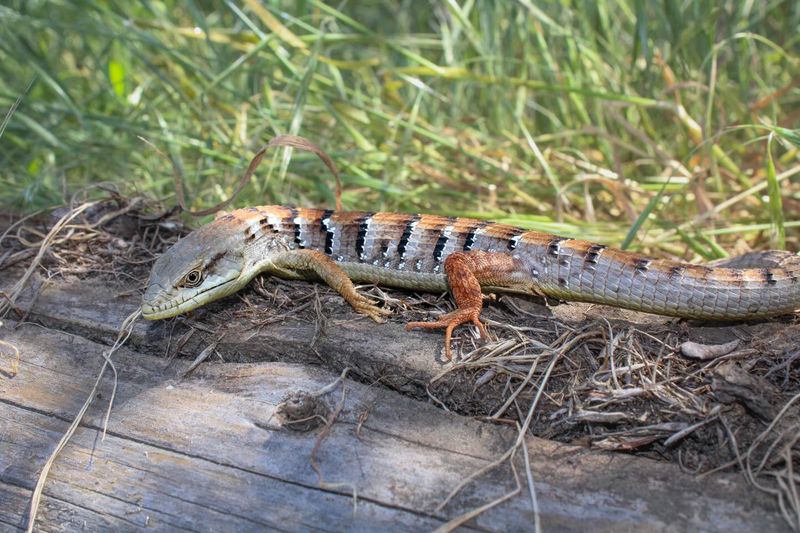
Counting three or four alligator lizards along one stretch of wall on a July afternoon does not mean your yard has suddenly become a breeding colony. A more grounded explanation is that the area offers something those animals want right now, whether that is a shaded crevice, a meal, or a patch of concrete that holds the right temperature at the right hour of the day.
Seasonal activity, newly mobile juveniles, and repeated sightings of the same two or three individuals can all make a small group appear larger than it actually is.
Alligator lizards are native California reptiles that move through suburban yards, garages, and gardens regularly. The California Department of Fish and Wildlife life-history account for the southern alligator lizard notes that egg-laying in southern California typically begins in early June, so juveniles may become visible later in summer.
That timing can coincide with homeowner reports of more lizards, but a cluster near one foundation does not reliably confirm a clutch was laid there or that a measurable population increase has taken place.
Reliable identification matters here, too. “Alligator lizard” is a common name shared by several California species, including the southern, northern, San Francisco, and Panamint alligator lizards, each with its own geographic range and habitat preferences. The California Department of Fish and Wildlife amphibian and reptile species list tracks these separately because their conservation status and range differ.
A photo combined with your zip code is the most practical starting point for figuring out which species you are actually seeing before drawing any conclusions about behavior or numbers.
The foundation may be offering shelter and prey
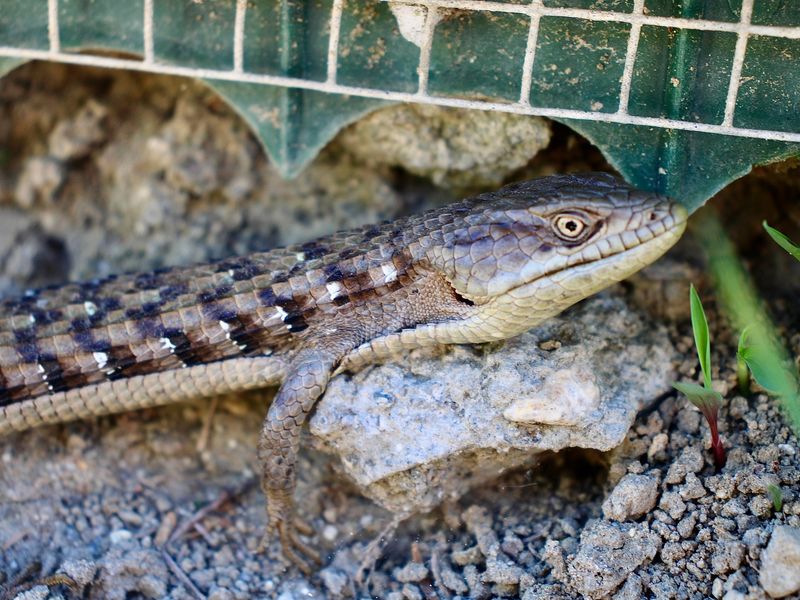
Foundation edges are rarely just concrete and soil. Over a season they accumulate the exact features that make alligator lizards comfortable: flat rocks that absorb heat, leaf litter that holds moisture, crevices that offer shade, and low vegetation that slows drying winds.
UC IPM’s lizard guidance describes the species as commonly using suburban yards, garages, debris piles, rocks, logs, and other sheltered cover, and that description fits a typical California foundation perimeter almost perfectly.
Those same features also concentrate arthropods. Pill bugs gather under damp boards, spiders build webs in undisturbed corners, beetles move through leaf litter, and ants trail along the concrete seam.
A lizard patrolling this zone has a reliable food supply within a very short distance, which is a strong reason to keep returning. The lizards are not choosing your house; they are choosing the microhabitat that happens to be right next to your house.
National Park Service naturalist notes on the southern alligator lizard point out that in drier parts of California the species tends to associate with moist, vegetated areas or locations near water. If your irrigation system keeps the foundation perimeter damp or a downspout drains nearby, that moisture alone may be drawing lizards in from surrounding habitat, regardless of whether any other shelter is present.
Recognizing this helps with planning. Habitat that draws lizards also draws the arthropods lizards eat, so the goal is not to eliminate every feature but to decide where those features belong.
Keeping some cover in a designated garden or wildlife corner while clearing the immediate foundation edge gives lizards a place to operate without concentrating spiders and moisture right against your wall.
Their diet includes spiders and pill bugs—but the black-widow evidence has limits
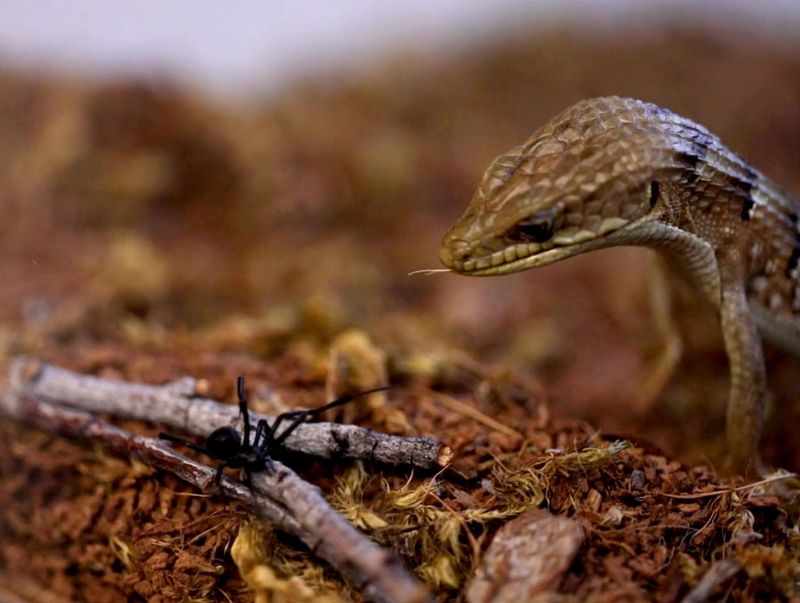
California alligator lizards eat a wide range of arthropods. Diet studies have documented spiders, beetles, grasshoppers, isopods, and other invertebrates as regular prey.
Isopods, the group that includes pill bugs and sowbugs, show up consistently in stomach content analyses, and spiders appear across multiple food-habit records for the species. A published diet study of the San Diego alligator lizard confirms this varied arthropod diet, which helps explain why lizards move through the same foundation-edge habitat that attracts so many common household pests.
The most striking piece of evidence concerns black widows specifically. A peer-reviewed study on black widow venom resistance in sympatric lizards found that southern alligator lizards can prey on western black widows and showed little measurable impairment or tissue damage after experimental venom exposure.
That is a genuinely unusual finding, because western black widow venom causes significant harm in many animals. The study also tested western fence lizards under the same conditions and found a different result, with tissue damage occurring despite maintained sprint performance, which underscores that venom resistance is specific to the alligator lizard and should not be generalized to every lizard you see in a California yard.
UC IPM’s overview of lizards in the home landscape describes the species as useful predators that may benefit gardens by consuming pest insects, and that framing is accurate. What the research does not address is how frequently southern alligator lizards encounter black widows in an ordinary suburban yard, how many they consume over a season, or whether their presence measurably changes the number of black widows living near a foundation.
Venom resistance is a biological trait; it does not translate directly into a yard-wide pest-control outcome.
Pill bugs are worth a separate note. They are decomposers that break down organic matter, and while they can occasionally damage seedlings, they are not serious plant pests in most California garden settings.
Alligator lizards do eat them, but there is no evidence that lizard predation removes enough isopods to solve a moisture problem or repair a garden where pill bug damage is already occurring.
A helpful predator is not a dependable black-widow control program
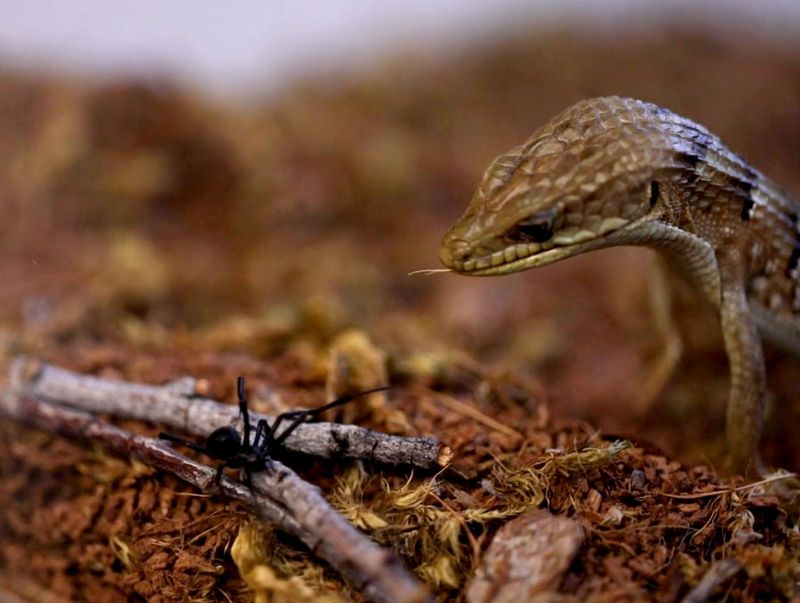
Alligator lizards can eat western black widows, and that is genuinely useful information for California homeowners. What that finding does not support is the idea that keeping lizards around your foundation will prevent a black-widow infestation or lower your risk of being bitten.
Spider populations depend on a web of factors, including available prey, shelter quality, seasonal weather, pesticide history, and competition from other predators. Removing one predator or adding another shifts that web without controlling it.
The peer-reviewed venom-resistance study documents a real predator-prey interaction under laboratory conditions. It does not measure encounter rates in suburban yards, seasonal variation in lizard diet, or how black-widow web density changes near active lizard populations.
Treating the study as proof of household pest control overstates what the research actually shows.
There is also a practical safety point worth separating from the venom-resistance finding. The study shows that southern alligator lizards have resistance to western black-widow venom; it has nothing to do with any danger the lizards pose to people.
UC IPM’s lizard guidance describes California alligator lizards as generally harmless to people. The handling risk is a bite, not venom, and that bite comes from restraining the animal rather than from any aggressive behavior toward humans going about their yard work.
A realistic payoff looks like this: a functioning food web that includes alligator lizards may consume some spiders and other arthropods near your foundation, and that is worth supporting. UC IPM’s spider management guidance makes clear that reducing human contact with black widows requires active habitat management, not reliance on any single predator.
Managing black-widow risk and supporting native lizards are two separate tasks that can run in parallel without one replacing the other.
Keep wildlife habitat, but move the busiest cover away from the wall
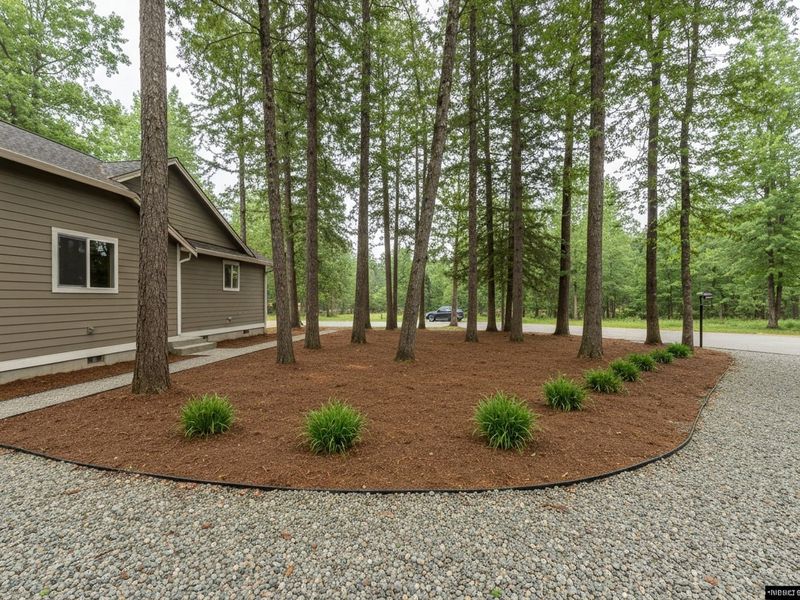
The most practical yard-management approach here is zoning rather than choosing between a bare foundation and an untouched debris pile. Rocks, logs, leaf litter, native plants, and other surface cover can stay in your yard; they just work better when they are placed in a deliberate garden or wildlife corner rather than pressed directly against the building’s edge.
Lizards can use that habitat without the cover also serving as a spider harborage zone that channels black widows toward your garage door or foundation vents.
UC IPM’s spider management guidance specifically recommends clearing accumulations of debris, woodpiles, and heavy vegetation from immediately next to structures. The reason is straightforward: those materials give black widows and other spiders exactly the undisturbed, sheltered spots they need to build webs close to entry points.
Moving the same materials even a few feet away from the wall reduces that direct connection while keeping the habitat functional for wildlife.
UC IPM’s lizard overview notes that lizards use a wide range of suburban features, so a designated wildlife zone does not need to be elaborate. A few flat rocks, a small brush pile, and some native groundcover placed with a clear gap between that area and your foundation gives lizards a home range that does not overlap with your building’s perimeter.
California homeowners in fire-prone communities have an additional layer of guidance to follow. Local defensible-space rules may require the removal or modification of woodpiles, dense vegetation, and dry debris within specific distances from a structure.
Those requirements take priority over any wildlife habitat recommendation, and they are not in conflict with the goal of supporting lizards. A fire-safe yard with a thoughtfully placed wildlife corner is a reasonable and achievable outcome.
Check your local fire district’s current defensible-space rules before deciding where to locate any brush or wood cover.
Seal the house instead of trying to repel the lizards
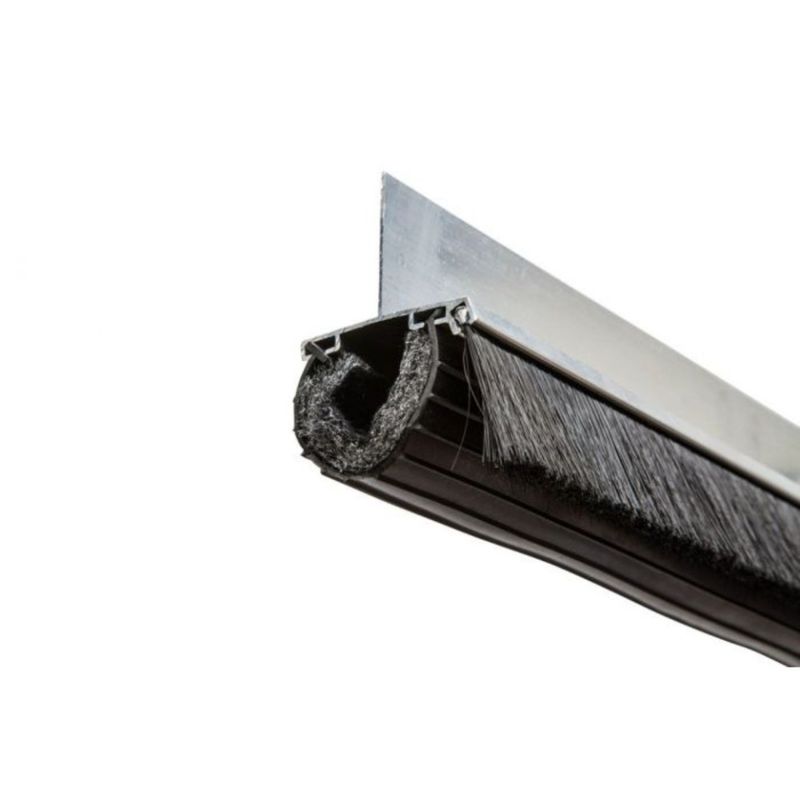
Finding an alligator lizard inside the house is startling but not a crisis. The animal wandered in through a gap it could fit through, which means the most useful response is closing that gap rather than trying to chase the lizard away with a product.
UC IPM confirms that no registered toxicants or repellents exist in California for killing or repelling lizards, so any spray or granule marketed for that purpose is not backed by a legal label for this use.
Moving an indoor visitor outside is simple when you avoid grabbing it directly. Place a container over the lizard, slide a piece of cardboard underneath, and carry it outdoors.
A broom can gently guide it toward an open door. Avoid picking the animal up by hand unless necessary, and if you do need to move it by hand, keep your grip loose and away from the tail, which can detach if the animal feels threatened.
UC Cooperative Extension’s lizard explainer notes that alligator lizards may bite when restrained, so a container is always the safer tool.
Once the lizard is outside, walk the foundation perimeter and look for openings a quarter inch wide or larger. Common entry points include gaps around pipes and conduit, spaces under door sweeps, torn window screens, and cracks in the sill plate area.
Caulk and foam sealant handle most of these. Door sweeps with a tight seal against the threshold close the most-used lizard entry point in most garages.
Indoor clutter removal matters here, too. Boxes, stored clothing, and rarely moved furniture give any animal that gets inside a place to hide and a reason to stay.
Clearing that clutter makes the interior less attractive and makes it easier to spot and remove any visitor before it settles in.
Reduce black-widow contact with targeted IPM, not a blanket spray
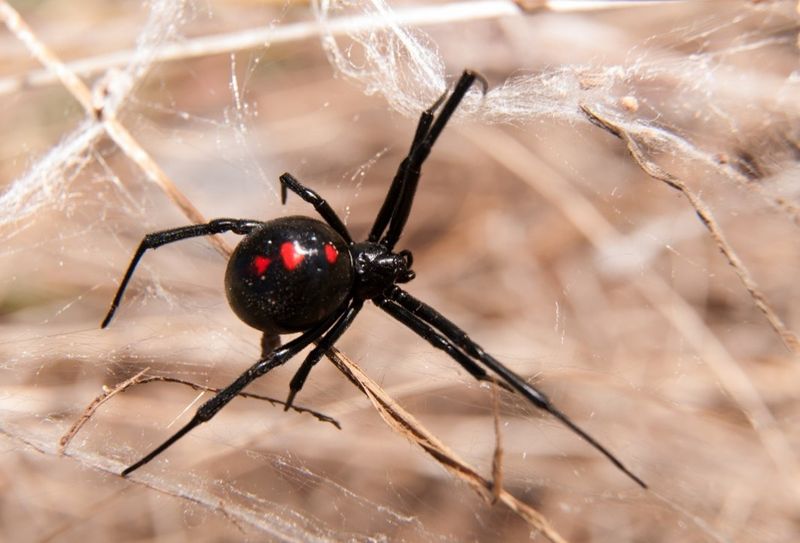
Black-widow concerns are legitimate in California, especially in garages, sheds, and around foundations where the spiders build webs in undisturbed corners. The most effective response is a set of habits and physical changes rather than a single spray application.
UC IPM’s spider management page outlines the core steps: reduce clutter around garages and foundations, seal cracks and gaps, inspect seldom-used items before picking them up, and wear leather or heavy work gloves whenever moving stored materials, firewood, or landscape debris.
Those steps matter more than lizard presence because they directly reduce the places where black widows can build webs close to human activity. A cluttered garage shelf gives a black widow everything it needs.
Clearing and organizing that shelf removes the harborage, which is a more reliable outcome than hoping a lizard will patrol the same corner.
UC IPM’s integrated pest management framework recommends identifying the specific pest, reducing food, water, and shelter sources first, applying nonchemical methods, and choosing the least-toxic labeled product only when treatment is actually necessary. Broad-spectrum pesticide applications can remove the prey and natural enemies that keep arthropod populations in balance and may expose nontarget wildlife, including the lizards, to chemicals through the food chain.
Targeted applications in specific harborage areas, using products labeled for that use, are a more proportionate response when chemical control is genuinely needed.
UC IPM’s widow spider guidance is direct about medical response: if you suspect a black-widow bite, seek medical attention promptly. Do not rely on home remedies, and do not assume that because you have lizards in the yard a bite is unlikely.
Symptoms of a significant envenomation can develop over hours, and a physician or poison control center is the right resource, not a wildlife strategy.
Let the lizards use the yard while you manage the structure
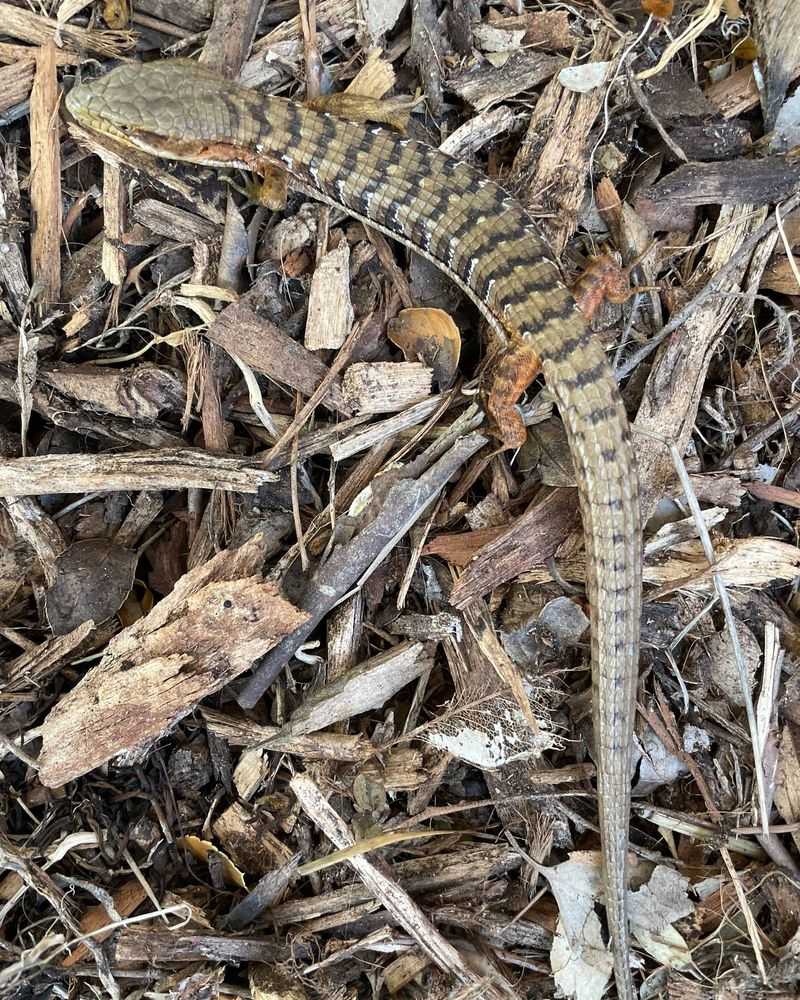
Repeated summer sightings of alligator lizards near a California foundation can reflect favorable nearby habitat, seasonal movement, newly visible juveniles, or simply the same animals returning to a reliable food and shelter source. That is not a problem requiring intervention; it is a sign that your yard supports native wildlife.
UC IPM’s lizard guidance treats the species as generally beneficial and notes that no registered products exist to repel or remove them, which makes tolerance the practical default for outdoor lizards that are not entering the home.
The structure itself still needs active management. A clear foundation edge, sealed entry points, reduced clutter, and glove-wearing habits around stored materials address the actual risks, including black widows, in ways that lizard presence alone cannot.
UC IPM’s spider guidance and its IPM framework both point toward the same conclusion: sanitation, sealing, and targeted treatment outperform any single ecological relationship when the goal is reducing human contact with venomous spiders.
The clearest decision rule is also the simplest one. Outdoor alligator lizards doing what alligator lizards do deserve to be left alone.
Indoor lizards deserve a gentle exit and a sealed door behind them. Black-widow risk deserves gloves, clean shelves, and a phone number for poison control kept somewhere easy to find.
Native lizards are a reasonable part of a California yard; they are just not a substitute for taking care of the house.