
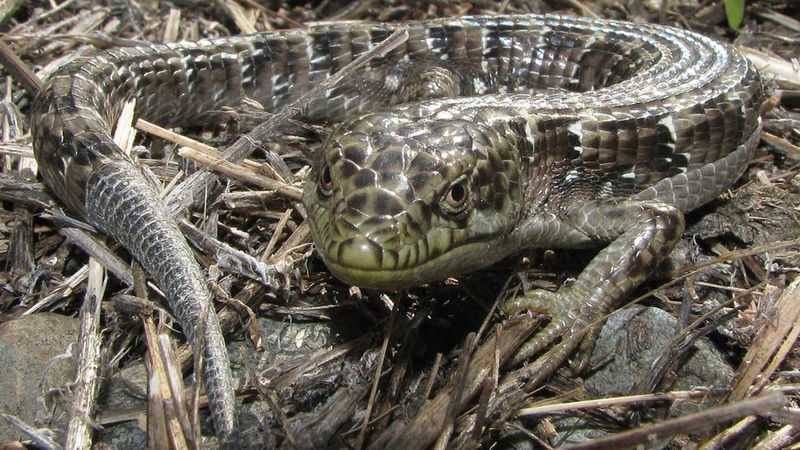
Spotting a long, scaly lizard threading its way through your stacked firewood can stop you in your tracks. That creature is almost certainly a native alligator lizard, and California homeowners are increasingly curious about what its presence actually means for their yard.
Far from signaling trouble, it may be doing something quietly useful, though the full story is more nuanced than the idea of a built-in pest-control service. Understanding what the lizard is really doing, and how to respond without causing harm, is worth a few minutes of your time.
A Woodpile Provides Cover, Not an Infestation Diagnosis
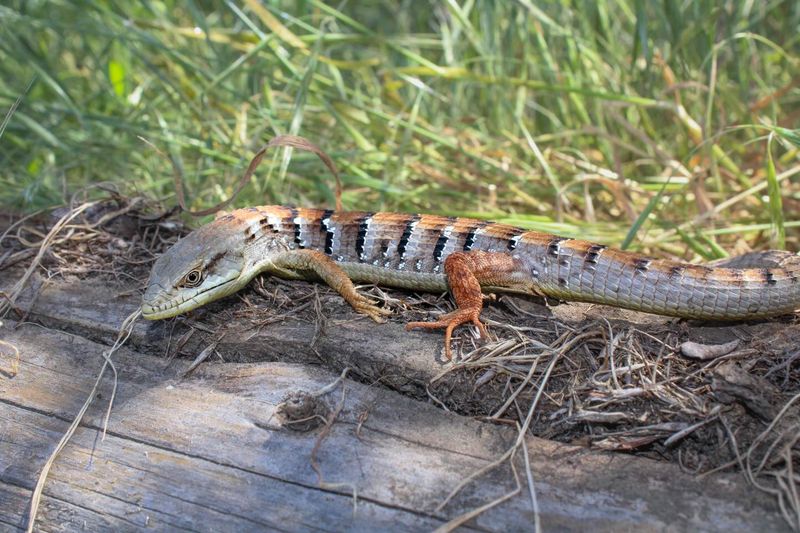
Stacked firewood creates exactly the kind of microhabitat a ground-hunting lizard finds useful: shaded gaps, bark surfaces warmed by the sun, and the promise of small animals sheltering nearby. National Park Service documentation on the southern alligator lizard describes the species as a ground-level hunter that searches for prey on the surface and beneath objects like rocks, logs, and boards.
A woodpile fits that description naturally, which means the lizard you spotted is probably using available cover to stay cool, stay hidden, and watch for movement, not reacting to a specific infestation inside your firewood.
Seeing a lizard near your logs does not confirm that the wood is harboring unusual numbers of pests. Logs and nearby leaf litter attract the same small animals that show up under any surface object in a California yard: beetles, sow bugs, spiders, and the occasional centipede.
The lizard did not necessarily arrive because the woodpile created an exceptional food source. It arrived because the cover was there.
That distinction matters for how you respond. Treating the firewood for insects after a lizard sighting would be a solution to a problem that probably does not exist.
The lizard’s presence is a sign of habitat use, not an infestation alarm. Its appearance near the woodpile one week and along a garden wall the next week reflects ordinary movement through a territory, not a new pest emergency requiring action.
The central lesson here is that habitat use, hunting behavior, and dependable garden pest control are three separate things. A lizard can use a woodpile for cover, hunt small animals nearby, and still provide no measurable reduction in any specific pest population.
Keeping those categories separate is the foundation for every homeowner decision that follows.
Identify the Lizard Conservatively
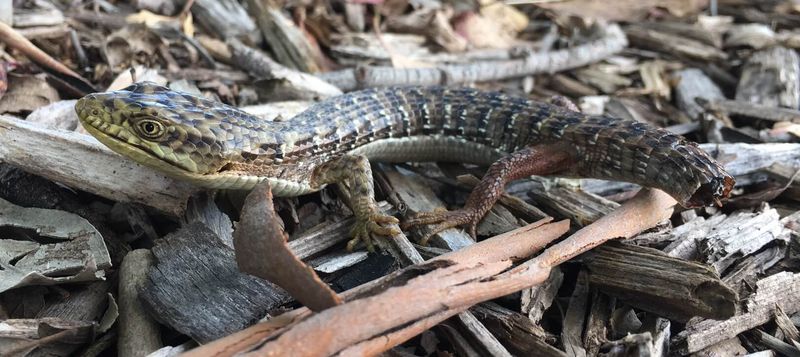
California is home to more than one alligator lizard species, and the long, brown, somewhat fierce-looking animal near your woodpile could be any of them depending on where you live. UC IPM’s lizard guidance recognizes multiple species in the state, noting that the southern alligator lizard is particularly widespread across much of California.
The northern alligator lizard occupies cooler, more northern and coastal regions, while other species occur in distinct habitat zones. Assuming every long lizard in a California yard is the same animal is a reasonable shortcut for conversation but not for species identification.
A casual photograph or a quick look over the woodpile is rarely enough to confirm species with certainty. CaliforniaHerps documentation of the southern alligator lizard describes keeled, rectangular scales arranged in rows that give the animal a plated, almost armored look, along with a long tail and a relatively large head.
Coloring varies considerably by individual and region, ranging from grayish brown to olive with darker crossbands. These features overlap enough with related species that confident identification often requires comparing range maps and regional field guides rather than a snapshot.
For practical purposes, knowing the exact species matters less than knowing the group. All California alligator lizards are native reptiles protected under state wildlife law, all are carnivorous ground hunters, and all deserve the same basic response: observe from a distance, leave them alone outdoors, and avoid handling.
The California Department of Fish and Wildlife oversees native reptile conservation statewide, and that protection applies regardless of which alligator-lizard species is visiting your yard. When in doubt about a sighting, a regional herpetological society or a county naturalist program can often help with identification without any need to capture the animal.
What the Lizard May Be Hunting
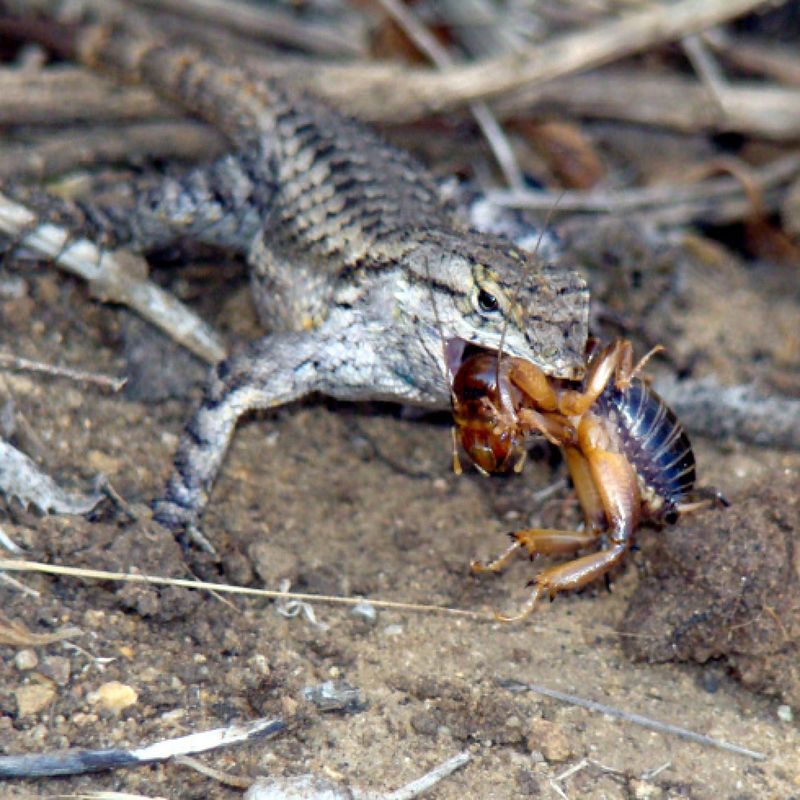
Southern alligator lizards eat a wide range of small animals, and the prey list documented by researchers is more varied than most homeowners expect. NPS records for the southern alligator lizard confirm documented prey that includes insects and their larvae, spiders, centipedes, sow bugs, scorpions, and snails.
On occasion, the species also takes small vertebrates such as other lizards, small mammals, nestling birds, or bird eggs. This is an opportunistic predator that eats what it can catch at ground level, not a specialist targeting one category of pest.
The broader guidance from UC IPM on California lizards generally lists additional prey types, including ants, wasps, aphids, beetles, and grasshoppers. Those examples apply to California lizards as a group and are not specifically attributed to alligator lizards in the reviewed sources.
The distinction matters because generalizing a species-level diet from group-level records can overstate what any one animal is likely hunting in your yard on a given afternoon.
Several items on both lists deserve a closer look. Spiders are widely considered beneficial because they prey on pest insects themselves.
Ground beetles are important predators of soil-dwelling pests and plant-damaging larvae. Centipedes, while unsettling to many homeowners, are also predators that consume insects.
An alligator lizard working through your garden debris is eating whatever moves, and that includes animals that help keep other pest populations in check.
Scorpions and sow bugs near a woodpile are genuinely unwanted for most homeowners, and the lizard may well consume both. Snails can cause real plant damage in California gardens, and centipedes occasionally bite.
The lizard’s diet overlaps with homeowner pest concerns in several places, but the overlap is incidental rather than targeted. Calling the diet broad and opportunistic is the most accurate single description, because that is exactly what the evidence shows.
Possible Pest Help Has Clear Limits
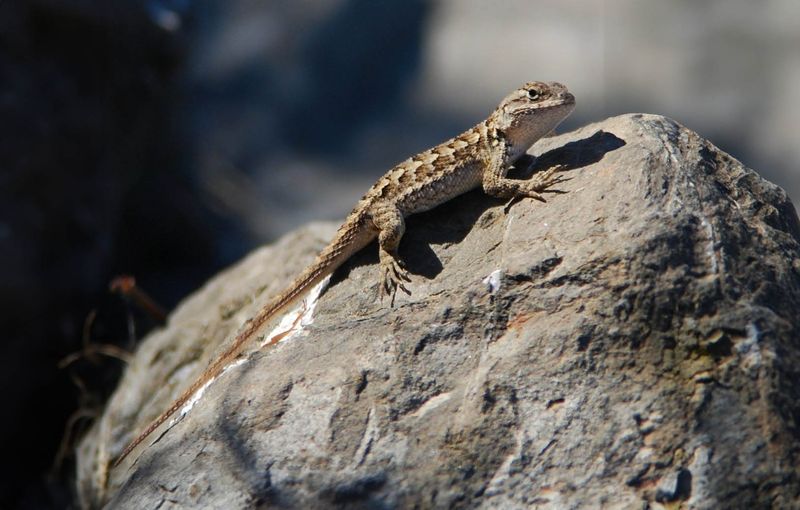
Diet records are useful, but they do not translate directly into pest control outcomes. Knowing that an alligator lizard eats snails does not tell you how many snails a single lizard removes from your garden per week, whether that number meaningfully affects the snail population, or how much plant damage it actually prevents.
UC IPM’s guidance on lizards notes that lizards may help with pest control and that they generally cause no measurable plant damage in gardens, which is a solid reason to tolerate them. That is a different claim from saying they reliably suppress pest populations or rank among the most effective garden predators.
Research on vertebrate insectivores and arthropod communities adds some useful context. A peer-reviewed study on predator cascades and arthropod communities found that vertebrate insectivores can influence arthropod populations and, through them, plant communities, but the effects vary considerably by habitat, predator density, and prey availability.
A single lizard moving through a suburban California backyard operates in a very different context from the experimental plots studied in that research.
The practical takeaway is that an alligator lizard near your woodpile may eat some organisms you consider pests. That is a real, if modest, benefit.
UC ANR guidance on beneficial insects and other natural enemies frames this kind of incidental predation as one piece of a broader natural-enemy community rather than a standalone pest-management strategy. Depending on a lizard to handle a genuine ant problem, a serious aphid infestation, or a grasshopper outbreak would leave you disappointed.
Treating an outdoor alligator lizard as a welcome visitor rather than a pest-control contractor is the most defensible expectation. Its presence is a sign of a functioning backyard food web, and that is worth something on its own terms, even without a measurable reduction in any specific pest population.
Protect Natural Enemies Without Managing the Lizard

Watching an alligator lizard work along the edge of your woodpile is genuinely satisfying, and the best response is also the simplest one: leave it alone. Do not try to feed it, corner it, or pick it up to relocate it to a better spot in the yard.
Outdoor lizards are territorial, seasonally mobile, and perfectly capable of finding their own hunting grounds. Moving one does not improve its situation and may actually disrupt the home range it has already established.
The more consequential homeowner decision involves pesticides. UC IPM’s guidance on protecting natural enemies and pollinators recommends identifying the pest before reaching for any product, using spot treatments rather than blanket applications, choosing selective or nonpersistent products where feasible, and avoiding broad-spectrum insecticides that can harm the natural enemies and pollinators that live in and around treated areas.
These recommendations apply to any California garden, and following them creates conditions where insect-eating wildlife has more to eat.
Broad-spectrum insecticides applied to a lawn or garden bed do not simply target the problem insect. They can reduce the populations of beetles, spiders, and other invertebrates that form the base of the local food web.
A yard with fewer invertebrates is a less productive hunting ground for any ground-level predator, including the lizard you want to keep around. Fewer prey animals mean less reason for the lizard to stay in the area.
None of this means that a pesticide application will directly harm the lizard or that a single treatment eliminates a local lizard population. The reviewed sources do not establish a specific mortality rate for alligator lizards from home-garden pesticide use.
The case for pesticide stewardship rests on protecting the broader natural-enemy community, which includes the insects, spiders, and other invertebrates that support every predator in the yard, the lizard included.
Remove Indoor Visitors Without Unnecessary Relocation
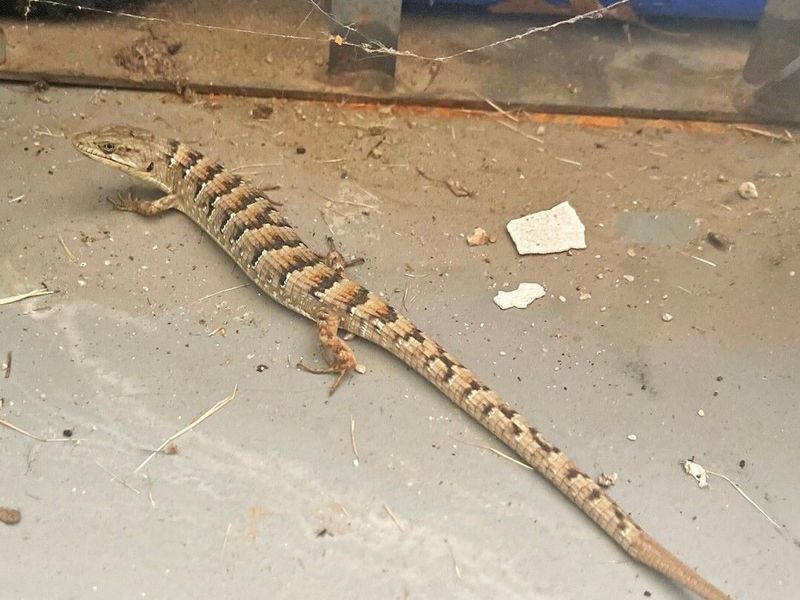
An alligator lizard slipping into a garage or through a gap in a door frame is a different situation from one hunting along the woodpile outside. Indoors, the lizard is in the wrong environment and needs to get out.
UC IPM recommends capture and outdoor release rather than poison or chemical repellents, and that advice is straightforward to follow without handling the animal directly.
A cardboard box, a large container, or a piece of stiff cardboard can be used to gently herd the lizard toward a door or into a container that you then carry outside. Release it immediately near the point of entry, not across the yard or in a different habitat.
Transporting a lizard to a new location disrupts its established territory and is not the same as simply letting it back out where it came from.
Picking up an alligator lizard by hand is worth avoiding for two reasons. First, alligator lizards bite when threatened, and the bite is strong enough to be painful even if it is not venomous.
Second, the California Department of Fish and Wildlife regulates the taking and possession of native reptiles, and casual handling of a wild lizard can cross into regulated territory faster than most homeowners realize. Wildlife research and handling permits exist for a reason, and a backyard encounter is not the context in which those permits apply to a homeowner.
If safe, noncontact removal is not possible, the right call is to contact local animal services or a permitted wildlife rehabilitator rather than attempting to grab the animal. Once the lizard is back outside, seal any openings approximately one-quarter inch wide or larger to prevent a repeat visit.
That simple exclusion step is usually more effective than any repellent product on the market.
Fire Rules Override Wildlife-Habitat Plans
A woodpile near the house is useful for winter fires, attractive to native wildlife, and a potential wildfire hazard all at the same time. In California, the fire-hazard concern takes priority, full stop.
Do not add logs, brush, piles of debris, or intentionally untidy stacking near your home’s foundation on the theory that it will attract or retain lizards. The wildlife benefit is real but modest, and it does not outweigh defensible-space requirements that exist to protect your home and your neighbors.
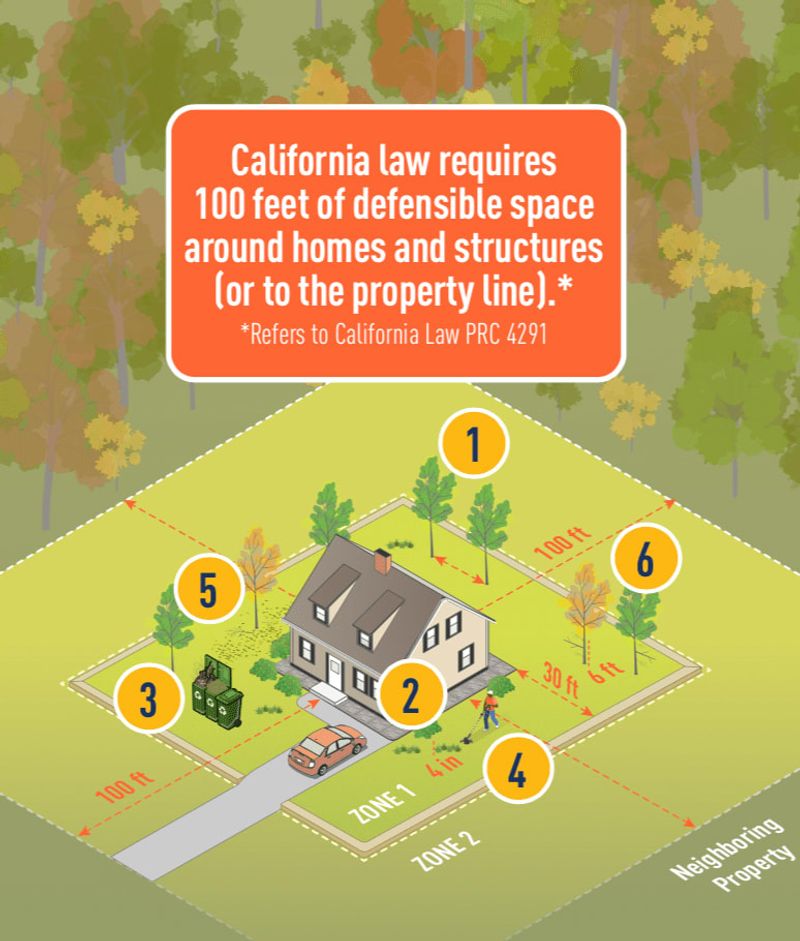
CAL FIRE’s defensible-space guidance for applicable areas calls for keeping firewood and lumber out of the first five feet around any structure and maintaining roughly 10 feet of clearance around exposed woodpiles down to bare mineral soil. These figures apply in the defensible-space zones covered by CAL FIRE regulations, not as a single universal rule across every California property.
Your specific situation depends on your local jurisdiction, your fire-hazard severity zone designation, and any additional requirements your city or county has adopted.
The California Board of Forestry and Fire Protection’s defensible-space zone framework describes Zone 1 as the area within 30 feet of a structure, where combustible materials including woodpiles need careful management, and Zone 2 extending to 100 feet, where vegetation and fuel loads are reduced to slow fire spread. Both zones have specific requirements that go beyond simply moving a woodpile a few inches from the wall.
Before deciding where to store firewood, check with your local fire department, county planning office, or fire-safe council. Some communities in fire-prone parts of California have adopted rules that are stricter than the state baseline.
Knowing the applicable local standard is the only way to be sure your woodpile placement is both legal and safe, regardless of what wildlife might be sheltering nearby.
Coexist With Realistic Expectations
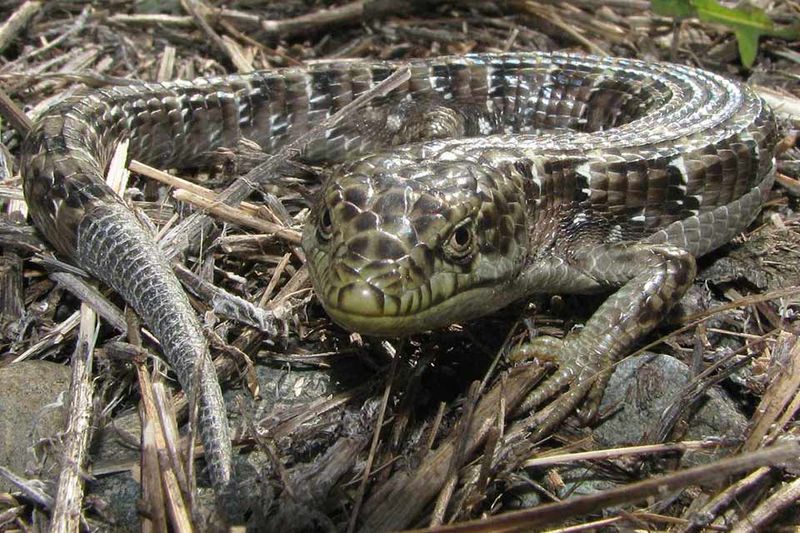
Putting this all together produces a short, practical checklist. Read the sighting as a wild predator using available cover, not as a pest alarm or a sign that you have cultivated a specialized pest-control ally.
Tolerate the lizard outdoors and give it space to move through its territory on its own schedule. Avoid broad-spectrum pesticide applications when targeted spot treatments or selective products can address the actual pest problem, because a yard with a healthy invertebrate community gives any ground-hunting predator more reason to stay.
For an indoor visitor, use a container or cardboard to guide it outside near the entry point and release it immediately, without relocating it to a new part of the property. Keep every woodpile positioned in compliance with applicable fire-safety requirements, and verify local rules before assuming a state-level guideline covers your specific property.
UC IPM’s lizard guidance and CAL FIRE’s defensible-space program together cover the two most consequential decisions you will make after a sighting.
Replace the expectation of pest elimination with something more accurate: an alligator lizard in a California yard may consume some of the small animals that cross its path, and a few of those animals will be ones you would rather not have in your garden. That modest, incidental benefit is the honest version of the story, and it turns out to be a good enough reason to welcome the lizard without asking it to do a job it was never designed to guarantee.