
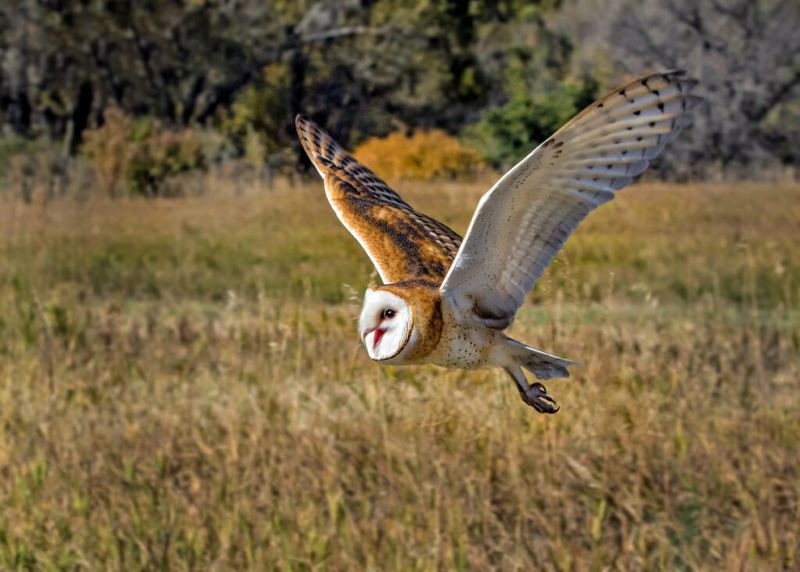
Spotting a barn owl near your California yard after dark is one of those moments that stops you in your tracks. Most homeowners assume the bird showed up because their property is overrun with rodents, but the real story is more nuanced and more interesting than that.
Understanding what the sighting actually signals can help you make smarter decisions about pest control, wildlife stewardship, and how to keep both your home and the owl safe.
A nighttime sighting usually means hunting, not roosting
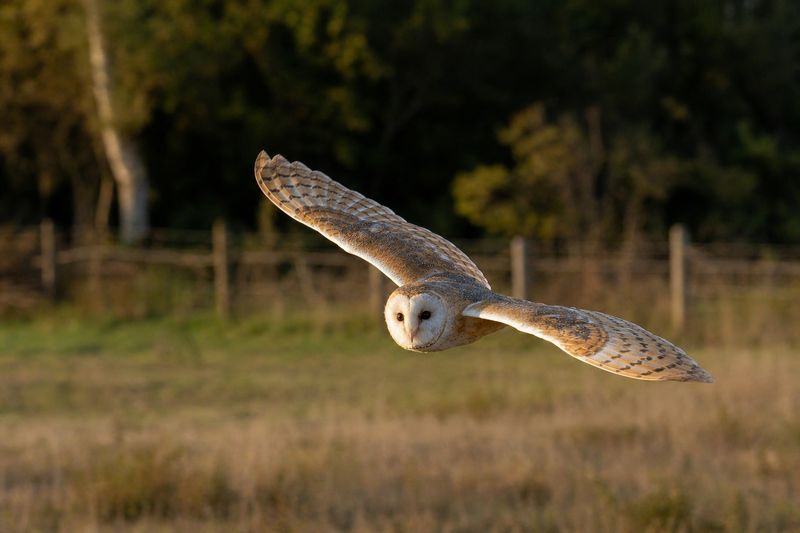
Barn owls are creatures of the night, but that does not mean every nighttime appearance near your yard signals that one has taken up permanent residence. According to Cornell Lab’s barn owl species overview, barn owls generally hunt from dusk through the night and spend daylight hours roosting in quiet, hidden spots such as tree cavities, barn lofts, dense shrubs, and the sheltered eaves of structures.
A bird gliding silently past your roofline or calling from a nearby tree after dark is almost certainly hunting or moving between areas, not settling in for the night.
Roosting is a daytime behavior. If you notice a pale, heart-faced bird tucked into a corner of your shed or perched motionless in a shaded tree on a weekday afternoon, that is a roosting bird using your property as a daytime retreat.
A nighttime sighting is a different thing entirely, and Cornell’s barn owl nest FAQ makes clear that the two behaviors happen at opposite ends of the clock.
Neither a nighttime hunter passing through nor a daytime rooster nesting in your eaves is proof of a property-specific rodent problem. The Audubon Society’s barn owl field guide notes that the species favors open and semi-open habitats for hunting, which means the bird may be responding to prey or cover well beyond the boundaries of your lot.
Before drawing any conclusions about what the owl reveals, it helps to understand what the landscape around your home actually offers the bird.
The owl points to usable habitat, not a rodent census
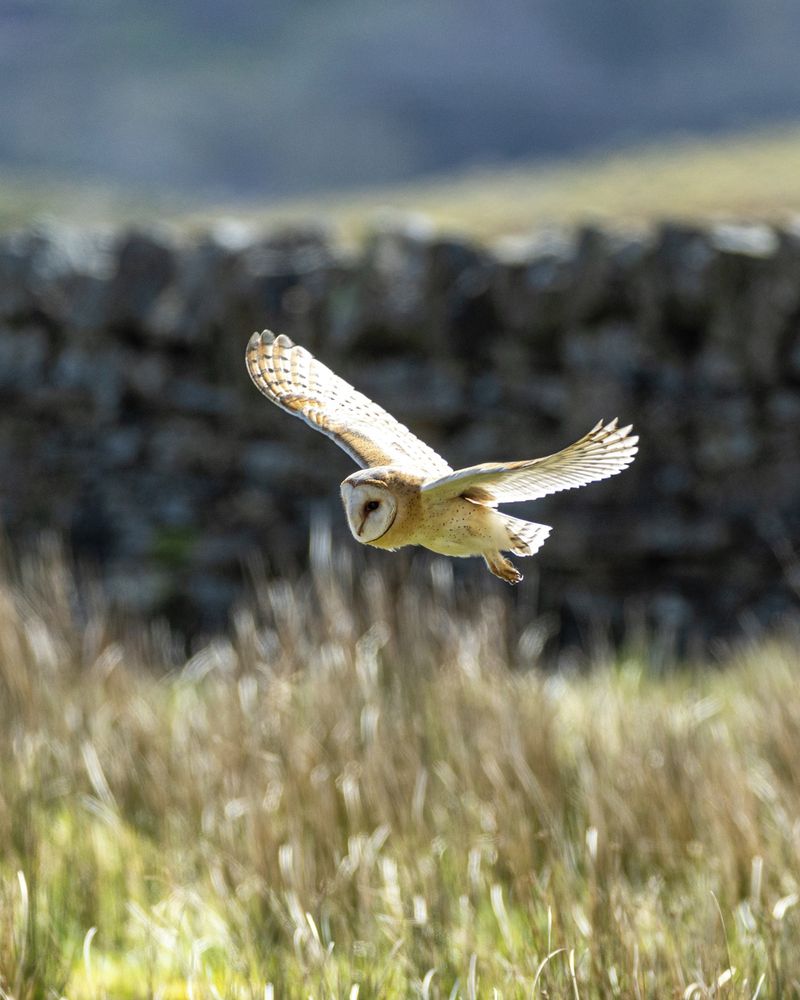
When a barn owl appears near your property, the most honest reading is that your yard sits within reach of habitat the bird finds useful. Open or semi-open areas nearby, such as fields, meadows, drainage channels, marshes, vineyards, orchards, or grassland strips along roads, are the kinds of places barn owls prefer for hunting.
Quiet, sheltered structures on or near your lot may offer a daytime roost. The bird is responding to those landscape features, not conducting a survey of your mouse population.
Barn owls also cover far more ground than most people realize. Cornell Lab reports that radio-tagged barn owls in the U.S. have shown home ranges of roughly 740 to 1,800 acres, with individual birds sometimes hunting beyond even that wide area.
A single owl working your neighborhood may be drawing prey from open habitat half a mile away and simply passing over your yard as part of a much larger nightly circuit.
The Cornell Lab species overview and the Audubon field guide both describe barn owls as birds tied to open landscapes rather than dense urban neighborhoods. A yard with mature trees, a garden shed, or proximity to undeveloped land may attract an owl for shelter or as a waypoint, even when the home itself has minimal rodent activity.
The sighting tells you about the surrounding landscape, not necessarily about what is living inside your walls or under your deck.
Barn owls can suppress some rodents under the right conditions
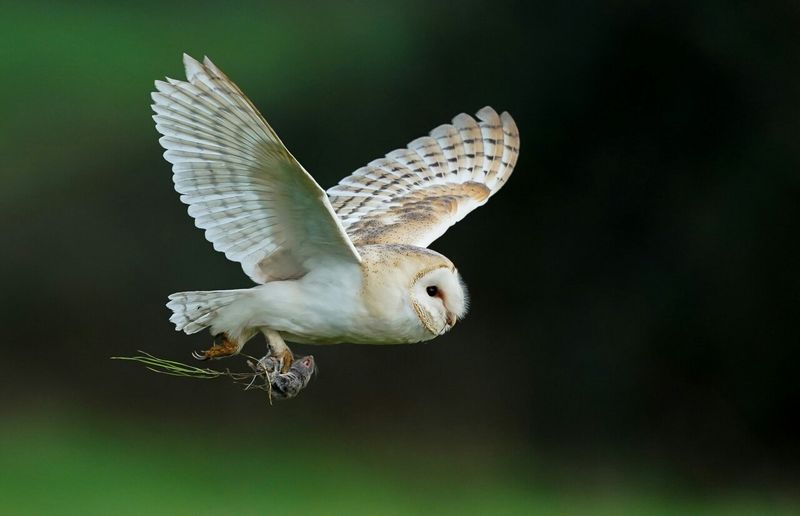
California agriculture has generated some of the clearest evidence that barn owls genuinely reduce rodent numbers in certain settings. Research on barn owl diet in California’s Central Valley found that 99.5 percent of identified prey items were agricultural pest species, as documented in a peer-reviewed study on agricultural land use and barn owl diet.
Mice, voles, and pocket gophers appear regularly in the prey record, though the dominant species shifts depending on whether surrounding land is row crops, perennial crops, grassland, or oak savanna.
The strongest suppression numbers come from vineyard research. A 2026 Napa Valley study found that higher barn owl hunting pressure was associated with a 38 to 52 percent reduction in predominantly deer-mouse abundance, along with increased rodent avoidance behavior in areas where owls were more active.
That is a meaningful effect, and it supports barn owls as a valuable component of integrated pest management in those landscapes.
What that finding does not do is promise the same result in a typical home garden. UC Cooperative Extension’s barn owl biological control guidance situates the pest-control role of barn owls in agricultural and open-land contexts.
Suburban lots are smaller, more fragmented, and often surrounded by structures where rodents can shelter beyond the owl’s reach. UC IPM points out that relying on natural predators alone for vole control is risky because residual populations can rebound quickly once pressure eases.
A barn owl may be eating rodents that pass through your yard, but it cannot reliably clear an established indoor or structural infestation, and it should not be treated as a substitute for the hands-on steps that actually protect a home.
The Napa Valley prey delivery and habitat study also shows that owl hunting effort tracks prey availability across the landscape, not just in one backyard corner. The owl is working a system, and that system is bigger than any single lot.
Check for physical evidence before diagnosing a problem
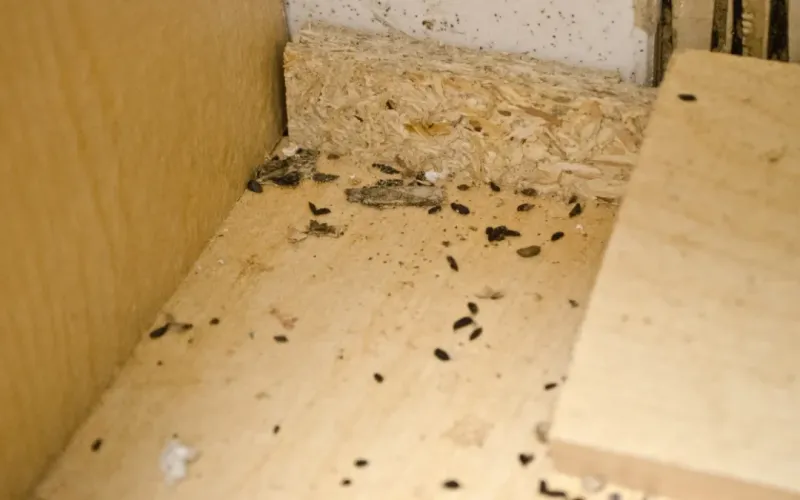
An owl near your yard is a reason to look around carefully, not a reason to panic. The first practical step is a systematic inspection of the places rodents actually use: the base of walls and foundations, utility penetrations, gaps under doors, spaces behind stored items in garages or sheds, and anywhere food or water might be accessible at night.
Physical evidence is what tells you whether rodents are active inside or immediately around the home. UC IPM’s house mouse management guidance lists droppings, gnaw marks on food packaging or structural materials, grease trails along baseboards, and nesting debris as reliable indicators.
UC IPM’s rat management page adds burrows along fences or garden beds, runways in vegetation, and chewed irrigation lines or wiring as signs worth noting. Fresh droppings and active gnawing indicate a current problem; old, dusty evidence may reflect past activity that has already resolved.
Garden areas deserve attention too. UC IPM’s vole management resource describes the shallow surface runways and small entrance holes that voles leave in lawns and groundcovers, signs that are easy to miss until plant damage becomes obvious.
The key distinction is between rodents that are moving through surrounding open habitat, which the owl may already be managing, and rodents that have established themselves inside or directly against your home’s structure. The owl sighting prompts the inspection; the physical evidence determines what you actually do next.
Use exclusion, sanitation, and targeted traps together
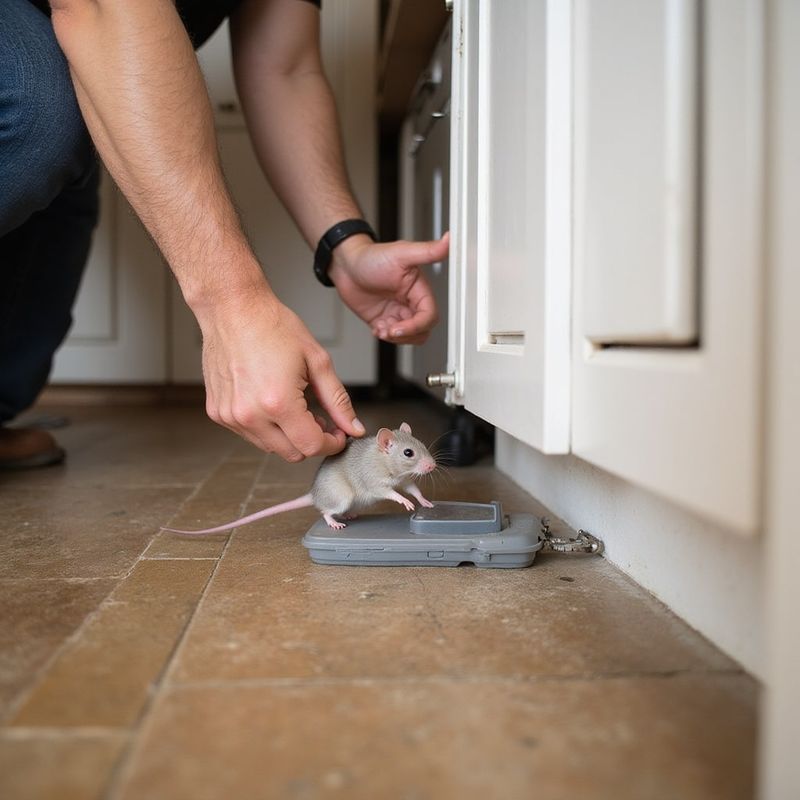
Owls are helpful, but they cannot seal a quarter-inch gap in your foundation or remove the spilled birdseed sitting under your feeder. Those jobs belong to you, and doing them consistently is what actually keeps rodents from establishing inside the home.
Structural exclusion is the highest-priority step. UC IPM’s house mouse guidance recommends sealing all gaps larger than a quarter inch around pipes, conduits, vents, and door frames, using materials rodents cannot chew through, such as hardware cloth, metal flashing, or copper mesh packed tightly into openings.
Weatherstripping under doors and screening on weep holes and crawlspace vents close common entry points that homeowners often overlook.
Sanitation removes the food and shelter that sustain populations once rodents find a way in. Practical steps include securing garbage in bins with tight-fitting lids, storing pet food in sealed containers and removing outdoor bowls overnight, cleaning up fallen fruit and spilled birdseed promptly, and reducing clutter such as stacked wood, dense groundcovers, and debris piles near the house that give rodents protected nesting spots.
UC IPM’s rat management page emphasizes that food removal and shelter reduction are prerequisites for effective trapping, not optional extras.
When trapping is needed, appropriately sized snap traps or electronic traps placed along active runways, behind appliances, inside wall voids, or at the base of fences where rodents travel are the most reliable tools. UC IPM’s vole management guidance notes that traps work best when placed in sufficient numbers and checked and reset frequently.
Direct control is necessary because natural predators, even active ones, may not reach rodents sheltering inside buildings or prevent a population from rebounding after a temporary reduction.
Avoid rodenticides that can expose the owl
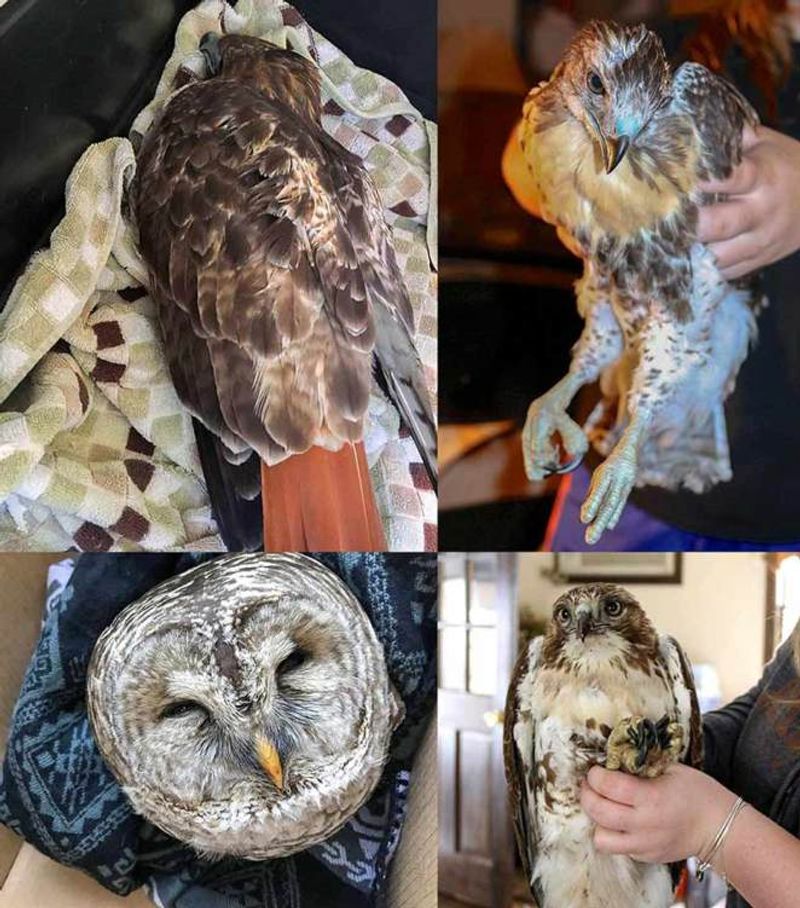
Rodent poison and barn owls are a dangerous combination. When a rodent eats bait and is then caught by an owl, the owl absorbs whatever toxic compound the rodent was carrying, a process called secondary poisoning.
The risk is well documented and applies to a range of active ingredients, including the second-generation anticoagulants that have been most commonly linked to raptor deaths in California.
EPA’s rodenticide pesticide safety review warns that predators and scavengers, including owls, hawks, foxes, and coyotes, are at risk of secondary exposure when they feed on poisoned rodents. USGS research on barn owl exposure to brodifacoum found that the compound accumulated in owl tissue at levels associated with harm, confirming that the risk is not theoretical.
California has added its own layer of restrictions on top of federal rules, but the picture is not simple. California DPR guidance on second-generation anticoagulant restrictions and DPR rules on chlorophacinone and warfarin show that whether a product is legal depends on the active ingredient, the use site, the applicator’s license status, the specific product label, and applicable exemptions.
Saying that all rat poison is banned in California is not accurate. What is accurate is that most consumer rodenticide products face significant restrictions, and homeowners should check the current product label and DPR rules before using any bait.
EPA rules on pellet-form rodenticides add a further federal layer to navigate.
Never use bait to draw rodents into an area where an owl is hunting. That approach is both ecologically harmful and contrary to how rodenticide labels permit use.
Exclusion and trapping protect your home without putting the owl at risk.
Support barn owls without forcing or disturbing them
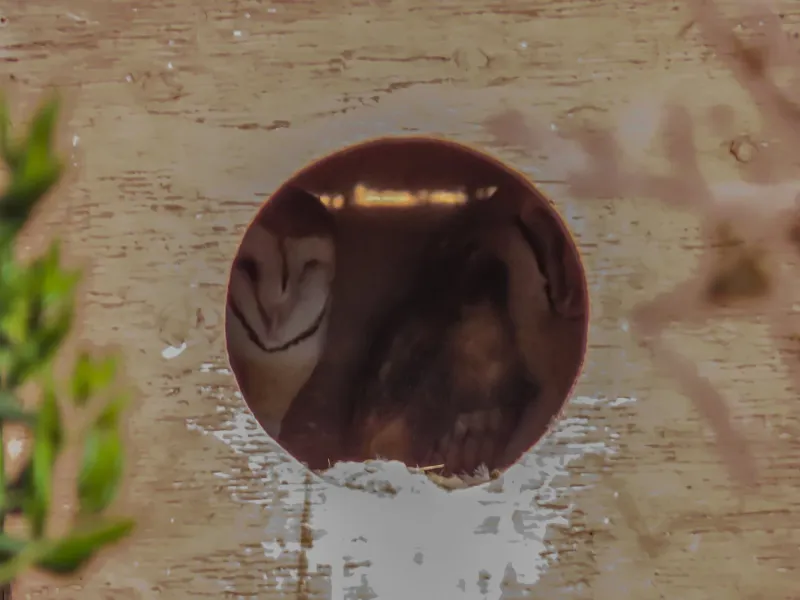
Putting up a nest box is one of the most concrete things a California homeowner can do to support barn owls, but a box alone does not guarantee a tenant. Occupancy depends on whether the surrounding habitat offers enough prey, whether the location protects the box from heat and predators, and whether the design suits the bird.
UC Cooperative Extension nest box installation guidance recommends elevated placement with clear, open flight access, good drainage and ventilation to prevent overheating, and positioning away from busy roads and structures when possible.
UC Cooperative Extension Napa County nest box plans provide specific dimensions and entry hole sizes suited to barn owls, and UC’s integrated pest management blog describes how box networks in agricultural settings have contributed to broader owl populations. A single well-placed box in a yard with nearby open hunting habitat has a reasonable chance of attracting a pair, though results vary with local conditions.
Once a box is in place, leave it alone during the breeding season. U.S.
Fish and Wildlife Service guidance on bird nest protections notes that active nests with eggs or dependent young receive federal protection, so disturbance around an occupied box is not just harmful to the birds but potentially a legal matter. Observe from a distance and resist the urge to check on progress by opening the box.
Cleaning should happen only when the box is unoccupied, typically in fall after the breeding season ends. UC’s fall nest box cleaning guidance and UC Cooperative Extension wildlife guidance both recommend wearing gloves and a dust mask when removing pellet debris and nesting material.
CDC guidance on disease risks from animals in public settings advises treating owl pellets as potentially contaminated with Salmonella, so bare-handed handling is not a safe shortcut. Do not feed the owl, place live or dead rodents outside for it, or attempt to handle or relocate a bird you find roosting.
Welcome the owl while managing the yard yourself
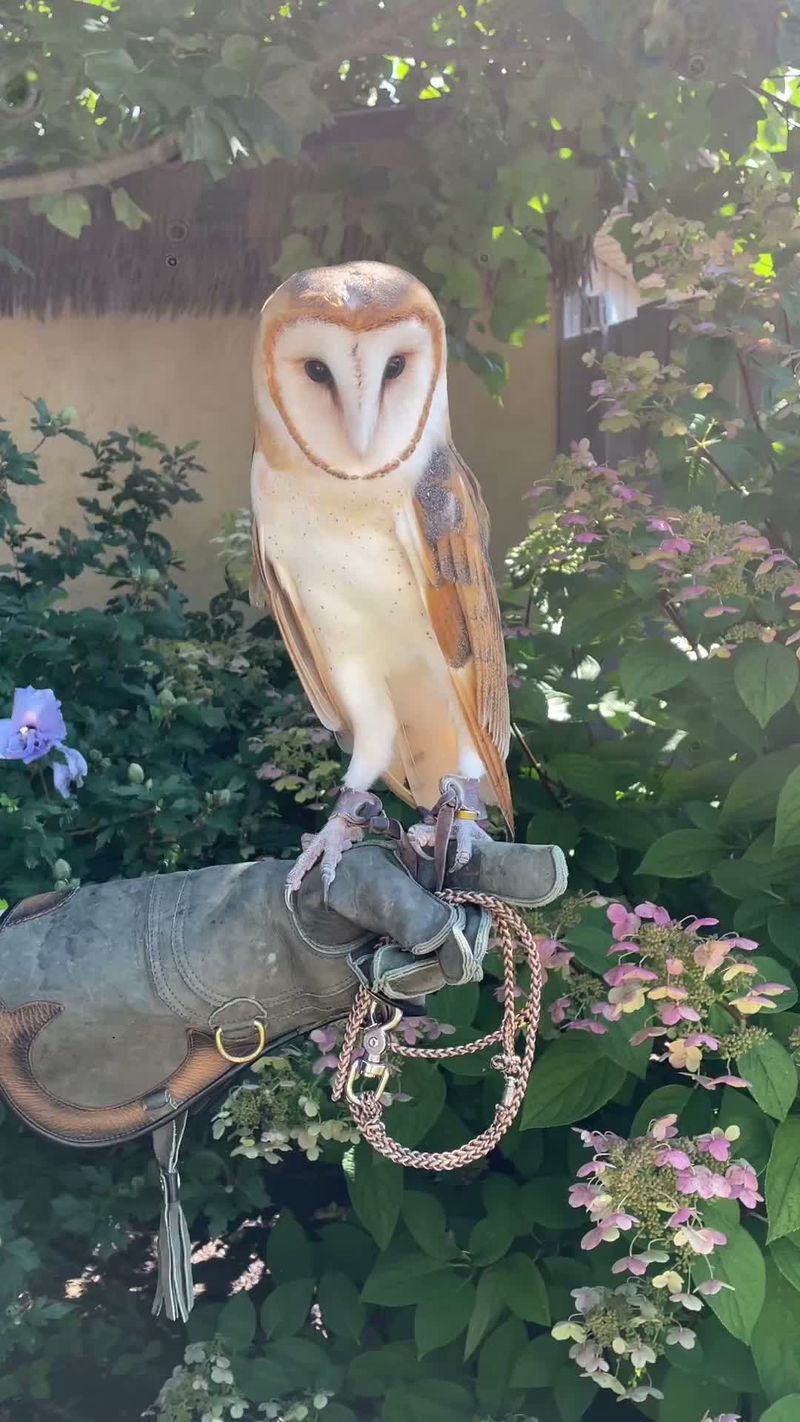
A barn owl working your neighborhood is genuinely worth appreciating. Cornell Lab’s barn owl overview describes a species whose populations have declined across parts of its range, partly due to habitat loss and rodenticide exposure, so a bird choosing to hunt near your yard reflects real ecological value in the surrounding landscape.
That said, the owl’s contribution to your specific rodent situation depends on conditions you cannot fully control: how much open habitat surrounds your property, how large the bird’s nightly range is, and whether the rodents causing problems inside your home are even accessible to a bird hunting in open air. The 2026 Napa Valley study showed meaningful suppression at the landscape scale; a single owl over a single suburban lot is a different scenario.
The practical decision rule is straightforward: inspect for physical rodent evidence, remove food and shelter, seal entry points, and use targeted traps where activity is confirmed. Skip rodenticides that put the owl at risk through poisoned prey.
Check UC IPM’s rat management guidance for structural and sanitation steps specific to the species causing problems. The owl may be helping across a wider landscape while you handle what happens inside and directly around your home.
Wildlife-friendly stewardship and effective pest control are not competing goals – they work best when you pursue both at once.