
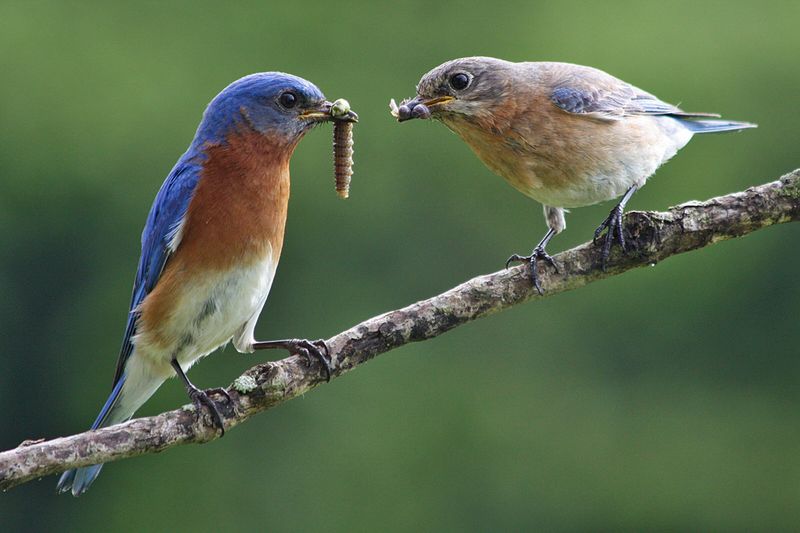
One morning you walk outside and realize the bluebirds that spent all spring nesting near your yard are simply gone. Before you worry, there is good news: a sudden quiet stretch in late summer usually says more about normal bird behavior than about any real population problem.
Understanding why bluebirds come and go can help you make smarter choices for your yard and enjoy these birds more reliably through the seasons ahead.
A quiet yard usually reflects changed use, not vanished bluebirds
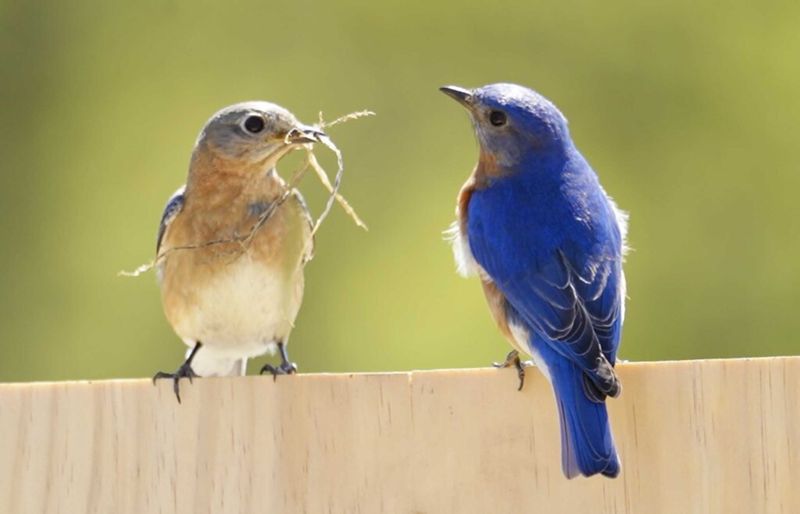
Noticing that your bluebirds have gone quiet is unsettling, but a gap in yard sightings from one property cannot tell you whether Eastern Bluebirds have disappeared from your corner of North Carolina or whether the local population has changed at all. The distinction matters, and it is worth holding onto as you read further.
Most Eastern Bluebirds in North Carolina are year-round residents rather than long-distance migrants. The North Carolina Wildlife Resources Commission’s Eastern Bluebird profile confirms that bluebirds are permanent residents across the Coastal Plain, Piedmont, and mountain regions, though winter abundance shifts by area.
Some birds move short distances after the breeding season, and birds from farther north do arrive in fall, but the bulk of the state’s population stays put.
What changes is not whether bluebirds exist nearby; it is whether they have a reason to use your specific yard on any given week. Cornell Lab of Ornithology notes that a yard going quiet in late summer and early fall is a common experience across many species, often driven by seasonal changes in behavior and food availability rather than population loss.
A few quiet weeks from one observation point is simply not enough information to conclude that something has gone wrong. Birds can be active in a neighboring field, a nearby hedgerow, or a patch of fruiting shrubs just outside your sightline, and you would never know from your porch.
The Carolina Bird Club’s Birds of North Carolina distribution data shows that abundance patterns differ meaningfully across the state’s regions, so a late-summer lull in Asheville looks different from one in Raleigh or Wilmington.
Treat the absence as a prompt to observe more carefully, not as evidence of a crisis.
After nesting, bluebirds stop behaving like territorial neighbors
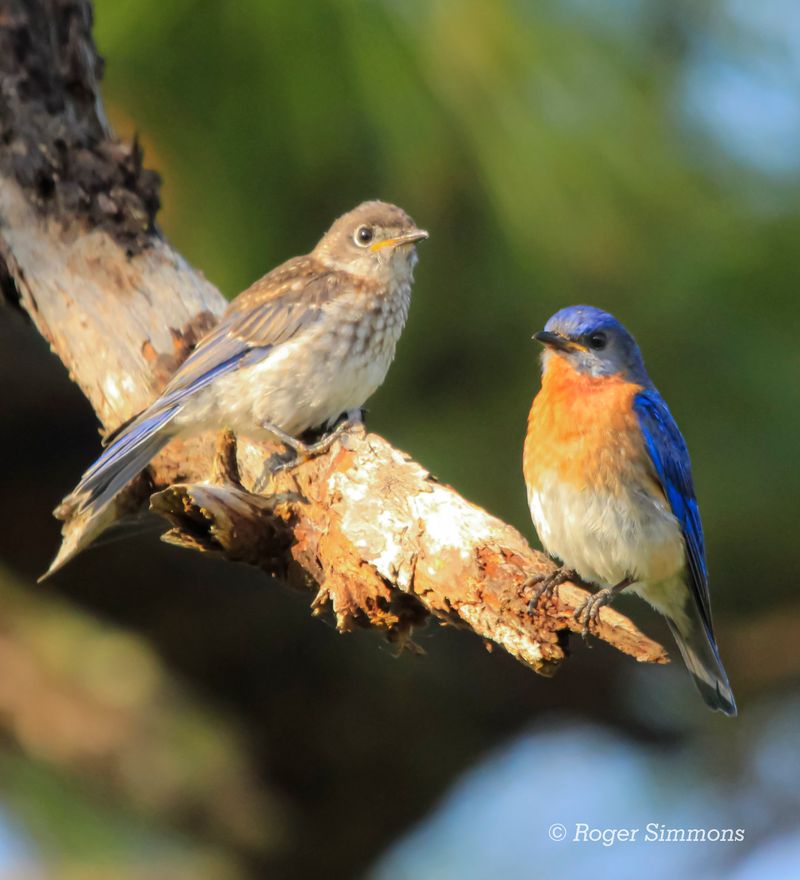
During the breeding season, male Eastern Bluebirds are hard to miss. They sing from exposed perches, chase rivals, and stay close to the nest box or cavity they are defending.
Once the last brood of the season fledges, that whole social structure unravels almost overnight.
North Carolina Wildlife Resources Commission guidance describes bluebirds leaving the area as a flock after nesting, roaming more widely in search of food rather than anchoring to a defended patch of ground. The birds that spent months treating your yard as home territory may now be traveling with their fledglings and occasionally with other family groups across a much larger area.
Cornell Lab’s Eastern Bluebird species account notes that southeastern birds may move short distances or remain near their breeding territories year-round, which means the same individuals could still be within a half-mile of your yard even when they are not stopping in. The territory that once guaranteed daily visits simply no longer exists in any meaningful way once nesting wraps up.
Food availability and weather play a role in where post-breeding flocks travel, but the picture is not as simple as “late-summer insects disappear, so bluebirds leave.” Natural food can actually be quite abundant in August and September across much of North Carolina, which is part of why Cornell flags late summer as a time when birds often visit feeders less, not because food is scarce, but because it is plentiful elsewhere. Your yard feeder going quiet is not proof that the birds are struggling; it may mean they are eating well somewhere nearby.
The shift from territorial pair to roaming flock is the single most reliable explanation for a late-summer bluebird absence, and it requires no yard problem at all to produce the result you are seeing.
Visibility can change even when the birds remain nearby
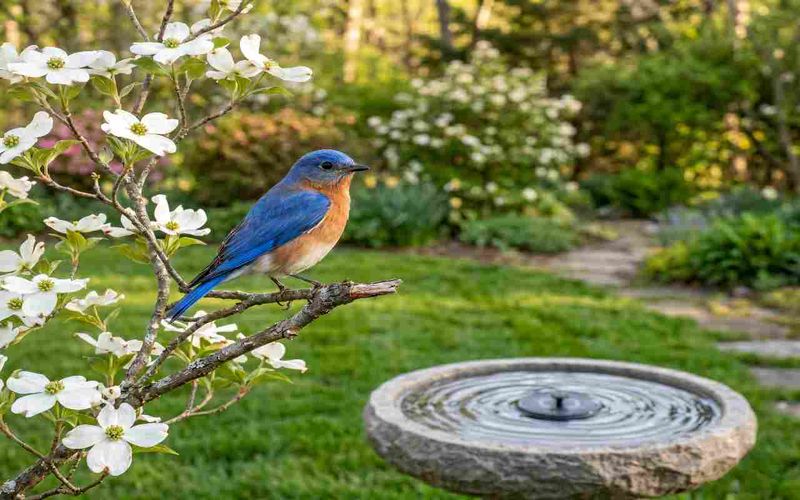
Birds do not have to leave an area to become harder to find. After breeding season, bluebirds stop singing the persistent territorial songs that made them so easy to locate in spring, and they spend more time foraging quietly through vegetation or visiting fruiting plants that may not be anywhere near your usual viewing spot.
Cornell Lab’s seasonal birdwatching guidance explains that many songbirds become noticeably less conspicuous after breeding ends, partly because the vocal advertising that drove spring activity simply stops. A bird that once announced itself from every fence post is now a quiet forager moving through cover without fanfare.
Molt is sometimes mentioned as a secondary factor in summer detectability. After breeding, many songbirds replace worn feathers, and during flight-feather molt, birds may stay closer to vegetation and move more cautiously because their flight is temporarily less efficient.
Cornell’s guidance addresses this pattern for songbirds broadly and uses other species as examples, so while molt could play a role in reducing a particular bluebird’s visibility, it should not be treated as a proven explanation for any specific absence you are observing. Consider it a possibility, not a conclusion.
A fruiting dogwood, viburnum, or pokeweed plant two streets away can pull birds off a familiar route for days at a time. Cornell’s yard-bird FAQ reinforces this point, noting that birds track food patches across a landscape and will shift their daily routes as those patches ripen or run out.
A few quiet weeks from one yard, during a season when singing has stopped and fruiting plants are scattered across the landscape, tells you very little about whether bluebirds are present in your broader neighborhood. Expand your observation area and give it more time before drawing any conclusions.
Inspect the yard for changes in accessible foraging space
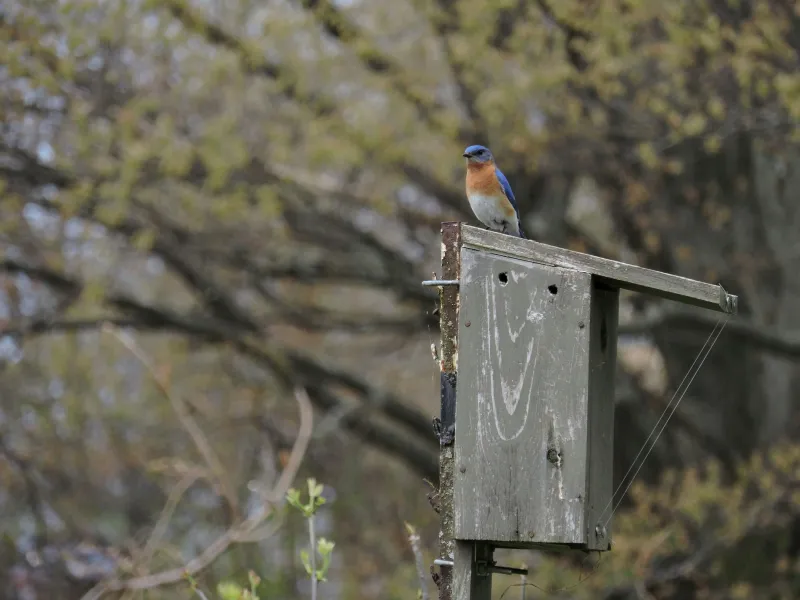
Once you have ruled out normal seasonal movement as the likely explanation, it is reasonable to take a closer look at whether something in the yard itself changed. Habitat change is one plausible factor worth inspecting, but it should not be the first thing you assume or the only thing you check.
Eastern Bluebirds hunt by scanning the ground from an elevated perch, then dropping to catch insects in short or sparse grass. Cornell Lab’s Eastern Bluebird account describes this foraging style clearly: the birds need open ground they can actually see from a perch and reach quickly.
Dense shrubs, tall unmowed grass, or heavy shade canopy closing over a formerly open patch can make a yard functionally invisible to a hunting bluebird, even if the birds are still moving through the neighborhood.
Penn State Extension’s bluebird habitat guide notes that natural plant succession can gradually convert open habitat into shrubby or wooded cover that bluebirds rarely use. If your yard has filled in with woody growth over the past few seasons, that slow change may have quietly reduced its value as a foraging spot, even if nothing dramatic happened this year.
Chemical treatment is another factor to consider. Insecticide applications or lawn treatments that reduced the invertebrate population in the soil and grass can make open ground less productive for a bird that depends on catching live prey.
University of Florida IFAS Extension’s backyard habitat guidance emphasizes that a wildlife-friendly yard supports invertebrate life as well as visible plants and birds.
Compare your yard now with what it looked like in April or May when bluebirds were visiting regularly. Has grass grown taller and denser?
Have shrubs spread across a formerly open patch? Has a tree leafed out more heavily than past years?
Any of those shifts could reduce accessibility without eliminating the birds from the area entirely. Keep in mind that neighboring habitat, weather, and normal post-breeding movement can produce the same observation, so a habitat change you find is a lead to follow, not a guaranteed explanation.
Build a patchwork instead of choosing all lawn or all overgrowth
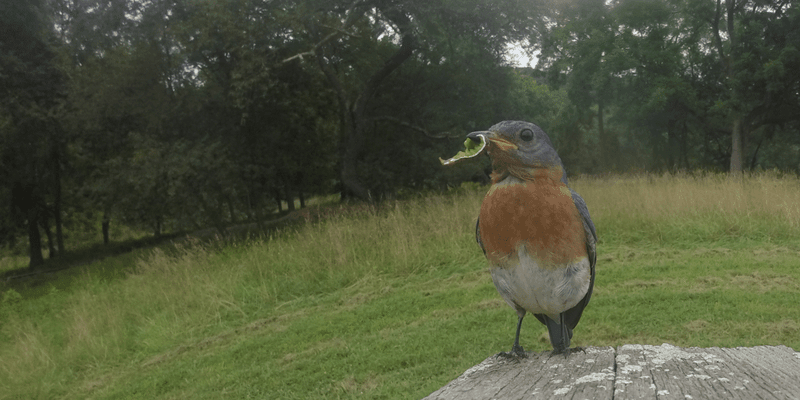
The most useful yard for Eastern Bluebirds is neither a perfectly manicured all-grass lawn nor a completely overgrown meadow. Both extremes miss something the birds need.
What works is a patchwork: some accessible open ground, some scattered native shrubs and trees, and a few good perches placed where a bird can actually survey the open area below.
Penn State Extension recommends maintaining open or semi-open areas with short or sparse grass and avoiding conditions where shrubs and woody growth close over the entire foraging space. You do not need to strip the yard bare; you need at least one patch of accessible ground where a bluebird can hunt successfully.
Native berry-producing plants earn a place in this design, but with realistic expectations. North Carolina Wildlife Resources Commission specifically lists viburnums, dogwoods, and pin cherry as summer and fall bluebird foods, with sumac, bayberry, and American holly serving as winter resources.
Adding these plants can improve your yard’s seasonal food value, but bluebirds choose among many available habitats across a landscape, and no single planting guarantees that specific birds will return on any schedule.
Perches matter more than many homeowners realize. Cornell Lab notes that bluebirds routinely scan from exposed positions such as fence posts, low branches, and garden stakes before dropping to the ground.
Place a few of these near your open foraging area, not directly over it, so birds have a clear sightline to the ground below.
Before clearing brush or removing trees, consider what other wildlife is using that cover and whether any late-season nesting is still underway. U.S.
Forest Service species review data on Eastern Bluebirds confirms that the birds favor edge habitat and open areas, but drastic clearing that removes cover for other species is rarely necessary and may create new problems. Modest, targeted adjustments to open up a foraging patch are more defensible than wholesale clearing.
A mixed yard with open ground, some native shrubs, and a few perches serves bluebirds without sacrificing the habitat value that benefits other native wildlife at the same time.
Use food, water, and pesticides carefully
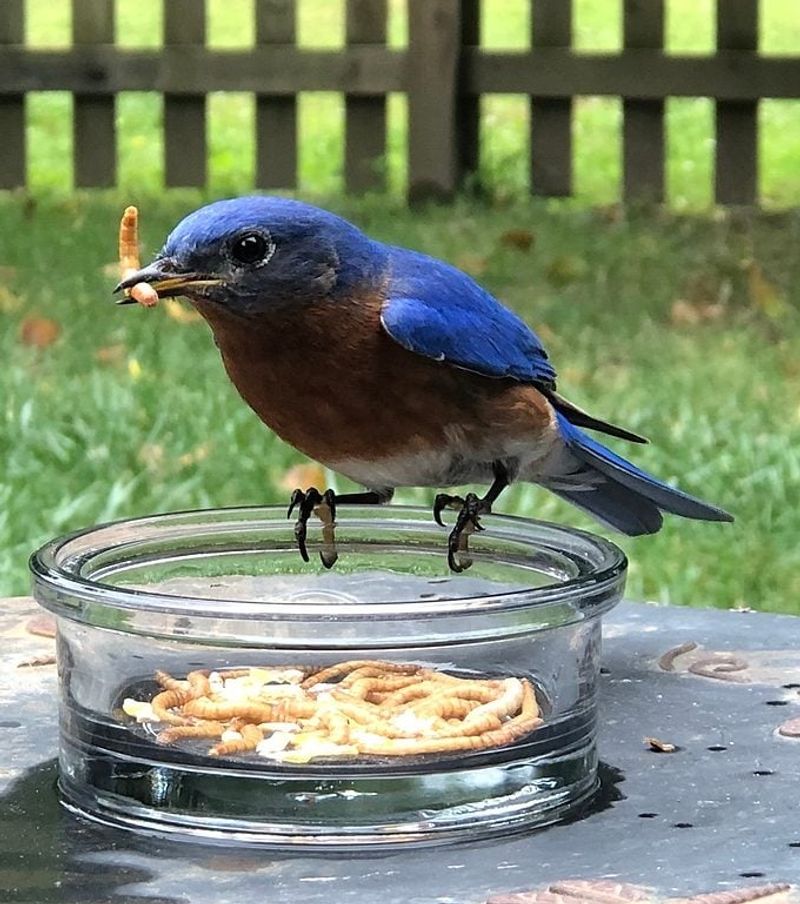
Bluebirds eat heavily on insects during the warm breeding season, catching grasshoppers, crickets, beetles, caterpillars, and other invertebrates from open ground. Their diet shifts toward fruit in fall and winter, which is why North Carolina Wildlife Resources Commission lists both insect-rich foraging habitat and berry-producing native plants as important yard features across the seasons.
If you want to offer supplemental food, ordinary seed feeders will not do the job. Cornell Lab confirms that bluebirds seldom visit standard seed feeders; mealworms offered on an open platform are a more reliable draw.
Offer modest amounts rather than large quantities, and keep the feeder clean to avoid spoiled food and the disease risks that come with it. A quiet feeder in late summer does not automatically mean local food is scarce; natural insect and berry availability may simply be drawing birds to other spots.
Penn State Extension guidance on bluebird habitat recommends a shallow water source, preferably less than about two inches deep, positioned near a perch so birds can approach safely. Change the water frequently and scrub the basin to prevent algae and bacterial buildup, especially during warm weather when pathogens multiply quickly.
Pesticide use deserves careful thought. Bluebirds depend on live insects, and broad-spectrum insecticide applications can reduce the invertebrate prey base in your yard for weeks or longer.
The EPA advises using pesticides only when necessary, treating only the affected area rather than the whole yard, following the legally enforceable product label exactly, and preventing runoff into water or areas used by wildlife. When a pest problem genuinely requires treatment, choose the most targeted option available and apply it at a time of day when foraging birds are less active.
Skipping unnecessary pesticide applications is one of the simplest and most direct ways to keep your yard productive for insect-eating birds without any additional effort or expense.
Know when observation or disease precautions matter more
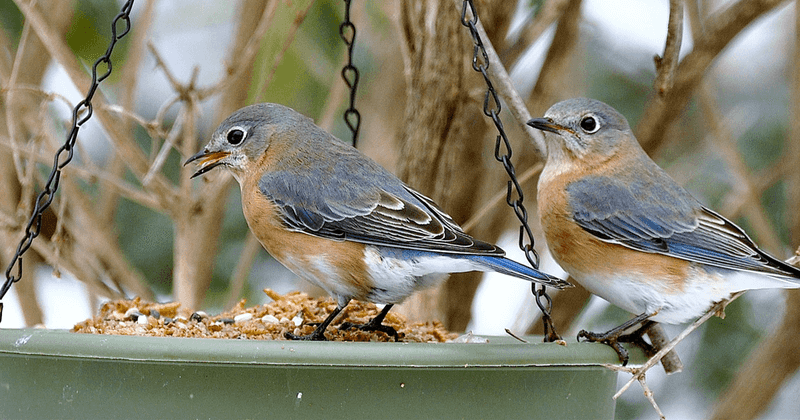
Seasonal absence and a genuine population concern are two very different situations, and the gap between them matters before you take any action. A single yard going quiet for a few weeks in August is a normal observation; a persistent, widespread drop in sightings across multiple locations and seasons is something worth investigating with real data.
The Carolina Bird Club’s North Carolina distribution records show that bluebird abundance patterns differ meaningfully across the state’s three main regions. Mountain populations may show more noticeable seasonal swings in abundance than Coastal Plain or Piedmont birds, so a late-summer lull in Asheville deserves a different interpretation than the same lull in Greenville or Greensboro.
To get a clearer picture of what is actually happening, track your own observations across several weeks rather than reacting to a single quiet morning. Compare notes with neighbors, check eBird for recent sightings in your county, and look at Breeding Bird Survey data for longer-term trends.
North Carolina Wildlife Resources Commission notes that standardized surveys are the appropriate tool for assessing long-term population changes; yard-level impressions are too variable to serve that purpose reliably.
A separate and more urgent situation arises if you find dead or visibly sick birds near your feeders or birdbath. Do not handle them without protective gloves, and do not assume the cause is obvious.
Contact a licensed wildlife rehabilitator or your state wildlife agency for guidance on next steps. Audubon, citing National Wildlife Health Center guidance, recommends cleaning feeders with a solution of nine parts water to one part bleach, rinsing thoroughly, and drying completely before refilling.
Cornell’s Project FeederWatch suggests cleaning seed feeders roughly every two weeks under normal conditions and more frequently if disease is suspected. Remove wet or moldy food and clean accumulated droppings below feeders promptly.
Concentrated feeding stations can facilitate disease transmission when poorly maintained, so regular cleaning is not optional housekeeping; it is a meaningful wildlife-health practice.
Make a modest reset and watch what happens
Rather than overhauling the entire yard, a measured reset gives you useful information and improves conditions without creating new problems for other wildlife. Start by walking the yard and noting what changed since spring: has open ground closed in, have shrubs spread, has chemical treatment reduced insect activity?
Fix what you can fix modestly and leave the rest for observation.
Preserve or gently reopen a patch of short or sparse grass where a bluebird could hunt. Add a fence post or garden stake nearby as a scanning perch.
Put out a shallow, clean water source and refresh it every few days. If you want to try a mealworm feeder, keep the portions small and the setup clean, following the same feeder-hygiene practices Audubon recommends for all feeding stations.
Skip any pesticide applications that are not strictly necessary, and follow label directions exactly when treatment cannot be avoided.
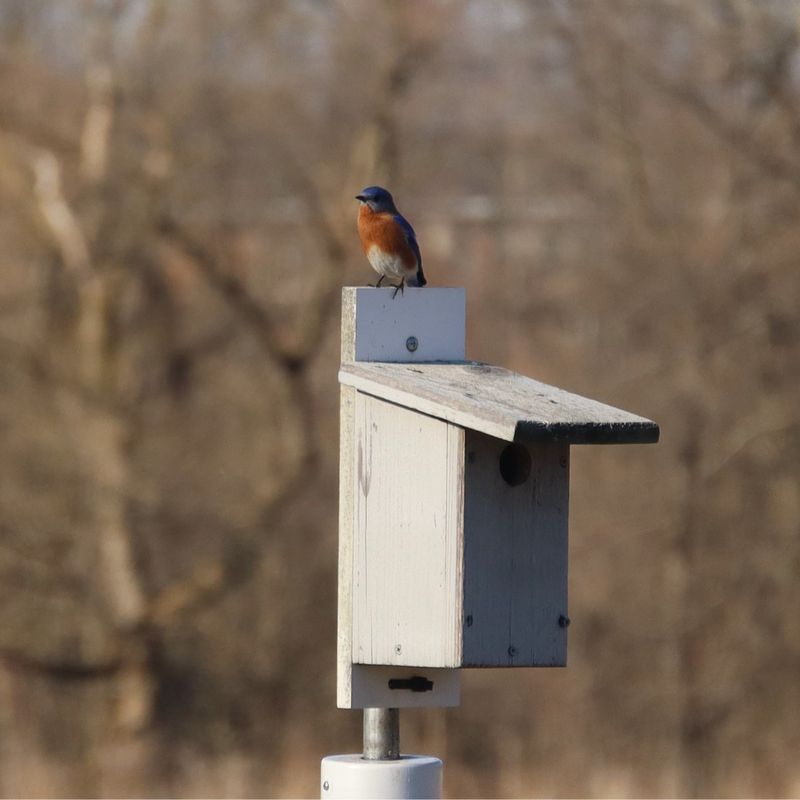
A nest box is an optional longer-term addition worth considering if your yard has suitable open habitat. North Carolina Wildlife Resources Commission recommends mounting the box on a self-supported pole with a predator baffle to deter raccoons, cats, and snakes, and placing it in open rather than wooded ground.
Penn State Extension guidance adds that nest checks should be limited and approached carefully to avoid disturbing active nests.
The goal of all of this is not to force the same birds back on a schedule you control. The goal is to make your yard a reasonable option among the many patches bluebirds move through, and to gather better observations over time.
A yard that offers open foraging ground, a perch, clean water, and minimal pesticide pressure is already doing its part; what happens next is up to the birds and the season.