
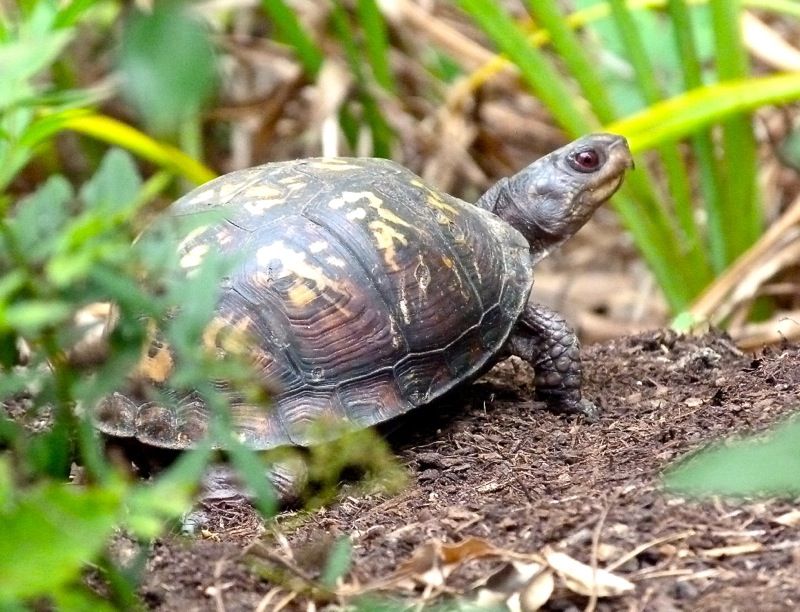
Finding an eastern box turtle slowly making its way through your tomatoes or flower beds can stop you mid-weed. Most gardeners either worry they’ve done something wrong or assume the turtle is there to eat their pest problems away.
Neither reaction is quite right, and understanding what the sighting actually means can help you make better choices for both your garden and the animal. Box turtles are native to North Carolina, and knowing how to respond when one shows up is genuinely worth a few minutes of your time.
The sighting points to habitat access, not a soil test
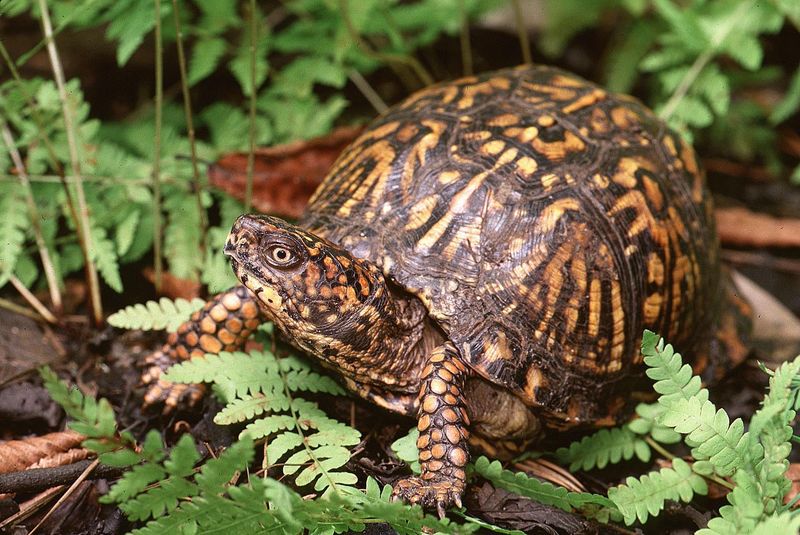
Spotting an eastern box turtle in your garden bed is less about what’s happening underground and more about what surrounds your property. According to NC Wildlife Resources Commission guidance, eastern box turtles commonly live near people and typically remain within a small home territory, usually under 2 acres.
That territory often stretches across multiple yards, drainage areas, woodsy edges, or brushy corners – not just one garden bed.
The turtle showing up in your beds most reliably tells you that your property connects to usable habitat somewhere nearby. That could mean a shaded fence line, a moist low spot, a neighbor’s overgrown corner, a drainage ditch, or a patch of woods within the animal’s regular range.
Your garden bed may simply be one stop along a route the turtle has been using for years.
One important point worth clearing up early: turtle presence is not a validated measurement of soil health. Established soil-health assessments rely on measurable physical, chemical, and biological properties – things like organic matter content, microbial biomass, nutrient cycling, and respiration rates.
None of those are visible from the surface, and none of them are reflected by a turtle walking through.
A U.S. Forest Service regional habitat study found that eastern box turtle occurrence links more closely to landscape features like canopy cover and reduced development than to garden-scale soil measurements.
The turtle is responding to the broader landscape – the shade, moisture, cover, and food available across a connected area – not sending you a report card on your compost pile.
The practical takeaway is simple: a healthy turtle in the bed is a sign that your yard fits into a functioning habitat corridor. That’s worth appreciating.
Leaving the animal alone and keeping that habitat connection intact does far more good than any intervention you might consider.
Why a cultivated bed can appeal to a box turtle
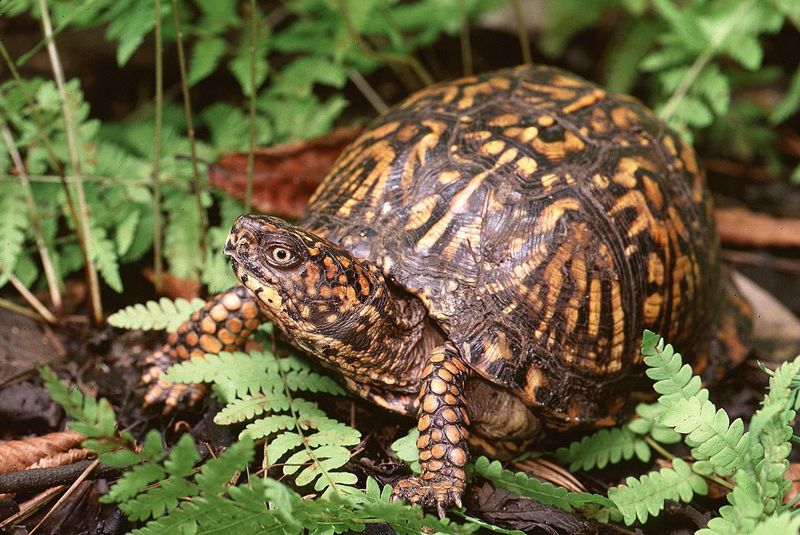
Garden beds offer a surprisingly useful combination of conditions for a passing turtle: damp soil that’s easy to move through, shade from tall plants or nearby trees, loose ground that doesn’t require much effort to probe, and sometimes fallen fruit, mushrooms, or invertebrates worth investigating. None of those features need to be intentional on your part – they’re just byproducts of how a productive bed tends to look in mid-season.
The University of North Carolina at Greensboro Box Turtle Connection guide identifies moist soils, native food sources, leaf cover, soft ground, mature trees, and brush piles as habitat features eastern box turtles actively use. A well-watered raised bed or a shaded border planting can check several of those boxes at once, which explains why a turtle might pause there even if the surrounding yard is mostly lawn.
One thing to keep in mind: eastern box turtles are terrestrial animals. They are not pond turtles, and they don’t require deep water or a water feature to survive.
The NC Wildlife eastern box turtle species profile describes them as land-dwelling animals that may soak in shallow puddles or visit shallow water but don’t need a constructed pond. Installing one specifically for a turtle you’ve spotted is unnecessary and won’t change the turtle’s behavior in any predictable way.
Habitat use also crosses property lines. A turtle that enters your yard from the east may be using a neighbor’s brushy corner as a resting spot and a drainage easement two lots over as a travel corridor.
The bed itself is a piece of a much larger picture. Research tracking eastern box turtle movement patterns confirms that individual home ranges routinely extend across multiple adjacent properties and landscape types, not just a single yard or planting area.
Understanding this broader range helps explain why the same turtle might show up again without warning – and why protecting a few habitat features near the bed matters more than trying to keep the animal confined to one spot.
What the turtle does—and does not—say about soil and pests
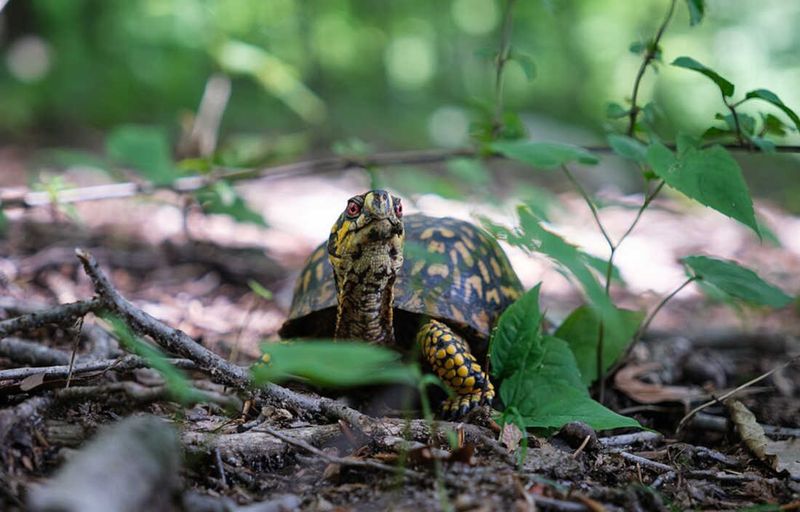
Two assumptions follow a box turtle sighting more than any others: that the garden soil must be healthy, and that the yard must be overrun with slugs or insects. Both ideas are understandable, but neither one holds up under scrutiny, and acting on them can lead to poor decisions about your soil and your pest management.
Soil health is a measurable condition. Oregon State University Extension’s guide on soil health and biota describes it as the sustained capacity of soil to function as a living ecosystem, assessed through properties like organic matter, microbial activity, biological respiration, and nutrient cycling.
A turtle walking through your bed doesn’t measure any of those things. If you want to know whether your soil is genuinely healthy, a soil test through NC State Extension is the right tool – not a wildlife sighting.
The pest-control assumption is similarly overstated. Eastern box turtles are opportunistic omnivores with a genuinely broad diet.
According to the NC Wildlife species profile, they eat slugs, snails, insects, earthworms, mushrooms, berries, fallen fruit, plant material, carrion, and other small animals. A turtle passing through your beds may well eat a slug or two along the way.
What that doesn’t mean is that your garden has an unusually high pest load, or that the turtle will reduce it in any meaningful way. The UNCG Box Turtle Connection guide confirms the diet is broad and variable – adults often eat substantial plant material and fruit alongside invertebrates.
No reliable source establishes that a free-ranging box turtle in a residential garden bed provides measurable pest suppression.
The defensible conclusion from a sighting is simply that wildlife is using your habitat. That’s a genuinely good thing.
But it doesn’t replace a soil test, and it doesn’t mean you should skip slug management or assume the turtle is handling your pest problem for you.
Leaving a healthy turtle where it is protects its territory
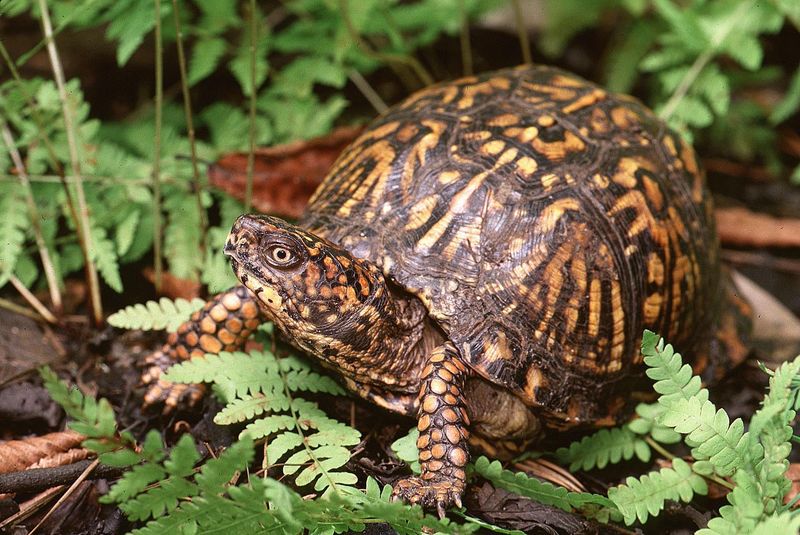
An apparently healthy turtle moving through your garden bed needs exactly one thing from you: to be left alone. Eastern box turtles have strong homing behavior, and their attachment to a familiar territory is not casual.
NC Wildlife Resources Commission specifically advises against relocating box turtles or taking them home, because moving an animal away from its established territory can cut it off from food sources, overwintering sites, nesting areas, and shelter it has used for years.
That kind of disruption carries real costs. A turtle carried to a nearby park or wooded area may spend weeks – sometimes months – attempting to return to familiar ground, crossing roads and unfamiliar terrain in the process.
The animal doesn’t recognize a “better” habitat when it’s placed there; it recognizes home, and home is where it was before you picked it up.
North Carolina’s eastern box turtle is classified as a nongame species with no open season. NC Wildlife discourages possession of wild box turtles because removing individuals from a local population reduces the breeding pool, and eastern box turtle populations recover slowly.
Adults don’t reach reproductive maturity for years, and local groups can take decades to rebound from collection pressure. This isn’t an extended legal lecture – just context for why the “leave it alone” guidance has conservation weight behind it, not just sentiment.
Practically speaking, a turtle using your yard is not a problem that needs solving. It isn’t eating your plants in any significant way, it isn’t a danger to people or pets, and it isn’t lost.
Watching it from a distance for a few minutes and then returning to your gardening is the right response. The animal will move on when it’s ready, and it may return again later – because your yard is part of its home range, not a random stop.
When should you move the turtle?
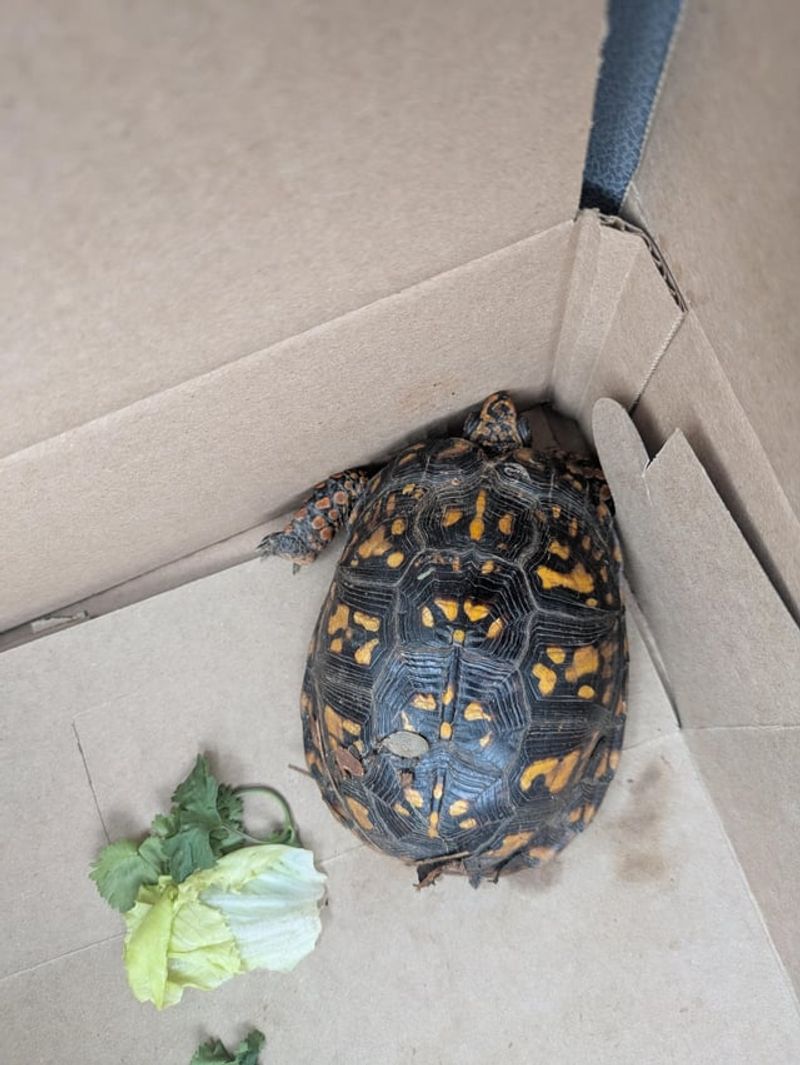
Garden use alone is not a reason to move a box turtle. The case for intervention is narrow and specific: a turtle in immediate physical danger, such as one sitting in active traffic or directly in the path of a lawn mower, warrants a brief, targeted assist.
Everything else – a turtle resting in a bed, exploring near a patio, or moving slowly through the yard – falls into the category of normal behavior that doesn’t require your help.
When a move is genuinely necessary, NC Wildlife guidance is precise: move the turtle only the shortest distance required to get it out of danger, ideally less than 50 feet. If a turtle is crossing a road, carry it to the side it was already heading toward – do not reverse its direction.
Turning it around doesn’t protect it; it just means the turtle will attempt to cross again.
A few other situations worth knowing: a turtle found in a window well, trapped behind a fence, or stuck in netting around garden beds can be gently freed and placed nearby on the ground. Once the immediate hazard is removed, your job is done.
The turtle doesn’t need to be carried to a park, released near a pond, or transported to wooded land across town.
Long-distance relocation – even to a place that looks like better habitat – separates the animal from the small, familiar territory it depends on. The turtle may wander extensively trying to get back, which increases its exposure to roads, predators, and stress.
Safe assistance means the shortest possible move, in the direction the turtle was already going, followed by leaving it alone to continue on its way.
Small yard choices can preserve the cover it uses
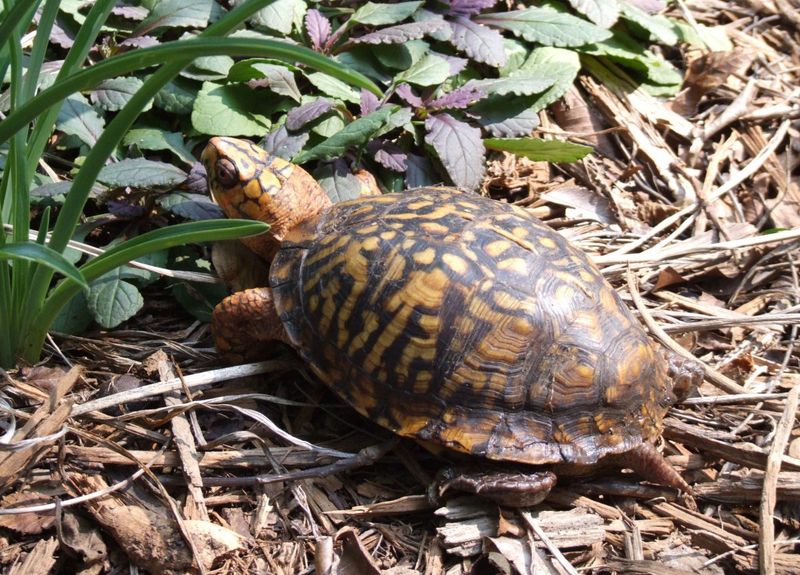
You don’t need to redesign your yard to support a box turtle’s habitat. A few low-effort choices near the edges of your cultivated area can make a meaningful difference without interfering with how you use your garden.
The UNCG Box Turtle Connection guide identifies leaf litter, fallen branches, brush piles, mature-tree shade, and areas of undisturbed moist or soft soil as the habitat features eastern box turtles rely on for cover, resting, foraging, and overwintering. Keeping a modest amount of that material along a fence line, under a hedgerow, or at the shaded edge of a bed costs nothing and requires almost no upkeep.
The goal is to avoid clearing or compacting every sheltered corner of the property, not to turn your yard into a nature preserve.
Paths and planting areas can stay fully functional. The idea is to leave some untouched edges rather than tidying every square foot.
A brushy corner near the back fence, a small accumulation of fallen leaves under a mature tree, or a strip of undisturbed ground along a drainage area can all serve as useful cover without affecting how the rest of the yard looks or performs.
Pesticide use near any wildlife-friendly area deserves careful attention. NC State Extension’s pesticide safety guidance is clear: products must be used according to their labels and only on labeled crops or sites.
Improper use can harm beneficial insects, contaminate soil and water, and injure wildlife. Never apply slug bait or spray on the assumption that a turtle will safely eat treated prey – a study on organochlorine pesticide residues in eastern box turtles documented potential immunosuppressive effects, and while that research involved older compounds, the broader caution about pesticide exposure in wildlife remains relevant.
These habitat-supporting choices give a passing turtle better options near your property, but they are not a guarantee the animal will stay. The turtle follows its own range, and that range extends well beyond your lot line.
Injury, nesting, and handling require different responses
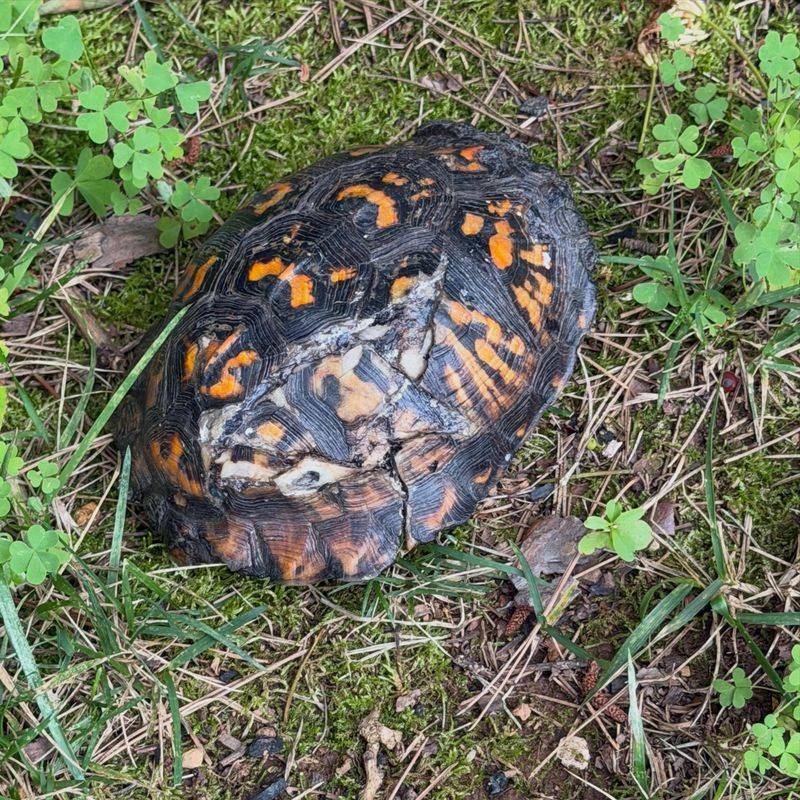
Not every unusual turtle encounter calls for the same response, and sorting out what you’re actually seeing helps avoid unnecessary worry – or unnecessary inaction when help is actually needed.
Disturbed soil near a garden bed is not reliable evidence of a turtle nest. Ordinary garden activity, animal digging, and irrigation can all produce similar disturbance.
If nesting has genuinely occurred, NC Wildlife notes that females lay three to six eggs in shallow holes and leave them unattended afterward. No protective action is typically required from you.
If a nest site is accidentally covered, the covering should be monitored and removed after the ground settles so it doesn’t interfere with hatchling emergence.
A turtle resting quietly, moving slowly, or pulling into its shell when approached is behaving normally and does not need intervention. The signs that do warrant professional help are physical: a cracked or crushed shell, active bleeding, a visible wound, or a turtle that cannot right itself and shows no response over time.
For any of those situations, contact a licensed reptile wildlife rehabilitator rather than attempting home treatment. NC Wildlife’s injured and orphaned wildlife resource can help you locate the right contact.
NC Wildlife also notes that some injuries can heal on their own, so getting professional advice before capturing the animal is worth doing when possible.
Handling any turtle should be kept brief and purposeful. CDC guidance on reptiles and amphibians is direct: reptiles can carry Salmonella even when they appear completely healthy.
Wash your hands thoroughly with soap and water after any contact. Extra caution applies around children under 5, older adults, and anyone with a weakened immune system – those groups face higher risk from Salmonella exposure and should avoid handling turtles altogether when possible.
The best garden response is to let the signal remain wild
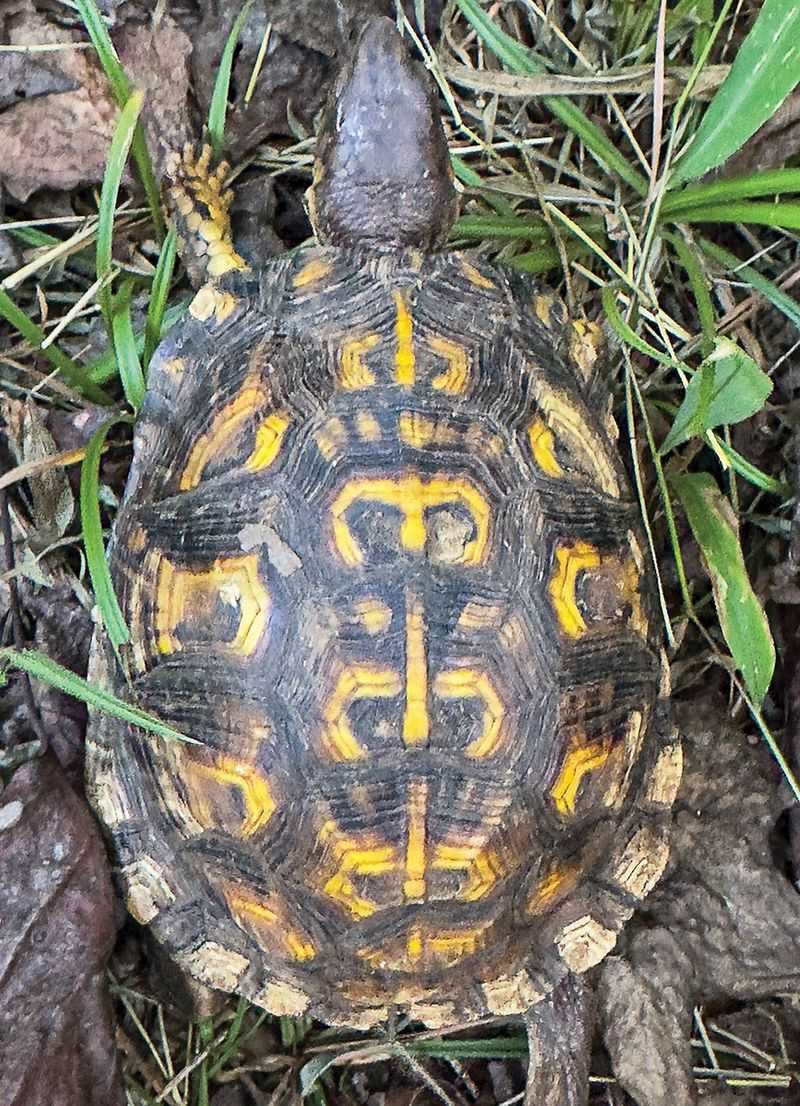
An eastern box turtle in your garden bed is telling you something real: your property connects to usable habitat, and native wildlife is moving through it. That’s worth recognizing.
What it isn’t telling you is that your soil passed a health test or that a pest outbreak is underway.
The response sequence is straightforward. Leave a healthy turtle where it is.
If it’s in immediate danger, move it only the shortest necessary distance in the direction it was already traveling. Preserve some leaf litter, shade, and undisturbed ground near the bed edges.
Use pesticides carefully and only as labeled, never assuming that treated prey is safe for wildlife. For a cracked shell, bleeding, or obvious injury, contact NC Wildlife or a licensed reptile rehabilitator rather than treating the animal yourself.
A North Carolina yard can stay productive, tidy, and family-friendly while also supporting a native species that has been part of this landscape far longer than any garden bed. The UNCG Box Turtle Connection guide frames it well: habitat support means keeping a few useful features intact, not turning your yard into a managed wildlife enclosure.
The turtle doesn’t need a pond, a feeding station, or a permanent address at your place. It just needs you to leave the door open.