
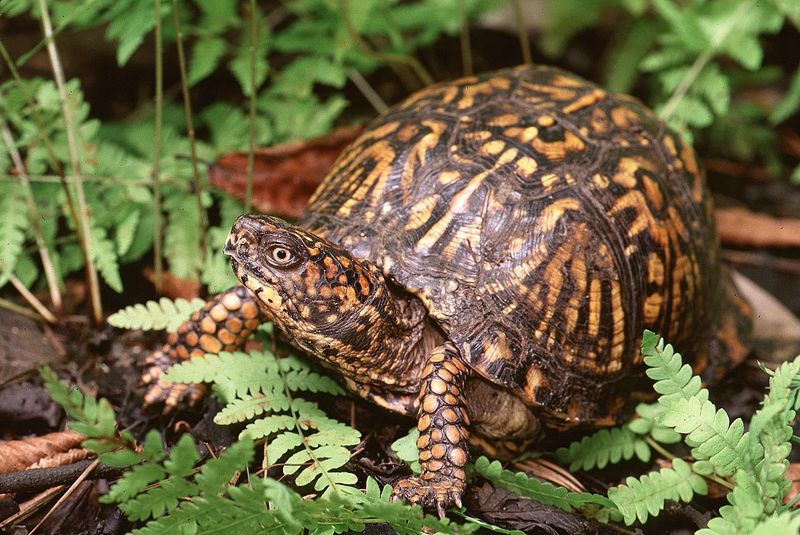
Spotting a box turtle near your garden beds can feel like a sign from nature, and in a way, it is, just not the one most people assume. Many North Carolina homeowners wonder if the turtle is drawn by healthy soil or a surge in garden pests, but the real story is more nuanced and more interesting.
Understanding why these animals wander through residential yards can help you protect them and make smarter choices about how you manage your outdoor space.
An eastern box turtle is one possible visitor—not a guaranteed identification
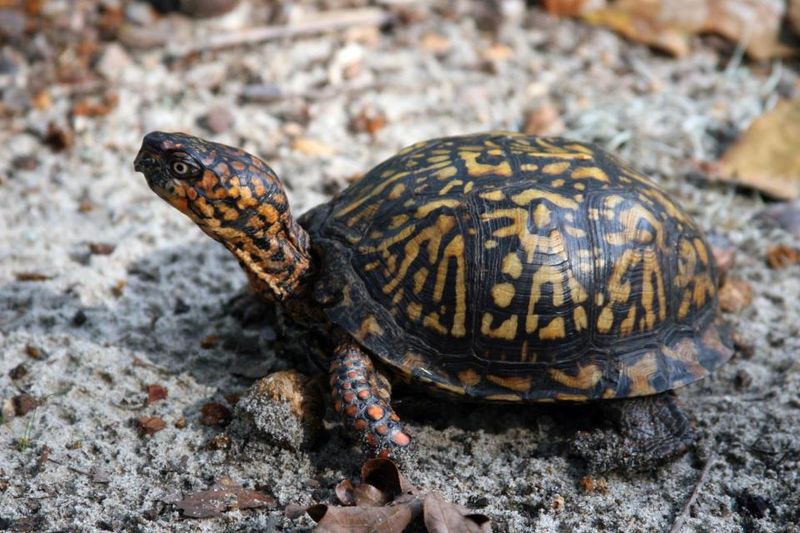
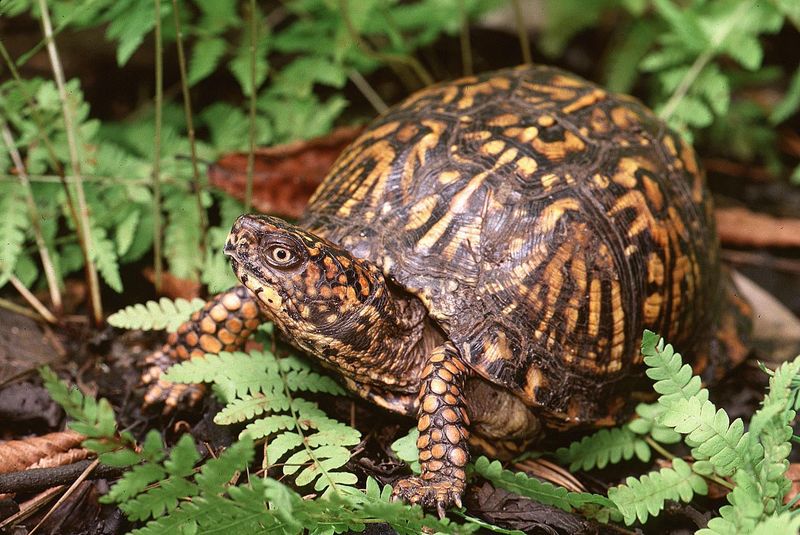
Before deciding what a yard turtle means for your garden, the first step is figuring out what you are actually looking at. Eastern box turtles, Terrapene carolina carolina, are the species most North Carolina homeowners encounter, and NC Wildlife Resources Commission lists them as statewide residents that regularly move through neighborhoods.
Their high-domed shell, hinged plastron that closes completely, and warm orange-and-brown patterning make them recognizable, but location alone is not enough to confirm an identification.
Not every yard turtle is an eastern box turtle. Snapping turtles, for instance, occasionally travel overland and can end up in unexpected places.
A common snapping turtle has a rough, keeled shell, a long tail, and a powerful bite, and it requires very different handling precautions than a box turtle. If you are unsure what species you are looking at, the safest choice is to observe from a short distance without touching the animal.
Once you have a reasonable identification, the conservation picture comes into focus. Eastern box turtles are classified as nongame wildlife in North Carolina, meaning they cannot be hunted or trapped, and the state identifies them as a conservation priority in its Wildlife Action Plan.
These animals are long-lived, sometimes surviving several decades, which means every individual lost to a car, a dog, or chemical exposure represents a significant gap in the local population. Threats including roads, habitat fragmentation, collection, pets, and pesticide exposure have contributed to declining numbers in some parts of the state.
Their presence in your yard is genuinely worth paying attention to, even if it does not carry the garden-diagnostic meaning that many sources suggest.
A garden bed can overlap with box-turtle habitat
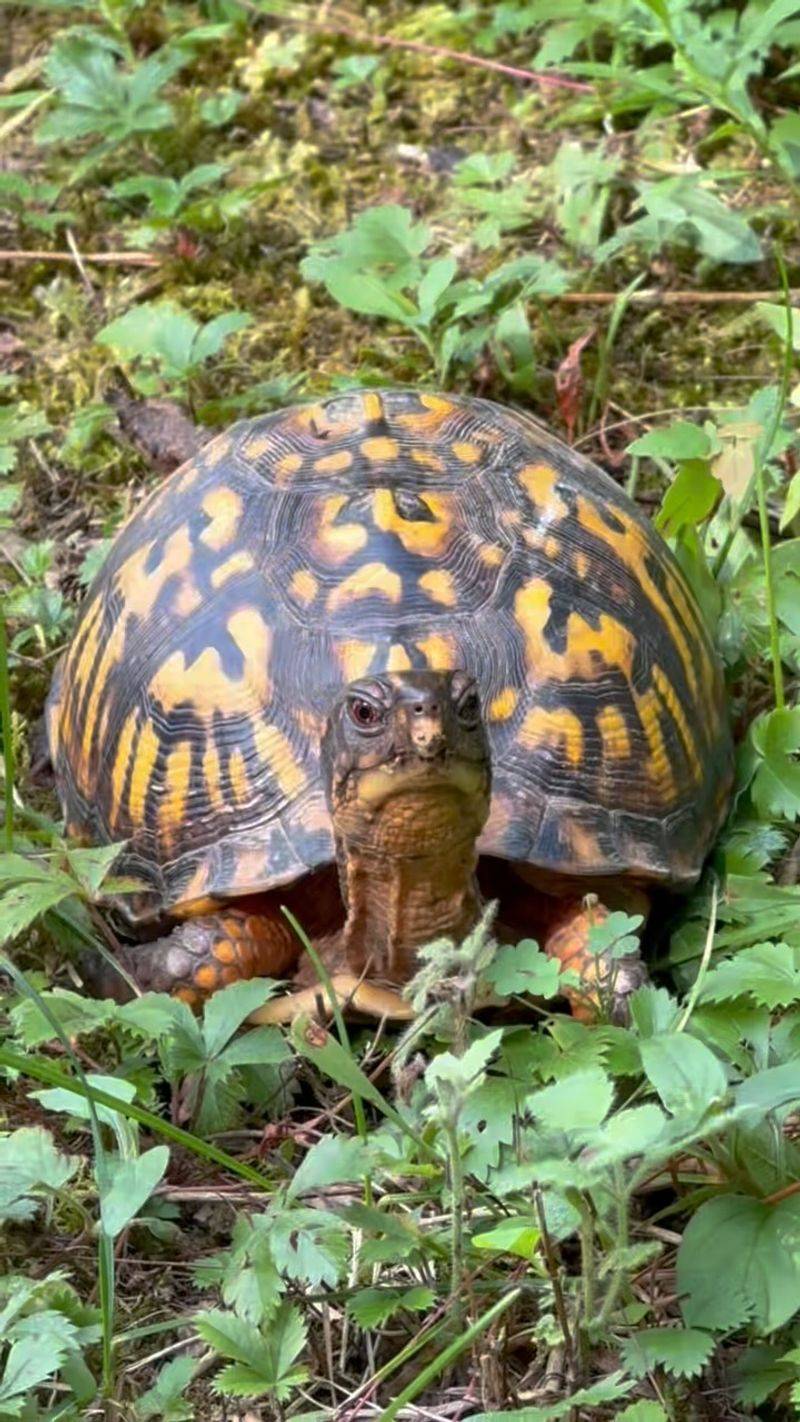
Garden beds sometimes offer a combination of conditions that overlap with what eastern box turtles seek: shade, moisture, loose or disturbed soil, and nearby cover. A North Carolina mountain-wetland study found that turtles selected resting sites with higher humidity and lower surface temperatures, particularly during hot or dry periods.
A mulched bed in partial shade can check several of those boxes without the gardener doing anything intentional to attract wildlife.
Leaf litter, woody debris, and loosened soil at bed edges give turtles places to regulate body temperature and find cover. These microclimate factors, rather than soil fertility, pH, or compost quality, are what the research actually connects to turtle habitat use.
A beautifully amended raised bed and a weedy, disturbed patch at the fence line might both attract a passing turtle if they share the right humidity, shade, and access to food, while a pristine bed baking in full afternoon sun may not appeal at all.
Habitat use also varies across North Carolina. Research comparing sandhills and coastal-plain populations found meaningful differences in how turtles selected habitat between those two settings, which reinforces that no single bed feature explains every visit.
A broader review of box-turtle ecology also points to connected cover and access to varied food sources as key factors across landscapes. The practical takeaway is that a turtle near your beds is responding to local microhabitat conditions, not delivering a verdict on your gardening skill.
The turtle’s diet does not make it a pest-control service
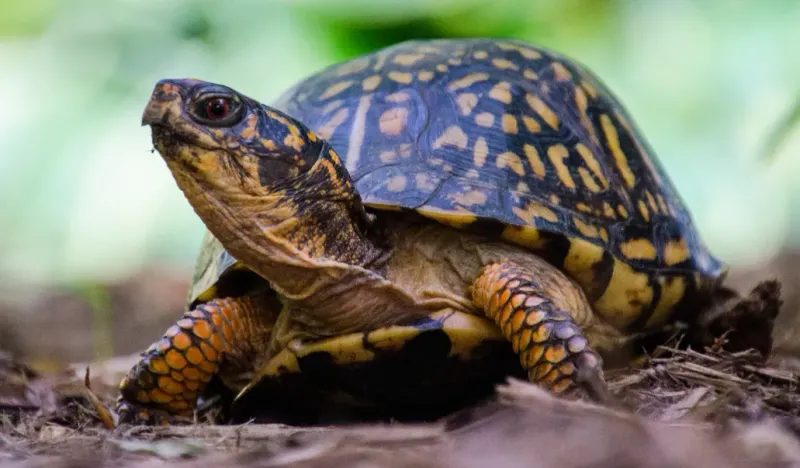
Eastern box turtles eat a wide range of foods, and that variety is worth understanding honestly. The NC Wildlife eastern box turtle species profile lists berries, fruit, seeds, roots, flowers, mushrooms, grasses, carrion, and small animals such as snails and slugs.
A peer-reviewed diet study published in Diversity documented a broad mixture of leaves, fruit, fungi, beetles, caterpillars, gastropods, millipedes, feces, and carrion, confirming that these animals are opportunistic generalists rather than focused insect hunters.
Yes, an eastern box turtle may eat a slug or snail it encounters while moving through your beds. That is a real behavior.
What it does not add up to is reliable, measurable pest suppression. No published research quantifies how many garden pests a single turtle removes per season, and nothing in the available literature shows that a turtle’s presence reduces crop damage or lowers slug or snail populations to levels a gardener would notice.
Framing the turtle as a biological-control agent overstates what the evidence actually shows.
Claims about tick or mosquito control should be set aside entirely. Those specific assertions have no footing in the eastern box turtle research for North Carolina.
The turtle’s diet is broad and fascinating on its own terms, mixing plant material, fungi, carrion, and various invertebrates across the seasons. A turtle foraging near your tomatoes is not signaling that pests are out of control; it is simply eating what it finds as it moves through available habitat.
Appreciating that distinction keeps expectations realistic and avoids decisions based on a pest-control promise the animal cannot actually deliver.
One sighting cannot grade your soil or reveal a home range
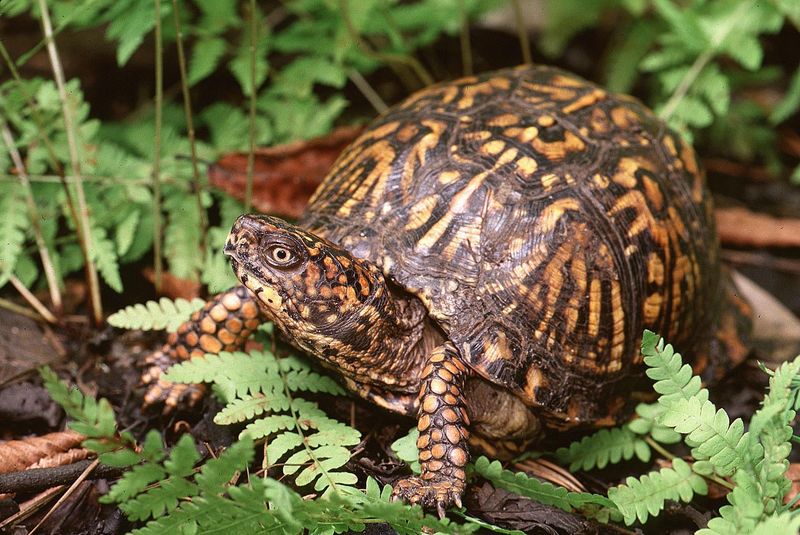
A turtle pausing near your raised bed is easy to interpret as a sign of something specific, healthy soil, a pest surge, or a resident animal that has claimed your garden. Each of those interpretations goes further than the evidence supports.
A 2026 USGS-supported movement study found that eastern box turtles selected deciduous forest patches, avoided roads and trails, and sometimes moved beyond the boundaries of protected green spaces into surrounding development. A single yard sighting could represent any point along a much longer travel route.
The turtle may be passing through on its way somewhere else, seeking a cooler or moister spot during a warm afternoon, searching for food, or investigating a possible nesting site. NC Wildlife notes that box turtles typically spend their lives within a small home territory, but that territory is defined by the turtle, not by the boundaries of a garden bed.
One appearance, or even a handful of appearances across a season, does not confirm that the animal lives in your yard or follows a predictable daily path through your beds.
Soil quality, fertility, pH, and compost richness are not factors that any published research connects to box-turtle presence. The characteristics documented in habitat studies are microclimate-based: humidity, surface temperature, shade, and access to cover and food.
A turtle could wander through a bed with compacted, nutrient-poor soil if that spot happens to offer the right combination of moisture and cover on a hot day. The sighting tells you something real about the turtle’s immediate needs, but it does not grade your amendments or confirm what is happening underground.
Leave a healthy turtle where you find it
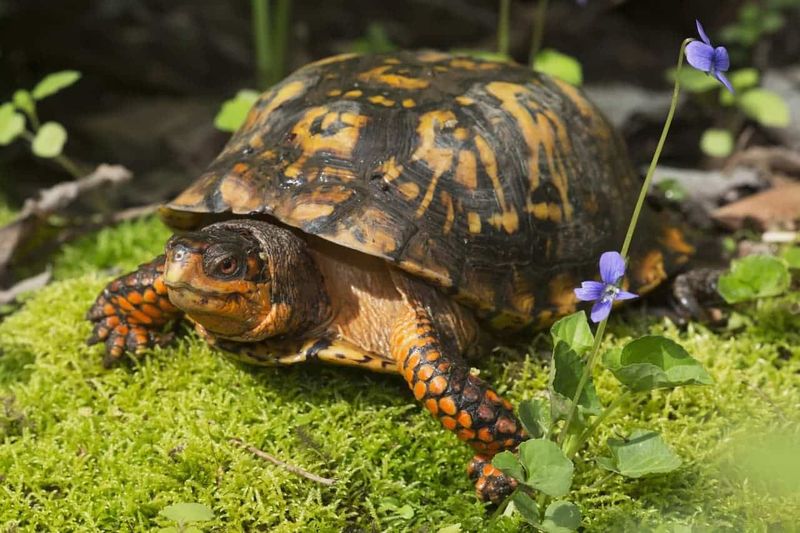
When a healthy eastern box turtle turns up near your beds, the right response is straightforward: watch it, enjoy it, and leave it alone. NC Wildlife is direct on this point: do not take the turtle indoors, do not keep it as a pet, do not feed it, and do not carry it to a nearby wooded area, pond, or another neighborhood that seems like a better fit.
These well-meaning moves can cause real harm.
The reason comes down to homing behavior. Eastern box turtles have strong attachments to their home territory and typically spend their entire lives within a relatively small area.
A turtle relocated even a short distance may spend weeks or months trying to return, crossing roads and unfamiliar terrain in the process, and may never successfully reestablish itself. Moving it to a pond is particularly misguided because eastern box turtles are terrestrial animals, not aquatic ones, and placing one in or near deep water puts it at risk.
For a turtle in immediate danger, such as while crossing a road, move it only the shortest safe distance in the direction it was already traveling. U.S.
Fish and Wildlife Service guidance on helping turtles cross roads reinforces this approach: finish the crossing the turtle already started, set it down facing the same direction, and walk away. Do not turn it around, carry it back to where it came from, or take it to a location you prefer.
A turtle with no visible injury that simply wanders through your garden needs nothing from you except the freedom to keep moving.
Reduce garden hazards without trying to lure turtles
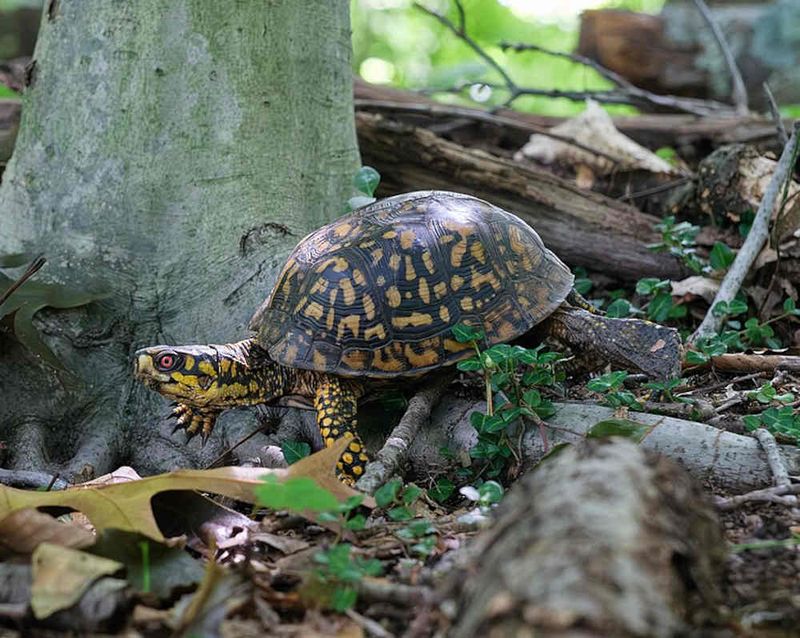
Making your yard safer for eastern box turtles does not require building a habitat feature or planting a turtle-specific garden. The most useful actions are subtractions: fewer hazards, less unnecessary clearing, and more careful timing around power tools.
Before mowing, tilling, edging, or digging in an area where you have seen a turtle recently, take a few minutes to walk the area and check for animals resting under plant material or in loose soil. Turtles can hold very still and are easy to miss at mowing height.
Retaining some leaf litter and natural cover at shaded or damp bed edges reduces the chance that a turtle loses a refuge it was using. NC Wildlife’s conservation and habitat guidance supports low-intervention yard management as a way to protect native species, and the USGS movement research underscores why connected patches of cover matter for turtles moving through suburban landscapes.
None of this guarantees a turtle will visit, but it does lower the likelihood that one moving through your yard will be injured or lose access to the conditions it needs.
Pesticide use deserves particular attention. EPA guidance on reducing pesticide impacts on wildlife recommends favoring nonchemical controls where possible, treating only the areas that actually need it, and keeping pesticides away from wildlife and water.
If you do use a pesticide product, the label is a legally enforceable document, and following it exactly is not optional. Do not assume that a product labeled as natural or botanical is automatically safe around reptiles or other nontarget wildlife; EPA pesticide safety guidance applies broadly regardless of a product’s origin.
Avoid spraying or broadcasting any pesticide in an area where a turtle is present or where you have seen one foraging recently.
Treat possible nests and injuries with care
Female eastern box turtles typically lay three to six eggs in a shallow nest scraped into loose, warm soil and then leave without returning. If you notice a turtle digging repeatedly in one area of your yard or garden, or if you uncover a cluster of leathery eggs while working, the best first response is to stop digging and give the area a wide berth.
NC Wildlife notes that box-turtle nests generally do not require human intervention, and unnecessary disturbance is one of the main risks to successful hatching.
If predator pressure is a genuine concern in your yard, a temporary piece of chicken wire or hardware cloth placed loosely over the nest area can help. This is an optional step, not a standard requirement, and it comes with responsibilities.
Check the cover daily so you will know when hatchlings are emerging, and remove it promptly after the ground has settled following hatching. A cover left in place indefinitely can trap or starve hatchlings that cannot push through it, turning a protective measure into a hazard.
Injuries are a separate situation entirely. A turtle with a cracked or bleeding shell, one that appears lethargic or unresponsive, or one showing signs of serious trauma needs professional help, not home care.
Contact a licensed North Carolina wildlife rehabilitator rather than attempting to clean wounds, apply adhesives to a cracked shell, or house the animal while it recovers. Rehabilitators have the training, supplies, and legal authorization to give a seriously injured turtle the best possible chance, and reaching out quickly after an injury is found improves outcomes significantly.
Protect the turtle, not the soil-and-pest myth
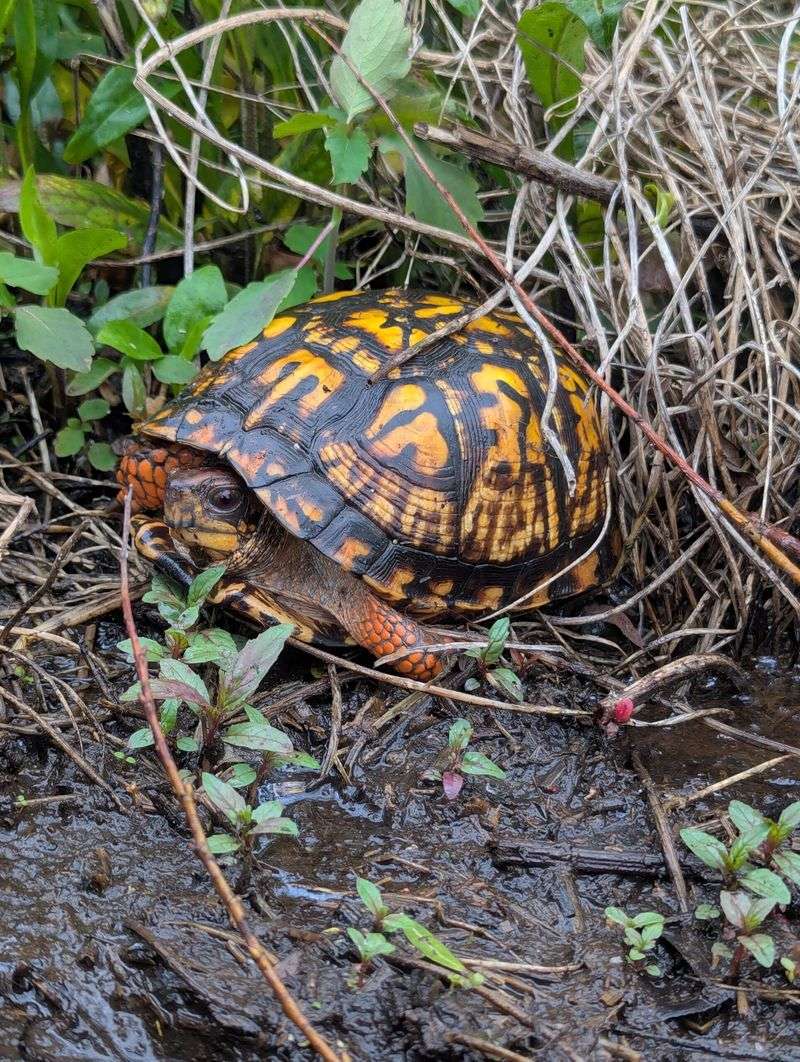
A confirmed eastern box turtle near your garden beds is responding to something real: accessible cover, a cooler microclimate, moisture, available food, or a route it has traveled before. Those are legitimate and interesting reasons for the visit.
What the sighting does not do is evaluate your compost, confirm a slug infestation, or promise any measurable reduction in garden pests. NC Wildlife and published movement research both point toward habitat connectivity, microclimate, and cover as the relevant factors, not soil quality or pest pressure.
The practical stewardship response is straightforward: leave healthy turtles wild, reduce the avoidable hazards in your yard, skip the pesticide broadcast when a turtle is nearby, and check before you run the tiller. Treat the encounter for what it actually is, a native animal moving through a landscape that still has enough connected habitat to support it, and make your corner of that landscape a little safer each time one passes through.