
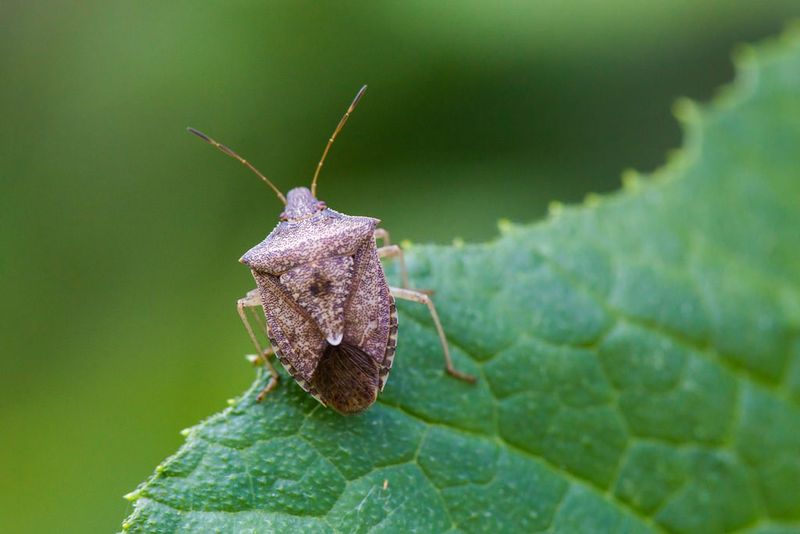
Around late August, many North Carolina homeowners start noticing brown, shield-shaped bugs gathering on sunny walls, slipping under door frames, and appearing on windowsills. Most of these are brown marmorated stink bugs making a seasonal move toward warm, sheltered spots before cooler weather arrives, and the biggest waves tend to hit in September and October.
Knowing what is actually driving this movement, and what to do about it, can save you a lot of unnecessary worry and wasted effort.
Late summer signals a seasonal move—not necessarily a yard infestation
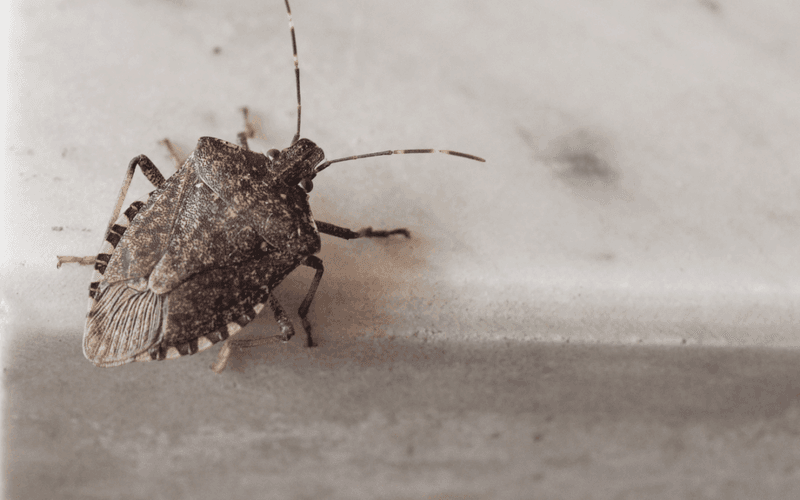
Every August, something predictable happens across the North Carolina Piedmont and mountain counties: brown marmorated stink bugs begin showing up on the sides of houses, around window frames, and near door gaps. NC State Extension’s brown marmorated stink bug guide explains that adults shift from summer feeding sites toward protected overwintering locations as days shorten and temperatures begin to drop.
They gather on warm, sun-facing building surfaces and find their way in through cracks, loose screens, gaps around vents, trim, and utility openings.
Seeing these bugs does not mean your yard has a severe infestation. Adults can travel from surrounding woods, nearby farms, roadside vegetation, neighboring properties, or any combination of these sources.
The insects respond to warmth and shelter, and a house with accessible gaps is simply an attractive option regardless of what is growing in the yard next to it.
Activity can start as early as late August, but the largest home invasions typically peak in September and October. Timing varies with local weather, population levels, and the mix of habitat nearby, so a mild late summer may push the peak later while a cool snap can accelerate movement.
North Carolina’s pattern is also geographically uneven. NC State Entomology’s statewide overview confirms that BMSB is most established in the Piedmont and mountains, with historically lower pressure in the Coastal Plain.
As of early 2026, the insect had been confirmed in 80 of the state’s 100 counties, so most NC homeowners in these regions can reasonably expect some seasonal movement.
Homes near mixed agricultural and woodland edges tend to see more bugs, according to USDA Agricultural Research Service findings on landscape type and stink bug pressure. That connection supports a cautious awareness of surrounding habitat, but it does not point to any single plant or yard feature as the cause.
Confirm the insect before you treat anything
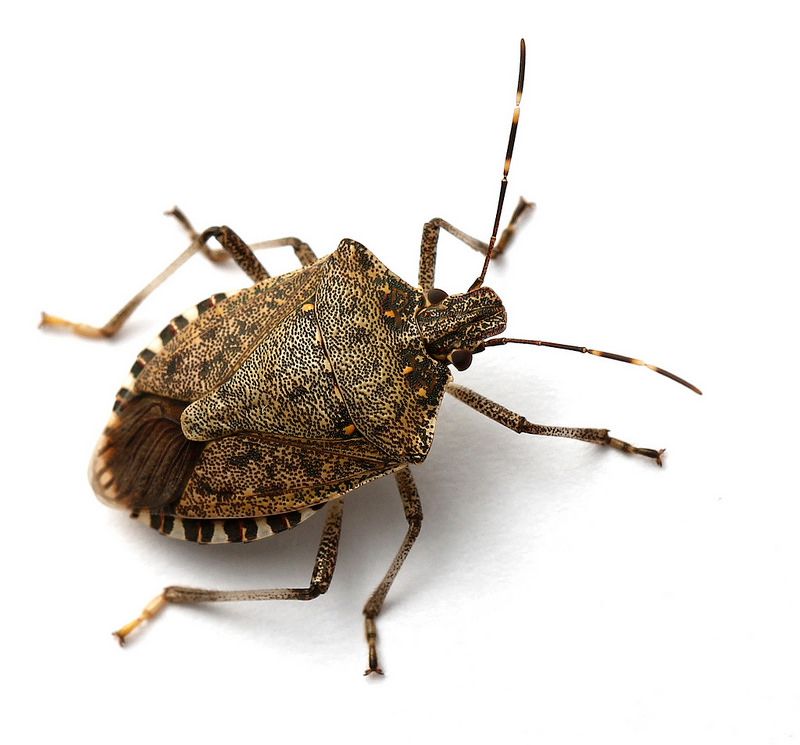
Not every brown stink bug crawling across your porch is a brown marmorated stink bug. North Carolina is home to several native stink bug species, and rushing to treat before confirming which one you have can lead to unnecessary pesticide use and, in some cases, harm to insects that are actually helping your garden.
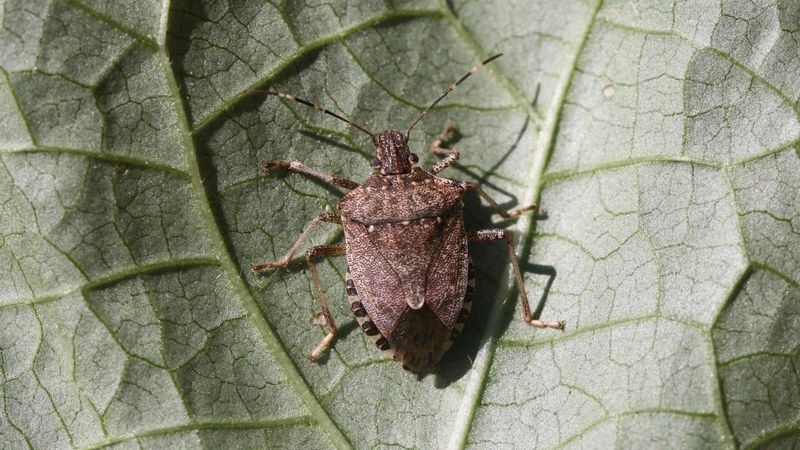
EPA guidance on brown marmorated stink bugs describes the insect as approximately 14 to 17 millimeters long, shield-shaped, and mottled brown overall. The most reliable identification marks are the alternating light and dark bands running along the antennae and around the outer edge of the abdomen.
If you cannot see those bands clearly, take a close photograph and compare it to images from NC State Extension or submit it through a local cooperative extension office before deciding on any response.
NC State’s statewide BMSB resource notes that several native stink bugs in North Carolina look similar to BMSB at a glance. Some are plant feeders with different management implications, while others are predators that actively hunt caterpillars, beetle larvae, and other garden pests.
Treating a predatory stink bug as an enemy works against your own garden’s natural balance.
One practical close-up clue comes from beak shape. NC State’s guide to distinguishing predatory from plant-feeding stink bugs explains that predatory species tend to have a beak that is noticeably thicker relative to the antennae, while plant-feeding species have a thinner, more needle-like beak.
This distinction may require a hand lens or a sharp photograph, but it is worth the extra few seconds before reaching for any product.
When in doubt, hold off on treatment. Confirming the insect first keeps your options open and protects the beneficial species that may already be working in your yard.
Inspect the garden without blaming every plant

Outdoor sightings of brown marmorated stink bugs are worth a walk through the garden, but finding the insects near your vegetable beds does not mean those beds caused the invasion. BMSB feeds on a wide range of plants, and adults can arrive from many directions before landing on whatever happens to be available and ripe.
NC State Extension’s full BMSB guide identifies susceptible crops that are worth checking closely: tomatoes, peppers, okra, beans, corn, Swiss chard, apples, peaches, pears, plums, and caneberries such as blackberries and raspberries. Feeding injury can take several forms, including surface discoloration, misshapen or deformed fruit, bruising-like marks, and internal damage that may not be obvious from the outside until you cut the fruit open.
A tomato that looks fine on the vine can have spongy, discolored flesh from a single feeding puncture.
Wild host plants in western North Carolina add another layer to the picture. NC State’s wild host plant resource documents tree-of-heaven, paulownia, catalpa, wild cherry, and black walnut as documented BMSB hosts in the region.
Tree-of-heaven and paulownia are non-native invasive species, and addressing them on your property may be worth considering for reasons that go beyond stink bugs. Porcelainberry is another invasive host that NC State has flagged as potentially worth managing.
Native trees are a different matter entirely. Dogwood, maple, black walnut, and other native trees support a wide range of wildlife and should not be removed simply because stink bugs appear near them.
NC State Extension is explicit on this point: removing healthy native trees is not a recommended or justified response to BMSB pressure. Focus your inspection on crops showing actual feeding injury and on any invasive host plants you may have been considering removing for other reasons already.
Seal the house before the fall return

Exclusion is the single most durable tool a North Carolina homeowner has against brown marmorated stink bugs, and the timing of that work matters as much as the work itself. NC State Extension’s BMSB FAQ specifically recommends completing exclusion work after overwintered bugs have left in spring or early summer, but before they begin returning in late August or fall.
Sealing entry points while bugs are still inside can trap them in wall voids and attic spaces, where they will eventually work their way into living areas throughout the winter.
A useful inspection sequence starts at the most common entry points. Check all window frames and door frames for gaps, damaged caulk, or cracked sealant.
Look at door sweeps and weather stripping and replace any that no longer make solid contact. Examine siding and fascia boards for gaps where materials meet or have shifted.
Move to the roofline and inspect attic vents, soffit seams, and any gap around the chimney or chimney cap. Inside the crawl space, check foundation vents, utility pipe penetrations, faucet connections, and any opening where wiring or cables enter the structure.
EPA guidance recommends repairing or replacing damaged window and door screens, installing chimney caps or screens if not already in place, and securing crawl-space and attic openings. These steps address the structural gaps that allow bugs to move from the building’s exterior into its wall cavities and living spaces.
A few supporting steps can complement the sealing work without replacing it. USDA ARS research on stink bug light response confirms that BMSB adults react to light during late summer and fall.
Turning off exterior lights near entry points on warm evenings, or switching to amber or warm-spectrum bulbs, may reduce the number of bugs drawn to your walls, though this is a modest step rather than a solution on its own. Keeping deep mulch, leaf litter, dense ground cover, and debris from piling against the foundation also removes sheltered routes that make it easier for bugs to reach gaps in the structure.
These are sound general pest-exclusion habits, but they will not stop regional movement on their own.
Remove indoor bugs without making the odor worse
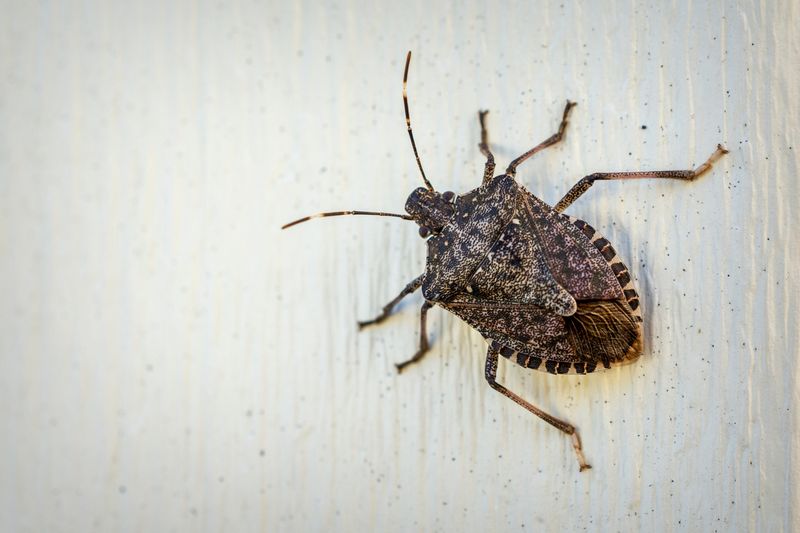
Finding stink bugs inside the house calls for a calm, deliberate approach. The biggest mistake most people make is crushing or swatting the insects, which triggers the release of the pungent defensive chemical that gives these bugs their name.
In an enclosed room, that odor lingers and can be surprisingly strong.
EPA’s stink bug guidance recommends two practical removal methods: vacuuming visible bugs or collecting them in a jar and drowning them in soapy water. Both work well for small numbers on walls, ceilings, and windowsills.
If you use a vacuum, empty or seal the canister promptly and place the contents in a sealed bag for disposal, or freeze the canister contents before emptying, because the insects can leave a strong odor inside the machine even after removal.
NC State’s BMSB FAQ advises against releasing captured bugs outside near the house, since they may simply return to the same entry points. Dispose of them in soapy water or sealed bags and place those in outdoor trash.
Indoor sprays, foggers, and insecticidal dusts are generally poor choices for this situation. Penn State Extension’s BMSB resource explains that products applied to living areas do not reach bugs overwintering in wall voids, attics, or other hidden spaces, and they do not prevent additional insects from emerging as temperatures fluctuate through fall and winter.
There is also a secondary problem: dead insects accumulating inside wall voids can attract carpet beetles, which then cause their own damage to fabrics, stored items, and natural fiber materials throughout the home.
BMSB does not bite, sting, transmit disease, or damage household materials. The concern indoors is primarily odor and nuisance, with the occasional possibility that very sensitive individuals may experience irritation from the insects’ defensive chemicals.
Steady manual removal and good exclusion handle the problem more reliably than any spray product.
Scout the garden before choosing a treatment
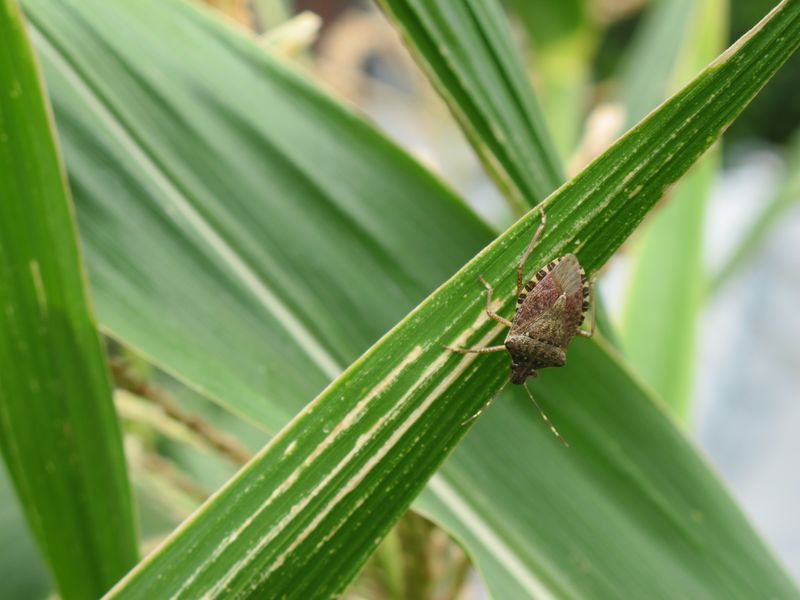
Before reaching for any product in the garden, the first step is always to confirm what you are looking at and how much actual crop damage is occurring. A few adult stink bugs on a tomato plant at the end of the season is a very different situation from a heavy population causing widespread fruit injury during peak harvest, and the response should match the actual problem.
NC State Extension recommends scouting susceptible crops for eggs, nymphs, adults, and meaningful feeding injury before making any treatment decision. BMSB eggs are pale green and barrel-shaped, laid in neat clusters on the undersides of leaves.
Nymphs range from small dark juveniles to larger insects that begin to resemble adults. Finding eggs or nymphs alongside visible crop damage gives you much clearer information than adult sightings alone.
For limited populations, hand-picking or knocking bugs into a container of soapy water is an effective and low-risk first response. Work in the early morning when the insects are slower and less likely to fly.
University of Maryland Extension’s BMSB FAQ also notes that row covers and other physical barriers can help protect susceptible crops from feeding, though covers need to be removed or opened during flowering to allow pollination and must be managed carefully to avoid trapping heat or humidity that could harm plants.
Sunflower trap cropping, which involves planting sunflowers nearby to draw stink bugs away from edible crops, has been attempted by some gardeners. NC State reports that results from this approach are mixed and that more research is needed before it can be recommended as a dependable technique.
Treat it as an experiment worth noting rather than a reliable fix.
NC State’s integrated pest management guidance consistently places monitoring and scouting ahead of treatment decisions. Reserve chemical options for situations where documented, substantial crop damage justifies the added risk and effort.
Avoid broad spraying and unsupported fixes
Reaching for a broad-spectrum spray at the first sign of stink bugs can create problems that outlast the original annoyance. Many of the insects killed by non-selective products are not pests at all.
Predatory stink bugs, parasitic wasps, ground beetles, and other natural enemies that help keep garden pest populations in check are all vulnerable to the same products used against BMSB.
NC State Extension’s biological control resource describes native predators and parasitoids as promising contributors to BMSB suppression, while also noting that current evidence does not support relying on native wildlife alone for dependable control. USDA ARS research on native egg parasitoids found that native biological control is generally insufficient for long-term suppression in many landscapes.
Killing the natural enemies already present makes that situation worse, not better.
When crop damage is substantial enough to justify a pesticide, the product label is the legal and practical starting point. EPA pesticide safety guidance states clearly that using a pesticide in a manner inconsistent with its label is illegal.
EPA’s read-the-label resource walks through what to check: confirm the product is registered for the specific crop and pest, follow the stated application rate, observe re-entry restrictions, respect pre-harvest intervals, and follow any pollinator precautions listed. These requirements protect you, your family, your pollinators, and nearby water sources.
Several other commonly suggested fixes deserve a clear-eyed look. Routine exterior house spraying offers limited, short-lived results and does not address the gaps that allow bugs to enter.
Homemade sprays, essential oils, and unregistered products are not supported by reliable evidence for use on edible crops or around the home, and some carry their own risks. Removing healthy native trees, including dogwood, maple, and black walnut, is not a recommended response to stink bug pressure.
NC State’s wild host plant guidance distinguishes the possible value of addressing certain invasive host plants from the unsupported idea of clearing native trees that have ecological value far beyond their incidental role as stink bug habitat.
Use the sightings as a checklist, not a reason to panic
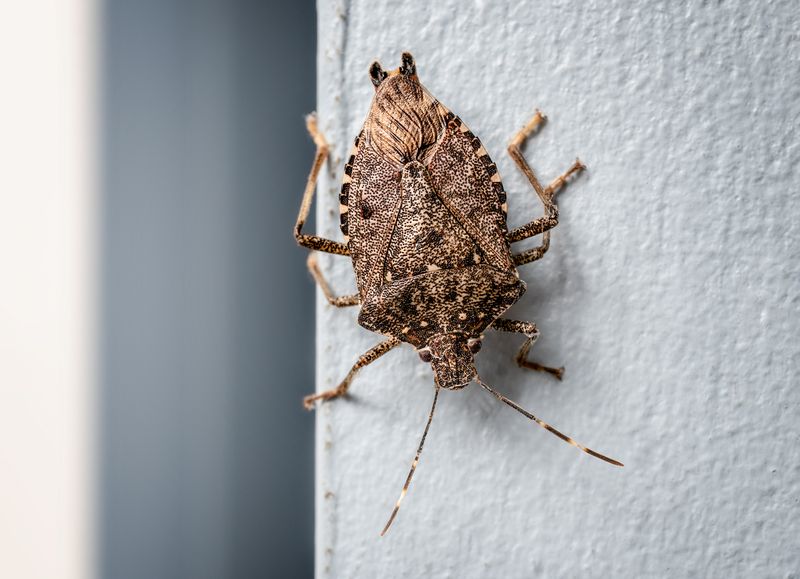
A cluster of brown, shield-shaped stink bugs on your wall in late August or September is most reliably read as a seasonal movement signal, not an emergency. NC State Extension frames BMSB’s fall behavior as a predictable annual pattern tied to overwintering biology, and that framing is the most useful one for a North Carolina homeowner trying to decide what to do next.
The order of operations is straightforward. First, confirm the insect before treating anything.
Second, walk the garden and check susceptible crops for actual feeding injury rather than assuming damage from sightings alone. Third, inspect the house for gaps, damaged screens, and missing weather stripping, and seal those openings if the overwintered bugs have already left for the season.
Fourth, remove any indoor bugs by vacuuming or collecting them in soapy water without crushing them. Fifth, escalate to a garden pesticide only when documented crop damage is substantial, the product is labeled for that specific crop and pest, and you can follow all label requirements.
NC State’s BMSB FAQ and EPA guidance both support this sequence.
BMSB does not reproduce indoors, damage your home’s structure, or threaten your family’s health. The sightings call for informed maintenance, and a house that is well sealed before the September peak is a house that handles the season with far less disruption than one treated reactively.
A stink bug on your wall is a reminder to check the caulk, not a signal that something has gone wrong.