
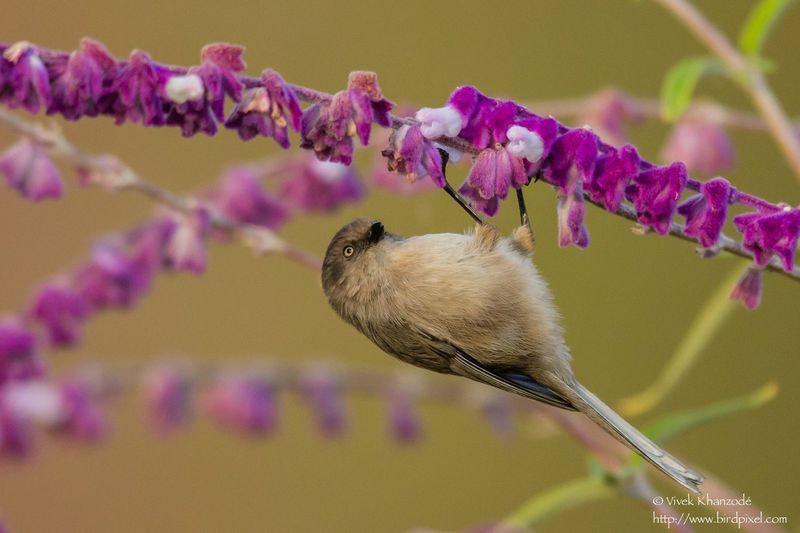
A small, restless cloud of birds sweeps through your rose bushes, hangs upside down from the stems, and vanishes into the neighbor’s oak in under a minute. Those are Bushtits, one of California’s most common and least noticed songbirds, and they were almost certainly hunting the tiny insects living in your garden. Understanding what they are actually doing, and what they are not doing, can change how you think about your yard, your aphids, and your next pruning session.
What a Bushtit flock may be doing in your roses
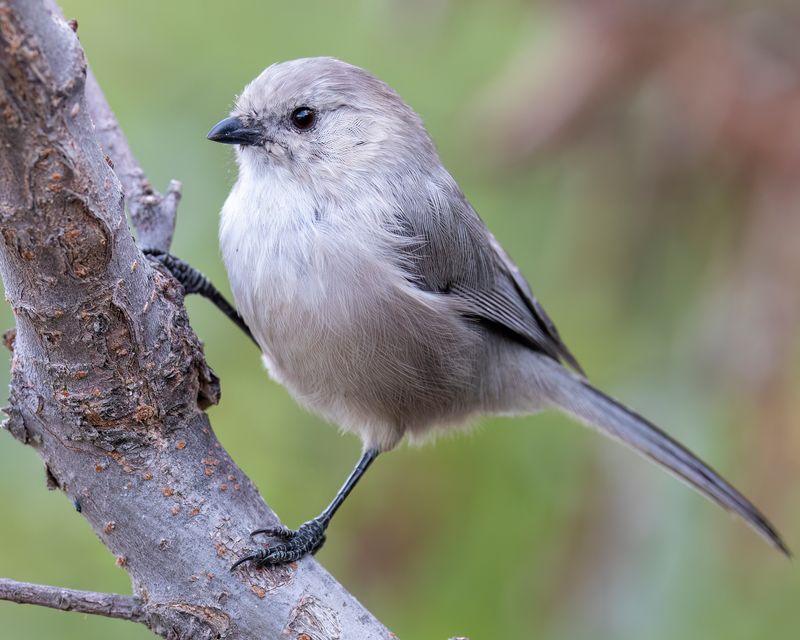
Spotting a wave of tiny gray birds moving rapidly through your rose bushes is easy to miss if you blink. Bushtits are barely larger than a ping-pong ball, and they rarely stay still long enough to study. The fastest way to confirm what you are seeing is to listen for a stream of soft, high-pitched contact calls, watch for birds hanging upside down beneath leaves, and notice how the whole group moves together like a loose, restless cloud through the foliage.
Outside the breeding season, California’s Wildlife Habitat Relationships account for Bushtits describes them foraging in flocks, working methodically through leaves and twigs in search of small invertebrates. That flock behavior is one of the clearest signs you have Bushtits rather than another small species. Flock sizes can range from roughly 10 to 40 birds, and Cornell Lab’s Bushtit overview notes they range widely across multiple properties, so the birds you see today may have already visited three other yards this morning.
A flock working through a rose bush is evidence of active foraging, full stop. It does not confirm the birds are nesting in your yard, and it does not prove every aphid on the canes is being eaten. Bushtits are opportunistic; they take whatever small insects are available in the foliage at that moment. Recognizing this distinction matters because it keeps expectations realistic and prevents the kind of hands-off approach that can let a real pest problem develop while you wait for the birds to finish the job.
Their insect-heavy diet may help, but it is not guaranteed aphid control
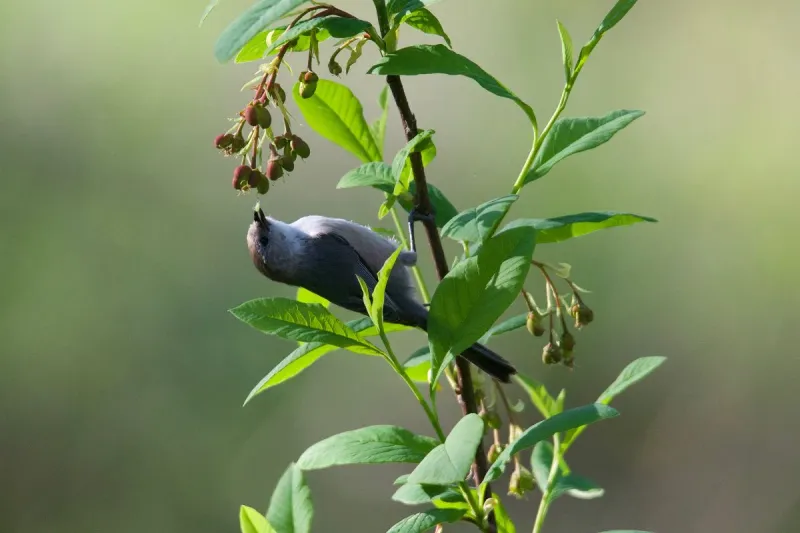
Bushtits eat a broad range of small invertebrates. Cornell Lab’s life history account documents their diet as mostly insects and spiders, including aphids, scale insects, leafhoppers, beetles, caterpillars, wasps, ants, and insect eggs or pupae. That list covers a meaningful slice of the pest community that California gardeners regularly battle on roses and vegetables, which is why a flock moving through your plants is genuinely worth welcoming.
Audubon’s field guide entry reinforces that insects make up the overwhelming majority of what Bushtits eat, and Audubon’s feature on the species notes that a flock moving through a garden can do a considerable amount of insect removal. That observation is useful context, but it is not a controlled study measuring how many aphids were actually removed per plant or whether rose health improved as a result.
The honest version of the claim is this: Bushtits foraging through your roses may eat some aphids and other plant-feeding insects in the process, which could modestly help suppress those populations. What the available evidence does not show is that the birds will reliably clear an infestation, protect a particular crop from damage, or replace the need to monitor and manage pests yourself. Bushtits are also not selective. They will eat spiders, parasitic wasps, and other beneficial insects alongside the pests, so their net effect on any one plant at any one time is genuinely unpredictable.
Treat their presence as a welcome bonus, not a guarantee.
Why heavily manicured yards may offer fewer opportunities
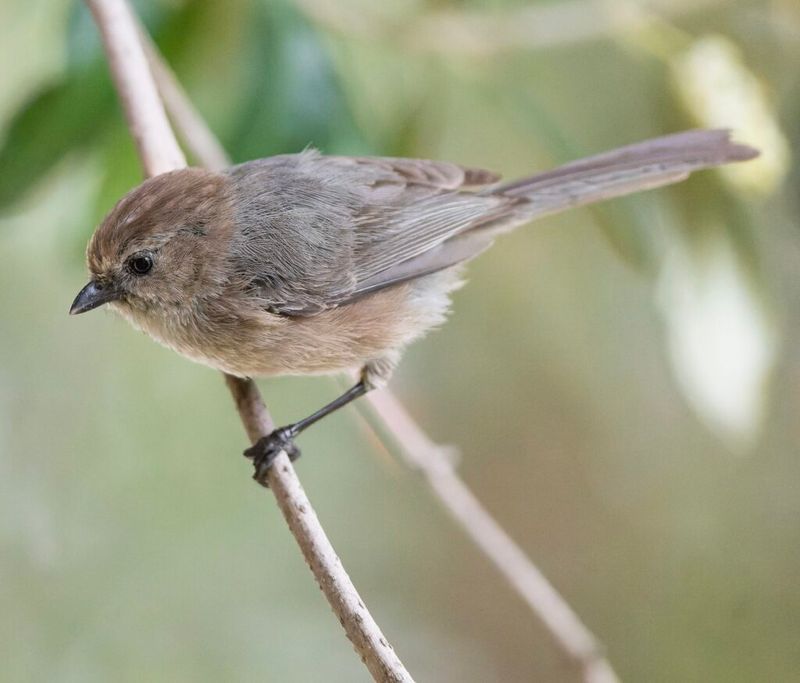
Bushtits are not birds of open lawns. California’s Wildlife Habitat Relationships account lists chaparral, oak woodland, coastal scrub, riparian vegetation, residential areas, and dense understory as the cover types they use, and Cornell’s life history page describes them using scrub, thickets, woodlands, suburbs, and parks. The common thread is structural complexity: layers of foliage at different heights that give a small bird places to hunt, hide, and eventually nest.
A yard stripped to turf and a few isolated roses gives a foraging flock very little to work with. Removing every shrub, understory layer, and dense planting may leave fewer potential foraging and nesting opportunities, though the evidence does not prove that removing one particular plant will cause a flock to stop visiting. The relationship is more about overall habitat quality than any single species of shrub. Cornell’s Bushtit overview suggests that native shrubs and small trees can make a yard more inviting, while emphasizing that habitat structure and local plant suitability matter more than selecting one universal Bushtit plant.
The practical takeaway is to distinguish between vegetation worth keeping and material that genuinely needs to go. Dead branches, diseased growth, invasive species, and fire-prone material are legitimate removal targets regardless of bird habitat. What a Bushtit-friendly yard asks of you is something more modest: retaining some living structure, whether that means a ceanothus hedge, a toyon, a native oak, or a thicket of well-maintained shrubs that give foraging birds somewhere to move through. Local nurseries and your county UC Cooperative Extension office can point you toward plants suited to your specific California climate zone.
Keep useful cover while keeping the house defensible
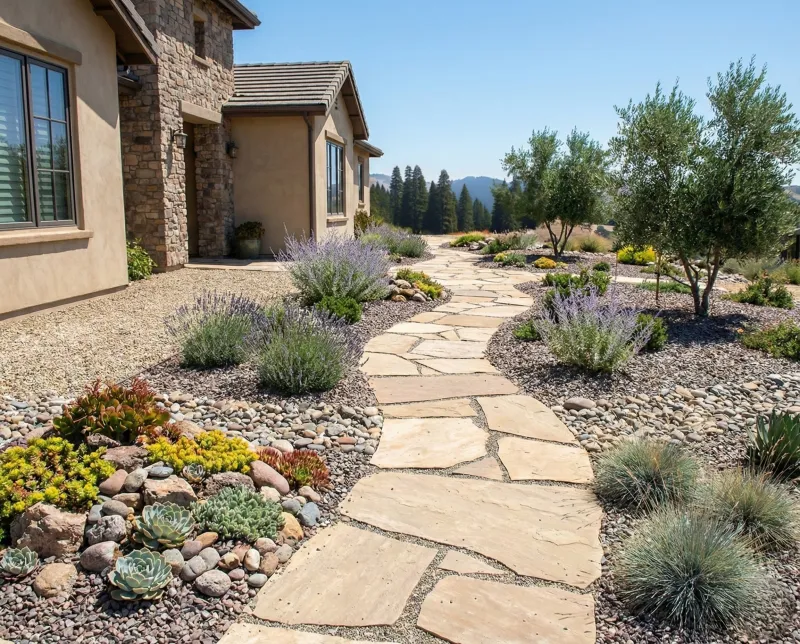
Any conversation about keeping vegetation in a California yard has to start with fire safety, not end with it. For homeowners in fire-prone areas, the two goals, supporting wildlife habitat and maintaining defensible space, are not opposites, but fire requirements come first and cannot be traded away for birds.
CAL FIRE’s Ready for Wildfire defensible space guidance identifies the first 5 feet around a structure as an ember-resistant zone. Within that band, dead or dying vegetation, combustible mulch, and materials that can carry an ember into a wall or vent should be removed. This is not a zone where leaving shrubs for birds is appropriate, regardless of species or habitat value.
From roughly 5 to 30 feet out, and continuing to 100 feet or the property line, the goal shifts from removal to separation. CAL FIRE’s defensible space resources describe keeping plants spaced so that fire cannot travel horizontally through continuous shrub cover or climb vertically from ground plants into tree canopies. That kind of thoughtful spacing still leaves room for living shrubs and small trees that Bushtits can use; the key is that vegetation is managed rather than left as unbroken fuel.
One important caveat: CAL FIRE notes that local governments and fire-protection districts may impose stricter standards than the state baseline, particularly on steeper slopes or in high-hazard zones. Before you decide how much shrub cover to keep, check with your local fire department or fire-protection district to confirm what rules apply to your specific parcel. Wildlife-friendly landscaping is a worthwhile goal, and it is fully achievable within defensible-space rules when planned carefully from the start.
Before treating roses, decide whether the aphids need treatment
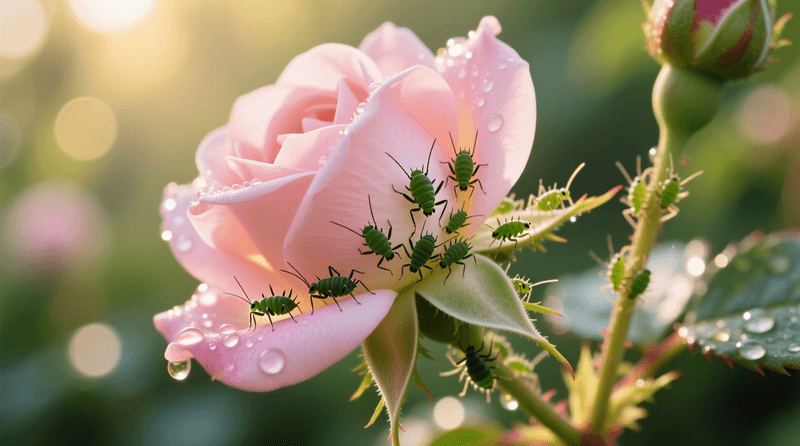
Aphids on your roses are not automatically a crisis. UC IPM’s rose pest management guidance makes clear that low-to-moderate aphid populations often cause little lasting damage, and that tolerating a modest infestation can actually support the natural enemies, lady beetles, lacewings, syrphid fly larvae, and parasitic wasps, that keep populations in check over time. Reaching for a spray bottle the moment you see a cluster of green or black aphids on a new cane may do more harm than good.
Regular monitoring is the most useful first step. Walk your roses every week during the growing season, check the undersides of new leaves and the tips of growing stems, and note whether populations are stable, increasing, or already attracting predators. A strong stream of water from a hose can knock aphids off stems without harming plants, beneficial insects, or birds. Pruning out badly curled or distorted growth removes the most heavily colonized tissue and the aphids sheltering inside it.
UC IPM’s general aphid guidance also explains why an aphid decline after Bushtits visit cannot automatically be credited to the birds. Aphid populations naturally fluctuate with temperature, plant growth stage, rainfall, the presence of ants that protect aphids from predators, and the activity of other natural enemies that were already working before the flock arrived. A well-timed rainstorm or a surge in local lacewing activity may explain a population drop just as plausibly as a foraging flock. Observing Bushtits and watching aphid numbers fall in the same week is a correlation, not a confirmed cause-and-effect.
Broad-spectrum pesticides can harm the wider pest-control community
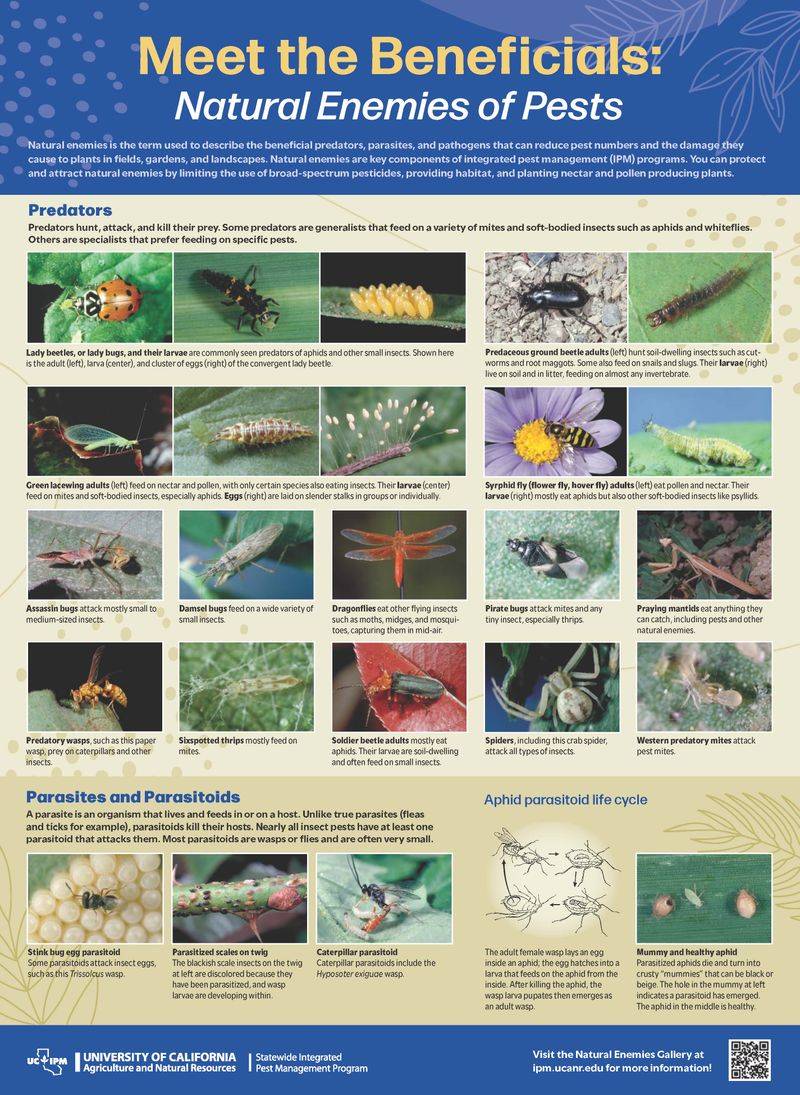
Spraying aphids the moment you spot them, or treating plants on a calendar schedule rather than in response to a real problem, can set back the natural-enemy community that was already doing quiet work in your yard. UC IPM’s rose pest guidance warns that broad-spectrum insecticides can harm or destroy beneficial natural enemies, including the lady beetles, lacewings, and parasitic wasps that suppress aphids independently of any birds. Removing those organisms can cause aphid populations to rebound faster than they would have without treatment.
Systemic insecticides carry an additional concern. Products absorbed throughout plant tissue may harm pollinators and other beneficial insects that feed on treated plants, and UC IPM notes they are usually unnecessary for ordinary landscape aphid problems. Spraying to give Bushtits or other wildlife more insects to eat is equally counterproductive; pesticides can reduce the insect food supply that birds depend on and may harm birds directly through contact or secondary poisoning.
When treatment genuinely becomes necessary, the approach matters as much as the product. Choose the least disruptive option suited to the specific plant and pest, whether that is insecticidal soap, horticultural oil, or a targeted spot application. Treat only the affected areas rather than the whole plant or the whole garden. EPA guidance on pesticide labels notes that the label is a legally enforceable document and must be followed exactly, including directions about application rates, timing, and precautions for wildlife.
EPA tips for reducing pesticide impacts on wildlife reinforce using pesticides only when necessary and taking steps to minimize harm to birds and beneficial organisms. A targeted, well-timed application is far less disruptive than a reflexive broad spray, and it leaves more of the natural-enemy community intact to keep working after you put the bottle away.
A hanging pouch changes how you prune
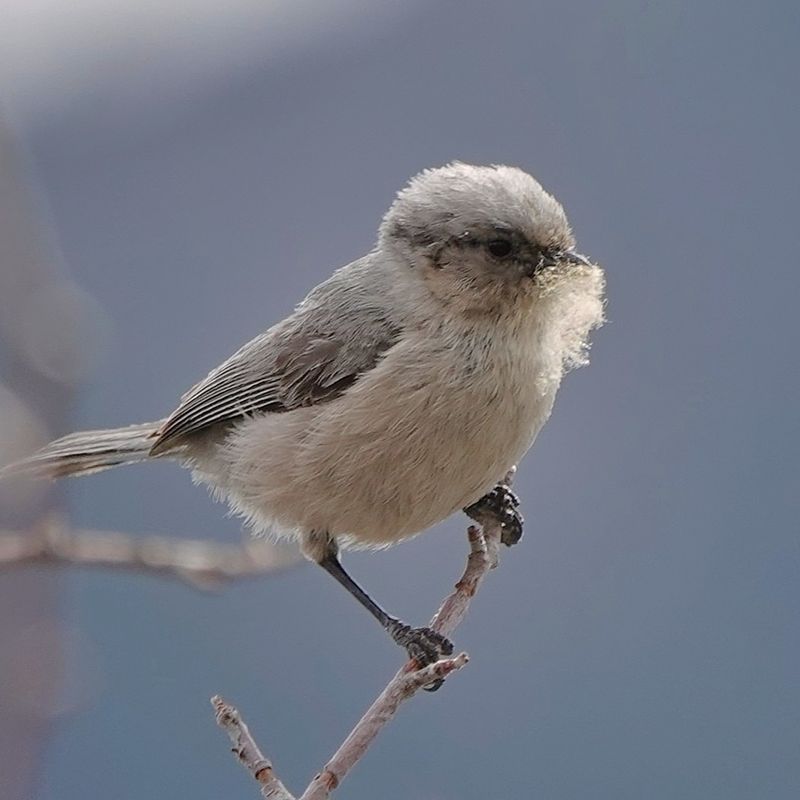
Bushtit nests are unlike almost anything else you will find in a California yard. The structure is a hanging, pouch-like bag woven from spider webs, plant fibers, moss, and lichen, shaped roughly like a long sock and attached to a branch so it sways in the wind. Cornell Lab’s life history account reports nest placement ranging from roughly 3 to 100 feet above the ground, while California’s Wildlife Habitat Relationships account notes nests are usually found below about 12 feet but can vary considerably. The practical point is that height alone does not tell you whether a nest is present; you have to look.
Before any pruning, hedge trimming, or major vegetation work, spend a few minutes scanning the shrubs and trees you plan to cut. An active nest containing eggs or chicks looks occupied and intact; an old or inactive nest may be collapsed, weathered, or empty. If you find a nest and are not sure whether it is active, postpone nonessential cutting until you can confirm its status. Breeding activity in California can begin in late winter and extend into summer, so the safe window for pruning without checking first is shorter than many homeowners assume.
U.S. Fish and Wildlife Service guidance on bird nests explains that most wild bird nests are protected under the Migratory Bird Treaty Act, and that disturbing an active nest containing eggs or chicks without authorization is illegal. That protection applies to active nests, not to every old pouch hanging in a dormant shrub. When you are uncertain about nest status or what action is legally permitted, contact your local California Department of Fish and Wildlife regional office or a licensed wildlife rehabilitator for guidance before proceeding.
Let the Bushtits inform your yard routine, not replace it
A Bushtit flock moving through your yard is good news. It signals active foraging, at least some habitat structure worth using, and a food web that has not been flattened by unnecessary pesticides. Treat it as useful information about your yard’s health, not as a reason to cancel your next monitoring walk or skip the hose treatment on a bad aphid cluster.
The most effective yards for both homeowners and wildlife follow a consistent sequence. Retain living vegetation structure, native shrubs, small trees, and layered understory, where it does not conflict with CAL FIRE defensible-space requirements. Monitor roses and vegetables regularly rather than reacting to the first aphid you see, and conserve the lady beetles, lacewings, and parasitic wasps already working alongside any visiting birds. Limit pesticides to situations where monitoring confirms a real problem, choose the least disruptive product, and follow the label.
Inspect shrubs and trees before pruning, and postpone work if you find an active nest protected under the Migratory Bird Treaty Act. UC IPM’s rose pest guidance and Cornell’s Bushtit life history account both point toward the same yard ethic: work with the natural community rather than around it.
A yard that supports Bushtits is not a wild, unmanaged space; it is a well-observed one. The birds will keep foraging whether or not you notice them, but the homeowner who notices tends to make better decisions.