
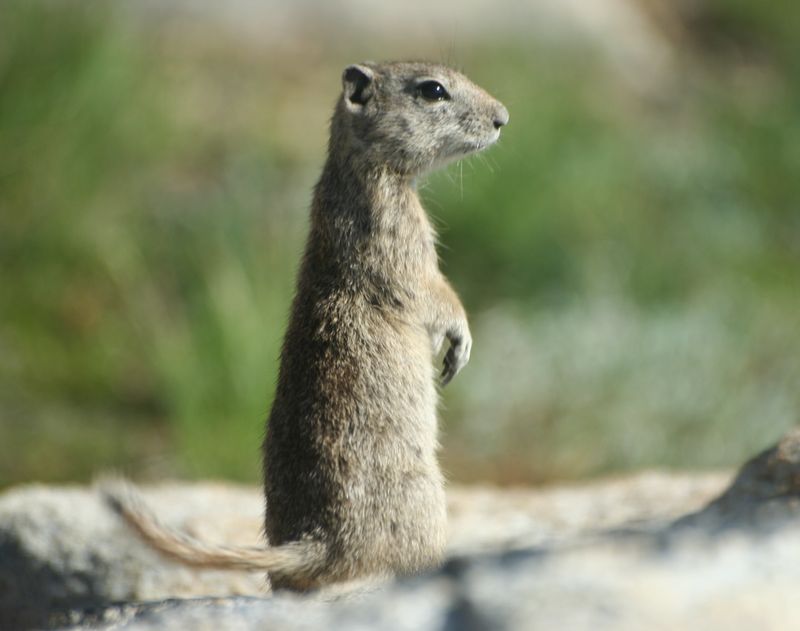
One day your yard is full of California ground squirrels darting between burrows, and then almost overnight they seem to vanish. Before you assume the worst, the explanation is often simpler and more fascinating than you might expect.
Understanding what is actually happening below ground can help you make smarter decisions about your property and the wildlife sharing it.
The silence usually starts below ground
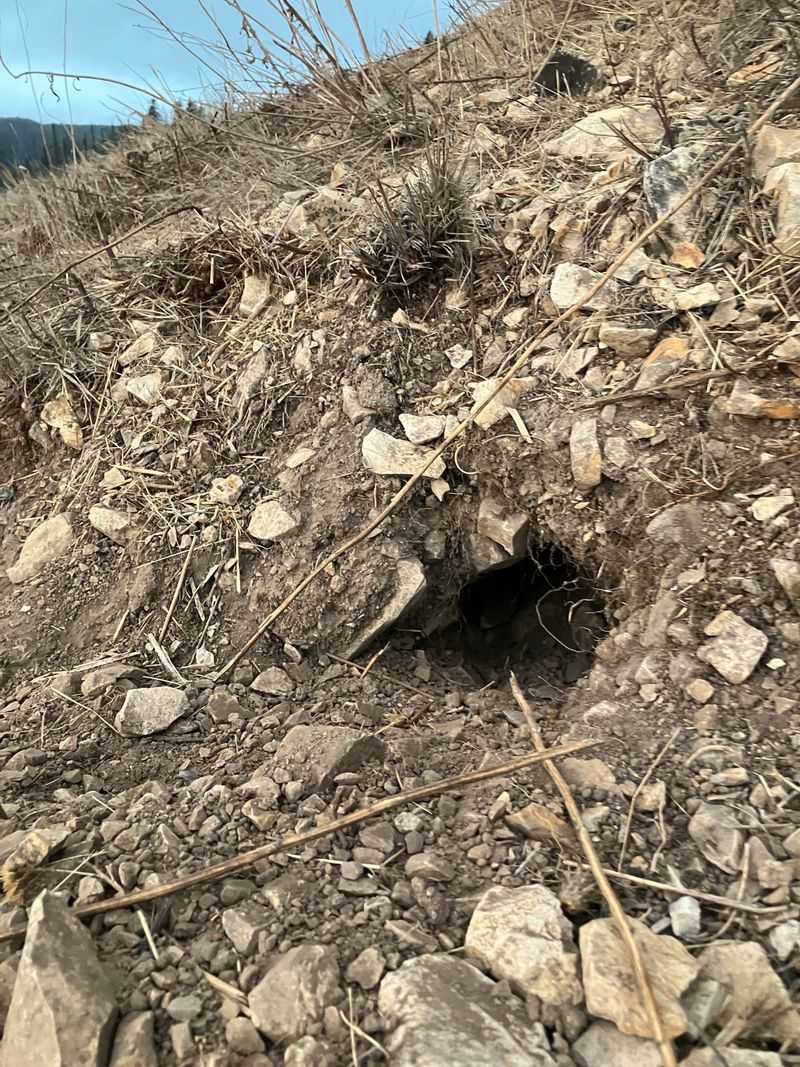
Most homeowners notice it as a sudden quiet: the ground squirrels that spent spring and early summer raiding garden beds and chirping from fence posts have simply stopped appearing. The most common explanation is estivation, a period of summer dormancy or greatly reduced activity that adult California ground squirrels enter during the hottest part of the year.
UC IPM’s ground squirrel management guidance documents that most adult ground squirrels may become inactive for a few days to a week or more during extreme heat, and that inland populations can remain underground for substantially longer stretches.
The key phrase here is “above ground.” When squirrels disappear from view, it almost always means they have reduced surface activity, not that they packed up and left the neighborhood. California ground squirrels are non-migratory animals whose home ranges center on their burrow systems, so the animals are almost certainly still nearby, just out of sight.
Estivation is not the same as hibernation, though both involve slowed activity. Summer dormancy is a response to heat and, in many areas, the seasonal drop in food availability that comes when grasses dry out and seeds become scarce.
The squirrels conserve energy underground where temperatures are cooler and more stable.
That said, estivation is a pattern, not a certainty for any individual property. A sudden drop in sightings fits the seasonal picture well, but it cannot by itself confirm that every squirrel on your block has retreated underground.
Other factors can reduce above-ground activity too, and those are worth considering before drawing any firm conclusions.
California does not have one squirrel calendar
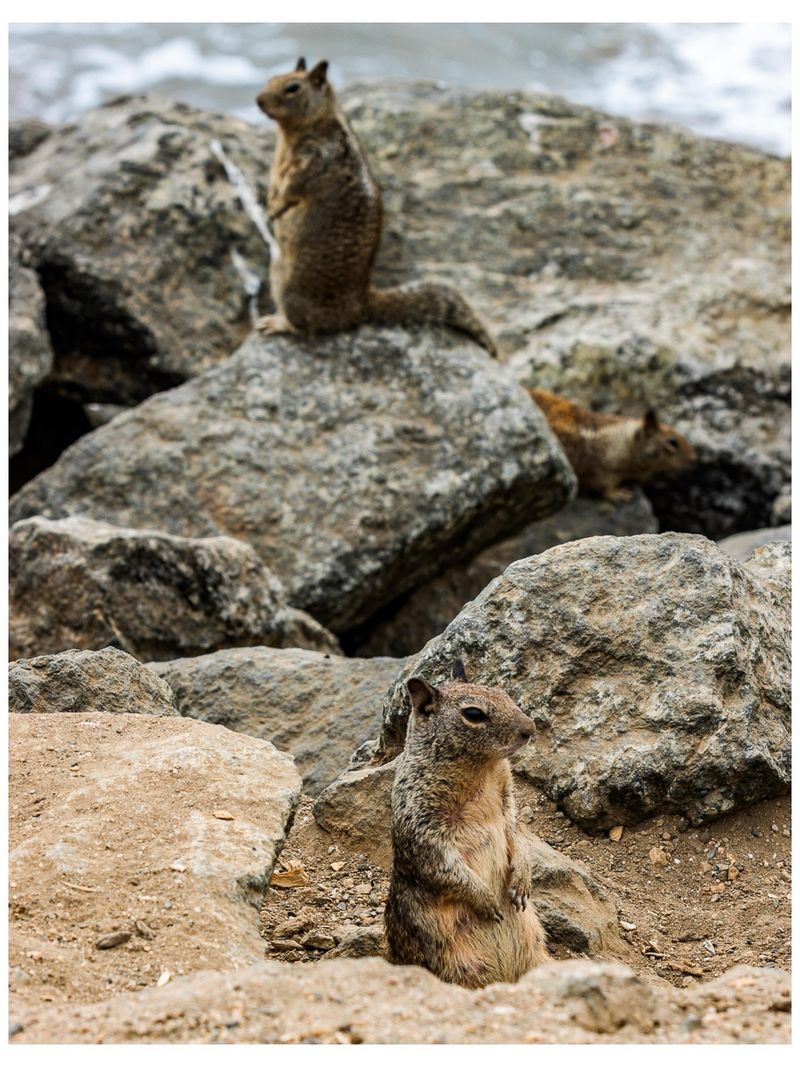
Expecting every California ground squirrel to vanish on the same August date is a reasonable assumption, but the reality is far more variable. UC IPM’s alfalfa pest management guidelines note that coastal Southern California populations can remain active year-round, while inland populations are more likely to show pronounced summer dormancy.
A homeowner in Riverside County and a homeowner in Santa Barbara may be looking at entirely different seasonal patterns even though both share the same species in their yard.
Heat, food supply, local habitat, weather patterns, age, and sex all interact to push the timing earlier or later. Inland areas where summer temperatures regularly exceed 100 degrees Fahrenheit and where annual grasses dry up completely tend to produce the most dramatic disappearances.
Coastal areas with milder temperatures and more persistent vegetation often keep squirrels foraging above ground with far less interruption.
Sex differences add another layer of complexity. A peer-reviewed Mammalian Species account of Otospermophilus beecheyi summarizes a study conducted at UC Santa Cruz in which males entered estivation as early as May or June, while most females did not follow until late July.
That specific timing reflects one study site and should not be read as a statewide schedule, but it illustrates how much variation exists even within a single colony.
Young squirrels add yet another wrinkle. Juveniles born in spring commonly remain active through much of their first summer and do not typically follow the same estivation pattern as adults.
If your yard goes completely silent, with not even a young squirrel in sight, that is worth noting because estivation alone may not explain the total absence. A mix of ages and sexes behaving differently is normal, and a yard that still has a few small, energetic squirrels running around is probably showing exactly what the research would predict.
An empty-looking burrow may still be occupied
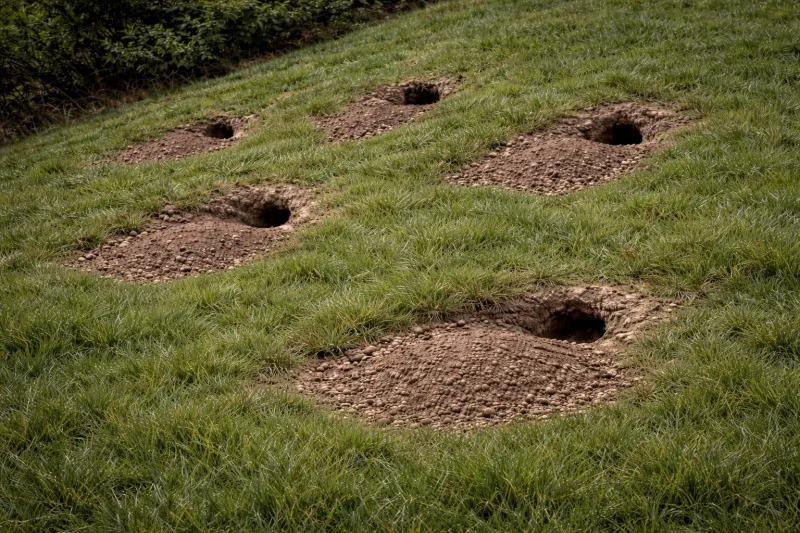
A quiet burrow entrance can feel like a clear signal that the animals are gone, but ground squirrel burrow systems are more complex than a simple hole in the ground. California Department of Pesticide Regulation guidance on ground squirrel burrows explains that squirrels may plug portions of their tunnel systems from the inside during estivation or hibernation.
Those internal plugs are not visible from the surface entrance, so an open-looking hole tells you very little about whether an animal is resting a few feet below.
Rather than trying to peer into or probe a burrow, observe from a comfortable distance over several days. Fresh loose soil pushed out near the entrance is a reasonable sign of recent digging activity.
Scattered nutshells, fruit rinds, scat, or other food debris near the opening can also suggest the burrow has been used recently. Cobwebs stretched across the entrance are more consistent with an inactive burrow, but a single cobweb on a breezy morning is not conclusive proof of abandonment.
No single sign should be treated as definitive on its own. A burrow that looks inactive today could show fresh activity tomorrow if a squirrel emerges briefly in the cooler hours of early morning or late afternoon, which is sometimes the only above-ground time they take during the hottest weeks.
Avoid approaching, disturbing, or blocking a burrow entrance while you are still trying to determine whether it is active. Blocking an occupied burrow can trap animals inside or force them to excavate a new exit in an even less convenient location.
Patient observation from a distance gives you better information and avoids creating a new problem in the process.
A late-summer lull is not a diagnosis
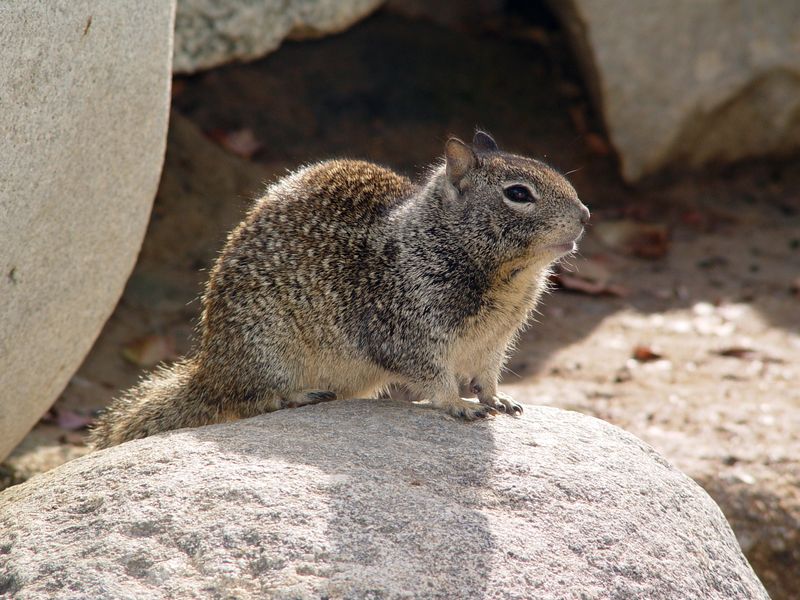
Estivation is the most common seasonal explanation for a late-summer drop in squirrel sightings, but it is not the only possibility. Local pest control activity, a shift in predator pressure from hawks or foxes, a change in available food sources, weather-driven adjustments to daily activity schedules, disease, natural mortality, or simple movement into a neighboring yard can all reduce how often squirrels appear above ground.
Treating estivation as the automatic answer can lead you to overlook a different situation entirely.
Species identification matters more than many homeowners realize. California Department of Fish and Wildlife’s human-wildlife conflict page for squirrels points out that California is home to several ground squirrel species, not just the familiar California ground squirrel.
The Mojave ground squirrel, for example, is listed as threatened under the California Endangered Species Act and has its own distinct range and seasonal patterns. Misidentifying the species before taking any management action could have serious legal and ecological consequences.
Plague is another topic that sometimes surfaces when people notice a sudden absence of rodents. The California Department of Public Health describes human plague as rare and geographically concentrated in rural and mountainous areas, not a routine concern in ordinary suburban settings.
CDPH plague guidance emphasizes practical precautions: avoid handling wild rodents, stay away from burrows, keep pets away from rodents and fleas, and report unusual numbers of dead rodents to local health authorities. A normal seasonal lull does not signal an outbreak, and treating it as one adds unnecessary alarm without helping you understand what is actually happening.
The practical takeaway is to hold your conclusions loosely. A quiet yard in August fits the estivation pattern well, especially for inland properties, but confirming what actually happened requires more than an absence of sightings.
Observation is the safest first response
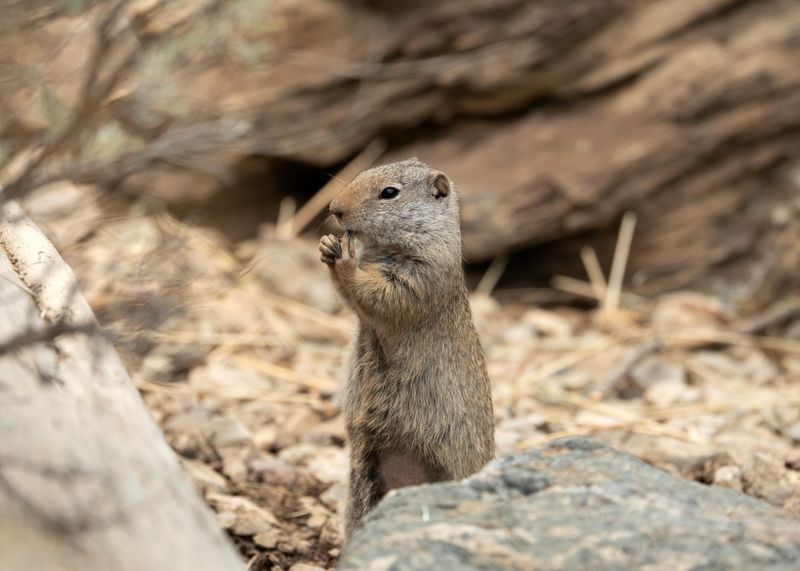
When squirrels are not causing active damage, the most practical first step is to do less, not more. Watching from a distance over several days costs nothing and gives you far better information than any guess made from a single morning of silence.
Early morning and late afternoon are the most likely windows for above-ground activity even during hot weather, so those are the best times to check.
UC IPM’s home and landscape ground squirrel guidance is clear that homeowners should not feed, handle, or approach wild rodents or their burrows. Beyond the obvious safety concern, close contact with wild rodents or their fleas carries a small but real health risk, and CDPH guidance reinforces the importance of avoiding that contact, particularly in areas where plague is known to occur.
A yard that looks squirrel-free is not automatically a yard without a squirrel problem. Underground burrow systems can continue to affect roots, drip irrigation lines, slopes, retaining walls, and other earthen features whether or not an animal is visible above ground.
The absence of a squirrel sunning itself on a rock does not mean the tunnels beneath your garden bed have stopped expanding.
Use the quiet period to take stock of what you can actually see: Are there new areas of disturbed soil? Has any irrigation line been chewed or shifted?
Are there sections of slope that look undermined or sunken? Answering those questions from observation gives you a factual basis for deciding whether you have a seasonal lull or a property problem that warrants attention.
Control requires evidence and careful timing
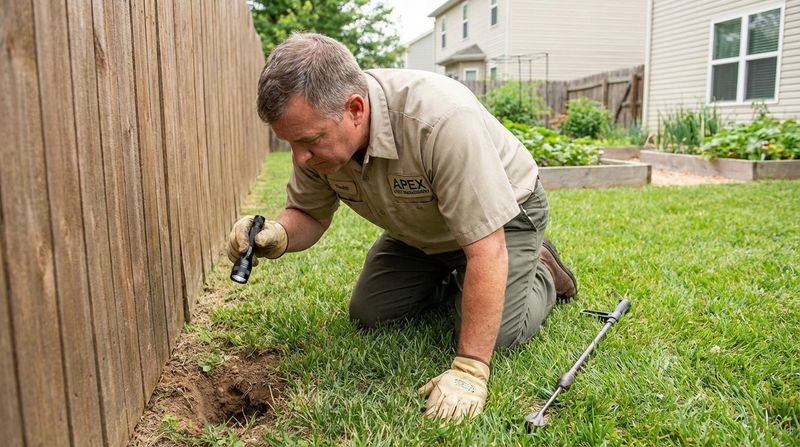
Management should follow confirmed evidence, not a quiet yard. That means identifying the animal as a California ground squirrel rather than a protected species, locating active burrows with signs of recent use, and documenting actual damage to plants, structures, irrigation, or slopes.
UC IPM recommends starting management when a small population is present rather than waiting for reinfestation to become extensive, but that advice assumes you have confirmed active animals and a real property problem, not simply an absence of sightings.
Sealing every burrow entrance is not a safe reflex action. Burrows may still be occupied, may connect to openings you have not found, or may shelter nontarget wildlife including burrowing owls or kit foxes.
UC IPM advises treating only confirmed active ground squirrel burrows and avoiding any treatment when a nontarget animal may be present.
Late summer is also not the right time for most fumigation approaches. Dry summer soil allows fumigation gases to escape through cracks in the ground, which reduces effectiveness and increases the risk of gas drifting to unintended areas.
Gas cartridges present a serious fire hazard in dry late-summer conditions and should never be used near buildings or dry vegetation. Aluminum phosphide is a restricted-use pesticide that can only be legally applied by licensed professionals and cannot be used within 100 feet of occupied or potentially occupied structures.
Residential users do not have access to legal toxic baits for California ground squirrel management. Improvised poisons and off-label pesticides are both illegal and dangerous to nontarget animals, pets, and people.
Live-catch trapping is sometimes considered a humane alternative, but UC IPM explains that relocating animals off the same property without a permit is illegal, and relocation can spread disease or create conflicts in the receiving location. Any management plan beyond basic exclusion and habitat modification is best developed with a licensed pest control professional who knows California regulations.
Read the quiet as a seasonal clue, not a verdict
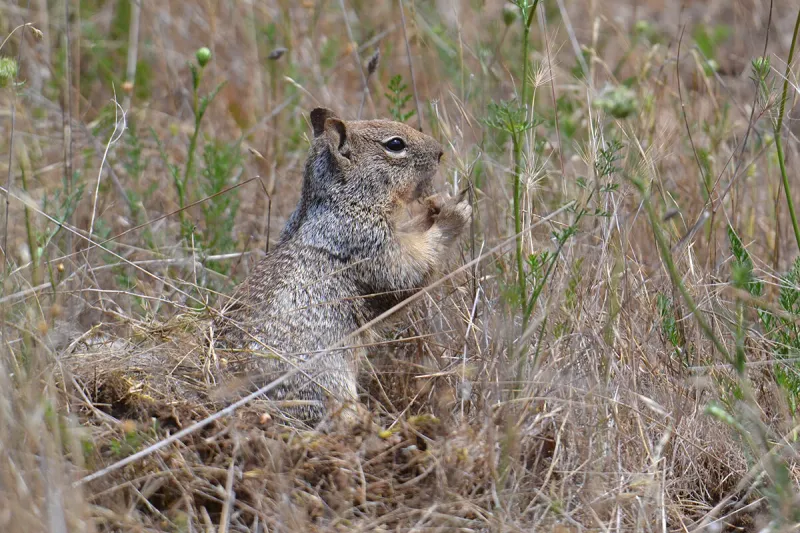
For many inland California homeowners, a sudden drop in squirrel sightings during July or August reflects a well-documented seasonal pattern: adult squirrels spending less time above ground in response to heat and declining food availability. That pattern is real, but it varies by location, species, age, sex, weather, and the specific conditions on your property.
Coastal yards may never experience the same quiet that inland yards do.
UC IPM notes that timing and duration of inactivity differ substantially among individuals and populations, which is why a neighbor’s yard and your own can behave differently even when they share the same squirrel colony. Before deciding what the silence means, look at burrow evidence, check for actual property damage, confirm the species, and consider whether juveniles should still be visible but are not.
The most useful thing a homeowner can do is observe carefully, protect people and pets from unnecessary contact with wild rodents and their fleas, and pursue any management only when active squirrels and a documented property problem are both confirmed. A yard gone quiet in August is most often just a yard doing what California yards do in summer, with the squirrels waiting it out a few feet below the surface.