
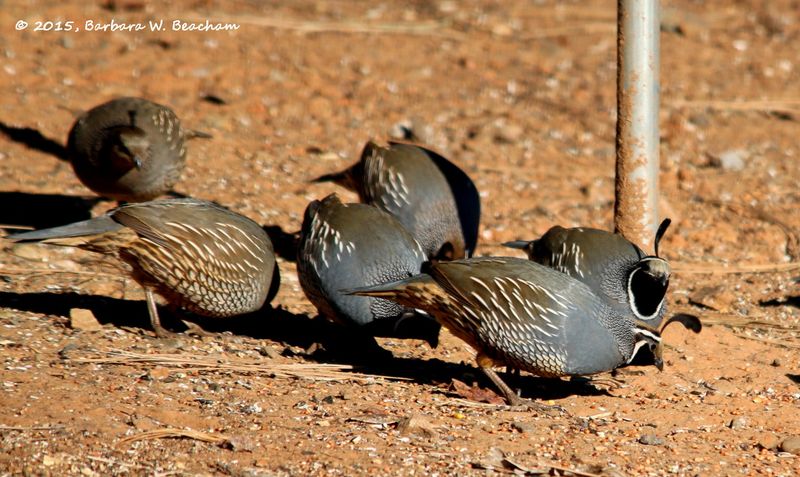
Spotting a crowd of California Quail bobbing through your yard on a summer morning is genuinely exciting, but the title of this article needs a quick correction before anything else: a large gathering does not necessarily mean a whole covey has arrived to nest together. What it more likely means is that your yard, or the neighborhood around it, is offering something real and useful to these birds.
Understanding what that signal actually says, and how to respond without causing harm, is what this article is about.
A gathering signals usable habitat—not a communal nest
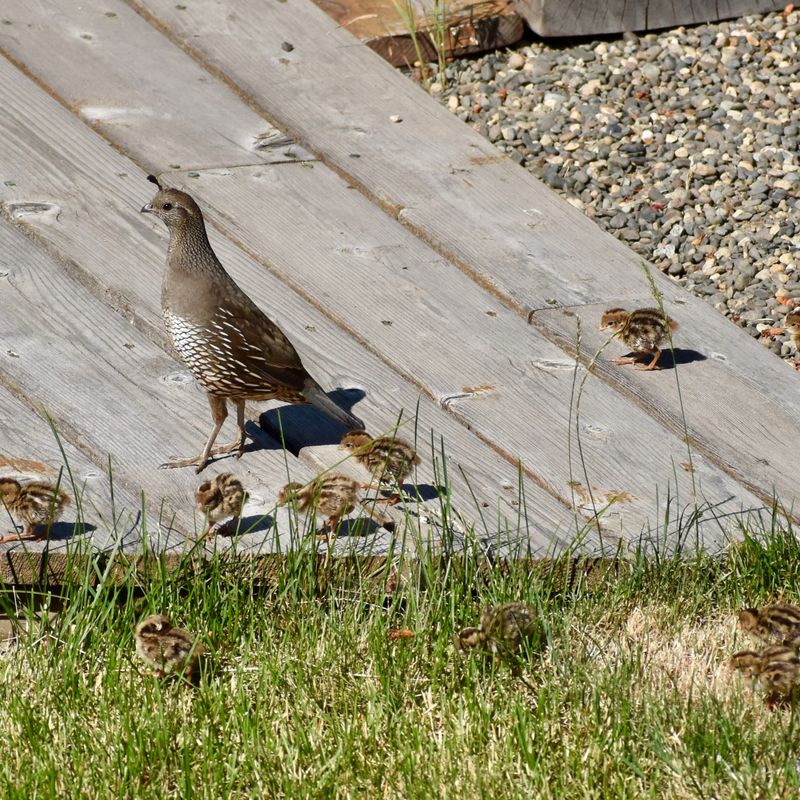
Seeing a group of California Quail moving through your yard during summer is worth paying attention to, but the most useful interpretation is a practical one: the property, or the block around it, is providing some combination of food, ground-level cover, open foraging space, and possibly water. That combination is what pulls quail into human-modified landscapes.
According to the California Department of Fish and Wildlife life-history account, California Quail occupy a wide range of habitats including chaparral, woodland edges, farms, parks, and suburban yards when those resources appear together.
The first thing to set aside is the idea that the birds have chosen your yard as a communal nesting site. Quail do not nest as a group.
What you are most likely seeing is adults, family groups, or recently fledged young moving through a shared habitat patch that happens to include your property. The yard may be one stop on a wider circuit, not the single location supplying everything the birds need.
Cornell Lab of Ornithology notes that California Quail use a broad mix of habitats, often adapting well to suburban settings when dense low cover, open ground for foraging, and seed-producing plants are nearby. The Audubon Field Guide similarly describes the species as highly adaptable to human-altered environments.
None of that adaptability, though, means a single yard is a complete habitat. Quail commonly range across several properties and open areas within a neighborhood.
The most accurate read on a summer quail gathering is this: your yard is functioning as part of a favorable habitat patch. That is genuinely good news, and it gives you something concrete to protect and improve.
A gathering is not a sign of luck, unusual bird intelligence, or a guaranteed annual event, but it does tell you the landscape around your home is doing something right.
One crowd may contain several quail groups
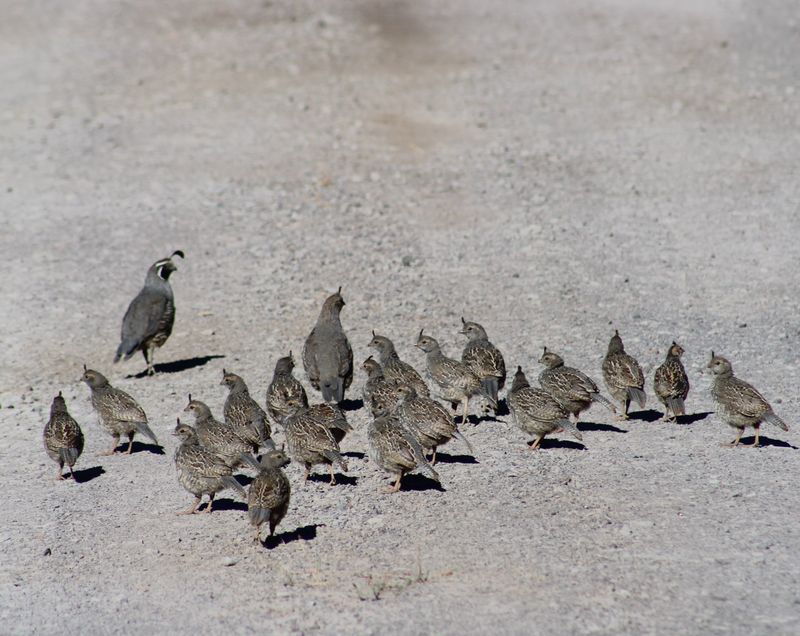
California Quail are well known for forming large coveys, but covey size and composition shift dramatically with the season. Fall and winter groups can be substantial, with Cornell Lab reporting fall-and-winter coveys that sometimes exceed 75 birds.
By breeding season, those large groups break apart. Pairs split off, lone males take up calling posts, and nesting females stay close to cover.
What looks like one big covey in your yard during summer may actually be several separate family units sharing the same food source or water.
After chicks hatch and grow mobile enough to follow adults, multiple family groups can come back together into larger aggregations around reliable resources. A California quail breeding-behavior study published in The Condor describes how social structure shifts through the breeding cycle, with pairs and family groups later reassociating.
Research on hybrid zone dynamics, including Gee’s work in Evolution, also underscores how fluid quail group boundaries can be across seasons and landscapes. So a crowd of birds in July may include a nesting pair’s brood, a second family group from the next block, and a few juveniles from an earlier hatch, all drawn to the same shaded corner or water dish.
Repeated visits from multiple birds do not confirm that eggs are present on your property. The birds may be using your yard for dust-bathing, shade, or seed, while nesting somewhere else entirely.
Before applying any of this guidance, confirm you are actually looking at California Quail. The Cornell range map shows the species is native mainly to California and parts of the western U.S.
In southeastern California deserts, Gambel’s Quail overlap with California Quail and look similar. The CDFW life-history account notes that California Quail are replaced by Gambel’s Quail in southeastern desert areas, so identification should rely on markings, range, and call.
If you are in Florida or most of Texas, Texas Parks and Wildlife lists four different quail species for that state, and California Quail guidance does not apply to those regions.
A real nest is usually hidden at ground level
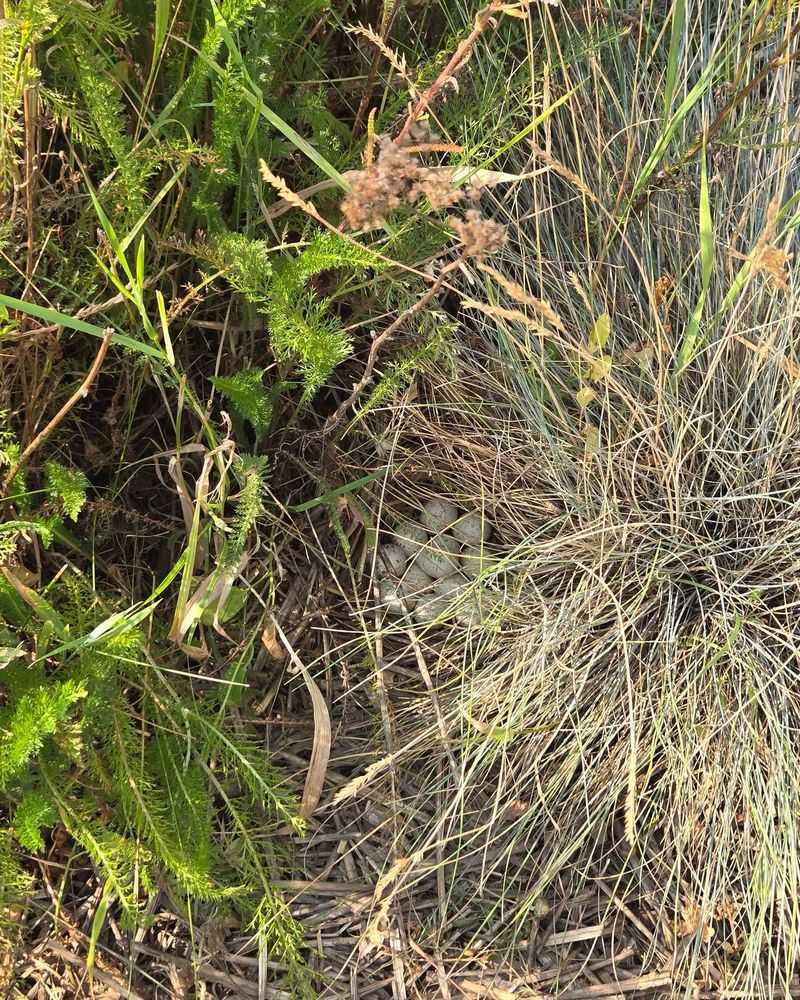
Most people who wonder whether quail are nesting in their yard never actually find a nest, and that is by design. California Quail nests are shallow depressions scraped into the ground, lined with grass stems, leaves, and other plant material, and tucked into spots that are genuinely hard to see.
Cornell Lab describes typical nests as concealed in grasses, low vegetation, shrubs, or near logs and rocks, with clutches usually running 12 to 16 eggs and incubation lasting about 22 to 23 days.
That information is useful as background context, not as a checklist to go looking. Searching actively for a nest risks flushing the female off the eggs or leaving a scent trail that predators follow.
If you happen to notice a female sitting very still in a low, sheltered spot and she does not flush when you move nearby, there is a reasonable chance she is incubating. The better response is to quietly back away and give the area a wide berth.
Elevated nests do occasionally occur, so it is not accurate to say California Quail always nest on the ground. The Audubon Field Guide notes that nests can sometimes be placed above ground level.
That said, ground placement is the norm, and most nest-related activity you observe will happen at or near ground level.
Keep in mind that a yard can serve quail in several ways that have nothing to do with nesting. A bird moving slowly through a patch of dry soil is probably dust-bathing, not incubating.
A group foraging along a fence line is using a feeding route. Adults moving in short, alert bursts with chicks nearby are brood-rearing, which may or may not involve a nest on your property.
Distinguishing these behaviors keeps your response proportionate and avoids unnecessary disruption to birds that are simply passing through.
Look for a habitat mosaic, not a magic plant
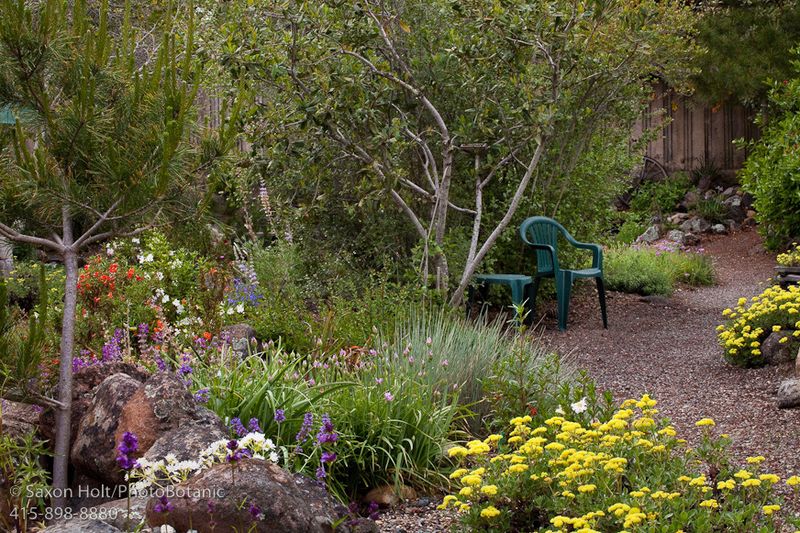
No single plant or yard feature explains why quail show up. What draws them is a combination of elements working together: dense low shrubs for escape and concealment, open patches of grass or forbs for foraging, taller vegetation that offers shade and overhead cover, and reliable water when temperatures climb.
The CDFW life-history account describes quail as birds that generally stay close to cover while foraging and may need access to free water daily during hot weather. That behavioral pattern is the key to reading your yard: look for which combination of features is already present, then consider what is missing.
In practical yard terms, a brushy corner with dense low shrubs provides the escape cover quail rely on when a hawk passes overhead. An adjacent open patch of native grass or low forbs gives them room to scratch and forage without losing sight of that cover.
Seed-producing plants extend the food supply through summer and into fall. A shallow, clean water source can matter significantly during California’s dry season, though adding water alone does not guarantee quail will nest or return.
The CDFW yard-plant guidance lists specific plants that California Quail use for food and cover, including brittlebush, deerweed, redberry, Pacific blackberry, lotus, lupine, clover, filaree, and chickweed. Plant suitability varies significantly by California climate zone, local soil, and available water, so treat these as a starting point rather than a universal prescription.
A coastal yard and an inland valley yard are working with different conditions, and a plant that thrives in one may struggle or spread aggressively in another.
The practical takeaway is to think in layers and patches rather than single features. Quail move between open ground and dense cover repeatedly throughout the day, so a yard that offers both within a short distance is more useful to them than one that has only one or the other.
Make one yard corner quieter and more dependable
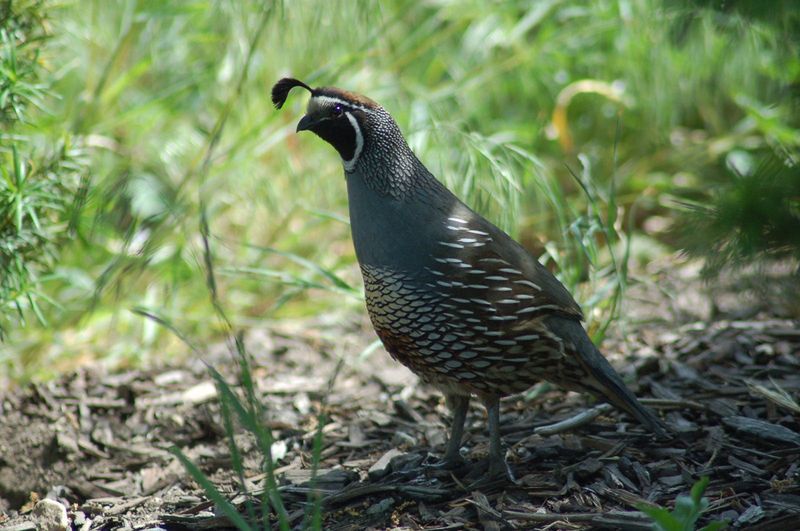
Turning habitat knowledge into yard action does not require a full landscape overhaul. The most useful thing most homeowners can do is identify one low-traffic corner of the yard and commit to keeping it quieter and more consistent.
Quail are alert birds that respond to disturbance, and a section of yard that sees regular foot traffic, dog activity, or frequent pruning is less useful to them than one that is largely left alone.
Start by preserving any native grasses, low shrubs, or seed-producing forbs already growing in that area. Removing them to tidy up eliminates the structural cover quail depend on.
CDFW guidance on yard plants for quail recommends retaining low native vegetation and adding locally appropriate shrubs that provide both food and concealment. If you are adding new plants, place them outside required defensible-space zones and check that they are appropriate for your California climate region.
A clean, shallow water source can be worth maintaining if you can service it at least every few days. Stagnant water grows algae and can harbor bacteria, so a birdbath or shallow dish that is scrubbed and refilled regularly is far more valuable than one left to sit.
The CDFW account notes that quail may need free water daily in hot weather, but adding water does not promise nesting or return visits.
A low-traffic area helps more than any attempt to make a nest visible or build a structure around it. UC Agriculture and Natural Resources bird-garden guidance emphasizes that minimizing disturbance near cover areas is one of the most effective things a homeowner can do.
Present these steps as habitat support, not a contract. Quail survival and return depend on weather, food supply, predator pressure, and conditions across the broader landscape, none of which a single yard controls.
Protect a nest by leaving it in place
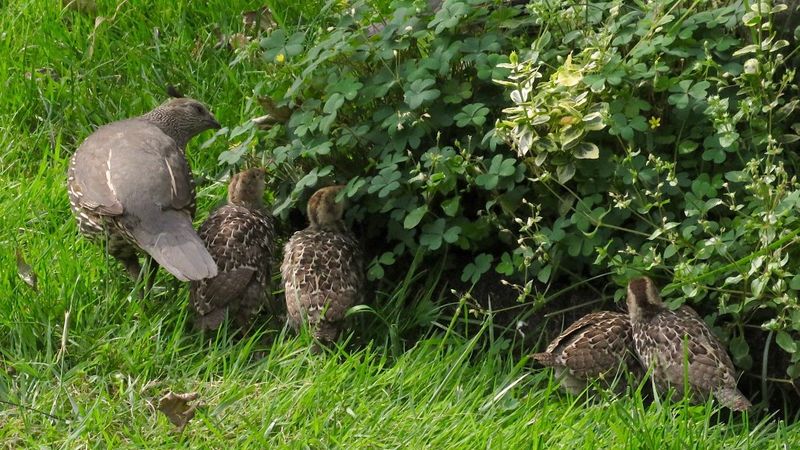
Finding an actual nest in your yard puts one clear responsibility on you: leave it alone. California Quail nests, eggs, and chicks should stay exactly where they are.
Do not move the nest to what seems like a safer spot, do not add material around it, and do not check on it more than necessary. Ground nests are disturbed more easily than they look, and a female flushed repeatedly off her eggs may abandon them.
California law reinforces this point directly. California Fish and Game Code section 3503 prohibits needlessly destroying the nest or eggs of any bird.
That is not offered here as legal advice for your specific situation, but it does reflect a clear state policy that active nests deserve protection. Handling or relocating a nest is not a safe workaround.
Practically, delay any mowing, pruning, weed removal, or major landscaping work in the area around the nest for as long as the nest is active. UC Agriculture and Natural Resources bird-garden guidance advises keeping the surrounding area as undisturbed as possible.
If a scheduled yard project cannot be postponed, work from the outside in and stop well before you reach the nesting area.
Keep cats indoors or physically prevented from reaching the nesting zone. Cats are among the most significant predators of ground-nesting birds, and even a cat that does not kill the adult can scatter chicks or destroy eggs.
Keep dogs away from the area as well. CDFW guidance on sick and injured wild birds advises against handling wild birds and recommends contacting a permitted wildlife rehabilitator or CDFW if you find a bird that appears injured or in distress.
Observe from a distance, and resist the urge to intervene unless the bird is clearly in danger from a human-caused hazard.
Avoid feeding, pesticide, and wildfire hazards
Good intentions can create real problems when it comes to supplemental feeding. Putting out large amounts of seed on the ground attracts quail, but it also concentrates feces, spilled grain, pets, and predators in the same spot.
Cornell Lab notes that ground-level feeding increases crowding risks, and crowding raises the chance of disease transmission among birds. If you choose to use a feeder or birdbath, clean it thoroughly at least twice a week.
Remove it temporarily and discard uneaten seed if you find sick or dead birds nearby.
CDC guidance for bird hobbyists recommends avoiding direct contact with wild birds, washing hands after any contact with bird feeders or water dishes, and keeping pets away from areas where wild birds congregate. A CDC Emerging Infectious Diseases article on Salmonella and wild songbirds found that contaminated feeders contributed to disease spread, which applies broadly to any wild bird feeding setup.
These precautions are not reasons to panic, but they are reasons to keep things clean and to avoid creating a permanent feeding station that concentrates birds year-round.
Pesticide use near quail habitat deserves careful thought. EPA pesticide safety guidance advises reading the product label completely and following it exactly, including restrictions on application near water and wildlife.
The EPA garden pesticide guide warns against overapplication, spray drift, and runoff, all of which can reach foraging birds and their chicks. USGS research on pesticides and wildlife documents how common garden and agricultural products can harm non-target species.
Avoid treating areas where quail are actively foraging or where chicks are present.
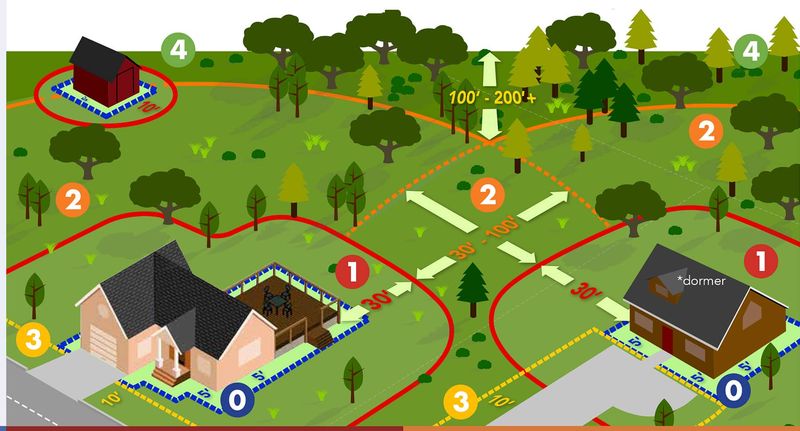
Dense cover and brush piles can support quail, but placement matters enormously in California. CAL FIRE defensible-space guidance requires that the first five feet around any structure be ember-resistant and free of combustible vegetation.
The California Board of Forestry defensible-space zone rules also require separation between shrubs and trees within 30 feet of structures. Any brush pile or dense planting added for quail habitat should be located well outside these zones and sized to avoid becoming a fire hazard.
Support the habitat without expecting a promise
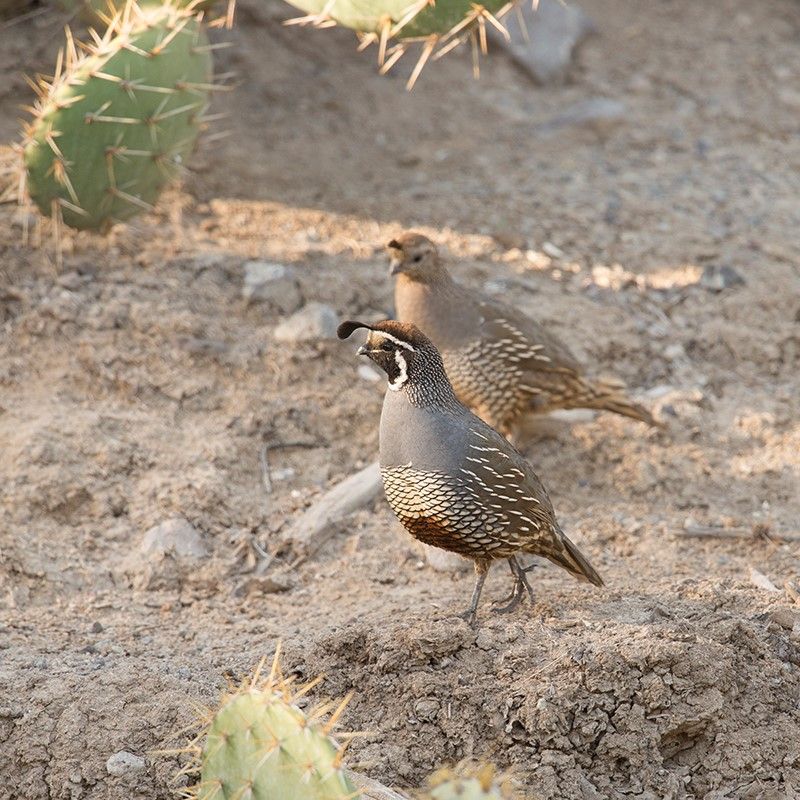
A summer gathering of California Quail is telling you something specific and useful: your yard, or the neighborhood around it, is currently offering some workable mix of food, cover, open ground, and possibly water. That is a real signal, and it gives you a concrete starting point for stewardship.
The CDFW life-history account and Cornell Lab’s life-history data both point to habitat quality as the driver of quail presence, not chance.
A practical priority order helps keep the response grounded. First, confirm the species so the right guidance applies.
Second, if you find an actual nest, protect it by staying back and delaying nearby yard work. Third, preserve or build a safe habitat mosaic – cover, open foraging space, food plants, and clean water – while respecting fire-safety requirements.
Fourth, avoid crowding, heavy feeding, and pesticide use near areas where birds are active. The CDFW yard-plant resource can help with plant selection suited to your California climate zone.
Future visits depend on factors well beyond any single yard: chick survival rates, predator pressure, seasonal rainfall, and how the surrounding neighborhood changes over time. A yard that supports quail this summer may see fewer birds next year if a nearby food source disappears or a predator moves in, and that is not a failure of your effort.
Responsible habitat stewardship means providing consistent, safe conditions and accepting that wildlife makes its own decisions about where to go. The birds that find your yard useful this summer are doing exactly what quail do – working a landscape that meets enough of their needs.
Keeping that landscape honest and intact is the most durable contribution you can make.