
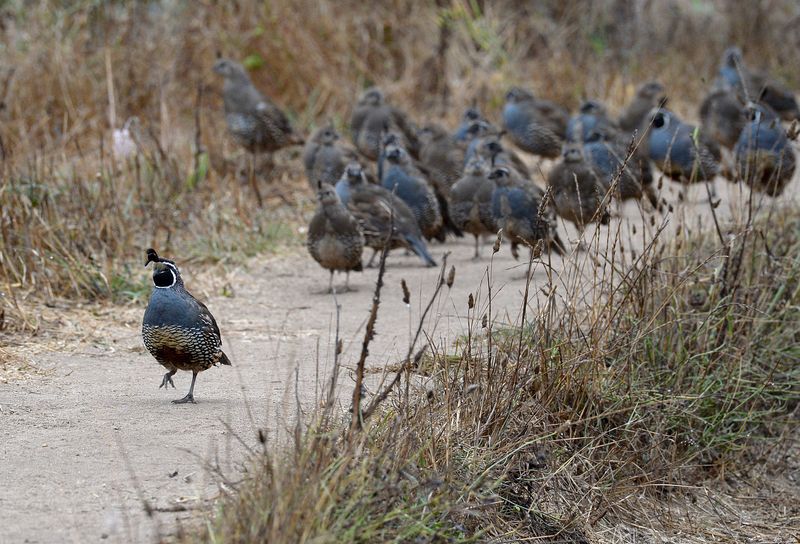
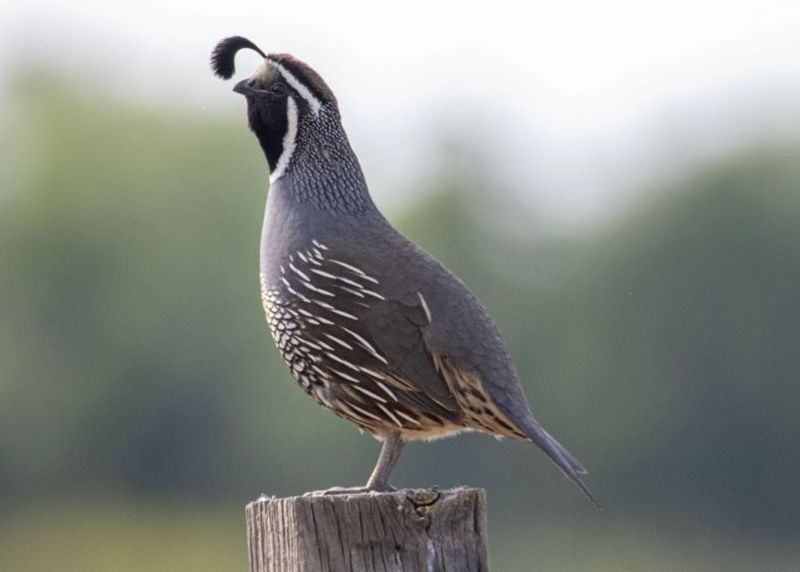
Spotting a plump little bird with a teardrop-shaped head plume strutting across your yard can stop you in your tracks. California quail are showing up in more suburban gardens, and when they do, it usually says something specific about the cover and food your yard already provides.
Understanding what drew them in, and what to do next, can help you support these birds without accidentally disturbing them or breaking fire-safety rules that apply to every California homeowner.
A sudden sighting shows possible habitat use, not confirmed nesting
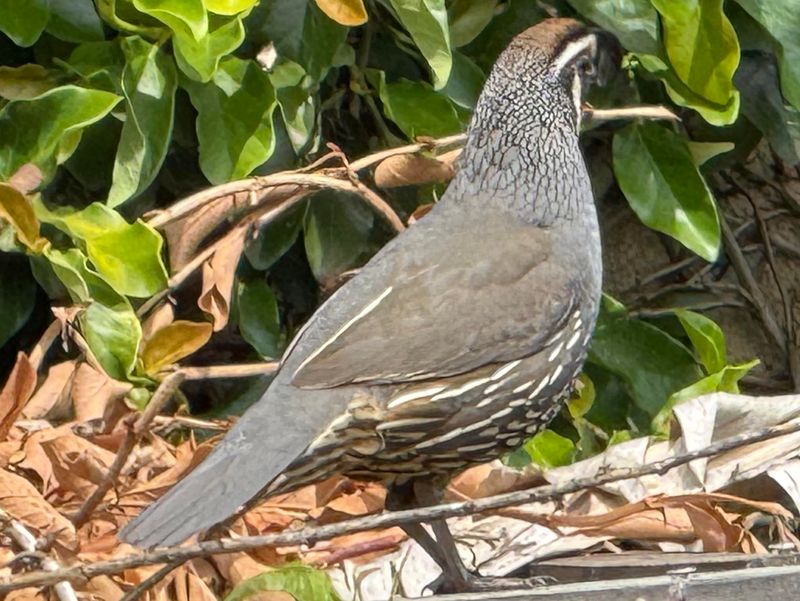
Seeing California quail in your yard for the first time is exciting, but the most honest explanation is also the most practical one: the birds may be feeding, resting, dust-bathing, or simply passing through. Before applying any habitat or plant advice, confirm you are looking at a California quail and not one of the state’s other quail species.
California quail wear a bold, comma-shaped black head plume, a scaled belly pattern, and a brown-and-gray body. Gambel’s quail, common in desert regions of southeastern California, look similar but have a plain buff belly and more reddish-brown flanks.
Mountain quail, found in higher-elevation shrub and woodland habitat, are larger and carry a long, straight head plume. The habitat and plant recommendations below apply only to California quail.
Once you have identified the species, resist the urge to conclude that a nest is nearby. Cornell Lab of Ornithology’s California quail life-history account describes coveys that can number more than 75 birds, particularly in fall and winter, and notes that family groups and non-breeding birds also move together.
A group foraging along your fence line may be working a regular feeding circuit that covers several neighboring yards, not staging near a nest on your property. Actual nesting evidence requires something more specific: watching a female carrying nesting material, observing an adult sitting motionless on the ground in the same spot for extended periods, seeing eggs in a shallow ground scrape, or watching chicks following adults within days of hatching.
Timing adds another layer of caution. CDFW notes that California birds nest during different periods depending on species and location, and some nest in every month of the year, so “summer” is not a universal nesting window for every California location.
A sudden increase in sightings during warm months may reflect seasonal movement, a change in nearby habitat, or simply that your garden now offers something useful. CDFW’s California quail habitat guidance frames backyard visits as a response to available resources, not a sign that quail have formally chosen your yard as a permanent home.
Quail use the edge between cover and open ground
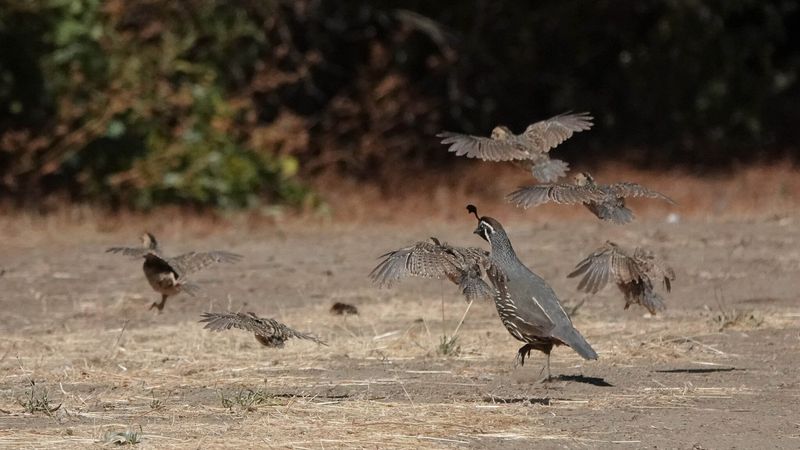
The pattern that makes a garden attractive to California quail is not one dramatic feature but a specific relationship between two zones: open or sparsely vegetated ground for walking and feeding, placed directly next to shrubs, grasses, or other low cover for concealment and escape. Cornell Lab’s life-history account describes California quail as birds that forage in open areas while remaining close to cover, using that edge constantly as they move through a yard.
A garden with a gravel path, bare soil patch, or low-mowed area running alongside a dense shrub border can create exactly that transition without any deliberate planning on the homeowner’s part.
Beyond the structural edge, several other yard features may contribute. Seed-bearing forbs and grasses, berry-producing shrubs, fallen acorns, and small insects all serve as food.
Leaf litter and loose, dry soil support ground foraging and dust-bathing, a behavior quail use to manage feather condition and parasites. A quiet corner with low foot traffic, minimal disturbance, and afternoon shade can function as a midday refuge during California’s hot summers.
CDFW’s quail habitat guidance identifies brush species as essential for cover and perches, and forb species as key food sources, reinforcing that the birds respond to a combination of structure and food rather than any single element.
No birdbath, feeder, or specific plant variety creates this pattern on its own. A yard with wall-to-wall dense vegetation offers cover but limits the open-ground movement quail rely on for feeding.
Conversely, a heavily mowed, uniformly open lawn provides movement but no escape cover, which makes the birds vulnerable. The quail-friendly yard sits in between: varied in height, patchy in density, and offering both exposed foraging areas and nearby protective vegetation within a few quick steps of each other.
A suspected ground nest changes how you manage the garden
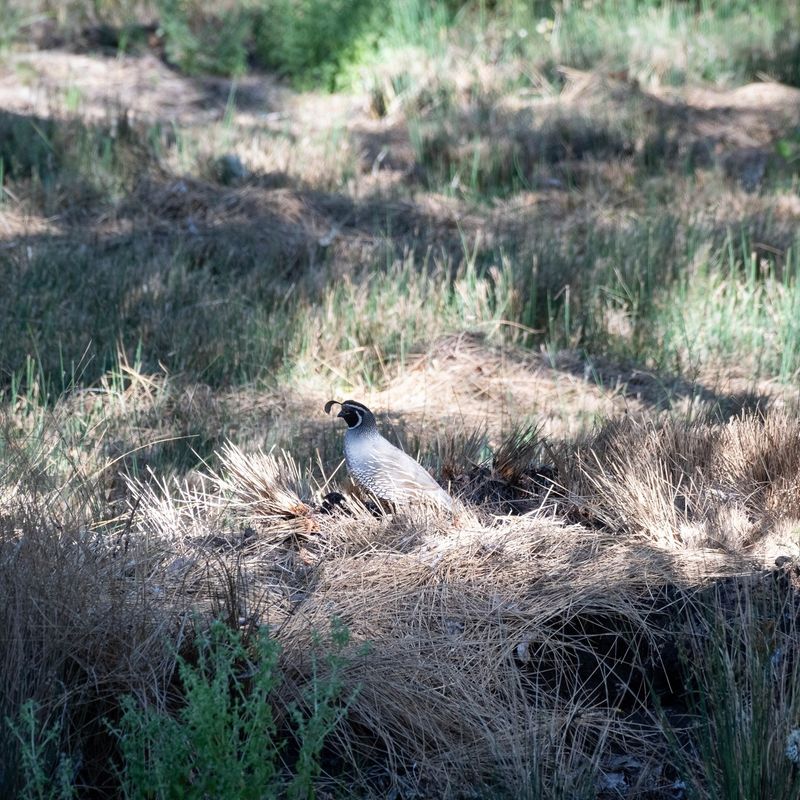
California quail nests are shallow scrapes in the ground, typically about five to seven inches across and one to two inches deep, lined with grasses and dry stems. Cornell Lab documents typical clutches of 12 to 16 eggs, an incubation period of 22 to 23 days, and one to two broods per year.
Females usually tuck the nest into grass, alongside a rock, or at the base of a shrub or small tree, relying on concealment rather than height or structure for protection. You are unlikely to spot the nest unless you are working in that exact area, which is exactly why the most protective response is to stop working there rather than go looking.
If you see a female sitting very still on the ground in the same location on multiple occasions, or if you notice adults behaving defensively near a low shrub or grass clump, treat that area as a possible nest site and give it a wide berth. Stop mowing, weed-whacking, pruning, digging, or rearranging vegetation in that immediate zone for the duration of the nesting period.
Keep dogs and cats away from the area entirely. CDFW’s wildlife rehabilitation guidance specifically advises leaving ground nests undisturbed and contacting a wildlife rehabilitator or regional CDFW office when a nest’s status is unclear, such as when eggs appear to be abandoned or an adult has not returned for an extended period.
Do not handle healthy chicks found on the ground. California quail are ground-nesting birds, and newly hatched chicks move with the adults almost immediately after hatching.
A chick on the ground near a shrub is almost certainly not lost. CDFW’s avian investigations program notes that most wild birds and their nests are protected under the Migratory Bird Treaty Act and related California statutes, and California Fish and Game Code section 3503 prohibits the needless destruction of bird nests or eggs.
CDFW’s drone and nest-disturbance guidance reinforces that repeated close approaches, including photography at close range, can disturb nesting birds in ways that expose eggs and young to predators or cause abandonment. CDFW’s nesting-bird disturbance page provides additional context on when and how disturbance becomes a legal concern.
Use regional plants to recreate useful structure
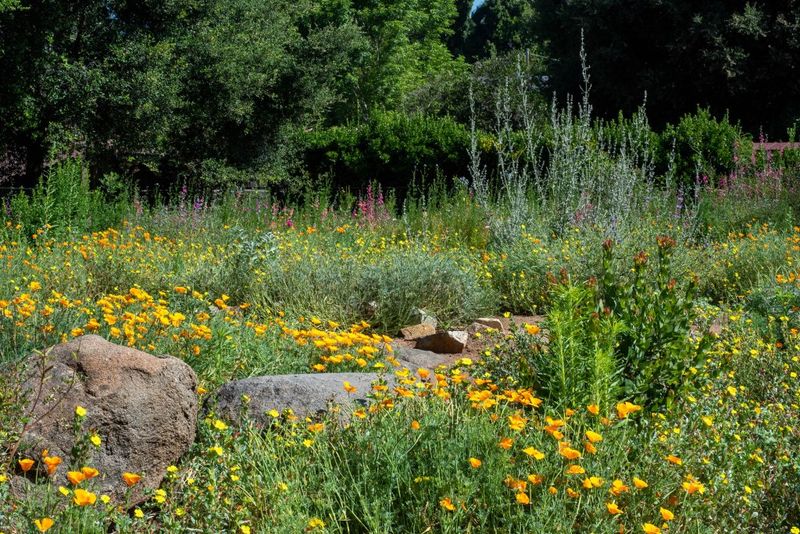
Rather than following a fixed planting list, start by looking at what quail are already using in nearby natural areas, open space preserves, or even a neighbor’s mature native garden. CDFW’s California quail habitat guidance specifically recommends observing the vegetation quail use locally and imitating that structure, because regional climate, soil, and existing plant communities vary enough that a plant thriving in one part of the state may not establish easily in another.
The goal is to recreate the structural relationship quail already rely on: brushy cover alongside open foraging ground, with seed- and berry-bearing plants woven in.
CDFW lists several California quail favorites as regional examples, not a guaranteed recipe. Brush species useful for cover and perching include brittlebush and redberry.
Food-bearing forbs and shrubs include deerweed, Pacific blackberry, lotus, lupine, clover, filaree, and chickweed. Cornell Lab confirms that backyards with ground-level food sources and dense shrubbery are regular California quail habitat, which supports the idea that recreating those elements is worth attempting.
Whether quail actually visit depends on whether a local population exists nearby, what predators are present, and how well the yard connects to surrounding habitat, factors no plant list can guarantee.
Reduced disturbance during the nesting period, such as delaying pruning and avoiding soil disruption in planted areas, can also help preserve whatever structure is already working. That said, all vegetation management must remain subordinate to fire-safety requirements.
CAL FIRE’s defensible-space program sets fuel-reduction standards that apply regardless of wildlife goals, and some local jurisdictions impose stricter rules. Plant for habitat structure within those legal limits, not around them.
Treat water and supplemental food as optional tools
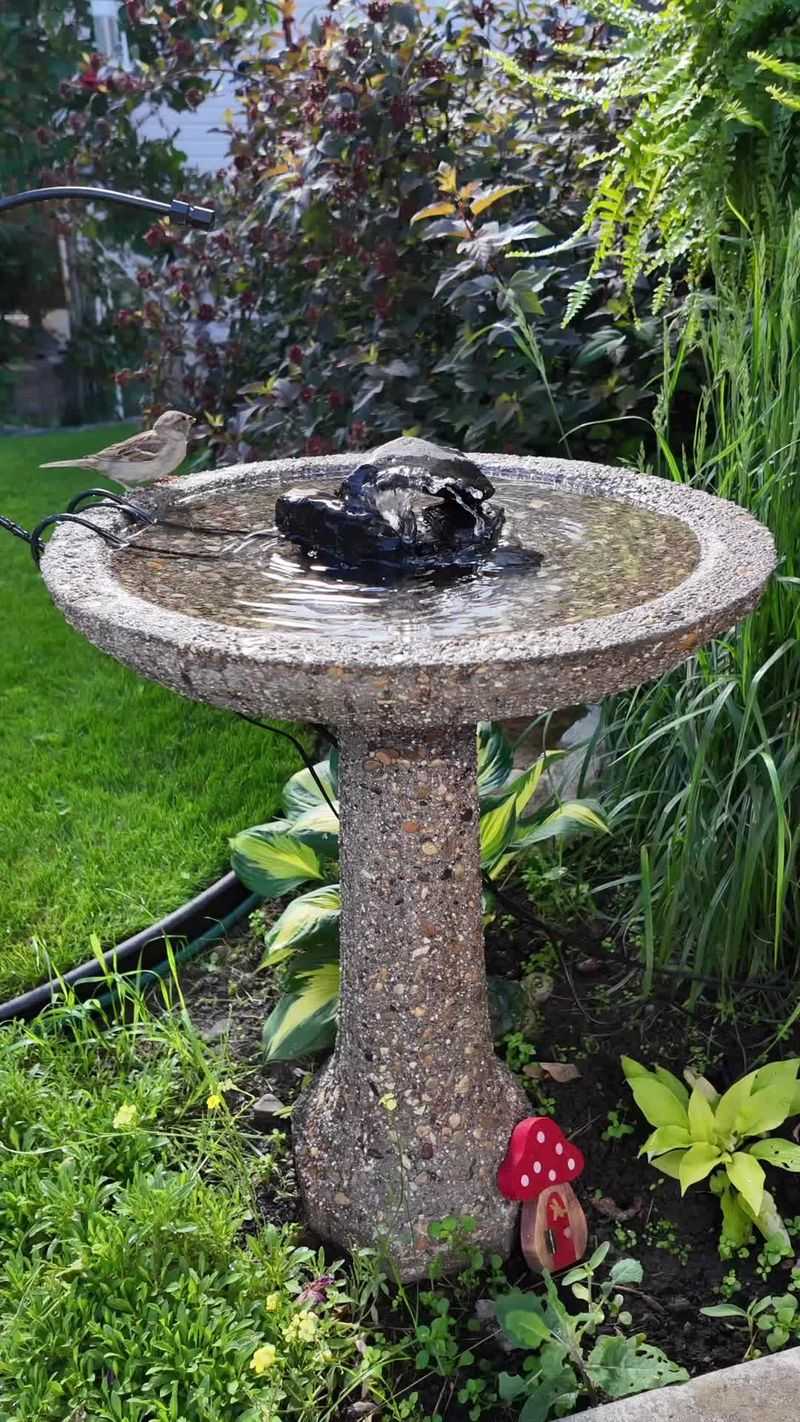
Artificial water and supplemental food are sometimes presented as essential steps for attracting quail, but the evidence puts both in a more conditional category. The Presidio’s California quail viability report notes that quail may use artificial water sources, but that drinking-water needs outside of heat and drought conditions remain uncertain.
A shallow water dish placed in the open during a heat wave or extended dry spell may genuinely help, but it is not a required feature for the core habitat strategy described in this article. Concentrated water sources can also increase predator exposure, since raccoons, cats, and other animals are drawn to reliable water just as birds are.
If you choose to offer water, keep the container shallow, no more than one to two inches deep, and clean it every few days to prevent mosquito breeding and bacterial growth. University of Arizona Cooperative Extension wildlife-habitat guidance recommends providing escape routes in any water feature deeper than about one to two inches, using gently sloping rocks, bricks, or ramps so small birds can exit easily if they slip in.
Place the dish near cover so birds can retreat quickly, but not so close to dense vegetation that a predator can approach unseen.
Supplemental feeding carries its own trade-offs. The Presidio report notes that feeders can increase local quail density in some management situations, but feeder use varies between individual birds, and seed on the ground or in open trays reliably attracts raccoons, rats, and other non-target animals.
The habitat structure described in earlier sections, cover, open ground, native food plants, and reduced disturbance, does not require a feeder to function. Add one only if you are prepared to manage the non-target animal traffic it will bring.
A backyard forms only one part of the quail landscape
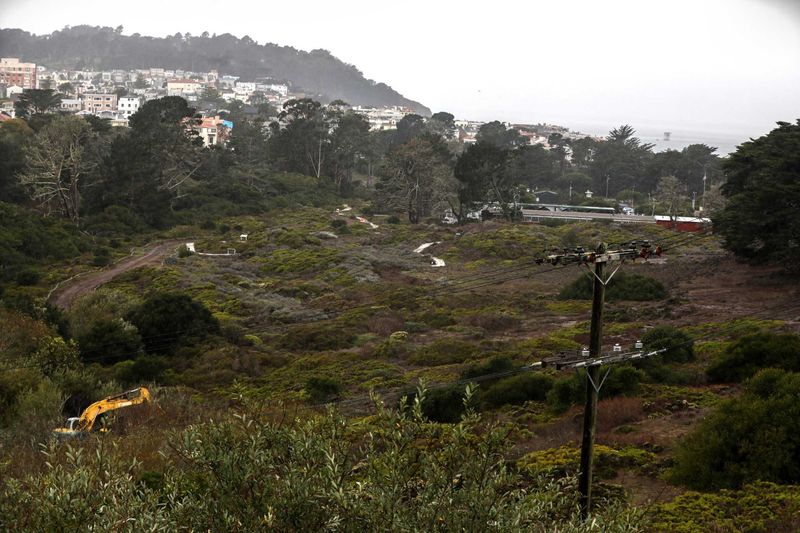
Even a well-structured yard cannot substitute for the broader landscape conditions that determine whether California quail persist in an urban area over time. Research from the San Francisco Estuary Institute on urban park suitability for California quail found that larger, less-isolated habitat patches, greater shrub cover, lower impervious surface, connectivity between habitat areas, and predator conditions all influence whether quail occupy and persist in urban settings.
A single garden, however thoughtfully planted, is one tile in a much larger mosaic.
A covey visiting your yard may be working a daily circuit that spans several neighboring properties, a nearby park, or the edge of an open-space preserve. Cornell Lab notes that coveys can be large, fluid groups that shift with seasons and resource availability.
A new sighting this summer may reflect seasonal movement after a nearby habitat change, a temporary shift in food availability, or simply that a gap in fencing or vegetation now gives the birds access to your yard that they did not have before. None of those explanations require a permanent commitment from the quail.
The Presidio’s California quail restoration work identifies feral cats, nest predators, habitat loss, and vehicle collisions as significant urban threats that operate at a scale well beyond any one yard. Reducing those pressures where you can, by keeping pets indoors or supervised and connecting with neighbors about shared habitat goals, matters more for long-term quail presence than any single planting decision.
Your yard can be a useful stop along the way without being sufficient habitat on its own.
Wildlife-friendly cover still must meet California fire rules
One of the sharpest tensions in California wildlife gardening is that the dense, layered vegetation quail use for cover can conflict directly with defensible-space requirements that apply to millions of California homes. CAL FIRE’s defensible-space program requires removing dead and dying vegetation, reducing fuel continuity between plants, mowing annual grasses to no more than four inches in applicable zones, and maintaining separation between shrubs and between shrubs and trees.
These are legal requirements in many parts of the state, not optional suggestions, and local fire departments or fire-safe councils may impose standards that are stricter than the state baseline.
Leaving a dense shrub border, a thick grass clump, or a pile of leaf litter in place for quail is not an option if those features violate your zone’s fuel-reduction rules. The practical path forward is to work within the constraints rather than around them.
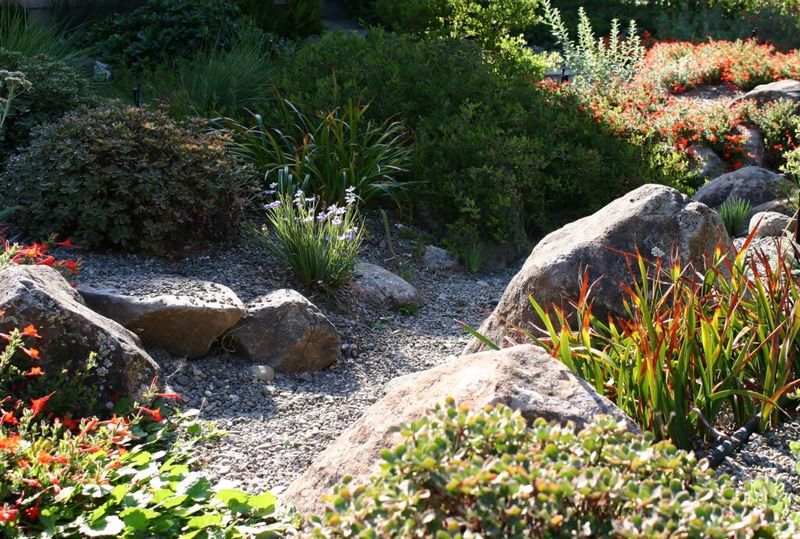
Native shrubs that meet CAL FIRE spacing and height requirements can still provide meaningful edge cover. Low-growing forbs that stay under the grass-height limit can supply food.
Bare or graveled ground that satisfies fuel-reduction goals also functions as the open foraging surface quail prefer. The two goals overlap more than they conflict when the specific rules for your property and zone are treated as the starting point.
Check with your local fire department, county fire-safe council, or CAL FIRE unit before making any vegetation changes intended to support wildlife. Rules vary by zone designation, parcel location relative to wildland-urban interface boundaries, and local ordinance.
No wildlife benefit justifies non-compliance with fire-safety law in a state where residential fires can spread rapidly through unmaintained vegetation.
Maintain compatible habitat without expecting a permanent covey
The most grounded takeaway from a California quail sighting is also the most freeing one: the birds showed up because your yard currently offers a workable mix of cover, open ground, food, shade, and low disturbance. That combination came together through your existing choices, and you can preserve it without dramatic changes or expensive interventions.
Cornell Lab’s life-history data confirms that backyards with ground-level food and dense shrubbery are regular California quail habitat, which means maintaining what you already have is a reasonable first step.
If you suspect a nest, follow the guidance from earlier sections: leave the immediate area alone, stop disruptive yard work nearby, and keep pets away. CDFW’s rehabilitation and ground-nest guidance remains the right resource for anything unclear about a nest’s status or a bird in distress.
Offer water during heat or drought if you can manage the container responsibly, and skip the feeder unless you are ready to deal with what it attracts.
Whether the quail keep visiting depends on factors your yard cannot fully control, including the health of the surrounding landscape, predator pressure, and connectivity to larger habitat patches. Urban quail research consistently points to landscape-scale conditions as the stronger driver of persistence.
A yard that stays compatible, fire-safe, and low-disturbance gives the birds a reason to return when conditions allow. That is a realistic and worthwhile goal, even if a permanent covey is never guaranteed.