
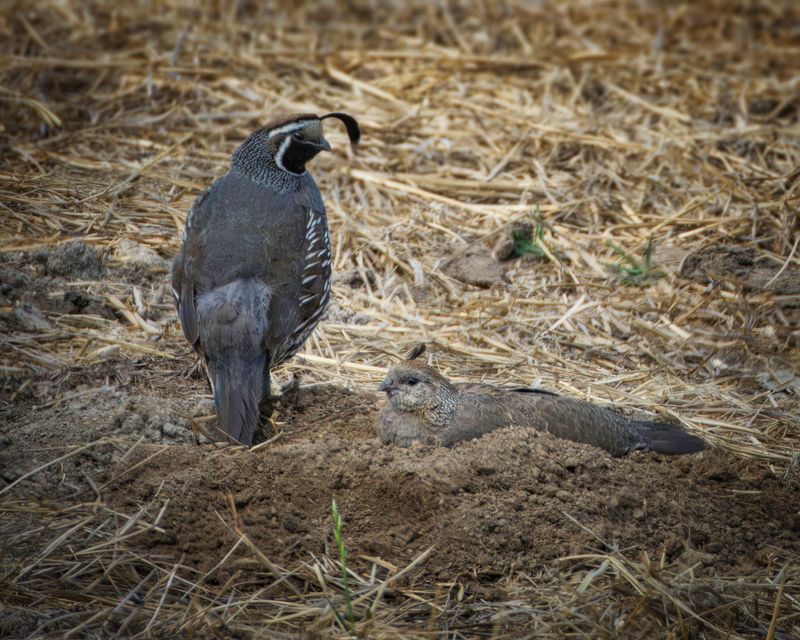
Finding a California quail nest tucked into a corner of your yard this summer is one of those surprises that stops you mid-step. These plump, topknotted birds are a familiar sight across California neighborhoods, but discovering they chose your property to raise a family raises a lot of questions.
What did you do right? Is the nest safe?
And what should you do now? The answers are more nuanced than most homeowners expect, and getting them right makes a real difference for the birds.
Summer nesting can look sudden even when it is normal behavior
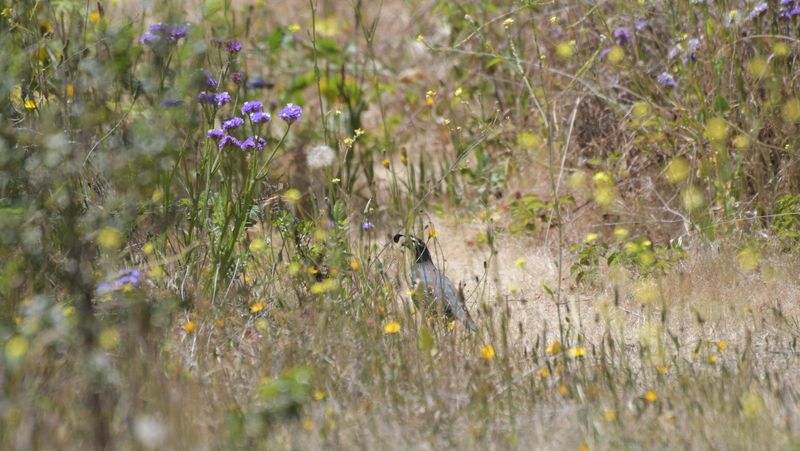
Stumbling across a quail nest in July or August can feel like something remarkable just happened overnight, but the timing is well within the ordinary calendar for this species. California Department of Fish and Wildlife’s California quail life-history account places the nesting season from April through August, with the highest activity in May and June.
A nest found in midsummer or later fits comfortably inside that window rather than signaling something unusual.
If you spotted the nest in late July or August, it may represent a delayed start or a renesting attempt after an earlier failure, but that is not guaranteed. Not every late-season nest is a second try.
The birds follow seasonal cues shaped by rainfall, food availability, and local conditions, so the timing you see in your yard reflects a broader set of factors beyond anything you planted or changed recently.
The strongest conclusion you can draw from the nest itself is that a female accepted at least one workable location on or near your property. Cornell Lab of Ornithology’s California quail life history describes ground-level concealment near cover as the key requirement she was evaluating, not the whole yard or its overall quality.
The birds may have been using habitat beyond your property line for movement and foraging all along, and the nest is one piece of a larger picture rather than a complete report card on your landscaping choices.
Resist the urge to trace the nesting back to one recent garden change. Seasonal behavior, neighborhood habitat conditions, and population movement all play into where a pair decides to nest in any given year.
The nest is good news, and understanding what it actually tells you helps you respond in a way that supports the birds without overclaiming what your yard has become.
Read the nest as a clue, not a complete yard diagnosis
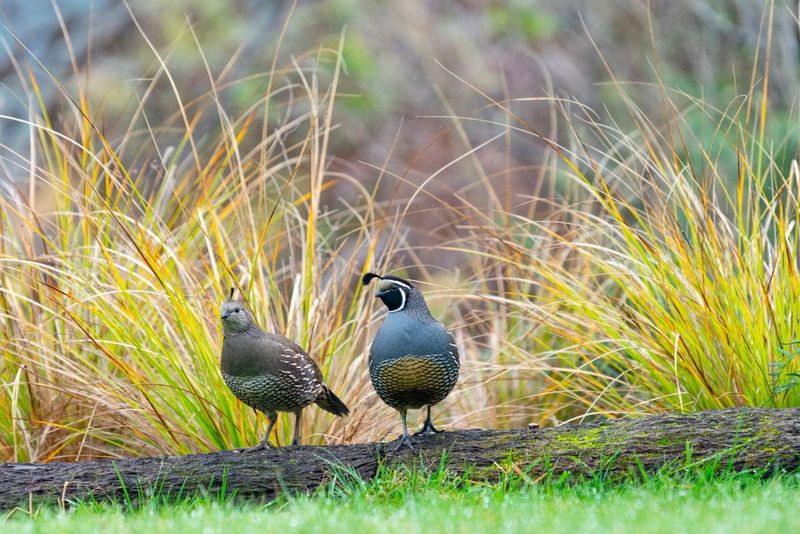
A California quail nest is not elaborate. Cornell Lab describes it as a shallow scrape in the ground, lined with grasses and plant material, placed under or beside vegetation, rocks, logs, or brush.
The female was looking for a spot that offered concealment and some protective structure at ground level. Finding that combination somewhere in your yard is what the nest confirms.
What the nest does not confirm is that your entire yard functions as complete quail habitat. The birds almost certainly range beyond your property to forage and move through the landscape.
CDFW’s life-history account describes California quail using a mix of brushy cover for protection and more open, plant-rich ground for feeding. Your yard may supply one piece of that mix while the birds pull other pieces from neighboring lots, green spaces, or undeveloped areas nearby.
The habitat pattern that actually serves quail is a mosaic, not a wall of dense vegetation. Thick, uniform cover can restrict the open movement quail need just as much as a bare, exposed lawn can leave them vulnerable.
CDFW’s quail habitat guidance points to a combination of brushy species for cover and perching alongside forb-rich ground where birds can feed and navigate on foot.
Yard features like a brush pile, a low shrub border, some native grasses, or a rock cluster near open ground can read as workable structure to a nesting female without making the whole yard a wildlife sanctuary. California Native Plant Society’s habitat gardening guidance emphasizes varied plant structure, seed-bearing plants, and some retained leaf litter and bare ground as elements that support birds broadly.
The nest clue tells you that at least one of those features landed in the right place this season.
One nest does not prove that the yard is safe
A female choosing your yard to nest means she accepted the site, not that the site is free of danger. Nesting decisions happen under real predator pressure, and a successful-looking nest at the start does not guarantee the eggs or chicks will survive.
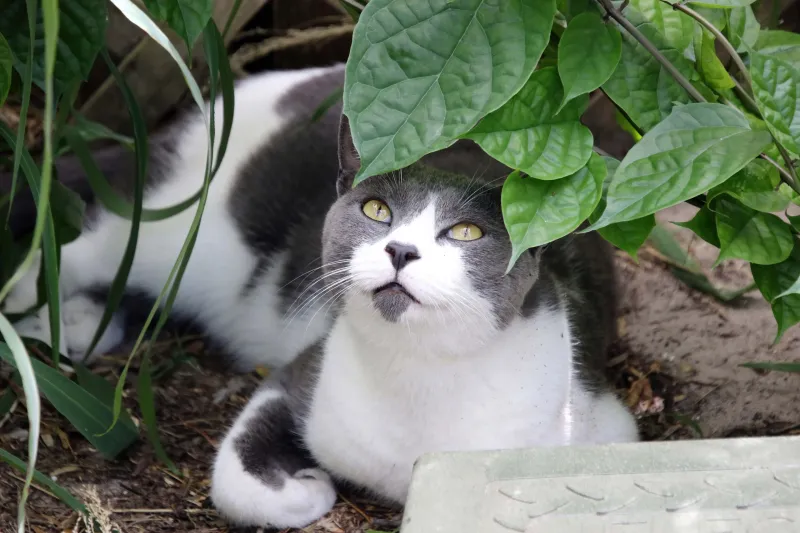
CDFW’s California quail life-history account lists hawks, owls, snakes, skunks, raccoons, coyotes, jays, and domestic cats among the animals that threaten nests, adults, and young. Any of these may be present in a yard where a nest exists.
Domestic cats deserve special attention here. A cat that spends time outdoors, whether yours or a neighbor’s, poses a direct threat to ground-nesting birds and their chicks.
Physical separation between pets and the nesting area is the safest response, not any attempt to handle or reposition the birds. The same applies to dogs, which can disturb a nest even without intending harm.
Zoom out to the surrounding neighborhood and the picture gets more complex. Research on California quail in urban parks found that occupancy is shaped by factors well beyond any single yard, including surrounding habitat quality, park size, connectivity, pavement coverage, and predator pressure.
A yard that sits in a fragmented neighborhood with heavy pavement and few connected green spaces faces constraints that no amount of careful planting fully overcomes.
Your yard may be functioning as one usable patch inside a larger habitat network, but one nest cannot establish that such a network is present, connected, or stable. The nest is a hopeful sign, not a certificate of safety.
Holding that distinction keeps your response grounded: protect what you can control around the active nest, and stay realistic about the threats that operate beyond your fence line.
Protect the nest by minimizing contact and disturbance
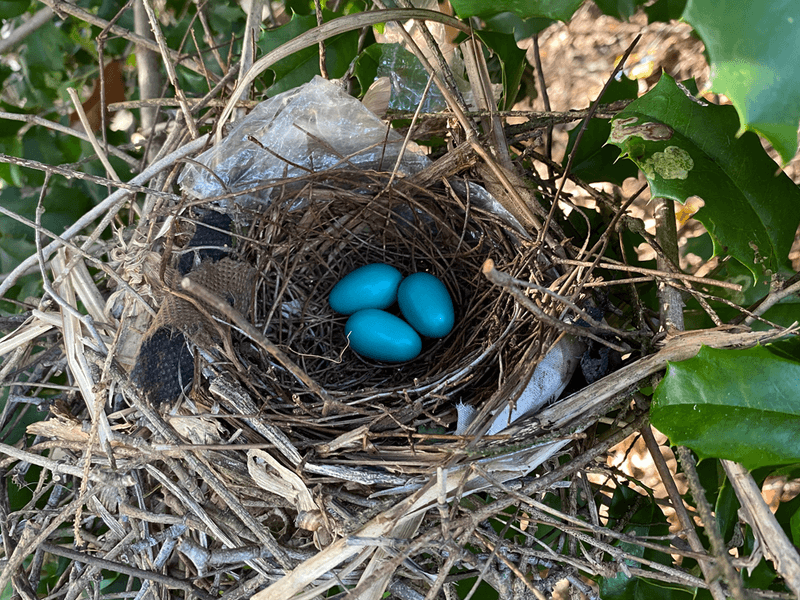
Once you know a nest is there, the most protective thing you can do is stay away from it. That means no leaning in for a closer look, no checking whether the eggs have hatched, and no probing the surrounding vegetation to get a better angle.
Every visit you make is a risk, because repeated human presence can stress the incubating bird and create a visible trail that guides predators directly to the site.
Stop or defer any nearby yard work for the duration of the nesting attempt. Mowing, weed-whacking, digging, pruning, and edging near the nest can expose eggs or newly hatched chicks to temperature extremes and predators, and can cause the adults to abandon the site entirely.
CDFW’s wildlife rehabilitation guidance advises against removing or disturbing ground nests, and California law prohibits needlessly destroying bird nests or eggs. A delayed mowing schedule costs you very little compared to what a premature pass with the mower can cost the birds.
Do not attempt to handle the nest, reposition eggs, cover the site with a shelter, or add nesting material. Well-intentioned interventions of this kind can disrupt the nest’s thermal environment, introduce human scent, or physically damage the clutch.
CDFW’s guidance on wildlife disturbance makes clear that close approach and overhead activity near active nests can trigger abandonment, and the same principle applies at ground level.
Keep dogs and cats physically separated from the nesting area for the entire period. A temporary fence section, a closed gate, or a leash routine that routes pets around the zone all work better than trying to shoo birds or manage the situation after contact has already happened.
CDFW’s quail life-history account identifies domestic cats as a documented threat to adults and young alike.
Do not use a personal judgment call to decide when the nesting attempt is finished and yard work can resume. If you have a task that genuinely cannot wait, or if you are uncertain whether the nest is still active, contact a CDFW regional office or a permitted wildlife rehabilitator rather than making that call on your own.
Preserve a varied, site-appropriate habitat mosaic
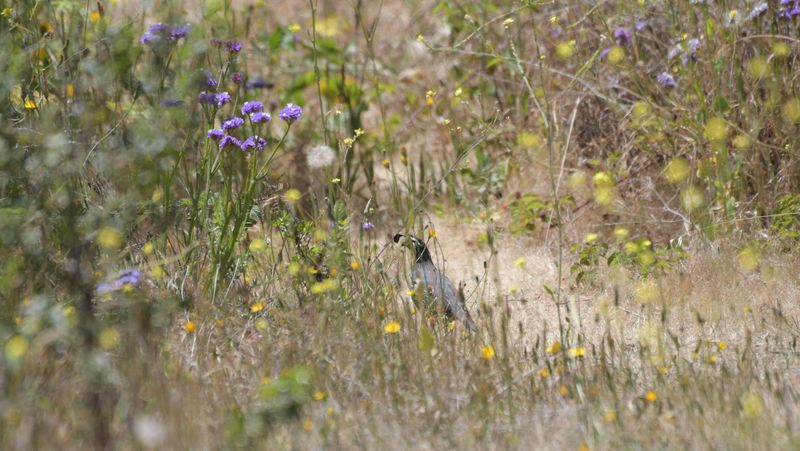
The most durable thing you can do after a nesting visit is maintain the kind of varied ground structure the birds found useful, without treating any single plant or design formula as a guarantee. California Native Plant Society’s habitat gardening guidance recommends allowing seeds to ripen on plants before cutting them back, retaining some leaf litter and patches of bare ground, using varied plant heights and structures, and reducing or eliminating pesticide use.
These practices support the insects and seeds that birds forage on, and they build the layered, patchy character that makes a yard navigable rather than just dense.
CDFW’s quail habitat plant guidance lists species associated with California quail, including brittlebush, deerweed, redberry, Pacific blackberry, lotus, lupine, filaree, and locally appropriate oak trees. Clover and chickweed also appear on the list as plants quail use, though they are not California natives.
Locally native species are generally preferable because they are adapted to regional soil, water, and climate conditions, but the key point is matching any plant choice to your specific locality, water availability, and fire-safety requirements rather than simply copying a list.
Open ground matters as much as cover. Quail are ground-running birds that need navigable space between shrubs and grass clumps to move, forage, and escape quickly.
A yard where every square foot is planted solidly can actually limit quail movement even if the plants themselves are appropriate species. Aim for a patchwork where protective shrubs or brush sit near areas of shorter vegetation, forbs, and some exposed soil.
One framing worth setting aside entirely: numerical habitat targets from Texas quail management, such as hundreds of grass clumps per acre or specific percentages of woody cover, were developed for ranch-scale bobwhite and scaled quail management. Texas Parks and Wildlife’s South Texas quail management guide and related bobwhite habitat guidance address landscape-scale operations with different species in a different region.
They are useful background for understanding quail habitat principles generally, but they are not validated prescriptions for a California backyard, and applying them directly would misrepresent both the science and the species.
Do not add feeders or birdbaths automatically

The impulse to put out food and water after spotting nesting quail is understandable. It feels like active support.
Before doing that, though, consider what CDFW’s Wildlife Health Lab avian investigations program recommends: avoid providing artificial food or water to wild birds because feeders and birdbaths concentrate birds in small areas and can accelerate the spread of disease. That risk does not disappear just because the birds you are trying to help are nesting nearby.
Wildlife management literature from arid regions does discuss the value of free water for quail, particularly in dry years when natural water sources are scarce. That observation applies to large-scale range and habitat management in places like the Texas Panhandle, not to individual California backyards where the relevant concern is an active nest and the birds’ wellbeing during a critical period.
Translating a range-management water recommendation into a birdbath installation for a suburban quail nest skips over the disease-concentration risk CDFW specifically flags.
The more reliable priorities are the ones already covered: protect the active nest from disturbance, keep pets physically separated from the nesting area, and maintain the varied plant structure and natural ground cover the birds are already using. Those steps address real, present conditions.
A feeder or birdbath adds a variable that may help in some broader contexts but carries a documented downside that CDFW considers serious enough to advise against it as a general practice for wild birds.
Support future use without promising another nest
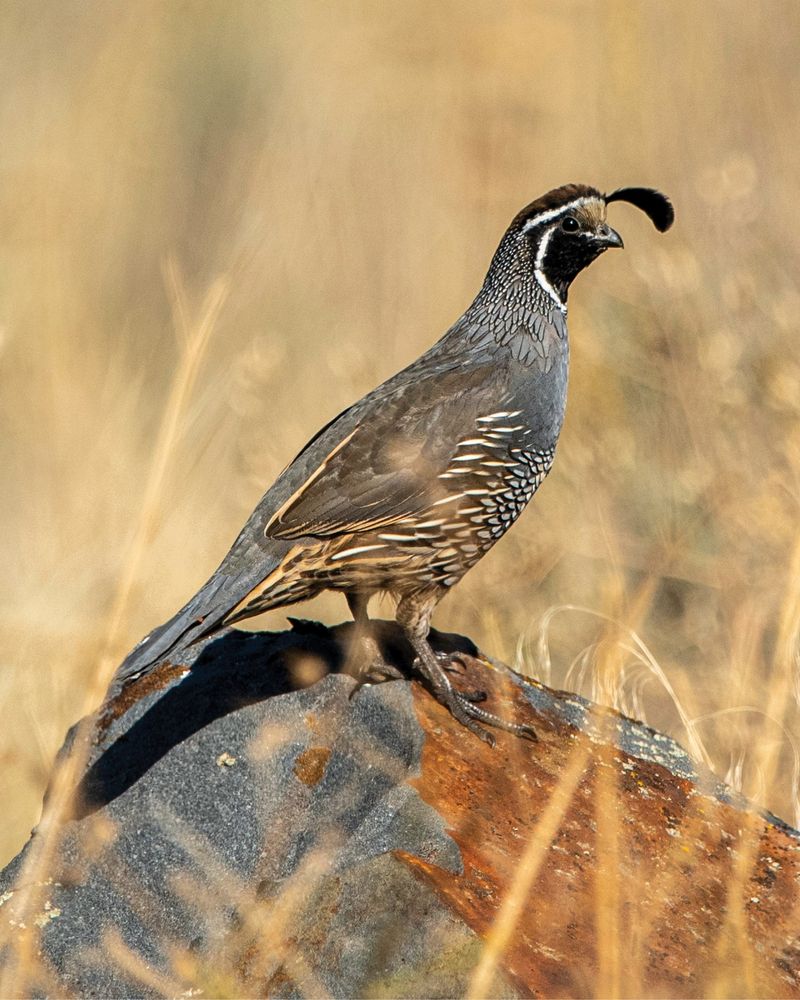
Responsible stewardship after a nesting visit comes down to a practical sequence rather than a wishlist. Protect the active nest by staying away and keeping pets clear.
Once the nesting attempt has concluded, defer to CDFW or a permitted wildlife rehabilitator if any uncertainty remains about timing or condition. Then focus on maintaining the habitat conditions the birds found useful, without treating that maintenance as a contract for next summer.
CDFW’s quail life-history account and urban-park research on California quail occupancy both point to factors that operate well beyond any single yard: rainfall patterns, food availability in the broader landscape, predator pressure, habitat connectivity across the neighborhood, and population-level movement. A yard that held a nest this year may not attract one next year even if nothing changes on your property, and a yard that sees no nest next year has not necessarily failed.
What you can realistically offer is a low-disturbance patch with varied cover, open navigable ground, seed-bearing plants appropriate to your local conditions, and minimal pesticide use. CDFW’s quail habitat guidance and CNPS habitat gardening principles support that kind of yard as genuinely useful habitat within a larger landscape, even if it cannot function as a self-contained quail sanctuary.
No plant list, water feature, or landscaping project guarantees a return visit. A yard that stays quiet, structurally varied, and ecologically honest is simply one more patch of usable ground in a landscape that quail navigate on their own terms.