
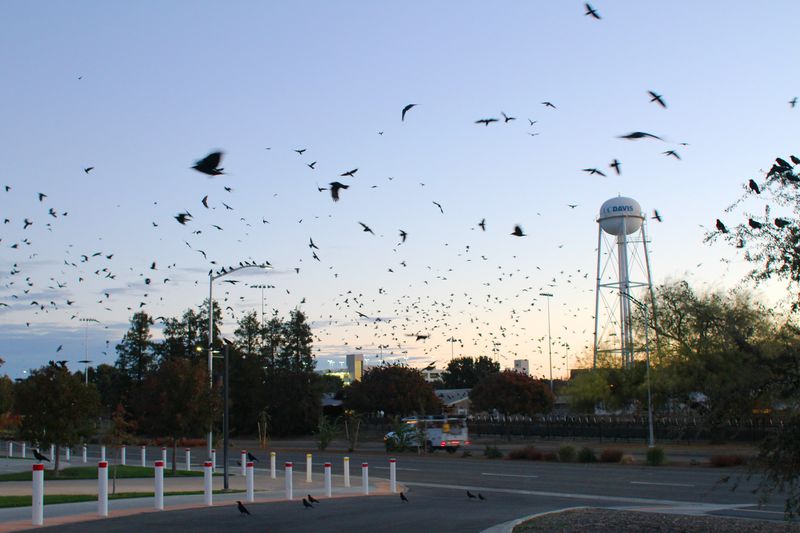
Crows landing in your yard by the dozen can stop you mid-coffee and make you wonder what is going on out there. California homeowners often assume a sudden gathering means something is wrong, either with the yard or with the birds.
The real answer is more layered and more interesting than a simple pest alarm. Knowing what draws crows and how to read their behavior helps you respond sensibly instead of reaching for a spray bottle.
Identify the birds before interpreting the flock
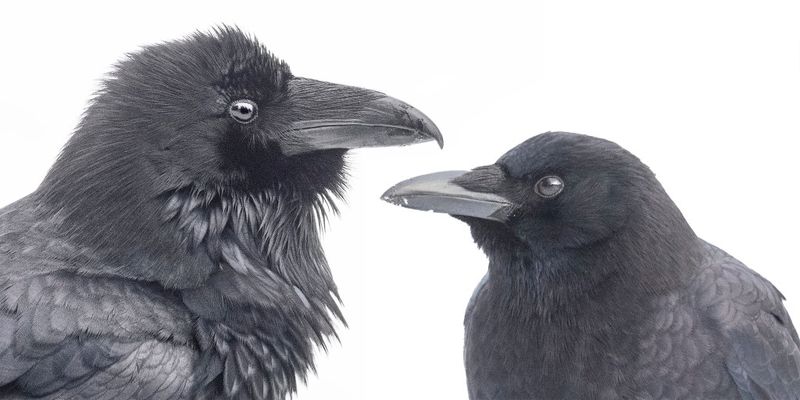
Before drawing any conclusions about why large black birds have gathered in your yard, take a closer look at who they actually are. California has two common large black corvids, and they behave very differently.
Mistaking one for the other can lead you to the wrong explanation entirely.
American Crows are roughly the size of a pigeon, with a fan-shaped tail and an all-black bill that looks proportional to their head. They are social birds that commonly travel and forage in groups, and their calls are the familiar “caw” most people recognize.
California Department of Fish and Wildlife notes that both American Crows and Common Ravens are present across the state, and telling them apart changes how you interpret a gathering.
Common Ravens are noticeably larger, closer to the size of a Red-tailed Hawk, with a wedge-shaped tail and a heavy, curved bill. They tend to travel in pairs rather than large flocks, and their call is a deep, throaty croak rather than a sharp caw.
Seeing two large black birds circling overhead is far more likely to be a raven pair than a crow flock.
The distinction matters because American Crow behavior drives most of the yard-gathering scenarios described in this article. Cornell Lab of Ornithology’s life history account describes American Crows as year-round family-group birds that also form large seasonal roosts, which explains why their numbers can shift dramatically in a short period.
Ravens simply do not behave the same way. Confirming you have crows, not ravens, gives you a much more useful starting point for figuring out what brought them to your yard.
A sudden gathering can have several ordinary explanations
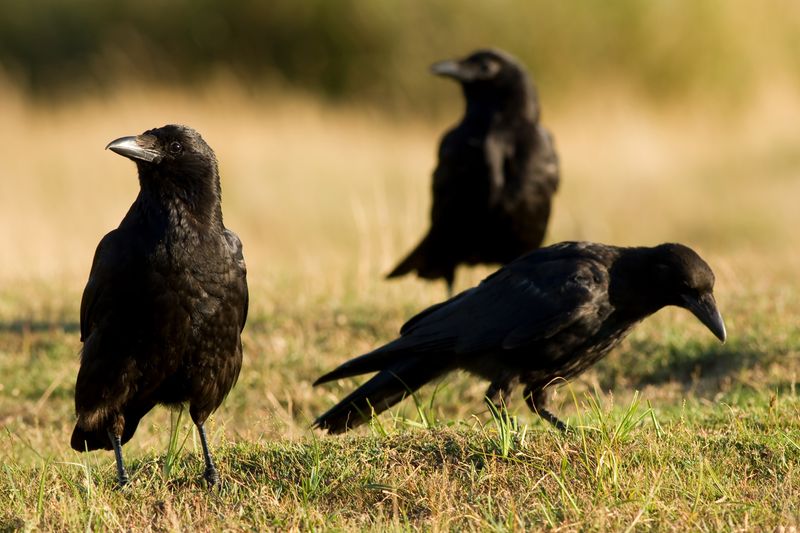
A yard full of crows is striking, but the explanation is usually mundane. The most common reasons a group shows up are a concentrated food opportunity, a nearby communal roost, or ordinary social behavior among birds that already live in the area.
None of those automatically point to a yard problem you need to fix.
Watch where the birds are spending their time. Crows working across the turf, probing the soil, and pulling at grass are behaving differently from crows perched high in a eucalyptus or oak, calling back and forth.
Crows gathered under a fruit or nut tree, picking through fallen debris, are following a food source that has nothing to do with lawn insects. Cornell Lab’s crow life history describes them as opportunistic omnivores attracted to open areas with food, trees, and human-created resources like garbage and fallen fruit.
Seasonal roosting adds another layer. American Crow winter roosts can grow into very large gatherings, and birds from surrounding neighborhoods may funnel through a yard that happens to sit along a flight path.
Cornell Lab’s winter bird survival coverage explains that crows and other corvids gather for warmth, information-sharing, and predator detection, not because any one yard is uniquely attractive.
Pet food left outside, spilled birdseed, unsecured compost, standing water after irrigation, and overripe fruit are all documented attractants. California’s living-with-wildlife guidance recommends removing attractants rather than trying to interpret or manage the birds directly.
A heavily watered lawn that stays moist for extended periods can also draw crows looking for earthworms near the surface, which is a watering habit issue rather than an insect infestation. Location, timing, and what the birds are actually doing give you far more useful information than the number of birds alone.
Treat lawn probing as a clue, not a diagnosis
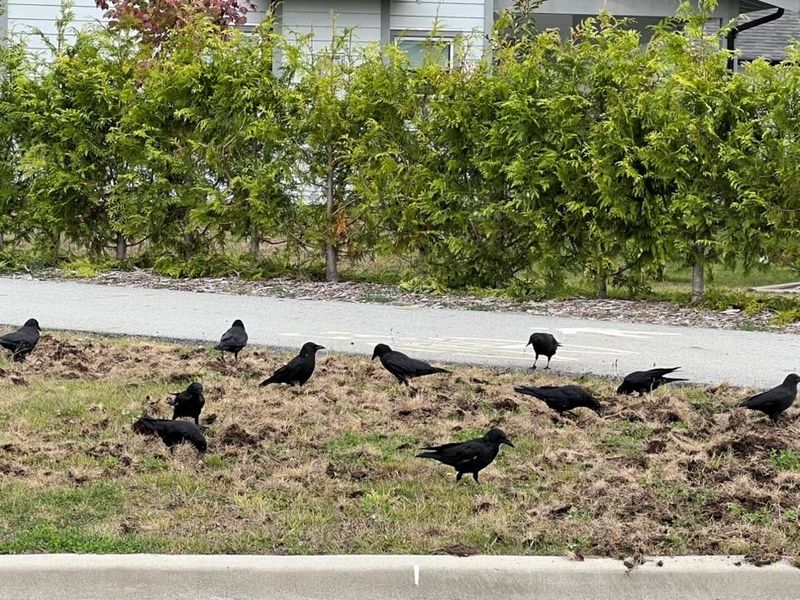
Crows working across the grass and jabbing their bills into the soil are worth paying attention to, but that behavior is a reason to look closer, not a confirmation of a pest problem. Probing, small holes, and lifted patches of turf are clues that something may be living in the soil below.
They are not proof that crows are solving it for you.
UC IPM’s lawn insect resource notes that birds and other vertebrates may be attracted to turf containing white grubs, particularly in autumn when grub populations are closer to the surface. That seasonal timing matters.
If crows suddenly appear on your turf in late summer or early fall and the grass has been yellowing in irregular patches, the combination is a reasonable prompt to inspect the soil. If crows show up in February after a rainy week, earthworms near the surface are a far more likely target.
Crow probing can also create its own turf damage. The birds are searching for prey, and the holes and loosened soil they leave behind add to whatever wear the lawn was already experiencing.
Describing this as aeration overstates the benefit and understates the disruption.
UC IPM’s vertebrate pest and turf management guidance frames bird activity in turf as a sign to address invertebrate populations below the surface rather than treating the birds as the primary concern. The practical takeaway is straightforward: if crows are probing turf that is also showing unexplained thin spots, brown patches, or spongy areas, pull back a square foot of grass and count what you find underneath.
That inspection tells you whether insects are actually present and numerous enough to matter. Crow behavior alone does not.
Crows eat some pests without reliably controlling them
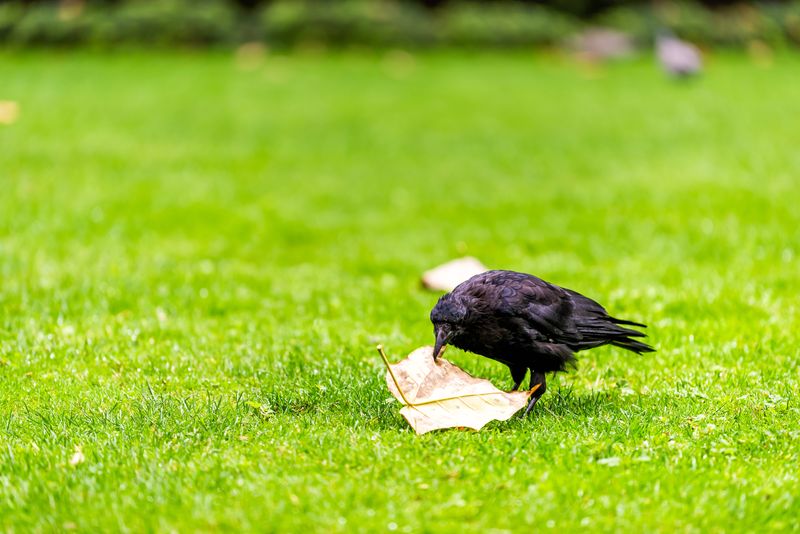
Crows do eat insects, and some of those insects qualify as yard pests. That part is accurate.
Where the story gets more complicated is the jump from “crows eat some pests” to “crows will control your pest problem.” Those are two different claims, and only the first one holds up.
Cornell Lab’s crow life history describes American Crows as true omnivores whose diet includes insects, earthworms, mice, carrion, seeds, fruit, nuts, garbage, eggs, and the nestlings of other birds. Pest insects are one item on a long and varied menu, not the focus of their foraging strategy.
A flock working your yard may consume some white grubs one morning and spend the next afternoon picking through a neighbor’s compost pile.
The stomach-sample evidence sharpens this point. A review of bird-based pest management research found that American Crow stomach contents included pest insects such as May beetles and weevils alongside beneficial insects including predatory ground beetles.
Crows do not selectively target only the insects that harm your lawn. They eat what they find, and some of what they find is working in your yard’s favor.
For residential pest management, this matters practically. A flock of crows may reduce the local grub count in one area of your turf during a foraging visit, but there is no evidence that they will bring a pest population below a damaging threshold or maintain that reduction over time.
UC IPM’s integrated pest management approach for lawns is built around monitoring, confirming damage, and using targeted treatments when thresholds are crossed, not on relying on wildlife to do the work. Crows can be a useful ecological signal, but they are not a pest-control service you can count on.
Confirm the lawn problem before using insecticide
Crow activity near the turf is a prompt to investigate, not a green light to treat. The diagnostic sequence matters because lawn damage in California has many causes, and applying insecticide for the wrong one wastes money and can harm non-target organisms including the beneficial insects crows themselves sometimes eat.
Start by separating crow behavior from the lawn’s actual condition. If the grass is thinning, yellowing, or pulling up easily from the roots, those symptoms are worth investigating on their own terms.
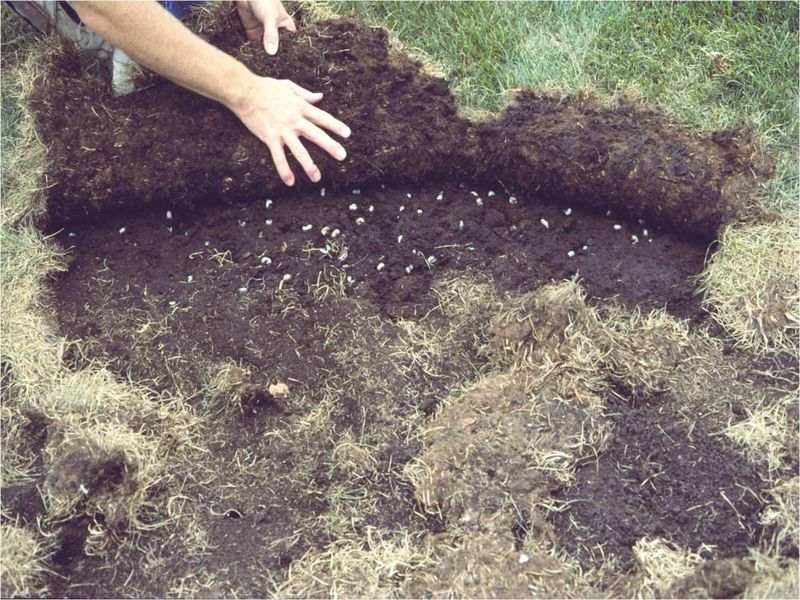
If the lawn looks fine and crows are simply present, there may be nothing to treat at all. UC IPM’s lawn insect guidance advises confirming that insects are both present and causing the damage before any treatment is considered, and it provides a specific decision point for white grubs: treatment is generally unnecessary when five or fewer grubs are found per square foot in a residential lawn.
That threshold is a useful starting point, though it does not apply identically to every grass type, soil condition, or pest species.
Before blaming insects at all, consider the other common causes of California lawn decline. Overwatering and underwatering both produce brown or thin patches.
Grass varieties poorly suited to the local climate struggle through dry summers regardless of insect pressure. Fungal disease, fertilizer burn, and dog urine leave patterns that look similar to grub damage but require completely different responses.
The inspection itself is simple. Cut three sides of a one-foot square of turf, fold it back like a flap, and count any white, C-shaped grubs in the top few inches of soil.
Do this in several spots where damage is visible. If grub counts are consistently low and the root system looks intact, the lawn problem likely has another cause.
Healthy turf that is watered correctly and planted in a suitable variety will generally resist pest pressure better than stressed grass, and it will need fewer pesticide applications over time.
Remove attractants and protect fruit without feeding crows
Managing what crows find in your yard is more effective than trying to manage the crows themselves. Most of the things that draw them are things homeowners can control without any special equipment or wildlife permits.
Garbage is a primary attractant. Crow-proof your bins by using lids that latch, and bring containers in promptly after pickup.
Fallen fruit under stone fruit trees, citrus, figs, or any fruiting plant is another reliable draw. Picking up dropped fruit regularly or removing it with a rake before it ferments removes the food signal.
Pet food left on a patio, spilled seed under a feeder, and open compost piles round out the usual list. California’s Wildlife Health Lab specifically identifies pet food, fallen fruit, birdseed, and debris as attractants that draw wildlife and should be cleaned up consistently.
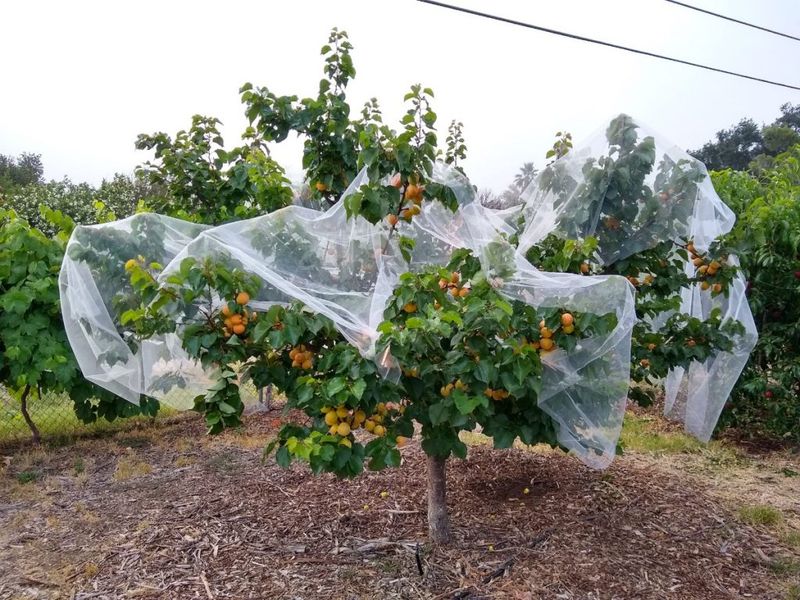
For ripening fruit on trees you want to protect, physical exclusion is the most reliable method. UC IPM recommends 1/4- to 1/2-inch plastic mesh netting installed so birds cannot reach fruit around the canopy edges.
The netting needs to be draped fully and secured at the base so crows cannot work their way underneath. Partial coverage that leaves gaps is less effective and can trap birds, so fit it carefully.
Feeding crows intentionally to recruit them as pest controllers is not a sound strategy. California’s wildlife guidance recommends against providing artificial food or water to wild birds because concentrated feeding raises disease transmission risk and attracts additional nuisance wildlife.
Putting out meat scraps or cat food to keep crows around trades one concern for several others and does not produce reliable pest reduction. A tidy yard that removes food-based rewards is the most straightforward way to reduce crow visits when they become a nuisance.
A live flock is not a West Nile warning
Seeing a large group of crows can trigger worry about disease, particularly West Nile virus. That concern is worth addressing clearly: a healthy, active crow gathering is not a disease warning.
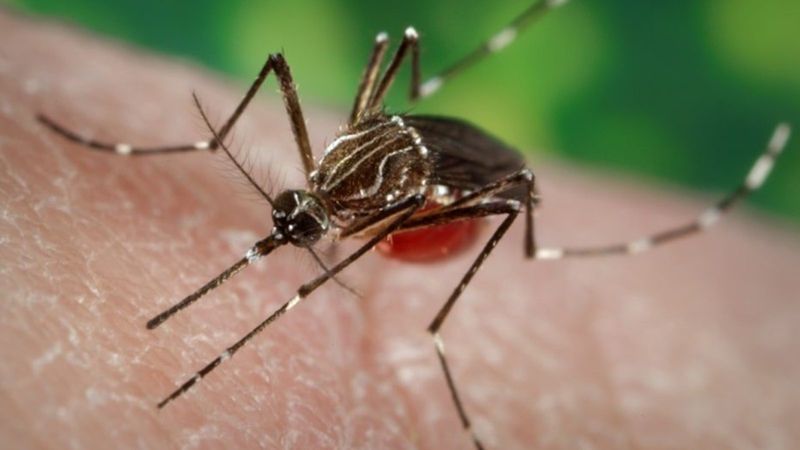
West Nile virus is transmitted to people by the bite of an infected mosquito, not by contact with crows or by being near them. CDC guidance on West Nile and dead birds confirms that crows are highly susceptible to the virus, which is exactly why they are useful to public-health surveillance, but a live, active flock is behaving normally and does not signal an elevated risk to the people watching them.
California Fish and Wildlife’s bird and wildlife conflict resource addresses both the ecological role of crows and the public-health context around them, noting that their susceptibility to West Nile makes dead crows a useful monitoring tool rather than a reason to avoid living ones.
A dead crow is a different situation and deserves a different response. Keep children and pets away from any dead bird you find in the yard.
Do not pick it up with bare hands or let it sit where pets can reach it. CDC healthy-pets and wildlife guidance advises avoiding contact with sick or dead wild birds as a general precaution.
California accepts dead-bird reports through its West Nile virus dead-bird reporting program, and submitting a report helps the state track where the virus is circulating. Use a doubled plastic bag over your hand to move the bird if necessary, seal it, and dispose of it in the trash.
Use observation—not panic—to choose the next step
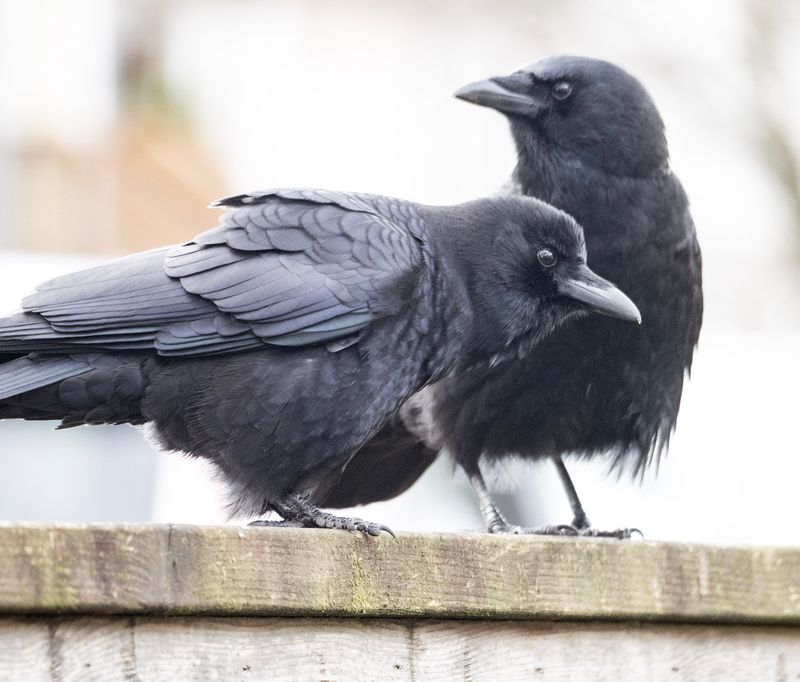
A yard full of crows rewards a measured look rather than an immediate reaction. Confirm the birds are American Crows, note where they concentrate, and consider what the yard is offering them: turf, fruit, garbage, water, or simply tall trees along a roosting route.
If they are probing turf and the grass shows actual symptoms, inspect the soil before doing anything else. Confirm insects are present and above a meaningful threshold before applying any treatment.
If the birds are gathered under a fruit tree or near a compost bin, the fix is removing the food source rather than addressing the birds. California Fish and Wildlife recognizes that crows provide real ecosystem value as scavengers and insect-eaters while also creating property concerns when large groups concentrate.
Both things are true at once.
Do not feed, poison, trap, or harass crows as improvised control. The Migratory Bird Treaty Act protects wild birds including crows, and California wildlife health officials caution that artificial feeding and improvised deterrents can create larger problems.
Observation costs nothing and usually reveals a simple, fixable explanation. Crows are paying attention to your yard for a reason, and finding that reason is almost always more useful than chasing them off before you know what drew them in.