
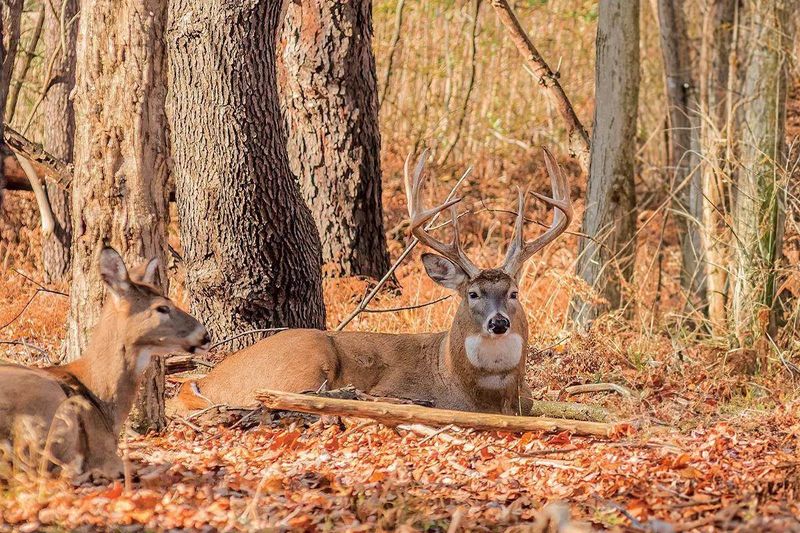
Most North Carolina homeowners don’t expect to find a deer curled up in the corner of their yard – but once it happens repeatedly, the questions start piling up. Why that spot?
Why so often? The answer usually has more to do with what your yard is quietly offering than with anything mysterious about the deer.
Reading that pattern correctly can help you make smart decisions about your property, your family, and the animal sharing your space.
That corner is probably functioning as secure resting habitat

Repeated bedding in the same yard corner isn’t random luck for a deer. According to NC Wildlife’s white-tailed deer profile, white-tailed deer are highly adaptable animals that move through suburban North Carolina regularly, using residential landscapes as part of their daily range.
When one corner keeps attracting a deer, the most straightforward explanation is that the spot delivers something the animal needs: a reliable resting place that feels secure.
Deer seek landscapes where food, water, and cover occur close together, and NC Wildlife’s residential deer guidance confirms that suburban yards frequently check those boxes without homeowners realizing it. A corner with afternoon shade, dense vegetation, and proximity to browse can function almost like a purpose-built resting site from the deer’s perspective.
The USDA Forest Service species review for white-tailed deer documents that deer prefer areas where protective cover and foraging opportunities are close together. Your yard corner may be doing exactly that job.
The bed itself is a signal worth reading – not a problem to panic about, but a clue about what conditions your property is providing.
One important caution: the bed alone cannot tell you which specific deer is resting there, why it chose that exact spot over all others, or whether the animal is sick, pregnant, or in distress. Multiple conditions almost always work together.
Treat the observation as a starting point for inspecting your yard rather than as a single-cause diagnosis.
Several yard features can create the same draw
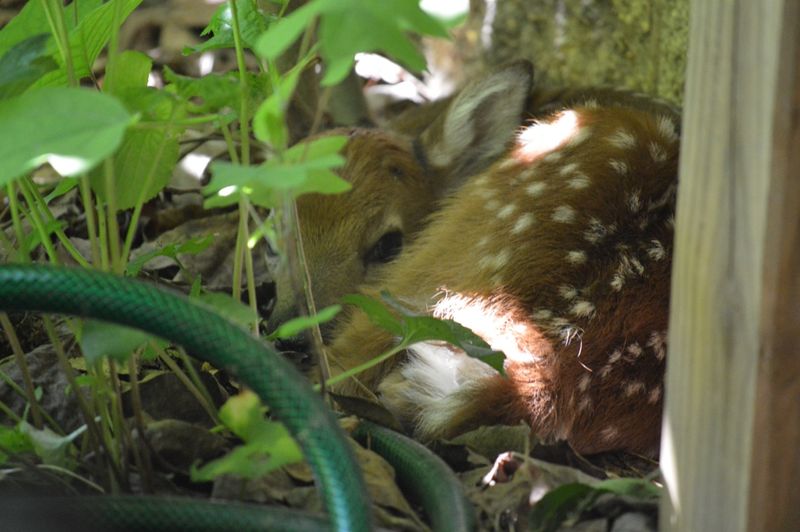
No single feature explains why deer choose a specific corner. Shade is often a major factor, especially during North Carolina’s long warm season.
Research conducted in southern Texas found that deer selected bedding areas based on thermal conditions, woody canopy cover, and vegetation height, choosing cooler, shadier spots during hot periods. A study of deer habitat use in warm southern landscapes and related research on thermal cover and deer activity point to shade and vegetative structure as meaningful attractors.
Those findings come from Texas and Florida, so they shouldn’t be read as precise North Carolina bedding thresholds – but they are relevant context for any Southern yard with a warm-season deer problem.
Beyond shade, dense shrubs, tall ornamental grasses, brush piles, evergreen plantings, and low-hanging branches all provide concealment from perceived threats and protection from wind or rain. Research on fawn bed-site selection found that resting sites generally had more vegetation cover and greater vegetation height than nearby comparison sites, and a related study on cover use by white-tailed deer reinforces that dense vertical structure matters for both concealment and weather buffering.
A wooded edge, drainage ditch, creek corridor, or overgrown fence line adds another layer of appeal. USDA’s white-tailed deer species review describes how deer prefer “edge” conditions where open foraging areas border protective cover.
A corner that backs up to a tree line or brush-filled drainage is essentially a textbook edge habitat.
Nearby food also matters. Overhanging fruit trees, acorn-producing oaks, ornamental berry shrubs, garden beds, spilled birdseed, or outdoor pet food can make a corner far more attractive than it would be on its own.
Add a clear sightline or an obvious escape path back toward woods, and that corner quietly becomes the most appealing resting option in the yard.
What does repetition actually tell you?
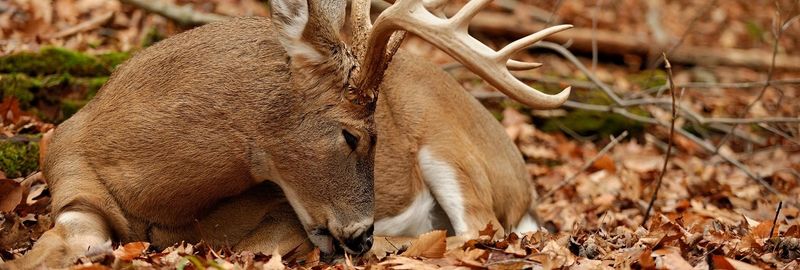
Seeing a deer bed in the same corner more than once raises an obvious question: is it the same deer every time? Possibly, but the honest answer is that a bed impression alone cannot confirm that.
Research does support general site fidelity in white-tailed deer. A long-term study documenting strong site fidelity in female white-tailed deer found that does tended to return to familiar portions of their home ranges across seasons and years.
A separate Florida study on deer space use and revisitation patterns found that wild deer did revisit certain areas within their ranges repeatedly.
What that means practically is that a deer – or possibly more than one deer – has identified the corner as a reliable option. Familiarity lowers the perceived risk of using a spot.
Once a location has been used without incident, a deer is more likely to return to it. That’s the mechanism behind repetition, not a mysterious attachment to one patch of ground.
Deer also use multiple beds depending on weather, time of day, disturbance levels, food availability, and seasonal shifts in cover. The USDA Forest Service species review notes that deer bed and ruminate during inactive periods but move among locations as conditions change.
So repeated use of your corner doesn’t mean the animal is there all day, every day – it means the corner has earned a place on a short list of reliable resting options. The pattern signals a favorable yard condition, not a permanent residency.
A short yard audit can reveal why the spot works

Walking the perimeter of your yard with a few specific questions in mind can turn that bed into genuinely useful information about your property. Start by noting when the deer appears.
Morning use often suggests a deer transitioning from overnight foraging. Afternoon use frequently points toward shade and thermal relief as the primary draw.
Weather conditions at the time – overcast versus full sun, hot versus mild – add another layer of context.
Next, stand at the bed site and look up. Is the spot shaded during the hottest part of the afternoon?
Shade from a large tree, a fence, or a dense shrub line is one of the most consistent attractors in warm-weather bedding, as the USDA Forest Service’s white-tailed deer review documents when describing how deer use cover for thermal relief. Then look outward from the bed: can the deer see approaching threats from multiple directions?
A spot with good sightlines in most directions but dense cover at its back is a classic resting setup.
Check the vegetation height and density within and around the corner. Tall ornamental grasses, unpruned shrubs, brush piles, evergreen hedges, or low-hanging branches all contribute to concealment.
Then look for food: nearby garden plants, fruit trees, ornamental berries, birdfeeders, pet food bowls, or acorn-producing trees are all worth noting. NC Wildlife’s conflict-prevention guidance identifies concentrated food sources as a key factor in repeated deer visits.
Finally, check the escape route. A corner that backs up to a wood line, drainage ditch, creek corridor, or overgrown fence line gives a deer a fast exit, and that matters.
Conduct the whole audit from a comfortable distance. NC Wildlife advises keeping a safe distance from wild deer, especially if the animal is present.
These observations identify likely attractors – they are not a diagnostic test, and they won’t point to one single cause.
A bed does not prove a fawn, pregnancy, or illness
Three interpretations come up almost every time a homeowner notices repeated deer bedding – and all three lead to unsafe behavior if acted on without better information. The first is that the doe must be pregnant and preparing a fawning site.
A bed alone cannot establish pregnancy. Does do select concealed cover when fawns are young, but a homeowner cannot determine from one resting impression whether a fawn is nearby, whether the animal is pregnant, or whether the corner has any fawning significance at all.
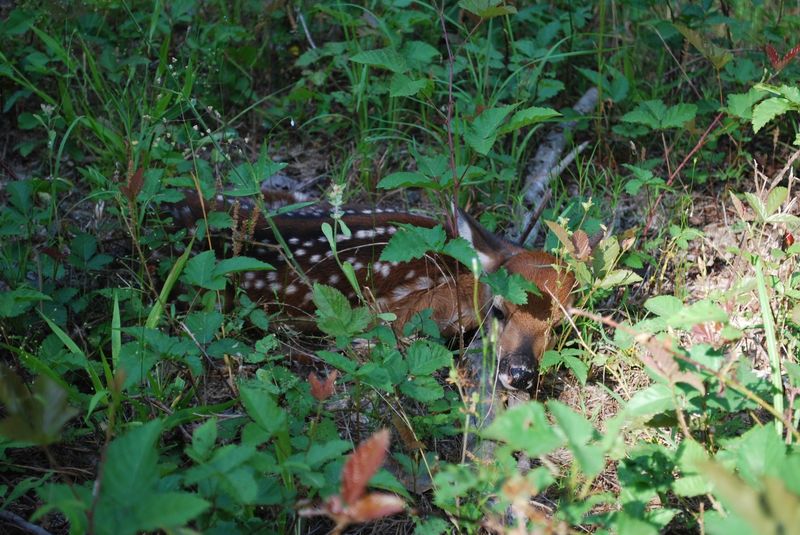
The second assumption is that a lone fawn spotted near the same yard area is abandoned or in danger. NC Wildlife’s wildlife problem FAQ is direct on this point: does routinely leave fawns alone for hours while they forage.
A fawn lying still and quiet in dense vegetation is almost always behaving normally. The instinct to touch or move it is understandable but harmful.
Leave the fawn exactly where it is, keep children and pets well away, and check again from a distance later in the day. Contact NC Wildlife or a licensed wildlife rehabilitator only if the fawn is clearly weak, unable to stand, visibly injured, or bleating persistently over several hours.
NC Wildlife’s fawn guidance gives specific criteria for when intervention is actually warranted.
The third assumption is that a deer bedding in one place repeatedly must be sick. Repeated use of a favorable resting site is normal behavior, not a symptom.
The USDA Forest Service’s species review for white-tailed deer documents that deer return to familiar, secure locations as a routine part of their home-range use.
Concern about a deer’s health is appropriate when the animal shows severe weakness, an inability to rise, obvious physical injury, unusual neurological behavior such as circling or stumbling, or prolonged distress with no movement. NC Wildlife advises against approaching a resting deer under any of these circumstances – call the agency instead.
A deer that simply rests in the same corner and moves off normally is not a cause for alarm.
Remove easy incentives before using deterrents
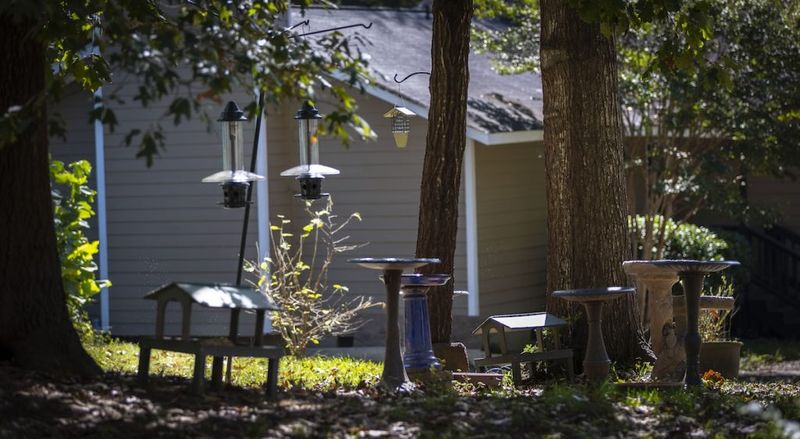
Before reaching for a spray bottle or a motion-activated sprinkler, the most practical first step is making the yard less rewarding. NC Wildlife’s guidance on feeding wildlife is clear: do not feed deer intentionally or accidentally.
Artificial food sources can cause nutritional problems in deer, draw larger numbers of animals to a concentrated area, worsen landscaping damage, increase opportunities for disease transmission, and make deer bolder around people and pets over time.
Practical removal steps include bringing in birdfeeders or switching to squirrel-proof designs that limit seed spillage, storing outdoor pet food inside after mealtimes, picking up fallen fruit from trees regularly, and checking whether garden beds or ornamental plantings are serving as a convenient browse line. NC Wildlife’s conflict-prevention page identifies these concentrated food sources as primary drivers of repeated deer visits to residential areas.
Once the easy food is reduced, deterrents can play a supporting role – but their limitations matter. Repellents and scare devices may offer partial, temporary help.
NC State Extension’s wildlife management guidance specifically notes that chemical deterrents work best before browsing patterns are established and require repeated reapplication to remain effective. Motion-activated sprinklers, noise devices, and visual deterrents follow a similar pattern: deer often habituate to them within weeks, particularly if food pressure is high.
Think of deterrents as a way to buy time or protect a specific plant while you address the underlying conditions. They are not a substitute for removing food incentives or installing physical barriers where the stakes are higher.
Physical exclusion is the dependable next step
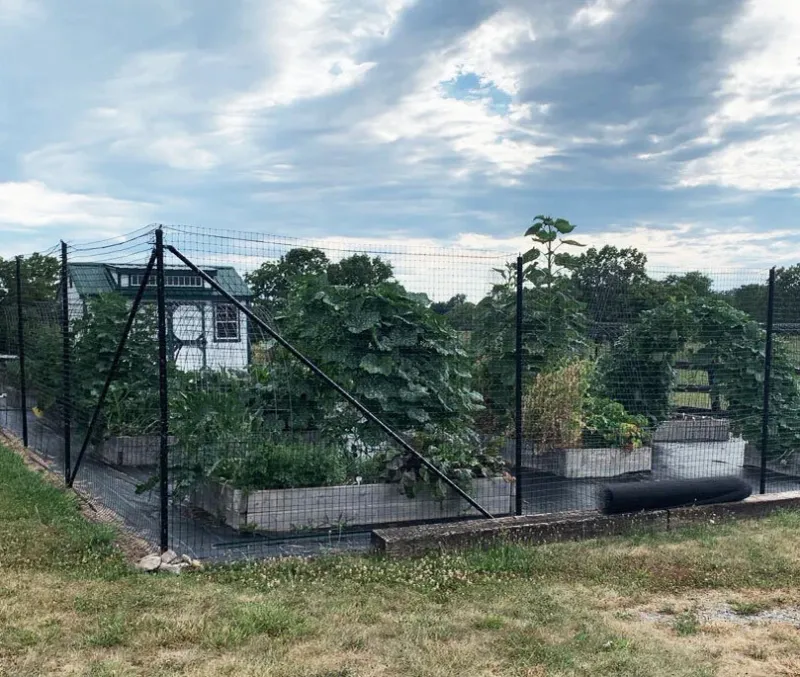
When deterrents aren’t holding or the plants being damaged are too valuable to risk, physical exclusion is the most reliable option available to North Carolina homeowners. NC State Extension’s wildlife management guidance recommends physical exclusion as the most effective method when deer pressure is serious, noting that no plant species is completely deer-proof and that repellents are best treated as a complement to exclusion rather than a replacement.
For smaller garden beds, raised planters, or individual shrubs, poultry wire or plastic mesh can provide meaningful protection at a manageable cost. The mesh needs to be tall enough to prevent a deer from simply reaching over it – a barrier of at least 4 to 5 feet can protect a limited area, though deer can clear lower obstacles when motivated.
NC Wildlife’s deer fencing guidance is direct: a long-term deer barrier generally needs to be about 8 feet or taller and made from strong, relatively impenetrable material to be reliably effective across a larger area or yard perimeter. A 4-foot fence can reduce damage in a limited space but should not be treated as a deer-proof solution.
Relocation is not an available option in North Carolina. NC Wildlife states that deer cannot be relocated, and attempting to trap or move a deer creates stress for the animal and legal risk for the homeowner.
Exclusion and prevention are the practical paths forward.
Protect family activity areas without blaming the deer
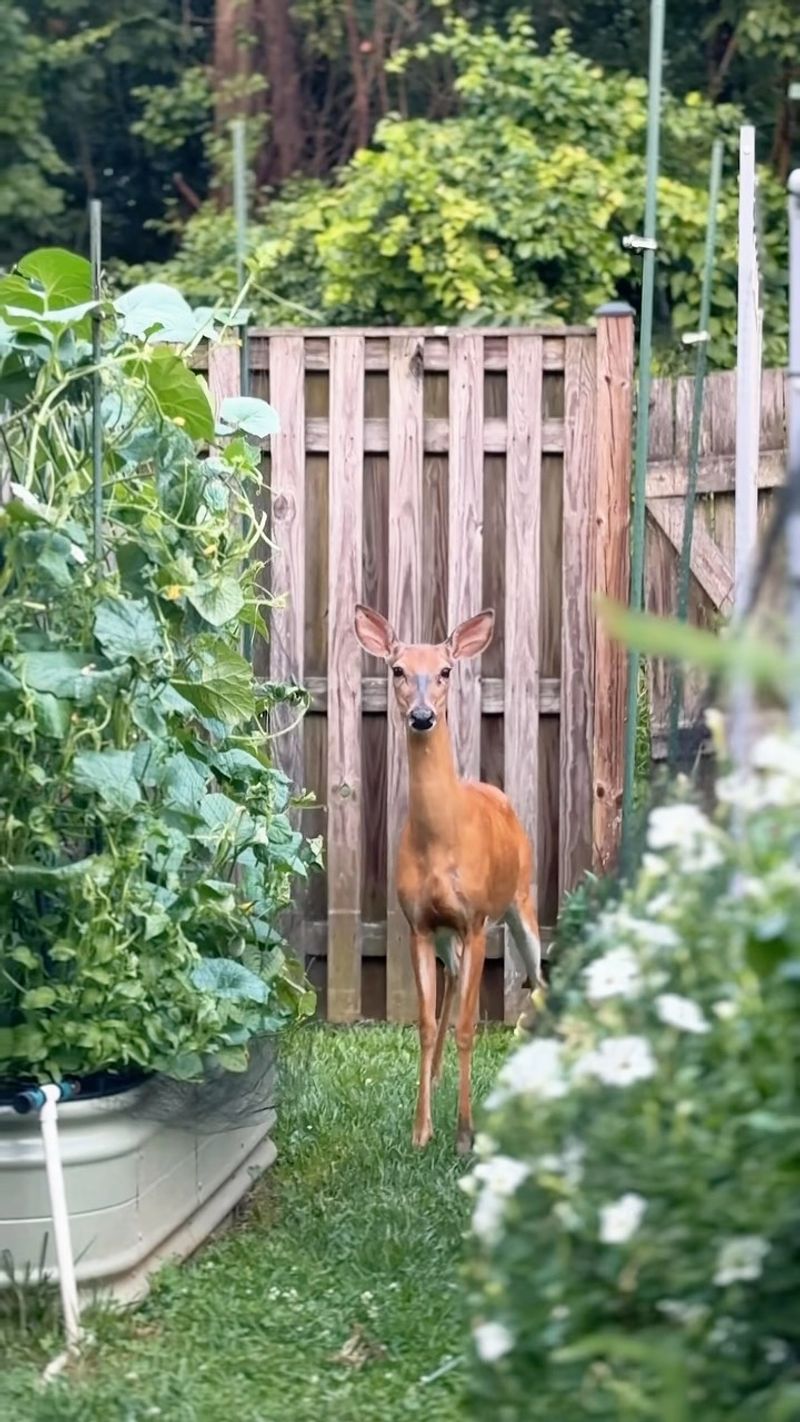
Deer presence raises understandable concerns about ticks, but the connection is more specific than it first appears. CDC’s explanation of Lyme disease transmission clarifies that deer serve as a blood source and transport host for ticks but are not infected with the Lyme bacteria themselves and do not infect ticks.
Tick exposure risk depends on the local tick species present, infection rates in that population, how much time people and pets spend in tick-prone habitat, and whether ticks are found and removed promptly. A bedded deer does not automatically translate into a Lyme disease risk in your yard.
That said, managing tick exposure in frequently used yard areas is a smart, independent step. CDC tick prevention guidance recommends removing leaf litter near play and activity areas, keeping tall grass and brush trimmed back from the house, and maintaining a 3-foot barrier of wood chips or gravel between a lawn and any wooded edge.
Checking people and pets thoroughly after time outdoors and using appropriate repellents on skin and clothing add another layer of protection. CDC’s Lyme prevention recommendations include prompt tick removal as one of the most effective individual actions available.
One additional layer of guidance matters before taking any action that involves attracting, feeding, baiting, or handling deer or fawns in North Carolina. Chronic wasting disease rules vary by county and change over time.
NC Wildlife’s CWD surveillance and management area regulations outline current county-specific restrictions on feeding, baiting, attractants, and fawn rehabilitation. Check those rules directly before doing anything that might bring deer closer to your home or involve hands-on contact with a deer or fawn.
Read the bed as information, then choose the lightest effective response
A deer returning to the same corner is telling you something concrete about your yard: that spot is offering shade, cover, low disturbance, a convenient escape route, or nearby food – probably more than one of those at once. USDA’s white-tailed deer species review supports the idea that deer use familiar, secure habitat repeatedly, and that pattern is what you’re seeing.
The bed is information, not a verdict.
The practical sequence is straightforward. Inspect the corner for the conditions that make it attractive.
Remove artificial food incentives. Protect specific plants or activity areas with mesh or, for reliable long-term coverage, a tall physical barrier.
Keep a safe distance from any deer that is present, and follow NC Wildlife’s conflict-prevention guidance for current recommendations. If the concern is tick exposure, manage the yard habitat directly rather than focusing solely on the deer.
NC State Extension frames the goal well: work with what the landscape is doing rather than against it. A yard that repeatedly draws a resting deer is a yard with real habitat value.
Understanding what drives that pattern lets you make targeted adjustments instead of broad ones – and usually the lightest effective response is all that’s needed. A well-read yard is a better-managed yard.