
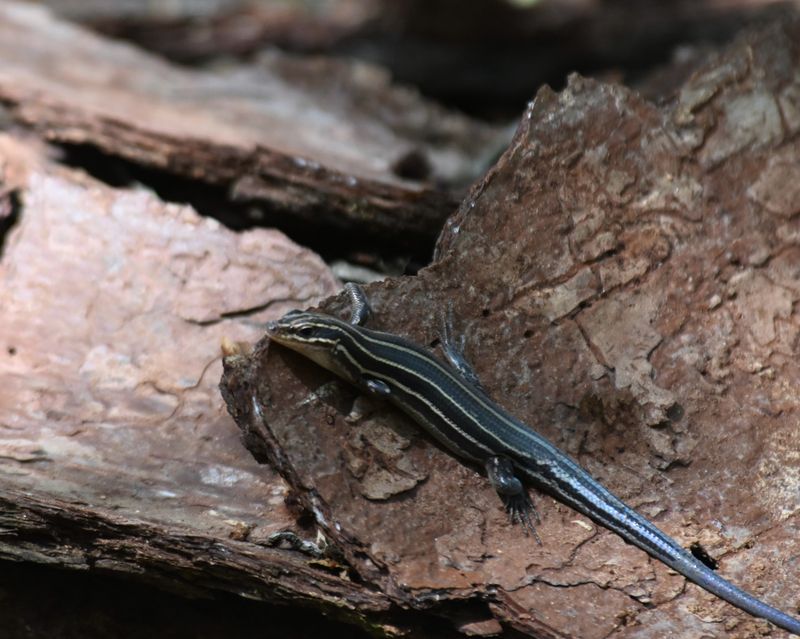
A flash of bright blue zips across your mulch and vanishes under a leaf. It is a small lizard, and it has you wondering what it is doing in your yard.
In North Carolina, that quick glimpse can tell you something useful, but not as much as you might think. Here is what a skink sighting can show about your garden beds, and where the story stops.
A skink signals usable habitat, not a garden health score
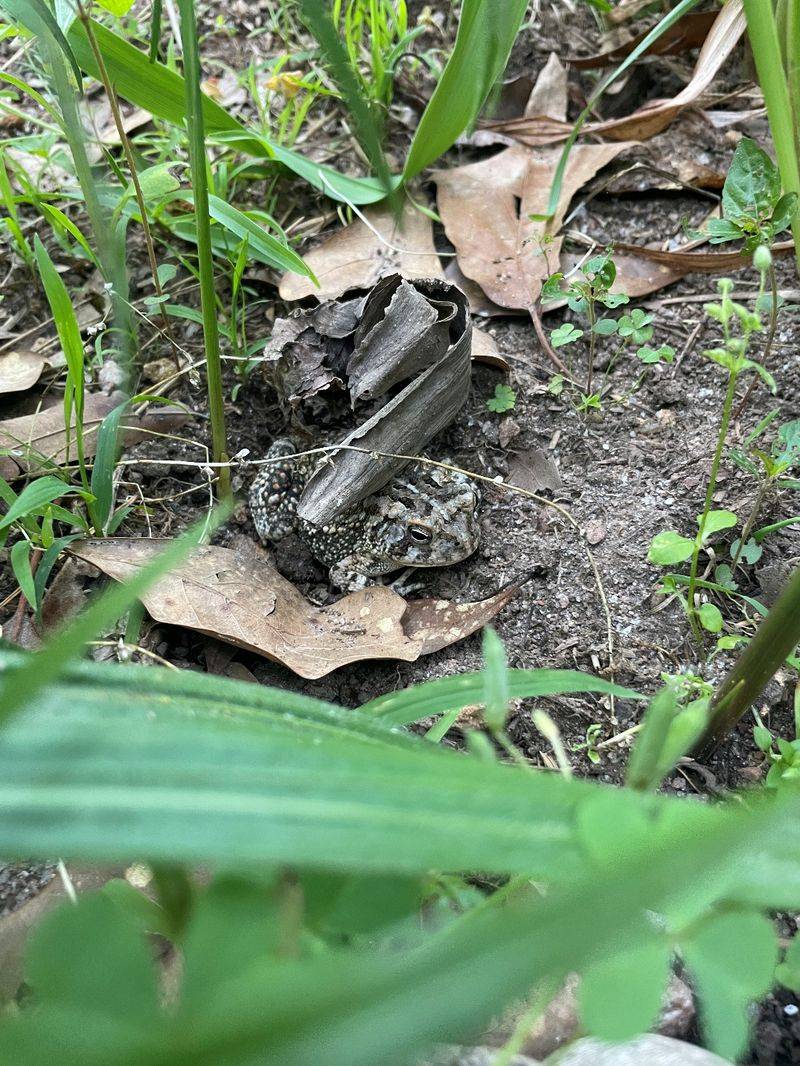
Spot a skink near your tomatoes or azaleas, and you have learned one thing: it found conditions it can use. That means some kind of food was within reach and there was a place to duck out of sight.
Five-lined skinks eat insects and other small invertebrates, and North Carolina Wildlife Resources Commission information notes that they rely on sheltered spots such as logs, rocks, and debris.
That is a small clue, and it helps to keep it small. A single lizard cannot tell you that your beds are crawling with insects.
It also cannot tell you that your soil is rich, your plants are thriving, or your yard is healthier than the neighbor’s. Plenty of ordinary yards have a skink or two tucked into a woodpile.
You may have seen articles suggesting that wildlife can act as a report card for a habitat. Be careful with that idea here.
One often-cited paper, a Biological Conservation study of five-lined skinks, looked at how skink numbers related to human disturbance and cover in a study area in Canada. It was not a test of whether skinks can measure garden quality in North Carolina backyards.
So treat the sighting as a pleasant hint, not a test result. If you want to know how your garden is doing, look at the plants themselves, the soil, and the actual insects on the leaves.
Does a blue tail identify the skink?
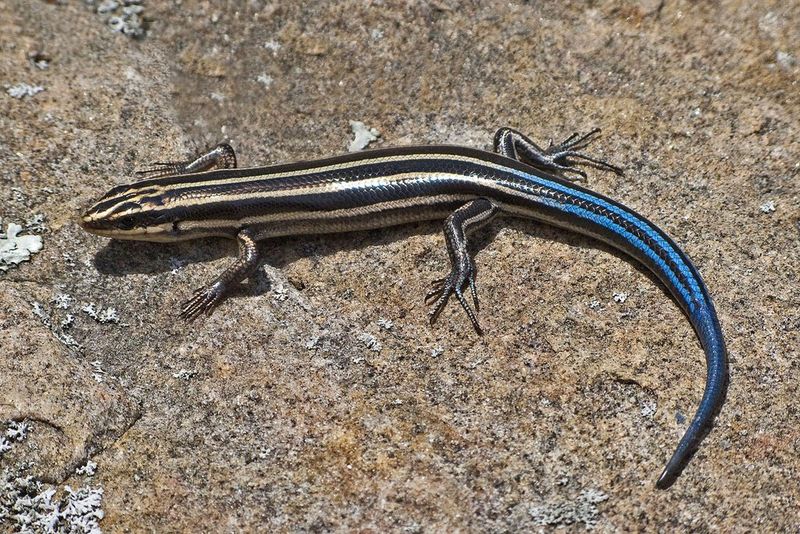
Here is the catch with the flashy blue tail: three North Carolina species wear it when young. Juveniles of the five-lined skink, the southeastern five-lined skink, and the broad-headed skink all show five stripes and a bright blue tail, and telling them apart can be tricky.
You can read the species descriptions for the southeastern five-lined skink and the broad-headed skink to see how close the resemblance runs.
The common five-lined skink is widespread across much of the state, so it is a fair guess in many yards. A guess is still a guess, though.
A blue tail alone does not confirm which species you are watching.
The color also fades with time. According to NC Wildlife Resources Commission details, the blue tail is chiefly a juvenile feature.
Females may keep their stripes as adults, while older males can turn a more uniform bronze.
Timing matters too. Young skinks commonly hatch in July or August, according to the five-lined skink profile.
If you suddenly notice blue-tailed lizards in late summer, seasonal hatching may be the reason.
That means a newly noticed skink does not prove your yard changed or that the local population grew. You may simply be seeing the new generation for the first time.
Their varied diet does not guarantee garden pest control
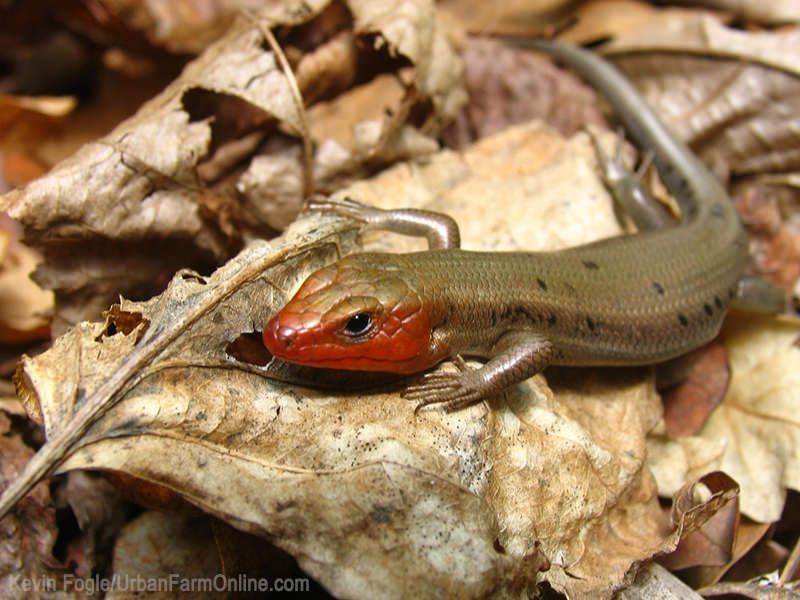
Ask what a skink eats and the answer is: quite a lot. The five-lined skink profile describes a diet of insects, spiders, and other arthropods, along with some other small prey.
North Carolina Parks reptile information points the same way.
Notice what that list includes. Spiders and many insects are not garden pests, and some are helpful to your plants.
A skink snapping up a beetle on your patio is not the same as a skink guarding your squash.
This is the line worth drawing. Eating invertebrates is documented.
Controlling a particular pest is not. There is no solid reason to promise that a skink will cut the number of aphids, caterpillars, or stink bugs on your plants in any measurable way.
It also works the other way. Seeing a skink does not show that your beds hold lots of plant-chewing insects.
It only tells you that this animal found something to eat nearby.
So enjoy the skinks as part of your yard’s wildlife, and keep watching your plants as you always have. If leaves are being eaten, look at the leaves, identify the culprit, and decide what to do from there.
Shelter helps make a garden bed usable
Skinks do not live out in the open for long. They dart for cover, and the five-lined skink profile describes habitat with sheltered places such as logs, rocks, and debris.
A tidy bed with bare soil offers little of that.
You do not need a big project to change this. North Carolina Wildlife Resources Commission backyard guidance for reptiles and amphibians recommends leaving some leaf litter and adding logs, rocks, or brush piles for shelter.
Pick a spot that makes sense for your family and pets. A back corner, the edge of a shrub border, or the far side of a fence can all work.
Keep the pile away from walkways, play areas, and the house foundation.
Work with what you already have. A few fallen leaves left under the shrubs this fall cost nothing, and a stack of rocks takes an afternoon.
Resist the urge to check on your shelter. Pulling apart existing cover or lifting logs and stones to look for lizards disturbs the very hiding places you are trying to provide.
Let the skinks come and go on their own schedule, and enjoy the occasional glimpse from a distance.
Protect wildlife while managing the beds

Keeping a garden going means dealing with pests sometimes, and skinks do not change that. What you can do is use a lighter touch.
The EPA tips for reducing pesticide impacts on wildlife suggest minimizing use, treating only when needed, and following the directions on the product label.
That advice matters here because NC Wildlife Resources Commission information lists pesticides and outdoor cats among the threats to skinks. You do not have to give up pest management.
Identify the problem first, spot treat instead of spraying whole beds, and read the label every time.
If you have outdoor cats, consider whether they can be kept indoors, at least during the warm months when young skinks are out and about.
Then there is the matter of the skink itself. It is tempting to scoop one up for a closer look, especially a bright blue-tailed youngster, but please do not.
Handled skinks may bite, and the five-lined skink profile notes that they can shed their tails when seized.
You may also have heard that skinks are venomous. They are not.
North Carolina’s five-lined skinks are harmless and nonvenomous, and watching quietly is safer for you, your kids, and the animal.
Treat the sighting as a reason to observe, not overhaul
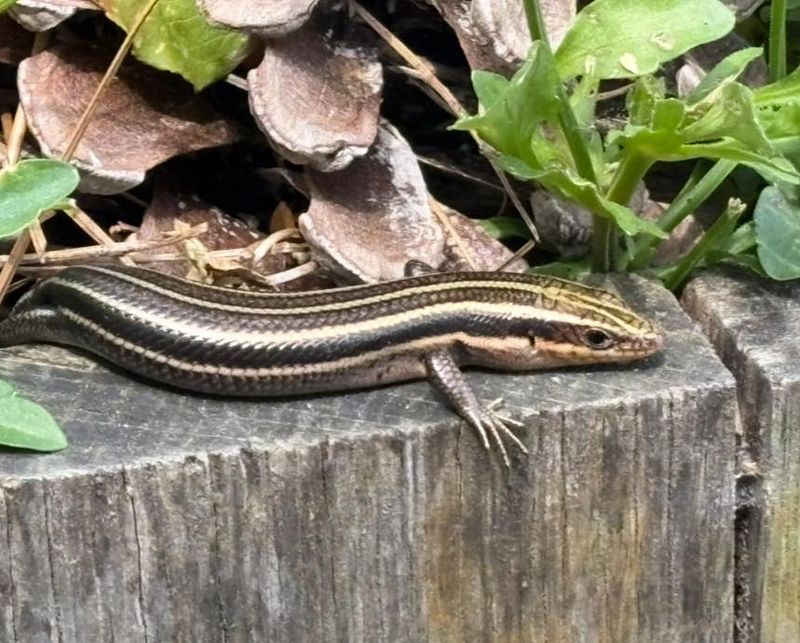
A skink in your beds means it can use the food and cover your yard offers. It does not grade your garden or promise fewer pests.
Keep the shelter you have, leave a few logs or rocks in a quiet corner, and watch without touching.
The best part of the sighting is simply the sighting itself.