
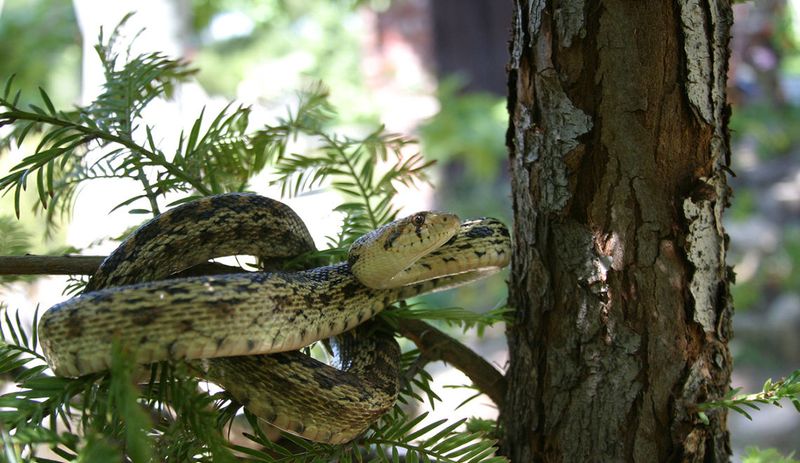
Spotting a large snake gliding through your California garden can stop you cold, especially if it looks a lot like a rattlesnake. Most of the time, that snake is a native gopher snake, and its presence tells you something useful about your yard’s ecosystem.
Understanding what it actually eats, how to tell it apart from venomous species, and how to manage real rodent damage can save you from a costly mistake. Knowing when to leave a snake alone is just as valuable as knowing how to deal with a pest problem.
A gopher snake may be a useful predator, not a yard pest
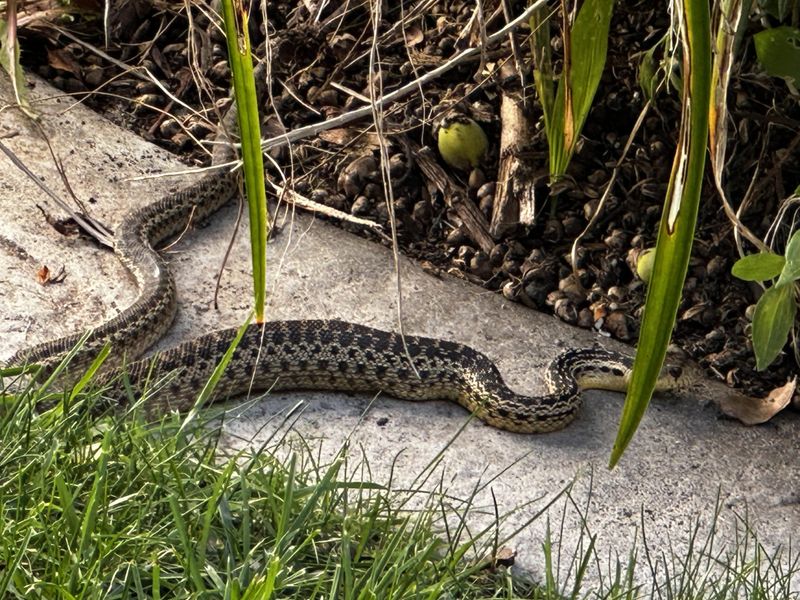
Finding a thick, patterned snake moving through your flower beds or along the fence line is an understandable shock. Before reacting, though, it helps to know what you are likely looking at.
California gopher snakes (Pituophis catenifer) are one of the most common large snakes across the state, and they turn up in yards, gardens, and open lots wherever rodents are active. The California Department of Fish and Wildlife life history account for the species describes adults as foragers that hunt in and around mammal burrows, which is exactly the kind of habitat a typical California backyard provides.
Gopher snakes are nonvenomous native predators, not pests. Their name suggests a single-minded diet, but the reality is more flexible.
The snake may be responding to whatever prey is already active in your yard, whether that is a pocket gopher, a rat, a mouse, or something else entirely. A sighting does not confirm that the snake is eating gophers at that moment, and it does not prove that your rodent population is already shrinking.
What the sighting does suggest is that your yard offers enough prey and shelter to attract a native predator. CDFW notes broadly that snakes provide an ecosystem benefit by helping control rodent populations, which means removing one eliminates a potential predator that may already be working in your favor.
That is worth pausing over before reaching for a shovel or a phone to call for removal.
Snake activity tends to pick up during warm weather, but the exact timing in California varies with local climate, elevation, and prey availability. CDC guidance for outdoor workers frames warm months as peak snake activity periods rather than a fixed statewide season.
A summer sighting in a Sacramento valley garden follows different patterns than one on a coastal hillside or at higher elevation. The practical starting point is the same regardless of location: treat the snake as a native resident that may be doing useful work, and give it room to move on.
Why a gopher snake can mimic a rattlesnake
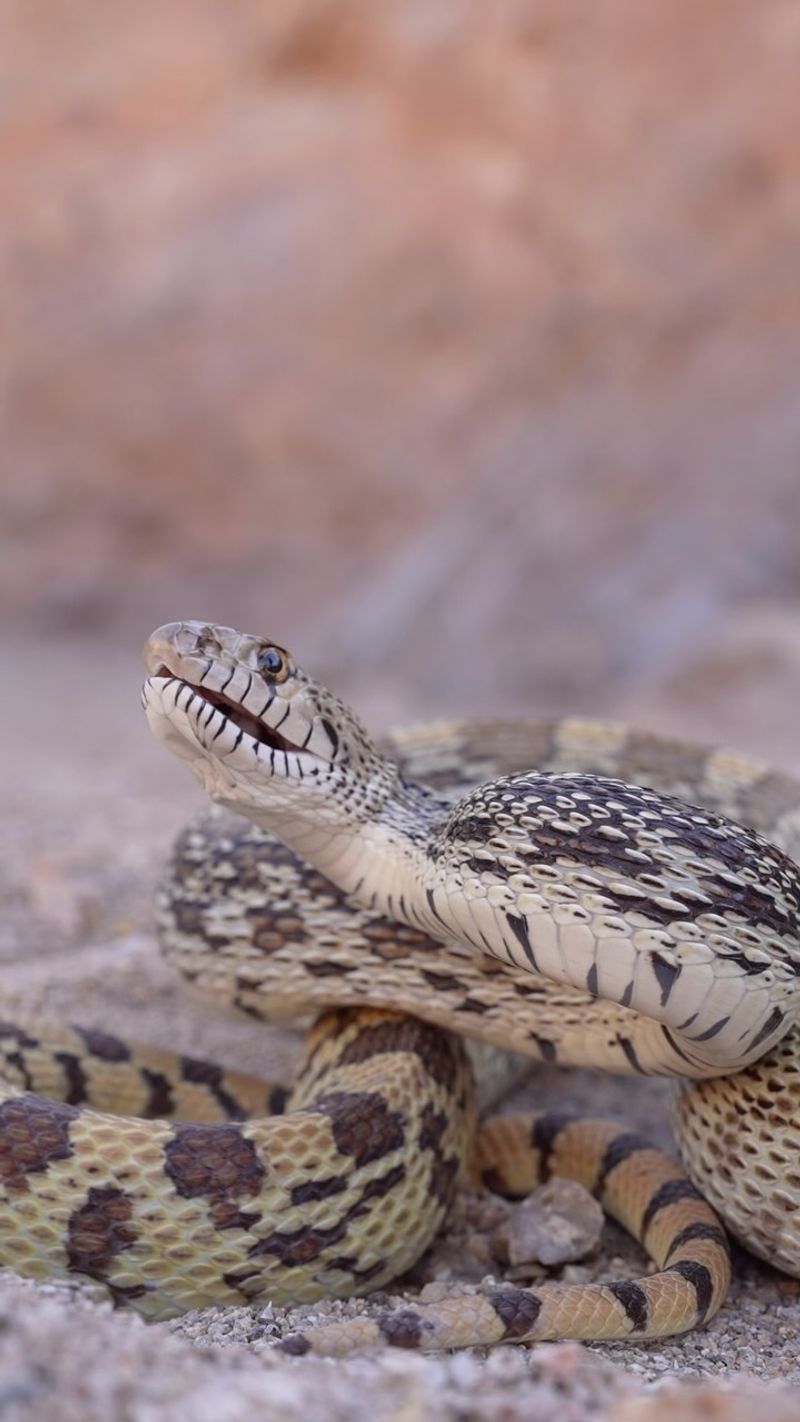
Few things in a California yard are more alarming than a snake that flattens its head into a triangular shape, coils its body, and buzzes its tail against dry leaves. That sequence of behaviors can look exactly like a rattlesnake preparing to strike.
The catch is that gopher snakes perform the same display as a bluff. UC IPM’s gopher snake identification notes confirm that gopher snakes can flatten the head, coil, hiss loudly, and vibrate the tail when they feel threatened, even though they carry no venom and have no rattle.
The mimicry works because it creates hesitation in a predator or a curious human. For a homeowner who has not spent time studying local snakes, the display can be convincing enough to trigger a real fear response, and that is entirely understandable.
The National Park Service describes the gopher snake’s defensive behavior in similar terms, noting that the combination of posture, sound, and movement is a deliberate imitation of a rattlesnake rather than evidence that the animal is dangerous.
Here is where the safety concern becomes real: the absence of a visible rattle does not make any snake safe to approach. UC IPM’s rattlesnake guidance points out that rattles can break off, and that young rattlesnakes may have only a small button where the rattle will eventually grow.
An inexperienced observer cannot safely identify a snake by checking for a rattle, especially from any distance where the detail is hard to see.
Head shape is also an unreliable field mark on its own. A threatened gopher snake actively reshapes its head to appear more angular, so the triangular profile that many people associate with venomous species can be produced by a completely nonvenomous animal.
CDFW advises homeowners to keep their distance from any unidentified snake rather than trying to confirm the species up close. If you want a photo for identification purposes, take it from a safe distance without moving closer to the animal.
California has several native rattlesnake species, and confident identification requires more than a quick glance at posture or tail behavior.
What the snake can—and cannot—do about rodents
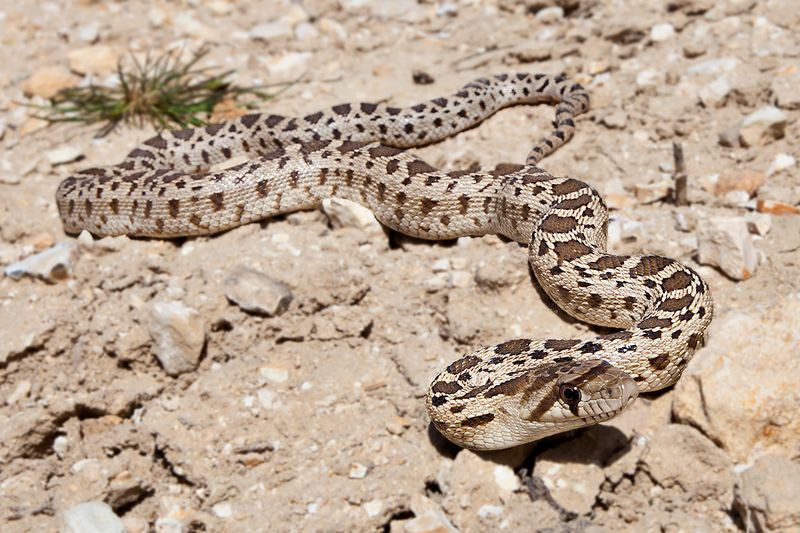
Part of what makes gopher snakes valuable in a California yard is the range of prey they actually take. The CDFW life history account documents a diet that includes pocket gophers, mice, kangaroo rats, ground squirrels, rabbits, birds, quail, and eggs.
Juvenile gopher snakes may also take lizards and other smaller prey before they are large enough to handle mammals. The name “gopher snake” is accurate in the sense that pocket gophers are among the animals it hunts, but the diet is genuinely broad and opportunistic.
That breadth matters for homeowners because it means the snake may be hunting whatever rodent is most available in the yard, not necessarily the one causing the most visible damage. A gopher snake working along your fence line might be following a rat run rather than targeting the gopher tunnels under your vegetable beds.
Retaining the predator supports a wildlife-aware approach to yard management, but the snake’s presence alone is not evidence that your rodent problem is being solved.
UC Agriculture and Natural Resources warns explicitly that gopher snakes have a relatively low feeding rate and are unlikely to significantly control rodent populations on their own. Rodents reproduce quickly, and a single predator moving through a yard cannot keep pace with an active infestation.
The snake belongs in an integrated pest-management plan as one contributing factor, not as the primary or sole control strategy.
Driving the snake away or killing it removes one potential predator from your yard’s ecosystem. CDFW’s human-wildlife conflict guidance frames snake removal as counterproductive to wildlife-aware rodent management, though it stops short of claiming that removal will predictably worsen any specific infestation.
The honest framing is straightforward: the snake may be doing useful work, and eliminating it forfeits whatever hunting it was contributing without guaranteeing any measurable benefit to your pest situation.
Identify the animal causing the damage before treating it
A snake in the yard and a chewed-up garden bed are two separate problems, and treating them as one leads to misdirected effort. The snake’s presence tells you a predator is active; it does not identify which rodent is damaging your plants.
Before spending money on traps, barriers, or bait, figure out which animal you are actually dealing with.
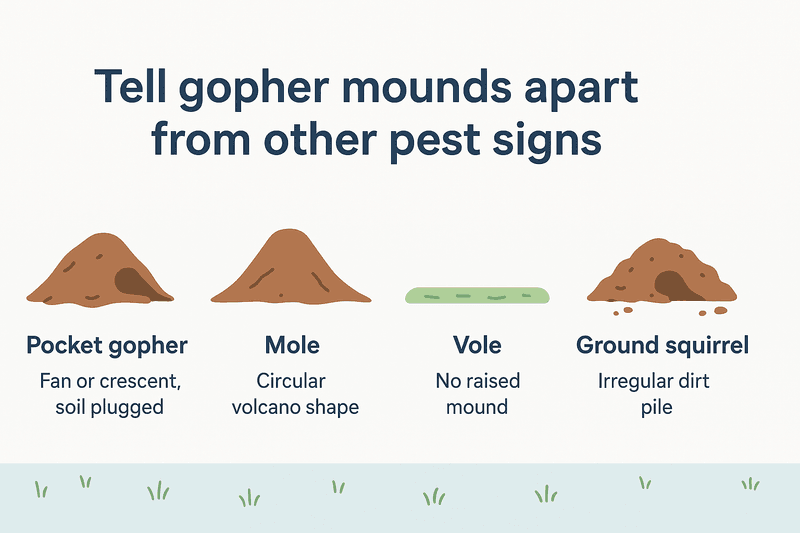
Pocket gophers leave distinctive signs that set them apart from rats, mice, voles, ground squirrels, and moles. UC IPM’s pocket gopher resource describes the classic mound shape as crescent-, horseshoe-, or fan-shaped, with a plugged lateral opening off to one side.
The plug is where the gopher sealed the entrance after pushing soil out. Feeding tunnels typically run 6 to 12 inches below the surface, which is why gopher damage to plant roots often appears before you see any surface disruption.
Rats and mice leave smaller, rounder burrow openings or gnaw marks on wood, fruit, and stored material. Ground squirrels create larger, open burrow entrances often grouped in a colony area.
Voles run surface runways through grass without creating the fan-shaped mounds associated with pocket gophers. Moles, which are insectivores rather than rodents, push up rounded, symmetrical mounds and feed on earthworms and grubs rather than plant roots.
CDFW’s rodent conflict page provides additional distinguishing characteristics for California’s common yard rodents.
The UC ANR burrowing rodents management guide reinforces the diagnosis-first approach, noting that control methods differ significantly by species. Trapping techniques, bait placement, and exclusion designs that work for pocket gophers are not the same as those used for rats or ground squirrels.
Misidentifying the pest wastes time, money, and effort, and it can lead to control measures that leave the actual problem untouched while disrupting other parts of the yard ecosystem.
Manage confirmed gopher damage without poisoning predators
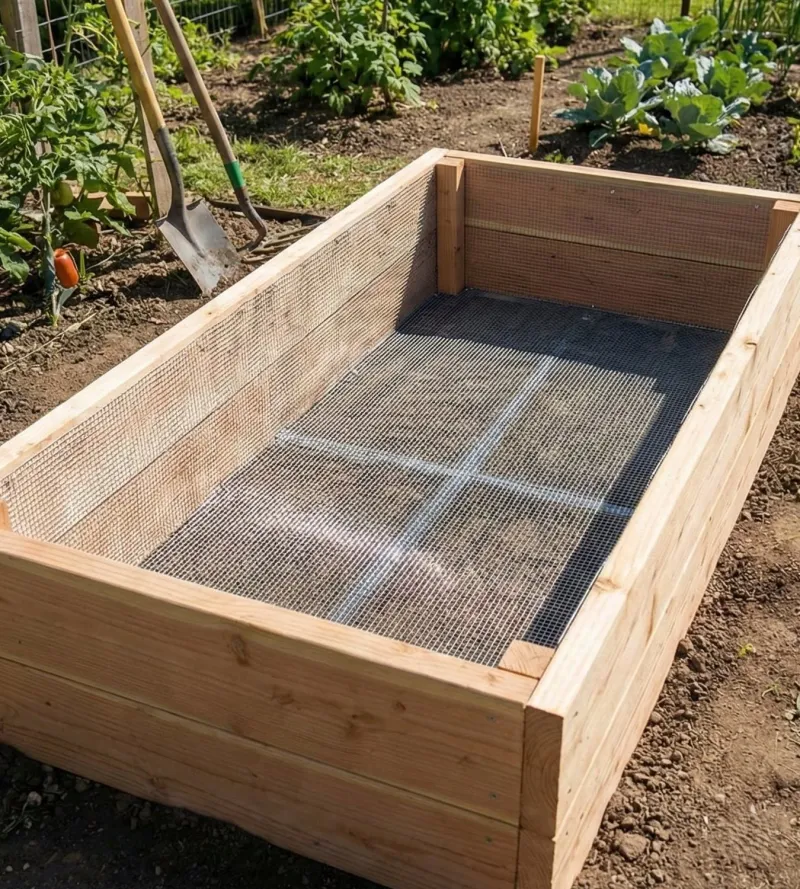
Once you have confirmed pocket gophers as the source of your plant damage, the most reliable responses are exclusion and trapping rather than hoping a predator handles the problem. UC IPM recommends underground hardware cloth or wire mesh barriers for raised beds, installed along the bottom and sides to block gopher access from below.
Individual plants can be protected with root baskets made from the same material, placed at planting time. A key installation detail: the barrier or basket needs to be sized and positioned so it protects the root zone without compressing roots as the plant matures.
Trapping is the other primary tool for confirmed pocket-gopher infestations. Pincer-style and box traps placed in active tunnels can reduce a local population more directly than any predator working on its own schedule.
Locating the main tunnel run, rather than a side branch, improves trap effectiveness considerably. UC IPM’s guidance covers tunnel-finding techniques and trap placement in detail.
Toxic baits are a different matter, and their use in a backyard setting requires careful thought. UC Master Gardener guidance warns that rat and gopher poisons can cause secondary poisoning in predators and pets when they consume a poisoned rodent.
A gopher snake, a red-tailed hawk, a barn owl, a neighborhood cat, or a dog can all be harmed by eating prey that has ingested rodenticide. This risk applies whether or not you are aware that a snake is using your yard at the time.
UC ANR’s burrowing rodent management publication frames toxic baits as one option within a broader integrated pest-management approach, not as a first response. If you choose to use bait products, follow label instructions precisely, place bait only in the confirmed tunnel system rather than on the surface, and use tamper-resistant stations where children, pets, or non-target wildlife could encounter them.
Casual or wide-area baiting in a yard that also hosts snakes, raptors, and other predators can undercut the very ecosystem benefit those animals provide.
Give the snake space instead of trying to remove it
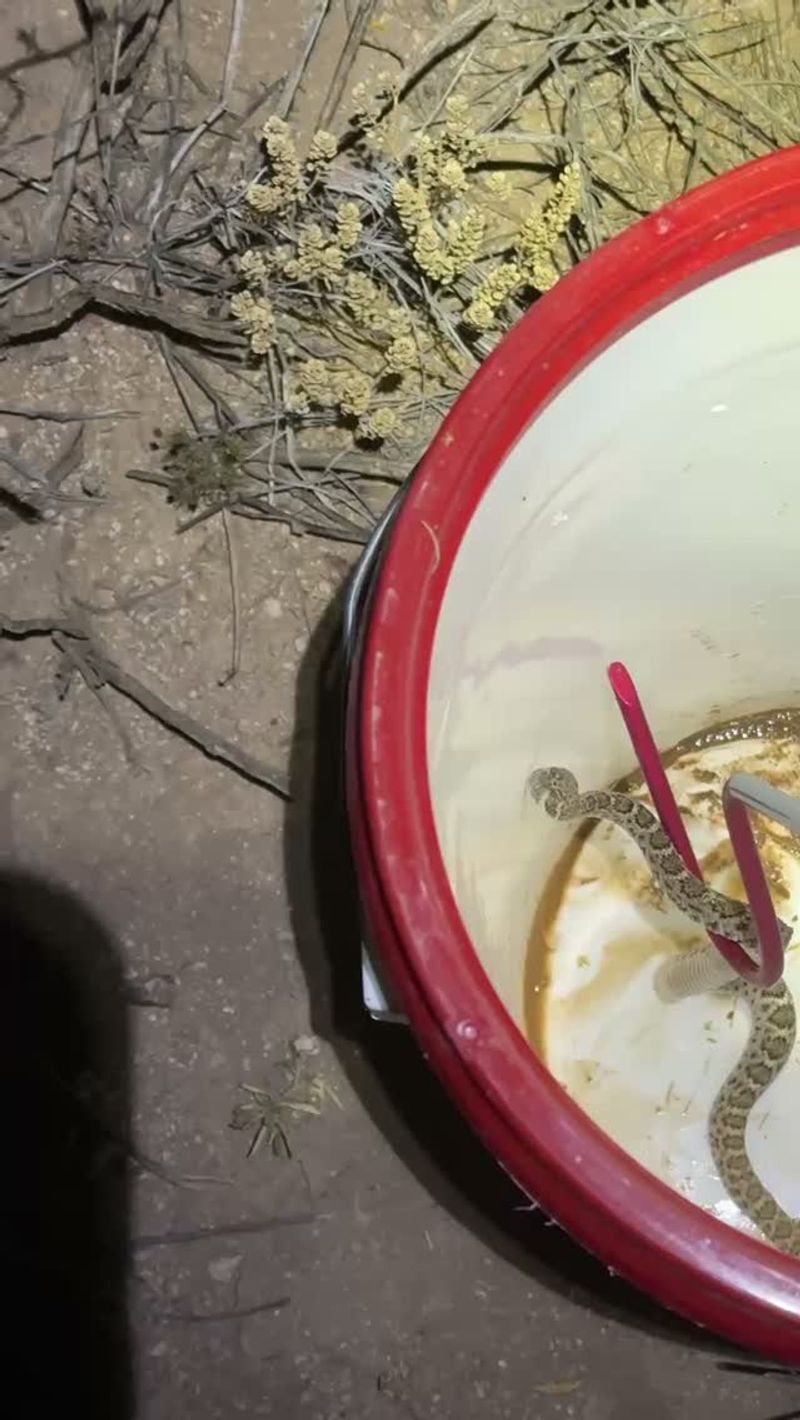
When a gopher snake turns up in an outdoor space, the most effective first response is also the simplest: keep children and pets at a distance and let the snake move on at its own pace. Most snakes found in yards are passing through rather than establishing a permanent residence, and a calm wait is usually all that is needed.
CDC wildlife safety guidance is direct on this point: do not touch, trap, chase, or kill a snake, particularly one you cannot identify with certainty.
If a snake enters the home or creates a situation where space and distance are not possible, contact your local animal control agency or a qualified wildlife professional. They have the tools and training to handle the animal safely without harming it or putting people at risk.
Attempting to corner, grab, or herd a snake indoors significantly raises the chance of a defensive bite, even from a nonvenomous species.
Capturing a snake and releasing it somewhere else is not a recommended solution. CDFW’s nuisance wildlife guidance states that wildlife generally cannot be trapped and transported to another location as a general management practice.
Moving a snake into an unfamiliar area disrupts its territory, removes it from a habitat where it was already functioning, and does not address whatever conditions attracted it to your yard in the first place.
Products marketed as snake repellents are also not a reliable solution. UC IPM states plainly that no plants repel snakes and that available chemical repellents have not been proven effective enough to recommend.
Mothballs, sulfur, and similar remedies carry their own pesticide-exposure risks and should not be scattered in a yard where children, pets, or wildlife are present.
If anyone is bitten by a snake, get to an emergency medical facility immediately. CDC bite guidance is clear that cutting the wound, attempting suction, applying ice, using a tourniquet, or trying any folk remedy can cause additional harm.
The only appropriate response to a potential snakebite is prompt professional medical care, regardless of whether the snake appeared venomous. CDFW echoes this recommendation and advises that any bite from an unidentified snake be treated as a medical emergency.
Keep the snake’s benefit in perspective
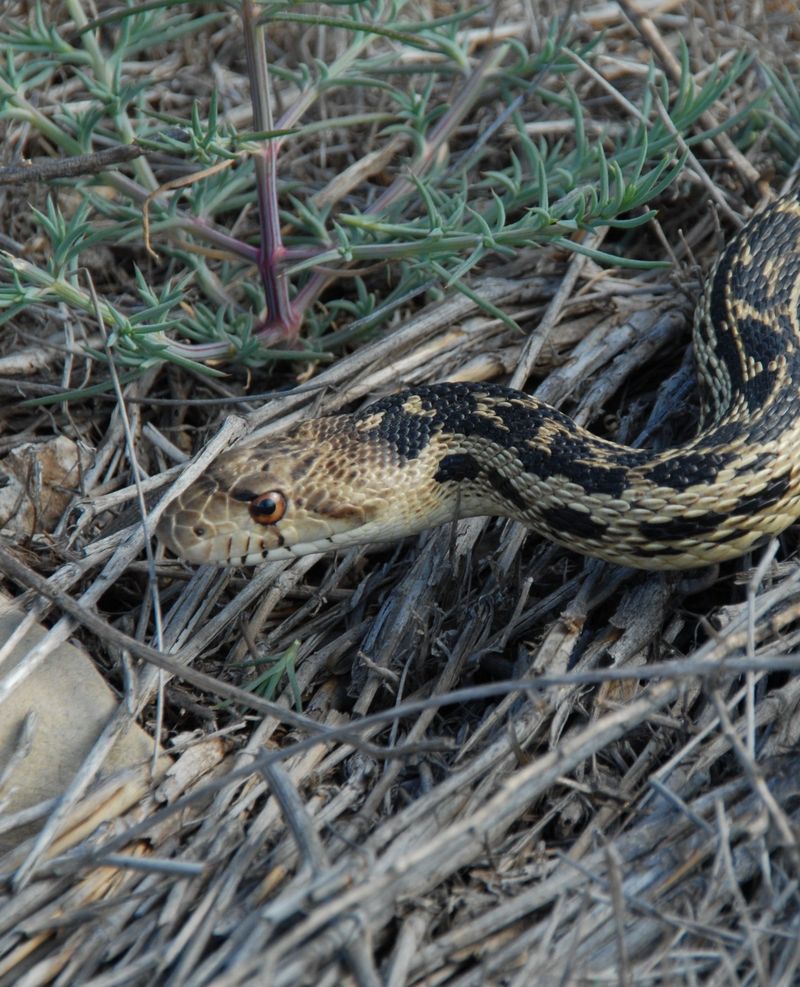
A suspected gopher snake outside is generally a reason to pause rather than panic. The animal may be hunting rodents that are already using your yard, which puts it on the useful side of the ecological ledger.
CDFW’s position is that snakes contribute to rodent control as part of the broader yard ecosystem, and that framing is the right starting point for any homeowner who spots one.
Keeping that benefit in perspective means holding two ideas at once. Leaving an unidentified snake alone is the right call every time.
Managing confirmed rodent damage still requires targeted methods: accurate pest identification, physical exclusion, trapping where appropriate, and careful use of any toxic products. UC ANR is clear that no single predator reliably controls a rodent infestation on its own, and a gopher snake is no exception to that rule.
Preserving one native predator supports the yard ecosystem without replacing any of the practical steps a real pest problem requires. CDC guidance applies the same logic to all wildlife encounters: give the animal room, avoid handling it, and call a professional when the situation genuinely requires intervention.
A yard that makes space for native predators while addressing pest problems with targeted methods is a yard working with its local ecology rather than against it. That balance is harder to achieve than simply chasing off every unfamiliar creature, but it tends to produce a healthier, more resilient outdoor space over time.