
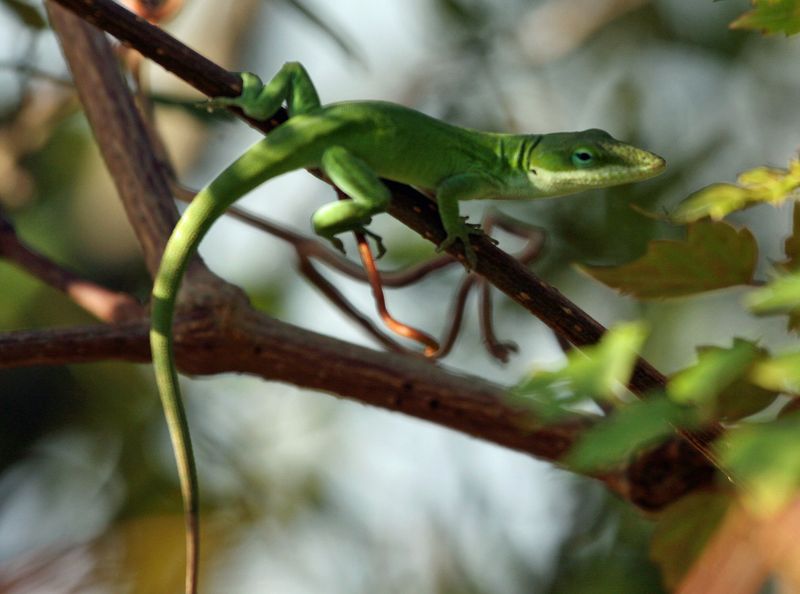
Suddenly spotting green anoles everywhere you look in your yard can feel like something shifted overnight. For North Carolina homeowners, a summer full of these bright little lizards raises real questions about what changed, whether it means fewer pests, and how to respond.
The honest answer is more nuanced than a simple win for your garden, and understanding it can help you make smarter choices for both wildlife and your family.
A yard full of anoles signals possibility, not a guaranteed ecological reset
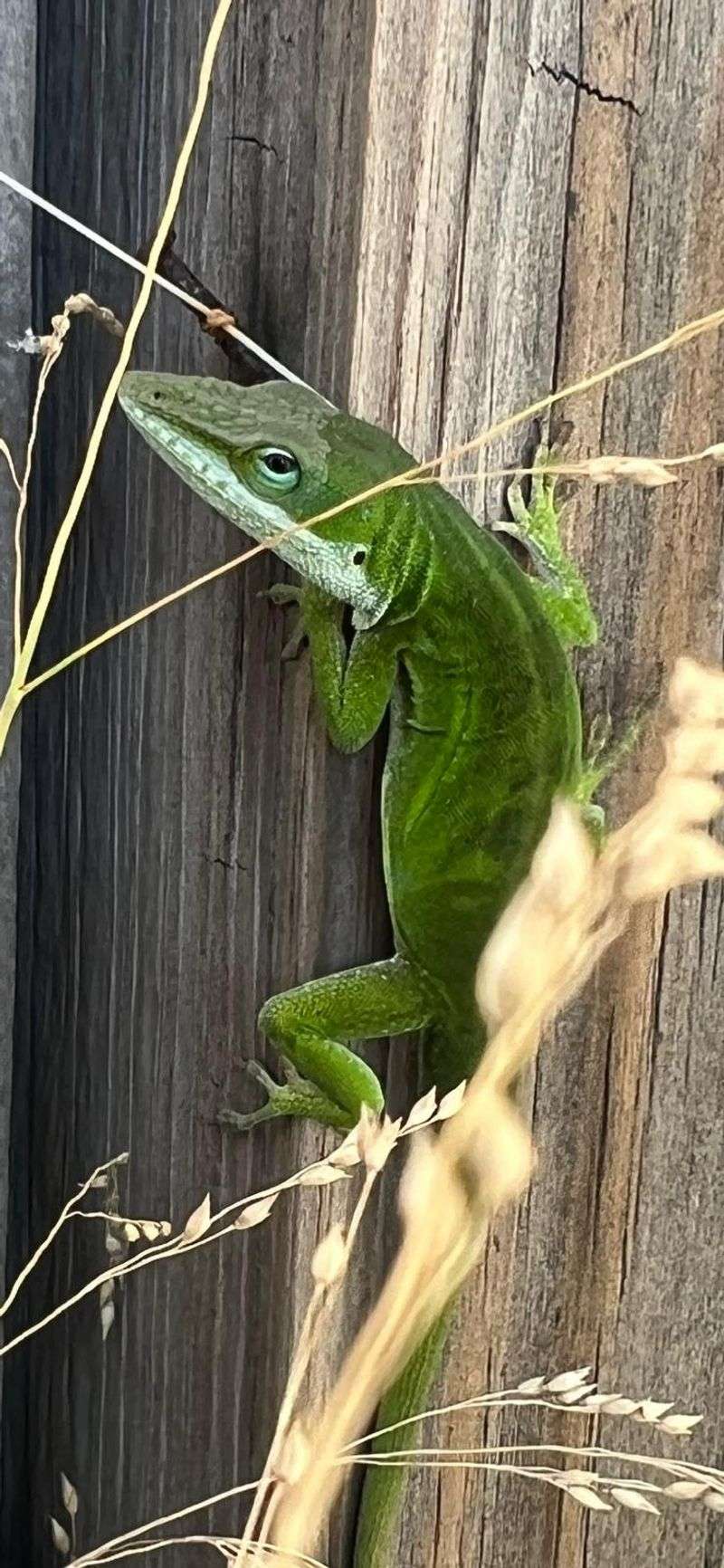
Spotting a dozen green anoles where you used to see one or two naturally prompts a question: did something fundamental change in your yard? The short answer is that a visible surge can indicate your yard currently offers conditions these lizards can use, including warm temperatures, climbing surfaces, shelter, and small arthropods to eat.
But that observation alone does not diagnose a yard that has reached some higher ecological level, and treating it as proof of a complete pest-eating transformation sets up expectations the evidence cannot support.
According to NC Wildlife’s green anole profile, the green anole is a native North Carolina reptile well adapted to urban and suburban settings. It uses trees, shrubs, woody vines, fences, walls, and buildings as hunting and basking perches.
A yard that recently gained more vegetation, lost a predator, or simply entered the warmest weeks of summer may show more anoles for reasons that have nothing to do with a permanent ecological improvement.
Other explanations are equally plausible. Normal summer breeding, increased daytime activity in hot weather, the conspicuous display behavior of territorial males, changes in local prey populations, shifts in predator pressure, and even recent landscaping disturbance can all push more lizards into view at once.
Seeing more anoles is a clue worth reading, but the clue points in several directions simultaneously.
The sections ahead will help you sort through those possibilities, understand what green anoles actually eat, set realistic limits on their pest-control role, and identify the yard conditions that may genuinely support them. The goal is to help you appreciate a native predator honestly, without assigning it powers it has not been shown to possess in a residential North Carolina yard.
Warm weather and breeding can make a normal pattern look new
Summer is simply when green anoles are hardest to miss. These lizards are active during the day, and their activity ramps up as temperatures climb through June, July, and August.
More time spent in the open, on fences, walls, porch railings, and garden shrubs, means more chances for a homeowner to notice them.
Breeding adds another layer of visibility. NC Wildlife notes that green anoles breed mainly from spring through late summer, with females laying single eggs repeatedly throughout the season.
By midsummer, juveniles from early clutches are already out foraging on their own, which can make a yard feel suddenly overrun even when the adult population has not changed much. A population that was always there just becomes much more apparent once juveniles start appearing alongside adults.
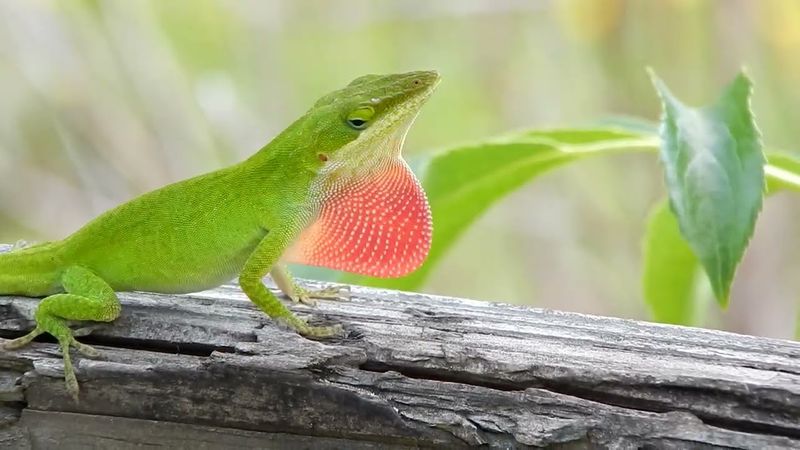
Male behavior amplifies the effect considerably. Males perform head-bobs, push-up displays, and throat-fan extensions called dewlap flares to claim territory and attract females.
Research on green anole seasonal behavior confirms that these displays are concentrated during the breeding season and make males highly conspicuous on exposed surfaces. A single male on a fence post, flashing a pink-red dewlap repeatedly, can catch a homeowner’s eye a dozen times in an afternoon and register as “many lizards” when it is the same individual.
Females and juveniles are considerably harder to spot. They tend to stay lower in vegetation, move less conspicuously, and lack the bold display behaviors that draw attention.
This means that a yard may appear to be overflowing with anoles based almost entirely on the visibility of a few territorial males, while the actual population remains modest and seasonal. Distinguishing that visibility effect from a genuine population increase requires more than a headcount from the porch.
Shrubs, vines, and vertical cover may create useful anole habitat
Green anoles are climbers first. They hunt, bask, and display on vertical surfaces, and the variety of those surfaces in a yard shapes where and how often you encounter them.
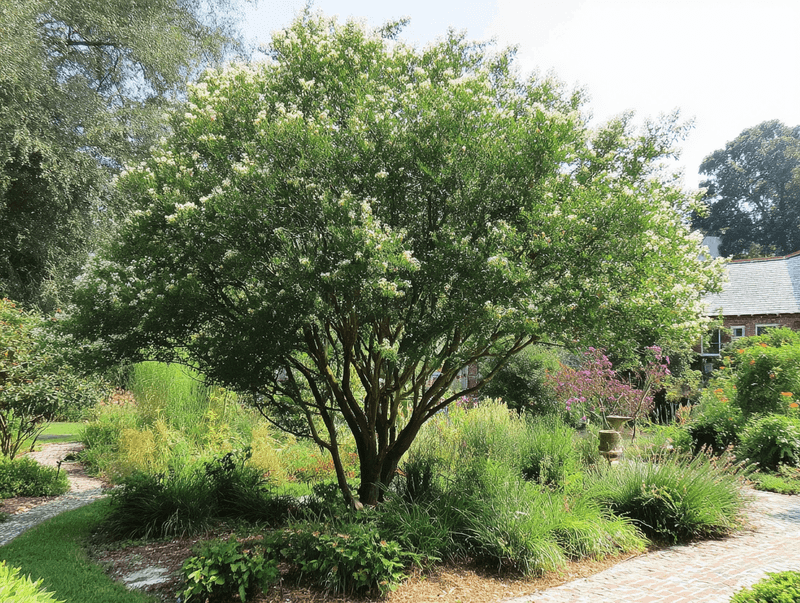
NC Wildlife’s species account lists trees, shrubs, woody vines, fences, walls, and buildings as typical habitat features, which means a yard with layered vegetation and a few structural perches already offers more than a flat, open lawn.
Adding or retaining native shrubs, woody vines, and small trees can plausibly provide anoles with more surface area for hunting and shelter. A U.S.
Forest Service study on habitat selection by Anolis carolinensis in eastern Texas pine forests found substantially higher anole abundance in plots with greater shrub density, suggesting that shrub structure and available perches can influence local numbers. That study took place in a specific forest setting in Texas, not in a North Carolina residential yard, so it should not be read as a precise planting formula.
Still, the general direction of the evidence supports the idea that structural complexity matters.
Separately, research on green anoles in Texas land-use settings found that natural plots supported greater arthropod biomass and that female anole body condition differed across habitat types. This points to a relationship between habitat quality and prey resources, though not a simple one.
Yards with more structural diversity and richer arthropod communities may support anoles better, but the connection is not a guaranteed outcome of any particular planting choice.
NC Wildlife’s suburban backyard habitat guidance recommends native plant islands, progressively taller vegetation layers, shrubs, trees, and selected brush or cover areas as practical measures for supporting suburban wildlife broadly. These are reasonable, low-impact starting points for any homeowner who wants to make the yard more hospitable to native species.
Think of them as general wildlife-habitat improvements that may also benefit anoles, rather than a verified method for producing a specific number of lizards.
Green anoles eat many arthropods, not just the pests you dislike
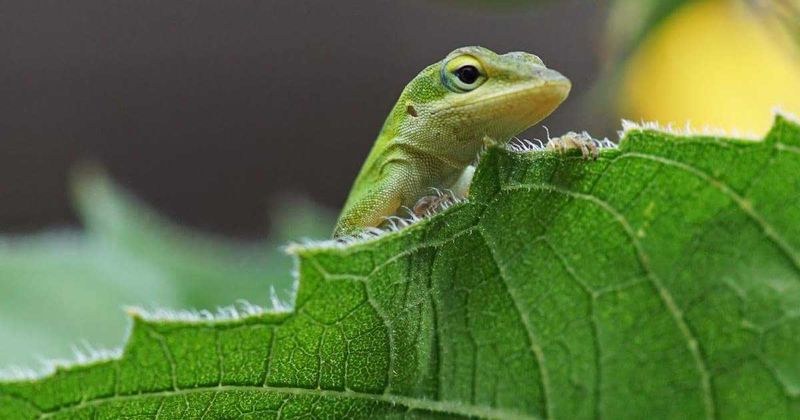
One of the most appealing things about having green anoles around is knowing they are actively hunting. Their diet is broad and opportunistic, covering flies, moths, crickets, beetles, ants, butterflies, termites, spiders, and other small arthropods.
NC Wildlife and the Davidson College herpetology resource both describe this generalist feeding strategy, which means anoles take what is available rather than seeking out specific targets.
That breadth is worth keeping in mind. An anole hunting through your garden shrubs is as likely to eat a butterfly, a spider, or a beneficial beetle as it is to eat a fly you wanted gone.
Animal Diversity Web’s account of Anolis carolinensis confirms that the species does not selectively target pest insects. The practical meaning is that green anoles function as one native predator within a wider food web, not as a targeted pest-removal service.
The land-use research mentioned earlier adds another layer of nuance. Habitat quality and prey resources interact in complex ways, and the presence of more arthropods in a yard does not automatically translate into more anoles or more pest removal.
The relationship runs in multiple directions: anoles need prey, but they also need cover, warmth, and safe perches, and prey communities themselves respond to vegetation, season, and disturbance in ways that do not always align neatly with what a homeowner considers a pest.
The fair way to think about this is that a yard with active green anoles has a native arthropod predator working through the vegetation on its own schedule. That is genuinely useful as part of a broader ecological community.
Counting on it to solve a specific pest problem, though, asks more of the lizard than the evidence supports.
Anoles cannot replace targeted pest management
Some of the most appealing claims about green anoles involve mosquitoes and ticks, and both deserve a careful look. Research on anoles as biological-control agents does exist, but it comes primarily from agricultural and coffee-farming systems.
A review published in Ecology and Evolution on Anolis lizards as biocontrol agents describes promising results in agroecosystems, including predation on coffee berry borers. That evidence does not transfer cleanly to a residential North Carolina yard, where conditions, pest species, and lizard densities are entirely different.
Mosquitoes are a particular area where expectations tend to outrun reality. Florida-based research covered by Health News Florida found that mosquitoes frequently bite anoles, which can affect mosquito host choice and disease ecology.
That finding concerns how mosquitoes select hosts, not whether anoles consume enough mosquitoes to reduce the population or lower disease risk around a home. Those are separate questions, and the available evidence does not answer them in favor of anoles as mosquito control.
Tick claims are weaker still. Some published research, including a CDC Emerging Infectious Diseases study on lizards and tick-borne pathogens, shows that lizards can serve as tick hosts or influence pathogen cycles rather than eliminate ticks.
There is no reliable North Carolina yard study supporting the idea that green anoles meaningfully reduce household tick loads.
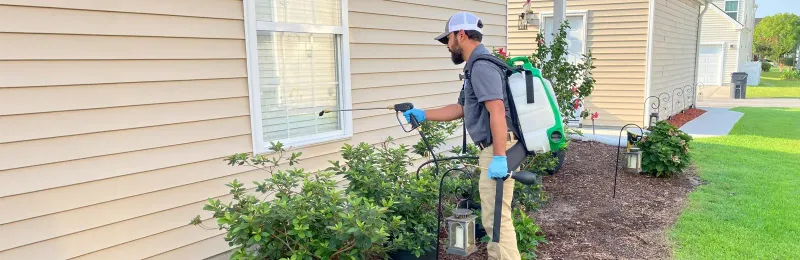
The practical alternative to relying on lizards for pest control is integrated pest management. EPA guidance on reducing pesticide impacts on wildlife advises identifying the actual pest first, then choosing the least disruptive effective method, treating only the affected area, and following the product label.
For mosquitoes specifically, CDC does not recommend residential misting systems and warns that routine spraying can harm beneficial insects and expose people and wildlife to unnecessary insecticide. Targeted, label-directed treatment of a confirmed pest problem protects both your household and the wildlife in your yard far better than either blanket spraying or wishful thinking about lizard appetites.
Color alone cannot identify the anole you saw
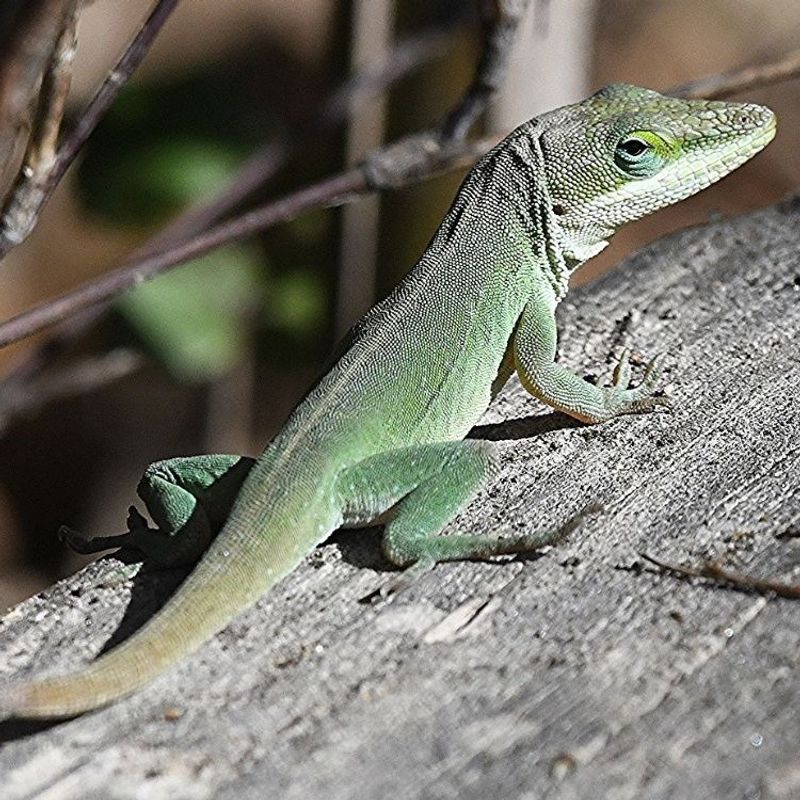
Green anoles have a genuinely confusing trait for homeowners trying to sort out what they are looking at: they change color. A green anole can appear bright emerald, dull brown, gray, or a mottled combination depending on temperature, stress, activity level, and background.
The NC Parks reptile checklist for Anolis carolinensis confirms the species is native across the state, from the low mountains to the barrier islands, and its appearance at any given moment is not a reliable indicator of species identity.
Body shape, pattern, and habitat context matter more than color when trying to identify a lizard. NC Wildlife’s green anole page and regional herpetology resources both emphasize that green anoles have a slender build, a pointed snout, and sticky toe pads suited to climbing.
Brown anoles, an introduced species documented in Florida, tend to be stockier, have a different head shape, and often display a distinctive pale lateral stripe or pattern. The University of Florida IFAS brown anole resource covers the introduced species in detail, but its ecology and behavior are specific to Florida and should not be assumed to apply uniformly to North Carolina.
Not every brown-looking lizard in a North Carolina yard is a brown anole. Making that assumption based on color alone can lead to misidentification and unnecessary concern.
If you are genuinely uncertain, photograph the lizard and compare it to regional guides or contact your local NC Wildlife office for help.
On the stewardship side, the general rule is to leave healthy wild lizards alone. NC Wildlife advises leaving wild animals in place or returning them to where they were found if they are not clearly injured.
North Carolina also regulates possession of native reptiles. The NC Wildlife amphibian and reptile possession permit page specifically documents a restriction on keeping brown anoles without appropriate authorization.
Rules for other species may differ, so check current NC Wildlife guidance before capturing, moving, releasing, or keeping any wild lizard.
Support useful habitat without trying to manufacture an anole boom
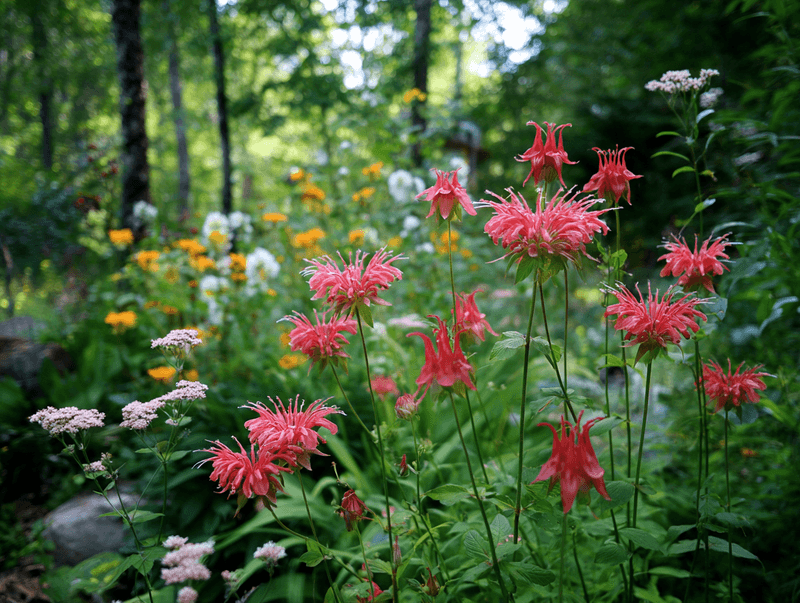
Translating the evidence into yard practice means thinking about structure rather than chasing a specific lizard count. Retaining existing shrubs, woody vines, and small trees costs nothing and preserves climbing and hunting surfaces that anoles already use.
Where the yard is mostly uniform lawn, replacing a section with layered native plantings, a native plant island, or a mixed border with varying heights can add the kind of structural diversity that benefits a range of wildlife, potentially including anoles.
NC Wildlife’s suburban backyard guidance recommends exactly this kind of progressively layered approach: ground cover, shrubs, and canopy trees working together to create varied habitat. The eastern Texas shrub-density study supports the idea that more shrub structure can correlate with higher anole presence, though again, that research was conducted in a forest setting and is not a prescription for a specific North Carolina planting plan.
Treat both sources as general direction, not a guarantee.
Brush piles and selected cover areas can support the broader arthropod community that anoles and other wildlife depend on. A small, intentional pile of branches in a back corner is more useful than blanketing the entire yard in leaf litter, and it avoids the moisture and pest-habitat problems that come with indiscriminate leaf accumulation.
Green anoles are climbers, not leaf-litter specialists, so the emphasis belongs on vertical structure.
On the pest-control side, avoid broad routine insecticide applications if supporting insect-eating wildlife matters to you. EPA guidance and label-reading best practices both point toward treating only confirmed pest problems in affected areas.
Residential mosquito-misting systems are a particular concern: CDC advises against them because routine automated spraying can harm beneficial insects and expose wildlife to repeated insecticide contact. Observation, patience, and targeted responses to actual pest problems will serve both your yard and its wildlife residents far better than any broad intervention.
Read the surge as a clue, then manage the yard with proportion
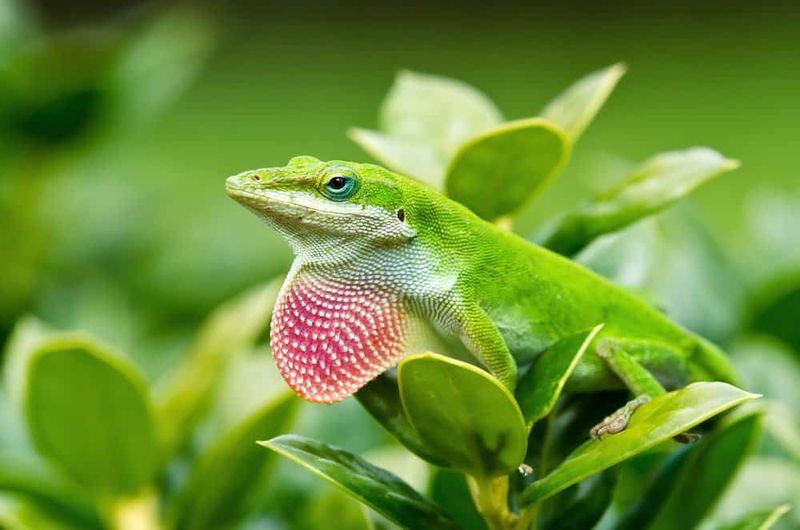
A yard full of green anoles on a July morning is worth noticing, but it calls for curiosity rather than conclusions. NC Wildlife’s green anole guidance and the broader evidence reviewed here agree that visible anoles can indicate the yard currently offers warmth, shelter, climbing structure, and small prey.
They can also reflect breeding season, juvenile recruitment, conspicuous male display, or simply the fact that summer puts these lizards in plain sight. Any of those explanations, or a combination of them, may be operating at once.
The most useful response is a proportional one. Appreciate the native predators, make modest structural habitat improvements where they fit your yard and lifestyle, and base any pest-control decisions on the actual pest and the real household risk it presents.
NC Wildlife’s suburban habitat page and EPA’s wildlife-protective pesticide guidance both point the same direction: support native species through thoughtful habitat choices and reserve targeted treatment for confirmed problems.
The number of anoles on your porch is not a reliable substitute for a tick check after yard work or a source-reduction approach to standing water near the house. Wildlife support and responsible household protection are not opposites, and the yards that do both well tend to start with accurate expectations rather than inflated ones.