
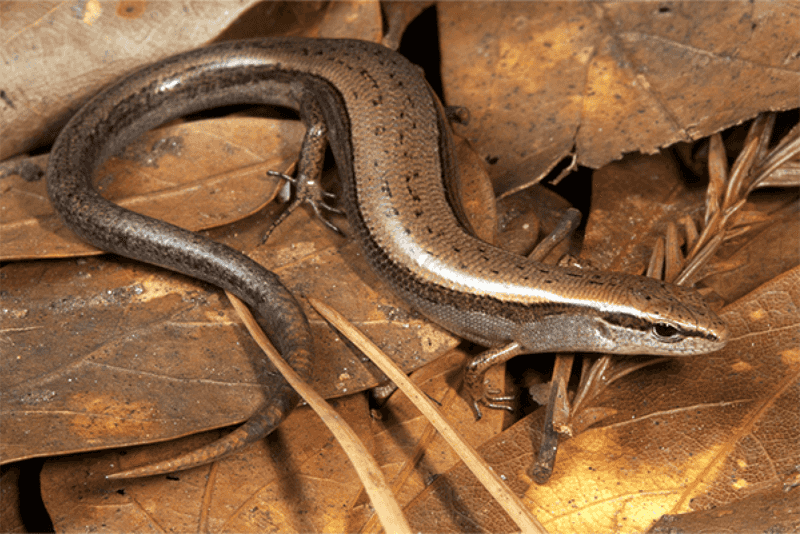
Something small and brown keeps darting through the mulch by your back steps, and it moves too fast to get a good look. Odds are it’s a ground skink, a tiny lizard that spends its days in the leaves.
Seeing one tells you a little about your yard, but not as much as people sometimes think. Knowing what the clue really means can help you decide what to do with your leaves before winter.
A tiny rustle may be a ground skink
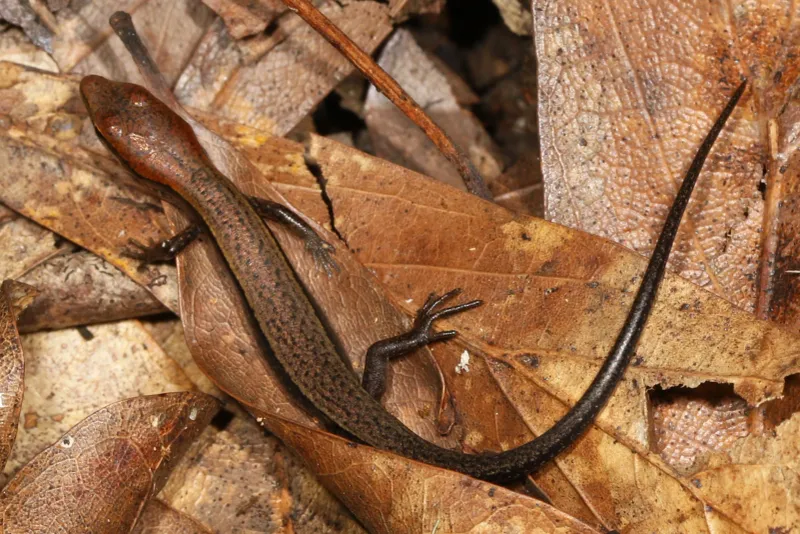
Most people first notice a ground skink by sound. A faint rustle runs through the leaves, and a slim brown blur disappears under the mulch.
The animal is probably a ground skink (Scincella lateralis), also called a little brown skink, which is a small, brown, ground-dwelling lizard that is easy to miss as it moves through leaf litter.
Records for the species cover most of North Carolina, but that does not mean every yard has them or that they are equally common everywhere. Sightings and habitat use vary from place to place, so your neighbor across town may see them daily while you see one a month.
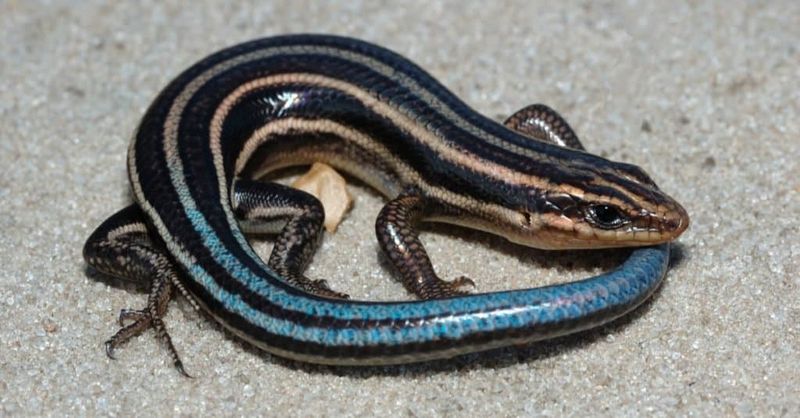
Before you treat a sighting as proof of anything, confirm what you saw. The state reptile account lists features that help tell the species apart and mentions a possible look-alike in the southern mountains.
If you live in that part of the state, that caution matters most.
A photo helps a lot. Try to capture the head or the side of the body, then compare it with the identifying features in that account.
A clear picture beats a guess, and it keeps you from drawing species-specific conclusions about a lizard that turns out to be something else.
What leaf litter offers
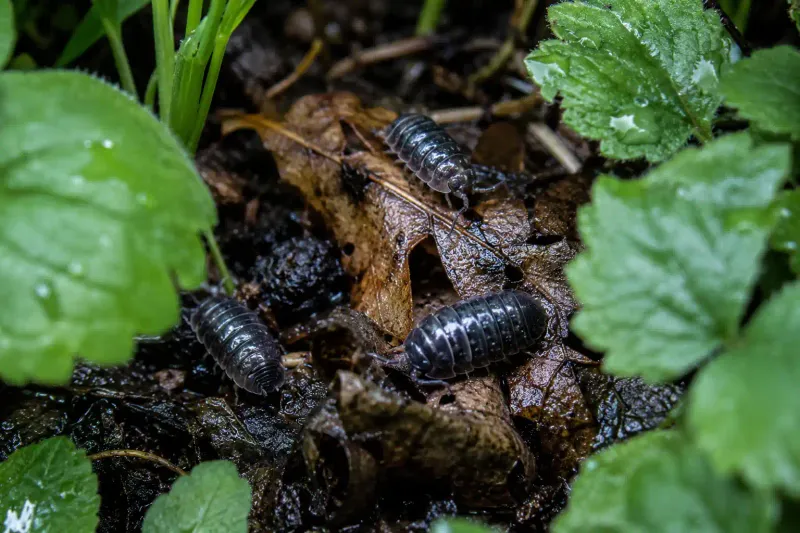
For a lizard the size of a pencil, a layer of leaves works like a house and a pantry in one. The litter gives ground skinks a place to tuck out of sight, and it holds the small creatures they hunt.
The North Carolina species account describes leaf litter and other ground cover as places where these skinks shelter and forage.
Their menu is made up of tiny animals without backbones. NC Wildlife lists small insects, spiders, isopods (think pill bugs), millipedes, and other small invertebrates.
They hunt in leaf litter, decaying wood, and other debris, so a rotting stick or a corner of old mulch can be as useful to them as a pile of leaves.
Here is the catch. A skink in your leaves shows that some cover and some hunting ground exist there.
It does not show that prey is plentiful. One lizard can live well off a small patch, and a patch can look busy with bugs and still support none.
So read the sighting as a modest clue. If you want a rough sense of what lives in your litter, gently lift a handful in a quiet bed and look for pill bugs and spiders, then set it back as you found it.
A sighting is not a soil test
It is tempting to treat a skink like a living moisture gauge. Skinks in the leaves, damp soil underneath, plenty of bugs: the story sounds neat.
Nothing in the sources backs it up, and a single sighting cannot tell you how wet your whole yard is or how many insects it holds.
What is known is narrower. A South Carolina study of ground skink physiology suggests that temperature and moisture in small local microhabitats can shape where these lizards live and when they are active.
That is about a patch under a log or a bed of leaves, not about a whole property.
Using a moist spot does not mean a skink needs a soggy yard. North Carolina records include dry maritime forests, sandhills, and dry ridges, and the state habitat account says the species avoids excessively wet areas.
If you want to know your soil moisture, push a finger into the soil or use a cheap probe. If you want to know about insects, look for them.
A skink only tells you that a bit of usable ground cover exists nearby, and there is no reason to water more or pile on mulch to attract one.
Fall activity is possible, not a statewide surge
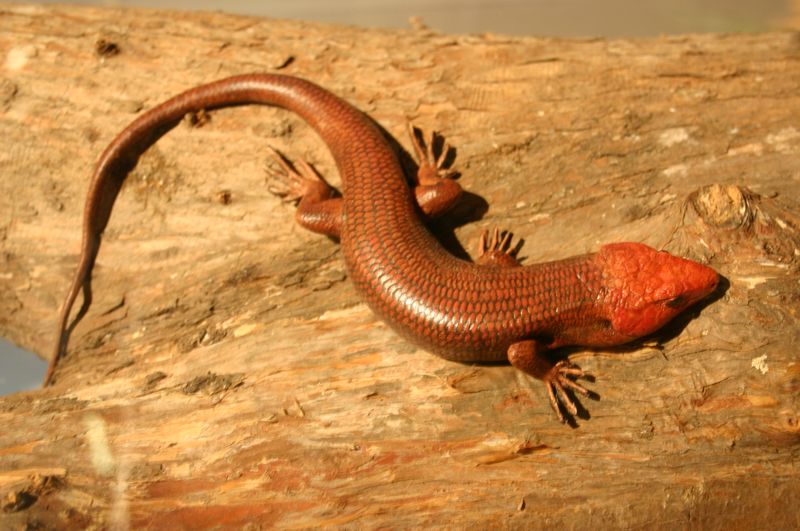
Autumn sightings make sense, but they do not add up to a trend. A field study in South Carolina recorded ground skinks in October, November, and December, so cool-season activity is clearly possible.
That research took place at a single site in 2012, which makes it a useful data point and nothing more.
North Carolina adds a bit of context. NC Wildlife says these skinks shelter underground in winter and may stay active year-round in milder areas.
A warm afternoon on the coastal plain could bring one out in January, while a cold snap in the foothills keeps them buried.
That leaves several things unproven. The sources do not show that skinks migrate in fall, that they breed then (breeding is listed for April through July), or that they prepare your yard for winter in any specific way.
They also do not show more skinks every autumn.
A better explanation for repeated sightings may be simple. Leaves are dropping, the ground is more open to view in places, and you are outside raking.
You may just be noticing animals that were there all along.
Keep some leaves, but manage them where they fall
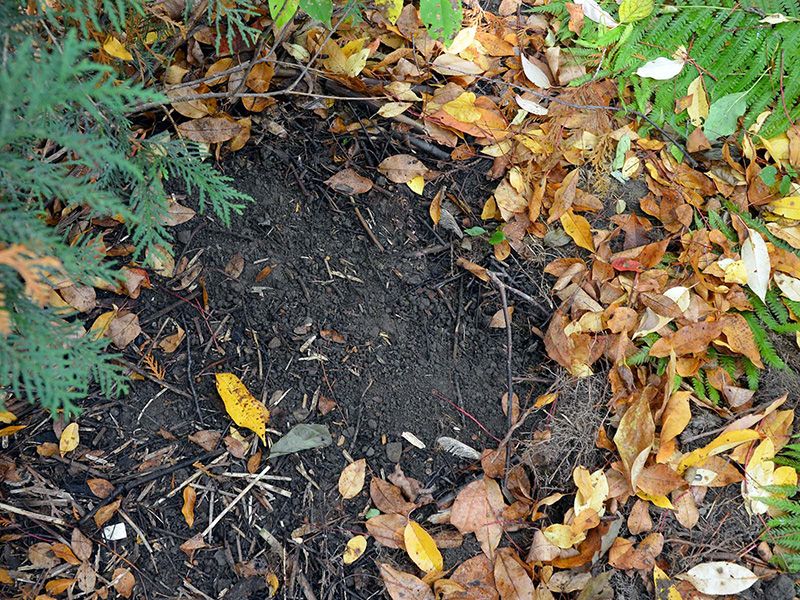
You do not have to choose between a tidy yard and a habitat-friendly one. Start by leaving leaves undisturbed in quiet beds or out-of-the-way corners, and skip the habit of clearing every scrap of ground cover.
NC State Extension points out that leaf litter and dead wood serve as habitat for insects and other wildlife.
Extension also suggests practical ways to handle the rest. Rake or blow leaves into beds or under trees and shrubs, and shred or mulch what falls on the lawn by running the mower over it.
Thick, wet mats can smother turf, so keep heavy layers off the grass.
Walkways and storm drains need a different rule: keep them clear. Slick leaves on steps are a slip hazard, and clogged drains cause trouble in the next heavy rain.
Skip two tempting extremes. Do not bury the whole property in deep leaves, and do not water beds to make them damp for lizards.
A strip along a back fence line or a shrub bed behind the shed gives ground skinks a place to hide and hunt without costing you a thing at the front door.
The useful signal is ground-level cover
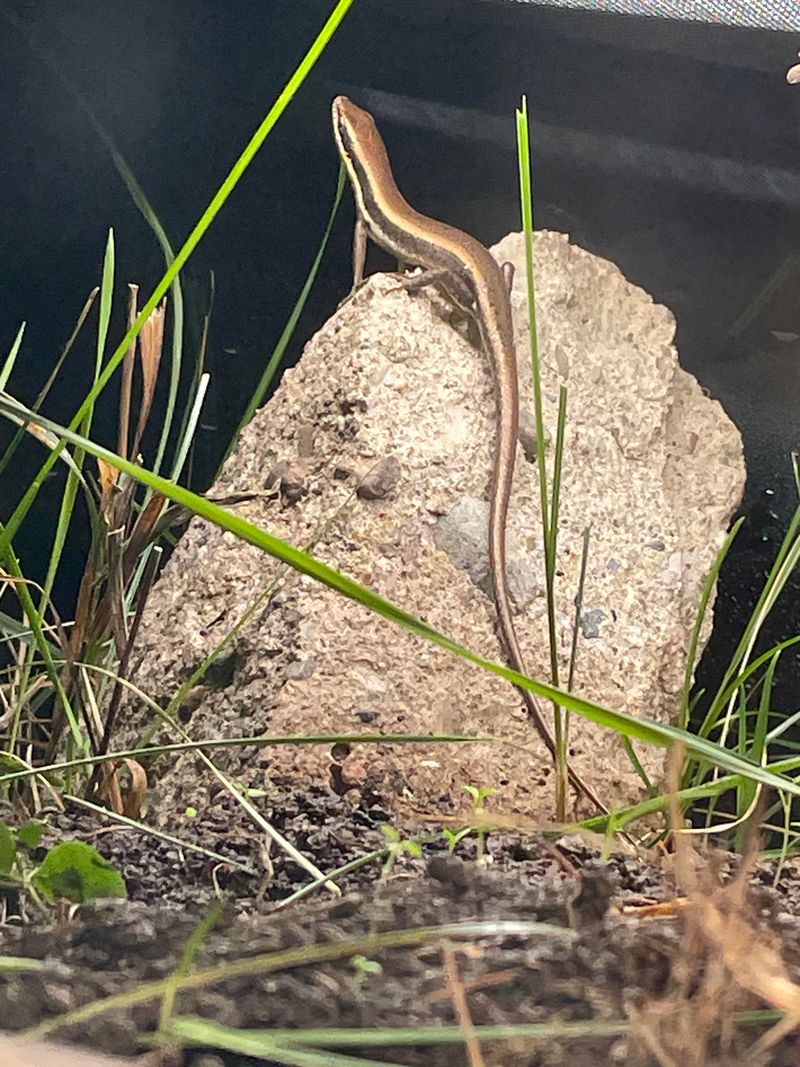
A skink in the leaves is a prompt to look down. It points to ground-level cover and small hunting spaces in your yard, which the state species account ties to this lizard’s shelter and foraging.
It does not diagnose soil moisture, count bugs, or promise pest control.
So keep some suitable cover where it makes sense, and follow Extension’s advice to keep turf, paths, and drains working.
A small lizard asks for very little, just a corner nobody bothered to tidy.