
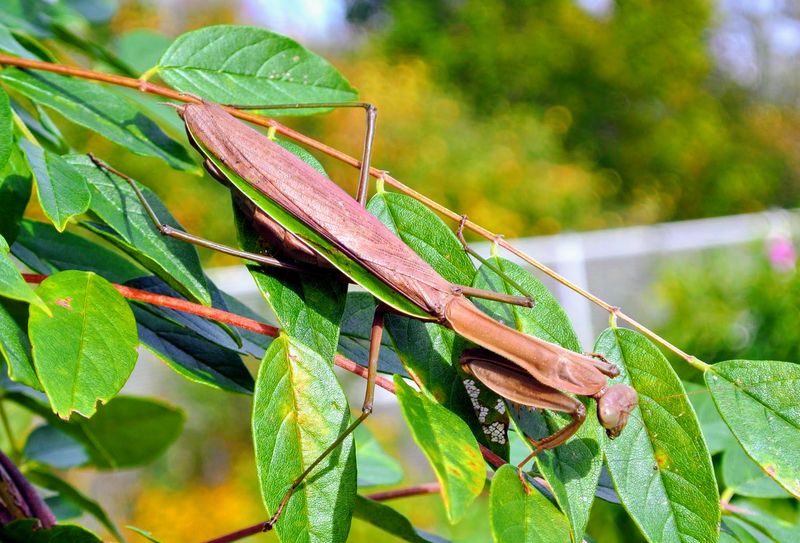
Spotting a praying mantis perched on a tomato cage or rosebush can stop you in your tracks. These prehistoric-looking insects show up in California gardens every summer, and most homeowners immediately wonder whether that sighting is good news, bad news, or something in between.
The honest answer is more nuanced than most gardening advice lets on, and understanding it can help you make smarter decisions about pests, pesticides, and the other creatures sharing your yard.
A mantis has found a workable hunting site
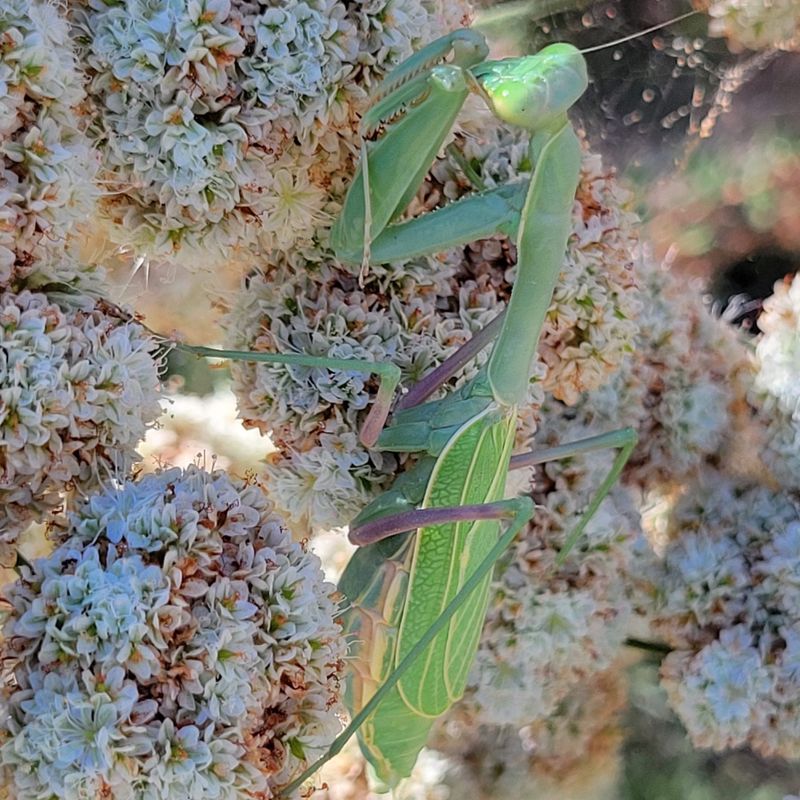
Finding a praying mantis in your garden on a warm California morning is striking, but the most accurate thing you can say about that sighting is fairly specific: the mantis has located a spot with usable shelter and enough appropriately sized prey nearby to make ambush hunting worthwhile. According to UC IPM’s profile on mantids, these insects are sit-and-wait predators that position themselves on vegetation, flowers, or other surfaces and seize whatever prey comes within reach.
The sighting tells you about immediate habitat conditions, not about the overall health, soil quality, or pest load of your yard.
That distinction matters more than it might seem. A single visible mantis may have walked or flown in from a neighbor’s yard, a nearby hedge, or a vacant lot.
Its presence cannot confirm that your garden is thriving, that pollinators are abundant, or that a damaging pest outbreak is underway. As the University of Maryland Extension’s mantid resource notes, mantises are generalist predators whose hunting behavior is driven by opportunity, not by any preference for pest species over beneficial ones.
Supporting one ambush predator is also not the same as running an effective pest-control program. A lone mantis consumes a limited number of insects relative to the populations that can build up in a California garden over a long, warm summer.
Treat the sighting as an interesting observation about local habitat conditions rather than as a verdict on whether your yard needs intervention or deserves a clean bill of health.
What does the mantis eat?
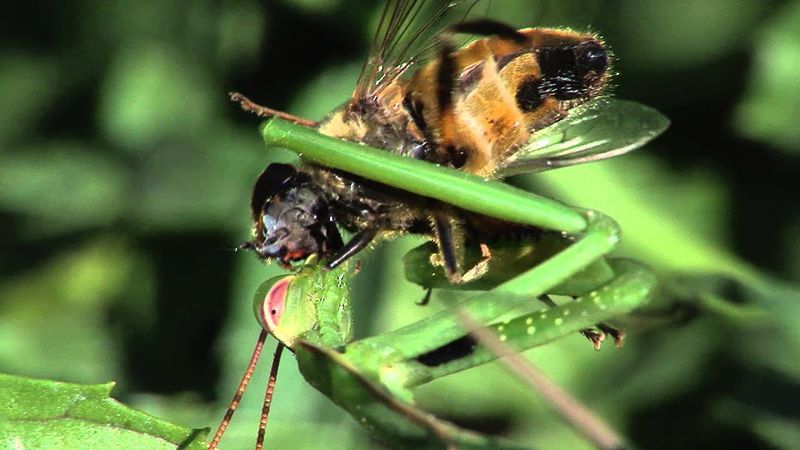
Mantises eat whatever they can catch, and that list is longer and more complicated than most homeowners expect. UC IPM specifically names bees, butterflies, and syrphid flies among the insects mantises may consume, alongside aphids, caterpillars, grasshoppers, and other common garden visitors.
Because their hunting is purely opportunistic, a mantis stationed on a flowering plant is just as likely to catch a pollinating bee or a beneficial syrphid fly as it is to snag a caterpillar chewing your tomatoes.
Syrphid flies are worth mentioning by name because many California gardeners do not recognize them. These hovering, bee-mimicking flies are important aphid predators in their larval stage, and they are exactly the kind of insect a mantis will take without hesitation.
Losing even a few syrphid flies to a mantis could slow down the very biological control you were hoping to encourage.
A mantis positioned in a pollinator garden is not automatically protecting your pollinators or improving the garden’s ecological balance. Its presence there simply means it found a good ambush spot with plenty of insect traffic, regardless of whether those insects are pests or allies.
The feeding behavior is opportunistic rather than targeted, which is why calling a mantis “beneficial” without qualification oversimplifies what is actually happening. Being part of the food web and providing a useful pest-control service are two very different things, and a mantis in your California garden is clearly the former without being reliably the latter.
Why one mantis will not manage your aphids or hornworms
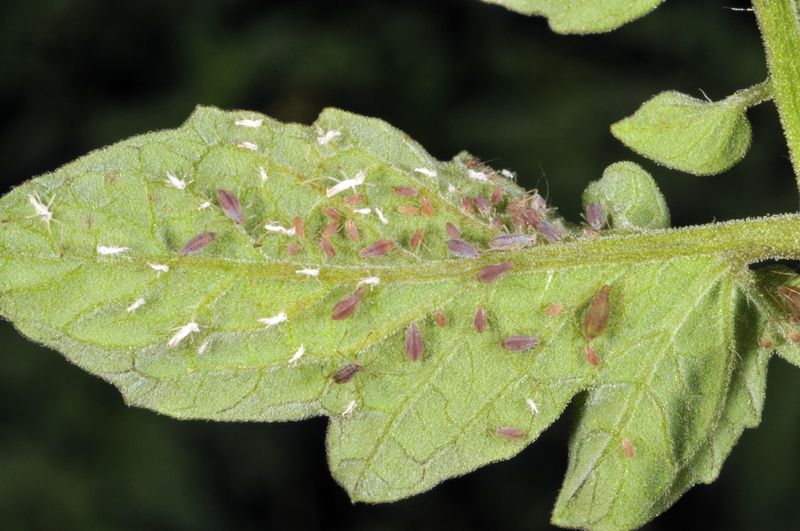
Seeing a mantis near aphid-covered roses or hornworm-damaged tomatoes can feel like a natural solution has arrived. The reality, according to California IPM authorities, is more sobering.
UC IPM states plainly that mantises provide little or no dependable biological control, and the reasons are structural: they are generalist predators, they spend long stretches of time motionless rather than actively hunting, and they consume comparatively few insects relative to what a thriving aphid colony or hornworm population can produce.
The one-generation-per-year life cycle compounds the limitation. UC IPM’s mantid page notes that California mantises complete a single generation annually, so populations cannot rapidly expand in response to a pest outbreak the way that aphid predators like lady beetles or lacewings sometimes can.
The UC ANR beneficial insects guide reinforces this point, grouping mantises among insects that attract interest but deliver limited measurable control in garden settings.
Colorado State University Extension’s overview of mantid biology similarly describes their pest-control value as modest at best. A mantis may eat an aphid or two during a hunting session, but an established aphid colony on a California rose or vegetable plant can number in the hundreds or thousands and reproduce rapidly in warm weather.
A single predator working slowly and indiscriminately cannot keep pace with that math.
The practical takeaway is to resist using a mantis sighting as a reason to skip monitoring. Checking plants regularly for actual damage, identifying the specific pest involved, and assessing whether the infestation has reached a level that warrants action are steps that no predator sighting can replace.
Being part of the food web is real; being a reliable control agent is not the same thing.
Summer sightings fit the California mantis life cycle
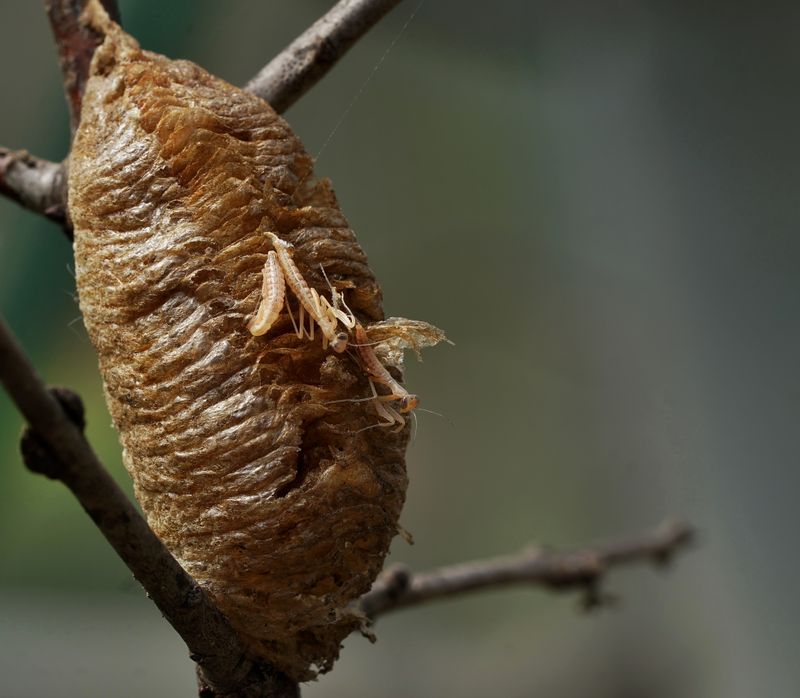
Mantises showing up in California gardens from late spring through early fall is not random. UC IPM confirms that California mantises follow a single annual generation, with nymphs hatching in spring and both nymphs and adults remaining active through the warm months.
By midsummer, the insects you see are typically juveniles that have grown large enough to be noticeable, or adults that have reached their full size and are actively hunting before the breeding season winds down.
As summer transitions to fall, mated females deposit egg cases, called oothecae, on twigs, plant stems, fence rails, or other firm surfaces. Each ootheca is a hardened, foam-like structure that protects the eggs through winter.
The eggs remain dormant until warming temperatures in spring trigger hatching, releasing dozens to hundreds of tiny nymphs that immediately begin hunting on their own.
If you find an ootheca in your garden, leave it outdoors where you found it. University of Maryland Extension’s September gardening guidance cautions specifically against bringing egg cases indoors, because household warmth can trigger premature hatching and release many nymphs inside your home before conditions outside are suitable for their survival.
Timing for all of this varies across California’s diverse climates. Coastal gardens, inland valleys, foothill elevations, and heavily irrigated suburban lots each experience different temperature curves, so exact hatch and activity dates will shift depending on where you garden in the state.
You may also notice differences in mantis size and color across the season. Younger nymphs are small and easily overlooked; adults can reach several inches in length.
Neither green nor brown coloration reliably identifies a species, since California hosts both native and introduced mantid species that overlap in appearance.
Leave the visitor alone—and skip the mail-order egg case
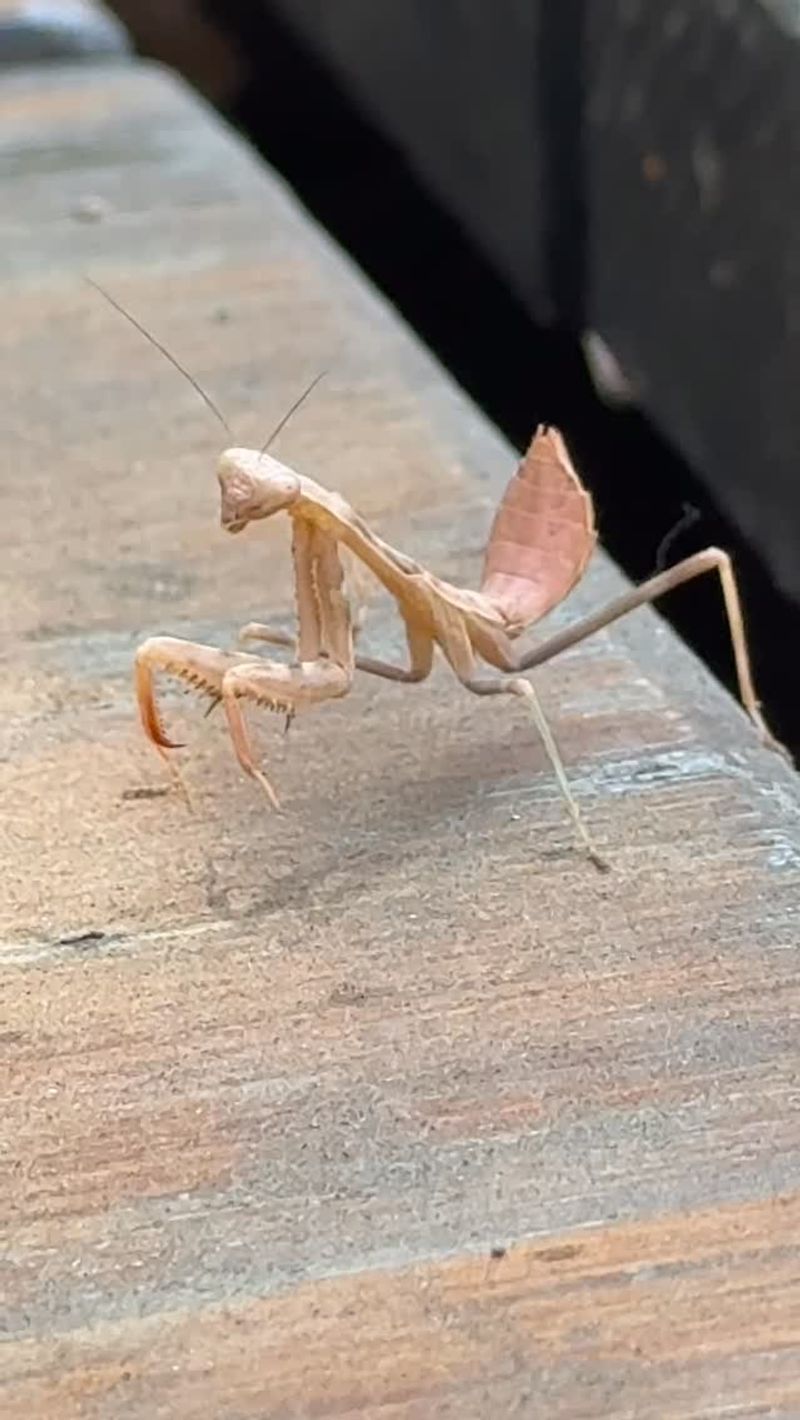
Watching a mantis from a comfortable distance is the safest and most sensible response to finding one in your garden. UC Cooperative Extension describes mantises as harmless to people under ordinary circumstances but warns that their spined, prey-catching forelegs can deliver a sharp, painful pinch if the insect feels threatened.
Picking one up is unnecessary and adds risk for both you and the mantis, so observation is the better choice.
Leaving an outdoor mantis undisturbed when possible is a reasonable default. If one ends up somewhere genuinely inconvenient, such as a doorway or an area where it could be accidentally stepped on, moving it to nearby vegetation is fine.
The key word is outdoor: mantises belong outside, and any relocation should keep them there.
Purchasing commercial egg cases to release as a pest-control strategy is a different matter, and extension sources are consistently skeptical of it. UC IPM notes that commercially sold cases may come from introduced Chinese mantises rather than California’s native species.
Utah State University Extension’s beneficial insects guide and the Colorado State University mantid overview both describe the pest-control benefit of releasing mantises as limited or negligible. Releasing generalist predators that will eat bees, butterflies, and syrphid flies alongside any pests present is not a targeted strategy, and it does not address the underlying conditions that allowed a pest population to build up in the first place.
Save your money and put your energy into habitat practices that support a broader community of natural enemies instead.
Build a garden that supports many natural enemies

Rather than trying to attract more mantises specifically, the more productive goal is building garden conditions that support a wide range of natural enemies. Lady beetles, lacewings, parasitic wasps, ground beetles, and syrphid flies collectively provide far more consistent and targeted pest pressure than any single generalist predator.
UC IPM’s biological control resource explains that a diverse community of natural enemies is more reliably effective than relying on any one species.
Reducing unnecessary pesticide use is the single most impactful step most California homeowners can take. UC IPM’s guidance on protecting natural enemies and pollinators notes that broad-spectrum insecticides harm predators and parasitoids alongside target pests, often making pest problems worse over time by eliminating the insects that would otherwise keep populations in check.
Skipping a spray when damage is tolerable is frequently the most ecologically sound decision.
Varied vegetation makes a measurable difference. UC IPM’s insectary plants page identifies flowering plants with accessible pollen and nectar as key resources for adult parasitic wasps and predatory flies that need floral food sources to reproduce.
Mixing flowering annuals, perennials, and shrubs throughout your garden provides both hunting structure and food for these insects across multiple seasons.
Research published in Ecological Applications by Philpott and Bichier on urban garden predation services found that vegetation complexity affected predation in urban gardens, though the effects varied by prey type. This supports habitat-conscious gardening as a general practice rather than as a guarantee that any specific predator will appear or that pest problems will disappear.
Think of varied vegetation, reduced pesticide use, and flowering plants as investments in the whole food web, not as a recipe for more mantises or fewer aphids by a set date.
Manage the actual pest, not the mantis sighting
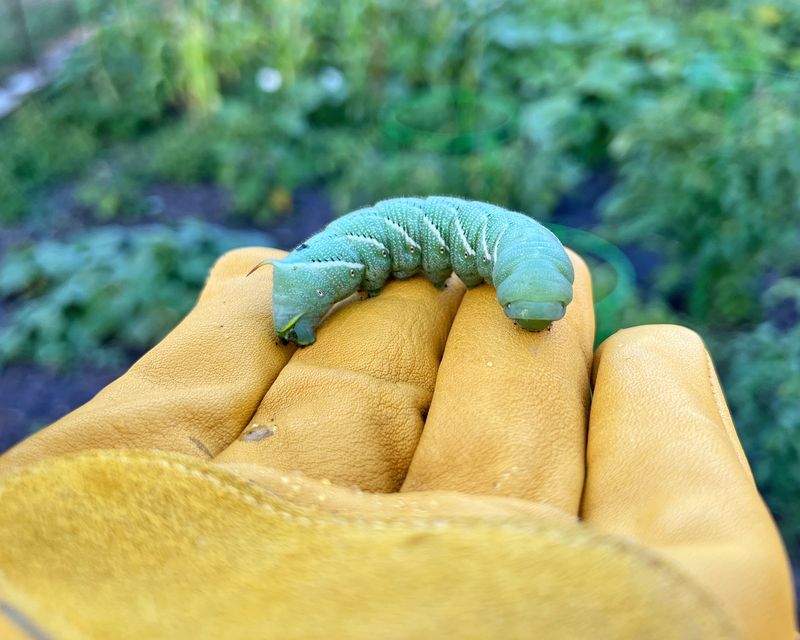
A mantis in the garden does not change what you should do when you see plant damage. The first step is always identification: confirm what pest is actually present before deciding whether action is needed.
Aphids and hornworms are common California garden problems, but they respond to different management approaches, and treating the wrong thing or treating prematurely wastes time and can harm the natural enemies already working in your favor.
For aphids, UC IPM’s aphid management guidance recommends starting with the least disruptive options. Check whether the affected plant can tolerate the current level of infestation without lasting damage.
Prune out heavily infested shoots and dispose of them away from the garden. On sturdy plants, a strong stream of water directed at aphid colonies can knock large numbers off without any chemical input.
Controlling ants, which protect aphid colonies from predators in exchange for honeydew, can also let existing natural enemies do more work. If those steps are insufficient, insecticidal soap or horticultural oil applied according to the product label are lower-impact chemical options, but both can injure drought-stressed or heat-stressed plants, which is a real concern in California summers.
Always read the label and match the product to the specific crop and situation.
Tomato hornworms respond well to a different approach. UC IPM’s hornworm resource emphasizes inspection and hand removal as the practical first line of action.
Check plants carefully, especially on the undersides of leaves, and remove caterpillars by hand. Hornworms with white cocoons attached to their bodies are already parasitized by beneficial wasps and should be left alone, as those wasps will continue working in your garden.
UC IPM’s natural enemy protection guidelines advise avoiding disruptive pesticides, especially early in the season when parasitoid populations are building. Every treatment decision should be tied to a confirmed pest identification, a realistic damage assessment, the specific crop, and the product label.
The best reading of a summer mantis sighting
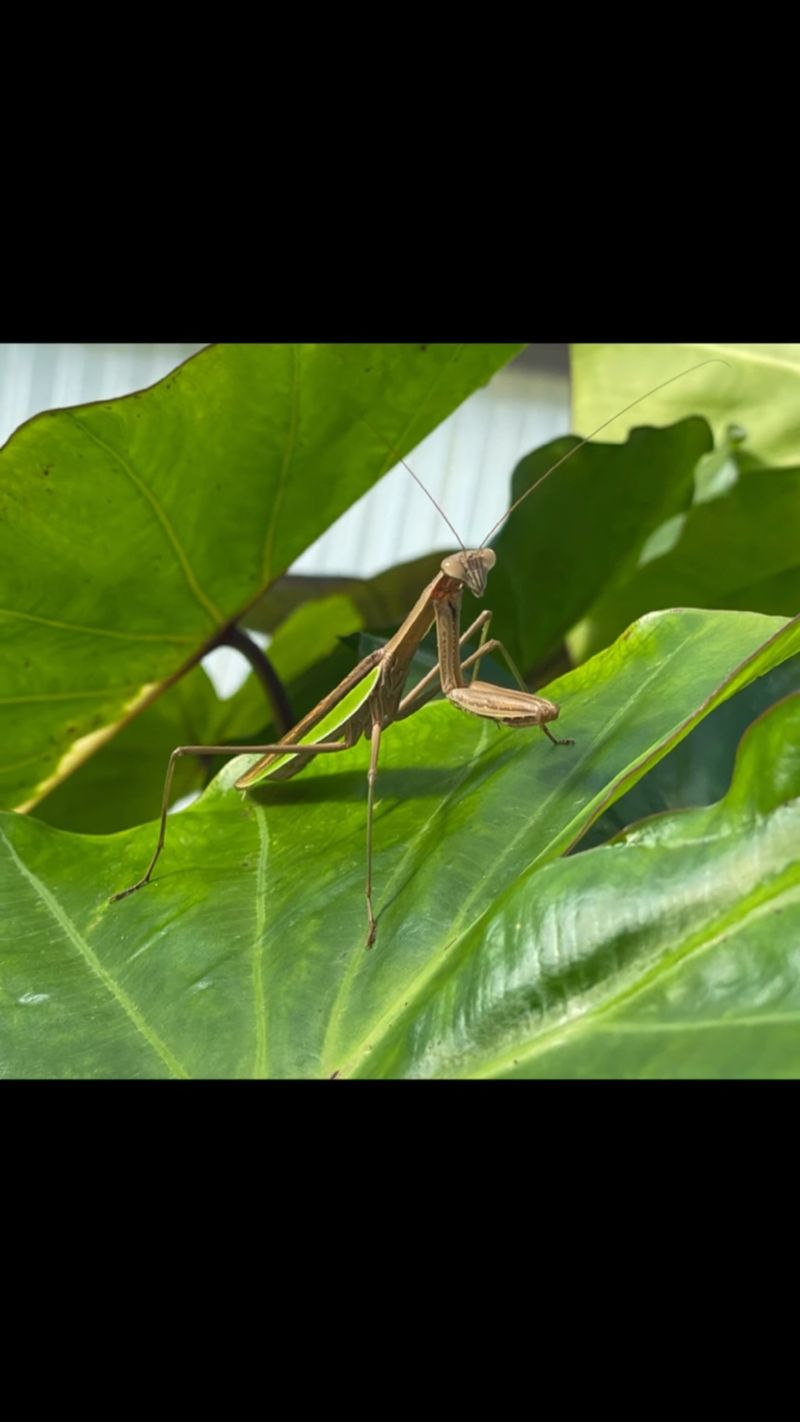
Coexisting with a mantis and relying on one for pest control are genuinely different things. A mantis in your California garden can reasonably suggest that the space offers usable shelter and enough prey for an ambush predator to set up, but that inference says nothing about soil health, pollinator abundance, water efficiency, or whether a damaging pest outbreak is underway.
UC IPM is clear that mantises provide little dependable biological control, and UC IPM’s broader natural-enemy guidance consistently points toward diverse predator communities rather than single-species solutions.
The practical prescription is straightforward: leave the mantis undisturbed when possible, avoid broad-spectrum sprays that harm the full range of natural enemies in your garden, support diverse predators and parasitoids through varied vegetation and flowering plants, and address confirmed aphid or hornworm damage through monitored, crop-specific IPM rather than hoping a single insect handles it. A mantis is a genuinely interesting part of your garden’s food web, and that is reason enough to appreciate the visit without asking it to do a job it was never built to do reliably.