
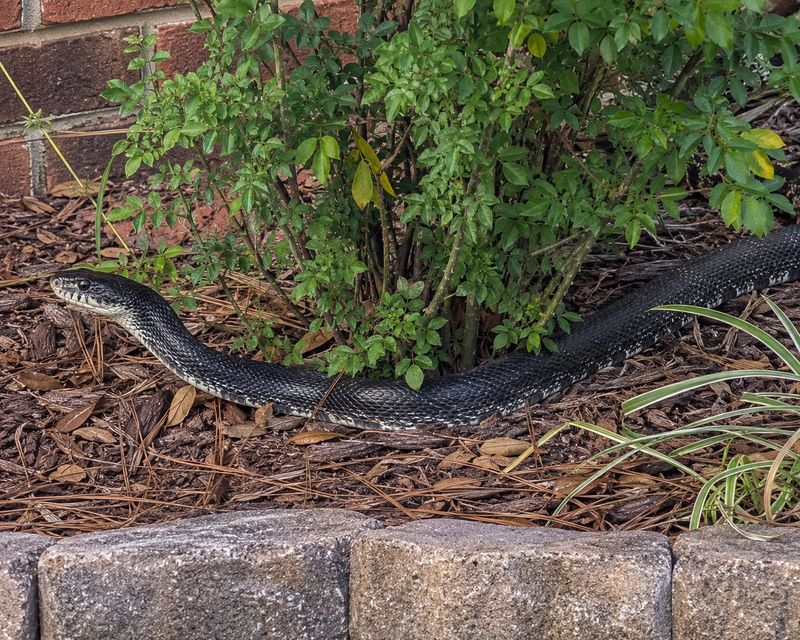
You open the shed door and spot a long, dark snake tucked near the wall. Your first thought might be that something is wrong.
In North Carolina, a rat snake nearby is a good reason to look around, but it does not tell the whole story. Here is how to check the shed, fix real problems, and let a native snake go on its way.
A rat snake is a clue, not a diagnosis
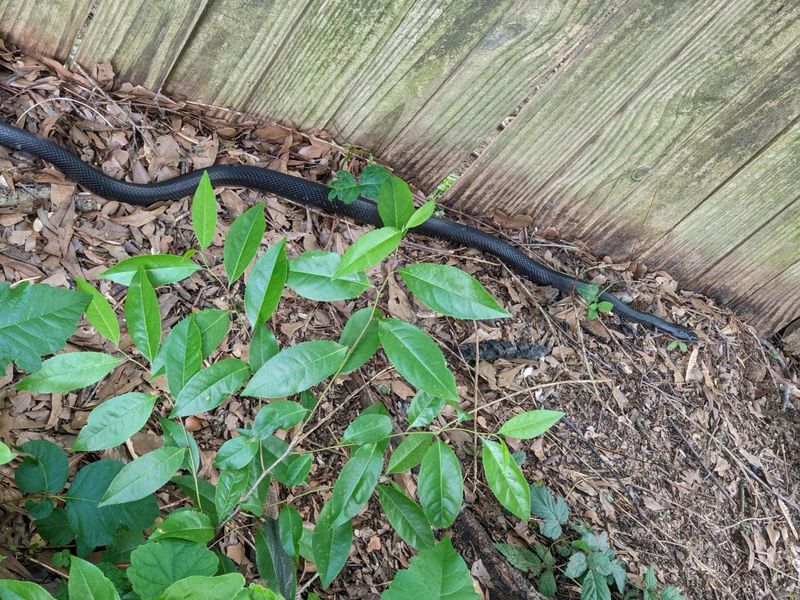
Seeing a rat snake near your shed is a fair reason to check for rodents. It is not proof that rodents are there, and it cannot tell you how many there might be.
Think of the snake as a prompt to investigate, not a verdict.
According to the North Carolina Wildlife Resources Commission, rat snakes are common across the state, climb well, and get into buildings more often than any other snake in North Carolina. They eat rodents, which is how they earned their name.
That makes mice and rats one plausible draw, but only one.
Plenty of homeowners in the mountains, the Piedmont, and the coastal plain share their yards with these snakes and never have a rodent problem. A snake may pass through a yard for many reasons that have nothing to do with what is inside your shed.
Jumping to the idea of an infestation could send you chasing a problem that is not there.
A better plan is simple. Treat the sighting as a cue to spend ten minutes looking for real signs of rodents.
If you find them, you have something concrete to fix. If you find nothing, you can relax and enjoy having a native animal in your yard.
A fall sighting does not explain why the snake is there
Autumn can feel like the season when snakes suddenly show up, but the calendar alone does not explain a sighting. Nothing in the state’s wildlife guidance shows that rat snakes start appearing around sheds in fall, or that rodent numbers jump at that time.
A snake seen in October could just as easily be seen in May.
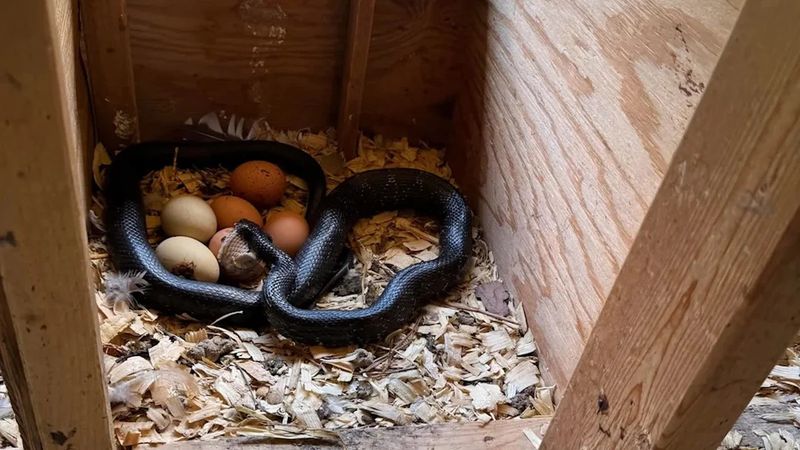
So why might one be there? The NCWRC notes that rat snakes eat rodents, but also birds, bird eggs, and other small mammals.
A shed near a bird feeder, a nest box, or a chicken coop may offer a different kind of meal. Sheltered spots like stacked lumber, tarps, and gaps under a floor can also give a snake cover.
Wildlife biologists do say that snakes use artificial cover to regulate their temperature, and that such cover is handy for monitoring snakes in spring and fall. That is a statement about where snakes can be found and counted.
It does not say that fall brings more snakes to sheds or more rodents to yards.
In practice, this means you cannot read a snake’s motives from one sighting. Prey, shelter, or simple wandering are all possible.
The only way to learn about your own shed is to look at the shed itself.
Look for rodent evidence before you act
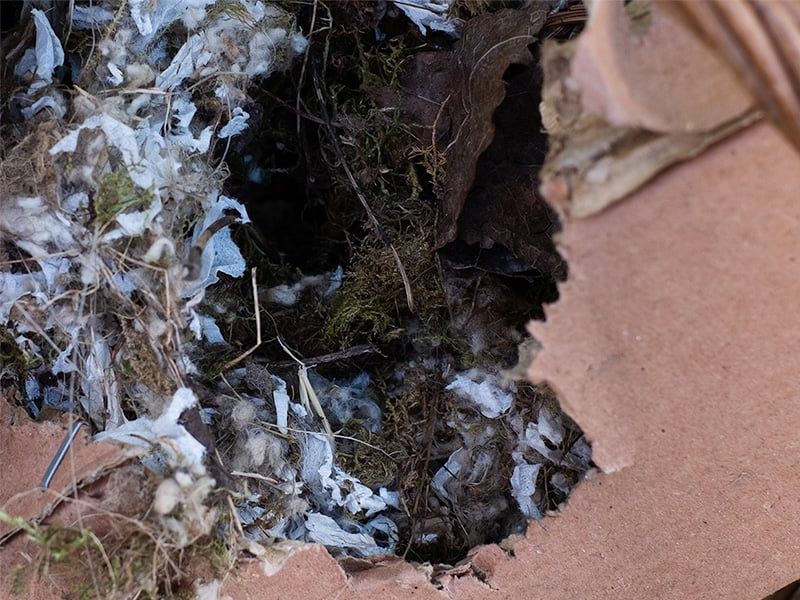
Grab a flashlight and gloves, and go through the shed slowly. NC State Extension guidance on structure-invading rats points to signs such as droppings, gnawing, nests, and burrows.
Those are the clues that matter, far more than the snake.
Start inside. Check corners, shelves, the undersides of stored items, and any bags of seed or feed for chewed edges.
Shredded paper, insulation, or fabric packed into a tucked-away spot can be a nest. Droppings tend to gather along walls and near food.
Then walk the outside. Look along the foundation and under the floor line for burrow openings, worn paths through grass, and gnawed wood near doors or vents.
The same kind of evidence is covered in the extension guide for mice, which can leave smaller droppings and finer gnaw marks.
What you find should guide what you do next. Fresh droppings and chewed materials point toward rodent activity worth addressing.
A clean, undisturbed shed suggests you can skip any control steps for now. Either way, one walk-through is a snapshot, so a quick recheck in a few weeks is a good habit.
Reduce food and shelter that support rodents
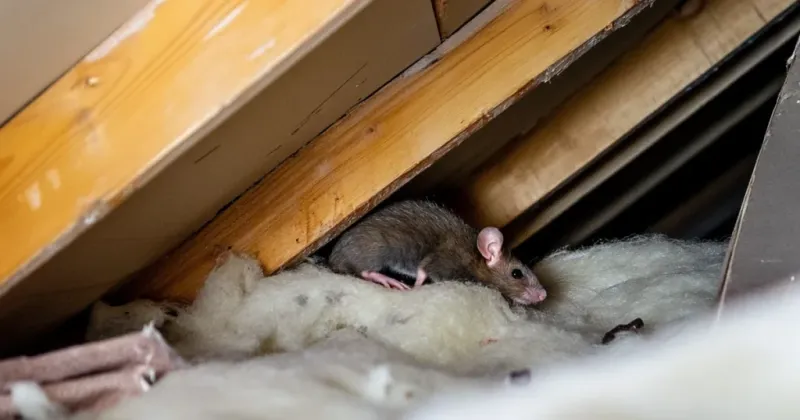
If your inspection turns up rodent signs, or you simply want to make the area less inviting, start with food. Store birdseed, pet food, and livestock feed in containers with tight lids.
Sweep up spills right away, and keep garbage secured.
The NCWRC notes that outdoor pet food can attract rodents as well as other animals that hunt them. Feeding pets indoors, or picking up bowls after meals, removes an easy snack for everything in the yard.
Next, think about shelter. NC State Extension’s advice on rats recommends good sanitation and cutting down nesting sites around structures.
Move firewood, lumber, and flowerpots away from the shed walls, trim back thick vegetation, and clear out clutter inside.
These steps tackle conditions that can support rodents. They are not a way to make a snake leave, and they do not replace checking for real evidence first.
Think of them as routine yard care that keeps your shed from becoming a cozy home for unwanted guests.
Seal rodent entry points when activity is confirmed
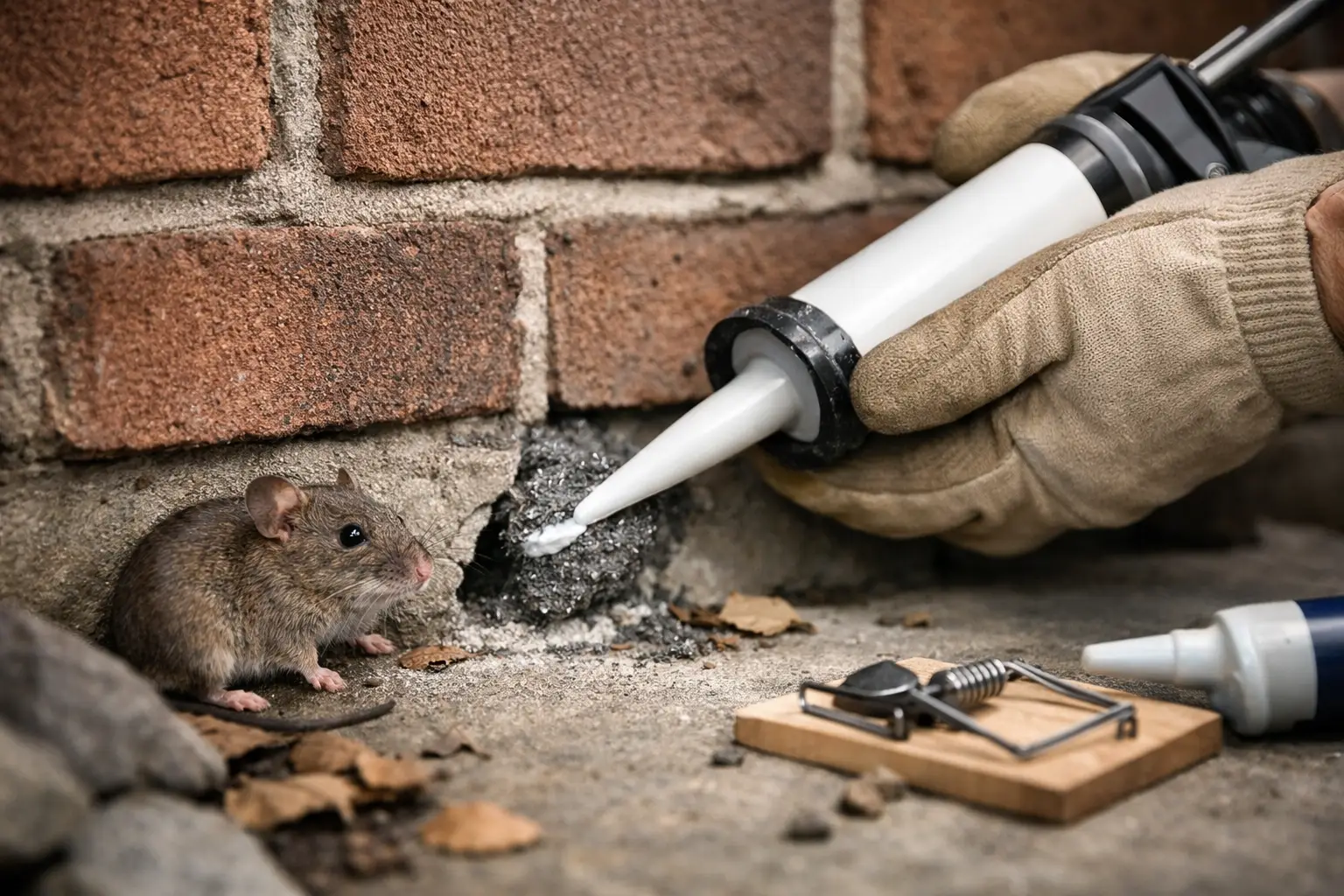
Once you have confirmed rodents, cutting off food and shelter is only half the job. They also need a way in.
NC State Extension’s guidance on structure-invading rats recommends sealing entry points, and it lists specific gap sizes, materials, and door-sweep approaches.
Walk the shed again with a rodent’s-eye view. Check the door bottom, vents, places where pipes or wires pass through walls, and gaps where the siding meets the foundation.
Durable, chew-resistant materials hold up better than soft fillers that rodents can gnaw through.
Follow the extension document for exact measurements and products, since those details are written for rodents. Do not treat them as a universal snake-proofing guide.
A gap sized to stop a rat says nothing about what will or will not keep a snake out.
Also skip the aisle of snake repellents. The NCWRC says advertised products are not proven to work.
Fixing real rodent access points is a practical step, while repellents are a gamble.
Give the snake space and respond to evidence
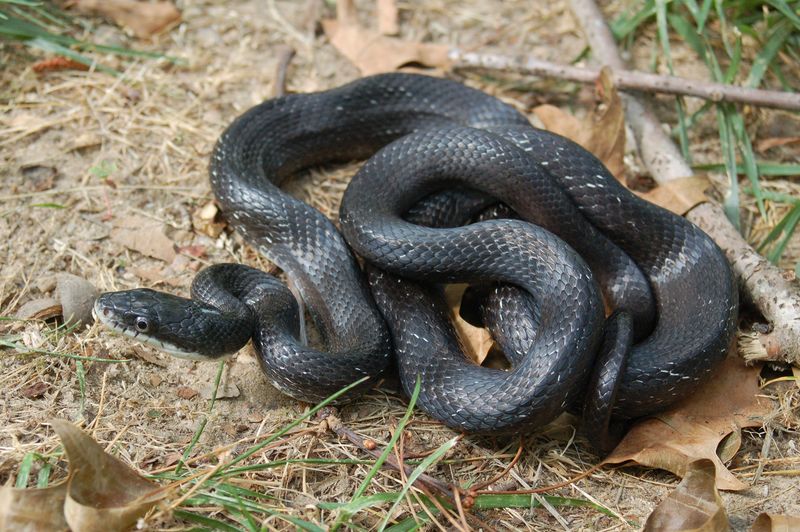
When you spot the snake, the best move is to back off and let it be. The NCWRC describes rat snakes as nonvenomous, but it notes that a restrained one may bite.
Most snakes will move along if given time, so keep pets and children away and do not try to corner or handle it.
Color and a quick glance are poor guides to identity. Rat snakes vary around the state, from glossy black in the mountains and Piedmont to greenish with stripes in parts of the southeastern coastal plain.
If you are not sure what you are looking at, do not step closer to check. The state’s snake guidance is a good place to read up from a distance.
After the snake has gone, return to the practical sequence. Look for rodent signs, and if you find them, deal with food, shelter, and access using the extension advice.
One inspection will not settle every question, and a snake will not reliably protect your shed.
A rat snake is a neighbor passing through, and your shed is the one thing you can actually fix.