
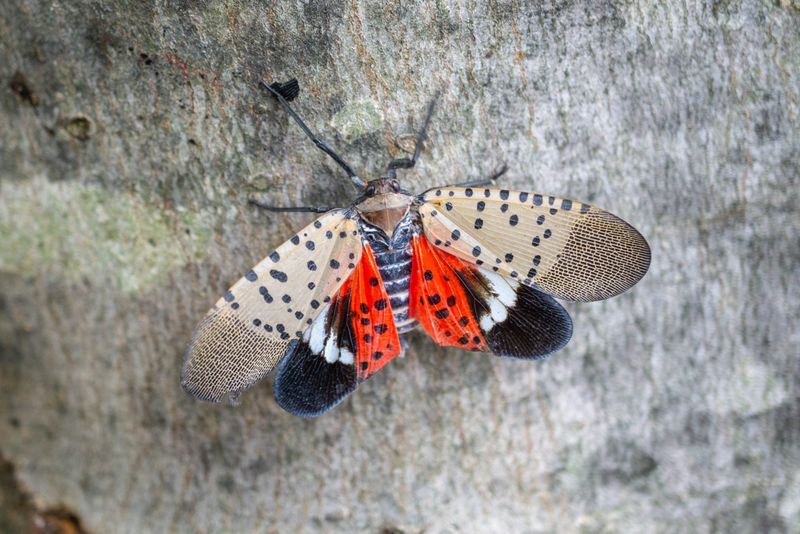
Something colorful and unfamiliar has been landing on fences, tree trunks, and garden plants across parts of North Carolina this summer, and a lot of homeowners want to know what it is. The spotted lanternfly is an invasive pest that has been spreading across the eastern United States, and it showed up in North Carolina sooner than many people expected.
Knowing how to identify it, where to look for the source, and how to respond without overreacting can save you time, money, and a lot of unnecessary worry.
First Confirm That the Insect Is a Spotted Lanternfly
Unfamiliar insects have a way of causing alarm before anyone has a chance to look closely. Before drawing conclusions about what is happening in your yard, take a moment to compare what you are seeing against reliable identification resources, because several common insects can be mistaken for spotted lanternflies at first glance.
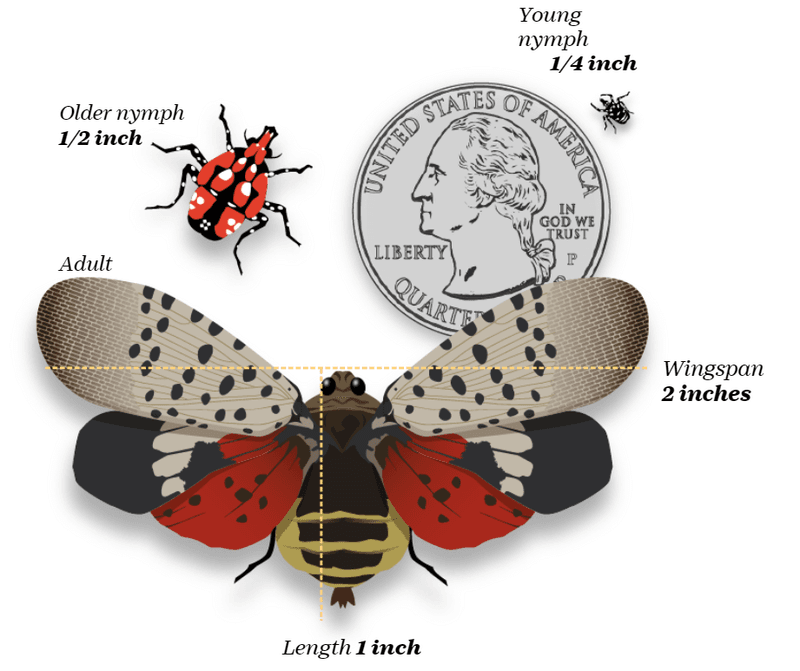
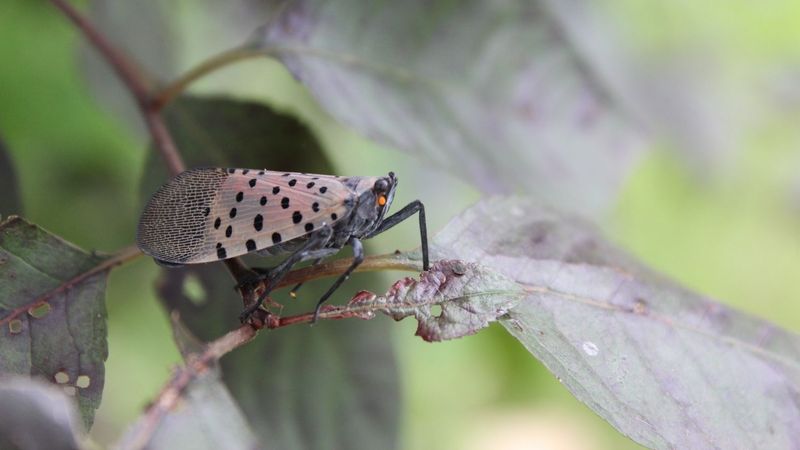
Adult spotted lanternflies are roughly an inch long. Their forewings are grayish with black spots, and when the wings open, you can see bold red patches with black spots on the hindwings.
Younger nymphs look quite different: early-stage nymphs are small and black with white spots, while later-stage nymphs develop red patches. The NC State Extension spotted lanternfly publication includes photographs of each life stage, which makes side-by-side comparison much easier than relying on a text description alone.
If you are not certain after comparing images, photograph the insect next to a coin or ruler so the size is clear in the frame. That kind of reference photo helps extension agents and state officials evaluate a report quickly.
The NCDA&CS spotted lanternfly page explains how to submit a report and what information to include.
A confirmed cluster is worth investigating further, especially when you want to understand where the insects are coming from. A possible or suspected sighting, on the other hand, is a reason to gather more information rather than to act immediately.
The NC State Extension Forestry page on spotted lanternfly is a reliable starting point for identification and next steps. Confirming the insect’s identity before doing anything else keeps your response proportionate to what is actually happening.
Why Tree-of-Heaven Deserves the First Check
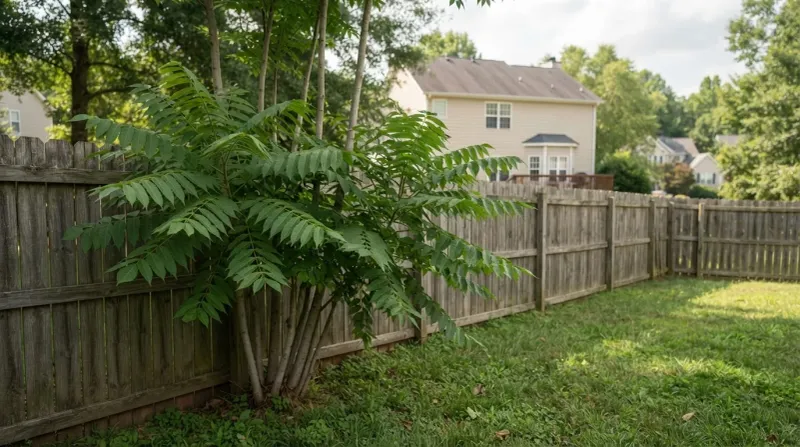
When spotted lanternflies cluster on or near a property, tree-of-heaven is the first place to investigate. Known scientifically as Ailanthus altissima, this invasive tree is the preferred or major host of the spotted lanternfly, and it tends to grow in exactly the kinds of places homeowners often overlook: roadsides, fence lines, vacant lots, disturbed soil along property edges, and the scrubby margins between maintained lawns and wooded areas.
According to NC State Extension’s spotted lanternfly resource page, tree-of-heaven is widespread throughout North Carolina and commonly found in unmanaged areas. That means the tree drawing lanternflies to your yard may not be growing inside your property line at all.
A neighbor’s fence row, a roadside stand, or a wooded edge several lots away can serve as a source.
Preferred-host status matters because spotted lanternflies, especially older nymphs and adults, actively seek out tree-of-heaven when it is available. Research supported through USDA Forest Service spotted lanternfly mitigation work has documented how strongly the pest gravitates toward this host compared with many alternatives.
That preference explains why a large tree-of-heaven nearby can attract and concentrate insects that then spread to other plants in the surrounding area.
Identifying tree-of-heaven in your immediate surroundings is a logical first step after confirming the insect, but finding the tree does not automatically tell you it is the only source, and not finding it in your yard does not mean lanternflies have no explanation. The Penn State spotted lanternfly management guide is clear that the pest can complete its life cycle without tree-of-heaven and can use a broad range of other plants.
Think of tree-of-heaven as the most productive place to start looking, not as proof of what is happening.
Identify Tree-of-Heaven Before You Remove It
A few trees in the North Carolina landscape share enough features with tree-of-heaven that removing the wrong one is a real possibility if you move too quickly. Getting the identification right first protects native and desirable trees and keeps your response targeted.
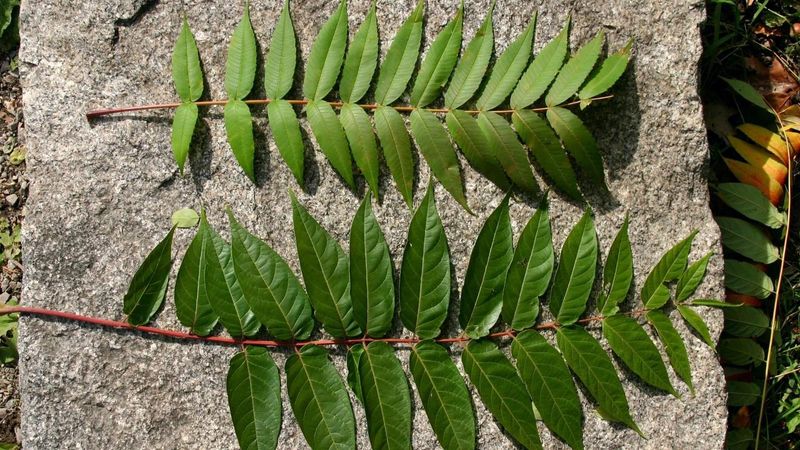
Tree-of-heaven has large compound leaves, often between one and four feet long, with many leaflets arranged along a central stem. Each leaflet has smooth or nearly smooth edges, which is one of the clearest ways to separate it from look-alikes.
Crush a leaf or snap a small twig and you will often notice a strong, unpleasant smell sometimes compared to peanut butter that has gone off. The NC State Extension tree-of-heaven publication walks through these features with photographs and notes other identifying characteristics such as the distinctive notch near the base of each leaflet.
Black walnut and staghorn sumac are two trees that can cause confusion. Black walnut also has large compound leaves with many leaflets, but its leaflets have finely toothed edges, and the tree produces round, husked nuts.
Staghorn sumac has a similar leaf structure but its leaflets are more clearly toothed, and the stems have a fuzzy texture. The University of Minnesota Extension tree-of-heaven identification guide includes side-by-side comparisons that are useful even for North Carolina readers working through an unfamiliar specimen.
Before removing any large tree, especially one near a building, utility line, or property boundary, consult a qualified arborist. Misidentified removals waste effort, and poorly executed cuts on large trees can create safety hazards.
Accurate identification protects you from both mistakes.
Look Beyond the Preferred Host
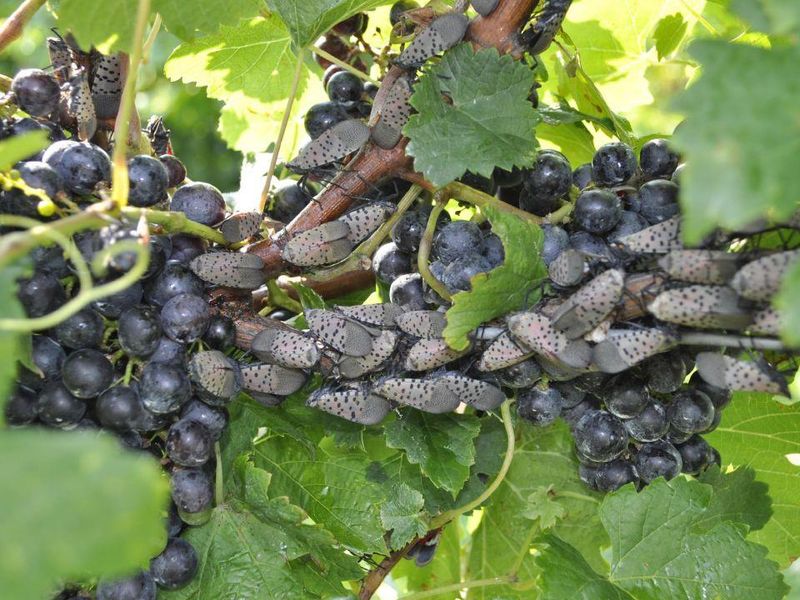
Yards without a single tree-of-heaven can still attract spotted lanternflies, and understanding why helps homeowners investigate more thoroughly rather than assuming the pest has no local explanation.
According to the NC State Extension spotted lanternfly publication, the pest feeds on more than 100 plant species. Younger nymphs in particular use a wider range of hosts before older nymphs and adults narrow their preference toward tree-of-heaven.
Grapes, walnuts, maples, apples, peaches, hops, and various ornamental plants are all documented hosts. If you grow any of these in your yard, they are worth checking even when no tree-of-heaven is visible nearby.
Adult lanternflies are also mobile. They fly, walk, and aggregate in ways that bring them onto home siding, decks, fences, vehicles, and ornamental shrubs well away from their feeding site.
The USDA APHIS spotted lanternfly page notes that adults resting on structures are a common report, especially in late summer and fall when populations are at their highest.
The source of the insects may also lie entirely beyond your property. A wooded edge, a roadside stand of mixed trees, a neighboring yard with unmanaged growth, or a commercial site with landscaping can all support populations that spill into adjacent residential areas.
USDA Forest Service mitigation research has documented how spotted lanternfly populations spread outward from established sites, which means a yard with no obvious host can still sit within the dispersal range of a nearby infestation.
Egg masses extend the search even further. They can appear on bark, wooden fences, grills, outdoor furniture, garden tools, firewood, vehicle wheel wells, and building surfaces.
The NCDA&CS spotted lanternfly page encourages homeowners to check hard surfaces as carefully as they check plants, because egg masses on nonliving objects are easy to miss and equally capable of producing a new generation.
Scout for Insects and Egg Masses by Season
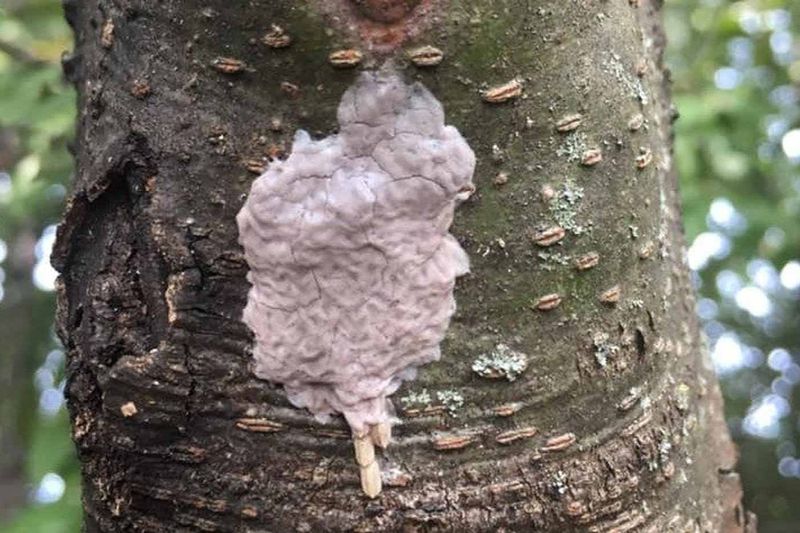
Spotted lanternflies do not look the same or occupy the same surfaces throughout the year, so knowing what to search for in each season makes scouting far more productive.
In North Carolina, immature insects generally become visible from around May through September. Early-stage nymphs are tiny and black with white spots, and they tend to feed on a wide range of plants before maturing.
By midsummer, later-stage nymphs with red patches are easier to spot on stems and leaf undersides. Adults are most active from roughly July through December, with populations peaking in late summer and early fall.
NC State Extension’s spotted lanternfly resource page provides seasonal timing guidance calibrated for North Carolina conditions, though exact timing shifts with weather and location within the state.
Egg masses are the form most likely to persist through winter and into spring. They are grayish or tan, with a texture that resembles dried mud or a smear of putty, and each mass is roughly an inch long containing approximately 30 to 50 eggs.
USDA APHIS notes that egg masses can appear on tree bark, rocks, wooden fences, grills, patio furniture, outdoor toys, vehicles, trailers, and building surfaces. They are present from approximately October through June, which means winter is not a reason to stop checking.
A practical scouting habit is to walk the yard perimeter once a month during the active season, paying attention to tree trunks at eye level and below, the undersides of large leaves, and any hard surfaces where a mud-like smear might blend in. According to NC State Extension, early detection during the nymph stage gives homeowners the most management options before populations build.
Prevent Hitchhiking Before You Leave the Property
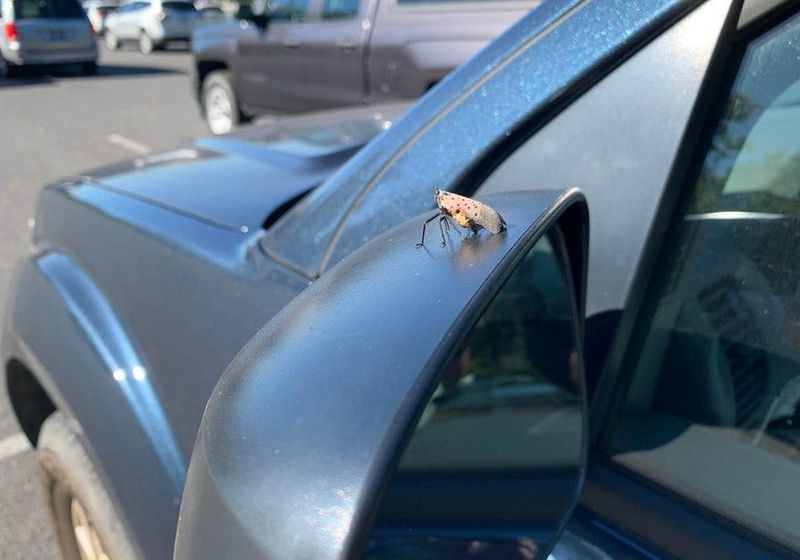
One of the most consequential things a North Carolina homeowner can do has nothing to do with spraying or removing anything. Checking items before they leave the property takes only a few minutes and can prevent spotted lanternflies from spreading to areas where they have not yet established.
Adults can walk onto vehicles, trailers, campers, and outdoor equipment without being noticed, and egg masses laid on smooth surfaces are easy to carry hundreds of miles before anyone realizes they are there. Before loading firewood, moving lawn furniture, trailering a boat, or starting a road trip, check the exterior surfaces of anything that has been sitting outdoors.
Pay particular attention to wheel wells, trailer hitches, the undersides of outdoor furniture, and stacked firewood. The USDA APHIS spotted lanternfly page emphasizes transport prevention as one of the most effective tools available to the public for slowing the pest’s spread.
Reporting guidance in North Carolina depends on where you are. As of February 10, 2026, NCDA&CS confirmed established populations in seven counties: Forsyth, Guilford, Rockingham, Caldwell, Caswell, Davidson, and Rowan.
If you suspect a spotted lanternfly outside those known areas, photograph it with a coin or ruler for scale and follow the current reporting instructions on the NCDA&CS spotted lanternfly page. Residents inside already established counties should check the current state map and guidance, since routine sightings in those areas may not require individual reports.
Conditions are changing as the infestation expands, so the map and instructions posted by NCDA&CS are more reliable than any fixed list in an article.
Match the Response to the Actual Risk
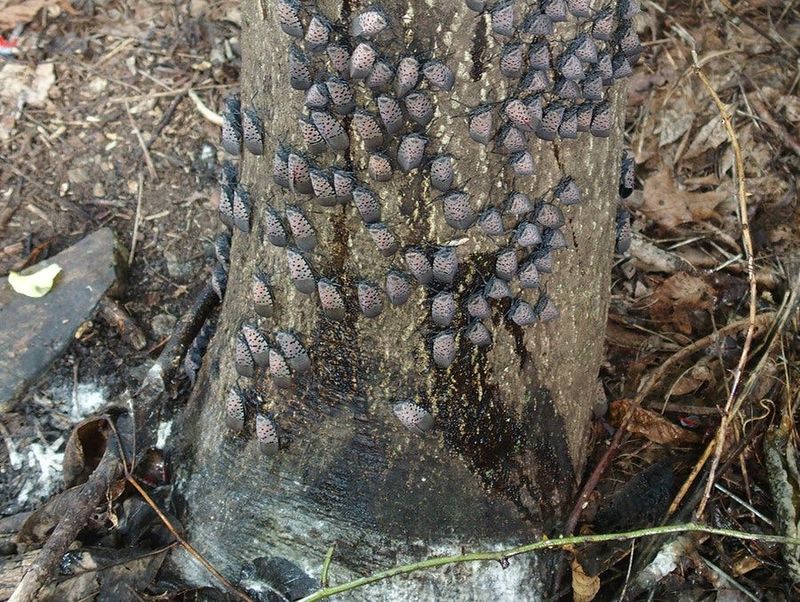
Not every spotted lanternfly sighting calls for immediate action. Understanding what the pest actually does, and what it does not do, helps homeowners decide whether they are dealing with a nuisance or a genuine plant-health concern.
The most immediate problem for most homeowners is honeydew: a sticky, sugary liquid that lanternflies excrete while feeding. Honeydew coats surfaces below infested plants, attracts ants, wasps, bees, and other sugar-feeding insects, and encourages black sooty mold to grow on leaves, furniture, and structures.
According to USDA APHIS, sooty mold can reduce the ability of leaves to photosynthesize, adding a secondary stress on top of direct feeding. The result is often a messy, unpleasant yard rather than a dying landscape.
Light or moderate feeding on established trees and shrubs often does not cause obvious injury. The more defensible concern is repeated, heavy feeding over multiple seasons, particularly on plants already under stress from drought, disease, or poor soil.
The Penn State spotted lanternfly management guide supplement identifies grapevines and young black walnut saplings as among the plants most vulnerable to serious injury from sustained feeding pressure. Spotted lanternflies do not bite or sting people, and they do not damage the structure of buildings.
If tree-of-heaven is present on your property and you want to remove it, plan carefully. Cutting the tree without treating the root system often triggers vigorous resprouting from the base and roots, which can make the problem worse rather than better.
The Penn State spotted lanternfly management guide notes that effective removal typically requires herbicide treatment directed at the root system, and that a qualified arborist or licensed pesticide professional is the appropriate choice for large trees, trees near utilities, or trees in difficult locations. Removing tree-of-heaven may reduce a local food source, but it will not reliably eliminate lanternflies from the area, since the insects can use other hosts and may move in from neighboring properties.
The Penn State guide for landscape professionals reinforces that removal alone is unlikely to consistently reduce lanternfly numbers.
Avoid Unproven Remedies and Wildlife Hazards
Once homeowners confirm spotted lanternflies are present, the impulse to do something immediately is understandable. Some of the most widely shared remedies, though, either lack reliable evidence or can cause harm to other wildlife, so knowing what to avoid is just as useful as knowing what works.
Homemade mixtures get shared quickly online, but Penn State Extension’s page on home remedies for spotted lanternfly is explicit: milkweed, lavender oil, spearmint oil, vinegar, dish soap, and similar mixtures have not been approved for this use and are not supported by reliable evidence. Applying untested substances to plants can harm the plants themselves, kill beneficial insects, and give homeowners a false sense of having addressed the problem.
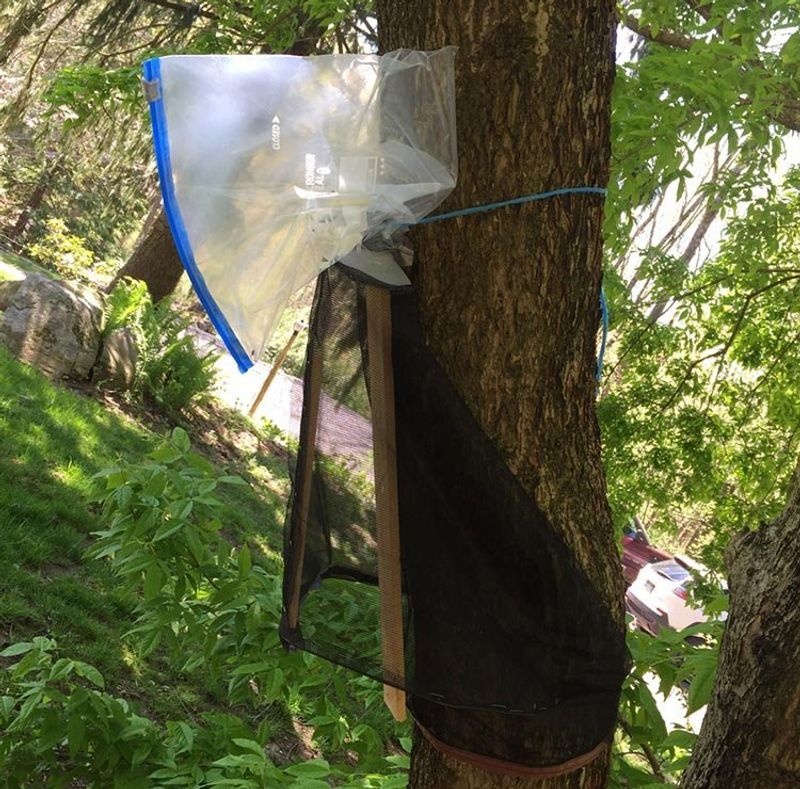
Sticky band traps are a different matter, but they require careful setup. Uncovered sticky bands placed around tree trunks can capture birds, bats, squirrels, lizards, butterflies, and other nontarget wildlife, sometimes fatally.
The Penn State spotted lanternfly management guide recommends circle-style traps as a more appropriate residential option, and any sticky band must have a wildlife barrier, be narrow and tightly fitted to the trunk, and be checked every day. Instructions for building a wildlife barrier are available through Penn State Extension’s sticky band wildlife barrier guide.
Pesticide use requires the same care. Chemical treatment is not automatically warranted for every sighting or every tree.
The EPA’s introduction to pesticide labels explains that the label is a legally binding document, and using any product in a way that contradicts its label is against federal law. Before applying any pesticide, confirm the pest identity, read the full label, check for restrictions on flowering plants and pollinator exposure, and consider whether a certified applicator is the better choice, especially for large trees or systemic treatments.
Broad spraying without a confirmed target and a label that authorizes the use does more harm than good and can create legal liability.
What a Confirmed Cluster Really Tells You
A confirmed cluster of spotted lanternflies in your yard is a signal to investigate, not a reason to clear every tree in sight or reach for the nearest spray can. Three checks cover the most important ground: look for tree-of-heaven on or near the property, inspect other host plants and hard outdoor surfaces for feeding insects or egg masses, and honestly assess whether you are dealing with a sticky nuisance or a sustained plant-health concern.
The NC State Extension Forestry spotted lanternfly page and the Penn State spotted lanternfly management guide both point toward the same practical approach: identify before acting, scout by season, prevent transport, and choose targeted responses that account for pollinators and nontarget wildlife. Panic removal, homemade sprays, and indiscriminate pesticide applications all carry costs that usually outweigh their benefits when the infestation is modest.
What a cluster really tells you is that this pest has arrived in your corner of North Carolina, and the most useful thing you can do is pay attention to what is actually happening in your yard rather than react to what might happen.