
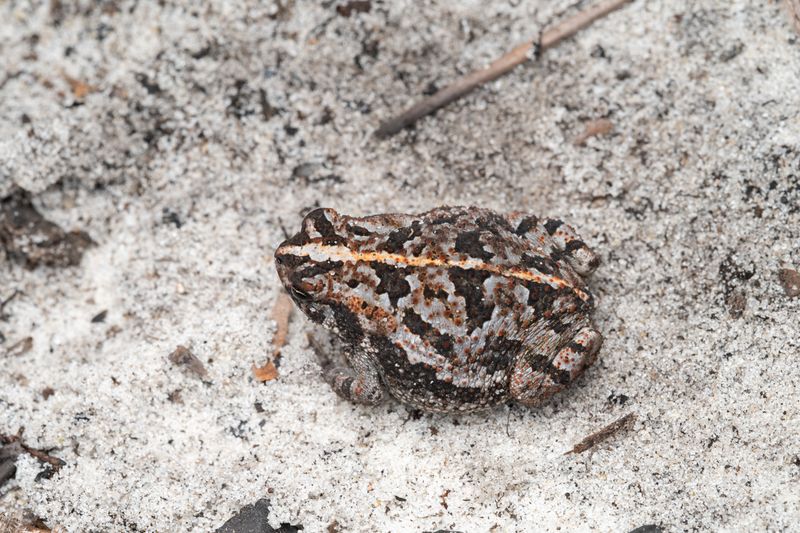
You flip on the porch light after dark and there it is again, a toad sitting right by the door. Seeing the same kind of visitor night after night makes many North Carolina homeowners wonder what it means.
The answer is simpler and calmer than you might expect, and it points to some easy choices for your yard. Here is what toads are probably doing, what we can and cannot know, and what to try.
Nightly visits are a clue, not a diagnosis
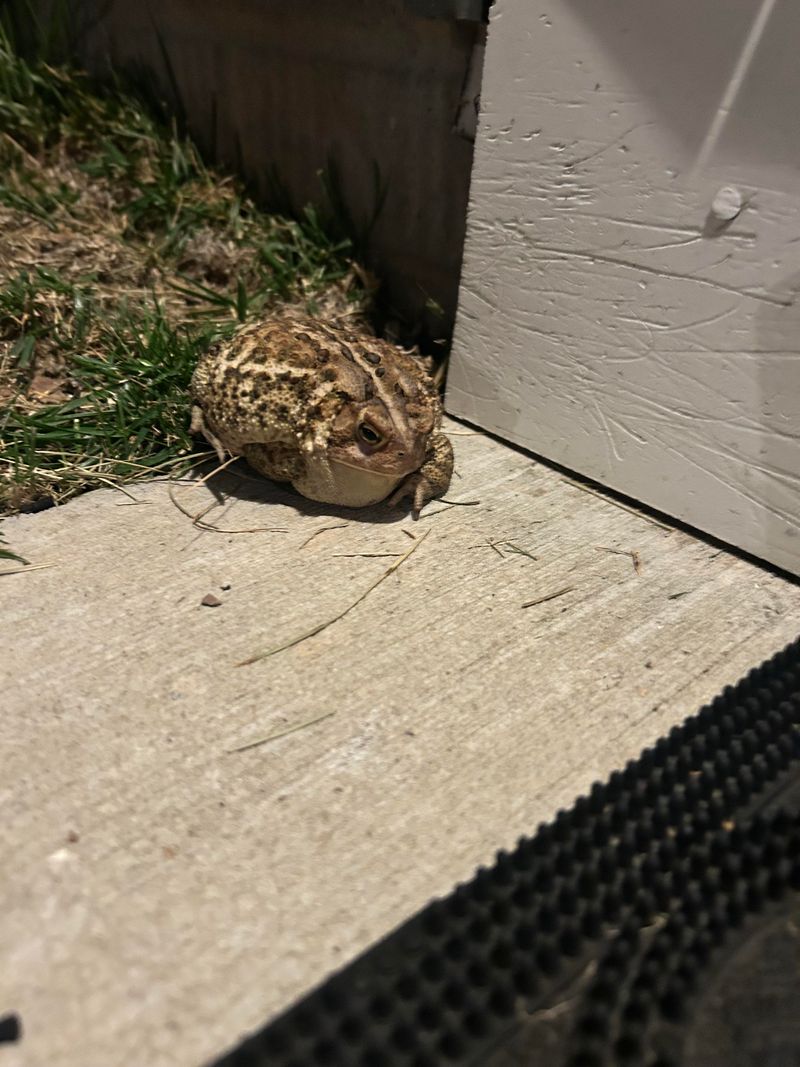
Toads that turn up by your back door every night are showing you that the spot works for them in some way. Their visits fit with a nearby chance to find food or a place to shelter.
They do not tell you exactly why they came, and they do not point to a specific problem with your yard or house.
It also helps to know that North Carolina has four native true toads: the American, Fowler’s, southern, and oak toads. According to the NC Wildlife Resources Commission American toad profile, which one you see depends partly on where you live.
Fowler’s toads are common in many parts of the Piedmont, and American toads turn up in semi-wooded suburban areas within their range. A quick look at a toad by the steps is usually not enough to name the species.
The North Carolina Biodiversity Project describes American toads as mostly nocturnal, so night visits are ordinary behavior. Think of a toad at your door as a wildlife observation, not a home inspection report.
A maintenance issue, like water pooling against the foundation, is something you can see and measure yourself. A toad on the step is not proof of one.
Treat the visits as a friendly clue and look at your yard with curiosity instead of worry.
Why a back door can offer food or shelter
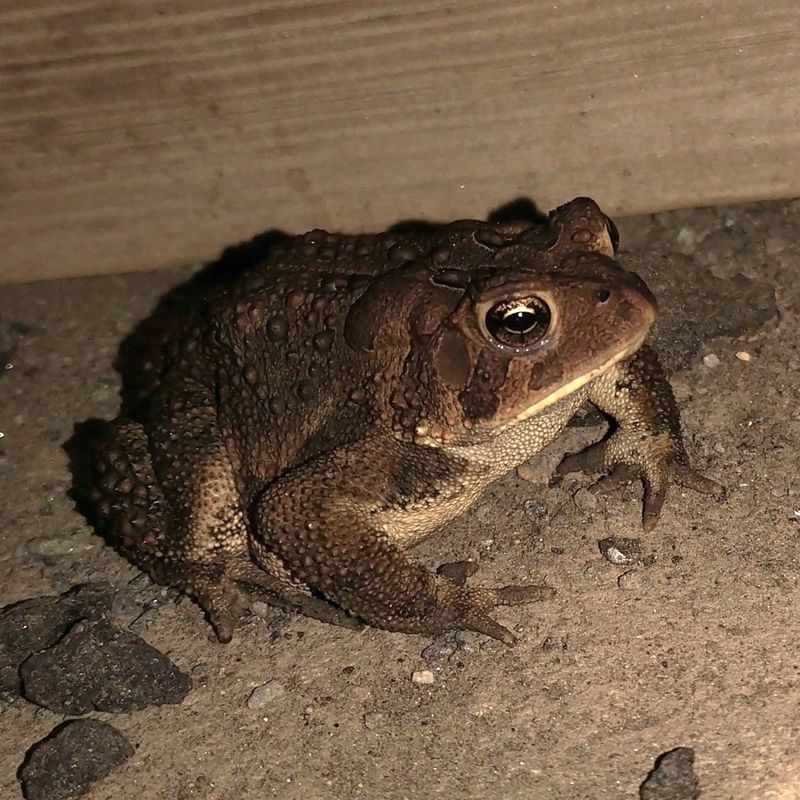
Picture a toad’s night. It wakes as the air cools, hunts for small prey, and needs a damp, sheltered place to rest when the day turns hot.
A back door area can sometimes offer a bit of both.
American toads forage mostly at night. They are most active in rainy weather and warm, moist conditions, and they look for moist cover during hot, dry spells, according to the North Carolina Biodiversity Project.
That could explain why summer nights after rain bring more sightings.
Fowler’s toads keep similar hours. The NC Wildlife Resources Commission describes them as mostly nocturnal, feeding on insects and other small invertebrates.
Any spot where those small animals wander past could interest a hungry toad.
Near a house, that might mean a shaded step, a ledge of mulch, a pot with a bit of cover, or a shadowy corner. But there are other possibilities too.
Your yard may sit next to a woodlot, a creek, or a neighbor’s pond, and the toads may simply be passing through on their usual routes.
Seasons matter as well. Toads are more visible during certain weather and times of year, so a few weeks of nightly visits may fade on their own.
Nobody can read the exact reason from the sighting alone, and that is fine.
Could the porch light be part of the pattern?
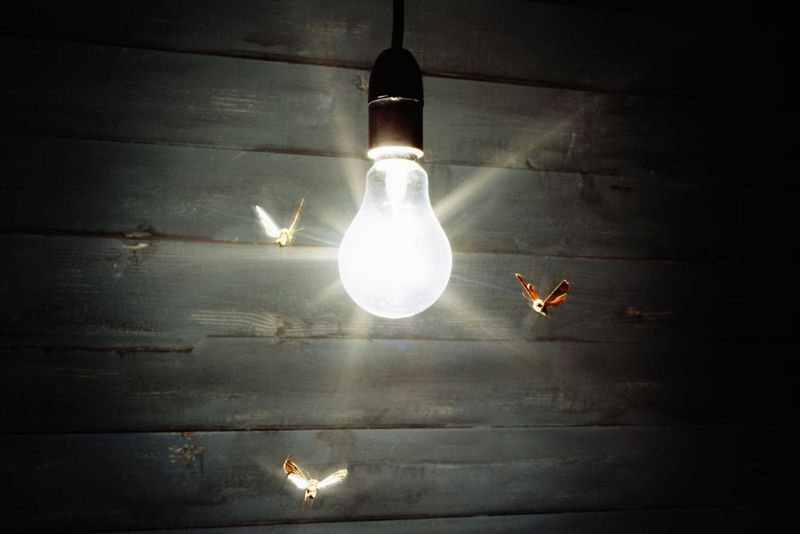
Anyone who has watched a porch light knows moths, beetles, and other bugs gather around it. It is reasonable to guess that a toad might sit nearby and snack on whatever drops down or wanders past.
That idea is plausible, but it is not something anyone has confirmed for North Carolina’s native toads.
The best feeding research on this topic looked at invasive cane toads. In a study of artificial light and food intake in invasive toads, light was linked to how much the toads ate.
Cane toads are a different animal from the American or Fowler’s toads in your yard, so the results are a hint, not an answer.
Also, a toad under a light is not necessarily drawn to the light. It may just be taking advantage of prey in the area.
Amphibians react to artificial light in different ways. One study of the common toad found that light at night changed activity and energy use during breeding, which shows light can affect toads but not in one simple way.
So the porch light could be part of your pattern, or it could have nothing to do with it. If you are curious, you can test it gently, which section six explains.
A broad diet is not a pest-control guarantee
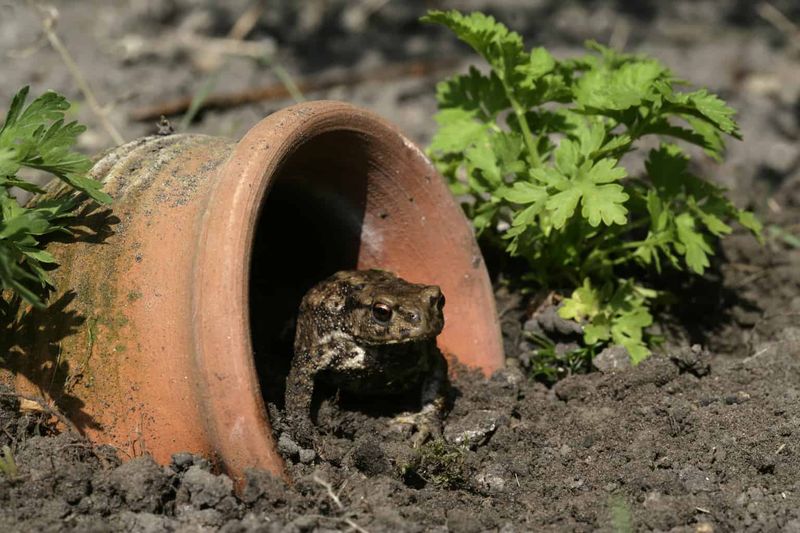
Toads are opportunistic hunters. The NC Wildlife Resources Commission lists insects and other small invertebrates as Fowler’s toad food, and American toads eat a similar mix of ground-dwelling bugs, worms, and other small creatures, as the North Carolina Biodiversity Project notes.
That sounds like good news for a garden, and it can be nice to have them around. But a wide menu is not the same as pest control.
A toad eats what it happens upon, which may include harmless or helpful insects along with the ones you dislike.
One or two toads by your door do not tell you they are protecting your tomatoes or beans from damage. Nothing in the sources shows that a few toads will control a particular pest, so it is best not to count on them for that job.
If you fight a specific problem, such as chewed leaves, look at the plant and the actual culprit first. Toads can be a pleasant bonus in the mix, one small part of a lively yard, not a substitute for other steps you choose.
Keeping a toad-friendly yard is worthwhile for its own sake. Enjoy them as neighbors and let any pest benefits be a happy extra.
Check for water buildup, not for proof from the toads

A moist, shady hideout is good for amphibians. Persistent water or lots of moisture pressed against a house is a different matter.
Those two things are easy to mix up, and toads by the door cannot tell you which one you have.
So instead of reading the toads, read the ground. On a dry afternoon and again after a good rain, walk along the foundation.
Look for standing water, soil that stays soggy, gutters or downspouts that dump next to the wall, and heavy clutter or debris piled against the house.
NC State Extension, in its guide on millipedes in turf, advises reducing excess moisture and hiding places near foundations and keeping water from accumulating there. That advice is about house upkeep, and it fits whether or not toads are around.
The same organization’s backyard reptiles and amphibians guide points to cover like logs as helpful for wildlife, which is why the goal is balance. Keep the house edge tidy and well drained, and offer wildlife cover somewhere else.
If you find water that does not drain, that is worth fixing on its own merits. If you find nothing, the toads are probably just enjoying the neighborhood, and there is no need to change anything.
Do not wet the soil next to the house to please them.
Try small changes while keeping refuge away from the house
If you would rather not step around toads every night, a few gentle changes are worth a try. None of them is guaranteed, and none is meant to push toads out of your yard.
Start with the light. Oregon State Extension suggests in its advice on frogs on a porch that turning off the light can help when frogs gather to feed on light-drawn insects.
That is general guidance, not a North Carolina trial, so treat it as an experiment. You can switch the porch light off when you do not need it, or use a motion-activated fixture instead.
Give it a couple of weeks and see what you notice.
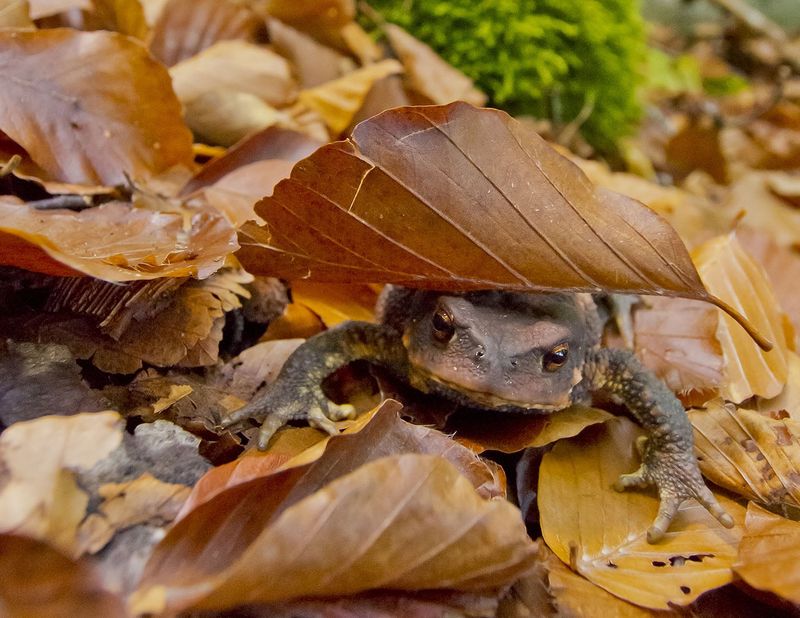
Next, think about where toads can rest. Toads like cool, damp, sheltered places, so give them one well away from the foundation.
Natural leaf litter under a tree or a carefully placed log pile in a shady corner both work. NC State Extension notes that logs and similar cover are useful to reptiles and amphibians.
Keep that refuge dry enough to be safe for the house and away from the walls. Never keep the house edge wet on purpose.
Please skip capturing or moving toads. If one is in a spot where you must touch it, handle it briefly and gently, and make sure your hands are clean of soap, lotion, and repellent.
Limit chemical exposure and protect pets
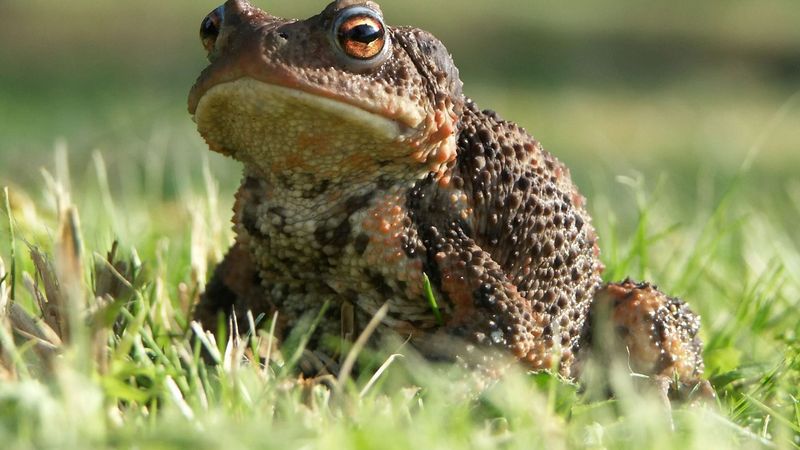
Toads breathe and drink partly through their skin, which makes chemicals a real concern for them. EPA researchers have studied this in frogs, and their work on pesticide uptake shows that pesticides can be absorbed through amphibian skin.
The simple takeaway is to use pesticides only when you truly need them, follow the label exactly, and never spray an animal or its shelter.
Hands matter too. NC State Extension’s backyard amphibian guidance warns that soap, lotion, or insect repellent on your hands can expose an amphibian to chemicals.
That is one more reason to enjoy toads from a distance and skip casual handling.
Pets deserve a little attention as well. Toads have defensive skin secretions, and risk depends on the species and how much exposure happens.
The Merck Veterinary Manual notes that the most serious U.S. problems come from large cane toads in places like Florida, Hawaii, and Texas.
That does not mean a North Carolina toad is always harmless. Keep dogs and cats from mouthing toads, especially on evening potty trips.
If your pet bites or swallows one, call your veterinarian for advice, and do so promptly if symptoms show up. Most nights, though, a toad by the door is just a quiet neighbor.
A toad on the step is a small sign that your yard still has room for wildlife, and that is worth a moment of appreciation.