
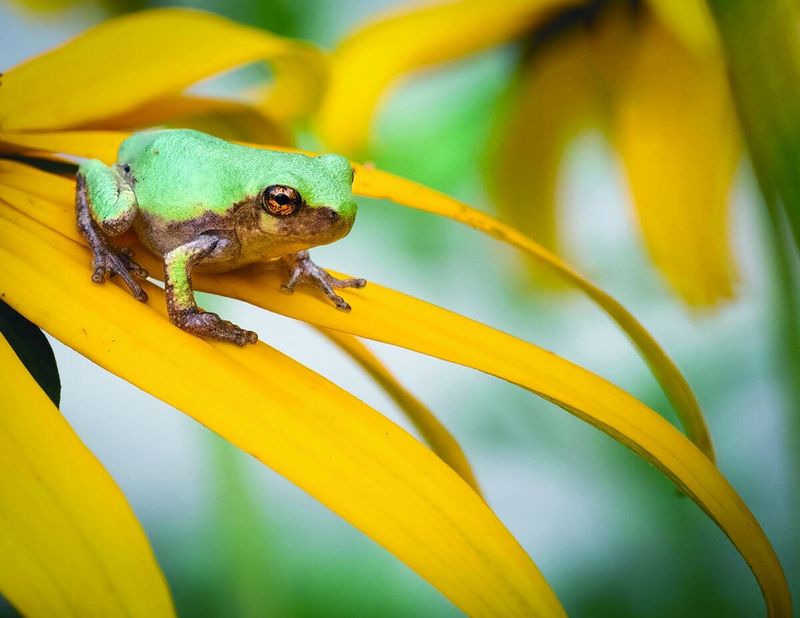
Spotting a small frog clinging to a tomato cage or tucked behind a pot on a warm July evening can stop you mid-step. Most California homeowners assume it means something dramatic, like a soggy yard, a bug explosion, or a breeding colony moving in.
The reality is quieter and more interesting than that. A tree frog showing up in your garden is a clue about a very specific pocket of your yard, and knowing how to read that clue can help you become a better steward of the wildlife already living alongside you.
A Summer Frog Is Reading Your Yard’s Microclimate
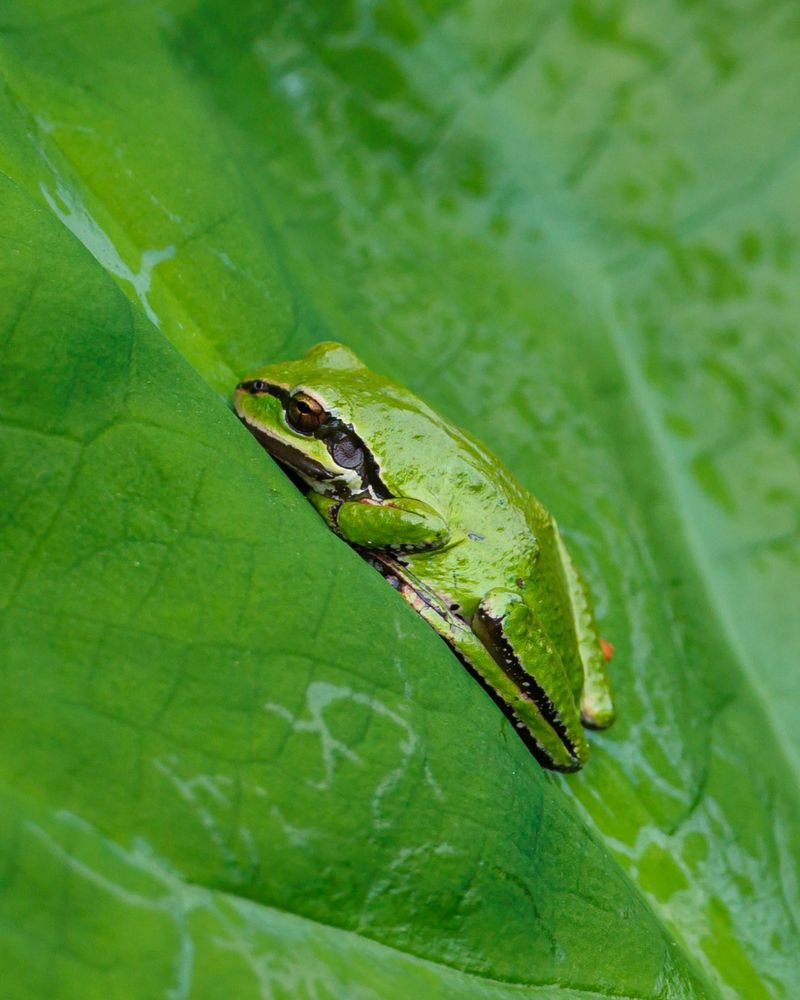
Finding a frog wedged under a dripping irrigation emitter or tucked behind a shaded planter is not a sign that your whole yard has turned into a swamp. What it usually means is that one small corner of your garden happens to check several boxes at once: some moisture nearby, a cool shaded spot to rest, enough vegetation or debris for cover, and enough insects and other small invertebrates to make foraging worthwhile.
Frogs are selective about where they settle, and a sighting tells you more about that specific microhabitat than about your yard as a whole.
California’s native treefrogs and chorus frogs spend most of their adult lives on land, not in water. The California Department of Fish and Wildlife’s Pacific treefrog account notes that adults can range nearly a kilometer from breeding sites and use terrestrial cover throughout the nonbreeding season.
That means a frog in your garden may have walked or hopped in from a creek, a neighbor’s pond, or a drainage channel several lots away. Breeding does not have to be happening in your yard for a frog to rest there.
The key distinction worth holding onto: a localized suitable refuge is not the same as chronically wet soil, poor drainage, or a pest outbreak. A frog may appear because a single drip valve keeps one bed consistently damp, because a stack of flagstone stays cool through the afternoon, or simply because moths gather near your back porch light and the hunting is good.
None of those scenarios requires you to rethink your irrigation system or call a pest-control company. Instead, treat the sighting as an observation, a small data point about which corner of your garden has quietly become habitable for California wildlife.
The California Species Behind the Name Matter
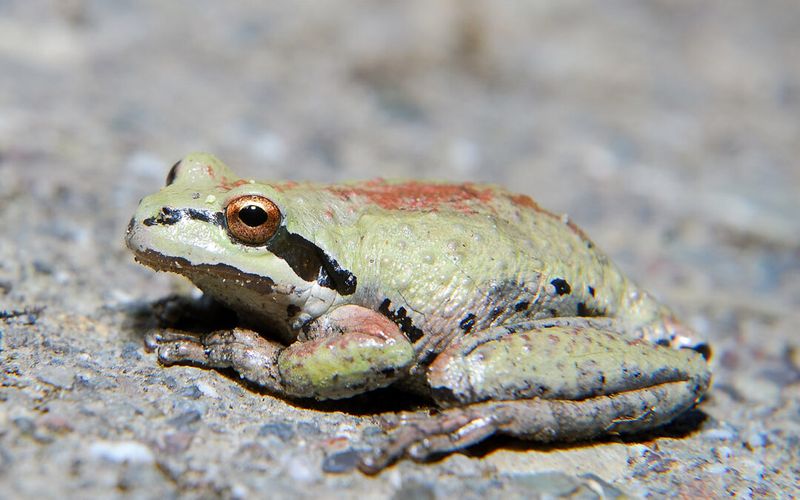
Calling every small frog you find in a California yard a “Pacific treefrog” is an easy habit to fall into, but the name covers more complexity than it suggests. Taxonomy has shifted in recent decades, and what was once grouped under a single widespread species has been reclassified.
CDFW’s wildlife habitat account notes that older life-history information for the former Pacific treefrog grouping requires updating, and that the current recognized range of Pseudacris regilla in California is now largely limited to the northwestern part of the state.
Southern California homeowners are more likely to encounter the California treefrog, Pseudacris cadaverina, whose distribution is patchier and tied more closely to rocky stream corridors, canyon pools, and quiet water along the coast and inland ranges. The CDFW California treefrog account describes adults as strongly associated with moisture and prone to rapid water loss under hot, dry conditions, which helps explain why summer sightings in Southern California yards tend to cluster near irrigated beds, shaded masonry, or properties close to a natural drainage.
Location changes the reasonable interpretation of a sighting considerably. A frog spotted in a Central Valley garden, a Sierra foothill yard, a coastal San Diego canyon neighborhood, or a high-desert property near Joshua Tree is almost certainly a different species with different habitat needs and different seasonal behavior.
Rather than defaulting to a single common name, use a combination of clues: the frog’s coloration, the presence or absence of a dark eye stripe, the call if you can hear it at night, and your proximity to water or rocky terrain. California’s CDFW wildlife habitat resources and regional herpetological guides can help narrow down what you are actually looking at, which matters if you want to make habitat improvements that genuinely suit the animal sharing your yard.
What Frogs Actually Eat—and What They Cannot Promise
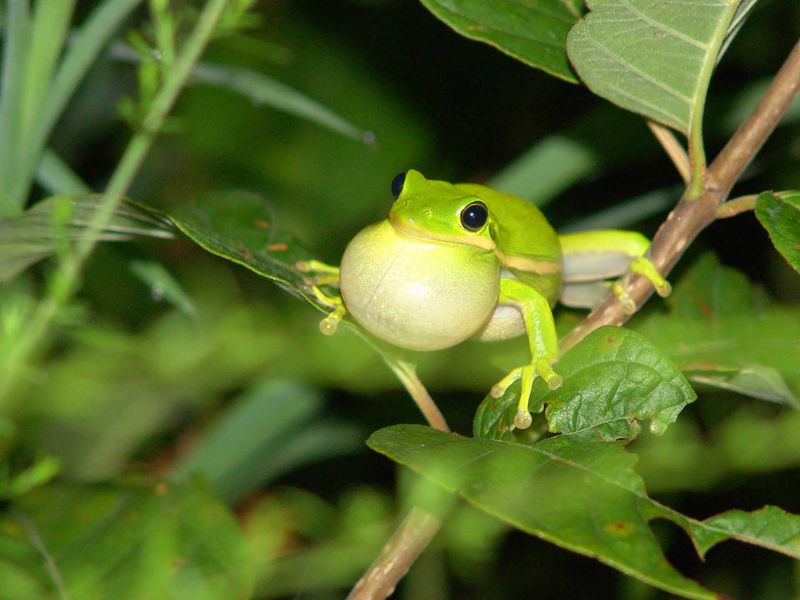
Adult treefrogs and chorus frogs are generalist predators, which is a polite way of saying they eat whatever small invertebrate crosses their path at the right moment. Documented prey from California populations includes spiders, caterpillars, grasshoppers, ants, beetles, moths, slugs, isopods, centipedes, and earthworms.
A USGS diet study of three California anuran species from the Cache Creek watershed found a similarly broad and opportunistic prey profile, confirming that these frogs consume a wide range of terrestrial arthropods rather than targeting any single garden pest.
Most of that eating happens from late afternoon into the night. Frogs are ectotherms, meaning they rely on environmental temperature to regulate their body functions, and California’s summer heat pushes activity toward cooler evening hours.
Irrigated planting beds, shaded borders, and areas where night-flying insects gather can all concentrate prey and make foraging more efficient. Outdoor lighting may alter insect activity in ways that affect prey availability, but the research supports frog foraging and insect consumption more directly than it supports any guaranteed “porch-light buffet” effect, so treat that connection as plausible rather than proven.
The harder boundary to hold onto is this: a frog eating insects in your garden does not mean your garden has a damaging pest population, and having frogs present does not guarantee that any particular pest will drop below harmful levels. UC IPM’s integrated pest management guidance frames frogs and other natural predators as one component of a broader management approach, not a replacement for monitoring, targeted controls, or cultural practices.
Some of the invertebrates a frog catches may be harmless decomposers or even beneficial predators themselves. Frogs belong in a wildlife-friendly yard because they are part of a functioning ecosystem, not because they will reliably solve a specific pest problem you are already dealing with.
Give Frogs Cover Without Turning the Yard Into a Wet Zone
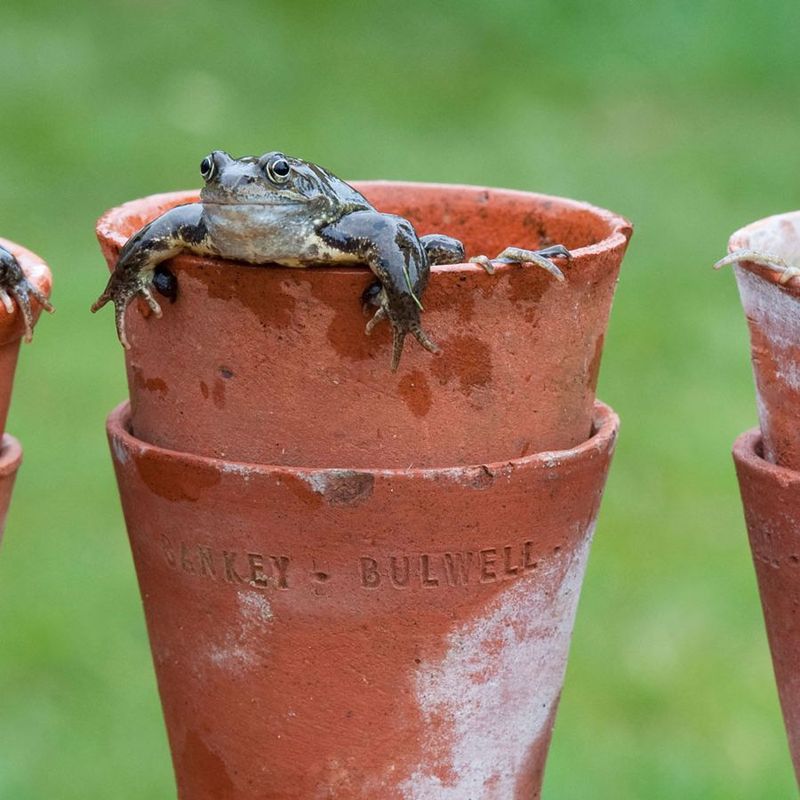
Improving frog habitat in a California yard does not require a complete landscape overhaul or a permanently soggy garden bed. Structure matters more than moisture volume.
Oregon State University Extension’s Pacific chorus frog habitat guide recommends dense vegetation, tall grasses, shrubs, leaf litter, logs, rocks, and brush piles as the building blocks of usable cover. A shaded corner with a few flat stones, a pile of bark pieces near a drip-irrigated bed, or an undisturbed patch of native groundcover can all serve as daytime refuges without requiring you to keep the whole yard wet through California’s dry summer months.
Plant selection is where local guidance becomes essential. California’s Department of Water Resources points out that native and drought-tolerant plantings can reduce maintenance demands while supporting native insects and wildlife.
The key qualifier is that plant choices must match your specific climate zone, water availability, and yard conditions rather than a generic statewide list. A sedge that thrives in a foggy coastal garden may struggle in an inland valley, and a shrub well suited to a San Diego canyon yard may be inappropriate for a Sierra foothill property.
Tools like WUCOLS (Water Use Classification of Landscape Species) and local native-plant societies can help you match plants to your actual conditions.
DWR’s water-efficient landscaping guidance also reinforces that the goal is targeted moisture in the right spots, not broad overwatering. Before adding brush piles, dense vegetation clusters, or other structural cover near your home, check applicable local defensible-space and fire-safety requirements.
California’s wildland-urban interface rules vary by jurisdiction and fire hazard severity zone, so what qualifies as beneficial wildlife cover in one neighborhood may conflict with clearance requirements in another. Your local fire authority or Cal Fire can clarify what applies to your specific address.
A Pond Can Help Only When It Fits the Site
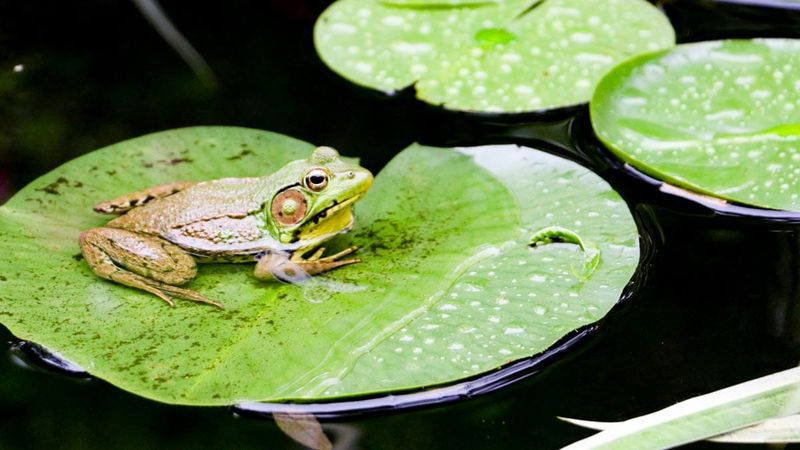
Adding a pond is often the first idea homeowners reach for when they want to encourage frogs, but water features come with real decisions that vary by property, species, and season. The OSU Extension chorus frog guide recommends ponds that include aquatic plants providing cover, oxygen, egg-attachment sites, and habitat for the insects and spiders that frogs eat.
Fish-free water is strongly preferred because fish prey on tadpoles and eggs, and the guide specifically notes that temporary ponds can benefit chorus frogs because fish and bullfrogs are less likely to persist in ponds that dry seasonally.
That last point matters for California homeowners: not every frog-friendly pond needs to stay full through August. Some chorus frog species breed in temporary or seasonal water and complete their larval development before the pond dries.
Others require longer hydroperiods. The right answer depends on which species live in your area, your local rainfall and irrigation patterns, and whether you can realistically maintain water quality through the summer without creating standing water that breeds mosquitoes.
Mosquito management is a genuine concern for any residential water feature. Shallow, stagnant water without circulation or biological control can become a breeding site within days.
Options include mosquito dunks containing Bacillus thuringiensis israelensis, a recirculating pump to keep water moving, or a pond design that includes enough aquatic plant cover and predatory invertebrates to suppress mosquito larvae naturally. Child and pet safety also require attention: even a shallow pond is a hazard for young children and should be fenced or covered when not supervised.
Local water districts and municipalities may also have requirements or restrictions on residential water features, so check before breaking ground. A pond added thoughtfully, with plants, escape ramps, no fish, and a maintenance plan, can be a genuine asset for local amphibians.
One added as an afterthought can create more problems than it solves.
Protect Frogs From Harmful Yard Practices
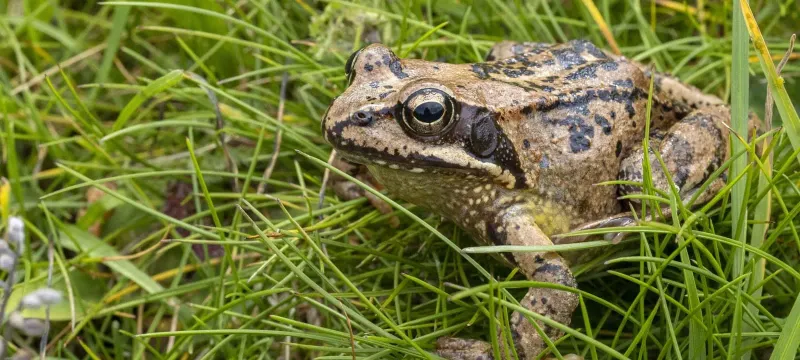
Amphibian skin is permeable, which means frogs absorb water and dissolved substances directly through their bodies. Pesticides, fertilizer residues, and contaminated runoff that would barely register as a concern for a bird or a mammal can be acutely harmful to a frog crossing a treated lawn or sheltering under a sprayed shrub.
UC IPM’s “Keep Our Water Clean” guidance advises limiting pesticide use around the home and landscape, choosing nonchemical or least-toxic methods where practical, preventing runoff into storm drains and waterways, and following product labels and California regulatory requirements. Pyrethroid insecticides receive specific mention as highly toxic to aquatic animals, and even small amounts carried by irrigation or rain can reach drainage channels connected to natural habitat.
Practical alternatives include hand-removal of large pests, targeted spot treatments rather than broad applications, adjusting irrigation timing to reduce conditions that favor fungal disease and pest buildup, and accepting that a wildlife-friendly yard will carry some insect activity by design. Not every pesticide carries the same risk, but the safest approach around known frog habitat is to treat the immediate area as a buffer zone and apply any product only where genuinely needed, following label directions precisely.
Moving frogs, tadpoles, or eggs from another location into your yard is one of the most well-intentioned mistakes a homeowner can make. USGS amphibian disease guidance explains that relocation can spread pathogens including chytrid fungus, which has contributed to amphibian population declines globally, and can place animals in unsuitable or ecologically damaging locations.
OSU Extension also advises against purchasing or collecting frog eggs for home ponds, for the same disease and ecological reasons. Allow local frogs to find your yard on their own terms.
American bullfrogs deserve a separate note. They are nonnative in California, prey on native frogs, birds, and small mammals, and can carry chytrid fungus.
Do not identify a suspected bullfrog by size alone. CDFW’s invasive-species page for American bullfrogs provides identification characteristics and asks residents to report sightings through the department’s reporting system rather than attempting to capture or remove the animal without guidance.
Let the Frog Be a Clue, Not a Pest-Control Plan
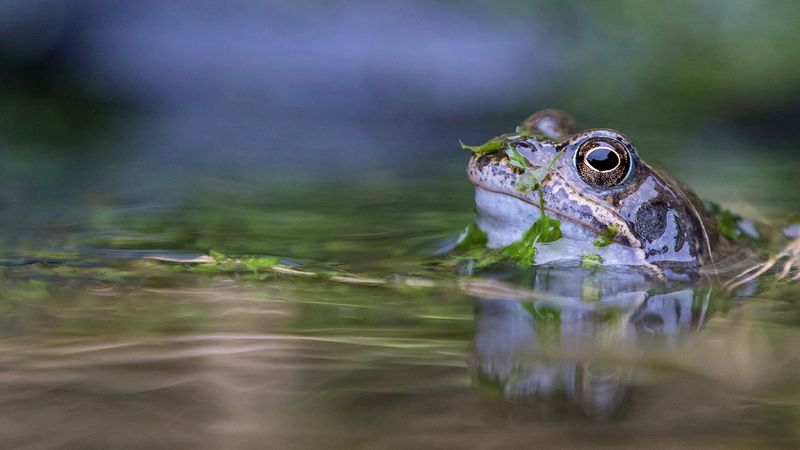
When a frog appears in your California garden this summer, the most useful first move is simple observation. Note where it is sitting, what time of day or evening you spotted it, and what the immediate surroundings look like.
Is there a drip emitter nearby? Dense low-growing plants?
A shaded rock surface that stays cool? Those details tell you where a functional pocket of habitat already exists, and that pocket is worth protecting rather than disrupting.
From there, the action list is shorter than most homeowners expect. Preserve the cover that already works.
Choose locally appropriate native or drought-tolerant plants to extend that cover without overwatering. Reduce pesticide use in and around that area.
If you want to add water, evaluate whether your site, your maintenance capacity, and your local rules make a pond realistic. Address actual garden pests through monitoring and targeted integrated management rather than assuming the frog will handle it.
UC IPM’s integrated management framework is a practical starting point for that last step.
A summer frog sighting cannot diagnose poor drainage, confirm a pest infestation, or promise healthier plants ahead. What it can do is confirm that one corner of your yard has quietly become a place where California wildlife chooses to spend time.
CDFW’s habitat accounts remind us that these animals navigate real distances across fragmented urban landscapes to find the conditions they need. A yard that earns a frog’s confidence, even in one small shaded corner, is doing something right.