

Spotting a fox trotting through your yard once is a treat. Seeing the same animal cross the same stretch of grass three mornings in a row is something else entirely, and it raises a fair question: what is drawing it back?
The answer usually has less to do with the fox and more to do with what your property or neighborhood is quietly offering. Understanding that connection can help you protect your pets, make smarter yard decisions, and share the landscape with wildlife without unnecessary conflict.
Repeated sightings usually mark a usable neighborhood route
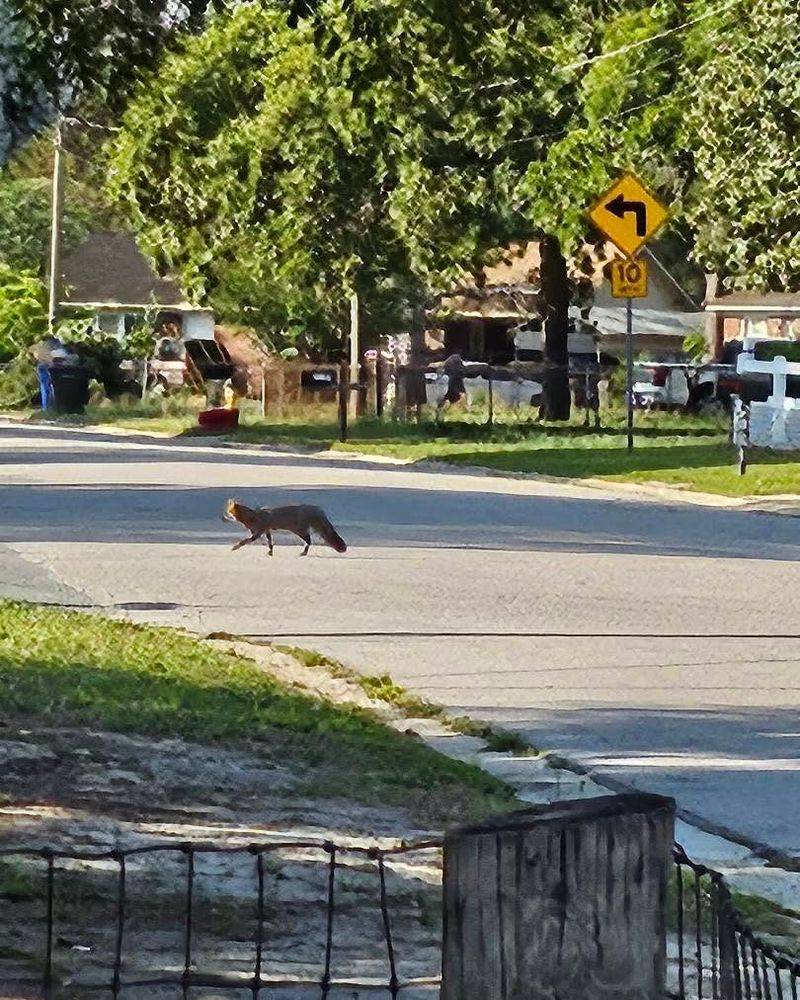
A fox that crosses your yard multiple times in a week is almost certainly not lost. Foxes are territorial and routinely patrol defined areas in search of food, shelter, and passage between habitat patches.
When one keeps appearing in the same corner of your property, the most grounded explanation is that your yard or the surrounding block has become a useful stop along a regular circuit.
NC Wildlife’s species profile for red foxes notes that residential areas can supply both food and cover, making neighborhoods genuinely functional habitat rather than accidental detours. A yard with bird feeders, fruit trees, dense shrubs, or an open crawl space is not just scenery to a fox; it is a resource map.
The animal reads that map and returns when the resources hold.
What a sighting cannot do is tell you exactly which resource matters most. The fox may be hunting mice near your compost, cutting through to reach a wooded lot two streets over, or simply following a path it established weeks ago when prey was briefly abundant.
Urban fox research consistently shows that individual animals use broad home ranges that overlap multiple residential properties, so the “cause” of a crossing may lie on a neighboring lot as easily as on yours.
Replacing the idea of a random visit with the idea of a purposeful route changes how you approach the problem. Rather than waiting for the fox to show up and reacting, you can audit the landscape for the combination of food, cover, and connected space that makes your yard worth including.
NC State Extension’s wildlife guidance frames this kind of habitat assessment as the practical first step before any control action. The fox is giving you information every time it crosses; the useful question is what that crossing is pointing toward.
Which fox is crossing the yard?
Before drawing conclusions about what your yard is offering, spend a moment on identification. North Carolina is home to two fox species, and they behave differently enough that knowing which one you are watching can sharpen your habitat read considerably.
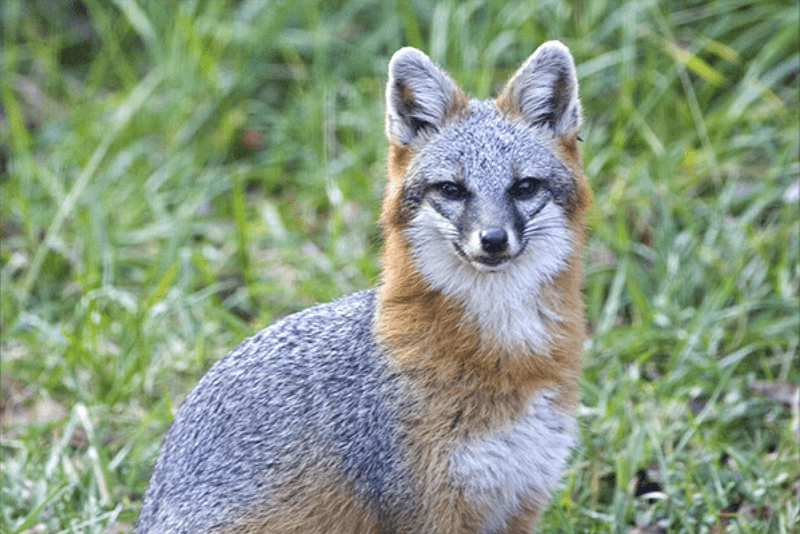
The gray fox is the state’s only native fox. According to NC Wildlife’s mammal guide, gray foxes are common in suburban and semi-rural areas and are the species most likely to be denning in wooded residential neighborhoods.
A reliable field mark is the dark stripe running along the top of the tail, ending in a black tip. The coat is salt-and-pepper gray on the back and sides, with rusty-orange patches on the neck, flanks, and legs.
Gray foxes also have a distinctive ability that red foxes lack: they can climb trees, which means a gray fox may be accessing cover or food sources that seem out of reach.
Red foxes are also established across North Carolina and commonly use developed landscapes. They tend to favor open edges, fields, and mixed-habitat areas more than dense woods.
The classic red fox has a bright rusty-orange coat, white-tipped tail, and black legs, though color variations exist. Rutgers Extension’s fox reference notes that red foxes are highly adaptable and thrive in suburban settings where open patches alternate with cover.
The National Park Service’s gray fox profile points out that gray foxes strongly prefer brushy or wooded terrain, while red foxes more readily use open ground. That difference matters when you look at your yard.
A gray fox appearing repeatedly suggests your property may offer dense cover or a wooded corridor. A red fox may be more interested in open lawn edges, meadow strips, or a nearby field.
Neither identification proves what attracted the animal, but it focuses the habitat questions you should be asking next.
Food may be arriving before the fox does
Foxes are opportunistic eaters, and their diet is broader than most homeowners expect. Small mammals such as mice and voles are well-known prey, but NC Wildlife’s mammal guide documents that foxes also consume rabbits, birds, eggs, insects, reptiles, fruit, nuts, and plant material.
Gray foxes in particular eat substantial amounts of plant matter and invertebrates alongside small mammals, so a yard with a blackberry patch and an active insect population can be just as appealing as one with a heavy mouse presence.
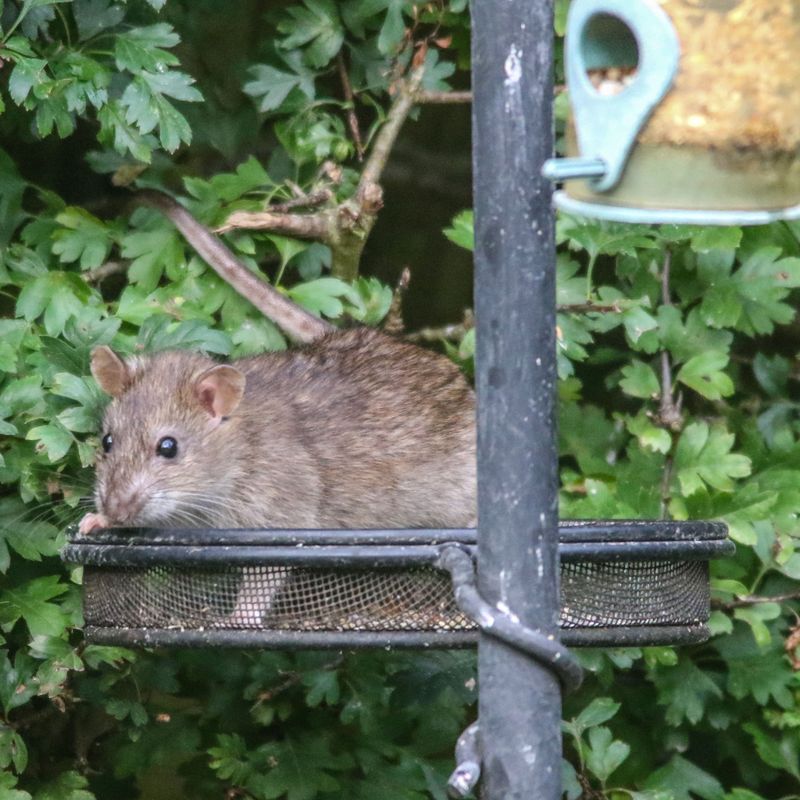
One indirect pathway that surprises many homeowners is the bird feeder connection. Spilled birdseed accumulates on the ground and draws mice, sparrows, and squirrels.
Those animals, in turn, may attract a fox that never touches the seed itself. NC Wildlife’s conflict prevention guidance specifically identifies bird feeders as a potential indirect attractant and recommends cleaning spilled seed regularly as a first-line management step.
Other food sources worth checking include outdoor pet bowls left out overnight, unsecured trash cans, fallen fruit under apple, pear, or fig trees, compost bins that contain meat or fish scraps, and any poultry or rabbit feed stored in open containers. NC State Extension’s wildlife management chapter lists accessible food as the primary driver of wildlife conflict near homes.
Penn State Extension’s guidance on urban poultry reinforces that unsecured feed is a reliable attractant for predators, including foxes.
Repeated sightings do not prove that your yard has a rodent infestation. The fox may be responding to fruit, insects, garbage, or prey on a neighboring property.
The practical move is to walk the yard and identify which of these food sources are actually present and accessible, then address the easiest ones first. Removing an attractant does not guarantee the fox will stop crossing, but it does reduce one reason to return and lowers the overall conflict risk.
Cover and connections can make the yard worth crossing
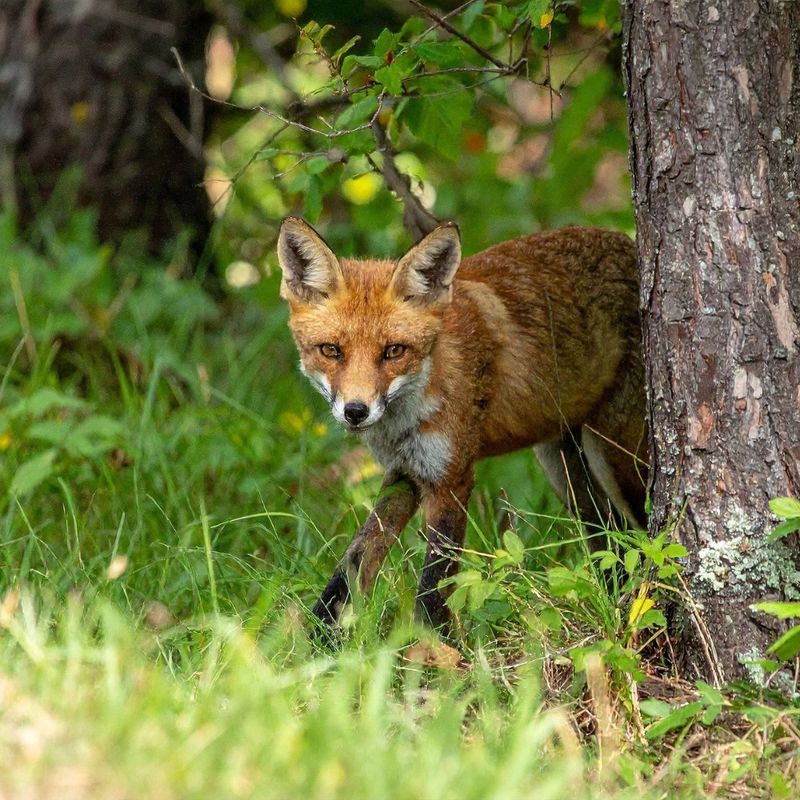
Food is only half the equation. The structural features of a yard, meaning the places that offer shade, concealment, and protected rest, can make a property worth visiting even when food is minimal.
Foxes are cautious animals that prefer to move through connected cover rather than cross wide-open ground, so a yard with dense plantings, stacked materials, or accessible enclosed spaces may serve as a travel corridor whether or not it holds prey.
Common cover features include dense ornamental shrubs planted along fences, brush piles, wood stacks, sheds with open gaps at the base, crawl spaces with loose or missing screens, porches and decks with accessible openings underneath, and drainage culverts or ditches with heavy vegetation. NC Wildlife’s red fox profile notes that sheltered spaces near homes can serve as both resting sites and denning locations.
A single open gap under a back porch may look minor from the outside, but to a fox it represents a dry, protected space that is worth checking repeatedly.
The habitat picture extends beyond your property line. Urban fox habitat research shows that foxes navigate neighborhoods as connected systems, using greenway corridors, drainage easements, wooded lot edges, and even fence lines as movement pathways.
Your yard may be one segment of a longer route that links a forested patch on one street to an overgrown vacant lot two blocks away. The crossing point you observe is real, but the full route is much larger.
Distinguishing temporary cover from an active den matters here. A fox resting under a shrub on a warm afternoon is using temporary cover.
A fox that repeatedly enters the same opening, especially one that shows signs of digging or worn soil, may be using a den. NC State Extension’s wildlife chapter advises evaluating the landscape as connected habitat before targeting any single feature, because closing one gap without addressing adjacent cover or food often has limited effect on the broader pattern.
Summer and daylight add context, not a diagnosis
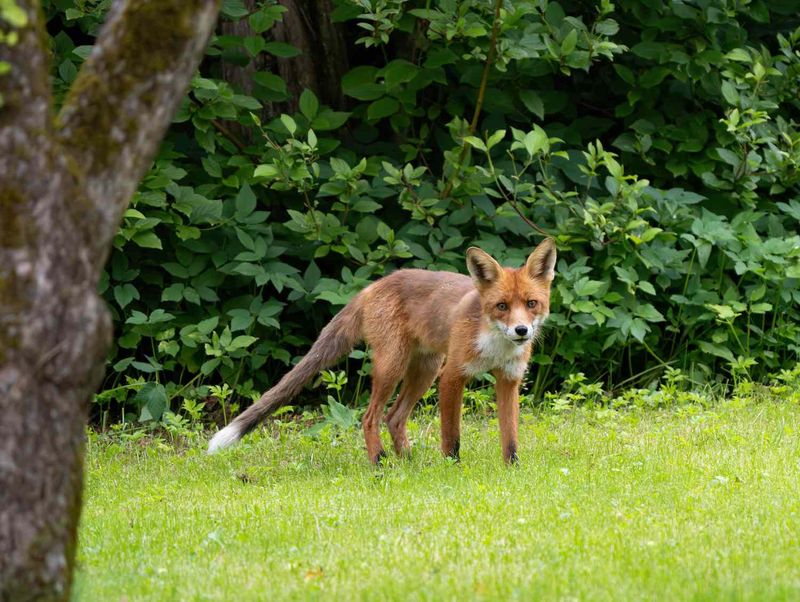
Summer fox sightings tend to spike, and the timing has a straightforward explanation. By June and July, any kits born in spring are mobile and beginning to explore, which means family groups cover more ground and appear in more places than they did in winter.
Increased food demands associated with raising young may push adults to forage longer hours and across wider areas. That said, not every fox seen this summer has kits nearby; presenting that as one possible seasonal factor is accurate, but treating it as a certainty is not.
NC Wildlife’s mammal guide describes the general seasonal activity patterns of both red and gray foxes, and NC Wildlife’s red fox profile notes that daytime sightings can simply reflect available food opportunities rather than a health problem. A fox hunting grasshoppers in a sunny lawn at 10 a.m. is behaving normally for the season.
Patchy or thin-looking fur is another summer feature that alarms homeowners. NC Wildlife’s 2026 spring encounter guidance specifically notes that patchy fur during summer coat shedding is not necessarily a health concern.
A fox transitioning between its winter and summer coat may look rough but be perfectly healthy.
The behaviors that actually change the risk picture are distinct from ordinary daylight activity. Unexplained aggression toward people who have not approached the animal, staggering or loss of coordination, apparent disorientation, paralysis, unusual tameness where the fox allows close approach without retreating, or repeated deliberate movement toward people are all signs that warrant a different response.
NC Wildlife’s conflict guidance and CDC information on rabies both identify abnormal neurological behavior as the relevant concern, not the time of day. If you observe those signs, keep people and pets away from the animal and contact your local animal control or wildlife authority promptly.
Remove the easiest invitations first
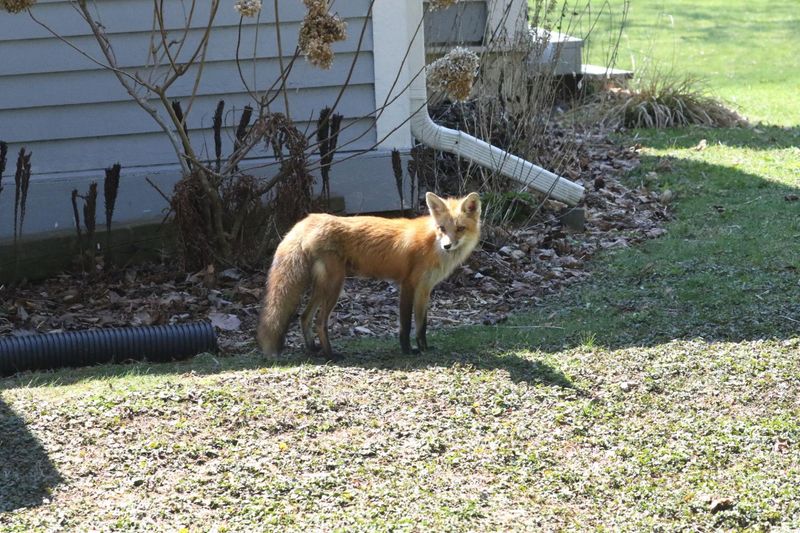
Once you have a sense of what the yard may be offering, the most productive next step is removing the lowest-effort attractants before considering anything more involved. These changes rarely require major landscaping or construction, and they can meaningfully reduce the reasons a fox has to linger close to the house.
Start with food. Feed pets indoors whenever possible, or bring food and water bowls inside as soon as the meal is finished.
Secure trash cans with locking lids or store them in a garage or shed until collection day. Clean spilled birdseed from the ground beneath feeders at least a few times per week, or consider switching to a tube feeder design that reduces scatter.
Pick up fallen fruit from under trees regularly, since rotting fruit attracts both the small animals foxes eat and foxes directly. If you compost, keep meat, fish, and cooked food out of open bins.
NC Wildlife’s conflict prevention guide identifies all of these as practical first-line steps.
On the structural side, reduce clutter that creates sheltered hiding spots near the foundation. Wood piles, stacked building materials, and dense low shrubs immediately adjacent to the house are worth reorganizing or trimming back.
NC State Extension’s wildlife management guidance recommends targeting food access and high-risk denning locations near buildings before making broader habitat changes. Stripping the yard of all vegetation is unnecessary and counterproductive; the goal is reducing specific access points, not eliminating wildlife habitat entirely.
Before closing any gap under a porch, deck, shed, or crawl space, confirm that the space is unoccupied. Humane World’s fox guidance and NC Wildlife both caution against sealing an opening while a fox family may be inside.
Look for tracks, worn soil, or other activity signs, and wait until you are confident the space is empty, including that any young have left, before installing exclusion materials. Sealing a fox inside creates a more serious problem than the one you were trying to solve.
Protect pets, poultry, and people without escalating the encounter
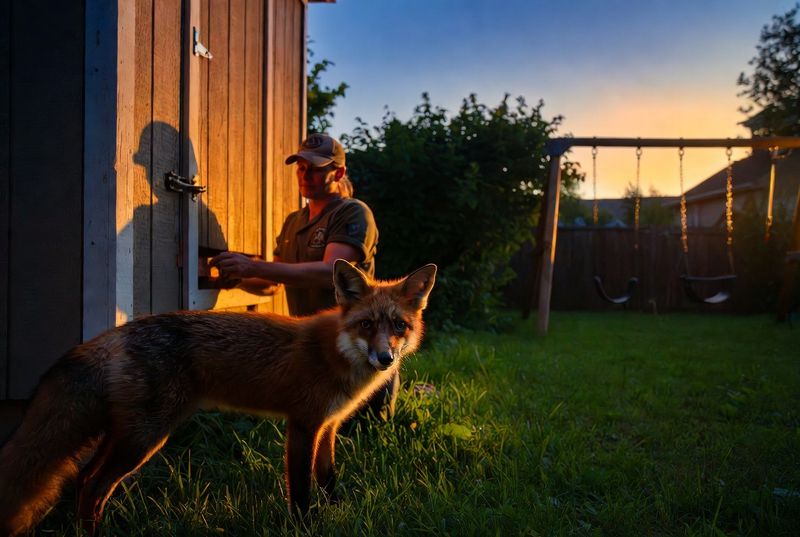
A fox passing through the yard on its way somewhere else is a very different situation from one that lingers near the back door, investigates the chicken coop, or approaches children playing outside. Matching your response to the actual behavior keeps the situation from escalating unnecessarily.
For a fox that is simply moving through, observation from a distance is appropriate. Keep dogs leashed or supervised when outside, especially if you suspect a den is nearby.
A dog that charges a den opening can trigger defensive behavior from a parent fox, even if the dog is just being curious. Cats allowed outdoors overnight face real risk from foxes, and that risk increases near a den.
NC Wildlife’s conflict guide recommends supervising pets and keeping them secured after dark.
Outdoor poultry and rabbits need predator-resistant housing: a solid-walled coop or hutch with hardware cloth rather than standard chicken wire, a secure latch, and no gaps larger than an inch at the base. Foxes are persistent and capable diggers, so a buried apron of hardware cloth around the perimeter of a run adds meaningful protection.
Penn State Extension’s guidance on urban poultry emphasizes that secure enclosures, not deterrents alone, are the reliable standard for protecting birds from predators.
When a fox is lingering too close to the house or returning repeatedly to the same spot despite food removal, nonlethal hazing is a reasonable next step. Loud clapping, a sharp shout, a spray from a garden hose, or motion-activated sprinklers can discourage the animal without harming it.
Humane World’s fox resources recommend hazing from a safe distance and avoiding cornering the animal, which can prompt defensive behavior.
Never feed a fox, even indirectly by leaving food accessible. Feeding reduces natural wariness and increases the probability of bold, conflict-prone behavior over time.
Proximity to a fox is not a rabies exposure, but a bite, scratch, or contact between fox saliva and broken skin or a mucous membrane is. If that happens, wash the area thoroughly with soap and running water for 15 minutes and seek immediate medical advice, as directed by NC DHHS rabies information and CDC rabies guidance.
A regular fox is a habitat clue, not a pest-control service

Repeated crossings are most usefully read as a signal that the broader landscape currently offers something worth visiting, whether that is food, protective cover, a reliable travel path, or some combination of the three. Working through the yard audit this article describes, checking food sources, identifying cover features, and thinking about connected habitat beyond your fence line, gives you a concrete starting point rather than a guessing game.
Foxes and other predators may contribute to natural pressure on rodent populations. NC State Extension’s vole management guidance notes that foxes and other predators can help keep vole numbers in check, but that is different from promising that a fox in the yard will solve a rodent problem.
Rely on targeted food-source removal and habitat modification, not on the fox, to manage conflict.
When a fox causes property damage or the situation escalates beyond what nonlethal hazing and food removal can address, the appropriate path in North Carolina is to contact a licensed Wildlife Damage Control Agent. NC Wildlife’s damage control agent list and NC Wildlife’s conflict guidance both direct residents to these professionals for ongoing conflicts.
Relocating a fox is illegal in North Carolina and is not a solution you should attempt. A fox that keeps crossing your yard is telling you something about the landscape; your job is to read the clue and respond to the specific conditions it points to, not to move the messenger.